Hardcover. US, PM Press, 1st, 2013, Book: Very Good, Dust Jacket: Very Good, Hardcover, 208 pages, color illustrations. Like new in publisher's shrink-wrap. A declaration of love to Peter Kuper's adoptive city in which he has lived since 1977, this diary is a vibrant survey of New York City's history. Through Kuper's illustrations, this book depicts a climb to the top of the Brooklyn Bridge, the homeless living in Times Square, roller skaters in Central Park, the impact of September 11, the luxury of Wall Street, street musicians, and other scenes unique to the city. With comics, illustrations, and sketches, this work of art portrays everything from the low life to the high energy that has long made people from around the world flock to the Big Apple.
Hardcover. NY, Liveright, 1st, 2012, Book: Very Good, Dust Jacket: Very Good, Hardcover, 272 pages. Who could have imagined that in 1972, when Aline Kominsky, a Long Island escapee and bodaciously talented artist, broke her foot one rainy fall day, it would result in the most unique collaboration in comics history? Laid up in her house, she was persuaded by R. Crumb, her nerdy, neurotic boyfriend, to pass the time drawing together a "two-man" comic. The result is a jaw-dropping yet tender account, not only of the joys and challenges of a legendary marriage but also of the obstacles faced by struggling female artists. In Drawn Together, our foremost male-female cartooning couple recall their success at shocking America with Weirdo Magazine, the life-altering birth of their precocious daughter Sophie, and their astonishing move to the safe haven of France. With an irresistible introduction and a striking four-color section, Drawn Together becomes a graphic cause-celebre and a must-have for any comics devotee.
Hardcover. New Haven, Yale University Press, 1st, March 1, 2002, Book: Very Good, Dust Jacket: Very Good, Hardcover, 245 pages, illustrated throughout. Clean, bright pages and tight binding. Pierre Puvis de Chavannes (1824-1898) was a towering figure in late nineteenth-century France. The country's greatest public painter, he created murals that decorated museums in Amiens, Rouen, and Lyons as well as major buildings in Paris-most notably the Pantheon, the Sorbonne, and the city hall. Critics from the political right, left, and center, the avant-garde, the Academy, and the state all agreed on the importance of Puvis's murals. Avant-garde artists greatly admired and drew from his work. There was much controversy, however, over the meaning of these murals. This handsomely illustrated book is the first full-length examination of Puvis's murals and their critical reception during the artist's lifetime. Jennifer L. Shaw explains that Puvis's paintings were imagined to embody a vision of France. Although his regional images, allegories of the French heritage, and evocations of the nation as an embracing motherland were all part of a grand tradition of public art, Puvis's painting style was more closely aligned with the avant-garde. Rather than providing a specific narrative or allegory of France, Puvis's murals provoked viewers to experience their own fantasies of Frenchness; rather than using the close brushwork favored by most of his contemporaries, Puvis used large flat areas of color to render his subjects. Shaw persuasively argues that Puvis was the only painter of the period to unite the traditions of public art and modernist form. Her original analysis of Puvis's art underlines his importance to the history of modernism; her examination of the public response to his art illuminates debates about art, subjectivity, and national identity in fin de siecle France.
Softcover. New York, Universe Pub, 1st, 1993, Book: Very Good, Dust Jacket: None, 138 pages. Softcover. Color photographs. Light edgewear to wrappers otherwise clean, unmarked copy. Hotchkiss (1833-69), an American painter and intimate of Asher B. Durand and Elihu Vedder, is the quintessential delicate artist who dies, underappreciated, at a young age. The title refers not only to his romantic landscapes but also to his sketchy career. This catalog accompanies an exhibition that opens this fall at the National Academy of Design. Novak, a premier art historian of the Hudson River School, provides a provocative essay on Hotchkiss as the fragile, poetic artist fixated on capturing evocative images of the ancient past. Felker, the exhibition curator, provides an insightful catalog of works arranged by subject matter. Appendixes include an exhibition checklist, a chronology of the artist's life, and transcriptions of selected manuscript material. Recommended for academically oriented art history collections.
Hardcover. London, B. T. Batsford, 1st, 1984, Book: Very Good, Dust Jacket: Very Good, Hardcover in a bright, unclipped dust jacket. Many b&w plates, some color, 216 pages. In this beautiful book, Aileen Ribeiro surveys the clothing worn by the middle and upper classes throughout Europe in the eighteenth century and discusses what this meant in terms of social definition and identity. Ribeiro, one of the world's premier historians of dress, also looks at such subjects as developments in retailing and distribution, etiquette, the rise of the dress designer and couturier, the evolution of ready-made clothes, fancy dress and the masquerade. Clean copy.
Hardcover. New Haven, Yale University Press, 1st, 2013, Book: Very Good, Dust Jacket: Very Good, Hardcover. Like new in publisher's shrink-wrap. 304 pages illustrated in color and b&w. A thought-provoking examination of the challenging and sometimes sinister roles that fashion has played in the history of cinema.
Hardcover. NY, Harper Design, 1st, 2023, Hardcover in pictorial boards, 223 pages illustrated in color. From longtime fashion director, consultant, media personality, and author, Hal Rubenstein, comes a lush, full color, illustrated guide to the most influential fashion on television from the 1950s to today, revealing the surprising ways our favorite shows have significantly reflected and often shaped the way we dress. From Mary Tyler Moore's capri pants on The Dick van Dyke Show and Emma Peel's dominatrix jumpsuit on The Avengers to Olivia Pope's trademark white trench on Scandal and Don Drapers' grey sharkskin suits on Mad Men Dressing the Part is a rich history of popular American fashion and culture in the modern age. In this gorgeous compendium, the longtime fashion director and expert identifies the most stylish television shows of the past 70 years, highlighting the ways they have affected and often inspired ordinary Americans' wardrobes. Combining his decades of fashion expertise and insider knowledge with lush photographs, archival sketches, fascinating interviews with over two dozen of television's best costume designers, commentary from showrunners and co-stars, and little-known backstories, Rubenstein reveals with insight and wit how television has shaped everyday fashion, guiding and often elevating how we dress. Clean copy.
Hardcover. NY, Oxford University Press, 1st, 2002, Book: Very Good, Dust Jacket: Very Good, Hardcover in a bright, unclipped dust jacket. 308 pages, b&w illustrations. Burt Korall is widely recognized as the most authoritative writer on jazz drumming. His first book Drummin' Men--The Heartbeat of Jazz: The Swing Era is considered a classic. It was praised by Nat Hentoff as "a book that illuminates not only the pantheon of jazz drummers in classic jazz, but makes clear the very essence of the jazz spirit." Now, in this exciting sequel, Korall offers a richly informative history of drumming in the Bebop era. Bebop--hard driving, discordant, melodically unconventional--introduced new sounds and innovative rhythms that changed the face of jazz. Korall looks at this music through the eyes of the musicians themselves, covering a whole range of important jazz drummers, but focusing upon the most original and significant--principally Kenny Clarke, Max Roach, and Art Blakey. Korall provides a knowledgeable background about the history of bebop--and the unfortunate and almost universal heroin addiction that swept through the jazz world in the wake of Charlie Parker's habit. The book contains Korall's own memoir of nearly 50 years in the jazz world, linked by his narrative of the careers of these drummers and their place in the bebop jazz scene. But the most remarkable aspect of the book is the oral history that weaves together the stories of the drummers themselves as well as their friends and contemporaries. Clean copy.
Hardcover. NY, Abrams, 1st, 2010, Book: Very Good, Dust Jacket: Very Good, Hardcover, 320 pages. From its first issue in April, 1970, the National Lampoon blazed like a comet, defining comedy as we know it today. To create Drunk Stoned Brilliant Dead, former Lampoon illustrator Rick Meyerowitz selected the funniest material from the magazine and sought out the survivors of its first electrifying decade to gather their most revealing and outrageous stories. The result is a mind-boggling tour through the early days of an institution whose alumni left their fingerprints all over popular culture: Animal House, Caddyshack, Saturday Night Live, Ghostbusters, SCTV, Spinal Tap, In Living Color, Ren & Stimpy, The Simpsons--even Sesame Street counts a few Lampooners among its ranks. Long before there was The Onion and Comedy Central news shows, there was the National Lampoon, setting the bar in comedy impossibly high!
Softcover. London, Tate Publishing, 1st, 2008, Book: Very Good, Dust Jacket: None, Softcover, 248 pages, color and b&w illustrations. This book examines the work of Duchamp, Man Ray, and Picabia, three pioneering figures in the history of modernism. It explores the points of convergence and the parallels in their development throughout their careers. Central to this is their response to photography and film, and to the challenges posed to fine art by the development of mass production. Duchamp's paintings of 1911-12 were influenced by the representation of movement in photography, while Picabia's were shaped in part by the belief that the advent of the camera spelled the end of traditional painting. Man Ray used photography first to record his own art works and those of others, but soon saw in it a means of creating images of a status and inventiveness traditionally restricted to fine art. And, as this fully illustrated book shows, humor and eroticism were themes common to the work of all three artists.
Softcover. New York , Museum of Modern Art , 1970, Book: Very Good, Dust Jacket: None, Unpaginated (86 pages), maroon illustrated wrappers. This is an album of early photographs taken of the New York red light district around 1912 by Bellocq. Friedlander took prints from the original plates for this book and they provide a fascinating documentary on bordellos at this interesting time in history. Reputedly never taking 'dirty' pictures of the girls, Bellocq confined his endeavors to recording for posterity these ladies in both clad and unclad poses. The foreword takes the form of a conversation between Friedlander and Dan Leyrer, who was also a photographer and a contemporary of Bellocq.
Hardcover. New York, Da Capo Press, Reprint, 1971, Book: Very Good, Dust Jacket: None, Hardcover. (Library of American Art Series) 1971 reprint of the original 1926 edition. 110 pages. b&w illustrations. Brown cloth, gilt lettering to spine and front cover. Light wear and unfortunate paper-clip impressions to upper edge of some pages. Still a nice, tight copy.
Hardcover. London, Penguin Books, 1st, 1965, Book: Very Good, Dust Jacket: Good, Hardcover in an edgeworn dust jacket. 390 pages, 192 bw plates at rear plus line diagrams and maps. No slipcase.
Hardcover. London, Farrand Press, 1st, 1990, Book: Very Good, Dust Jacket: None, Hardcover, 374 pages. Black & white illustrations. Minor fading to cover cloth. Clean, tight copy. B&w frontispiece & 282 illustrations. An important study of the wide range of uses to which lithography was put through the 19th century, with chapters on military manuals, music printing, shorthand, facsimiles including the publications of Sir Thomas Phillipps; with a catalogue of 423 examples traced by Professor Twyman. No dust jacket.
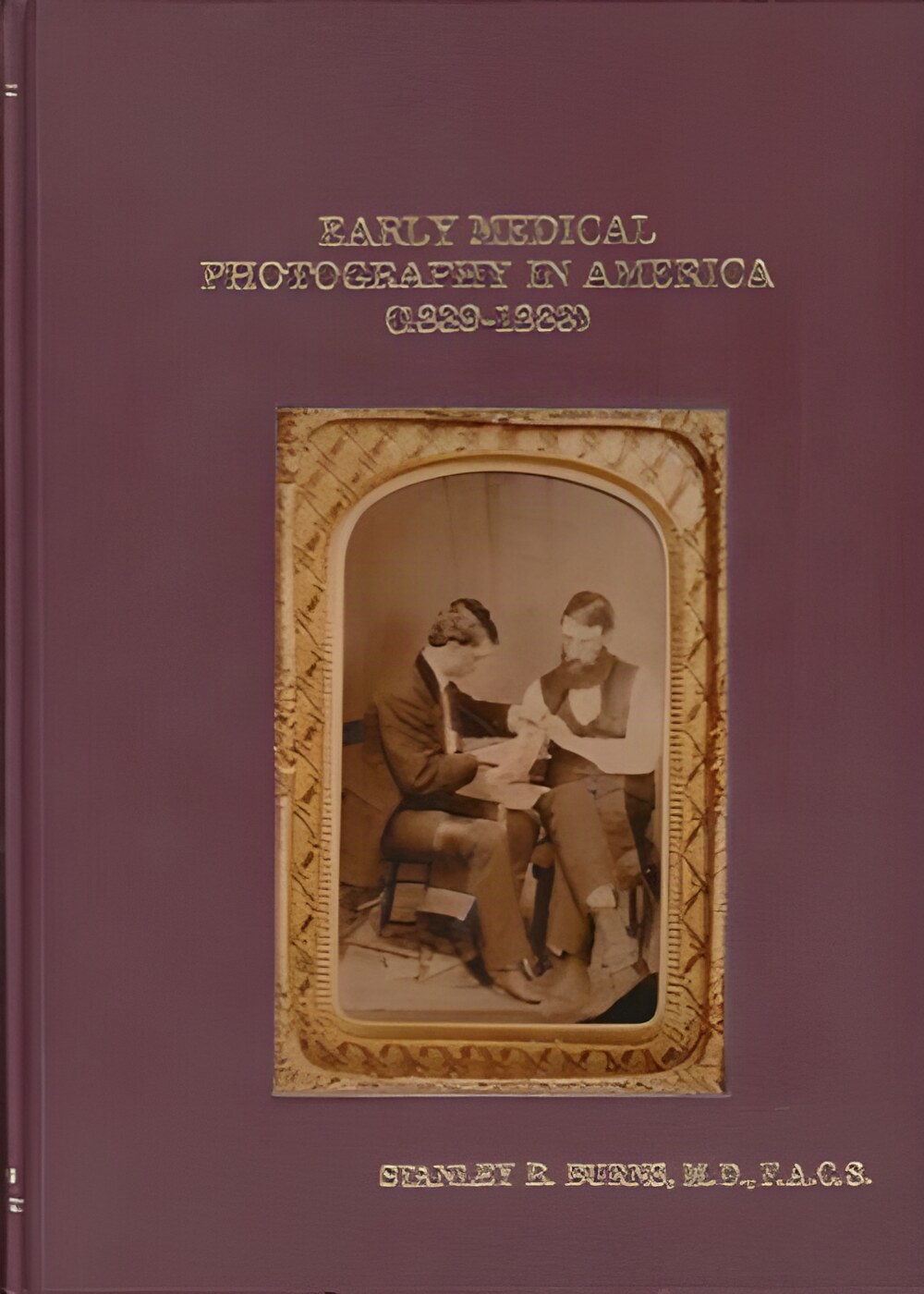
Hardcover. NY, The Burns Archive., 1st, 1983, Book: Very Good, Dust Jacket: None, Hardcover, maroon cloth with gilt lettering and a pastedown plate on the front cover. SIGNED AND INSCRIBED BY BURNS on the title page. Reprints articles in facsimile that Burns wrote for the New York State Journal of Medicine on the history of early medical photography. Clean, bright copy.
Hardcover. New York, Praeger, 1st, 1967, Book: Very Good, Dust Jacket: Good, 117 pages of text followed by black & white plates. Minor age darkening along top edge. Dust jacket worn along edges - now protected with clear plastic cover. Clean, tight copy.
Hardcover. NY, D.A.P./Distributed Art Publishers, 1st, 2010, Book: Very Good, Dust Jacket: Very Good, Hardcover in a slipcase, 192 pages. Transforming words into icons and images into wide-screen epics, Ed Ruscha has wholly reconceived the terms of painting for our era. Tagged variously as a Conceptualist, Pop artist or latter-day Surrealist, Ruscha flouts category, or rather incorporates all categories, always surprising and experimenting with both subject and method. His paintings are steeped in our times: cinema, advertising, logos, late capitalism and the twists and turns of postwar art have all informed his iconography since the early 1960s, arriving on the cool surfaces of his canvases with magnetic detachment. Ruscha eschews process and focuses exclusively on the final product: "the means to the end has always been secondary in my art," he has said. Ruscha has also reinvented the use of words in art, finding disquieting ways to invest language with a weird, throbbing, ambient static, never aspiring to what he calls "word gestures," since "each word is an excursion unto itself." Fifty Years of Painting focuses on Ruscha's majestic oeuvre of paintings. A magnificent publication, it comes housed in a slipcase that sports the artist's classic painting "Standard Station" (1966), and, alongside fantastic reproductions, it contains a preface by novelist James Ellroy, essays by Ralph Rugoff, Alexandra Schwartz and Ulrich Wilmes, a text by novelist Bruce Wagner, an interview with the artist by Kristine McKenna, an illustrated chronology and an exhibition history.
Hardcover. US, Dark Horse, 1st, 2013, Book: Very Good, Dust Jacket: None, Elephant folio, hardcover, 104 pages in color. Like new in publishers shrink-wrap. One of comics' greatest artistic achievements gets its due in this deluxe 15" x 20" hardcover collecting the first two years of Tarzan Sunday strips by Hal Foster! Beautifully restored and printed at giant size, this first volume in Dark Horse's comprehensive collection of Foster's Tarzan Sundays reprints over one-hundred strips on high-quality paper and in eye-popping color, replicating when they first appeared! Includes a historical essay on Tarzan and Foster by comics scholar, Mark Evanier.
Softcover. New York, Billboard Books, 1st, 2006, Book: Very Good, Dust Jacket: None, 656 pages. Softcover with no dust jacket. Remainder mark on top edge, otherwise, clean, unmarked copy. Light edgewear to wrappers. Black and white pictures throughout. Mann, a novelist and author of books on film history, presents this biography of director John Schlesinger (1926-2003), based on interviews with the director and his family following his stroke in 2001, in addition to other primary source documents, articles, and reviews. He describes Schlesinger's childhood; his early days as a documentary director at the BBC; his films during the era of New Hollywood; and Midnight Cowboy, which won an Academy Award. His other films, such as Billy Liar, Darling, Cold Comfort Farm, and The Day of the Locust, are discussed, as well as his accurate depictions of homosexuality, and his personal and professional relationships.
Hardcover. New Haven CT, Yale University Press, 1st, 2019, Book: Very Good, Dust Jacket: None, Hardcover, pictorial boards, 232 pages. The question "What is American art?" might conjure the hyperrealism of Raphaelle Peale and William Harnett, the bold graphic style of Stuart Davis and Jacob Lawrence, or the Precisionist forms of Charles Sheeler. Little known, however, is that such notions of American art are significantly owed to a Russian Jewish immigrant named Edith Halpert. The founder of the Downtown Gallery in New York, Halpert shaped an identity for American art, declaring that its thrilling heterogeneity and democratic values were what most distinguished it from the European avant-garde. For forty-plus years, Halpert's gallery brought recognition and market success to now-legendary American artists--among them Arthur Dove, Marsden Hartley, and Georgia O'Keeffe, in addition to the artists mentioned above. She relentlessly championed nonwhite, female, and unknown artists and was a formative advisor in the shaping of many of the nation's most celebrated art museums and collections, from San Francisco to Boston. Not content with those achievements, she also pioneered the appreciation and collecting of American folk art. Richly illustrated with works that passed through her groundbreaking gallery, this book tells the extraordinary and largely overlooked story of her career and legacy. The artists Halpert launched into the American canon are household names--and this book compellingly argues that hers should be, as well. In publisher's shrinkwrap.
Hardcover. New York, W. W. Norton & Company, 1st, 2008, Book: Very Good, Dust Jacket: Very Good, Hardcover, 288 pages, 242 photographs reproduced in four-color process. Like new in publishers shrink-wrap. Edward Steichen was already a famous painter and photographer in America and abroad when, in early 1923, he was offered the most prestigious position in photography's commercial domain: that of chief photographer for Vogue and Vanity Fair. Over the next fifteen years, he would produce a body of work of unequaled brilliance, dramatizing and glamorizing contemporary culture and its achievers. Here are icon images of Gloria Swanson, Gary Cooper, Greta Garbo, and Charles Chaplin, as well as numerous other celebrities drawn from an archive of more than 2,000 original prints.
Hardcover. Cologne, Dumont Buchverlag, 1st, 1997, Book: Very Good, Dust Jacket: Very Good, Hardcover, 363 pages, illustrated throughout in color and b&w. Clean, unmarked copy with only minor wear to dust jacket. This volume provides an extensive survey of painting in Austria from 1900-1930, with Egon Schiele as the focal point, through a representative selection of over 100 works by Schiele and 23 of his contemporaries from the collection of Dr. Rudolf Leopold. Contributions by: Antonia Hoerschelmann, Rudolf Leopold, Klaus Albrecht Schroder, Harald Szeemann, and Patrick Werkner. 139 color plates and 59 b&w illustrations.
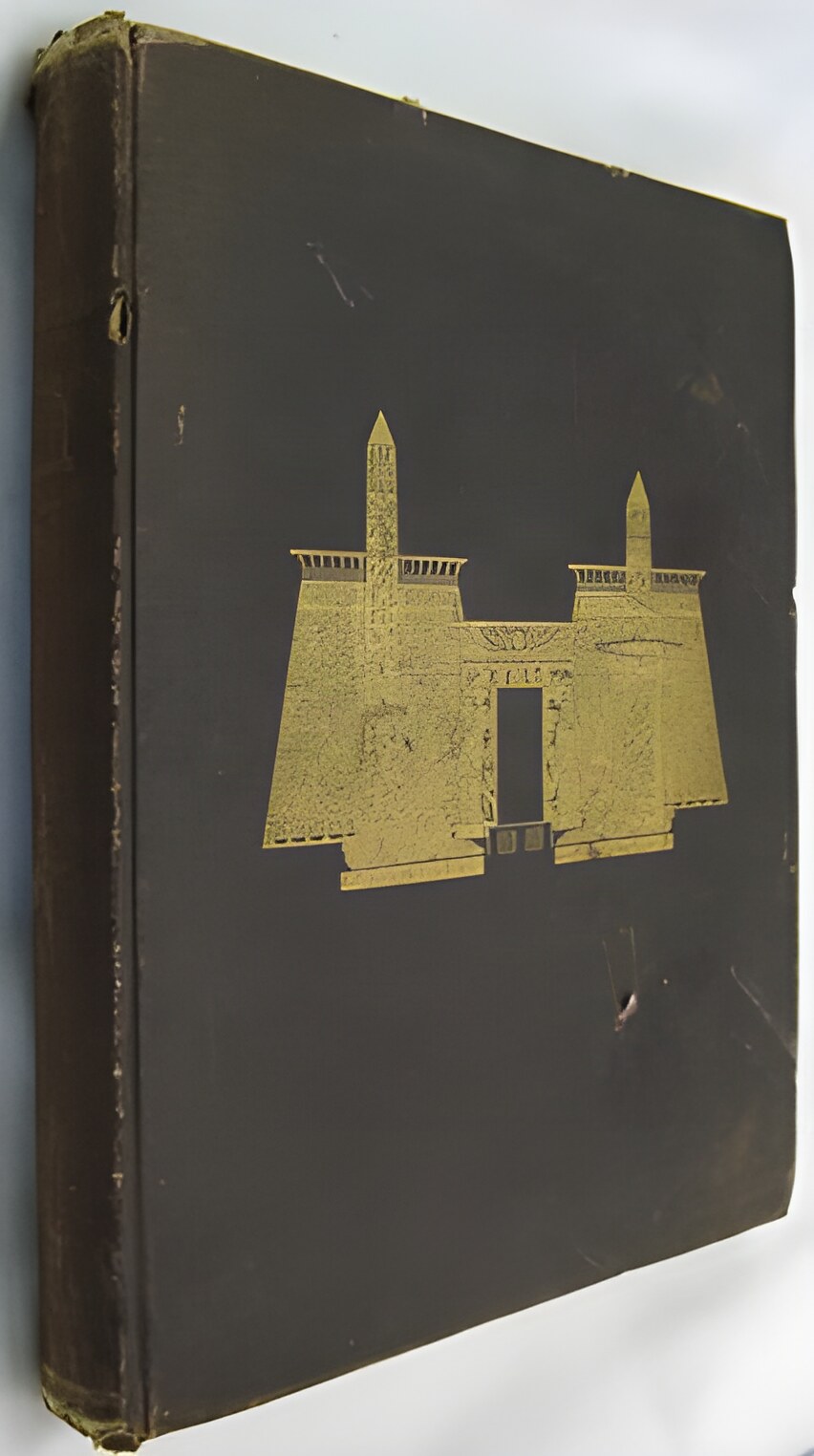
Hardcover. New York , privately printed, 1st, 1882, Book: Good, Dust Jacket: None, Hardcover. large folio, maroon cloth with gilt stamping. Covers worn, especially corners. Internally clean. 187 pages plus 51 full-page plates: 32 artotypes, 18 engravings, 1 chromo-lithograph. Some plates with light foxing, small water stains to some margins.In 1879, Gorringe won the contract to move the obelisk of Thutmosis III from Alexandria to Central Park for $75,000. This book is about the expedition to retrieve the obelisk and a study of the other standing obelisks in Paris and London. Frontispiece portrait of William Vanderbilt who financed the acquisition of the monument. Scarce in original printing.
Softcover. London/NY, Routledge , 1st, 1996, Book: Very Good, Dust Jacket: None, Softcover, 288 pages, illustrated in b&w. Empire Building is a study of how and why Western architecture was exported to the Middle East and how Islamic and Byzantine architectural ideas and styles impacted on the West.The book explores how far racial theory and political and religious agendas guided British architects (and how such ideas were resisted when applied), and how Eastern ideas came to influence the West, through writers such as Ruskin and buildings such as the Crystal Palace.Beautifully written and lavishly illustrated, Empire Building takes the reader on an extraordinary postcolonial journey, backwards and forwards, into the heart and to the edge of empire.

 "Drawn to New York: An Illustrated Chronicle of Three Decades in New York Cityby: Kuper, Peter/Eric Drooker")
 "Drawn Together: The Collected Works of R. and A. Crumbby: R. Crumb and A. Crumb")
 "Dream States: Puvis de Chavannes, Modernism, and the Fantasy of Franceby: Shaw, Professor Jennifer L.")
 "Dreams and Shadows: Thomas H. Hotchkiss in Nineteenth-Century Italyby: Novak, Barbara")
 "Dress in Eighteenth Century Europe 1715-1789by: Ribeiro, Aileen")
 "Dressing Dangerously : Dysfunctional Fashion in Filmby: Faiers, Jonathan")



 "Duchamp, Man Ray, Picabiaby: Mundy, Jennifer")
 "E.J. Bellocq: Storyville Portraitsby: Bellocq, E.J. and Lee Friedlander")
 "Early American Wall Paintings, 1710-1850by: Allen, Edward B.")
 "Early Christian & Byzantine Architectureby: Krautheimer, Richard")
 "Early Lithographed Booksby: Twyman, Michael")

 "Ed Ruscha: Fifty Years of Paintingby: James Ellroy (Author), Ralph Rugoff (Author), Alexandra Schwartz (Author), Bruce Wagner (Author), more")
 "Edgar Rice Burroughs' Tarzan: The Sunday Comics, 1931-1933by: Foster, Hal")
 "Edge of Midnight: The Life of John Schlesingerby: Mann, William J.")
 "Edith Halpert: The Downtown Gallery and the Rose of American Artby: Shaykin, Rebecca")
 "Edward Steichen: In High Fashion - The Conde Nast Years, 1923-1937by: Ewing, William A.")
 "Egon Schiele: The Leopold Collection, Viennaby: Leopold, Rudolf")
 "Empire Building: Orientalism and Victorian Architectureby: Mark Crinson")