Hardcover. New York, Harry N. Abrams, Inc., 1st Edition, 1989, Book: Very Good, Dust Jacket: Very Good, 155 pages. Hardcover. Color and b/w illustrations throughout. Cover boards bound in orange cloth, gilt title on spine, all excellent. Dust jacket unclipped, has small puncture near spine on front cover (patched from inside a with tape, see image), otherwise very good. Binding tight. Spine straight. In beautiful condition. Hassrick's illuminating discussion of Russell's work, based on much new research, is set against the backgrond of the artist's experiences in the West.
Softcover. Muncie, Ind., Ball State University, 1st, 1985, Book: Very Good, Dust Jacket: None, 72 pages, b&w and color illustrations. Light rubbing to wrappers, small tear to rear cover, else a very clean, tight copy.
Hardcover. London/Calcutta, Seagull Books , 1st, 2010, Book: Very Good, Dust Jacket: Very Good, Hardcover in a bright dust jacket. Circuses provide surreal, fantastic entertainment. At times magical and at others chilling, the circus is a world of magic and spectacle for the viewer, but for the performer, a career in the circus often brings with it a nomadic, lonely life. In Circus Girl, photographer Saibal Das captures beautiful and unusual images of circus girls, photographs which evokes this sense of darkness and resignation that underlies the otherworldly feats they perform under the big top. For instance, in one photograph, a circus girl whose act involves a lioness is seen sitting in front of a mirror putting on her makeup. The lioness that she usually whips in the ring stands behind her, her paw touching the girl's shoulder affectionately. But both wear a solemn look. In another, the girl sits on her props, staring silently at the snack packets strewn on the ground. The giant marquee is empty. Internationally renowned mime Nola Rae provides a haunting accompanying text that poetically comments on the transient wanderings of the circus performers who often yearn for a conventional family life while donning their costumes and taking hold of the trapeze. Rae gives voice to the circus girls, articulating the thoughts too often hidden by the brilliant illusion of stage lights.
Hardcover. Seattle, Salisbury Press, 1st, 1970, Book: Very Good, Dust Jacket: None, 64 pages. Hardcover. Illustrated in full color and black & white. Book with original wrap around band on cover. A nice copy.
Hardcover. London, Thames & Hudson, 1st, 2001, Book: Very Good, Dust Jacket: Very Good, Hardcover, 224 pages. In this latest celebration of his art Bailey brings together for the first time the best of all his "beauty" photographs from the 1960s up to the present day. Commissioned by the best-known fashion magazines of the time, these portraits of what Vogue once called "The Bailey Kind of Girl" include models such as Jean Shrimpton, Marie Helvin, Penelope Tree, and Bailey's wife, Catherine Dyer. Blended with these are Bailey's startling ethnographic portraits of, for example, Asaro mud men and Indian dancers, and his own paintings. In his illuminating introduction, Robin Muir sets these photographs in the context of the period in which they were taken and reminds us that for over forty years Bailey has challenged our notions of female beauty with his own highly personal vision. The sensational color images collected here testify that few are more expert than this photographer on a subject that is today preoccupying us more than ever. No admirer of either beauty or Bailey will want to be without this book. 110 color photographs.
Hardcover. London, Richard Cohen Books, 1st, 1996, Book: Very Good, Dust Jacket: Good, Hardcover in a lightly worn, unclipped dust jacket. Monumental biography and critical study, 810 pages, 200+ photographs, 16 pages in color. Kevin Brownlow, a film editor in his own right and author of the seminal silent film trilogy initiated with The Parade's Gone By. . ., brings to Lean's biography an exhaustive knowledge of the art and the industry. The life and its biographer provide a landmark work on the cinema. Emerging from a childhood of nearly Dickensian darkness, David Lean found his great success as a director of the appropriately titled Great Expectations. There followed his legendary black-and-white films of the 1940s and his four-film movie collaboration with Noel Coward. Lean's 1955 film Summertime took him from England to the world of international moviemaking and the stunning series of spectacular color epics that would gain for his work twenty-seven Academy Awards and fifty-six Academy Award nominations. All are classics, including The Bridge on the River Kwai, Lawrence of Arabia, Doctor Zhivago, and A Passage to India. Ownership name on half-title page, otherwise clean.
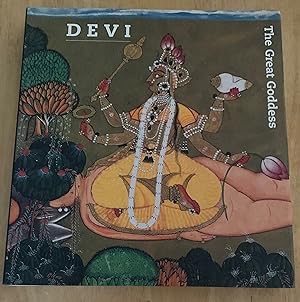
Hardcover. Washington, D.C., Prestel, 1st, 1999, Book: Very Good, Dust Jacket: Very Good, Hardcover in a bright dust jacket, 408 pages, illustrated throughout in color. Large oversized book. Devi, the Great Goddess of India is beautiful, beneficent, terrifying, all-powerful, and glorious. Ubiquitous in India's social and spiritual fabric, she has, over the millennia, been painted, sculpted, carved, and wrought from silver and bronze in a myriad of shapes and forms. Devi: The Great Goddess brings together one hundred and twenty of these diverse examples of Devi and a group of distinguished essayists who explore facets of Devi worship and tradition, including ritual, architecture, literature, history and contemporary issues such as feminism and gender politics. Light edgewear to dust jacket, else a clean, tight copy. PLEASE NOTE: DUE TO SIZE & WEIGHT, DOMESTIC SHIPPING ONLY.
Softcover. Bloomington IN, Indiana University Press/Electa , 1st, 1996, Book: Very Good, Dust Jacket: None, 253 pages, color and b&w illustrations. Softcover in excellent, clean condition. Domenico Tiepolo, 1727-1804, the son of Giambattista, left a corpus of drawings which show him to be one of the talented Venetian artists of the 18th century. 176 drawings plus many photographs of details and of paintings.
Hardcover. New Haven, CT, Yale University Press, 1st, 2015, Book: Very Good, Dust Jacket: None, 160 pages. Hardcover with no dust jacket. Very clean, like new in publishers shrink-wrap. This publication presents the first in-depth survey of the Conley Harris and Howard Truelove Collection of Indian Drawings, which was recently acquired by the Philadelphia Museum of Art. This exceptional collection, which has never previously been published, consists of 65 works on paper created between the 16th and 19th centuries.
Hardcover. Berkeley, University of California Press, 1st, 1990, Book: Very Good, Dust Jacket: Very Good, Hardcover in a bright dust jacket, 480 pages. Although he is referred to as a "genius" more often than any other scholar of his period, Edward Sapir has received no full-scale biography since his death in 1939. At long last, Regna Darnell provides a comprehensive assessment of the life, ideas, and wide-ranging interests of this remarkable man. Sapir, the foremost linguist and anthropologist of his generation, contributed substantially to the professionalization of linguistics as an independent discipline. He was the first to apply comparative Indo-European methods to the study of American Indian languages, on which he conducted extensive fieldwork. His theoretical work on the relationship of the individual personality to culture remains fundamental to culture theory in anthropology, as does his insistence on the symbolic nature of culture and the importance of culture as understood by its members, in their own words.Sapir became the first professional anthropologist in Canada and teacher of a whole generation of linguists and anthropologists at Chicago and Yale. Holding to a humanistic view of anthropology (his own work included poetry and literary criticism), he was the most articulate spokesman for the interdisciplinary social science of the late 1920s and 1930s. In both linguistics and anthropology Sapir is a revered master whose ideas continue to inspire discussion and research. A sixteen-volume Collected Works is now in progress. Clean copy.
Hardcover. US, Glitterati, 1st, 2015, Book: Very Good, Dust Jacket: Very Good, Like new in publisher's shrink-wrap. Hardcover, 272 pages. In his debut book of photography, with a foreword by one of the luminaries of NYC culture and entertainment, Adrian Buckmaster's monograph presents a staggeringly beautiful collection of portraits - a cross-section of humanity in all of its glorious diversity, from the ordinary to the extraordinary and everything in-between. Having spent his early years shooting commercial beauty and fashion, Buckmaster soon shifted focus to more personal projects, challenging conventional notions of beauty and celebrating the eccentricities of those whom society might classify as "misfits." Echoes of Buckmaster's early career remain, in the form of exquisite costuming, make-up, and scenic design. Despite an element of performance, there is an undeniable rawness to these portraits, in which subjects are both aware of the camera's gaze and sympathetically self-conscious, robing and disrobing, revealing and concealing. Buckmaster's photographic genius is encapsulated in his uncanny ability to fastidiously art direct while simultaneously stripping away layers of formality and convention. Arranged in three movements: Imposing, Revealing, and Inventing, this collection progresses from traditional portraiture to increasingly intimate portrayals, as subjects expose, create, and invent themselves. Included in this endlessly varied spectrum of characters are Burlesque performers, families, brides, lovers, and all manner of tattoos and body piercings. There are classical reclining nudes, reminiscent of Edouard Manet's Olympia or Titian's Sleeping Venus, dancers with incredible physical strength and dexterity, women costumed as peacocks and geishas, a contortionist inside a trunk, even a green-skinned man, bejewelled like an Indian deity.
Hardcover. Indianapolis, Indiana, Indianapolis Museum of Art, 1st, 2013, Book: Very Good, Dust Jacket: None, 160 pages. Hardcover no dust jacket. Color pictures throughout. Clean, unmarked copy with only minor wear to boards. Decoding Robert Indiana's work for a new generation, this revelatory book explores previously unknown autobiographical elements in the work of the Pop artist and printmaker. Famously proclaiming himself to be "an American painter of signs," Robert Indiana has created an enormous body of work, much of it boldly colored abstractions. In this incisive new examination of the artist, based on ongoing conversations with Indiana, art historian Martin Krause sifts through autobiographical clues within the artist's work and finds a wealth of affecting and affectionate references to Indiana's childhood, literary heroes, and the cultural icons of his generation. In addition, a penetrating essay by Pop art scholar John Wilmerding deconstructs Indiana's use of geometric shapes, making unexpected connections that enhance Krause's thesis. Accompanied by reproductions of more than 50 prints from the period 1960-2010--and focusing specifically on series such as Decade: Autoportraits, Vinalhaven Suite, and The Hartley Elegies as well as the "Love" and "Hope" images and studies of Marilyn Monroe, Picasso, and the Brooklyn Bridge--Krause's decryption of Indiana's visual language provides telling insight into the work of this quintessentially American artist.
Hardcover. India, Mapin Publishing Group, 1st, 2006, Book: Very Good, Dust Jacket: Very Good, 171 pages, color and b&w illustrations. This very visual work features the religious and historical significance of feet and footwear in Indian culture as reflected in the civilization's art, sacred writings, and literature. Like new in publishers shrink-wrap.
Softcover. Washington DC, Smithsonian's National Museum of the American Indian, 1st, 2004, Book: Very Good, Dust Jacket: None, Softcover, 263 pages. Color plates throughout. Five essays by contributors. Clean copy.
Hardcover. NY, Watson-Guptill, 1st, 1976, Book: Very Good, Dust Jacket: Very Good, Hardcover. Frank Schoonover, one of the giants of the Golden Age of American Illustration, was renowned for his scenes of life on the western frontier of America and Canada. Schoonover captured the flavor of the west and northwest in his dramatic outdoor compositions which depicted cowboys, Indians, trappers, Eskimos - the people and way of life that he knew, loved, and painted first hand. His keen sense of observations, coupled with his vivid documentary style, made his illustrations powerful paintings in themselves. They are now exhibited and collected for their own sake, independent of the books they illustrated, as unforgettable documents of a legendary way of life. Like the other great painter/illustrators of the Brandywine School -he was a student of Howard Pyle and a contemporary of such notables as N. C. Wyeth and Harvey Dunn - Schoonover was passionate about the portrayal of the American past. Although he lived most of his life in the Brandywine River area of Pennsylvania and Delaware, his commitment to the frontier dominated his work. A natural love for adventure and a yearning to find his own style sent him initially to the Canadian northwest, where he took naturally to the challenge of frontier life. Living among the Indians, canoeing, traveling by dogsled, and fending for himself brought authentic flavor to his paintings which illustrated many popular books and stories of adventure - most of which are now forgotten, although the paintings endure. This handsome collection is the first full-scale illustrated study of Schoonover's work, not only rediscovering the paintings of a major artist, but providing an important visual document of frontier life. 208 pages. 10 1/2 X 11 1/4. 48 color plates. 150 black-and-white illustrations. Chronology. Index. Due to size and weight, DOMESTIC SHIPPING ONLY.
Hardcover. NY, Watson-Guptill, 1st, 1976, Book: Very Good, Dust Jacket: Very Good, Hardcover. Frank Schoonover, one of the giants of the Golden Age of American Illustration, was renowned for his scenes of life on the western frontier of America and Canada. Schoonover captured the flavor of the west and northwest in his dramatic outdoor compositions which depicted cowboys, Indians, trappers, Eskimos - the people and way of life that he knew, loved, and painted first hand. His keen sense of observations, coupled with his vivid documentary style, made his illustrations powerful paintings in themselves. They are now exhibited and collected for their own sake, independent of the books they illustrated, as unforgettable documents of a legendary way of life. Like the other great painter/illustrators of the Brandywine School -he was a student of Howard Pyle and a contemporary of such notables as N. C. Wyeth and Harvey Dunn - Schoonover was passionate about the portrayal of the American past. Although he lived most of his life in the Brandywine River area of Pennsylvania and Delaware, his commitment to the frontier dominated his work. A natural love for adventure and a yearning to find his own style sent him initially to the Canadian northwest, where he took naturally to the challenge of frontier life. Living among the Indians, canoeing, traveling by dogsled, and fending for himself brought authentic flavor to his paintings which illustrated many popular books and stories of adventure - most of which are now forgotten, although the paintings endure. This handsome collection is the first full-scale illustrated study of Schoonover's work, not only rediscovering the paintings of a major artist, but providing an important visual document of frontier life. 208 pages. 10 1/2 X 11 1/4. 48 color plates. 150 black-and-white illustrations. Chronology. Index.
Softcover. Bloomington IN, Indiana University Press, 1st, 2003, Book: Very Good, Dust Jacket: None, Softcover, 209 pages. This groundbreaking study explores the Harlem Renaissance as a literary phenomenon fundamentally shaped by same-sex-interested men. Christa Schwarz focuses on Countee Cullen, Langston Hughes, Claude McKay, and Richard Bruce Nugent and explores these writers' sexually dissident or gay literary voices. The portrayals of men-loving men in these writers' works vary significantly. Schwarz locates in the poetry of Cullen, Hughes, and McKay the employment of contemporary gay code words, deriving from the Greek discourse of homosexuality and from Walt Whitman. By contrast, Nugent-the only "out" gay Harlem Renaissance artist-portrayed men-loving men without reference to racial concepts or Whitmanesque codes. Schwarz argues for contemporary readings attuned to the complex relation between race, gender, and sexual orientation in Harlem Renaissance writing. Clean copy.
Softcover. Baltimore, Clearfield, reprint, 2000, Book: Very Good, Dust Jacket: None, Softcover, light gray wrappers, 278 pages. This volume consists of abstracts of genealogical data from four of New York's earliest newspapers--the New-York Gazette (1726-1744) and the New-York Weekly Journal (1733-1751), the two earliest city papers, and the New-York Mercury and the Weekly Mercury (1752-1783). These newspapers were originally produced as weeklies and usually consisted of four pages, with occasional supplementary issues. Their subject matter encompassed essays, treatises, parliamentary proceedings, governors' messages, European and West Indian news, shipping news, incidents culled from other newspapers, and many advertisements. In this volume of abstracts may be found items yielding information concerning marriage, birth, death, age, status, place of residence, and place of origin, covering, in all, the years 1726 through most of 1783. Treatment is not confined to New York, for among individuals mentioned are those from all the other colonies, especially New Jersey (which had no newspaper in the colonial period), New England, Pennsylvania, and Maryland.
Hardcover. Norton/Smithsonian, 1st, 2002, Book: Very Good, Dust Jacket: Very Good, Hardcover, 288 pages. From the foremost collection of the artist's work, a remarkable portrait of Native American life. In 1832, George Catlin-showman, entrepreneur, and artist-made the first of four trips into Indian country, painting as he went, in a wonderfully spontaneous, if somewhat naive style. His ambition was to paint every tribe. He fell short. But what he did achieve, and the subject of this splendid volume, is a remarkable look into the faces and daily activities of Native Americans before their lands and their numbers were so radically diminished. And while Catlin was clearly influenced by the idea that Indians were Noble Savages (rapidly acquiring the vices of the white man while losing their "savage" virtues), his passion for his work is evidence of a profound respect and affection for his subjects, clearly demonstrated in this magnificent book. 275 illustrations, 150 in color.
Hardcover. Indianapolis, Bobbs-Merrill, 1st, 1952, Book: Good, Dust Jacket: None, Hardcover, green cloth with gilt lettering, 326 pages, b&w plates. The story of the sculptor who carved the faces of America's heroic dead on granite mountains, most prominently, Mount Rushmore. Previous owner's name on front fly leaf, otherwise clean. Mild shelf-wear.
Hardcover. Damiani, 1st, 2015, Hardcover in a bright dust jacket, still sealed in publisher's shrinkwrap, 156 pages. Outside the Studio is photographer Greg Gorman's tenth monograph. This book takes Gorman (born 1949) outside the reaches of his studio portrait and figure-study work, for which he is best known, and onto the streets of Southeast Asia-uncharted territory for the artist. Traveling initially on behalf of Epson, giving symposiums on fine art digital printing throughout Singapore, Malaysia, China and India, Gorman got a firsthand look at these very different cultures at the very beginning of the digital revolution. The transition from analogue to digital cameras was another new experience for Gorman, who had shot film for more than 30 years. For Gorman, being in the studio with the likes of Marlon Brando or Robert De Niro was second nature, but being thrust in front of strangers in China, Kuala Lampur, India, Thailand, Cambodia and Vietnam was a new adventure.
Hardcover. London, Gibbings and Co., 2nd Ed., 1896, Book: Very Good, Dust Jacket: None, 341 pages. Hardcover with blue cloth covers with black and gilt design. An ex-library but aside from spine stickers and bookplate, a remarkably clean, tight copy. Doesn't appear to be a circulating copy. Tales of hunting throughout the world, but mostly in America, from snipe shooting to wolf coursing. Includes several fishing chapters; salmon in Japan, black and striped bass, grey mullet, brook trout and muskies, with a final chapter on artificial stocking of lakes and rivers.
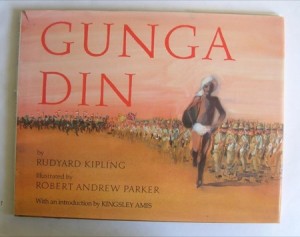
Hardcover. San Diego, Harcourt Brace Jovanovich, 1st thus, 1987, Book: Very Good, Dust Jacket: Very Good, Hardcover in a bright dust jacket with a award sticker. An illustrated edition of the classic poem, in which a British soldier recalls his experiences in the army in India and pays homage to the courage of the Indian water carrier Gunga Din. Lovely watercolor art by Robert Andrew Parker. Clean copy.

 "Charles M. Russell (The Library of American Art)by: Peter H. Hassrick")


 "Childe Hassam in Indianaby: Joyaux, Alain G. (Contributor)")
 "Circus Girlby: Das, Saibal,/ Rae, Nola")
 "CMR (Charles M. Russell) Book, Theby: Willard, John")
 "David Bailey: Chasing Rainbowsby: Bailey, David and Robin Muir")
 "David Lean: A Biographyby: Brownlow, Kevin")


 "Domenico Tiepolo: Master Draftsmanby: Gealt, Adelheid M. and George Knox")
 "Drawn From Courtly India: The Conley Harris and Howard Truelove Collectionby: Cameron, Ainsley")
 "Edward Sapir. Linguist Anthropologist Humanistby: Darnell, Regna")
 "Embarrassment of Riches, An: Photographsby: Buckmaster, Adrian/Susanne Bartsch")
 "Essential Robert Indiana, Theby: Krause, Martin")
 "Feet and Footwear in Indian Cultureby: Jain, Jatta")
![First American Art: The Charles and Valerie Diker Collection of American Indian Art by: Bernstein, Bruce [Editor]; McMaster, Gerald [Editor]; Ash-Milby, Kathleen E. [](javascript:largeIMTop('https://www.browsingisarousing.com/shop/images/First-American-Art-The-Charles-and-Valerie-Diker-Collection-of-American-Indian-Art_by_Bernstein-Bruc378700-411946.jpg','https://www.browsingisarousing.com/shop/images/First-American-Art-The-Charles-and-Valerie-Diker-Collection-of-American-Indian-Art_by_Bernstein-Bruc378700-411946.jpg',0,'378700',0,'') "First American Art: The Charles and Valerie Diker Collection of American Indian Art by: Bernstein, Bruce [Editor]; McMaster, Gerald [Editor]; Ash-Milby, Kathleen E. [")
 "Gay Voices of the Harlem Renaissance by: Schwarz, A.B. Christa")
 "Genealogical Data from Colonial New York Newspapers: A Consolidation of Articles from The New York Genealogical and Biographical Record by: Kenneth Scott (Compiler)")
 "Generations in Clay: Pueblo Pottery of the American Southwestby: Dittert, Alfred E., Jr. and Fred Plog")

 "Give the Man Room. The Story of Gutzon Borglumby: Casey Robert J.; Borglum Mary")
 "Greg Gorman: Outside the Studioby: Greg Gorman (Introduction), James Nachtwey (Foreword)")
 "Gun Rod and Saddle: A Record of Personal Experiencesby: Gillmore, Parker")