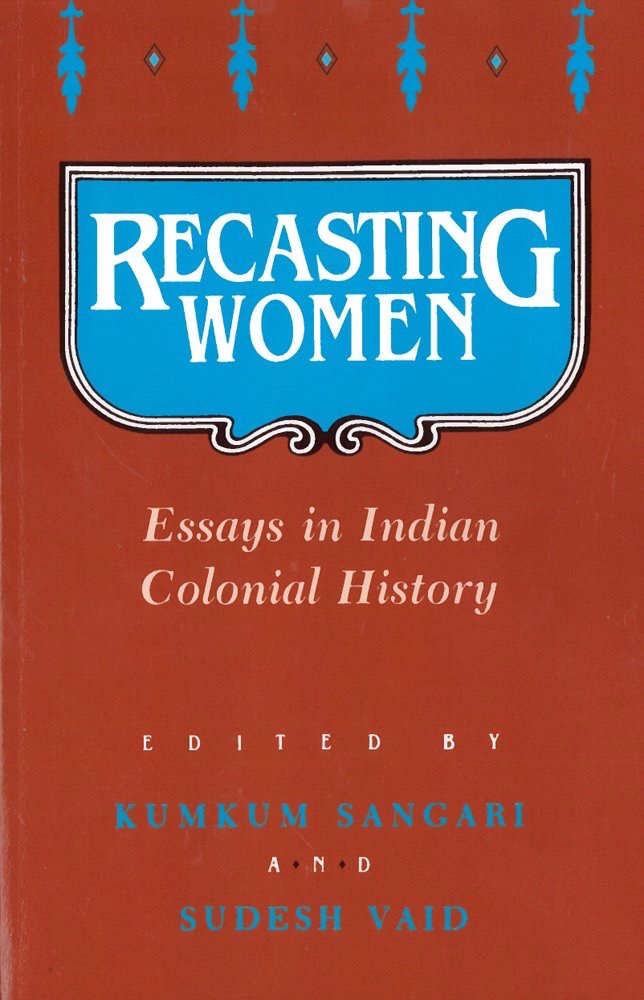
Softcover. New Brunswick NJ, Rutgers University Press, 1st pbk., 1990, Book: Very Good, Dust Jacket: None, Softcover, 372 pages. The first set of essays seeks to analyze the patriarchal discourses of a colonial society and includes an analysis of the shaping of Hindu-Aryan identity, the parameters of the discourse on widow-immolation, the "defeminization" of popular culture in nineteenth-century urban Calcutta, the nature of the reforms proposed by early women's journals in Hindi, and the implications of the nationalist movement and of Indo-Anglian literature on middle-class patriarchal norms. The second set of articles relates to women of the productive classes--the reconstitution of patriarchies in the agrarian transition in Haryana, in the Oudh peasant movement, in the armed peasant struggle in Telangana, and among the working class in Bengal. The contributors explore the interrelation of patriarchies with political economy, law, religion, and culture, and suggest a different history of "reform" movements, and of class and gender relations. Clean copy.
Hardcover. Indiana University Press, 1st, 2017, Book: Very Good, Dust Jacket: Very Good, Hardcover in a bright dust jacket, 475 pages. Rembrandt's stunning religious prints stand as evidence of the Dutch master's extraordinary skill as a technician and as a testament to his genius as a teller of tales. Here, several virtually unknown etchings, collected by the Feddersen family and now preserved for the ages at the University of Notre Dame, are made widely available in a lavishly illustrated volume. Building on the contributions of earlier Rembrandt scholars, noted art historian Charles M. Rosenberg illuminates each of the 70 religious prints through detailed background information on the artist's career as well as the historical, religious, and artistic impulses informing their creation. Readers will enjoy an impression of the earliest work, The Circumcision (1625-26); the famous Hundred Guilder Print; the enigmatic eighth state of Christ Presented to the People; one of a handful of examples of the very rare final posthumous state of The Three Crosses; and an impression and counterproof of The Triumph of Mordecai. From the joyous epiphany of the coming of the Messiah to the anguish of the betrayal of a father (Jacob) by his children, from choirs of angels waiting to receive the Virgin into heaven to the dog who defecates in the road by an ancient inn (The Good Samaritan), Rembrandt's etchings offer a window into the nature of faith, aspiration, and human experience, ranging from the ecstatically divine to the worldly and mundane. Ultimately, these prints? modest, intimate, fragile objects?are great works of art which, like all masterpieces, reward us with fresh insights and discoveries at each new encounter. Clean copy.
Softcover. Bowie MD, Heritage Books, reprint, 2001, Book: Very Good, Dust Jacket: None, Softcover, 425 pages. A facsimile reprint of the 1904 edition. Volume 1 ONLY. The present-day New York City neighborhood of Harlem was founded in the mid-17th century by Dutch Protestants, whose numbers included Huguenots (or their descendants) who had fled the counter-Reformation in France and the Walloon provinces of Artois, Cambresis, and Hainalt. Riker's Harlem is an extremely detailed historical and genealogical account of Harlem from its establishment by Kuyter and Stuyvesant between 1656 and 1660 to the end of the 17th century. Following several preliminary chapters on the Dutch and French context for the settlement of "New Haerlem," the author treats us to what seem like minute-by-minute accounts of its colonial development, including early efforts to settle the territory that became Harlem, the original land patents and their subsequent rearrangement, Indian wars, displacement of Dutch rule by the British in 1663 (and the brief reoccupation by Dutch forces in 1673), 17th-century village life, migrations to New Jersey, influx of Swedes, difficulties in assimilating English ways, and much, much more.
Softcover. Bowie MD, Heritage Books, reprint, 2001, Book: Very Good, Dust Jacket: None, Softcover, Pages 426-908 . A facsimile reprint of the 1904 edition. Volume 2 ONLY. The present-day New York City neighborhood of Harlem was founded in the mid-17th century by Dutch Protestants, whose numbers included Huguenots (or their descendants) who had fled the counter-Reformation in France and the Walloon provinces of Artois, Cambresis, and Hainalt. Riker's Harlem is an extremely detailed historical and genealogical account of Harlem from its establishment by Kuyter and Stuyvesant between 1656 and 1660 to the end of the 17th century. Following several preliminary chapters on the Dutch and French context for the settlement of "New Haerlem," the author treats us to what seem like minute-by-minute accounts of its colonial development, including early efforts to settle the territory that became Harlem, the original land patents and their subsequent rearrangement, Indian wars, displacement of Dutch rule by the British in 1663 (and the brief reoccupation by Dutch forces in 1673), 17th-century village life, migrations to New Jersey, influx of Swedes, difficulties in assimilating English ways, and much, much more.
Hardcover. Indianapolis, Bobbs Merrill Company, 1st, 1909, Book: Good, Dust Jacket: None, Hardcover with green cloth covers and gilt lettering. Color illustrations by Howard Chandler Christy throughout. Heavy stock pages, gutter cracked in several places. Glue repair abrasion on first chapter. Cover boards clean with minimal wear.
Hardcover. New Haven, Yale University Press, 1st, May 11, 2000, Book: Very Good, Dust Jacket: Very Good, Hardcover, 303 pages, illustrated throughout. Very clean and tight copy. Although lumped together with Pop artists such as Roy Liechtenstein and Andy Warhol, and often the movement's spokesperson, Indiana and his paintings actually have an uneasy fit in Pop company, mostly because his work isn't grounded in the commodity-oriented (Campbell Soup) realism of most Pop Art. Instead, his work engages with literature and poetry and with the popular rhetoric of the American dream-all permeated by the particularities of his upbringing and life. Ryan's dual accomplishments are in articulating the dynamics of Indiana's art-especially the connections between the artworks and the sources of imagery and themes in his own biography-and in rendering a sophisticated and judicious roundup of the Pop Art movement.
Hardcover. Berlin , Steidl, 1st, 2014, Book: Very Good, Dust Jacket: None, Hardcover. Like new in publisher's shrink-wrap. Robert Polidori is known for his large format photographs of habitats and rooms saturated with the traces of human intervention. In EYE and I, he turns the lens around to reveal the portraits of people he has encountered in his work of over thirty years photographing around the world, particularly in the Middle East and India. These instantaneous portraits of mutual recognition reveal the photographed subject and the photographer intersecting with each other in a fleeting gaze of mutual regard.
Hardcover. NY, Thomas Y. Crowell , 2nd pr., 1967, Book: Very Good, Dust Jacket: Very Good, Hardcover, 178 pages, with illustrations by the author and photographs throughout. Minor dust jacket edge wear, otherwise, very clean and tight.
Hardcover. New York, Rizzoli, 1st, 2006, Book: Very Good, Dust Jacket: Very Good, 262 pages. Hardcover with dust jacket. Sunfading to spine. Minor soiling to dust jacket. An otherwise very clean, unmarked copy with only minor edgewear. Rooms celebrates some of the most luxurious and bold interiors around the globe and the creative sensibilities of the people who inspired them. Beautifully presented through the sumptuous photography of Derry Moore, the 12th Earl of Drogheda, who has photographed some of the world's most spectacular houses as well as some of the most notable personalities in their homes, this lavish publication captures the dramatic spirit of such vivid figures as famed early twentieth-century interior designer Elsie de Wolfe, contemporary design legend Renzo Mongiardino, and the legendary decorator Nancy Lancaster. Moore revolutionized interior photography with his technical acuity, his keen aesthetic eye and his impeccably good taste. This vision culminated in an inspired collaboration with Joseph Holtzman, founding editor in chief and art director of the celebrated and controversial magazine Nest, and one of the great tastemakers of our age. This long-awaited book features a remarkable array of spectacular interiors, ranging from Charleston, the famed haunt of the Bloomsbury group, to India's Falaknuma Palace, Pauline de Rothschild's London residence, and Chatsworth Hall, Derbyshire, the grandest of English country houses.
Hardcover. La Jolla CA, Green Tiger Press, 2nd pr., 1986, Book: Good, Dust Jacket: None, Hardcover, illustrated boards, no dust jacket. Rover and Coo Coo is a story in the traditional style of story telling, a story that was told to generations of the Hay family around an open fire in winter or on an open porch in summer. It takes place when Indiana was a frontier, and Charles Hay left his family in their log cabin and went to the distant mill to have his corn ground. The adventure takes place in the dark forest with a chase by hungry wolves, and Charles' faithful hounds saving the day. There are beautiful and clear descriptions of the surroundings in those pristine times. The illustrations of the highly acclaimed artist, Tim Soliday, bring it all alive. In the end Charles is safe with his wife and two small children, and he speaks of nature and how all creatures have a place in the larger picture of the oneness of the world.
Softcover. Montclair, NJ, Montclair Art Museum, 1st, 2005, Book: Very Good, Dust Jacket: None, Paperback. 90 pages, color and b&w illustrations. An exhibition catalog, not published in hardcover.
Softcover. Ithaca NY, Cornell University Press, reprint, 1990, Book: Very Good, Dust Jacket: None, Softcover, 309 pages. A major contribution to the cultural and literary history of the Victorian age, Rule of Darkness maps the complex relationship between Victorian literary forms, genres, and theories and imperialist, racist ideology. Critics and cultural historians have usually regarded the Empire as being of marginal importance to early and mid-Victorian writers. Patrick Brantlinger asserts that the Empire was central to British culture as a source of ideological and artistic energy, both supported by and lending support to widespread belief in racial superiority, the need to transform "savagery" into "civilization," and the urgency of promoting emigration. Rule of Darkness brings together material from public records, memoirs, popular culture, and canonical literature. Brantlinger explores the influence of the novels of Captain Frederick Marryat, pioneer of British adolescent adventure fiction, and shows the importance of William Makepeace Thackeray's experience of India to his novels. He treats a number of Victorian best sellers previously ignored by literary historians, including the Anglo-Indian writer Philip Meadows Taylor's Confessions of a Thug and Seeta. Brantlinger situates explorers' narratives and travelogues by such famous author-adventurers as David Livingstone and Sir Richard Burton in relation to other forms of Victorian and Edwardian prose. Through readings of works by Arthur Conan Doyle, Joseph Conrad, H. Rider Haggard, Rudyard Kipling, John Hobson, and many others, he considers representations of Africa, India, and other non-British parts of the world in both fiction and nonfiction. Clean, bright copy.
Hardcover. NY, Doubleday, Doran & Company, 1st, 1928, Book: Very Good, Dust Jacket: None, Hardcover, orange cloth with red decoration, 279 pages. B&w, some color illustrations by Will Crawford. Previous owner's bookplate on inside cover, otherwise a clean, tight copy.
Hardcover. NY, Doubleday Doran, 1st, 1928, Book: Very Good, Dust Jacket: Good, 279 pages. Hardcover with dust jacket. Color, black & white illustrations by Will Crawford. Dust jacket with some heavy chipping.
Softcover. Chicago, Indiana Society of Chicago, 1st, 1940, Book: Very Good, Dust Jacket: None, Softcover, illustrated wrappers with red plastic comb binding. 40 full-page b&w cartoons by various artists, all honoring McCutcheon at the 29th Annual Dinner of The Indiana Society on Dec. 14, 1940: Fontaine Fox, Webster, Fitzpatrick, Milton Caniff, Shoemaker, Chester Gould, many others. Cover by Paul Plaschke. Bright, clean copy. Scarce.
Softcover. Calcutta/Chicago, Seagull/University of Chicago, 1st, 2018, Book: Very Good, Dust Jacket: Very Good, Softcover, flexible cloth in a bright dust jacket. An elaborate catalog published by Seagull Books, a venture begun in Kolkata in 1982 by Naveen Kishore, a theater practitioner. They focus on world and Indian literature in English translation, serious non-fiction, culture studies, performance studies, art and cinema. 372 pages illustrated in color. Clean copy.
Hardcover. Norman OK, University of Oklahoma Press, 1st, 1961, Book: Very Good, Dust Jacket: Good, Hardcover, in a edgeworn dust jacket, 270 pages. Color frontis, 115 b&w plates. Considers the life and work of American artist (and soldier) Seth Eastman (1808-1875). Follows his dual career at the Military Academy, and in Florida, Minnesota, Texas, and Washington. Includes a chronology and a fairly well-detailed checklist of works - oils, water colors, drawings, and lithographs and engravings after Eastman. The authoritative work on this fascinating artist.
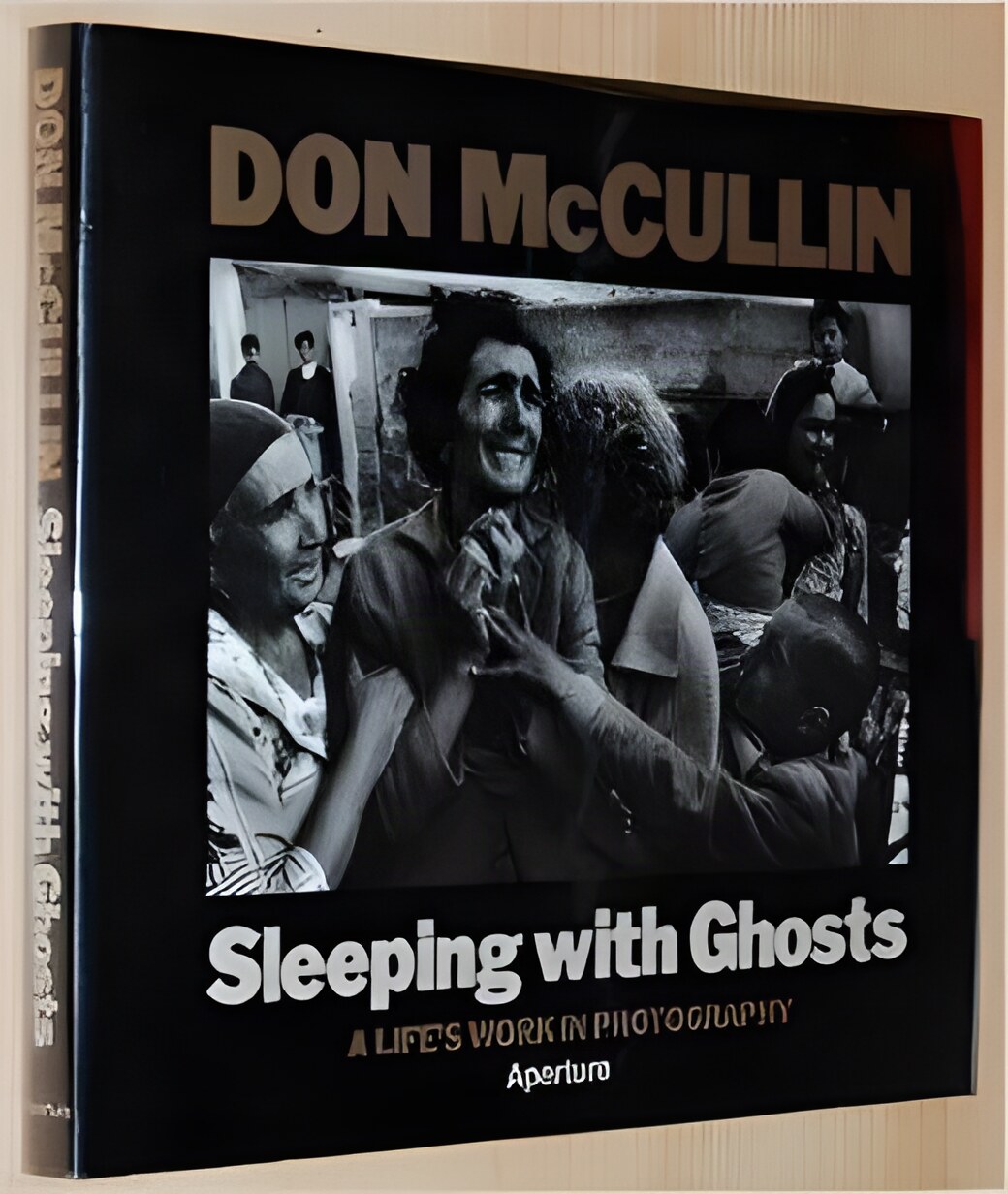
Hardcover. New York , Aperture Book, 1st, 1996, Book: Very Good, Dust Jacket: Very Good, Hardcover, 207 pages, illustrated throughout in b&w. Light yellowing to edges and light shelf-wear to dust jacket, else a clean, tight copy. This book shows the life's work of one of the most brilliant photojournalists of our time, who raised the status of his craft to that of high art. In his bestselling autobiography, Unreasonable Behavior, Don McCullin told the extraordinary and sometimes harrowing story of how he grew up in north London's gangland and graduated from poverty to stardom as the most daring and self-sacrificing reporter of wars around the world - from Cyprus to Israel, the Congo and Biafra to Vietnam, Pakistan to Cambodia, Beirut to Iraq. But his interests go far beyond the battleground in all its degradation which he has captured so brilliantly. In this book he has collected some 200 of what he considers to be his best pictures. A few have become well-known icons, many have not been seen in a book before. They depict unemployed miners collecting coal from the beach at dawn, down-and-outs in the East End, the homeless in Bradford, but they also reveal a passion for landscape, especially in the mysterious light of India, and a moving contact between human beings in a harsh environment. DUE TO WEIGHT. DOMESTIC SHIPPING ONLY
Softcover. New York, Hudson Hills, 1st, 1987, Book: Very Good, Dust Jacket: None, Softcover, 130 pages, color and b&w photographs. Exhibition catalogue dedicated to the contemporary Navajo artist and her weaving of Chant Rugs; a majority of the 83 textiles (shown in color plates) that have been selected are a well-balanced demonstration of the very finest weaving skills of any period in Navajo history.
Hardcover. Bloomington IN, Indiana University Press, 1st, 1987, Book: Very Good, Dust Jacket: None, Hardcover, green cloth stamped with gilt lettering and design. artfully explains the initial spirit and modern understanding of Tamil bhakti poetry. His fluent translations make the poems -- songs of the experience of God -- live for us as they did for their first audience nearly fifteen centuries ago. Clean, bright copy.
Softcover. Hong Kong, Christie's Inc., 1st, 2003, Book: Very Good, Dust Jacket: None, Softcover, 204 pages, photographs throughout with English and Chinese text. Very slight corner and edge wear, otherwise, very clean and tight copy.
Hardcover. NY, Rizzoli, 1st, 2008, Book: Very Good, Dust Jacket: Very Good, Hardcover in a bright dust jacket, 240 pages. A survey of the most original Southwestern Indian jewelers -- from traditional and contemporary silversmiths to exquisite lapidary artists to metalsmiths who create wearable art and objects.. Color photos by Addison Doty.
Hardcover. NY, Henry Holt, 1st, 1989, Book: Very Good, Dust Jacket: Very Good, Hardcover in a bright, price-clipped dust jacket. Twenty tales recounting the antics of the West Indian trickster ANANCY and his companions- Bro Monkey, Bro Dog and bro Tiger. Bold b/w illus. by Nigerian artist Joseph Olubo. Clean.
Hardcover. New York, Random House , 1st, 2002, Book: Very Good, Dust Jacket: Very Good, 402 pages. Cloth boards in a bright dust jacket. Clean, tight copy. The subjects of Salman Rushdie's collection of non-fiction range from The Wizard of Oz, U2, India and Indian writing, the death of Princess Diana, and football, to twentieth-century writers including Angela Carter, Arthur Miller, Edward Said, J. M. Coetzee and Arundhati Roy. In a central section, 'Messages from the Plague Years', Rushdie focuses on the fight against the Iranian fatwa, presenting texts both personal and political, which show for the first time how it was to live through those days. Rushdie's columns for the New York Times confront current issues - Kashmir, Northern Ireland, Kosovo, Islam and the West - as well as lighter topics such as reality TV, sport and sleaze. The book ends with the lectures that give it its title - Rushdie's exploration of the theme of frontiers: crossing them, breaking taboos, and - in the light of September 11 - the world of permeable frontiers in which we all live.





 "Robert Indiana: Figures of Speechby: Ryan, Professor Susan Elizabeth")
 "Robert Polidori: Eye and Iby: Polidori, Robert")

 "Roomsby: Moore, Derry")
 "Rover and Coo Cooby: John Hay/Tim Solliday")
 "Roy Lichtenstein - American Indian Encountersby: Stavitsky, Gail and Twig Johnson")

 "Rumbling Wings and Other Indian Talesby: Parker, Arthur C.")
 "Rumbling Wings and Other Indian Talesby: Parker, Arthur C.")
 "Saga of a Hoosier Boy: A Collection of Pictorial Tributes by the Contemporaries of John T. McCutcheonby: Cleveland (Ed.), Chester W.")



 "Seth Eastman: Pictorial Historian of The Indian by: McDermott, John Francis")
 "Song of the Loom, The/ New Traditions in Navajo Weavingby: Dockstader, Frederick")
 "Songs of Experience. The Poetics of Tamil Devotion by: Cutler, Norman")

 "Southwestern Indian Jewelry: Crafting New Traditionsby: Cirillo, Dexter")
 "Spiderman Anancyby: James Berry")
 "Step Across This Line - Collected Nonfiction 1992-2002by: Rushdie, Salman")