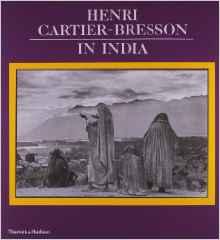
Softcover. London , Thames & Hudson, reprint, 2006, Book: Very Good, Dust Jacket: None, 128 pages. Softcover. Extensive b&w photography throughout with accompanying notes. Clean, unmarked copy with only minor wear to wrappers.
Softcover. London , Thames & Hudson, reprint, 2006, Book: Very Good, Dust Jacket: None, 128 pages. Softcover. Extensive b&w photography throughout with accompanying notes. Clean, unmarked copy with only minor wear to wrappers.
Hardcover. New York, Watson-Guptill Publications, 1st, 1978, Book: Very Good, Dust Jacket: Very Good, Hardcover in a bright, unclipped dust jacket. Quarto Format. 208 pages, 150 black-and-white and 48 colored illustrations. Notes; Bibliography; Index. Collection of paintings of the American West, primarily Native Americans. DUE TO WEIGHT, DOMESTIC SHIPPING ONLY.
Hardcover. NY, Dial, 2nd pr., 1983, Book: Very Good, Dust Jacket: Very Good, Hardcover in a bright, unclipped dust jacket, color illustrations by Susan Jeffers. Weaving together the beautiful oral traditions of the American Indian into a grand epic poem, Longfellow's renowned classic is given a stunning visual interpretation by an award-winning artist. Clean copy.
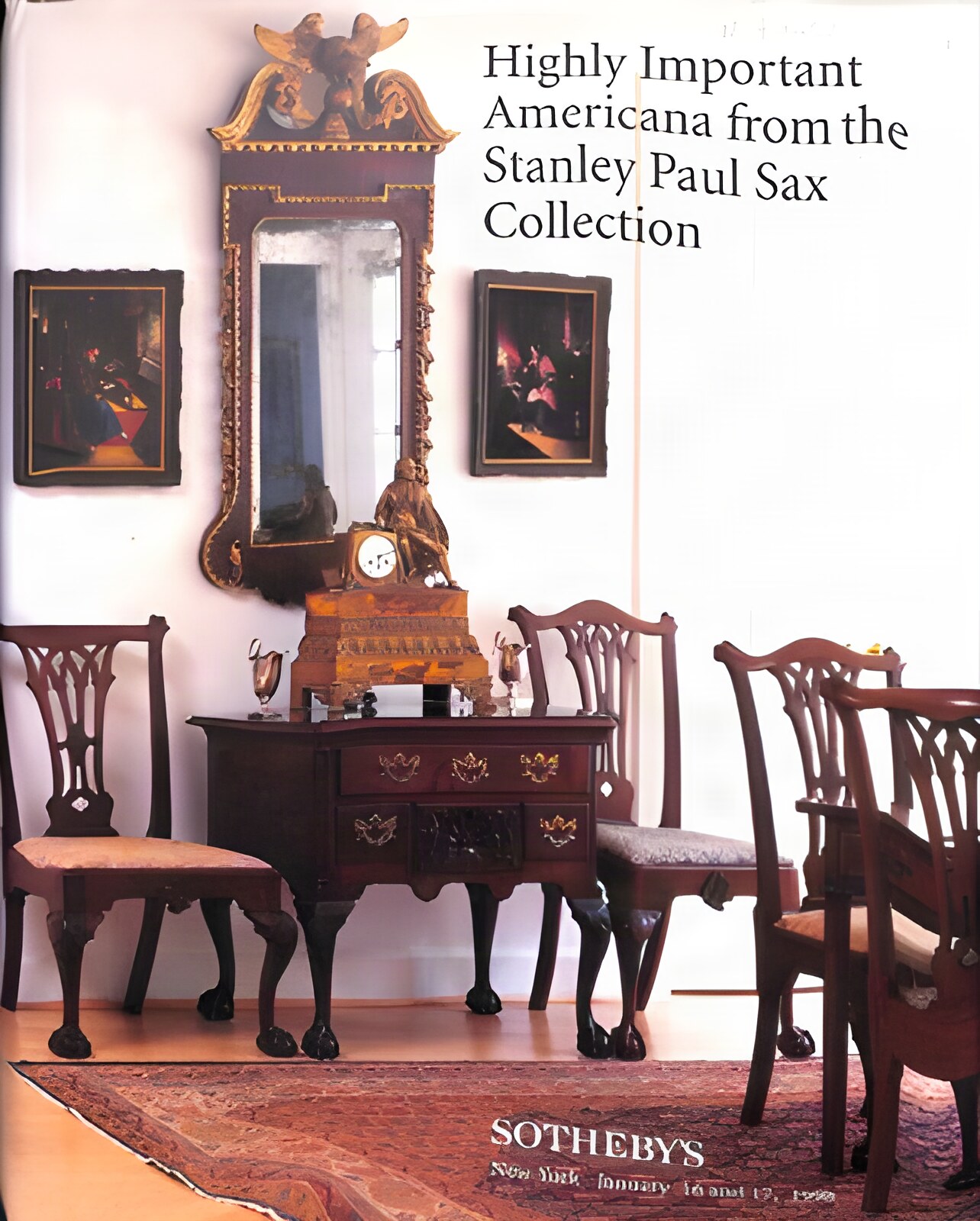
Hardcover. NY, Sotheby's New York, 1st, 1998, Book: Very Good, Dust Jacket: Very Good, Hardcover in a bright dust jacket, 579 lots, color photos throughout. Maroon cloth. Includes silver, miniatures, watches, prints and illustrations, maps, small statuary, a few paintings and marble busts, furniture, painted portraits, more furniture, clocks, chairs, Indian artifacts, more clocks, china, brassware, more furniture, a few paintings, samplers, embroidered items, carved ivory, more furniture, and some folk-art items. Lots of annotation on the more expensive items. Small dent to lower edge of front board, light shelf-wear to dust jacket, else a clean, tight copy. DOMESTIC SHIPPING ONLY.
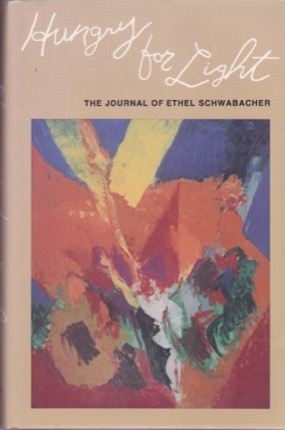
Hardcover. Bloomington IN, Indiana University Press, 1st, 1993, Book: Very Good, Dust Jacket: Very Good, Hardcover in a bright dust jacket. 263 pages,16 BW illus., 16 color plates. Takes us into the mind of American abstract painter Ethel Schwabacher (1903-1984). "Comparable to such important literary journals as those of Virginia Woolf and Anais Nin, Schwabacher's record will become a valuable resource for research into the creative process as well as the art history and theory of our time." Clean copy.
Hardcover. NY, William Morrow and Co., 1st, 1939, Book: Good, Hardcover, oblong salmon cloth-covered boards, illustrated paper label on front cover, wear to corners. Prose and poetry on eleven aspects of Pueblo Indian life, each passage accompanied by a beautiful color illustration after watercolors by Native American artists, including Allan Houser, an Apache who was the great-grandson of Geronimo and Gerald Nailor, a Navajo; both of whom studied at the Santa Fe School. Mild soil, shelfwear. No markings.
Softcover. Minneapolis, MN, The Minneapolis Institute of Arts, 1st, 1976, Book: Very Good, Dust Jacket: None, Softcover exhibition catalog. 90 pages. B&W and color illustrations throughout. Black pictorial cover with slight wear to spine and both covers. Very slight spotting to top edge. Overall, a clean, tight copy.
Softcover. Seattle, University of Washington Press, 1st, 2000, Book: Very Good, Dust Jacket: None, Softcover. Like new in publishers shrink-wrap. Chief Joseph's exhausted words of surrender, 'Hear me, my chiefs, I am tired; my heart is sick and sad. From where the sun now stands, I will fight no more forever', are the accepted end of the Nez Perce War of 1877, in which several bands of Nez Perce attempting to find a new home outside their diminished Idaho reservation clashed with the U.S. military (and occasionally other Indians) along the Clearwater and Big Hole Rivers, and finally at the foot of the Bear Paw Mountains. However, a number of Nez Perce escaped transportation to Indian Territory with Joseph and continued their flight to Canada, with perhaps a hundred eventually joining Sitting Bull's Lakota."I Will Tell of My War Story" reproduces, describes, and discusses a remarkable series of drawings by an anonymous Indian artist who fought with Chief Joseph and later reached Canada. The drawings, in red, blue, and black pencil, include portraits of principal participants in the war, battle scenes, and views of Nez Perce camp life and celebrations during the war and after. The drawings are preserved in a small pocket ledger labeled 'Cash Book' on the front, which was acquired by Indian Agent Charles D. Warner in the 1880s. It was willed by him to a family living in northern Idaho, and is now in the collection of the Idaho State Historical Society. Scott Thompson worked closely both with the owners and with members of the Nez Perce community in preparing his manuscript. Thompson's detective work and research methods to identify Nez Perce and other parties pictured in the Cash Book make fascinating reading. He is careful to point out what is speculation and what has been documented or attested to by experts on dress, weapons, ceremony, and other aspects of Native culture. The Cash Book drawings are unique in several ways. They are one of very few firsthand pictorial records of the Nez Perce War, representing an even scarcer record of this war as seen from the Indian viewpoint. They contain invaluable historical and ethnographic information not only explicit in the form of military and Native dress, regalia, and quite graphic battle scenes, but also implicit. The drawings reveal an important stage of cultural adaptation as shown by the mixture of white and Native goods combined in Nez Perce material culture during the 1870s and 1880s, and by the artist's assimilation of white/European drawing techniques such as texture and perspective. The artist combined these drawing techniques with Native art traditions to make exceptionally effective pictorial communications. Scott M. Thompson is an art teacher at Chase Middle School in Spokane, Washington.
Hardcover. New York, George Braziller, 1st, 1974, Book: Very Good, Dust Jacket: Good, 189 pages. Hardcover. Black & white illustrations. Dust jacket with spine fading, light wear at corners, edges. Clean, tight copy.
Softcover. Bangor ME, Bangor and Aroostook Railroad , 1st, 1941, Book: Very Good, Dust Jacket: None, Softcover. Published by the Bangor and Aroostook Railroad, this wonderfully evocative magazine brings the unspoiled Maine woods of pre-World War II back to life. The magazine has articles on a variety of topics, including camping, canoeing, Indian relics, Maine guides, Moosehead Lake and climbing Mt. Katahdin. Illustrated throughout with black and white photos designed to make you drop everything and head North. With canoeing map, list of big game records for 1940, Sportsman's Directory of camps, hotels and fishing waters reached by the railroad and 39 pages of vintage advertisements. 128 pages. Light edgewear, small name on first page, otherwise clean.
Hardcover. Chicago, A. C. McClurg and Co., reprint, 1934, Book: Very Good, Dust Jacket: None, 213 pages, 254 illustrations in color and b&w. First published in 1914, this is the 1934 reprint. Light yellow cloth with two-color design. Previous owner's signature, date on front fly leaf. Otherwise clean, very good.
Softcover. Rutland VT, Charles E. Tuttle, 1st, 1959, Book: Very Good, Dust Jacket: None, Thick card covers with integral color printed dust jacket, 32 pages, on thick art paper, 12 large tipped-in plates - 2 b/w and 10 color. Clean, bright copy.
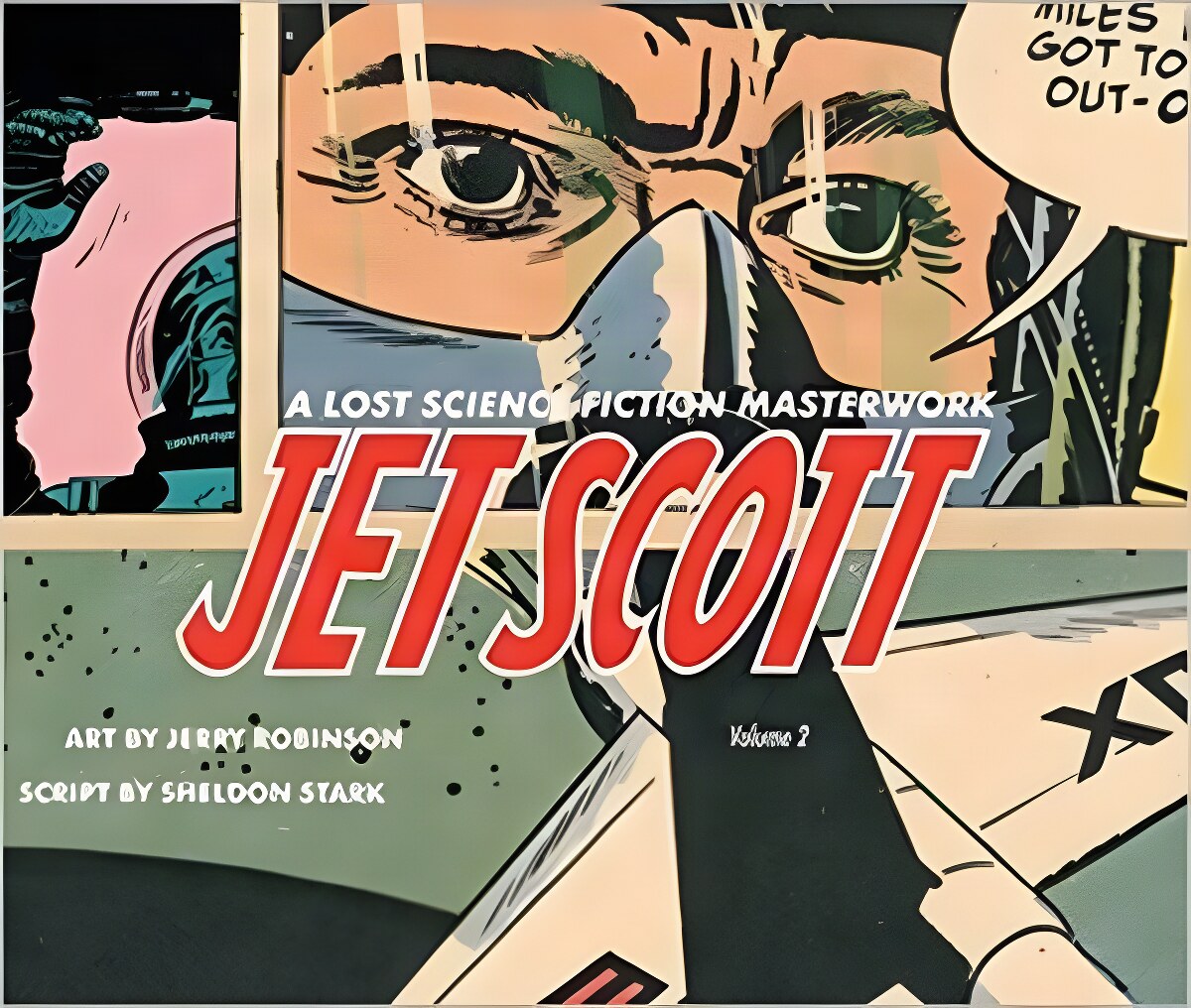
Hardcover. Dark Horse, 1st, 2010, Book: Very Good, Dust Jacket: Very Good, Hardcover, 256 pages. Volume 2 of the collected strip from the 1950s. This is a lost gem of American comic strips. Jerry Robinson's fluid style and supreme draftsmanship are on full display here. Fun, fast-paced stories of a character who's part Bill Nye, part Indiana Jones. The highlight of this discovery is seeing how Robinson played with his own style, slightly altering it to suit each story.
Hardcover. New Haven CT, Yale University Press;, 1st, 2009, Book: Very Good, Dust Jacket: Very Good, Hardcover, 180 pages. John Gutmann (1905-1998) was one of America's most distinctive photographers. Born in Germany where he trained as an artist and art teacher, he fled the Nazis in 1933 and settled in San Francisco, reinventing himself as a photo-reporter. Gutmann captured images of American culture, celebrating signs of a vibrant democracy, however imperfect. His own status as an outsider--a Jew in Germany, a naturalized citizen in the United States--informed his focus on individuals from the Asian-American, African-American, and gay communities, as well as his photography in India, Burma, and China during World War II. This handsome book acknowledges Gutmann's place in the history of photography. Drawing on his archive of photographs and papers at the Center for Creative Photography, it presents both unfamiliar works and little-known contexts for his imagery, linking his photography to his passionate interest in painting and filmmaking, his collections of non-Western art and artifacts, and his pedagogy. In addition to a major essay by Sally Stein, the volume includes an introduction by Douglas R. Nickel, and an overview of the Gutmann archive by Amy Rule.
Hardcover. New Haven CT, Yale University Press;, 1st, 2009, Book: Very Good, Dust Jacket: Very Good, Hardcover, 180 pages. John Gutmann (1905-1998) was one of America's most distinctive photographers. Born in Germany where he trained as an artist and art teacher, he fled the Nazis in 1933 and settled in San Francisco, reinventing himself as a photo-reporter. Gutmann captured images of American culture, celebrating signs of a vibrant democracy, however imperfect. His own status as an outsider--a Jew in Germany, a naturalized citizen in the United States--informed his focus on individuals from the Asian-American, African-American, and gay communities, as well as his photography in India, Burma, and China during World War II. This handsome book acknowledges Gutmann's place in the history of photography. Drawing on his archive of photographs and papers at the Center for Creative Photography, it presents both unfamiliar works and little-known contexts for his imagery, linking his photography to his passionate interest in painting and filmmaking, his collections of non-Western art and artifacts, and his pedagogy. In addition to a major essay by Sally Stein, the volume includes an introduction by Douglas R. Nickel, and an overview of the Gutmann archive by Amy Rule.
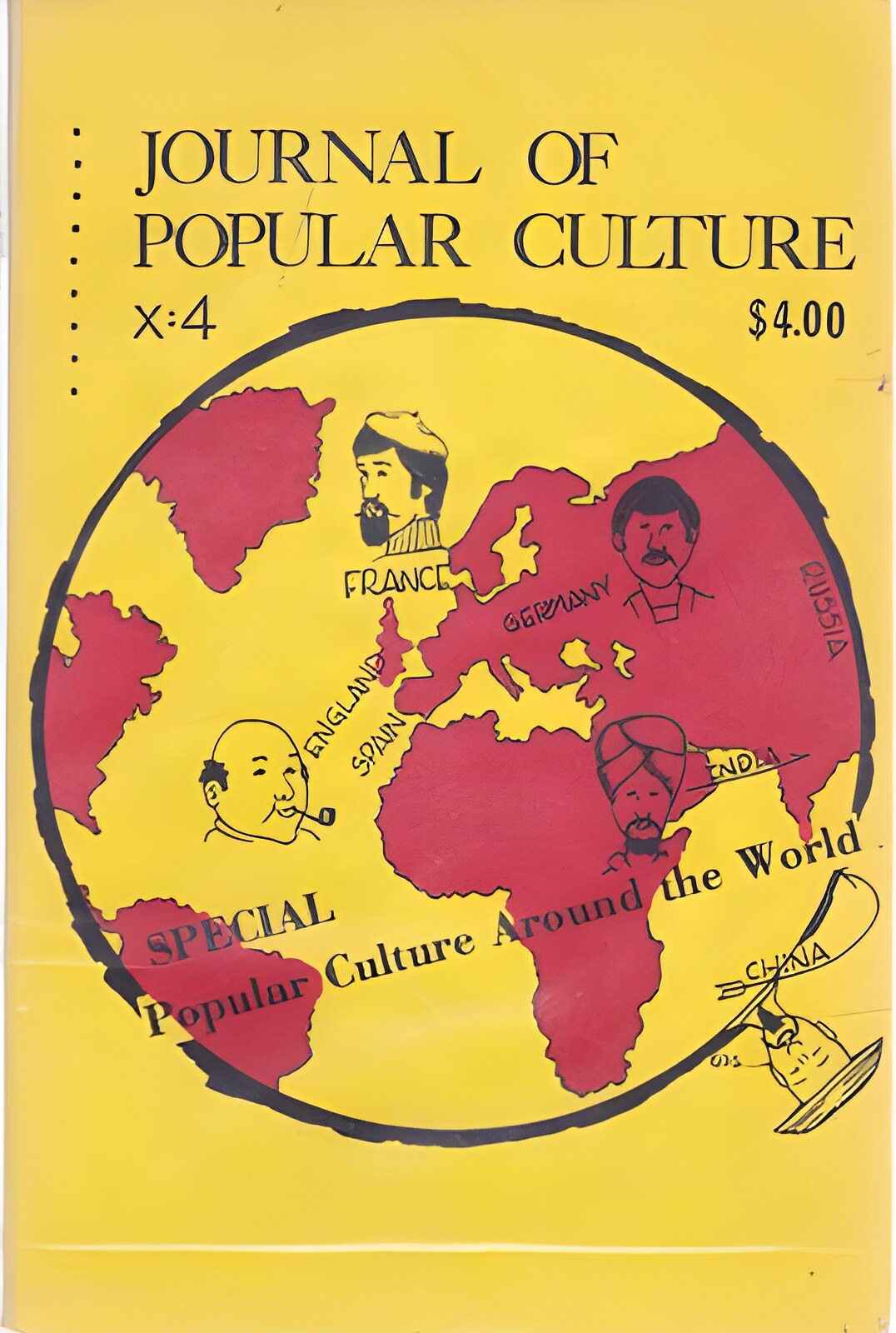
Softcover. Bowling Green OH, Journal of Popular Culture, 1st, 1977, Book: Very Good, Dust Jacket: None, Softcover, pages 701-909. Articles include: Philip Gordon on Ayn Rand. Louis F. Helbig on Struwwelpeter: an inquiry into the effects of violence in children's literature. French folk songs. D. L. Ashliman on the American Indian in German Travel Narratives and Literature. Clean.
Hardcover. New York , Metropolitan Books, 1st US, 2012, Book: Very Good, Dust Jacket: None, Hardcover, 191 pages, illustrated throughout in color and b&w. Clean, unmarked copy in excellent condition. Over the past decade, Joe Sacco has increasingly turned to short-form comics journalism to report from conflict zones around the world. Collected here for the first time, Sacco's darkly funny, revealing reportage confirms his standing as one of the foremost war correspondents working today. Journalism takes readers from the smuggling tunnels of Gaza to war crimes trials in The Hague, from the lives of India's "untouchables" to the ordeal of Saharan refugees washed up on the shores of Malta. And in pieces never published before in the United States, Sacco confronts the misery and absurdity of the war in Iraq, including the darkest chapter in recent American history-the torture of detainees.
Softcover. New York, Princeton Architectural Press, 1st, 2006, Book: Very Good, Dust Jacket: None, 192 pages. Softcover. A very clean, unmarked copy with only minor wear to edges. Black and white portraits of citizens of Indiana, taken over 4 decades.
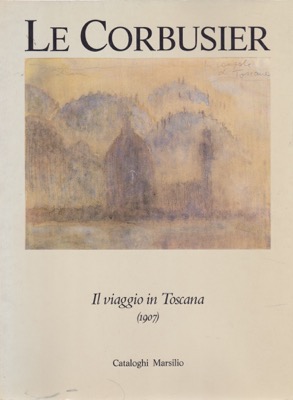
Softcover. Venice, Cataloghi Marsilio, 1st, 1987, Book: Very Good, Dust Jacket: None, Softcover, 140 pages. TEXT IN ITALIAN. A catalog of drawings and architectural watercolor sketches done by Le Corbusier on a trip to Italy in 1907. His career spanned five decades, with his buildings constructed throughout Europe, India, and America. He was a pioneer in studies of modern high design and was dedicated to providing better living conditions for the residents of crowded cities. (1907) - Catalogo della Mostra. Clean copy.
Softcover. London, Hamish Hamilton Ltd., Reprint, 1988, Book: Very Good, Dust Jacket: None, 454 pages. Softcover with moderate wear to edges, creases to cover & spine. Light foxing throughout & to top edge. Toning to edges. Includes drawings in bw by the author, decorating his letters, memoirs. Over 20 additional portraits in black & white. Clean copy.
Hardcover. NY, Grosset & Dunlap, 1st, 1934, Book: Very Good, Dust Jacket: Good, Hardcover in a bright, unclipped dust jacket with minor soil, tape repair. Frontispiece illustrated by Lee Haynes. Many illustrations in b/w, a few indicate B. Stevenson as artist, the rest are not specifically identified. Illustrated end papers. The story of the life of an Indian boy- his adventures are closely interwoven with the habits, customs and beliefs of his people.
Hardcover. New York, D.A.P.//La Fabrica , 1st, 2013, Book: Very Good, Dust Jacket: Very Good, Hardcover, 192 pages. Like new in publisher's shrink-wrap. America's first female war correspondent, Margaret Bourke-White was also something of a media star, with the portrait of her decked out in flying gear, camera in hand, about to set off on a bombing raid, being a favorite pin-up among U.S. forces. Focusing on the work Bourke-White made in the 1930s and 40s in Czechoslovakia, Germany, Italy, the Soviet Union and the U.K., Moments in History presents 150 classic photographs alongside revelatory extracts from letters and publications in periodicals. Bourke-White traveled to the USSR when the first Five-Year Plan was being implemented; she documented the German invasion of the Soviet Union in 1941, and the Allied bombing of Germany. In the summer of 1945 she was commissioned by Life to make a photographic record of the destroyed German cities. She was present at the liberation of the Buchenwald concentration camp and the Leipzig-Thekla forced labor camp. She recorded the partition of India and the Korean War, and one of her most famous pictures of this period is "Gandhi," which shows the subject at his spinning wheel. Also included in the catalogue are some of the word-picture sequences Bourke-White did for Fortune and Life, as well as extracts from her correspondence with personalities from the worlds of politics and culture, such as Winston Churchill and Georgia O'Keeffe. Bourke-White wanted to be the "eyes of the age," and her pictures testify to (as she put it) her "unquenchable desire to be present when history is being made."
Hardcover. Bloomington, IN, Indiana University Press, 1st, 2016, Book: Very Good, Dust Jacket: Very Good, 152 pages. Hardcover with dust jacket. A very clean, unmarked copy with only minor wear to dust jacket edges. A tight copy. As a photographer for Life and Fortune magazines, Margaret Bourke-White traveled to Russia in the 1930s, photographed the Nazi takeover of Czechoslovakia in 1938, and recorded the liberation of Buchenwald at the end of WWII. In 1949, Life sent her to South Africa to take photographs in a country that was becoming racially polarized by white minority rule. Life published two photo-essays highlighting Bourke-White's photographs, but much of her South African work remained unpublished until now. Here, these stunning photographs collected by Alex Lichtenstein and Rick Halpern offer an unparalleled visual record of white domination in South Africa during the early days of apartheid. In addition to these powerful and historically significant photographs, Lichtenstein and Halpern include two essays that explore Bourke-White's artistic and political formation and provide background material about the cultural, political, and economic circumstances that produced the rise and triumph of Afrikaner nationalism in South Africa. This richly illustrated book brings to light a large body of photography from a major American photographer and offers a compelling history of a reprehensible system of racial conflict and social control that Bourke-White took such pains to document.

 "Henri Cartier-Bresson in Indiaby: Cartier-Bresson, Henri")
 "Henry Farnyby: Carter, Denny")
 "Hiawathaby: Henry Wadsworth Longfellow/ Susan Jeffers")

 "I Wear the Morning Star: An Exhibition of American Indian Ghost Dance Objectsby: Peterson(Ed.), Harold")
 "I Will Tell of My War Story: A Pictorial Account of the Nez Perce War (Samuel and Althea Stroum Book)by: Thompson, Scott M.")
 "Image of the Indian and the Black Man in American Art, 1590-1900, Theby: Parry, Ellwood")

 "Indian Blankets and Their Makersby: James, George Wharton")

 "John Gutmann: The Photographer at Workby: Sally Stein , Douglas R. Nickel, et al.")
 "John Gutmann: The Photographer at Workby: Sally Stein , Douglas R. Nickel, et al.")
 "Journalismby: Sacco, Joe")
 "Laporte, Indianaby: Bitner, Jason")
 "Letters of Edwin Lutyens to His Wife, Lady Emily, Theby: Lutyens, Edwin/Clayre Percy & Jane Ridley (Editors)")


 "Little Indian (Little Indian Series) by: Cory, David")
 "Margaret Bourke- White: moments in historyby: Quimby, Sean")
 "Margaret Bourke-White and the Dawn of Apartheidby: Lichtenstein, Alex")