Hardcover. NY, Rizzoli, 1st, 2006, Book: Very Good, Dust Jacket: Very Good, Hardcover, 384 pages, profusely illustrated in color and b&w. This thought-provoking volume transports readers to France of the eighteenth, nineteenth, and twentieth centuries, beginning with Napoleon's love of perfume and the erotic importance he attached to it, through the lore and symbolism fragrance enjoyed in eighteenth and nineteenth-century Europe. By the early twentieth century, perfume's place as one of France's most important luxury industries was recognized and celebrated, and timeless fragrances--such as Chanel No. 5, Shalimar, Arpeges, and Joy--were launched. The distinctive bottles for these new essences and the art movements that inspired their design are detailed throughout the book, as are paintings, poetry, and literature that reveal the power of perfume and its ability to recall the past and evoke sensuality. According to nineteenth-century perfumer Eugene Rimmel, "the history of perfume is, in some manner, the history of civilization." Through fascinating text accompanied by gorgeous imagery, including packaging, labels, and advertisements, Perfume: Joy, Scandal, Sin explores perfume's impact on history, culture, society, art, and attitudes.
Hardcover. New York, Charles Scribner's Sons, 1st Edition, 1907, Book: Very Good, Dust Jacket: None, Hardcover. 126 pages plus 50 plates. Vivid color illustrated tipped-in plates (vibrant, excellent condition) with captioned tissue guards, as well as b/w illustrations throughout. Plates glued to brown heavy stock. Cover boards bound in green cloth, gilt title on spine, gilt title and design embossed on front cover board. Some light spotting to boards and spine, bump to front cover board's right top corner (see image). Binding tight. Spine straight. Pages quite bright and unmarked. Scarce. In Peter Pan in Kensington Gardens, J.M. Barrie first created Peter Pan as an infant, living a wild and secret life with birds and fairies in the middle of turn of the century London. This edition is beautifully illustrated by Rackham, one of the leading figures of the Golden Age of British book illustration.
Softcover. New York, Fromm International Publishing Corporation, 1st, 1994, Book: Very Good, Dust Jacket: None, 340 pages. Softcover. B/w illustrations throughout. Very clean copy, inside and out. From the back cover: "...a wickedly peceptive and daring book. It is also that worst of present-day literary evils, a real work of literature." This fresh and vivid portrait of the postwar Paris art world, written by a member of Picasso's circle, sheds original new light on the greatest of modern artists and on the most important and least-known of his loves, the alluring and formidable photographer and painter Dora Maar.
Softcover. Jerusalem/NY, Shalem Press, 1st, 2008, Book: Very Good, Dust Jacket: None, Softcover, 287 pages. Between the 16th and 18th centuries, European political philosophy felt intimately at home with the Hebrew Bible, enjoyed some familiarity with later Jewish texts and exegeses, and accommodated a small number of Jews within its political discourse. The period was characterized by a search for Hebraica Veritas, a view of De Republica Hebraeorum as the idealized polity, and biblical and Jewish ideas permeating the political imagination through art, literature, and legal codes. This volume is comprised of papers from the first ever international conference on political Hebraism held in Jerusalem in August 2004 under the auspices of the Shalem Center. The topic of political Hebraism is broached here from a number of approaches, including historical, literary, philosophical, theological, critical, and sociopolitical.
Hardcover. New York, NYUP, 1st, 1969, Book: Very Good, Dust Jacket: Very Good, Hardcover. 208 pages of text followed by a ection of corresponding black & white illustrations. Titian's fame as the greatest colorist in the history of painting has led students of his art to concentrate on problems of style and authenticity rather than on problems of content and meaning. Dr. Panofsky treats this neglected aspect of the Venetian master's work with a wealth of humanistic scholarship, exploring such varied topics as Titian's relationship to the philosophy and literature of his time, his attitude toward the antique, and the reasons behind his unrivaled acclaim as a portraitist. These studies show Titian to have been a man of far richer and more complex culture than hitherto assumed, possessed not only of the supremely gifted hand but of a subtle and poetic mind.Light wear. Clean, tight copy.
Softcover. Costa Mesa CA, Mazda Publishers, 1st, 1999, Book: Very Good, Dust Jacket: None, Softcover, 134 pages. The history of Iran is a subject attracting increasing interest, and in it the history of the Qajar period, here dated 1796-1925, occupies a pivotal transitional place. The Qajar rulers reunited Iran after a century of weakness and division, and helped create modern Iran and its response to western power. Although the Qajars were not great reformers, their period saw the development of many new trends of thought, ranging from new religious ideas and groups to the adapting of modern ideas to Iranian circumstances. This book covers intellectual trends and equally it covers the political and socioeconomic history of Iran, including the growth of western incursions and control, which led to social, economic, and political disruptions and helped lead to a major revolution that gave Iran a modern constitution. Later developments culminated in a modernizing central government under the Pahlavi shahs. The period 1796-1925 saw a flowering of Iran's visual arts, politically oriented literature, popular culture, and crafts and carpets, and the beginnings of photography and film. The book interprets all these developments as part of a readable and comprehensible history of a period that helped bring Iran into the modern world while continuing its cultural greatness. Clean copy.
Hardcover. Princeton University Press, 1st, 2025, Book: Very Good, Dust Jacket: None, Original pictorial boards (in publisher's unopened shrinkwrap). 280 pages illustrated in b&w and color. Alice Friedman tells the fascinating story of the queer avant-garde of the 1920s and '30s in New York, Paris, and Venice, as seen through the eyes of Max Ewing (1903-1934), a young musician, photographer, and man-about-town who, although virtually unknown today, moved in extraordinary circles. Among his friends and acquaintances, he listed Carl Van Vechten, Gertrude Stein, Muriel Draper, Romaine Brooks, Tallulah Bankhead. In his photographs and letters, we meet the rising stars of modern art, music, dance, and literature and enter a world of interracial friendship, "queer space," and experimentation that shone brightly before being swept away by the Depression.
Hardcover. London, Arthur Baker, 1st, 1952, Book: Very Good, Dust Jacket: Poor, Hardcover in a poor, worn dust jacket with a large chunk gone from front panel. Book is bright and clean, 180 pages. Illustrated with color and b&w plates by John Leech. A biography of the novelist who wrote of country sports like hunting in a comical way.
Hardcover. Twayne Publishers, 1st, 1992, Book: Very Good, Dust Jacket: Very Good, Hardcover in a bright, unclipped dust jacket, 177 pages. Perhaps the most significant and influential figure in this century's wave of American realism, Raymond Carver (1938-1988) is credited not only with reviving the short story as an artistically legitimate form, but also with perfecting minimalist fiction. Moving chronologically through Carver's complete short fiction canon and examining key stories in depth, Ewing Campbell traces the author's development through and beyond literary minimalism, into the tradition of tragic allegory. He explores Carvers persistent use of myth and archetype; motifs of the grotesque; religious iconography; and oppressed, spiritually paralyzed characters. From the earliest stories through the latest, Campbell illuminates Carvers constant fascination with the way individuals connect or fail to connect with one another. Clean copy.
Hardcover. Hatje Cantz, 1st, 2013, Book: Very Good, Dust Jacket: None, Hardcover with illustrated boards, 212 pages. Since the late 1970s, as a pioneer of Southern California underground culture, Raymond Pettibon has blurred the boundaries of "high" and "low," from the deviations of marginal youth to art history, literature, sports, religion, politics and sexuality. Rich in detail, his obsessively worked drawings pull freely from myriad sources spanning the cultural spectrum. The resulting, highly poetic constructions function as acute reflections of contemporary society. Throughout the years, his subjects have included political figures and historical events, with particular intensity since the events of September 11, 2001. Seen here are images of Ronald and Nancy Reagan, J. Edgar Hoover, both Bush presidents, the Kennedys, Hitler, scenes from the Vietnam War and protest movements, wars in Iraq and Afghanistan, the prisoner abuse of Abu Ghraib, President Obama and Osama bin Laden. Raymond Pettibon (born 1957) studied economics at UCLA around the same time he joined his brother in the punk band Black Flag. He soon began to contribute artwork to album covers, flyers and t-shirts, for the band and its label, SST Records, and exhibited his work in group shows in galleries in the 1980s. Since the 1990s his work has been the subject of numerous major solo exhibitions.
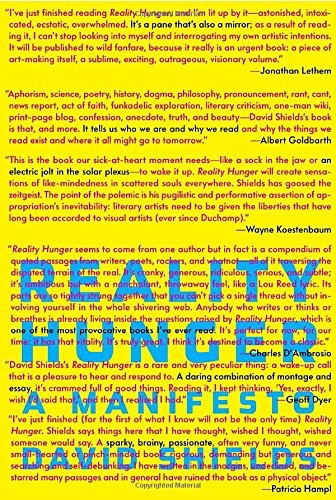
Hardcover. New York, Knopf, 1st, 2010, Book: Very Good, Dust Jacket: Very Good, Hardcover, 219 pages. Clean, bright copy. "I doubt very much that I'm the only person who's finding it more and more difficult to want to read or write novels," David Shields acknowledges in Reality Hunger, then seeks to understand how the conventional literary novel has become as lifeless a form as the mass market bodice-ripper. Shields provides an ars poetica for writers and other artists who, exhausted by the artificiality of our culture, "obsessed by real events because we experience hardly any," are taking larger and larger pieces of the real world and using them in their work. Reality Hunger is made of 600-odd numbered fragments, many of them quotations from other sources, some from Shields's own books, but none properly sourced--the project being not a treasure hunt or a con but a good-faith presentation of what literature might look like if it caught up to contemporary strategies and devices used in the other arts, and allowed for samples (that is, quotation from art and from the world) to revivify existing forms. Shields challenges the perceived superiority of the imagination and exposes conventional literary pieties as imitation writing, the textual equivalent of artificial flavoring, sleepwalking, and small talk. I can't name a more necessary or a more thrilling book.
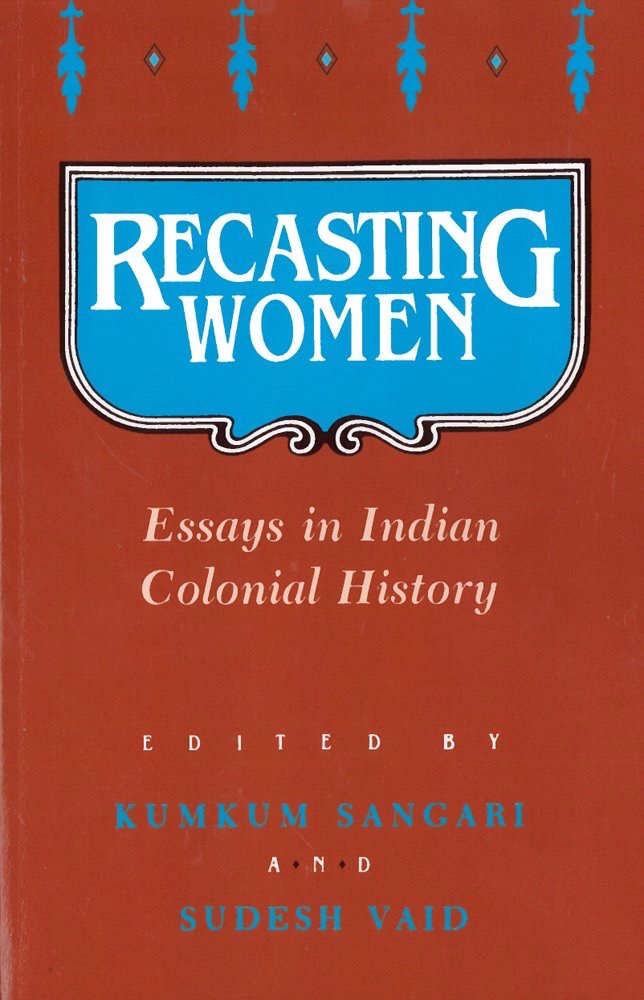
Softcover. New Brunswick NJ, Rutgers University Press, 1st pbk., 1990, Book: Very Good, Dust Jacket: None, Softcover, 372 pages. The first set of essays seeks to analyze the patriarchal discourses of a colonial society and includes an analysis of the shaping of Hindu-Aryan identity, the parameters of the discourse on widow-immolation, the "defeminization" of popular culture in nineteenth-century urban Calcutta, the nature of the reforms proposed by early women's journals in Hindi, and the implications of the nationalist movement and of Indo-Anglian literature on middle-class patriarchal norms. The second set of articles relates to women of the productive classes--the reconstitution of patriarchies in the agrarian transition in Haryana, in the Oudh peasant movement, in the armed peasant struggle in Telangana, and among the working class in Bengal. The contributors explore the interrelation of patriarchies with political economy, law, religion, and culture, and suggest a different history of "reform" movements, and of class and gender relations. Clean copy.
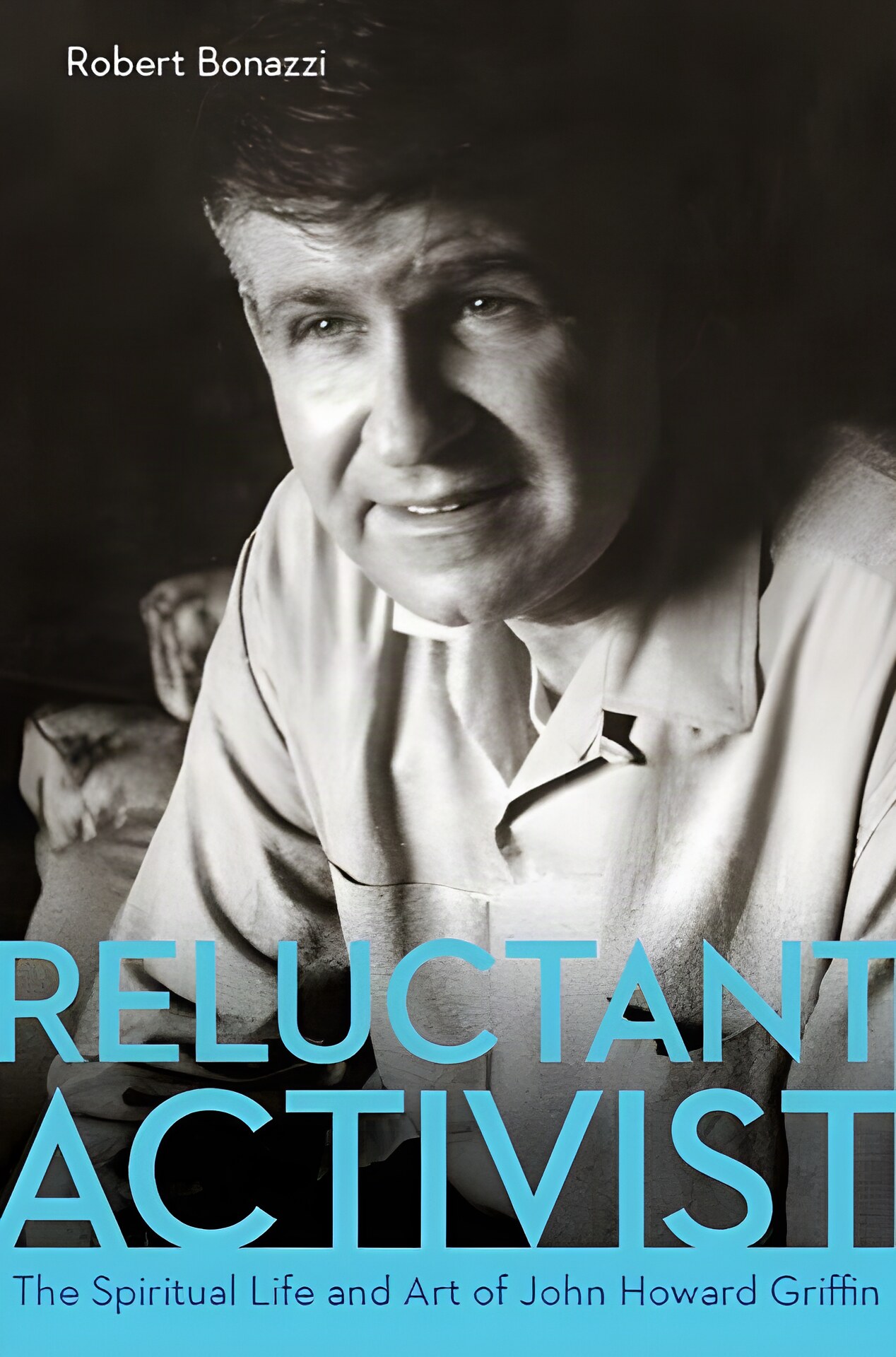
Softcover. Ft., Texas Christian University, 1st, 2018, Book: Very Good, Dust Jacket: None, Softcover, 435 pages. INSCRIBED BY BONAZZI on the title page. This authorized biography by Robert Bonazzi, is based on John Howard Griffin's Journals from 1950-1980. Griffin was blinded in the South Seas during WWII, but regained sight in 1957, after which he wrote the classic Black Like Me. Bonazzi follows Griffin year by year after 1961, when Griffin toured the globe as a lecturer on human rights.
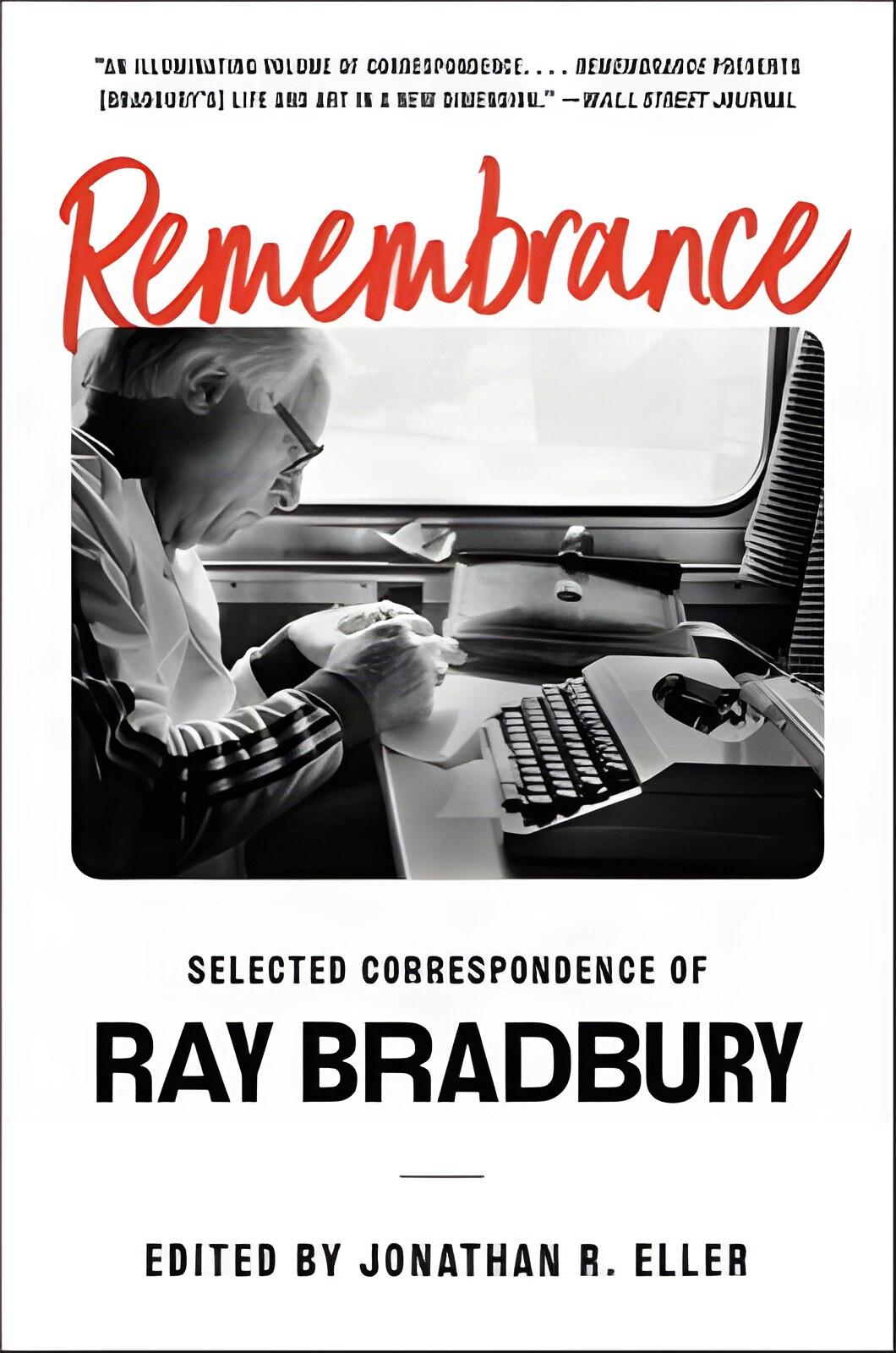
Hardcover. NY, Simon & Schuster , 1st, 2023, Book: Very Good, Dust Jacket: Very Good, Hardcover in a bright, unclipped dust jacket, 509 pages. Remembrance offers the first sustained look at the author's life in letters from his late teens to his ninth decade. Bradbury's correspondence was far-reaching--he interacted with a rich cross-section of 20th-Century cultural figures, writers, film directors, editors, and others who simply wanted insights or encouragement from a writer who had enriched their lives through his stories and novels. Bradbury scholar and biographer, Jonathan R. Eller, organized this volume into categories of correspondents, showing Bradbury's progression through life as he knew it, and not necessarily as the public perceived him. Letters to and from mentors and other writers are followed by correspondence with such film directors as John Huston, Francois Truffaut, and Federico Fellini. Letters with publishers and agents are followed by letters that capture moments of national and international recognition, the shadows of war and family members who shared the memories of his life. Among the writers whose letters illuminate Remembrance are Theodore Sturgeon, Sir Arthur C. Clarke, Twilight Zone writers Charles Beaumont and Richard Matheson, Dan Chaon, Bernard Berenson, Nobel Laureate Bertrand Russell, Graham Greene, Anais Nin, Gore Vidal, Carl Sandburg, and Jessamyn West. Clean copy.
Hardcover. NY, Twayne Publishers, 1st, 1996, Book: Very Good, Dust Jacket: Very Good, Hardcover in a bright dust jacket, 162 pages. The first full-length critical treatment of this significant and neglected figure in American realism. Arguing that raw naturalism and subtle craftsmanship - seemingly incompatible qualities join to make Yates one of the most accomplished writers of the post - World War II period, the authors provide a comprehensive survey of his life and work. An introductory chapter outlines the historical, literary, and social contexts important to Yates's writings, comparing him, for example, with his contemporaries Philip Roth and Mary McCarthy and articulating strong lines of continuity between his themes and the ideas of the French historian Alexis de Tocqueville, the Marxist-oriented socialist C. Wright Mills, and the social theoretician Erving Goffman. Next a thorough biographical portrait illuminates Yates's obsession with the American middle class and its dislocated, disordered, and psychologically stifled populace, followed by sharp readings of the novels and story collections, including unfinished and minor works. Clean copy.
Hardcover. Milwaukee WI, Amadeus, 1st, 2016, Book: Very Good, Dust Jacket: Very Good, Hardcover in a bright dust jacket, 406 pages, illustrations. INSCRIBED by co-editor Malcolm Crocker. A rare, revealing look at the composer, written by his granddaughter Tatiana. Featuring a wealth of correspondence and photographs from his family's archives, this book provides new, fascinating details about the composer's life, work, and relations with close friends and colleagues, including Borodin, Mussorgsky, and Tchaikovsky. It also sheds new light on his wife, Nadezhda Purgold, an accomplished composer and pianist who helped her husband with his own compositions. Many letters involve Rimsky-Korsakov's other family members and important figures in art, history, literature, and music of the late 19th and early 20th centuries. Clean copy.
Hardcover. teNeues, 1st, 2017, Book: Very Good, Dust Jacket: Very Good, Hardcover, 216 pages. Photographer Edward Quinn chronicles the sweet life of the French Riviera in the 1950s and 60s in this homage to the stylish celebrities who lived and loved on this chic coastline. Born in Dublin in 1920, Edward Quinn played Hawaiian guitar in Belfast, then went into the Royal Air Force. He eventually made his way to the Cote d'Azur, where he photographed world leaders, glamour girls and playboys, as well as figures from the worlds of art, music and literature. His most memorable work included images of an unknown Audrey Hepburn, Grace Kelly's first meeting with Prince Rainier, and a precocious Brigitte Bardot. His exacting eye showcased Picasso, T.S. Eliot, and Gary Cooper. With a polished technique and great patience and charm, Quinn caught some of the post-war Riviera's most memorable moments.
Hardcover. New Haven, Yale University Press, 1st, May 11, 2000, Book: Very Good, Dust Jacket: Very Good, Hardcover, 303 pages, illustrated throughout. Very clean and tight copy. Although lumped together with Pop artists such as Roy Liechtenstein and Andy Warhol, and often the movement's spokesperson, Indiana and his paintings actually have an uneasy fit in Pop company, mostly because his work isn't grounded in the commodity-oriented (Campbell Soup) realism of most Pop Art. Instead, his work engages with literature and poetry and with the popular rhetoric of the American dream-all permeated by the particularities of his upbringing and life. Ryan's dual accomplishments are in articulating the dynamics of Indiana's art-especially the connections between the artworks and the sources of imagery and themes in his own biography-and in rendering a sophisticated and judicious roundup of the Pop Art movement.
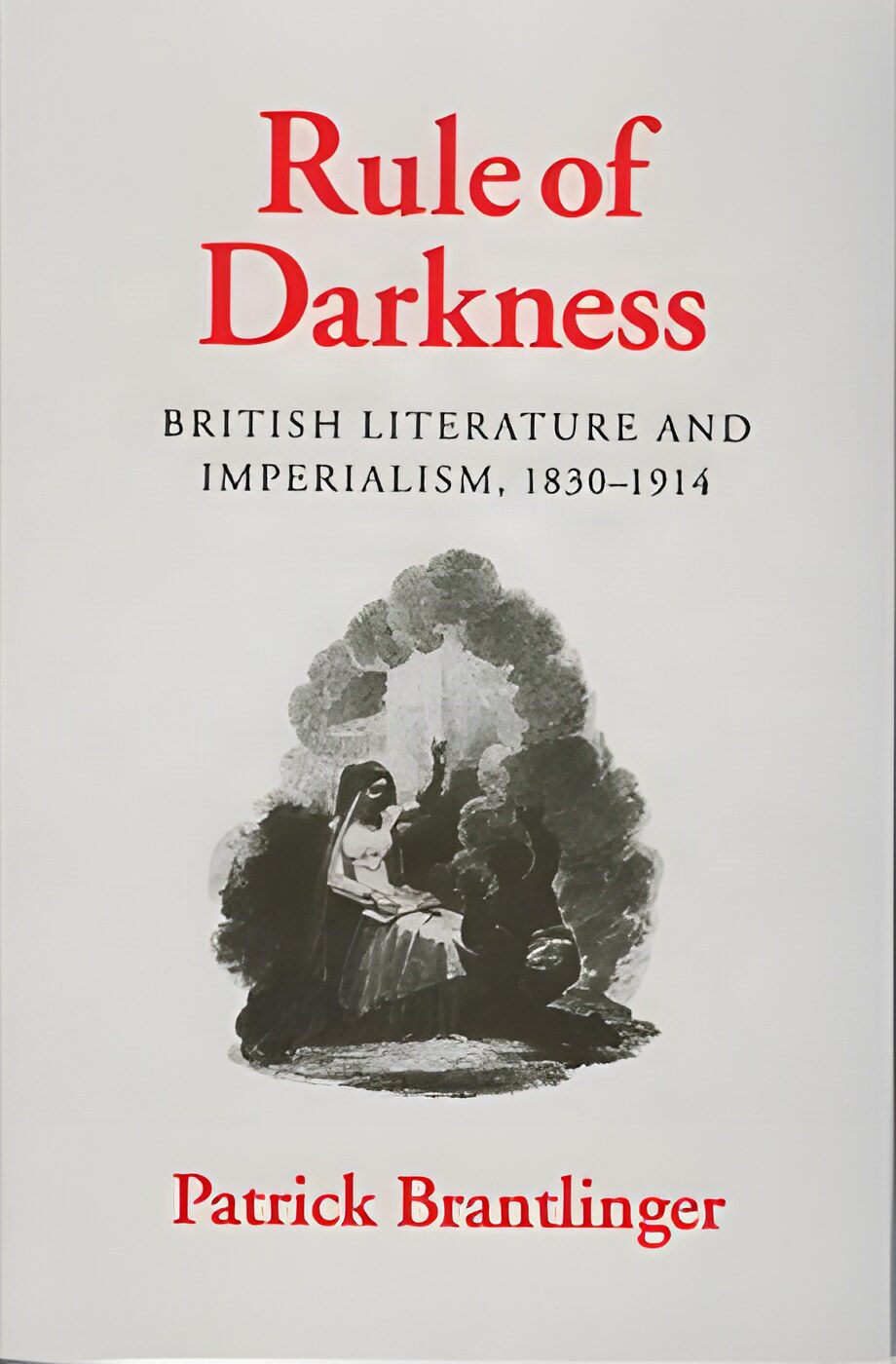
Softcover. Ithaca NY, Cornell University Press, reprint, 1990, Book: Very Good, Dust Jacket: None, Softcover, 309 pages. A major contribution to the cultural and literary history of the Victorian age, Rule of Darkness maps the complex relationship between Victorian literary forms, genres, and theories and imperialist, racist ideology. Critics and cultural historians have usually regarded the Empire as being of marginal importance to early and mid-Victorian writers. Patrick Brantlinger asserts that the Empire was central to British culture as a source of ideological and artistic energy, both supported by and lending support to widespread belief in racial superiority, the need to transform "savagery" into "civilization," and the urgency of promoting emigration. Rule of Darkness brings together material from public records, memoirs, popular culture, and canonical literature. Brantlinger explores the influence of the novels of Captain Frederick Marryat, pioneer of British adolescent adventure fiction, and shows the importance of William Makepeace Thackeray's experience of India to his novels. He treats a number of Victorian best sellers previously ignored by literary historians, including the Anglo-Indian writer Philip Meadows Taylor's Confessions of a Thug and Seeta. Brantlinger situates explorers' narratives and travelogues by such famous author-adventurers as David Livingstone and Sir Richard Burton in relation to other forms of Victorian and Edwardian prose. Through readings of works by Arthur Conan Doyle, Joseph Conrad, H. Rider Haggard, Rudyard Kipling, John Hobson, and many others, he considers representations of Africa, India, and other non-British parts of the world in both fiction and nonfiction. Clean, bright copy.
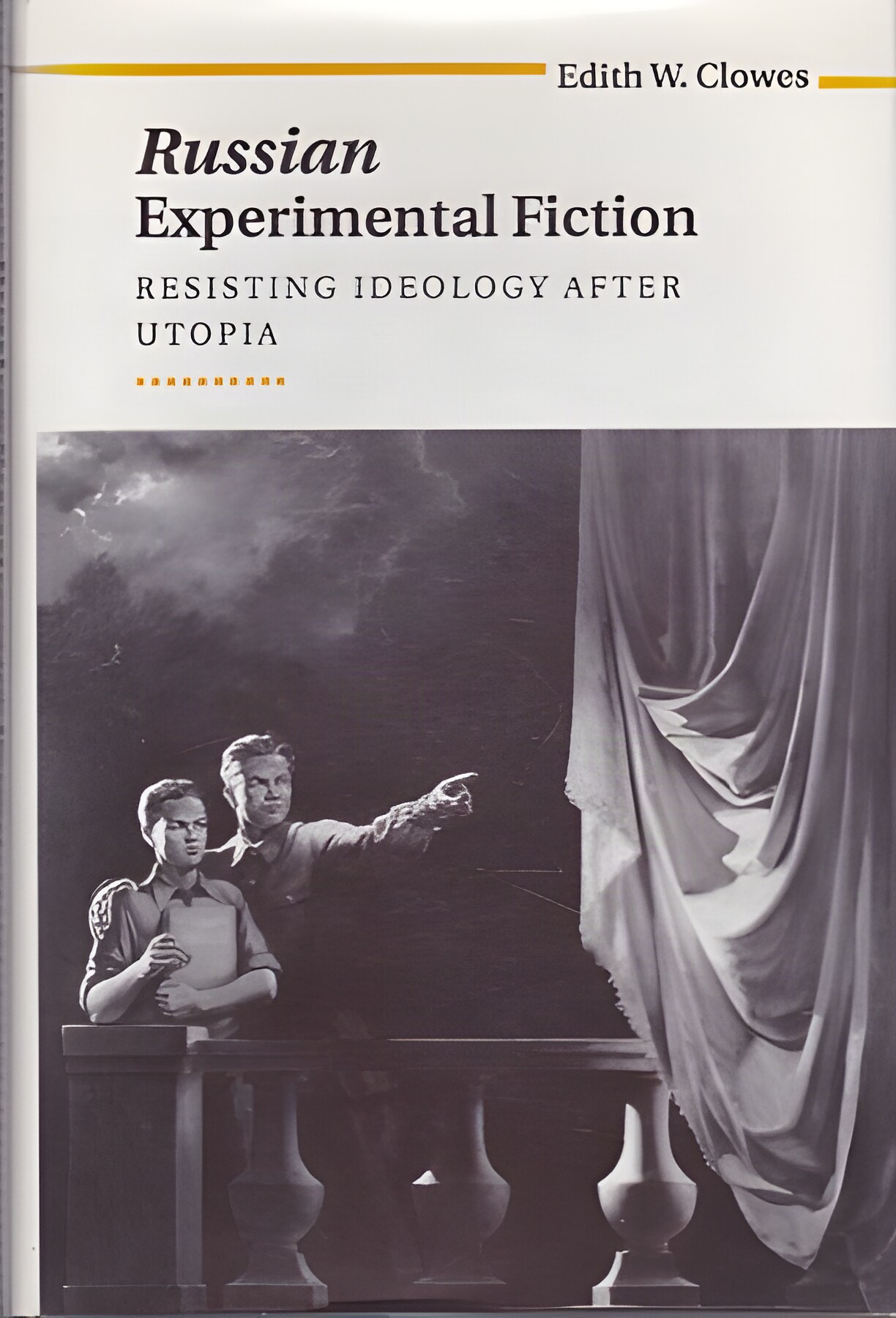
Hardcover. Princeton NJ, Princeton University Press, 1st, 1993, Book: Very Good, Dust Jacket: Very Good, Hardcover in a bright dust jacket, 236 pages. INSCRIBED BY THE AUTHOR on the front fly leaf. In the three decades following Stalin's death, major underground Russian writers have subverted Soviet ideology by using parody to draw attention to its basis in utopian thought. Referring to utopian writing as diverse as Defoe's Robinson Crusoe, Dostoevsky's Notes from Underground, and Orwell's Animal Farm, they have tested notions of truth, reality, and representation. They have gone beyond their precursors by experimenting with the tensions between ludic and didactic art. Edith Clowes explores these "meta-utopian" narratives, which address a wide range of attitudes toward utopia, to expose the challenge that literary play poses to dogmatism and to elucidate the sense of renewal it can bring to social imagination. Using both structural analysis and reception theory, she introduces readers outside Russia to a fascinating body of literature that includes Aleksandr Zinoviev's The Yawning Heights, Abram Terts's Liubimov, Vladimir Voinovich's Moscow 2042, and Liudmila Petrushevskaia's "The New Robinsons."
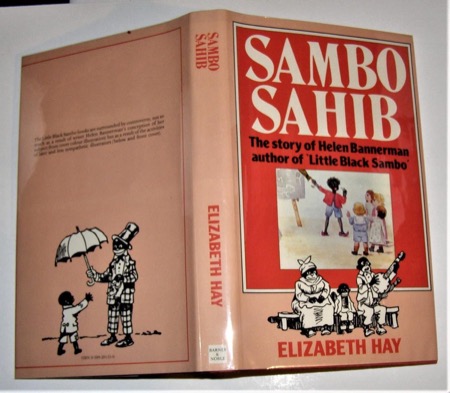
Hardcover. NY, Barnes & Noble, reprint, 1981, Book: Very Good, Dust Jacket: Very Good, Hardcover in a bright dust jacket, 194 pages. Includes a bibliography of Bannerman's books and 47 reproductions of the first British and first American editions and her illustrations for them. Phyllis Yuill and Justin Schiller helped with the publishing history and supplied illustrations. Hay shows that it was the illustrations of later artists that provoked the controversy over THE STORY OF LITTLE BLACK SAMBO, not Bannerman's original text or pictures. Bound in the original gilt-stamped red boards. From the dust jacket: "This first biography of Helen Bannerman covers much new ground and is based on the vast collection of letters to the children, usually lovingly illustrated, in the possession of the Bannerman family. As well as telling the story of one of the most popular children's books of all time, Elizabeth Hay's biography offers an intimate picture of the daily life of a British memsahib in the heyday of the Raj." Clean copy.
Hardcover. New Haven CT, Yale University Press;, 1st, 2006, Book: Very Good, Dust Jacket: Very Good, Hardcover, 288 pages. Saul Steinberg (1914-99) described himself as a "writer who draws," thus inspiring curator Smith to characterize Steinberg's brilliantly satiric drawings as "illuminations," thus linking his work to illuminated manuscripts and, given Steinberg's love of literature, to a particular favorite, Arthur Rimbaud's Illuminations. Smith also explores Steinberg's mission to illuminate the overlooked and the absurd. In the biographical sections of his beautifully crafted critique, Smith affectingly recounts Steinberg's life as a Jew in anti-Semitic Romania and an architecture student in Fascist Milan whose distinctive cartoons served as his ticket out of Nazi Europe and onto the pages of the New Yorker. Both Smith and renowned poet Charles Simic associate Steinberg's fascination with documents with his harrowing refugee experiences, while Simic, a fellow immigrant from the Balkans and a friend of Steinberg's, offers striking insights into the artist's comic sensibility. Both commentators reflect on the great change in Steinberg's work after 1960, as his images turned hallucinatory and nightmarish, his protest against tyranny more intense. As instantly recognizable as Steinberg's kinetic, punning, and slyly skewering art is, there hasn't been a comprehensive Steinberg book in years, making this outstanding volume invaluable in its reclamation of Steinberg's agile, philosophic, and category-defying art.
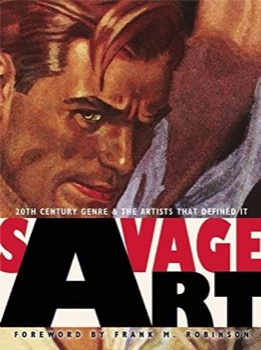
Hardcover. Nevada City NV, Underwood Books, 1st, 2010, Book: Very Good, Dust Jacket: Very Good, Hardcover in a bright dust jacket, 112 pages illustrated in color. Showcases the popular period illustration which prefigured and helped create the violent visual language in today's popular aboveground cinema, comic books, and ultra-violent multi-million copy video games. Featuring full-page illustrations by pulp artists Walter Baumhofer, Rafael de Soto, Margaret Brundage, Jerome Rozen, Virgil Finlay, Norman Saunders, H.J. Ward, Harold McCauley, Austin Briggs, Emsh and others, this beautifully produced full-color collection documents Depression-era masculine violence, in fantasy and reality, as depicted on the covers of popular literature. Clean copy.
Hardcover. London, Ashgate, reprint, 2010, Book: Very Good, Dust Jacket: Very Good, 248 pages. Hardcover with dust jacket. Clean, unmarked copy with only minor wear to dust jacket. Silver gilt on spine. 'Like "the ring" itself, this book is viral: it gathers into itself literature and film, disease and survival, cultural studies and aesthetics, Japan and America, technology and the family. We won't read Suzuki's novels or watch the films in the same way again. A thoroughly readable and teachable text!' Steven Bruhm, Robert and Ruth Lumsden Professor of English, The University of Western Ontario, and author of Reflecting Narcissus: A Queer Aesthetic 'Taking as its point of departure the phenomenon of The Ring in all its manifestations"the Japanese novel, the Japanese film, the American film, and the various sequels"The Scary Screen offers an in-depth and sustained speculation about the anxiety created by the development of communication technologies. The collection introduces startling insights into the relationship between changes in media forms and widespread fears of contagion, while also identifying a new universal form of horror that has emerged in recent decades as the status of reproduction"both technological and biological"has undergone a profound transformation. The essays included here represent a powerful theoretical response to this transformation.' Todd McGowan, University of Vermont, and author of The Impossible David Lynch and The Real Gaze '... The Scary Screen is a useful contribution to studies of The Ring, horror film, and cultural anxieties evoked by technology.' Journal of the Fantastic in the Arts.

 "Perfume: Joy, Scandal, Sin - A Cultural History of Fragrance from 1750 to the Presentby: Stamelman, Richard")


 "Picasso and Dora: A Personal Memoirby: LordJames")
 "Qajar Iran and the Rise of Reza Khan 1796-1925by: Nikki R. Keddie")

 "Raymond Pettibon: Here's Your Irony Back: Political Works 1975-2013by: Raymond Pettibon/Benjamin Buchloh")



 "Rimsky-Korsakov: Letters to His Family and Friends by: Tatiana Rimsky-Korsakov")

 "Robert Indiana: Figures of Speechby: Ryan, Professor Susan Elizabeth")


 "Saul Steinberg: Illuminationsby: Joel Smith and Charles Simic")
 "Scary Screen, The: Media Anxiety in The Ringby: Lacefield (Ed.), Kristin")