Hardcover. Insight Editions, 1st, 2008, Book: N, Hardcover, 14 pages. From the demented pages of MAD Magazine comes a depraved and uproarious look at contemporary politics' juiciest scandals. Revel in the salacious animation of our fearless leaders' most embarrassing moments. Hunt with Dick Cheney, learn how to spell with Dan Quayle, take speech lessons with George W. Bush, and find out why Alfred E. Neuman is running for President...again and again and again. Mad About Politics: A Pop-Up Book spares nothing at the expense of our elected officials, highlighting the unbearable truth about who's in charge. With precise pop-up ingenuity American power players have never looked so enjoyably foolish. If you're wondering who to vote for on Election Day let MAD About Politics give you some pointers. Suitable for the sardonic this tome of asinine political parody will have anyone with a sense of humor rolling in the aisles.
Hardcover. Philadelphia, Running Press, 1st, 2014, Book: Very Good, Dust Jacket: Very Good, Hardcover in a bright, unclipped dust jacket. Don Martin is of MAD Magazine's most recognized, most irreverent, and most influential artists. During his 32 years at MAD, he influenced a generation of writers and illustrators, and became known as "MAD's Maddest Artist." Don's ability to translate animated slapstick comedy to the printed page brought readers from around the world into his world, a world where hinged feet, enormous noses and low IQs ruled. Inside are over 200 of Martin's funniest and zaniest works from his lengthy career, along with every "GOOSH," " SPROING" and "POIT" that made his cartoons great. Also included in this one-of-a-kind collection is a generation of his color work, as well as his best portraits, posters and stickers created as bonuses for MAD Specials, and a foreword by longtime MAD editor Nick Meglin.
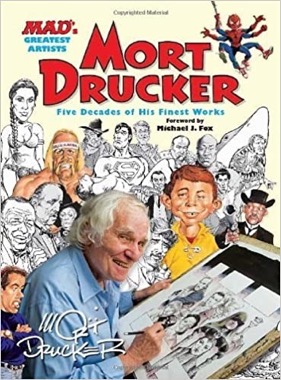
Hardcover. Running Press, 1st, 2012, Book: Very Good, Dust Jacket: Very Good, Hardcover, 272 pages. MAD Magazine was an indispensable part of 'growing up' for 1950s/60s kids. The humor was witty, leg-pulling and hilarious. The art work, to this day, was of the highest order. Top cartoonists such as Jack Davis, Don Martin, Bob Clarke etc. graced it's pages for many years. Top of the rank must be Mort Drucker, whose caricatures of film and TV stars are second-to-none. Some of his very best work, dating from 1957 to 2009, is included in this hefty volume. The reproductions are slightly larger than the magazine format and excellent for studying the line-work of this remarkable artist. Included is a fascinating discussion between Mort and former MAD editor Nick Meglin.
Hardcover. Running Press, 1st, 2012, Book: Very Good, Dust Jacket: Very Good, Hardcover, 272 pages. MAD Magazine was an indispensable part of 'growing up' for 1950s/60s kids. The humor was witty, leg-pulling and hilarious. The art work, to this day, was of the highest order. Top cartoonists such as Jack Davis, Don Martin, Bob Clarke etc. graced it's pages for many years. Top of the rank must be Mort Drucker, whose caricatures of film and TV stars are second-to-none. Some of his very best work, dating from 1957 to 2009, is included in this hefty volume. The reproductions are slightly larger than the magazine format and excellent for studying the line-work of this remarkable artist. Included is a fascinating discussion between Mort and former MAD editor Nick Meglin.
Hardcover. NY, Beehive Press, 1st, 2019, Book: Very Good, Dust Jacket: None, Large. oversize hardcover. 176 pages illustrated in color and b&w, with a sticker and postcard laid in. The first-ever comprehensive examination of this great artist, while collecting an amazing array of 300 generally scarce images. Harrison Cady (1877-1970) was one of the definitive magazine illustrators and cartoon artists of the first half of the 20th century. He created countless overflowing worlds of anthropomorphic lives: the Peter Rabbit Sunday page, the Happy Chaps for the magazine St. Nicholas, and illustrations that brought to life dozens of the Thornton Burgess books.
Hardcover. Bloomington, IN, Indiana University Press, 1st, 2016, Book: Very Good, Dust Jacket: Very Good, 152 pages. Hardcover with dust jacket. A very clean, unmarked copy with only minor wear to dust jacket edges. A tight copy. As a photographer for Life and Fortune magazines, Margaret Bourke-White traveled to Russia in the 1930s, photographed the Nazi takeover of Czechoslovakia in 1938, and recorded the liberation of Buchenwald at the end of WWII. In 1949, Life sent her to South Africa to take photographs in a country that was becoming racially polarized by white minority rule. Life published two photo-essays highlighting Bourke-White's photographs, but much of her South African work remained unpublished until now. Here, these stunning photographs collected by Alex Lichtenstein and Rick Halpern offer an unparalleled visual record of white domination in South Africa during the early days of apartheid. In addition to these powerful and historically significant photographs, Lichtenstein and Halpern include two essays that explore Bourke-White's artistic and political formation and provide background material about the cultural, political, and economic circumstances that produced the rise and triumph of Afrikaner nationalism in South Africa. This richly illustrated book brings to light a large body of photography from a major American photographer and offers a compelling history of a reprehensible system of racial conflict and social control that Bourke-White took such pains to document.
Hardcover. San Diego, Thunder Bay Press, 1st, 2001, Book: Very Good, Dust Jacket: Very Good, Hardcover in a bright dust jacket. 144 pages illustrated in color. INSCRIBED BY THE AUTHORS on the half-title page. Maxfield Parrish has long been considered one of the greatest American illustrators of the 20th century. In the early 1920s, when his works Garden of Allah and Daybreak were reproduced as art prints, he quickly became one of the best known artists in America with his art images appearing on posters, calendars, magazine covers, and book illustrations. His unmistakable paintings, characterized by "Parrish Blue" water and skies, luminescent rocks and hills, and exquisite young women in flowing classical robes, are infused with a romantic Eden-like quality so entrancing that reproductions are as enthusiastically received today as the prints were when they first appeared. A wonderful selection of his work with brilliant reproductions. Clean copy.
Hardcover. New York, Watson-Guptill Publications, 1st, 1973, Book: Very Good, Dust Jacket: Very Good, Hardcover. This is a volume with detailed chapters pertaining to Maxfield Parrish's work, including book and magazine illustration, posters and advertisements, as well as paintings and murals often depicting fantastical or mythological creatures. 224 pages, with over 100 b&w illustrations and 64 full color plates. Includes catalog of selected works, chronology, bibliography, and index. Bound in blue cloth, tight and clean. Clean dust jacket with full color reproduction of painting.
Hardcover. New York, Watson-Guptill Publications, 1st, 1973, Book: Very Good, Dust Jacket: Very Good, Hardcover. This is a volume with detailed chapters pertaining to Maxfield Parrish's work, including book and magazine illustration, posters and advertisements, as well as paintings and murals often depicting fantastical or mythological creatures. 224 pages, with over 100 b&w illustrations and 64 full color plates. Includes catalog of selected works, chronology, bibliography, and index. Bound in blue cloth, tight and clean. Clean dust jacket with full color reproduction of painting.
Hardcover. New York, Watson-Guptill Publications, 1st, 1973, Book: Very Good, Dust Jacket: Very Good, Hardcover. This is a volume with detailed chapters pertaining to Maxfield Parrish's work, including book and magazine illustration, posters and advertisements, as well as paintings and murals often depicting fantastical or mythological creatures. 224 pages, with over 100 b&w illustrations and 64 full color plates. Includes catalog of selected works, chronology, bibliography, and index. Bound in blue cloth, tight and clean. Clean dust jacket with full color reproduction of painting.
Hardcover. Taschen, 1st, 2008, Book: Very Good, Dust Jacket: Very Good, Hardcover in a bright dust jacket. 352 pages. Paying homage to the American periodicals of the 1950s, 1960s, and 1970s that documented outrageous exploits, this hefty, comprehensive guide is packed full of colorful cover art, sumptuous sample spreads, and enlightening essays.
Hardcover. NY, William Lewer, 1st, 1838, Book: Very Good, Dust Jacket: None, Hardcover, bound in 3/4 leather with marbled boards, black calf spine labels with gilt lettering, 396 pages, American Edition noted on title page; its London parent, "The Metropolitan: A monthly journal of literature, science, and the fine arts" was a London monthly journal established by Thomas Campbell in 1831 and continued, under various editors, until 1850. Clean bright copy.
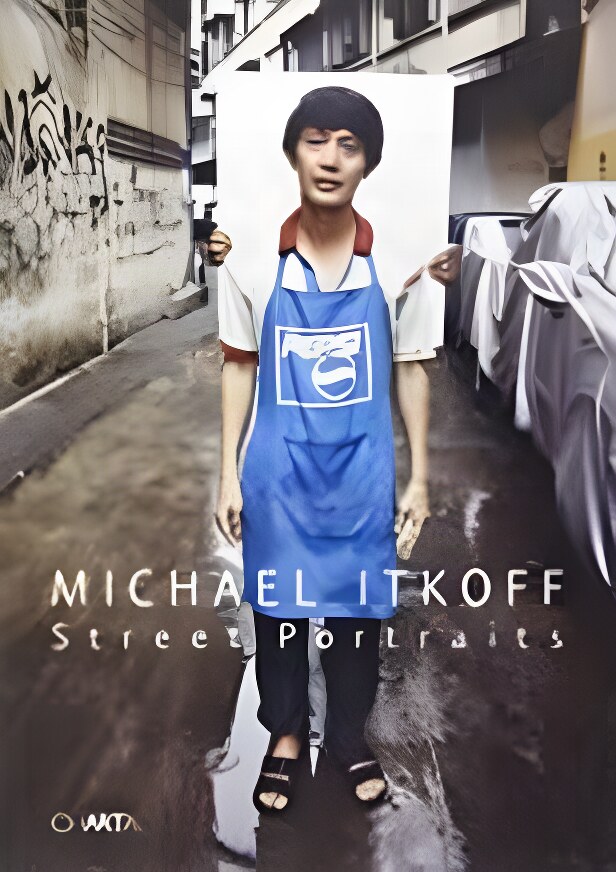
Softcover. Italy, Charta, 1st, 2009, Book: Very Good, Dust Jacket: None, Like new in publisher's shrink-wrap. 64 pages, color photos. Michael Itkoff has traveled the world since 2002 taking portraits of everyday people in the street. In the photographs gathered here, a makeshift backdrop is held behind subjects in London, Sydney, Hanoi, Bangkok and New York, allowing the larger urban scene to fill out the frame. Born in 1981 in Philadelphia, Itkoff is a Founding Editor of Daylight magazine.
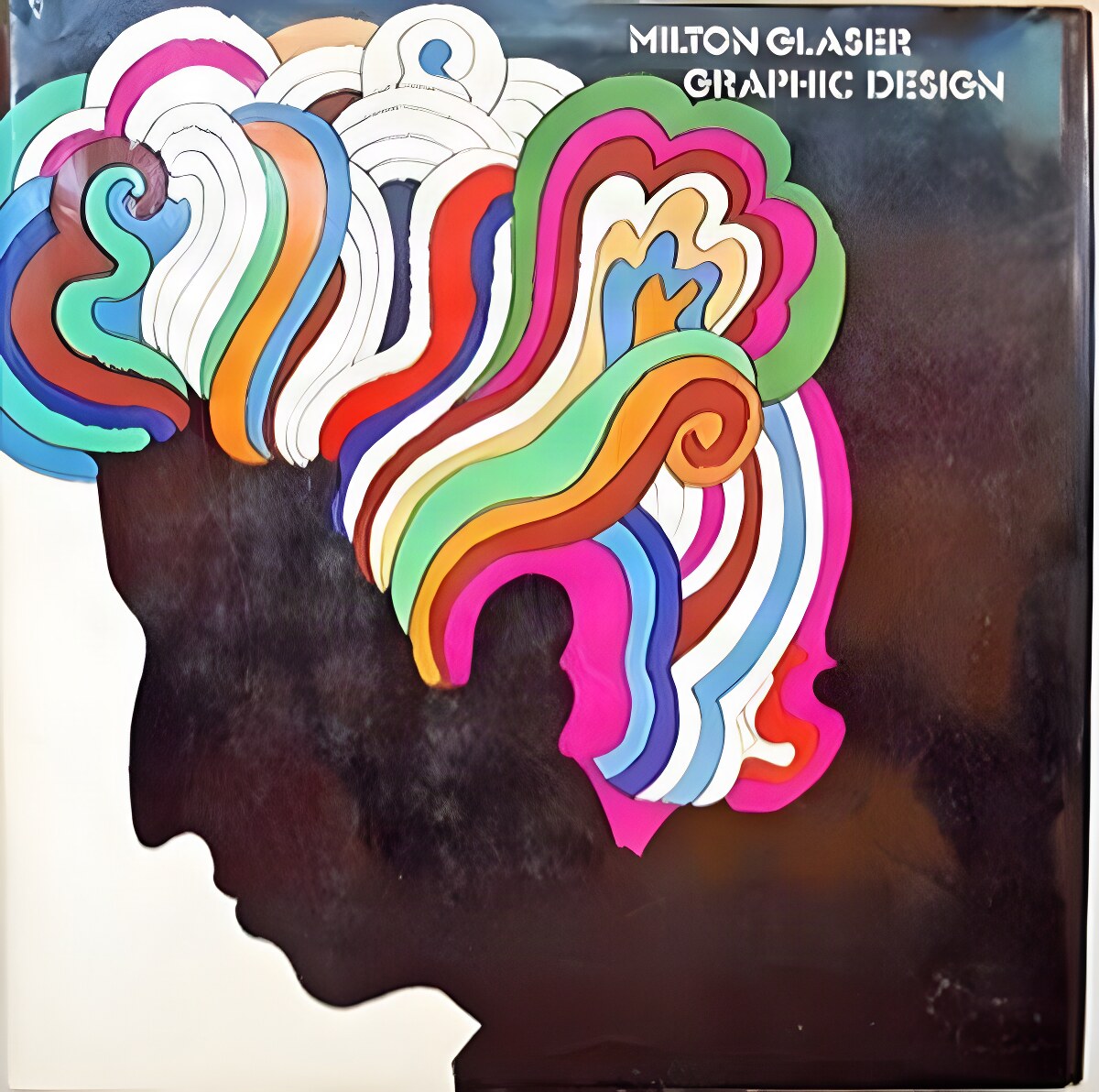
Hardcover. Woodstock NY, Overlook Press, 1st, 1973, Book: Very Good, Dust Jacket: Good, Hardcover in a lightly worn dust jacket with wear to extremities. 239 pages with 344 illustrations, 97 in color. This book explores the extraordinary achievement of America's pre-eminent graphic artist. Here Glaser undertakes not only a wide-ranging representation of his oeuvre but, in a personally revealing introduction, speaks of the influences on his work, the responsibilities of the artist, the hierarchies of the traditional art world, and the role of graphic design in the area of his creative growth. His work ranges from posters to book and record covers; from store and restaurant design to toy creations, magazine formats, and logotypes all of which define the look of the 1960s and 70s. Tape repair to reverse of dust jacket, no markings. DOMESTIC SHIPPING ONLY.
Hardcover. NY, Pantheon, 1st, 2011, Book: Very Good, Dust Jacket: None, Hardcover, glossy boards in an oblong format. 80 pages. Color art by Clowes. The fan-favorite Eisner Award-winning story, originally seri-alized in The New York Times Magazine, now collected and with forty pages of new material. Meet Marshall. Sitting alone in the local coffee place. He's been set up by his friend Tim on a blind date with someone named Natalie, and now he's just feeling set up. She's nine minutes late and counting. Who was he kidding anyway? Divorced, middle-aged, newly unem-ployed, with next to no prospects, Marshall isn't ex-actly what you'd call a catch. Twenty minutes pass. A half hour. Marshall orders a scotch. (He wasn't going to drink!) Forty minutes. Then, after nearly an hour, when he's long since given up hope, Natalie appears--breathless, apologiz-ing profusely that she went to the wrong place. She takes a seat, to Marshall's utter amazement. A captivating, bittersweet, and hilarious look at the potential for human connection in an increasingly hopeless world, Mister Wonderful more than lives up to its name. Clean copy.
Hardcover. NY, Pantheon, 1st, 2011, Book: Very Good, Dust Jacket: None, Hardcover, glossy boards in an oblong format. 80 pages. Color art by Clowes. The fan-favorite Eisner Award-winning story, originally seri-alized in The New York Times Magazine, now collected and with forty pages of new material. Meet Marshall. Sitting alone in the local coffee place. He's been set up by his friend Tim on a blind date with someone named Natalie, and now he's just feeling set up. She's nine minutes late and counting. Who was he kidding anyway? Divorced, middle-aged, newly unem-ployed, with next to no prospects, Marshall isn't ex-actly what you'd call a catch. Twenty minutes pass. A half hour. Marshall orders a scotch. (He wasn't going to drink!) Forty minutes. Then, after nearly an hour, when he's long since given up hope, Natalie appears--breathless, apologiz-ing profusely that she went to the wrong place. She takes a seat, to Marshall's utter amazement. A captivating, bittersweet, and hilarious look at the potential for human connection in an increasingly hopeless world, Mister Wonderful more than lives up to its name. Clean copy.
Hardcover. London, Gingko Press, 1st, 2010, Book: Very Good, Dust Jacket: None, Hardcover, pictorial boards, 256 pages. Modart editors showcase some of the actions and events from the first decade of the new millennium. It features now iconic images, passionate writing and a veritable fount of great new art from around the world.
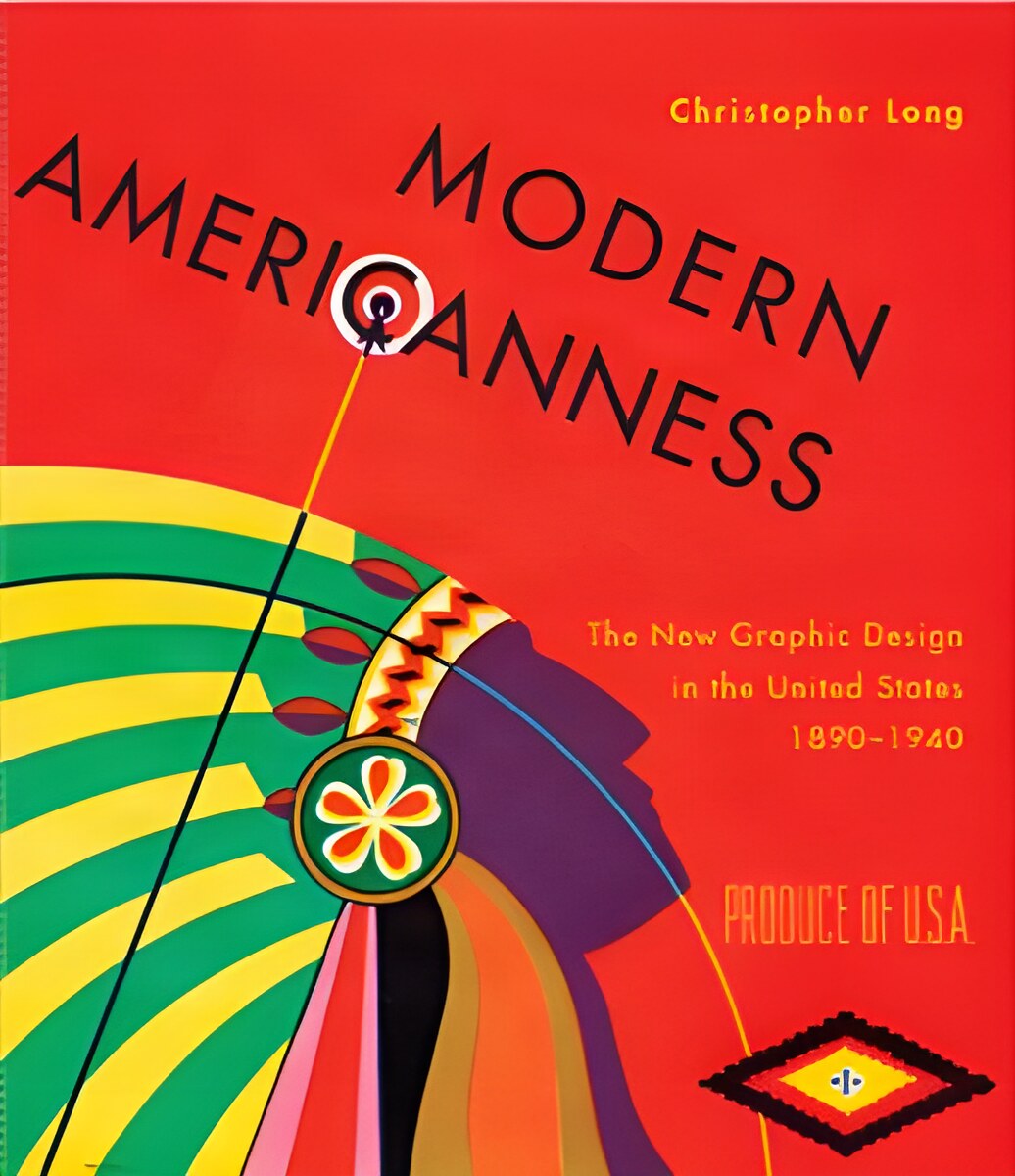
Hardcover. Czech Republic, Kant, 1st, 2025, Book: Very Good, Dust Jacket: None, Hardcover, pictorial boards, 264 pages. Venturing across five decades of American culture, this landmark book explores how modern graphic design emerged in the United States and how it became an intrinsic feature of the country's identity. Author and design professor Christopher Long tells this story in a wholly new way, exposing many long-forgotten figures and movements and resurrecting the debates and conceptions that were integral to the new art. In a series of deeply involving portraits of American artists and innovators who helped shape the very look of the modern age, Modern Americanness offers a sweeping story of the country's visual culture and its distinctiveness across a variety of designed objects: magazine covers, food labels, event posters, chapbooks, advertisements, propaganda and much more. Still in publisher's shrinkwrap.
Hardcover. New Haven CT, Yale University Press, 1st, 2020, Book: Very Good, Dust Jacket: None, Hardcover, Original black lettered cloth quarter laid on pictorial boards, 184 pages. A fascinating exploration of how photography, graphic design, and popular magazines converged to transform American visual culture at mid-century. This dynamic study examines the intersection of modernist photography and American commercial graphic design between 1930 and 1960. Avant-garde strategies in photography and design reached the United States via European emigres, including Bauhaus artists forced out of Nazi Germany. The unmistakable aesthetic made popular by such magazines as Harper's Bazaar and Vogue--whose art directors, Alexey Brodovitch and Alexander Liberman, were both immigrants and accomplished photographers--emerged from a distinctly American combination of innovation, inclusiveness, and pragmatism. Beautifully illustrated with more than 150 revolutionary photographs, layouts, and cover designs, Modern Look considers the connections and mutual influences of such designers and photographers as Richard Avedon, Lillian Bassman, Herbert Bayer, Robert Frank, Lisette Model, Gordon Parks, Irving Penn, Cipe Pineles, and Paul Rand. Essays draw a lineage from European experimental design to innovative work in American magazine design at mid-century and offer insights into the role of gender in fashion photography and political activism in the mass media.
Hardcover. NY, Assouline, 1st, 2005, Book: Very Good, Dust Jacket: Very Good, Hardcover, 80 pages. Morris Lapidus, the famous mid-century architect, outraged the architectural profession and riled critics with an architecture that was popularly embraced. His Miami Beach resort hotels - the Fontainebleau, the Eden Roc, and the Bal Harbour Sheraton - are synonymous with the glamour of Miami Beach in the 50s. Lapidus hotels are infamous as the stomping grounds of the Rat Pack and their fellow movie stars. Yet, during his life he was never published in architectural magazines and was discredited by the architectural profession - before undergoing a renaissance as a prophet of postmodernism. This book establishes the importance of his work and offers private insights into a man who once said why be exotic in private?
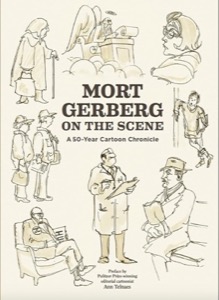
Softcover. Seattle, Fantagraphics Books, 1st, 2019, Book: Very Good, Dust Jacket: None, Softcover, pictorial wrappers, 112 pages illustrated in b&w. A 50-year career retrospective of cartoonist Mort Gerberg, whose social-justice-minded-and bitingly funny-cartoons have appeared in magazines such as The Realist, The New Yorker, Playboy, and the Saturday Evening Post. And as a reporter, he's sketched historic scenes like the fiery Women's Marches of the '60s and the infamous '68 Democratic National Convention. This handsome edition collects Gerberg's magazine cartoons, sketchbook drawings, and on-the-scene reportage sketches. Clean, bright copy.
Hardcover. New York, Harry N. Abrams, 1st, 2003, Dust Jacket: Very Good, 102 pages. Dust jacket price-clipped. "The New Yorker" takes a second look at our most loved childhood stories and rhymes. Edited by Bobby Goldstein. Nice copy.
Hardcover. London, Oxford University Press, 1st, 1974, Book: Very Good, Dust Jacket: Very Good, Hardcover in a bright dust jacket, 157 pages. A study of the popular English children's writer, Mrs Sherwood, 1775-1851 considering her style, writings, relations with publishers, etc. Includes reprints of The little woodman and his dog Caesar originally published: London, Houlston, 1850 and Soffrona and her cat Muff originally published: Wellington, Salop, Houlston, 1828. Includes a 38 page bibliography. "No study of nineteenth - century children's books in England can afford to ignore Mrs. Sherwood. She produced over four hundred different titles - books, tales, tracts, texts, magazines, articles in periodicals, cbapbooks, and Sunday School rewards. There is evidence that the writings of her Evangelical period, in particular, had a remarkable influence upon Victorian literature for the young.
Hardcover. NY, Pegasus Books, 1st, 2020, Hardcover in a bright dust jacket, 242 pages. A finely wrought coming-of-age memoir about the author's relationship with her beloved grandfather Joe Simon, cartoonist and co-creator of Captain America. In the 1990s, Megan Margulies's Upper West Side neighborhood was marked by addicts shooting up in subway stations, frequent burglaries, and the "Wild Man of 96th Street," who set fires under cars and heaved rocks through stained glass church windows. The world inside her parents' tiny one-bedroom apartment was hardly a respite, with a family of five-including some loud personalities-eventually occupying the 550-square-foot space. Salvation arrived in the form of her spirited grandfather, Daddy Joe, whose midtown studio became a second home to Megan. There, he listened to her woes, fed her Hungry Man frozen dinners, and simply let her be. His living room may have been dominated by the drawing table, notes, and doodles that marked him as Joe Simon the cartoonist. But for Megan, he was always Daddy Joe: an escape from her increasingly hectic home, a nonjudgmental voice whose sense of humor was as dry as his farfel, and a steady presence in a world that felt off balance. Evoking New York City both in the 1980s and '90s and during the Golden Age of comics in the 1930s and '40s, My Captain America flashes back from Megan's story to chart the life and career of Rochester-native Joe Simon, from his early days retouching publicity photos and doing spot art for magazines, to his partnership with Jack Kirby at Timely Comics (the forerunner of Marvel Comics), which resulted in the creation of beloved characters like Captain America, the Boy Commandos, and Fighting American. My Captain America offers a tender and sharply observed account of Megan's life with Daddy Joe-and an intimate portrait of the creative genius who gave us one of the most enduring superheroes of all time.

 "MAD About Politics: An Outrageous Pop-Up Political Parodyby: Idiots/john Ficarra, The Usual Gang of")
 "MAD's Greatest Artists: Don Martin: Three Decades of His Greatest Worksby: Don Martin/Nick Meglin")
 "MAD's Greatest Artists: Mort Drucker: Five Decades of His Finest Works by: Drucker, Mort")
 "Madness in Crowds: The Teeming Mind of Harrison Cady by: Cady Harrison; Denis Kitchen and Violet Kitchen")
 "Margaret Bourke-White and the Dawn of Apartheidby: Lichtenstein, Alex")

 "Maxfield Parrishby: Ludwig, Coy")


 "Men's Adventure Magazines: In Postwar America by: Max Allan Collins , Rich Oberg, et al.")


 "Metropolitan Magazine: January to June 1838 Vol. Vby: N/A")


 "Modart No. 01: Forget Art: In Order to Feel It. The Best of Modart Magazine by: Harlan Levey/ Editor")
 "Modern Look: Photography and the American Magazine by: Klein, Mason")
 "Morris Lapidusby: Desilets, Deborah")
 "Mother Goose on the Looseby: N/A")
 "Mrs. Sherwood and her Books for Childrenby: Cutt, M. Nancy")
 "My Captain America: A Granddaughter's Memoir of a Legendary Comic Book Artistby: Megan Margulies")