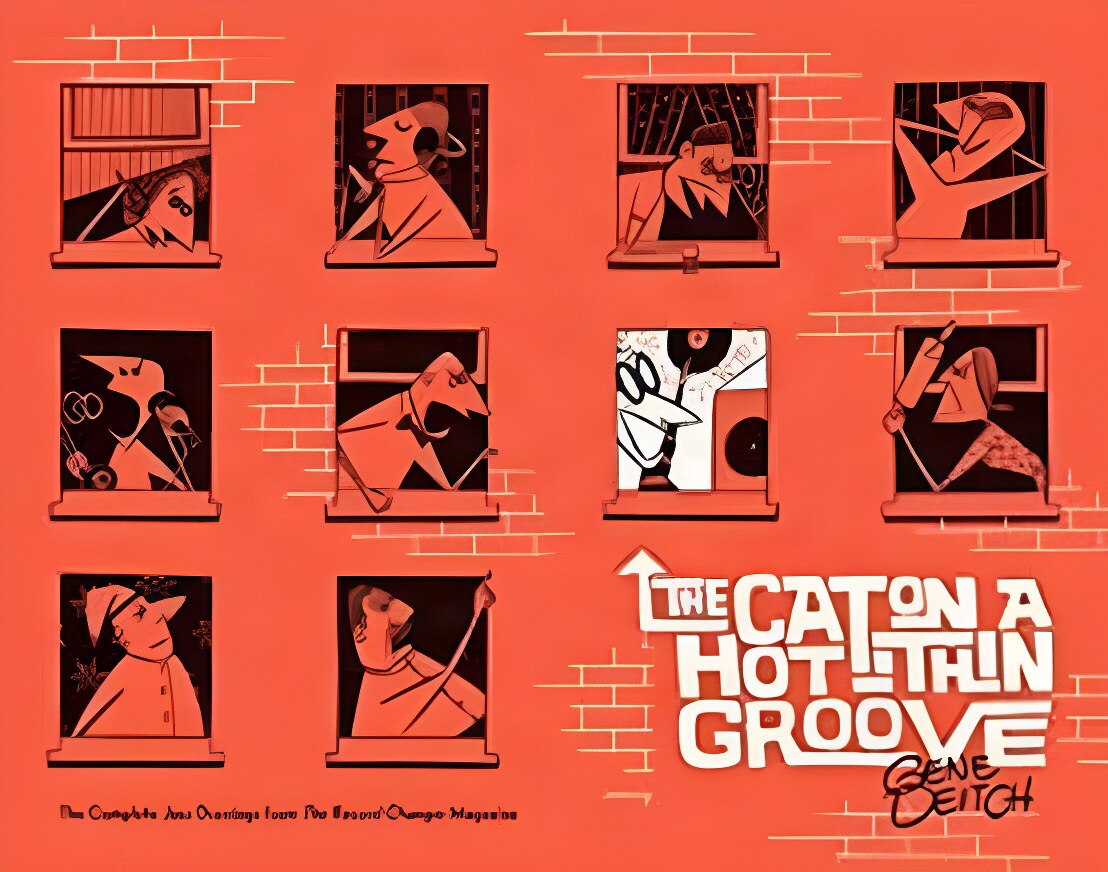
Softcover. Seattle, Fantagraphics, reprint, 2013, Book: Very Good, Dust Jacket: None, Softcover, 160 pages. At the age of 21, Gene Deitch discovered The Record Changer, a jazz fan magazine. Every jazz swinger in the '40s was called a "cat," so Gene Deitch created a cartoon feature titled "The Cat," which quickly became a fixture of the magazine. He also started drawing the covers, which graced almost every issue from 1945 to 1951. Deitch's stylistically virtuoso images exquisitely embodied the essence of the 1950s hipster, and was a visual paean to the joy of collecting records and appreciating jazz. The Cat on a Hot Thin Groove collects all of Deitch's Record Changer work in one gorgeous, coffee-table art book, with commentary and reminiscences by Deitch himself.
Softcover. NY, Crown Publishers, 1st, 1986, Book: Very Good, Dust Jacket: None, Softcover, 96 pages, color illustrations throughout. A follow-up to the authors first book, "The Cat Made Me Buy It!". 113 color photographs of advertising posters, magazine ads and covers, sheet music, signage, etc., all featuring felines.
Hardcover. Prion, 1st, 2009, Book: Very Good, Dust Jacket: Very Good, Hardcover, 230 pages. In terms of both words and images the world had never seen the like of the American comic book. They were bizarre, morbid, lurid, risque and bursting with subconscious desires of burgeoning youth culture. By the time 1954 arrived their were 500 different comics being published by 35 different companies, selling over 60 million copies a month between them. This is the history of the era and the art it produced. The book looks at the pioneers of the comic book and the comic's founding links with sleazy pulp magazines; the campaign for censorship; the fraught relationship between the comic book artists and their publishers; how what they did was rarely recognized as art at the time - and of course the comics themselves.
Softcover. Sausalito CA, Point Inc , 1st, 1978, Book: Very Good, Dust Jacket: None, 144 pages. Paperback Magazine. Very Good+,144 pages. Contributors: Michael McClure, Gregory Corso, David Brower, David Meltzer; Peter Coyote, Wavy Gravy. 40 pages of strips by R. Crumb (Little Joe, Mr. Nostalgia, Modern Dance Workshop and The Final Solution). 8 pages by Dan O'Neill.
Softcover. Seattle, Fantagraphics, 1st, 2008, Book: Very Good, Dust Jacket: None, Softcover, 200 pages. Gary Groth interviews father and son cartoonists Gene and Kim Deitch. Academy-award-winning Gene Deitch, whose wide-ranging career has spanned over 60 years, talks about doing illustrations for The Record Changer, directing cartoons such as Munro and Krazy Kat, and creating his comic strip Terr'ble Thompson. Underground comics pioneer Kim Deitch, touches on his father's influence, reminisces about the New York-based scene and outlines the evolution of Waldo the Cat. Plus: The innovative Grant Morrison fills us in on his X-Men run, All Star Superman, the ambitious Seven Soldiers "maxiseries," and how he became one of the architects of the current DC Comics universe. Finally, the comics gallery presents an historical essay and highlights from the turn-of-the-19th-century work of Puck cartoonist, F. M. Howarth.
Softcover. Seattle, Fantagraphics, 1st, 2009, Book: Very Good, Dust Jacket: None, Softcover, 207 pages. A career-spanning interview with Mort Walker, the creator of Beetle Bailey and Hi & Lois. Jordan Crane discusses The Clouds Above: comics by the famous 17th century caricaturist Thomas K. Rowlandson.
Softcover. New York, Fantagraphics Books, 1st, 2014, Book: Very Good, Dust Jacket: None, 300 pages. Softcover with light edgewear to paper wrappers. Clean, tight copy. Color and black and white illustrations throughout. The definitive Comics Journal interviews with the cartoonists behind Zap Comix, featuring: Supreme 1960s counterculture/underground artist Robert Crumb on how acid unleashed a flood of Zap characters from his unconscious; Marxist brawler Spain Rodriguez on how he made the transition from the Road Vultures biker gang to the exclusive Zap cartoonists' club; Yale alumnus Victor Moscoso and Christian surfer Rick Griffin on how their poster-art psychedelia formed the backdrop of the 1960s San Francisco music scene; Savage Id-choreographer S. Clay Wilson on how his dreams insist on being drawn; Painter and Juxtapoz-founder Robert Williams on how Zap #4 led to 150 news-dealer arrests; Fabulous, Furry, Freaky Gilbert Shelton on the importance of research; Church of the Subgenius founder Paul Mavrides on getting a contact high during the notorious Zap jam sessions; and much more. In these career-spanning interviews, the Zap contributors open up about how they came to create a seminal, living work of art.
Softcover. Seattle, Fantagraphics Books, 1st, 2001, Book: Very Good, Dust Jacket: None, Softcover, 144 pages, b&w drawings throughout. The Compleat Cannon reprints the entirety of cartoonist Wally Wood's classic sex and violence strip from the 1960s. Super-spy John Cannon is the American's answer to James Bond, fighting the Cold War with a license to kill. Wally Wood is of course the legendary cartoonist known for his contributions to the original Mad magazine. Always regarded as one of comics' great craftsmen, Cannon is simply one of the most beautiful strips ever produced. Featuring outrageous parodies of pop culture icons of the time, the Cold War, and the secret agent genre, Cannon is Wood at his most gregarious and incisive, working on one of the few projects in his career where he had no editorial constraints. Like Fantagraphics' The Compleat Sally Forth, also by Wood, this oversized collection includes a section of never-before-seen Cannon ephemera in the form of sketches, notes and annotated information about the strip.
Softcover. NY, Black Dog & Leventhal , 1st thus, 2006, Book: Very Good, Dust Jacket: None, Softcover. In fine unread condition, complete with two unopened disks featuring all 68,647 cartoons ever published in the magazine. Easy to browse CDs allow the reader to find cartoons by favourite artists, subject and date. 650+ flawless pages of cartoons spanning 8 decades, complete with an index of the artists.
Hardcover. Seattle, 1st, 2019, Book: Very Good, Dust Jacket: None, Hardcover in pictorial boards, mostly b&w, some color, 424 pages. Collecting the work of an international icon in the fields of comics, advertising, and erotica. Most of the comics in this volume, spanning 1965 to 1985, have never before been published in English. Crepax's first foray into comics magazines - "The Curve of Lesmo"-introduces our proto-feminist heroine, Valentina, the globe-trotting Milanese photographer. In other stories, she becomes a mother, outwits a gang of jewel thieves, flashes back to her childhood and adolescence, encounters a mysterious cello, and much more. Due to size and weight, DOMESTIC SHIPPING ONLY.
Softcover. Syracuse NY, Gustav Stickley, 1st, 1905, Book: Very Good, Dust Jacket: None, Softcover, approx. 200 pages, b&w illustrations, ads. Gustav Stickley showed his designs and ideas through his magazine The Craftsman. Published monthly between Oct 1901 and Dec 1916, The Craftsman was "the bible" of the Arts and Crafts Movement in the United States, which emphasized spare design, hand-crafting, and the importance of the individual craftsman. This issue features his article "Ornament: Its Use and Its Abuse". Also articles on The Development of the Public Library, The Future of Ceramics in America, Old Pewter Plate, The Modern House Beautiful, others. Clean, bright copy.
Hardcover. Franklin Center PA, The Franklin Library, 1st, 1987, Book: Very Good, Dust Jacket: None, Hardcover, rich maroon leather boards with decorations in gold on front and rear boards. Title in gold on spine between raised leather bands. All edges are gilt. Text is clean and crisp. Satin ribbon marker. SIGNED BY PLIMPTON on a blank prelim page. In April 1985, Sports Illustrated published an article that stunned the sports community. George Plimpton's 13-page profile of Sidd Finch, a mysterious pitcher who had been signed by the New York Mets and reportedly threw 168 mph, came complete with photos from spring training, scouting reports, and interviews with Mets players and management. A week later, SI apologized to readers around the world for their role in what is generally regarded as the greatest hoax in the history of sports journalism. The magazine had teamed up with the legendary author and Paris Review bon vivant for an April Fool's Day prank of unprecedented proportions. After the success of the article, Plimpton decided to turn the story into a novel -- a rousing baseball fairy tale that is considered one of the most memorable sports novels of the last half-century.
Hardcover. NY, Macmillan, 1st, 1987, Book: Very Good, Dust Jacket: None, Hardcover in a bright, unclipped dust jacket, 275 pages. In April 1985, Sports Illustrated published an article that stunned the sports community. George Plimpton's 13-page profile of Sidd Finch, a mysterious pitcher who had been signed by the New York Mets and reportedly threw 168 mph, came complete with photos from spring training, scouting reports, and interviews with Mets players and management. A week later, SI apologized to readers around the world for their role in what is generally regarded as the greatest hoax in the history of sports journalism. The magazine had teamed up with the legendary author and Paris Review bon vivant for an April Fool's Day prank of unprecedented proportions. After the success of the article, Plimpton decided to turn the story into a novel -- a rousing baseball fairy tale that is considered one of the most memorable sports novels of the last half-century. Clean copy.
Hardcover. Philadelphia, J.B. Lippincott, 1st, 1962, Book: Very Good, Dust Jacket: Good, Hardcover in a soiled dust jacket, 256 pages, b&w woodcuts by Pauline Winchester Inman. Stories, articles and reminiscences selected from work by Maine writers published in DOWN EAST. Clean internally.
Softcover. Flesk, 1st, 2021, Book: Very Good, Dust Jacket: None, Softcover, 400 pages. Edwin Austin Abbey (1852-1911) was born just two years after the inaugural release of Harper's Monthly Magazine. Starting with his first published drawing in December 1870 at age 18, Abbey's life-long association with the publisher resulted in hundreds of drawings found within the pages of Harper's Monthly Magazine and Harper's Weekly as well as Harper & Brothers books. The resulting exposure throughout the U.S. and Europe secured an extensive level of recognition. Abbey had the rarefied appeal to everyone from the average reader to the most prestigious artists of the day. The inclusion of Abbey's illustrations in these periodicals helped to expand the reach of the poetry, stories and essays that they accompanied to a massive audience. This book focuses on Abbey's line art for the magazines and books published by Harper & Brothers, beginning with his earliest works as a new professional in the field. The collection contains over 350 drawings. These delineated the poetry of Robert Herrick and enhanced such books as The Deserted Village, Old Songs, She Stoops to Conquer and The Quiet Life. Drawings created for numerous short stories and poetry are displayed here as well. Also collected are Abbey's exquisite series of drawings done over the course of twenty years for The Comedies of William Shakespeare, followed by The Shakespeare Tragedies. His painstaking devotion to research while securing the appropriate costumes, props and models for his drawings was legendary. The results are some of the most revered illustrations ever created, which continue to astound aficionados and inspire artists generations after Abbey's last drawing was made. An extensive new essay by Alice A. Carter offers a fresh look at Edwin Austin Abbey, his life and career.
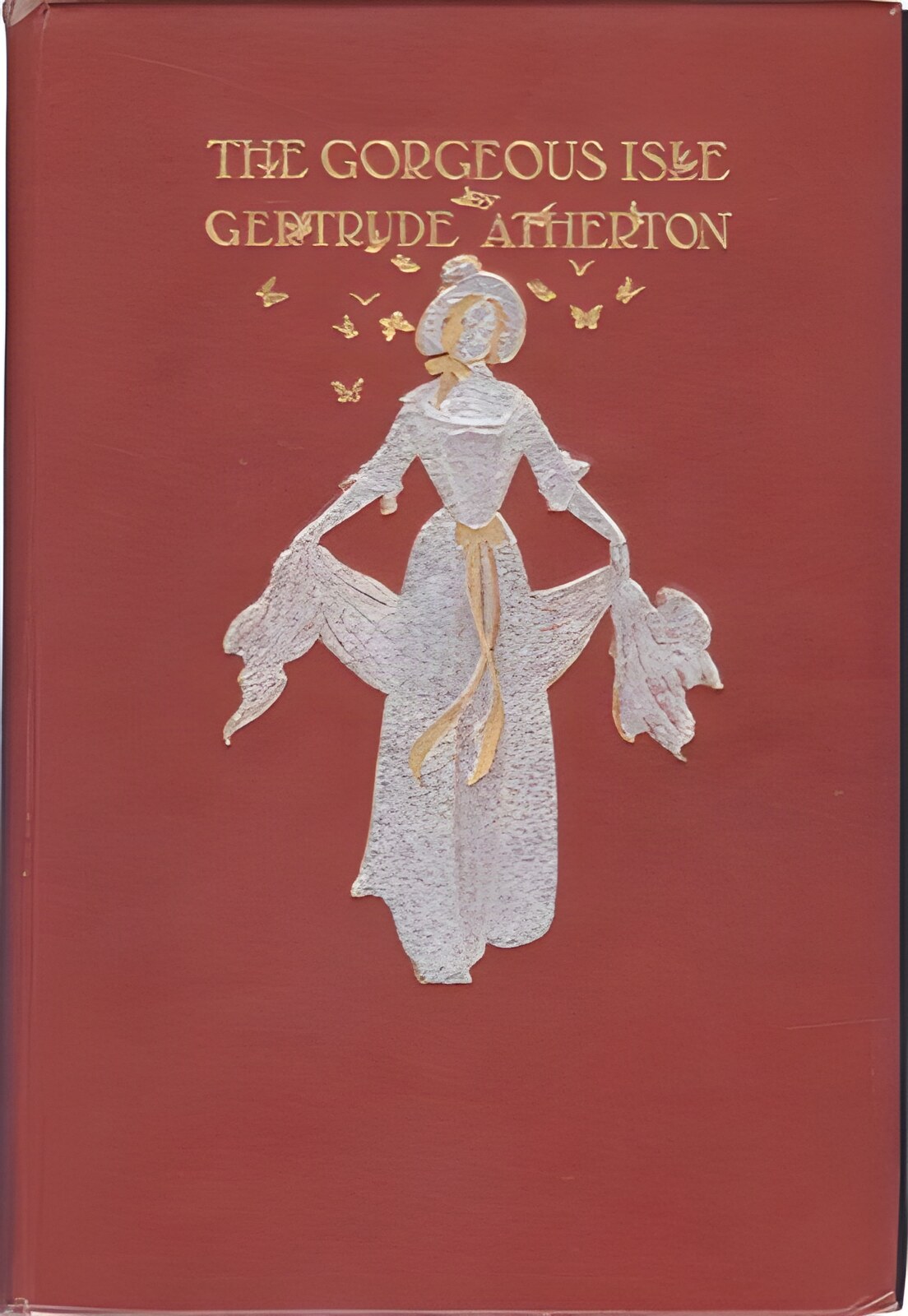
Hardcover. NY, Doubleday, Page & Co. , 1st, 1908, Book: Very Good, Dust Jacket: None, Hardcover, rust colored cloth binding decorated in silver and gilt. Color illustrated end papers. Four color plates by C. Cole Phillips. Gertrude Franklin Horn Atherton (October 30, 1857 - June 14, 1948) was an American author. Many of her novels are set in her home state of California. Her bestseller Black Oxen (1923) was made into a silent movie of the same name. In addition to novels, she wrote short stories, essays, and articles for magazines and newspapers on such issues as feminism, politics, and war. Light smudge to blank prelim page, otherwise clean.
Hardcover. NY, Knopf, 1st, 1958, Book: Very Good, Dust Jacket: Good, Hardcover. 154 pages. Profusely illustrated in b&w. A collection of cartoons by Andre Francois, whose work often appeared in Punch magazine as well as in Esquire, Sports Illustrated, Atlantic Monthly, and Picture Post. Clean, light wear to dust jacket, price clipped.
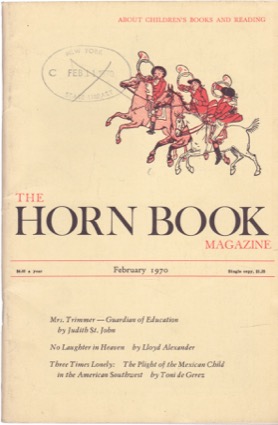
Softcover. Boston, The Horn Book, Inc, 1970, Book: Fair, Dust Jacket: None, Softcover, b&w illustrations, ads, reviews. Articles include No Laughter in Heaven by Lloyd Alexander, Three Times Lonely: The Plight of the Mexican Child in the American Southwest, The Art of Elizabeth Enright, others. Light stamp to front wrapper, otherwise clean.
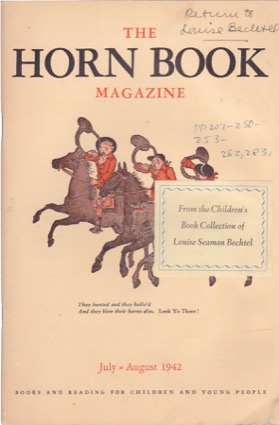
Softcover. Boston, The Horn Book, Inc, 1942, Book: Fair, Dust Jacket: None, Softcover, b&w illustrations, ads, reviews. Contains "Jack Darby on Writing Books for Children" by Walter D. Edmonds, Robert McCloskey's Caldecott acceptance speech, Of Rachel Field and Letters by Bertha Mahony, other articles on Field. Worn copy with wrinkling to pages.
Softcover. US, Picture This Press, 1st, 2012, Book: Very Good, Dust Jacket: None, Softcover, 224 pages. Volume 1: Drawings. Clean, unmarked copy with only minor wear to wrappers. Volume One focuses on Kley's ink drawings, and reprints for the first time a substantial selection of his illustration work for children's books and adult genre fiction, a side of Kley's career previously unexplored in other collections. This volume also includes a wide sampling of Kley's cartoons and magazine work, with newly collected examples taken directly from a variety of rare sources such as "Jugend," "Simplicissimus," and the historic "Der Orchideengarten" (the world's first fantasy fiction magazine). In all, more than 300 Kley illustrations and cartoons fill this first volume.
Hardcover. University of Nebraska Press, 1st, 2017, Book: Very Good, Dust Jacket: Very Good, Hardcover, 592 pages. Ring Lardner's influence on American letters is arguably greater than that of any other American writer in the early part of the twentieth century. Lauded by critics and the public for his groundbreaking short stories, Lardner was also the country's best-known journalist in the 1920s and early 1930s, when his voice was all but inescapable in American newspapers and magazines. Lardner's trenchant, observant, sly, and cynical writing style, along with a deep understanding of human foibles, made his articles wonderfully readable and his words resonate to this day. Ron Rapoport has gathered the best of Lardner's journalism from his earliest days at the South Bend Times through his years at the Chicago Tribune and his weekly column for the Bell Syndicate, which appeared in 150 newspapers and reached eight million readers. In these columns Lardner not only covered the great sporting events of the era--from Jack Dempsey's fights to the World Series and even an America's Cup--he also wrote about politics, war, and Prohibition, as well as parodies, poems, and penetrating observations on American life.
Softcover. Cambridge, Komatik Press, 1st, 2017, Book: Very Good, Dust Jacket: None, Softcover, oblong format. In 1917, while still in art school, Edward Shenton joined Company B, 103rd Engineers of the Pennsylvania National Guard. He stocked up on art materials, including many canvas-bound sketchbooks and a watercolor set, and went off to train and fight. Much of the war he witnessed made their way into his sketchbooks. When Ed returned home, no one wanted to hear about the war, much less see images of the horrors of battle. He went back to art school and his sketches were put away and forgotten. He had a brilliant career as an illustrator. His drawings graced the cover of Scribner's Magazine for ten years and embellished books by, among others, Hemingway, Fitzgerald and Thomas Wolf.Edward Shenton had a long career as an outstanding illustrator, author, and teacher and, after a very full life, died at the age of eighty-two. Nine decades after they were put away, his son came across Ed's sketchbooks and he and I decided that they, along with his father's wartime story, had to be shared with the world.
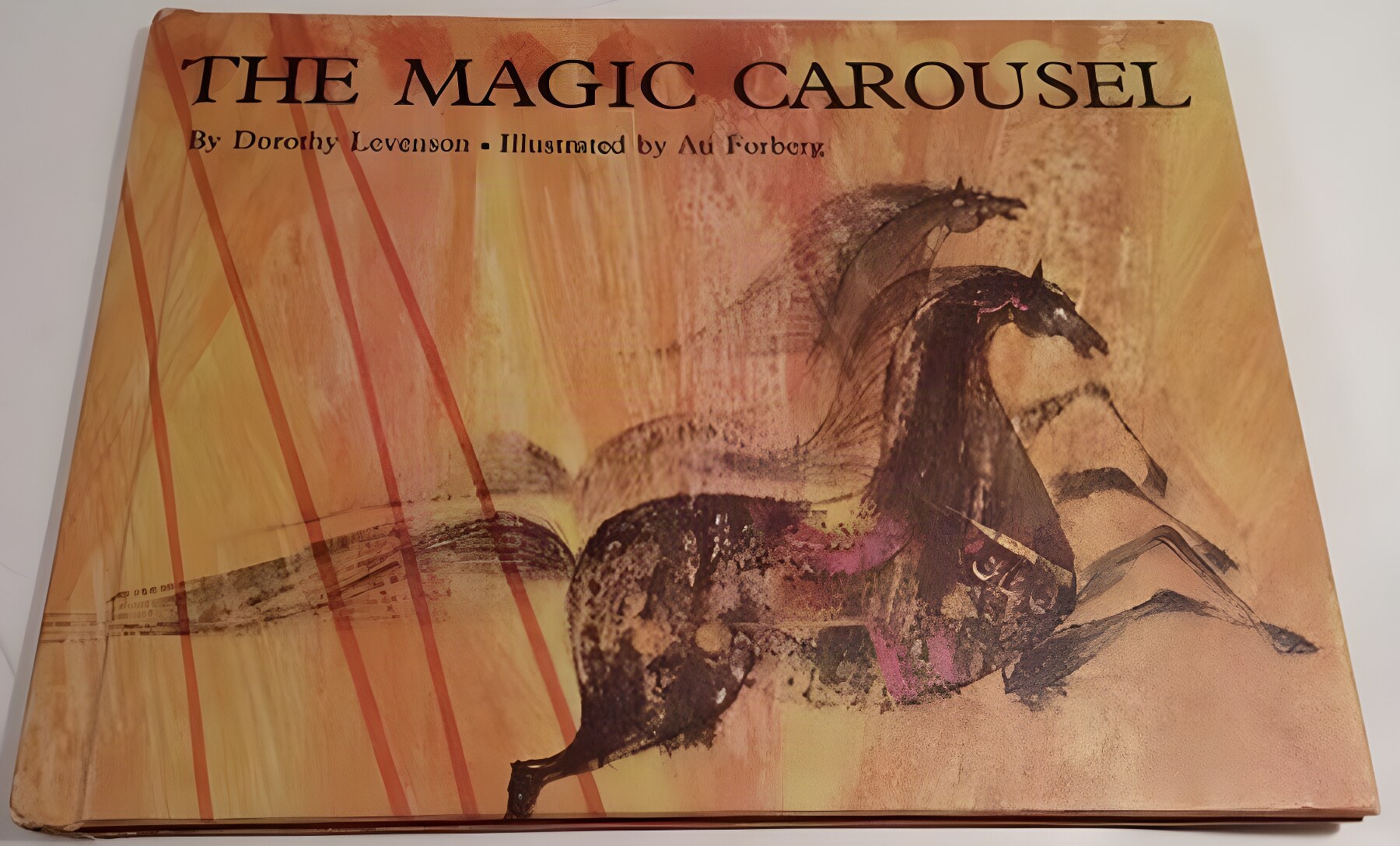
Hardcover. NY, Parents Magazine Press, 1st, 1967, Book: Very Good, Dust Jacket: None, Hardcover in pictorial boards, 36 pages with color art by Ati Forberg. Clean copy.
Hardcover. Madison WI, University of Wisconsin Press, reprint, 1989, Book: Very Good, Dust Jacket: None, Hardcover, brown cloth with white lettering on spine. 276 pages. Between 1868 and 1897 Henry James wrote a number of short essays and reviews of artists and art collections; these essays were published in magazines such as "Atlantic Monthly" and "Harper's Weekly" and in newspapers such as the "New York Tribune". They included James' comments on Ruskin, Turner, Whistler, Sargent, and the Impressionists, among many others. Thirty of these essays were collected and first published in a modern edition in 1956, accompanied by John Sweeney's introduction which sketched James' interests in the visual arts over a period of years, focusing on the ways in which painting and painters entered his work as subjects. Susan Griffin's new foreword places James' observations in a contemporary context. Some of the novelist's judgements will seem wrong to today's readers: he was very critical of the Impressionists, for example, but all of these essays bear the stamp of James' critical intelligence, and they tell us a great deal about his development as a writer during those years. Bight, clean copy.

 "The Cat Sold It!: The Feline Stars of the Advertising World by: Muncaster, Alice L./Ellen Yanow Sawyer")
 "The Classic Era of American Comicsby: Wright, Nicky")


 "The CoEvolution Quarterly-No. 20, Winter 1978 (Published by The Whole Earth Catalog) by: R. Crumb, Michael McClure, Gregory Corso, Wavy Gravy and others.")
 "The Comics Journal #292 (No. 292)by: Gary Groth, Mike Dean & Kristy Valenti (Ed.)")
 "The Comics Journal #297 (No. 297)by: Gary Groth (Ed.)")
 "The Comics Journal Library Vol. 9: Zap - The Interviewsby: Rosenkranz, Patrick")
 "The Compleat Cannonby: Wallace Wood")
 "The Complete Cartoons of the \"New Yorker\" (With DVD-ROM)by: Adam Gopnik")

 "The Curious Case of Sidd Finch (SIGNED COPY)by: Plimpton, George")





 "The Half-Naked Knightby: Andre Francois")
 "The Lost Art of Heinrich Kley, Volume 1: Drawingsby: Kley, Heinrich")
 "The Lost Journalism of Ring Lardnerby: Ring Lardner, Ron Rapoport , et al.")
 "The Lost Sketchbooks: A Young Artist in The Great War by: Passion, Rex")