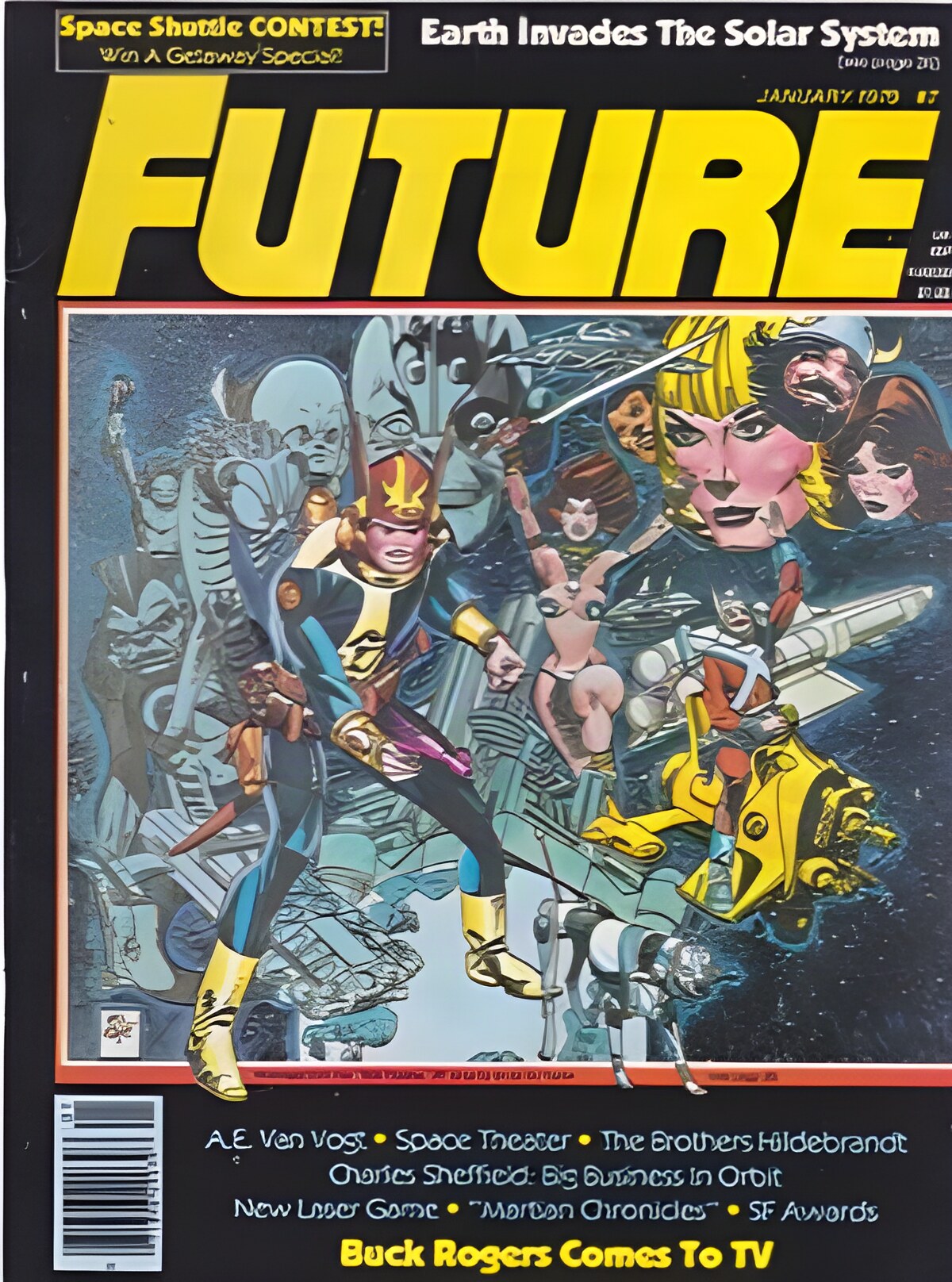
Softcover. NY, Kelly O'Quinn, 1st, 1979, Book: Very Good, Dust Jacket: None, Softcover magazine, 78 pages. Very light wear. A periodical devoted to scientific speculation about the future. This issue contains: Cover art of 'Star Hawks' by Gil Kane. An often overlooked magazine with a great interview with the Hildebrandt brothers. The interview reveals that they only had 36 hours to put together their original Star Wars poster that would eventually cement Star Wars as a classic. Magazine also features a spread of the Sci-Fi art of John Berkey (another classic Star Wars artist), Buck Rogers comes to TV, much more.
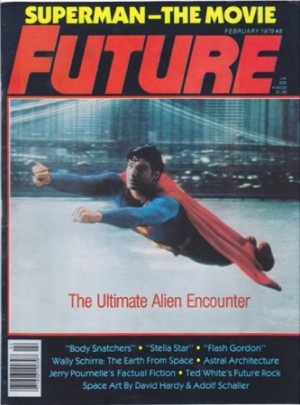
Softcover. NY, Kelly O'Quinn, 1st, 1979, Book: Very Good, Dust Jacket: None, Softcover magazine, 78 pages. Very light wear. A periodical devoted to scientific speculation about the future. This issue contains: Jerry Pournelle interview, Superman the Movie, Invasion of the Body Snatchers, Flash Gordon, David Hardy Art, Wally Schirra on the Earth from Space, much more.
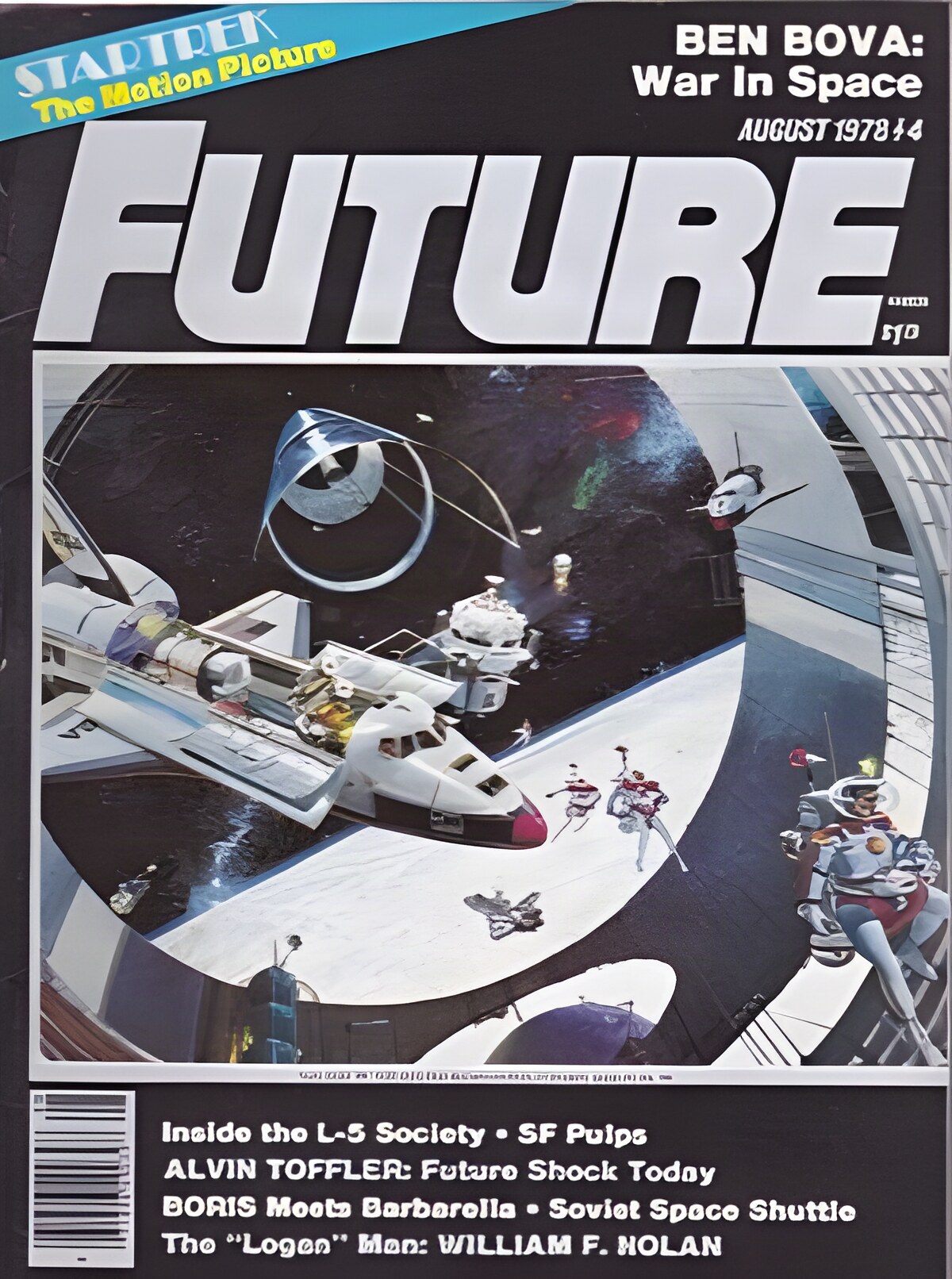
Softcover. NY, Kelly O'Quinn, 1st, 1978, Book: Very Good, Dust Jacket: None, Softcover magazine, 78 pages. Very light wear. A periodical devoted to scientific speculation about the future. This issue contains: Data bank, Logan's Runner William F. Nolan. Still Sittin' On Top of the World- The Amazing Group 1 Astronauts, Star Trek - The Movie, The World of SF Pulps, Civilization in Space, Space Now! - The L-5 Society's Henson Family Writes a Future scenario, SF Graphics- Boris Meets Barbarella, Navy Drops a Boom Theory, Space Art of Robert McCall, and much more.
Softcover. New York, Forge, 1st, 1996, Book: Very Good, Dust Jacket: None, 237 pages. Softcover. A very clean, unmarked copy with only minor edgewear. Nearly 150 Gahan Wilson cartoons appear for the very first time anywhere in Gahan Wilson's Even Weirder. An additional 90 cartoons make their debut in book form, after initial publication in The New Yorker, Playboy and other magazines.
Hardcover. NY, Farrar, Straus and Giroux, 1st, 2017, Book: Very Good, Dust Jacket: Very Good, Hardcover in a bright dust jacket, 206 pages. Famously unabashed, W. Eugene Smith was photography's most celebrated humanist. As a photo essayist at Life magazine in the 1940s and '50s, he established himself as an intimate chronicler of human culture. His photographs of war and disaster, villages and metropolises, doctors and midwives, revolutionized the role of images in journalism, transforming photography for decades to come. When Smith died in 1978, he left behind eighteen dollars in the bank and forty-four thousand pounds of archives. He was only fifty-nine, but he was flat worn-out. His death certificate read "stroke," but, as was said of the immortal jazzman Charlie Parker, Smith died of "everything," from drug and alcohol benders to weeklong work sessions with no sleep. Lured by the intoxicating trail of people that emerged from Smith's stupefying archive, Sam Stephenson began a quest to trace his footsteps. In Gene Smith's Sink, Stephenson merges traditional biography with rhythmic digressions to revive Smith's life and legacy. Traveling across twenty-nine states, Japan, and the Pacific, Stephenson profiles a lively cast of characters, including the playwright Tennessee Williams, to whom Smith likened himself; the avant-garde filmmaker Stan Brakhage, with whom he once shared a Swiss chalet; the artist Mary Frank, who was married to his friend Robert Frank; the jazz pianists Thelonious Monk and Sonny Clark, whose music was taped by Smith in his loft; and a series of obscure caregivers who helped keep Smith on his feet. The distillation of twenty years of research, Gene Smith's Sink is an unprecedented look into the photographer's potent legacy and the subjects around him. Clean, bright copy.
Softcover. New York, Harper Design, 1st, 2012, Book: Very Good, Dust Jacket: None, 255 pages. Softcover. Extensive b&w photographs and illustrations throughout. Illustrated frontispiece. Clean, unmarked copy with only minor wear to wrappers.
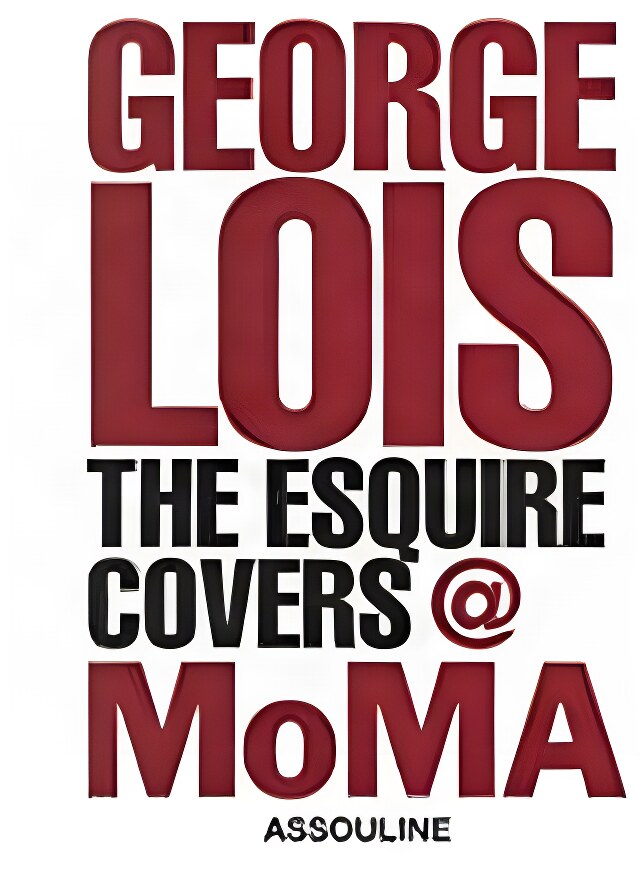
Hardcover. New York , Assouline Publishing, 1st, 2010, Book: Very Good, Dust Jacket: None, 200 pages, color illustrations. At the forefront of American advertising's creative revolution in the 1960s, George Lois was hand-picked by magazine editor Harold Hayes to visually convey that Esquire--a proponent of that era's New Journalism--was on the cutting edge of American culture. In 2008, New York City's Museum of Modern Art acquired a wide range of George Lois's groundbreaking, often controversial Esquire covers for its permanent collection. This fascinating catalogue presents the original exhibit, with additional covers and images from Lois's private collection, including photos of the designer at work and out-takes of the shoot that resulted in Andy Warhol "drowning" in one of his own tomato soup cans. Like new in publisher's shrink-wrap.
Hardcover. NY, Assouline Publishing , 1st, 2010, Book: Very Good, Dust Jacket: Very Good, Hardcover, 200 pages. In 2008, the Museum of Modern Art acquired a wide range of George Lois's groundbreaking Esquire magazine covers and put them on display for a full year. The Esquire Covers at MoMA collects the entirety of that exhibit, many more covers, and unseen images from Lois's private collection, including personal photographs of the designer at work and outtakes of a shoot with Andy Warhol. George Lois, who led advertising's creative revolution in the 1960s, was hand-picked by the legendary editor Harold Hayes to convey visually that Esquire--a leading proponent of another creative revolution of the time, New Journalism--was on the cutting edge of profound changes in American culture. With images of JFK, RFK, and Martin Luther King, Jr. watching over Arlington National Cemetery; of Richard Nixon under the makeup-artist's powder-puff; and of Muhammad Ali as the martyred Saint Sebastian, he did just that.
Hardcover. Richmond, Va., Candela Books, 1st, 2010, Book: Good, Dust Jacket: None, 100 pages. Hardcover. Extensive b&w photography throughout. Tipped in plate on front cover. Small stain to front cover, otherwise clean, tight copy. Working primarily from the 1940s through the early 1960s, the American photographer Gita Lenz (1910-2011) made documents of New York street life that won her early recognition and inclusion in two group shows curated by Edward Steichen for The Museum of Modern Art, a three-person show at the Brooklyn Museum and numerous articles and features in photography magazines of the time. Equally given to inflecting her portraiture with hints of social realism one on hand, and surrealism on the other, and also influenced by her close friend Aaron Siskind, Lenz produced abstract compositions, city still lifes, surreal still lifes and intimate portraits. She receded from view in the 1960s as financial demands impeded her practice, but in 2002, a chance meeting with photographer Gordon Stettinius led to the retrieval of this small but charming body of work, and the publication of this superbly printed first monograph.
Hardcover. NY, Abrams, 1st, 2024, Book: Very Good, Dust Jacket: None, Hardcover, pictorial boards, 330 pages. A visually captivating history of the evolution of Glamour magazine and the brands legendary decades at the forefront of female empowerment in an incredible photographic volume For more than 80 years, Glamour has been the preeminent women's empowerment brand in America. But until now, no one has told the extraordinary story of its origins, the famous names who helped shape the magazine into the global powerhouse it is today, and Glamour's many historic firsts. Glamour was the first American fashion magazine to feature a Black cover star, the first to present Gloria Steinem's writing, and the first to feature groundbreaking reporting on reproductive rights. In a gripping journey, follow the group of women editors and journalists who spearheaded the magazine as World War II transformed the female landscape with over 7.5 million working women suddenly in the US workforce in 1940 and repositioned the title from charting Hollywood glamour to the magazine for the girl with a job.
Softcover. Zurich, Graphis Press, 1st, 1974, Book: Very Good, Dust Jacket: None, English, German and French text. B&w and color illustrations. Very good.
Softcover. Zurich, Graphis Press, 1st, 1975, Book: Very Good, Dust Jacket: None, 124 pages. English, German and French text. B&w and color illustrations. Bottom right corner slightly bumped. Else a very clean, tight copy.
Softcover. Zurich, Graphis Press, 1st, 1975, Book: Very Good, Dust Jacket: None, English, German and French text. B&w and color illustrations. Light edge wear to wrappers. Else very good.
Softcover. Zurich, Graphis Press, 1st, 1975, Book: Very Good, Dust Jacket: None, English, German and French text. B&w and color illustrations. Spine faded. Else very good.
Softcover. Zurich, Graphis Press, 1st, 1975, Book: Very Good, Dust Jacket: None, English, German and French text. B&w and color illustrations. Very good.
Softcover. Zurich, Graphis Press, 1st, 1976, Book: Very Good, Dust Jacket: None, English, German and French text. B&w and color illustrations. Very good. Swiss Posters 1976. Kodak Colour Calender Contest, 1977. Fred Otnes. 1.international Animated Film Festival in Ottawa. Trends in Jewellery Design in Europe.
Softcover. Zurich, Graphis Press, 1st, 1977, Book: Very Good, Dust Jacket: None, English, German and French text. B&w and color illustrations. Very good.
Softcover. Zurich, Graphis Press, 1st, 1980, Book: Very Good, Dust Jacket: None, English, German and French text. B&w and color illustrations. Jan Swanka, Barbara Nessim, Erhard Gottlicher, Oswaldo Miranda.
Softcover. Zurich, Graphis Press, 1st, 1980, Book: Very Good, Dust Jacket: None, English, German and French text. B&w and color illustrations. Very good.
Softcover. Zurich, Graphis Press, 1st, 1986, Book: Very Good, Dust Jacket: None, 84 pages. English, German and French text. B&w and color illustrations. Very good. International graphic design magazine based out of Switzerland. No longer in print. Cover illustration by Andrzej Dudzinski. In Graphis magazine Issue 242, you'll find articles on: IBM--Design, Business & Education, by Steven Heller; Fourth Colorado International Invitational Poster Exhibition, by Philip E. Risbeck, Fort Collins, Colorado; Conception and Design of the USA Annual Reports 1983/84, by Richard A. Lewis, New York.
Softcover. Zurich, Graphis Press, 1st, 1988, Book: Very Good, Dust Jacket: None, English, German and French text. B&w and color illustrations. Very good. Subjects include Igarishi, Nygaard, and early tourism posters.
Los Angeles, circa 1980, Book: Very Good, A valentine greeting drawn with pen and color markers on white paper stock and signed 'Bill M." Approx. Bill Melendez was a animator who started at the Disney Studios in the late 30s and later became famous for directing the Peanuts animated specials for TV in the 1970s. The recipient of the card, Flanzy Lewis, was a reporter for Rona Barrett's Hollywood Magazine who interviewed Melendez.
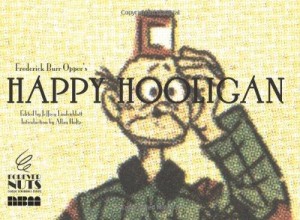
Hardcover. US, NBM Publishing, 1st, 2008, Book: Very Good, Dust Jacket: Very Good, Hardcover, 110 pages, illustrated throughout in color and b&w. Opper was already a quite successful cartoonist/illustrator for the prestigious Puck magazine when William Randolph Hearst lured him out to create a comic strip for the New York Journal. While a step down from (relatively) high to low brow, Opper jumped at the chance and out came ?Happy Hooligan" an un-heroized vagrant who ends up very badly at the end of each strip, no matter how much good he might mean. His perennial demise surely went on to inspire Wile E. Coyote or Mr. O, especially as his own cowardice and unworthiness contributes to his hilarious woes. This second entry in ?Forever Nuts' presents a collection of the better early full color Sundays. Clean, tight copy.
Hardcover. NY, Harper & Bros, 1868, Book: Good, Dust Jacket: None, 864 pages, b&w engravings throughout. 3/4 black calf leather over pebble grain cloth covered boards. Rubbing to the leather. Subjects: Lookout Mountain & How We Won It, John Bull in Abyssinia, Among the Andes of Peru and Bolivia, Fashions in Guinea, Chinese Embassy to Foreign Powers, Explorations in Lower California, Shooting Stars and Meteors, Fish Culture In America, many other articles. Hinges cracked, library bookplate on inside front cover, otherwise a clean, tight copy.

 "Gahan Wilson's Even Weirderby: Wilson, Gahan")

 "Gentry Man, The: A Guide for the Civilized Maleby: Rubenstein, Hal")
 "George Lois: The Esquire Coversby: Lois, George")
 "Gita Lenzby: Lenz/Gordon Stettinius, Gita")
 "Glamour: An Extraordinary History: 85 Years of Women Breaking Boundariesby: Pearlman, Natasha; Wolle, Ruhama; Moeslein, Anna")


 "Graphis, No. 173, Volume 30by: Herdeg, Walter (Ed.)")
 "Graphis, No. 177, Volume 31by: Herdeg, Walter (Ed.)")
 "Graphis, No. 178, Volume 31by: Herdeg, Walter (Ed.)")
 "Graphis, No. 179, Volume 31by: Herdeg, Walter (Ed.)")
 "Graphis, No. 180, Volume 31by: Herdeg, Walter (Ed.)")
 "Graphis, No. 188, Volume 32by: Herdeg, Walter (Ed.)")
 "Graphis, No. 191, Volume 33by: Herdeg, Walter (Ed.)")
 "Graphis, No. 210, Volume 36by: Herdeg, Walter (Ed.)")
 "Graphis, No. 212, Volume 36by: Herdeg, Walter (Ed.)")
 "Graphis, No. 242, Volume 42by: Herdeg, Walter (Ed.)")
 "Graphis, No. 254, Volume 44by: Herdeg, Walter (Ed.)")
 "Hand-Drawn Greeting Card (SIGNED)by: Bill Melendez")