Hardcover. NY, Abrams, 1st, 2008, Book: Very Good, Dust Jacket: Very Good, Hardcover, 300 pages. In this lavishly produced volume, journalist Gaudriault accompanies photographer Rancinan to Africa, Asia, Europe and the United States to interview 23 masters of contemporary photography, paying homage to fashion photographers and photojournalists, traditional chroniclers of their times and conceptual artists. Rancinan's photographs record each encounter in portraits that encapsulate each subject's relationship with his shared discipline. Readers follow paparazzo Ron Galella fending off the camera; Martin Parr, the sardonic chronicler of middle-class British life, having tea in a cafe; Rankin, the creator of the hip magazine Dazed and Confused, hopping into a trashcan filled with his own cast-off images. Gaudriault's short essays quote liberally from her interviews and provide both biographical information and incisive commentary. Several of the older photographers strike an elegiac tone and confess to finding themselves at the end of the eras that gave birth to their visions, but optimism reigns among younger practitioners: David LaChapelle is reinventing himself in Hawaii; Rankin is bearing witness to an age that is still young; and Oliviero Toscani, the radical combination of journalist and marketer behind the Benetton campaigns, describes billboards as the church frescoes of today.
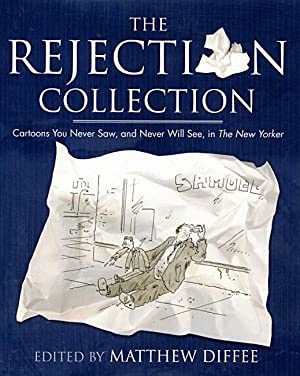
Hardcover. NY, Simon Spotlight Enterteinment, 1st, 2006, Book: Very Good, Dust Jacket: Very Good, Hardcover in a bright, unclipped dust jacket. We are accustomed to enjoying no more than 20 cartoons in each issue of the New Yorker Magazine. These are chosen from ten ideas, submitted weekly, by some 50 New Yorker cartoonists. This is an anthology of "the rejects" from known contributors edited by Matthew Diffee (himself a contributing cartoonist since 1999), and a foreword from Cartoon Editor Robert Mankoff of some 20 years. 264 pgs of hilarious rejected cartoons, accompanied by handwritten questionnaires & photographed self-portraits. Clean copy.
Softcover. Overlook Books, reprint, 2003, Book: Very Good, Dust Jacket: None, Softcover, 144 pages. The adorable squash-shaped character was so popular it immediately spawned the largest merchandising craze in the nation's history. In the words of Life magazine, the nation was "Shmoo-struck." The Short Life and Happy Times of the Shmoo collects, for the first time in one volume, Capp's essential comic strips about the Shmoo. This is Al Capp and his incisive social criticism at its best.
Hardcover. NY, Random House, 1st, 1999, Book: Very Good, Dust Jacket: Very Good, Hardcover, 240 pages. The Sixties is the product of a 30-year collaboration between photographer Richard Avedon and writer Doon Arbus, whose images and words combine in this volume to create a compelling portrait of one of the 20th century's most tumultuous decades. Avedon, the celebrated photographer whose portraits of some of the best-known personalities of our age have graced the pages of Harper's Bazaar, Vogue, and The New Yorker magazines since the early 1950s, was prolific during the '60s. Looked at together, his images from those years create a visual time capsule. This large book is filled with a cacophony of Yippies, Black Panthers, Weathermen, Hare Krishnas, Andy Warhol Factory Superstars, pop artists, rock musicians, astronauts, pacifists, politicians, electroshock therapists, media correspondents, civil rights lawyers, antiwar activists, and more--all shot against his signature white background. Arbus, a novelist and writer for magazines including Rolling Stone and The Nation (and the daughter of photographer Diane Arbus), conducted interviews with many of the subjects. Snippets of those conversations provide an intimate and unforgettable document of the tension, vulnerability, anger, recklessness, hope, and empowerment many people experienced during that era. Brief biographies of the portrait sitters, as well as a chronology that spans the first signs of the war in Vietnam in 1960 to its final conclusion in 1973, provide excellent context for the images.
Hardcover. NY, Random House, 1st, 1999, Book: Very Good, Dust Jacket: Very Good, Hardcover, 240 pages. The Sixties is the product of a 30-year collaboration between photographer Richard Avedon and writer Doon Arbus, whose images and words combine in this volume to create a compelling portrait of one of the 20th century's most tumultuous decades. Avedon, the celebrated photographer whose portraits of some of the best-known personalities of our age have graced the pages of Harper's Bazaar, Vogue, and The New Yorker magazines since the early 1950s, was prolific during the '60s. Looked at together, his images from those years create a visual time capsule. This large book is filled with a cacophony of Yippies, Black Panthers, Weathermen, Hare Krishnas, Andy Warhol Factory Superstars, pop artists, rock musicians, astronauts, pacifists, politicians, electroshock therapists, media correspondents, civil rights lawyers, antiwar activists, and more--all shot against his signature white background. Arbus, a novelist and writer for magazines including Rolling Stone and The Nation (and the daughter of photographer Diane Arbus), conducted interviews with many of the subjects. Snippets of those conversations provide an intimate and unforgettable document of the tension, vulnerability, anger, recklessness, hope, and empowerment many people experienced during that era. Brief biographies of the portrait sitters, as well as a chronology that spans the first signs of the war in Vietnam in 1960 to its final conclusion in 1973, provide excellent context for the images.
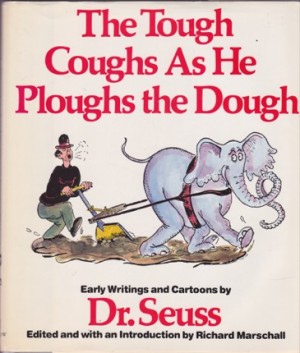
Hardcover. NY, William Morrow & Co, 1st, 1987, Book: Very Good, Dust Jacket: Very Good, Hardcover in a lightly worn, price clipped dust jacket with a short closed tear to rear panel. Writer and cartoonist Ted Geisel was a successful illustrator for humor magazines before he became children's book author Dr. Seuss. In 1925, he had graduated from Dartmouth College in New Hampshire, then developed comic masterpieces for a dozen years. The contents herein were drawn from those collections. Collected are essays of surrealism and literary nonsense including confessions on spying on General Grant during the Civil War; Cartoon essays supported by art creatures: Piscozooavistical Studies of Boids and Beasties; 17 full-page cartoon fantasies; Cartoon advertisements for Flit insecticide.
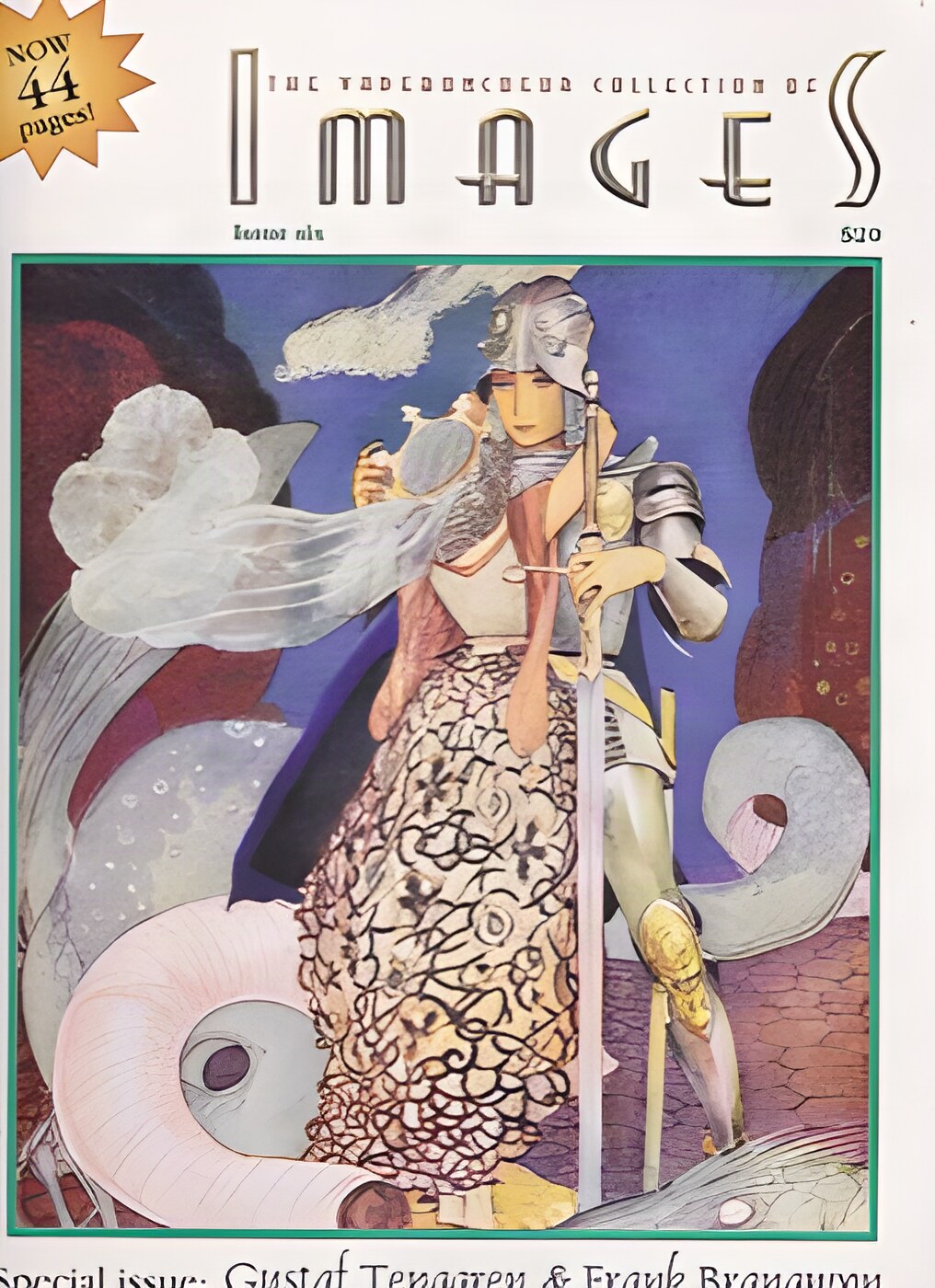
Softcover. Palo Alto CA, Jim Vadeboncoeur, 1st, 2003, Book: Very Good, Dust Jacket: None, Softcover magazine, 44 pages, features many rare color illustrations and lavish production. This issue concentrates on the work of just two artists, Gustaf Tenggren (1896-1970) & Frank Brangwyn (1967-1956). Tenggren originated in Sweden but emigrated to the USA in 1920, where he continued to provide illustrations for Swedish illustrated editions. Frank Brangwyn hailed from Bruges, Belgium. He moved to England with his English family to complete his education. Both artists work is illustrated with detailed texts to accompany the many illustrations. Clean copy.
Hardcover. UK, Pi Global Publishing Limited, 1st, 2005, Book: Very Good, Dust Jacket: None, Hardcover, large format pictorial boards, Drawn from Opie''s unrivalled collection, this scrapbook illustrates song sheets, magazine covers, comic postcards, fashion and food, games, propaganda posters and a wealth of British wartime ephemera whose very survival is remarkable. Due to size (10 1/2 X 15"), DOMESTIC SHIPPING ONLY.
NY, Penguin Studio, 1st, 1998, Book: Very Good, Dust Jacket: Very Good, Hardcover, 129 pages, 13.5 X 10". Foreword by Bernard Gersten. Introduction by John Guare. Well-illustrated throughout in color. On buses, billboards, and train platforms, in newspapers and magazines, a poster's swift promise in glorious color or powerful dark tones offers a vivid impression of what awaits a theatergoer, and provides the lasting mental image of a play long after its closing night. No one creates such images with more invention, honesty, and beauty--sometimes disturbingly, but always memorably--than James McMullan. The Theater Posters of James McMullan is an illuminating collection of thirty-six posters from 1976 to the present (from Arcadia and Carousel to Six Degrees of Separation), almost all of them for New York's Lincoln Center Theater, by this artist for whom "the body itself becomes a quickly understood gesture like the movement of a mime or a dance." The ragman hanging off the lamppost with his flaming match in Road, the French-postcard wink of the Anything Goes woman, Eros aiming his arrow in Four Baboons Admiring the Sun . . . full-page reproductions of McMullan's posters accompany his stories of their geneses. Reference photographs, sketches, and alternate versions illustrate his search for the perfect visual metaphor. Most of all, the personalities and dramas of the theater people who surrounded each poster's birth--from Wole Soyinka and John Guare to Liv Ullmann, Patti LuPone, and Mike Nichols--fill this gift book of choice for all theater and art lovers.Newspaper review laid in. Clean, very goog in a bright, unclipped dust jacket.
Hardcover. NY, Bloomsbury, 1st, 2008, Book: Very Good, Dust Jacket: Very Good, Hardcover, 400 pages. This wonderfully comprehensive collection spanning nearly three decades and arranged chronologically-and drawn from the pages of magazines including Scientific American and Redbook as well as The New Yorker-brings together, for the first time, the very best of Roz Chast, whom O Magazine called "the wryest pen since Dorothy Parker's."
Hardcover. NY, Bloomsbury, 1st, 2008, Book: Very Good, Dust Jacket: Very Good, Hardcover, 400 pages. This wonderfully comprehensive collection spanning nearly three decades and arranged chronologically-and drawn from the pages of magazines including Scientific American and Redbook as well as The New Yorker-brings together, for the first time, the very best of Roz Chast, whom O Magazine called "the wryest pen since Dorothy Parker's."
Hardcover. US, Acc Art Books, 1st, 2018, Book: Very Good, Dust Jacket: None, 224 pages. Hardcover with laminated boards. Like new in publisher's shrinkwrap. One of the largest archives of film-set photography and editorial magazine shots from the '70s and '80s. Introduction by Jacqueline Bisset and Charlotte Rampling. Archive contains almost 100 unseen pictures, all narrated by Eva Sereny herself: a top professional photographer, working in a male-dominated fieldo Includes shots from the sets of several great classical films ('The Great Gatsby', 'The Night Porter', and 'Indiana Jones and the Temple of Doom', and more)Stories and photography intermingle on the pages of this gorgeous homage to '70s and '80s cinema and celebrity. Including rare and never-before-seen images. Through Her Lens is a wonderful collection of images and memoires that capture the spirit of the age. From unexpected late-night calls from Romy Schneider, to a stay at Paul Newman's home in Connecticut; from working on set with Bernardo Bertolucci, Werner Herzog, Steven Spielberg and Sydney Pollack, to lounging poolside with Raquel Welch; Sereny reveals her favorite moments from working behind the lens. This is the first photographic retrospective of Sereny's star-studded career, including nearly 100 never-before-seen images complemented by Eva's own stories.
Hardcover. NY, Parents Magazine Press, 1st, 1967, Book: Very Good, Dust Jacket: Very Good, Hardcover in a bright dust jacket. Wonderful introduction to different styles of architecture. Illustrated in color by Devlin. Related notes & articles to various landmark houses laid-in. Dust jacket price clipped. Clean copy.
Hardcover. NY, PowerHouse Book, 1st, 2018, Book: Very Good, Dust Jacket: Very Good, 240 pages. Hardcover with dust jacket. Still in publishers shrinkwrap. During the 1950s and 60s, Tom Palumbo was part of an influential group of young photographers working for the best fashion magazines in America -Harper's BazaarandVogue. Tom perfected his craft under the guidance of legends like Alexey Brodovitch, Carmel Snow, Diana Vreeland, and Alex Liberman. Tom's serene style contrasted with Richard Avedon's jazzed-up images and Lillian Bassman's soft blurred effects. Often Tom's particular layouts provided the balance in an issue. His pictures invariably enhanced the fashions of the 50s, where women were thought of as objects of worship, and beauty was thought of as an ideal. Tom photographed every day, producing unique images like jazz legend Miles Davis laughing. He loved taking pictures of artists like next-door neighbors Comden and Green; the young Mia Farrow and Jane Fonda; novelist Jack Kerouac. Late in life, Tom worked in theatre. But to him there was never much difference in the photographs he took or the plays he directed since both contained drama. Paradox and revelation-these two elements energized Tom Palumbo's life. These rediscovered photographs, celebrated in their time but not seen in decades, are presented here in book form for the first time ever, by award-winning author and Palumbo's widow, Patricia Bosworth.
Hardcover. Seattle, Fantagraphics, 1st, 2022, Book: Very Good, Dust Jacket: None, Hardcover, large format pictorial boards, 200 pages. In 1949, the ambitious Charles Biro - who had previously co-created the realistically brutal comic Crime Does Not Pay - edited and wrote an oversized comic aimed at adults, called Tops. Like several other radical adult comics projects that would follow, it proved to be a commercial failure and lasted only two Life magazine-sized issues. The original comics have since become a legendary holy grail among comics fans and historians, fetching as much as $6,000 on the collector's market: written about but rarely seen and never reprinted. Until now.Fantagraphics' Tops collects both issues of these oversized experimental comics in their entirety. Some of the best craftsmen working in comics at that time drew these pulpy, sexy, and melodramatic stories: Dan Barry, George Tuska, and others. It includes two stunning pre-EC crime tales illustrated by Reed Crandall, reminiscent of his Crime SuspenStories work. Actor Melvyn Douglas (believe it or not) takes the reader on a tour of utopia, entitled "How Would You Live Under A World Government?" - a positive spin on global Socialism! A treasure trove of fascinating and revelatory comics history for scholars and fans, this compilation includes an introduction by the editor, the historian and cartoonist Michael T. Gilbert, as well as several other essays providing background on the creation of the series and the publisher, editors, and cartoonists who realized it. It includes a chronicle in essay form of experimental, adult comics endeavors throughout the first half of the 20th century. Tops is a landmark work of historical importance and a mind-boggling reading experience from a bygone era meticulously restored and reproduced in a deluxe hardcover in its originally published dimensions. Full-color illustrations throughout.
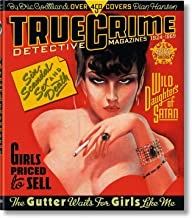
Hardcover. Taschen, 1st, 1013, Book: Very Good, Dust Jacket: Very Good, hardcover, 336 pages. At the height of the Jazz Age, when Prohibition was turning ordinary citizens into criminals and ordinary criminals into celebrities, America's true crime detective magazines were born. True Detective came first in 1924, and by 1934, when the Great Depression had produced colorful outlaws like Machine Gun Kelly, Bonnie and Clyde, Baby Face Nelson, and John Dillinger, the magazines were so popular cops and robbers alike vied to see themselves on the pages. Even FBI boss J. Edgar Hoover wrote regularly for what came to be called the "Dickbooks," referring to a popular slang term for a detective. As the decades rolled on, the magazines went through a curious metamorphosis, however. When liquor was once more legal, the Depression over and all the flashy criminals dead or imprisoned, the "detectives" turned to sin to make sales. Sexy bad girls in tight sweaters, slit skirts, and stiletto heels adorned every cover. Cover lines shouted "I Was a Girl Burglar-For Kicks," "Sex Habits of Women Killers," "Bride of Sin!," "She Played Me for a Sucker," and most succinctly, "Bad Woman."True Crime Detective Magazines follows the evolution and devolution of this distinctly American genre from 1924 to 1969. Hundreds of covers and interior images from dozens of magazine titles tell the story, not just of the "detectives," but also of America's attitudes towards sex, sin, crime, and punishment over five decades. With texts by magazine collector Eric Godtland, George Hagenauer, and True Detective editor Marc Gerald, True Crime Detective Magazines is an informative and entertaining look at one of the strangest publishing niches of all time.
Hardcover. US, teNeues, 1st, 2006, Book: Very Good, Dust Jacket: Very Good, Hardcover with dust jacket. 240 pages. Clean, tight copy. Like new in pubisher's shrinkwrap. In an increasingly mobile society, it's common to cross the globe many times in a single month. Journeys that might once have taken weeks, now take hours. All of this travel is a suitable metaphor for Andrew Macpherson's rise to the pinnacle of celebrity photography. He has literally traveled the world to profile the best-known people of our age; Charlize Theron, Reese Witherspoon, and George Clooney to name a few. As he's done so, he's also embarked on an artistic journey to bring something fresh and inviting to each of his images. In this quest, he employs a multitude of varied techniques, playing with form, context and color. A note of poignancy overshadows this work. Many of the original negatives were lost in a warehouse fire. It is a testament to the strength of Macpherson's work that even scanned from magazine pages - as some of these images are - the results still radiate vitality and power.
Softcover. New York, Doubleday, 3rd pr., 1986, Book: Very Good, Dust Jacket: None, 128 pages. Softcover with Light edgewear to wrappers. Cartoons by Roz Chast. Cartoons use puns and the author's offbeat sense of humor to poke fun at human nature and modern life in the United States. Originally appeared 1978-1981 mostly in The New Yorker magazine.
NY, Simon & Schuster, 1st, 2001, Book: Very Good, Dust Jacket: Very Good, Hardcover in a bright, unclipped dust jacket. Uphill with Archie is a beautifully written and deeply involving look at the life and the world of the great literary icon, poet Archibald MacLeish, by his youngest son. Partly an homage, partly an attempt to come to terms with the man (and the legend), Uphill with Archie speaks to all sons and daughters who have never completely resolved their feelings about powerful parents. Young William MacLeish grew up both captivated and cowed by the fame of a father who won Pulitzer Prizes for his poetry and comparable honors for his work as a lawyer, playwright, teacher, and government official. William's mother, Ada, began her marriage as a successful concert singer in Paris but later felt compelled to give up her art for her family. When Archie was working for Henry Luce and Fortune magazine, his younger children, watched over by a governess, stayed with their grandfather in Connecticut. But it is of the time spent with his family at Uphill Farm, a beautiful old house above a Massachusetts hilltown, that MacLeish has his fondest and most telling memories: "Archie and Ada gave me great gifts: music, the sound of the language beautifully spoken, the draw of knowledge, the arts of humor," William writes. "I learned to perform for them, and in time found myself addicted to getting a nice tan from Archie's sun. And the more I bathed in his light, the harder I found it to go looking for my own."
Hardcover. Seattle, Fantagraphics, 1st, 2013, Book: Very Good, Dust Jacket: None, Hardcover, 240 pages. Only a few months after the devastating attack on Pearl Harbor and the same year that Albert Camus offered the world his bleak vision of man's existence by introducing his philosophical dictum of The Absurd, Virgil Partch burst onto the scene with his own twist on the phrase. Partch was a cartoonist who offered comic counterpoint to the grim headlines and a unique perspective on human nature in the pages of the nation's most popular magazines. Known to millions by his jazzy signature, VIP, this comic genius ushered in a new era of the gag cartoon-zany, sometimes surreal, always hilarious-that inspired a generation of fellow cartoonists starting in the 1940s and '50s. His madcap style of humor was reflected in the cutting-edge comedic sensibilities of Burns & Allen, Jack Benny, Ernie Kovacs, Bob & Ray, Stan Freberg, and Jean Shepherd, and would position Partch as one of the most prolific "gag-men" of his day. VIP contributed to an astonishing array of magazines, wrote gags for other cartoonists, illustrated books, album covers, and advertisements, and adorned merchandise including, appropriately, cocktail glasses.VIP: The Mad World of Virgil Partch is the first time Partch's life and career has been treated in full, collecting amazing artwork from the entire range of his inspired career and featuring his own writings.
Softcover. Los Angeles, Society for Visual Anthropology, 1st, 1995, Book: Very Good, Dust Jacket: None, Softcover, magazine format, 144 pages. illustrated collection of provocative essays, occasional pieces, and dialogues with contributions from anthropologists, from cultural, literary and film critics and from image makers themselves. Includes: Articles on the cinema of Tim Asch, Paradise by James Clifford (on Papua New Guinea), Subtitling Ethnographic Films, other essays and reviews. Clean.
Softcover. Los Angeles, Society for Visual Anthropology, 1st, 1992, Book: Very Good, Dust Jacket: None, Softcover, magazine format, 120 pages. illustrated collection of provocative essays, occasional pieces, and dialogues with contributions from anthropologists, from cultural, literary and film critics and from image makers themselves. Includes: Reading Trash, Artaud, Rouch, & the Cinema of Cruelty; Remembering the Revolution, Forgetting the Empire; 'Thirty Centuries, the Splendors of Mexico'; What Is Real About Virtual Reality?; Marketing Alterity, other essays and reviews. Clean.
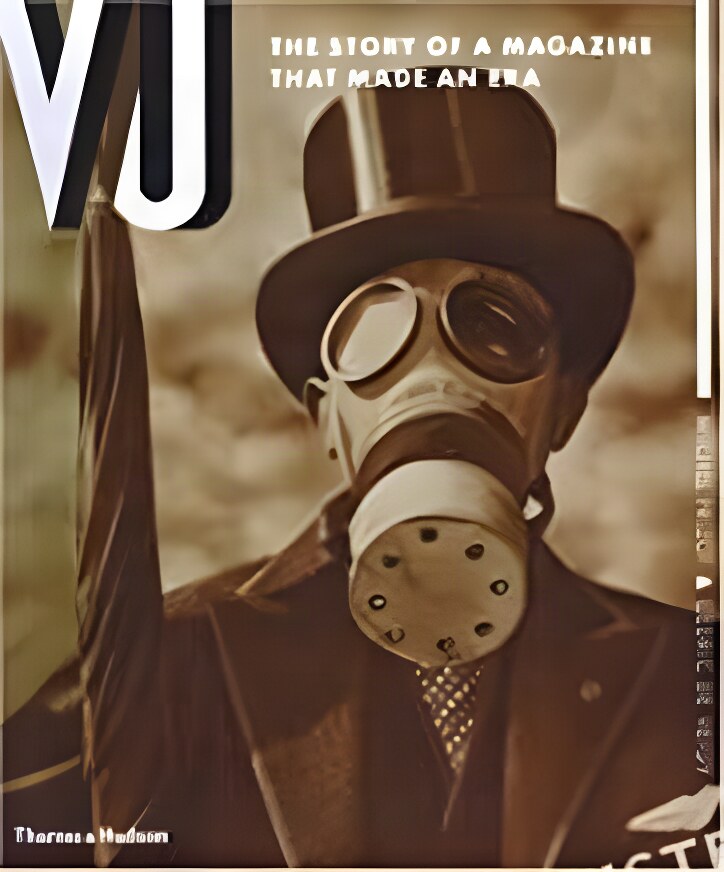
Hardcover. NY, Thames & Hudson;, 1st, 2009, Book: Very Good, Dust Jacket: Very Good, Hardcover in a bright, unclipped dust jacket. The best pages from the sensational photo magazine published in France in the 1920s and 1930s. Established in Paris in 1928, VU combined stunning photography with dynamic layouts and first-rate reporting, creating a revolution in journalism and setting the stage for future photo magazines like Life, Stern, and Paris Match. For a weekly magazine that only published 665 issues (21 March 1928 -- 5 June 1940) VU left behind a remarkable legacy as revealed in these pages. There are eight main chapters: Page layouts; Faces; Photo stories; Photomontages; The rise of Hitler; Sensation and spectacle; Image innovations; Covers and each is crammed with spreads and covers from the magazine and lots of them are big enough to read the stories and captions (assuming you know French). VU was created by publisher Lucien Vogel with editor Carlo Rim and art editor Alexander Liberman (who became US Vogue's art editor and later creative director of Conde Nast) as a general interest picture weekly, some years before Life and Look in the US and Picture Post in Britain. They all took advantage of developing technologies of the day like wire transmission of photos and rotogravure printing. VU was the first though to use photos in a very creative way, especially with cover montages created by Liberman, no doubt influenced by Russian magazines of the twenties designed Rodchenko, Tellingater, Lissitzky and Stepanova.
Hardcover. NY, Thames & Hudson, 1st, 2009, Hardcover, 320 pages. The best pages from the sensational photo magazine published in France in the 1920s and 1930s. Established in Paris in 1928, VU combined stunning photography with dynamic layouts and first-rate reporting, creating a revolution in journalism and setting the stage for future photo magazines like Life, Stern, and Paris Match. VU covered a wide and eclectic range of subjects including politics, world affairs, social issues, discoveries, exploration, the arts, sports, and entertainment. It intended to be an illustrated journal of the week's events-a movie newsreel on paper-and published work by some of the most important photographers of the time: Robert Capa, Andre Kertesz, Henri Cartier-Bresson, Brassai, Man Ray, and more. This book gathers some of the best work from more than 600 issues of VU: covers, double-page spreads, and complete reports. It provides both a record of the prewar world of the twenties and thirties, and an unparalleled history of photojournalism in the early twentieth century. 200+ b&w illustrations

 "The Photographer by: Gerard Rancinan and Caroline Gaudriault")
 "The Short Life and Happy Times of the Shmooby: Capp, Al")
 "The Sixtiesby: Avedon, Richard and Doon Arbus")
 "The Sixtiesby: Avedon, Richard and Doon Arbus")
 "The Wartime Scrapbook: The Home Front 1939-1945by: Opie, Robert")
 "Theater Posters of James McMullan, Theby: McMullan, James")
 "Theories of Everything: Selected, Collected, and Health-Inspected Cartoons, 1978-2006by: Chast, Roz")
 "Theories of Everything: Selected, Collected, and Health-Inspected Cartoons, 1978-2006by: Chast, Roz")
 "Through Her Lens: The Stories Behind the Photography of Eva Serenyby: Sereny, Eva")
 "To Grandfather's House We Go - A Roadside Tour of American Homesby: Harry Devlin")
 "Tom Palumbo: Dreamer with a Thousand Thrills: The Redicovered Photographsby: Bosworth, Patricia")
 "Tops: The Complete Collection of Charles Biro's Visionary 1949 Comic Book Seriesby: Charles Biro / Michael T. Gilbert")
 "Two Million Miles by: Macpherson, Andrew")
 "Unscientific Americansby: Chast, Roz")
 "Uphill with Archie: A Son's Journey by: William H. MacLeish")
 "VIP: The Mad World of Virgil Partchby: Virgil Partch and Jonathan Barli")
 "Visual Anthropology Review: Volume 11 Number 1/Spring 1995by: N/A")
 "Visual Anthropology Review: Volume 8 Number 2/Fall 1992by: N/A")
 "Vu: The Story of a Magazineby: C")