Hardcover. Columbus OH, Peter Bedrick, 1st US, 2003, Book: Very Good, Dust Jacket: None, Hardcover, 48 pages, glossy pictorial boards. Gorgeous, full-color panoramas of ancient landmarks are magnified with inset illustrations revealing fascinating details. A thumbnail history of the English theater, from its ancient and medieval predecessors to its suppression by the Puritans. Using the familiar one-topic-per-spread format, this tracks theater's checkered history as it slowly developed from a religious teaching tool to secular entertainment. Morley mixes fictional and historical characters to portray a player's often hand-to-mouth life. She focuses on Shakespeare's period in particular, describing the structure of a typical theater company, the major London stages of the time, what it was like to put on and to attend a play (specifically A Midsummer Night's Dream, though other plays and playwrights get mentions), and the Globe's phoenix-like career. Clean copy.
Hardcover. Bologna, Italy, Damiani, 1st, 2011, Book: Very Good, Dust Jacket: None, White cloth covers with gilt lettering and color picture on front. Like new in publisher's shrink-wrap. Holy Works is the culmination of Andres Serrano's vision of Christian iconography, reinterpreted photographically for the present. Serrano's intention with these works is not to recreate specific medieval or renaissance religious paintings, nor to invest them with the iconoclasm that made his name in the 1980s, but rather to renew the genre of sacred portraiture: "Rather than destroy sacred icons," says the artist, "I reinvent and reinforce them." Serrano's subjects for this series are selected from among his friends and acquaintances, emphasizing (like Caravaggio before him) the ordinariness of human features. The genres and themes are familiar, and Holy Works includes a "Last Supper" and a "Stations of the Cross" (rendered as a triptych panel), as well as bolder portrayals typical of Serrano--a "Blood Madonna" and a "Chinoise Madonna," for example. This volume is Serrano's major statement of his religious and artistic belief.
Hardcover. NY, Columbia University Press, 1st, 1993, Book: Very Good, Dust Jacket: Very Good, Hardcover in a bright dust jacket, 222 pages. Name on front fly leaf otherwise clean. Applying feminist theory to some lesser-known works by well known authors and painters, Munich (English, SUNY, Stony Brook) explores the psychological and cultural implications of the Victorian (male) treatment of the Perseus and Andromeda myth and its medieval analog, the legend of St. George and the dragon. With 31 photographs of the works discussed. A mild musty odor.
Hardcover. Notre Dame IN, University of Notre Dame Press, 1st, 1990, Book: Very Good, Dust Jacket: None, Hardcover, red cloth stamped in black and gilt. 227 pages plus a section of b&w plates in rear.. A series of nine papers delivered at a conference with the same name in 1988 at the University of Notre Dame. It considered the relationship between politics and the literary and visual arts. Political scientists and anthropologists focus on the institutions that express power relationships. The aim of the Notre Dame Conference was to consider the relationship between politics and the literary and visual arts. The visual arts considered in this volume range from the traditional fine arts categories of painting, sculpture and architecture to minor art objects such as medals, badges, banners and seals. In general terms, the study of politics denotes the study of power relationships. Within this larger framework political scientists and anthropologists have chosen to focus on the institutions and structures that express these relationships and/or the actions that are undertaken by individuals and groups to define, alter, or reinforce them. Clean copy.
Softcover. Sacramento CA, Crocker Art Museum, 1st, 2007, Book: Very Good, Dust Jacket: None, 47 pages, illustrated throughout in color. SIGNED BY ARTIST on front end paper. Clean, unmarked copy with only minor wear to wrappers. Robert Cremean (1932 - Present) is a sculptor (and occasional painter) born in Ohio, now based in Tomales Bay, California. Cremean does superlative figurative work. However, he has largely isolated himself from the American art mainstream to the extent that any showing is a considerable rarity. He's developed, via a benefactor, an "arrangement" with the Fresno Art Museum whereby it displays most of his new work. This book is from a show at the Crocker Art Museum, Sacramento, in 2005. Now 88, Cremean was early--and unsurprisingly-- influenced by medieval art, particularly the illuminated Chaucer manuscript at the Huntington Library. "I was amazed at the way the words and pictures met one another on the page." Most of his painted words are transcribed from his own notebooks.
Hardcover. NY, HarperCollins, 1st, 1994, Book: Very Good, Dust Jacket: Very Good, Hardcover in a bright, unclipped dust jacket. SIGNED by Babbitt on title page. Babbitt ( Tuck Everlasting ; Knee knock Rise ) has created some extraordinary children's books, and this one is no exception. It is, quite simply, Babbitt at her best. In a medieval castle, a king and queen argue a crucial question: what is the "best thing" for their young prince? The king insists that his wife gives the child too many toys ("If this keeps up, he'll turn out soft and silly"); she retorts that he gives him too many lessons ("If that keeps up, he'll turn out dry and dusty"). The king resorts to his books to find the answer, whereas the queen polls everyone she meets. The responses run the gamut from "vegetables" (the day nursemaid) to "sunshine" (the gardener) to "a song" (the court musician). But it is the cook's daughter who points the perplexed parents in the right direction, instructing them to ask the prince himself. "Bub," replies the toddler, which translates into the inarguably "very best thing": love. This splendid story is matched by exquisite artwork, which offers a refreshingly realistic depiction of the medieval setting and featuring the royal dog (patiently sporting a court jester's cap), who is entirely devoted to the very lovable prince.
Hardcover. New York, New York University Press, 1st, 1970, Book: Very Good, Dust Jacket: Very Good, 274 pages. Hardcover. Previous owners name at top right corner of front endpaper. Black & white illustrations. Faint foxing to edges. Includes Errata slip. Clean, tight copy.
Hardcover. New York , Assouline, 1st, 2005, Book: Very Good, Dust Jacket: Very Good, 80 pages, color illustrated throughout. Unclipped dust jacket. Mary Janes, Dots, Charms, Toostsie Rolls, Smarties, Chupa Chups lollypops. Candy is an sensual part of childhood. First there's the pleasure of seeing, then the practically mind-blowing pleasure of eating. And don't forget the simple pleasure of the creative, colorful wrapping. From the first candy shops in Medieval Europe to Tagada Strawberries that have delighted children worldwide, this book takes you on the historic journey of candy and sweets from New York to New Delhi, from Paris to Tokyo, London and beyond. Clean copy.
Hardcover. New York, Hastings House, 1st, 1963, Book: Good, Dust Jacket: Good, Hardcover, 574 pages. Nearly 400 photographs pictures 345 still standing houses of worship ranging from English medieval Gothic to classical Georgian, most of them pinpointed on 15 maps. Blue cloth, gilt lettering to spine and front cover. Dust jacket with minor edge wear. Original blue slip case, edge wear at bottom and opening edge. previous owner's inscription in front. Otherwise a clean, tight and crisp copy.
Hardcover. NY, Thames and Hudson, 1st, 1988, Book: Very Good, Dust Jacket: Very Good, Hardcover in a bright dust jacket, 240 pages. 226 illustrations, 50 in color, "Nudes comprised more than 20 percent of Degas' subject matter. His typical unclothed female is a slightly plump middle-class lady at her bath. Yet the French artist explored nudity in many guises. The symbolic figures of his Medieval War Scene and David and Goliath suggest vulnerable, naked humanity. Then there are the prostitutes of his brothel pictures, salaciously or humorously observed. There are women in meditative poses, asleep, dancing and, infrequently, making love to other women. There is a bit of the voyeur in Degas' images, but as British art historian Thomson shows, the painter transcended his own conventional categories of 'nice' bourgeois women and 'fallen' lower-class whores. His explorations of the nude in charcoal, pastel, oil and sculpture exude empathy, even nobility." Clean copy.
Hardcover. New York, Farrar Straus Giroux, 1st, 1970, Book: Very Good, Dust Jacket: Very Good, Color illustrated by Antonio Frasconi. Dust jacket shows some minor wear. Hardbound. Translated from the Yiddish by the author and Elizabeth Shub. The winner of the 1970 National Book Award for children's literature retells a Hebrew legend with vivid simplicity and an internationally respected artist interprets it with a sincerity and fresh vision reminiscent of medieval art.
Hardcover. Christie's, 1987-1989, Book: Very Good, Dust Jacket: None, Complete 7 volume set including index, bound handsomely in red cloth over boards with gilt lettering and insignia to front covers, gilt titles to spines. Part I, Eighteenth Century Books Including the Gutenberg Bible; Part II, Medieval and Renaissance Manuscripts; Part III, Printed Books and Manuscripts Including Western Americana; Part IV, Printed Books and Manuscripts Including Early Printing, Literature, and Fine Bindings; Part V, Printed Books and Manuscripts Including Americana, Literature, and Fine Bindings; Part VI, Printed Books and Manuscripts Concerning William Morris and His Circle; Index and Price Lists. (12" x 9"). 302pp, 125pp, 320pp, 344pp, 316pp, 102pp, 99pp. Color and b/w plates throughout.
Softcover. London, V & A Publications, 1st pbk, 1996, Book: Very Good, Dust Jacket: None, Softcover, 191 pages. Containing over 100 masterpieces from a major collection, this volume traces the history of European sculpture, from the early-Christian period through to the beginning of the 20th century. Highlights include the medieval ivories, works by many of the Italian Renaissance masters, English 18th-century pieces, such as Roubillac's statue of Handel and sculptures by Rodin. Clean, bright copy.
Hardcover. London, Phaidon Press Limited, 1st Edition, 1967, Book: Very Good, Dust Jacket: Good, Text Volume - 450 pages. Hardcover. Blue cloth boards with gilt titles & gilt decorations to cover, spine. Frontis illustration, Parement Master and Workshop: Annunciation, Paris, in full color, tipped-in. Previous owner's signature to front flyleaf. Dust jacket with foxing, toning, now protected with plastic cover. Light foxing to edges. Otherwise very good, clean condition. Plate Volume - Hardcover, blue cloth boards with gilt titles & decorations. 845 plates, 12 full page, full color, tipped-in & beautifully presented. Dust jacket with light foxing, now protected with plastic cover. Light foxing to edges. Bright, clean copy.
Hardcover. New York, Weybright and Talley, 1st US, 1969, Book: Very Good, Dust Jacket: Very Good, 248 pages. Hardcover. Illustrated with 370 black & white plates and a color frontispiece. Introduction by Henry Moore. Photographs by Ilario Bessi in collaboration with Henry Moore. Brown canvas, spine lettered in gilt, upper cover blocked in gilt with publishers' device, Dust jacket with light surface wear to back cover. Clean, tight copy.
Hardcover. NY, Orion Press/ Trianon Press, 1st, 1961, Book: Very Good, Dust Jacket: Very Good, Hardcover in a bright dust jacket. 180 pages, profusely illustrated in b&w. 112 pages of photos, 3 fold-outs. The definitive study of the 12th-century French sculptor, responsible for almost all the sculpture and reliefs in the medieval cathedral in Burgundy. Spine cracked at preliminary spread before title page. No markings, clean copy.
Hardcover. New York, Harry N. Abrams, Inc., 1st English, 1972, Book: Very Good, Dust Jacket: Very Good, 527 pages. Hardcover. Previous owners name and brief inscription on front endpaper. Illustrated with black & white photographs. Dust jacket with light wear. Clean, tight copy.
Hardcover. Amsterdam, Ludion Ghent/Abrams, 1st, 2001, Book: Very Good, Dust Jacket: None, 208 pages with 282 color plates, 53 in b&w. No dust jacket. Published to coincide with a major exhibition of the artist's work in Europe, this loving tribute to one of the greatest, and most bizarre, of the medieval painters introduces readers to the often grotesque vision expressed in his work.
Hardcover. Geneva, Edito-Service, 1st English Ed., 1968, Book: Very Good, Dust Jacket: None, Hardcover, pebbled red cloth with gilt decoration and color label on front cover. Good general overview of painting in Western Europe during the later Medieval period. Illustrated in color and b&w. Clean copy.
Hardcover. East Lothian, Scotland, Tuckwell Press , reprint, 1998, Book: Very Good, Dust Jacket: Very Good, Hardcover in a bright dust jacket. 339 pages, 18 figures on 12 b/w plates, map, end notes, appendix, bibliography, index. James IV is the best-known of all the late medieval Scottish rulers. Widely praised by his contemporaries, he combined the qualities of successful medieval monarch with a wide interest in the arts and sciences, while remaining acutely conscious of the need to enhance the prestige of his dynasty throughout Europe. This excellent study examines all aspects of James IV's sovereignty, explains his popularity and his highly successful kingship and assesses reasons for the disastrous end to the reign when the king and a large population of the Scottish nobility were eliminated in a single afternoon in 1513 at Flodden. Clean copy.
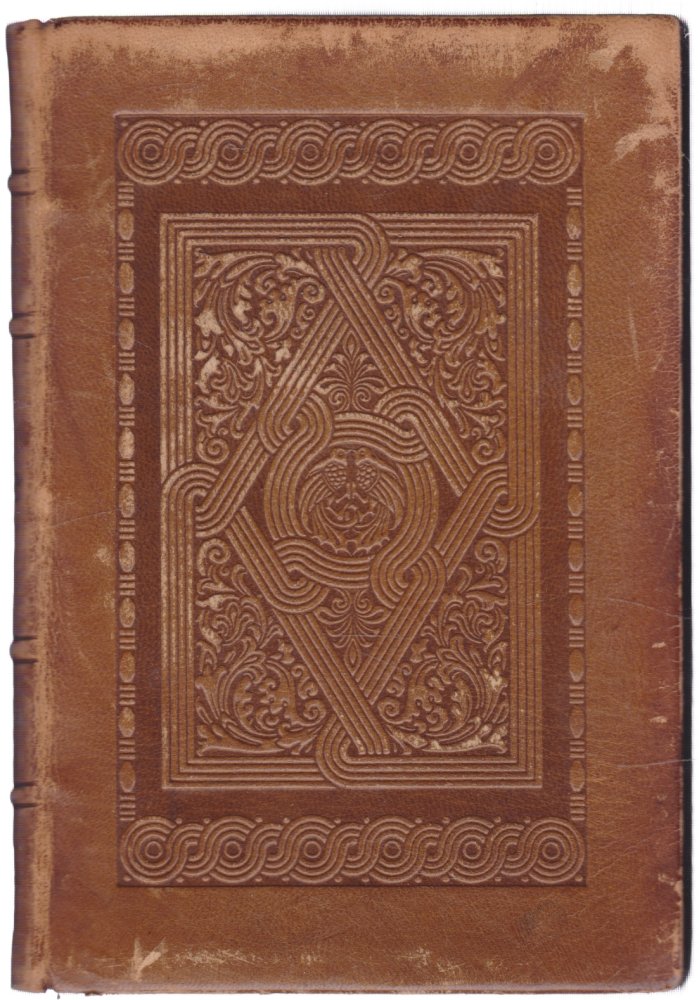
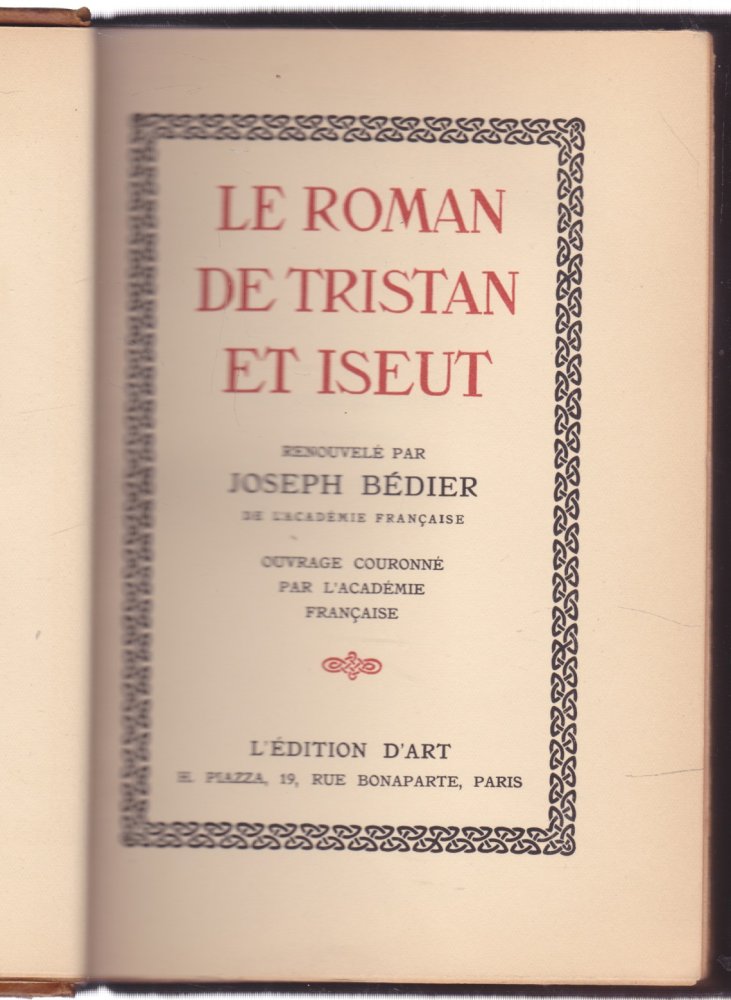
Hardcover. Paris, L'edition d'Art, 1922, Book: Very Good, Dust Jacket: None, Hardcover, embossed design on calf covers, gilt lettering on spine, 223 pages, top edge gilt. Marbled end sheets. French text. Edited by the celebrated French Medievalist Joseph Bedier of the L'Academe Francais. Inscribed by previous owner on first blank page with his related ephemera laid in. Otherwise clean. Calf covers worn at edges.
Hardcover. New Haven CT, Yale University Press, 1st, 2001, Book: Very Good, Dust Jacket: Very Good, Hardcover in a bright dust jacket, 387 pages. Color and b&w illustrations. Leading medieval historian Nicholas Orme draws together a vast range of sources and disciplines-history, literature, religion, and art-to create a picture of medieval childhood more comprehensive than ever before. Beginning with pregnancy and childbirth, Orme explores the succeeding stages of a child's growth to adulthood. He discusses baptism, the significance of birthdays and ages, and family life, including upbringing, food, clothes, sleep, and the plight of the poor. He also chronicles the misfortunes of childhood, from disablement, abuse, and accidents to illness and death. In a fascinating review of the special culture of children, the author describes their rhymes, toys, and games; their religion and relationship to the Church; and their learning to read the literature for children. The final chapter of the book explains how adolescents grew up and entered the adult world. Mild fade to spine, front fly leaf with two small scars to black paper, otherwise a clean, bright copy.
Hardcover. Limpsfield UK, Paper Tiger, 1st, 1981, Book: Very Good, Dust Jacket: Very Good, Hardcover in a bright, price-clipped dust jacket, 70 pages. 30 fables collected by the mysterious Marie de France, lavishly illustrated by Jason Carter and with new translations from original manuscripts. Carter's ancient-look, colorful artwork adds to the appeal. (The publisher has added `pre-foxed' pages.) Three of the tales are : The Bitch and Her Litter, The King of the Frogs, and The Crow Who Found Peacock Feathers. Each has an attached moral. Previous owner's inscription on front fly leaf, otherwise clean.
Softcover. Ithaca NY, Cornell University Press, reprint, 1991, Book: Very Good, Dust Jacket: None, Softcover, 204 pages. "Not of woman born," "the Fortunate," "the Unborn" - the terms designating those born by Caesarean section in medieval and Renaissance Europe were mysterious and ambiguous. In antiquity, children fortunate enough to have survived a Caesarean birth were believed to be marked for a special destiny. Vividly tracing the evolution of Caesarean birth from the early 1300s (when the operation was performed almost exclusively by midwives) through the Renaissance period (when midwives were considered witches and male surgeons took control), Blumenfeld-Kosinski . . . does more than provide [an] engrossingly accessible, historical account of the now-commonplace procedure--she unveils the roots of a medical misogyny that still prevails today. A richly cross-disciplined study utilizing depictions of Caesarean delivery in art, literature, and medical texts and illuminations (illustrations), [this book] is a captivating and revealing work that will be relished by readers of medical and cultural history, as well as by those who are interested in the subject of male dominance over women. Clean copy.