Hardcover. New York , Abrams, 1st, 2009, Book: Very Good, Dust Jacket: Very Good, Hardcover, 304 pages. Illustrated in color throughout. A survey of the many murals in the (now rapidly gentrifying) Mission District, the barrio Latino of San Francisco, combining elements of Mexican mural painting, surrealism, pop art, urban punk, and graffiti.
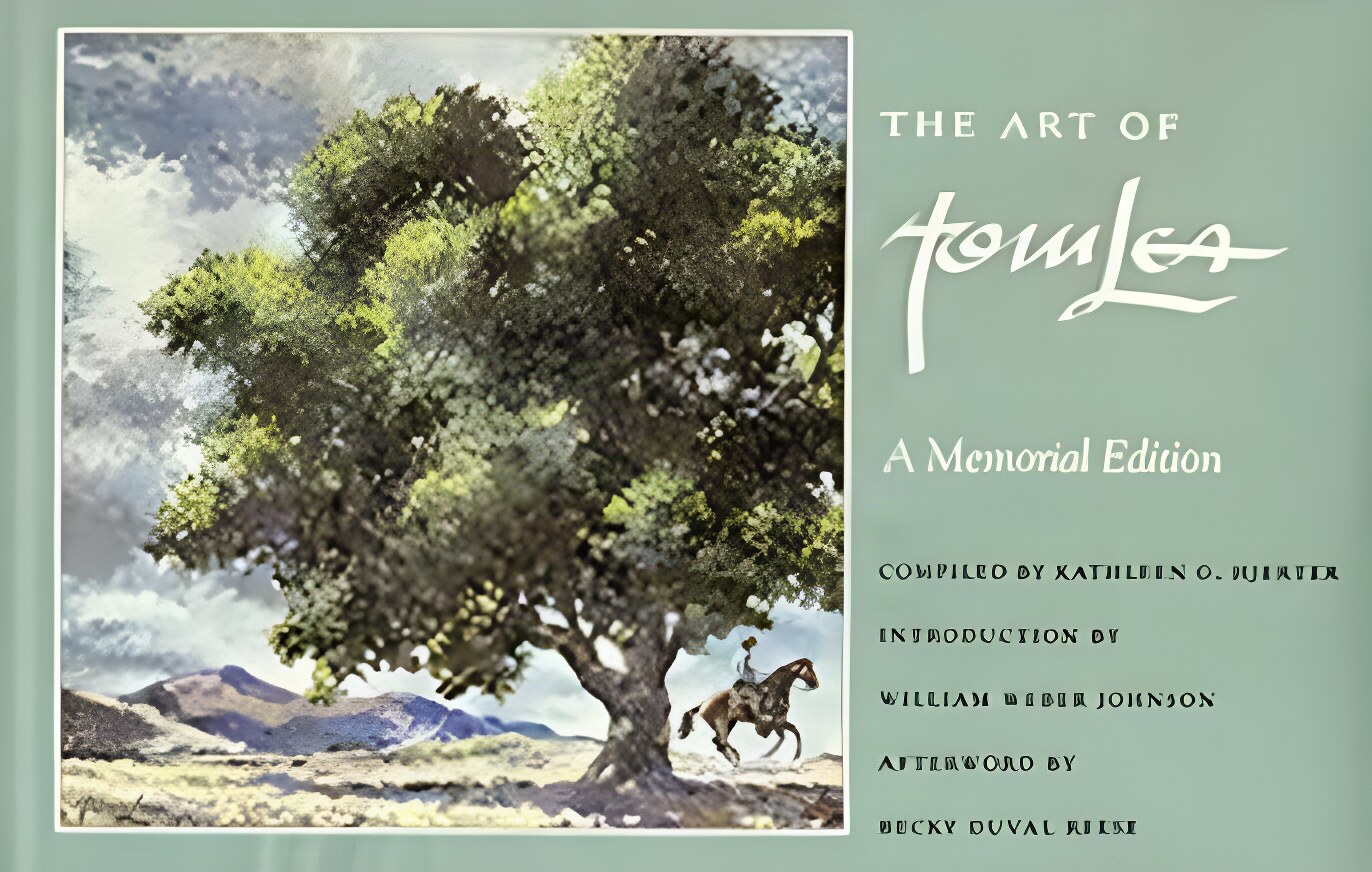
Hardcover. Texas A&M University Press;, 1st, 2003, Book: Very Good, Dust Jacket: Very Good, Hardcover, 276 pages. Tom Lea was a realist who painted things as they are, but just happened to see more of what they are than most of us do. A muralist, painter, book illustrator, World War II artist-correspondent, historian, novelist, and humanist, Lea died in 2001 after creating in some sixty years a corpus of work that has captivated those who know it. This volume makes available the full range of his vigorous work. Old admirers of Lea's talents will delight in this presentation, and a whole new generation will be awed by the unique contribution he has made. A Southwesterner from multicultural El Paso, Lea gave new vision to the misunderstood lands often thought of as barren wastes. As Kathleen G. Hjerter says in her foreword, in his paintings "the desert's melded colors are vibrant under many subtle gradations of light; the mesas and mountains reach up to a sky enormous enough to hold everyone's soul." But it is not just the southwest. its life and lore that Lea knew. Any subject he portrayed in picture or words (he wrote several outstanding books, including The Wonderful Country) he first researched minutely. Thus, he brought marvelous detail to his portrayal of the Mexican bullfighter, the Australian ranches and Texas cattle of the King empire, and the Indians, pioneers, and ranch hands of his own corner of the world. In the Second World War, as an artist-correspondent for Life magazine, he captured both the weaponry and the emotions of war. On assignment in China he developed a love for that land that gave him not only many subjects for paintings but also his favorite and, in later years, most characteristic medium: Chinese ink applied with a fine brush. This is a heavy and oversized book and will require extra shipping. International customers please ask for a shipping quote before purchasing.
Hardcover. NY, Prestel, 1st, 2016, Book: Very Good, Dust Jacket: None, Hardcover, gray cloth with yellow band, 248 pages. This beautiful book focuses on the distinctive and expressive power of Jackson Pollock's figurative paintings, drawings, and prints; a rarely studied aspect of his artistic career. Jackson Pollock's name has become synonymous with the abstract drip paintings that he famously created on the floor of his studio. Before these paintings, from the 1930s to the late 1940s, Pollock created figurative works, studying at one time under the painter Thomas Hart Benton and with the Mexican muralists Diego Rivera, José Clemente Orozco, and David Alfaro Siqueiros. Pollock took up figuration again after his famous drip paintings. This book starts with the early decades and also treats Pollock's re-adoption of the figuration after his renowned abstract paintings. The Figurative Pollock features 100 paintings and works on paper. From rolling landscapes to experiments in non-Western totemic painting to sketches and drawings fueled by Jungian analysis, the enormous range of Pollock's early and late work is presented here. Brimming with confidence and a sense of freedom, distinct yet so easily related to Pollock's most famous oeuvre, these works contribute to an understanding of how the artist found his voice.
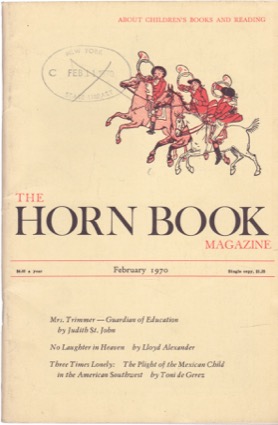
Softcover. Boston, The Horn Book, Inc, 1970, Book: Fair, Dust Jacket: None, Softcover, b&w illustrations, ads, reviews. Articles include No Laughter in Heaven by Lloyd Alexander, Three Times Lonely: The Plight of the Mexican Child in the American Southwest, The Art of Elizabeth Enright, others. Light stamp to front wrapper, otherwise clean.
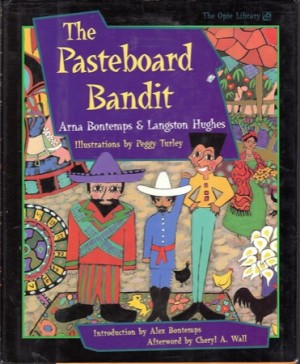
Hardcover. NY, Oxford University Press, 1st, 1997, Book: Very Good, Dust Jacket: Very Good, Hardcover in a bright, unclipped dust jacket. 94 pages, color illustrations by Peggy Turley. In this delightful children's tale, an American boy, Kenny Strange, moves to the quiet Mexican town of Taxco with his parents and strikes up a friendship with young Juanito Perez, a Taxco native. The two boys are brought together by an enchanting toy, the pasteboard bandit Tito. Chosen by Juanito at a town fair from among the other pasteboard toys, Tito, with his colorful clothes and bright eyes, becomes Juanito's and Kenny's constant companion, and the threesome share many adventures in and around the town's rolling green hills. The boys' growing friendship, Kenny's introduction to a culture unlike his own, and Tito's witty reflections on being a toy will be recognized instantly by anyone young or old who has ever made a friend or imagined that a toy might be real. Originally written in 1935, but never before published, The Pasteboard Bandit grew out of several trips Langston Hughes made to Mexico during his lifetime. Hughes first went to the town of Toluca at age 5 to visit his father, and again when he was older. During these visits, Hughes met many writers and artists, and it is their influence that informs the story of The Pasteboard Bandit--a story of two cultures meeting. When Hughes left Mexico for the last time, at age 32, he was carrying the first draft for The Pasteboard Bandit. Clean copy.
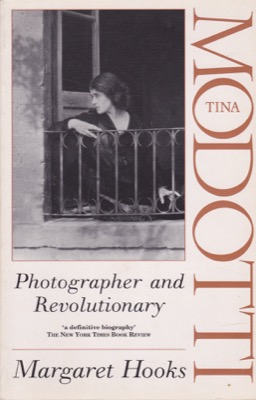
Softcover. NY, HarperCollins, 1st pbk, 1995, Book: Very Good, Dust Jacket: None, Softcover, 296 pages, b&w illustrations. The apt subtitle of this award-winning biography, Photographer & Revolutionary, sums up the creative tensions that characterized Tina Modotti's life and brief photographic career. Active as a photographer for only nine years, Modotti was pulled between formal and social concerns. Producing striking modernist compositions of everyday objects, photojournalism of poverty and conflict, and portraits of celebrities and common people alike, Modotti balanced political concerns with formal rigor. First published in 1993 and long out of print, Tina Modotti: Photographer & Revolutionary is the definitive portrayal of Modotti's life and work. Few photographers are more deserving of a biographical treatment than Modotti, whose work as an actress and artist's model introduced her to Edward Weston, who was to become her lover. Soon after she arrived in Mexico City with Weston, Modotti became increasingly politicized, working for the communist newspaper El Machete and establishing herself as the go-to photographer for the Mexican Muralist movement. The book includes extensive archival material, interviews with Modotti's contemporaries and many rare photographs. Clean copy.
Hardcover. Guadalajara, Jalisco, Centro Metropolitano, 1st, 1988, Book: Very Good, Dust Jacket: None, Hardcover, black cloth covers stamped in gilt with a photographic label on front. A study of the Mexican artist's sculpture. Illustrated in b&w and color, 194 pages plus index. Clean copy.

 "Street Art San Francisco: Mission Muralismoby: Jacoby, Annice (Editor)")
 "The Figurative Pollockby: Josef Helfenstein , Nina Zimmer, et al.")