Softcover. Washington DC, National Geographic Society, 1st, 1930, Book: Very Good, Dust Jacket: None, Original magazines July - December 1930, in a green pebbled hardcover binding. Magazines are dated and paged, with photographs and maps, but do not have covers, advertisements, etc. Includes: Mexico's west coast; 3 articles on the conquest of Antarctica; Unmapped areas of China, Unexplored areas of the Philippines; Chateau country of France; Yugoslavia; Virgil's Aeneid and Roman Geography; Strange tribes in the Shan States of Burma; The Yukon trail of 1898; Viking life in the Faeroes; and much more. Clean, bright volume.
Softcover. Albuquerque, University of New Mexico, 1st, 1981, Book: Very Good, Dust Jacket: None, Softcover, 113 pages, b&w and color illustrations. Light smudging to back wrapper; else a very clean, tight copy. This splendid publication, a compact guide to rug dating and identification, examines patterns, styles, and weaving materials of Navajo rugs. In order to produce this heavily illustrated volume, the author, a noted authority in the field, examined thousands of rugs in public collections and researched the catalogues turn-of-the century traders used for their rug customers
Softcover. Washington, D.C., Smithsonian, 1st, November 17, 1991, Book: Very Good, Dust Jacket: None, INSCRIBED BY PHOTOGRAPHER. Softcover, 256 pages, b&w photographs. A very clean, tight copy. In interviews and photographic portraits, [the author] and [the photographer] bring together forty-nine of Mexico's most acclaimed artists in the performing, visual, and literary arts, displaying the creative energy of a nation.
Hardcover. New Haven, CT, Yale University Press, 1st, 2015, Book: Very Good, Dust Jacket: None, 480 pages. Hardcover with no dust jacket. Very clean, unmarked copy still in shrink wrap. 378 color and 10 black & white illustrations. Tight copy. While European art forms were widely disseminated, copied, and adapted throughout Latin America, colonial painting is not a derivative extension of Europe. The ongoing debate over what to call it-mestizo, hybrid, creole, indo-hispanic, tequitqui-testifies to a fundamental yet unresolved question of identity. Comparing and contrasting the Viceroyalties of New Spain, with its center in modern-day Mexico, and Peru, the authors explore the very different ways the two regions responded to the influence of the Europeans and their art. A wide range of art and artists are considered, some for the first time.
Hardcover. US, Univ of New Mexico Press, 1st, 1995-10-01, Book: Very Good, Dust Jacket: Very Good, 227 pages. Minor edgewear to dust jacket, else a clean, tight copy. A in depth study of the exhibition held at the Museum of Modern Art in 1955, and its influence, with a final chapter on "Edward Steichen, Robert Frank and American Modernism".
Hardcover. Museum of New Mexico Press, 1st, 2003, Book: Very Good, Dust Jacket: Very Good, Hardcover, 124 pages. Featuring eighty-two vintage postcards published beginning at the turn of the century, Postcards of the Night traces American cultural life as it was transformed by industrial strength and shifting demographics. The nation increasingly was growing more educated, upwardly mobile, and urban, and the nighttime postcard popularized this modernism for ordinary consumption. Coalitions of city planners and urban developers, politicians and the media utilized the picture postcard to strategize the role of the individual in the rise of the city. It was the birth of leisure and of travel, the new tourist city to which the postcard needed forcefully to speak, in ways that were equal part artifice and art.
Hardcover. NY, Abbeville Press, 1st, 2010, Book: Very Good, Dust Jacket: Very Good, Hardcover in a bright dust jacket. 336 pages illustrated in color. This authoritative yet accessible study begins with an overview of the aesthetics, meanings, functions, and techniques of Mesoamerican architecture, and then proceeds to survey the historical development of the builder's art in each of the region's cultural areas. As readers travel from the Maya heartland of Guatemala and the Yucatan to the Aztec stronghold of the Valley of Mexico, and all the way to the northern hinterlands of Mesoamerica, they will gain an appreciation of both the unity and the diversity of the region's architecture. Clean copy. DOMESTIC SHIPPING ONLY.
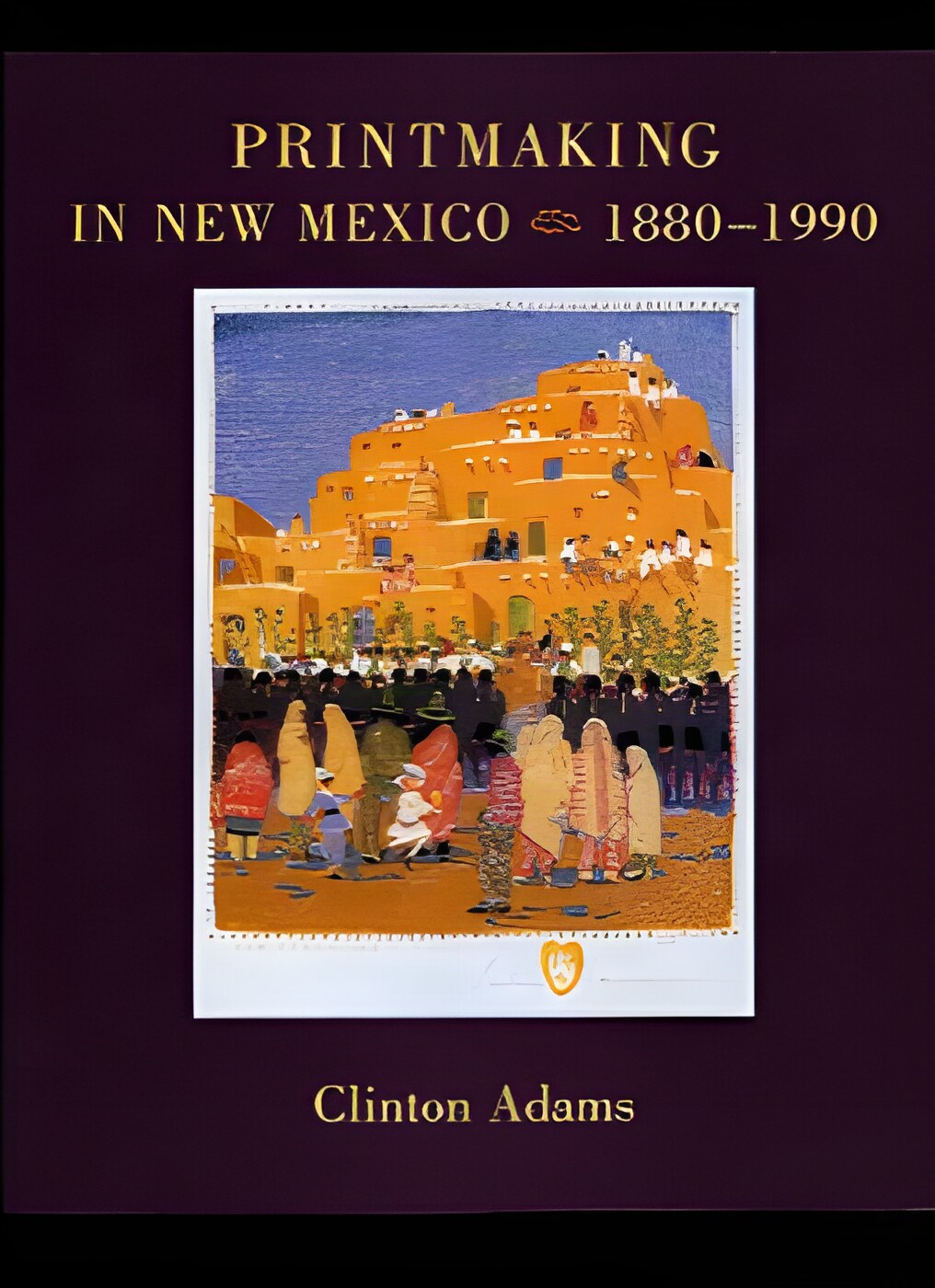
Softcover. Albuquerque NM, University of New Mexico Press, 1st, 1991, Book: Very Good, Dust Jacket: None, Softcover, 167 pages. Over 100 etchings, woodcuts, lithographs, and serigraphs by New Mexicans or relating to New Mexico, are accompanied by a review of the art over the past century. Clean copy.
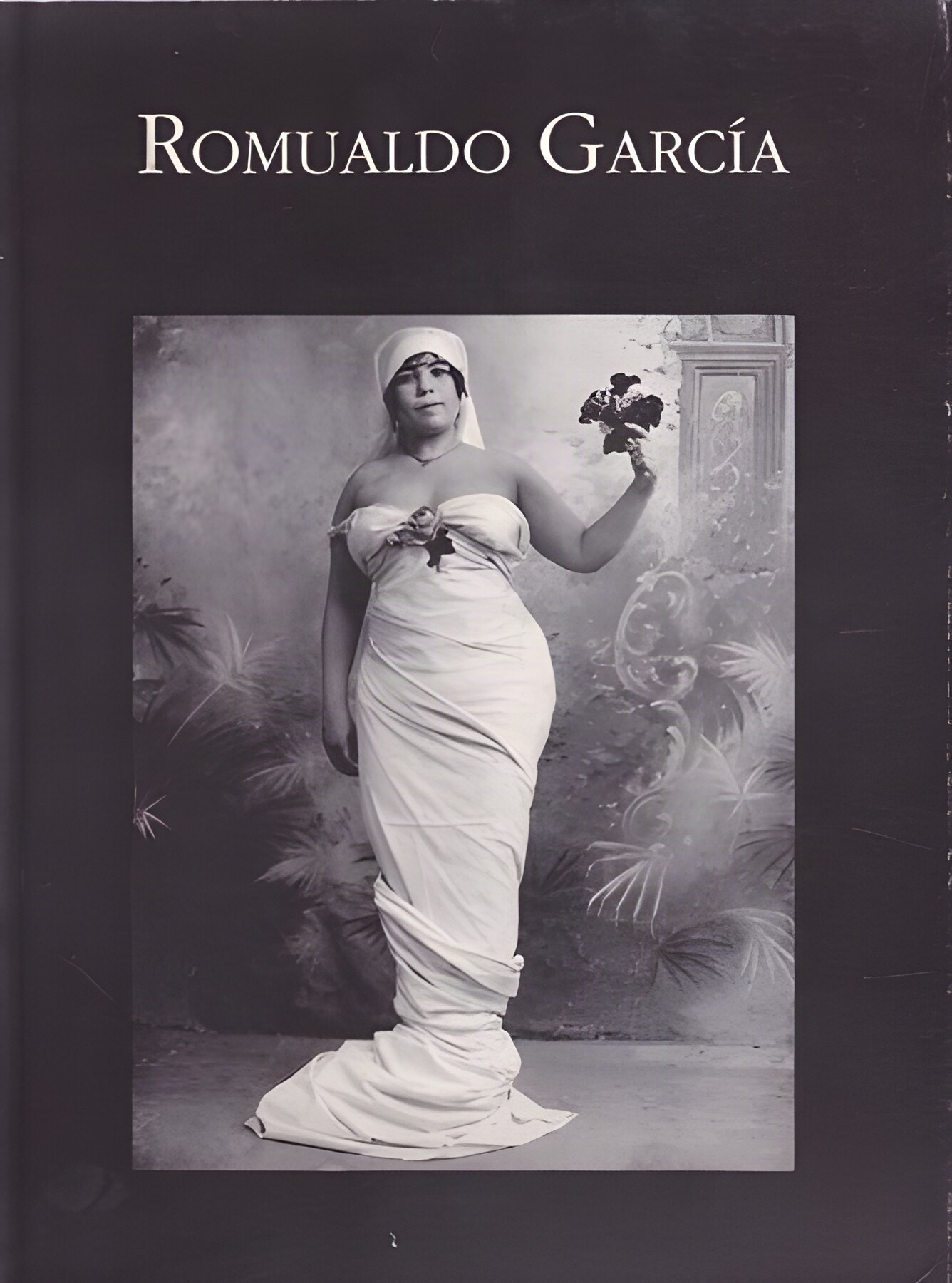
Softcover. Museo de Arte Contempaneo de Monterrey, 1st, 1993, Book: Very Good, Dust Jacket: None, Softcover, 64 pages. Numerous full page b&w photographs. Essay by Elena Poniatowska. Text in English and Spanish. Translated by John Page. Early 1900s portraits by a Mexican photographer in Guanajuato. Mild shelf wear, clean copy.
Hardcover. New Haven CT, Yale University Press, 1st, 2008, Book: Very Good, Dust Jacket: Very Good, Hardcover, 208 pages. This engrossing book presents the photographs of four historically engaged artists and explains what they reveal about the highly dramatic revolutionary and post-revolutionary period in Mexico from 1910 to 1935. The works of these photographers--American Walter H. Horne, Italian Tina Modotti, and Mexicans Agustin Victor Casasola and Manuel Alvarez Bravo--are discussed not just as windows onto events but as artworks that offer both objective reporting and stylized expression.The twenty-five years covered in the book encompass some of the most convulsive developments in Mexico, from the violence and cataclysmic changes wrought by the Mexican Revolution to the immense struggles to forge a new nation and a new government. During this period, the work of the four photographers--two primarily documentary, one propagandistic, and one artistic and personal--enabled Mexicans to understand the forces that had brought their nation to armed conflict and social transformation.
Hardcover. Rome , Compagnia Edizioni Internazionali, Reprint , 1968, Book: Very Good, Dust Jacket: Very Good, 173 pages. Hardcover. Numerous full color illustrations. Illustrated flyleaves and endpapers. INSCRIBED BY AUTHOR on frontispiece. Gray and white dust jacket with full color illustration on the front. Light edgewear and foxing on top edge.
Hardcover. Albuquerque NM, University of New Mexico Press, reprint, 1988, Book: Very Good, Dust Jacket: Very Good, Hardcover in a bright dust jacket, 107 pages. A collection of Georgia O'Keeffe's major drawings done between 1915 and 1963. Each drawing is accompanied by the artist's comments, usually on how, why, where or when she made the drawing. Originally published in 1974 in a signed limited edition of 100 copies. Edited by Doris Bry. Clean copy.
Softcover. Santa Fe NM, Museum of New Mexico Press, 2nd pr, 1988, Book: Very Good, Dust Jacket: None, Softcover in pictorial wraps. Foreword by George Kubler. Profusely illustrated in color and black and white. 127 pages. 81 artists interpret this masterpiece of 19th century Spanish Franciscan architecture. Map of Taos laid in. Clean copy.
NY, McGraw-Hill, 2nd Ed., 1968, Book: Very Good, Dust Jacket: Very Good, Hardcover, Pictorial dust jacket over blue paper covered boards and silver lettering. Blue and black illustrations by Frederic Marvin. Twenty retold legends from Mexico with pronunciation guide but no sources. the artist was educated and has exhibited in Mexico. Clean copy.
Hardcover. Mexico, Fundacion Olga y Rufino Tamayo, Reprint, 2002, Book: Very Good, Dust Jacket: Very Good, 150 pages. Hardcover with dust jacket. Clean, unmarked copy with only minor wear to dust jacket. Book text in Spanish. Former price tag residue on back of dust jacket. Color illustrations throughout.
Hardcover. NY, NBM, 1st, 2007, Book: Very Good, Dust Jacket: Very Good, Hardcover, 192 pages. Early b&w comic strips. Mutt and Jeff was the first successful daily comic strip; before it, the funnies were Sunday features. It debuted in 1907, however, as A. Mutt, limning the follies of lanky racetrack gambler Augustus Mutt. Diminutive sidekick Jeff appeared the following year to form a partnership that lasted until the strip's overdue demise in 1983. Mutt and Jeff was the first strip to essay weeks-long story lines, such as a trip to Mexico to join Pancho Villa's revolution. Compared to better-remembered strips of the era, Mutt and Jeff was crudely drawn, yet it captured the nation's fancy. Despite its significance in comics history, Mutt and Jeff is scantly regarded today. By the mid-1920s, Fisher handed creative duties over to ghosts to free up time for the playboy lifestyle that the strip's sizable revenues allowed him. Clean copy.
Softcover. Santa Fe, Museum of New Mexico Press, 1st revised, 2003, Book: Very Good, Dust Jacket: None, Softcover, pages. Maria, the potter of San Ildefonso (1887-1981), is not only the most famous of Pueblo Indian potters but ranks among the best of international potters. Her work Is collected and exhibited around the world, and more than any other artist, Maria Martinez brought "signatures" to Indian art. She and other members of her family revived a dying art form and kindled a renaissance in pottery for all the Pueblos. She raised this regional art to one of international acclaim. This lavishly illustrated book draws from Spivey's 1979 classic work. Featuring entirely new photography and 120 added pots as well as a significantly expanded text, this volume considers the entirety of this artist's immense oeuvre and important works and developments in her collaboration with Julian, and after his death, with her daughter-in-law Santana, son Popovi Da, and grandson Tony Da, bringing the legacy of Maria into the bright future of Pueblo ceramics.
Hardcover. NY, Doubleday, 1st trade, 1974, Book: Very Good, Dust Jacket: None, Hardcover in a lightly worn slipcase. First trade edition limited to 3000 copies. 278 pages with 58 color plates plus many drawings by Karl Karalus, text by Allan Eckert. Clean copy.
Hardcover. NY, Oxford University Press, 1st, 1997, Book: Very Good, Dust Jacket: Very Good, Hardcover in a bright, unclipped dust jacket. 94 pages, color illustrations by Peggy Turley. In this delightful children's tale, an American boy, Kenny Strange, moves to the quiet Mexican town of Taxco with his parents and strikes up a friendship with young Juanito Perez, a Taxco native. The two boys are brought together by an enchanting toy, the pasteboard bandit Tito. Chosen by Juanito at a town fair from among the other pasteboard toys, Tito, with his colorful clothes and bright eyes, becomes Juanito's and Kenny's constant companion, and the threesome share many adventures in and around the town's rolling green hills. The boys' growing friendship, Kenny's introduction to a culture unlike his own, and Tito's witty reflections on being a toy will be recognized instantly by anyone young or old who has ever made a friend or imagined that a toy might be real. Originally written in 1935, but never before published, The Pasteboard Bandit grew out of several trips Langston Hughes made to Mexico during his lifetime. Hughes first went to the town of Toluca at age 5 to visit his father, and again when he was older. During these visits, Hughes met many writers and artists, and it is their influence that informs the story of The Pasteboard Bandit--a story of two cultures meeting. When Hughes left Mexico for the last time, at age 32, he was carrying the first draft for The Pasteboard Bandit. Clean copy.
Softcover. London, Virago, reprint, 2019, Book: Very Good, Dust Jacket: None, Softcover, 321 pasges, color illustrations. During childhood, Joanna Moorhead heard about a wild cousin called Prin who had fled their suffocatingly respectable family. When Joanna travelled to Mexico to find her, it was the start of a life-changing friendship, for her relative was none other than Leonora Carrington, the last surviving Surrealist. This book tells how, over tea and tequila, Leonora recalled her extraordinary life, her relationship with Max Ernst, her incarceration in an asylum, and her friendships with Picasso, Dali and Frida Kahlo.
Hardcover. New Mexico, Museum of New Mexico Press, 1st, 2009, Book: Very Good, Dust Jacket: Very Good, Hardcover, 276 pages. Combining images from early masters and well-known fine art photographers with text and observations from noted writers, this is one of a kind book. It provides stimulating perspectives on Santa Fe's transformation over the last 160 years, presenting a historical and contextual perspective on the important role photography has played in documenting and shaping Santa Fe's image. Includes selected images from more than one hundred noted photographers.
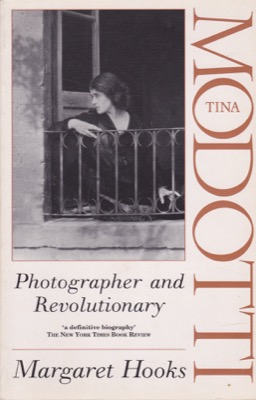
Softcover. NY, HarperCollins, 1st pbk, 1995, Book: Very Good, Dust Jacket: None, Softcover, 296 pages, b&w illustrations. The apt subtitle of this award-winning biography, Photographer & Revolutionary, sums up the creative tensions that characterized Tina Modotti's life and brief photographic career. Active as a photographer for only nine years, Modotti was pulled between formal and social concerns. Producing striking modernist compositions of everyday objects, photojournalism of poverty and conflict, and portraits of celebrities and common people alike, Modotti balanced political concerns with formal rigor. First published in 1993 and long out of print, Tina Modotti: Photographer & Revolutionary is the definitive portrayal of Modotti's life and work. Few photographers are more deserving of a biographical treatment than Modotti, whose work as an actress and artist's model introduced her to Edward Weston, who was to become her lover. Soon after she arrived in Mexico City with Weston, Modotti became increasingly politicized, working for the communist newspaper El Machete and establishing herself as the go-to photographer for the Mexican Muralist movement. The book includes extensive archival material, interviews with Modotti's contemporaries and many rare photographs. Clean copy.
Hardcover. Guadalajara, Jalisco, Centro Metropolitano, 1st, 1988, Book: Very Good, Dust Jacket: None, Hardcover, black cloth covers stamped in gilt with a photographic label on front. A study of the Mexican artist's sculpture. Illustrated in b&w and color, 194 pages plus index. Clean copy.
Softcover. Los Angeles, Society for Visual Anthropology, 1st, 1992, Book: Very Good, Dust Jacket: None, Softcover, magazine format, 120 pages. illustrated collection of provocative essays, occasional pieces, and dialogues with contributions from anthropologists, from cultural, literary and film critics and from image makers themselves. Includes: Reading Trash, Artaud, Rouch, & the Cinema of Cruelty; Remembering the Revolution, Forgetting the Empire; 'Thirty Centuries, the Splendors of Mexico'; What Is Real About Virtual Reality?; Marketing Alterity, other essays and reviews. Clean.

 "National Geographic Magazine - Vol. LVIII July - December 1930 (Six Issues)by: National Geographic Society")
 "Old Navajo Rugs: Their Development from 1900 to 1940by: Rodee, Marian E.")
 "OUT OF THE VOLCANO (SIGNED BY PHOTOGRAPHER)by: SAYER, PEDEN MARGARET and Carole Patterson (Photographer)")


 "Painting in Latin America, 1550-1820: From Conquest to Independenceby: Alcala, Luisa Elena")
 "Picturing an Exhibition: The Family of Man and 1950s Americaby: Sandeen, Eric J.")
 "Postcards of the Night: Views of American Citiesby: Jakle, John A.")

 "Seeing Mexico Photographed: The Work of Horne, Casasola, Modotti, and Alvarez Bravoby: Leonard Folgarait")
 "Sergio Dino Chesini Pitore Della Terra Del Sole by: Portalupi , Mario")
 "Some Memories of Drawings by: Georgia O'Keeffe")


 "Spirit and Vision: Images of Ranchos De Taos Churchby: D'Emilio, Sandra; Campbell, Suzan; & Kessell, John L. (essays)")
 "Star Mountain and Other Legends of Mexicoby: Camilla Campbell")
 "Tamayo Ilusradorby: Tamayo, Rufino")
 "The Legacy of Maria Poveka Martinezby: Richard L. Spivey , Maria Montoya Martinez, et al.")
 "The Owls of North America, North of Mexico: All the Species and Subspecies Illustrated in Color and Fully Describedby: Eckert, Allan W.; Karalus, Karl E.")

 "The Surreal Life Of Leonora Carringtonby: Joanna Moorhead")
 "Through the Lens: Creating Santa Feby: Redding, Mary Anne and Krista Elrick")

 "Visual Anthropology Review: Volume 8 Number 2/Fall 1992by: N/A")