Hardcover. Brighton UK, Alpha Press, 1st, 1999, Book: Very Good, Dust Jacket: Very Good, Hardcover in a bright dust jacket, 127 pages, illustrated in color and b&w. This book examines the extraordinary metamorphosis that has occurred in the presentation of the human face during the twentieth century. A series of essays charts the portraits which are the "Milestones" to that change, while the discussion that follows - "Changing Perceptions" - endeavours to identify its nature, its causes, and to show the manner in which the artists reveal this transformation when painting their sitters. Clean copy.
Hardcover. SUNY Press, 1st, 1992, Book: Very Good, Dust Jacket: Very Good, Hardcover, 768 pages. The personal journals of Charles Burchfield reveal the unique vision and approach to life that established him as America's preeminent watercolorist and painter of nature. When he died in 1967 at the age of seventy-three, Burchfield had filled sixty-seven bound notebooks with his personal entries, comprising some 10,000 pages. He included sketches, doodles, quotations, clippings, weather notes, and other marginalia and insertions offering a rare glimpse into the artist's life. Presented here in book form, the edited journals are organized thematically. The editor's introductions place each section in biographical and art historial context. The material is annotated and informed by the previously unpublished archives of the Burchfield Art Center, and complemented by 41 color plates of Burchfield's paintings and 131 black and white illustrations. Due to size and weight, DOMESTIC SHIPPING ONLY.
Hardcover. New York, Harry N. Abrams, Inc, 1st, 1982, Book: Very Good, Dust Jacket: Very Good, Hardcover in a bright dust jacket, 272 pages. 189 illustrations, including 98 plates in full color. Light brown cloth. Clean, bright copy. As good as new. Peale painted thousands of canvases and that provided a superb record of colonial and federal society. In mid-life Peale turned to the study of nature and assembled a museum in Philadelphia that was, at its time, the most important institution of its kind in the country.
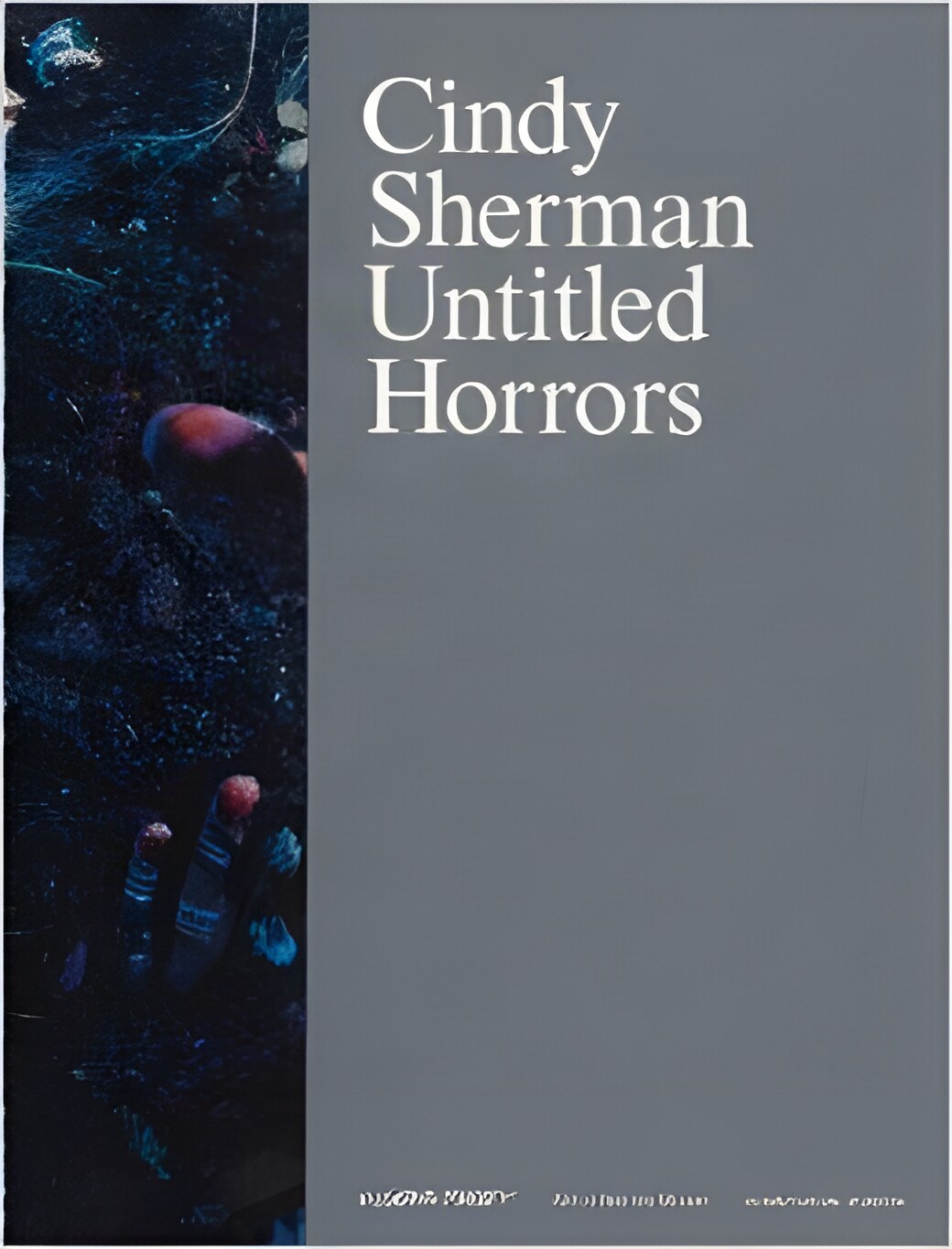
Softcover. Hatje Cantz, 1st, 2013, Book: Very Good, Dust Jacket: None, Like new in publisher's shrink-wrap. Softcover, 220 pages. Throughout her career, Cindy Sherman (born 1954) has been interested in exposing the darker sides of human nature, noticeable both in her selection of subject matter (fairytales, disasters, sex, horror, surrealism) and in her disquieting interpretations of well-established photographic genres, such as film stills, fashion photography and society portraiture. Delving relentlessly into the more grotesque extremes of delusion, vanity and self-image, Sherman probes deeply into the masks and distractions we all employ to set apart our public and our private personae, and challenges us to consider how bizarre and unconvincing our attempts at projecting a semblance of normality can be. Attracting a certain degree of notoriety, intense and ongoing public interest as well as extensive critical acclaim, Sherman's works continue to challenge and intrigue in equal measure. This richly illustrated publication deploys a selection of works from across her career to highlight and acknowledge these particular aspects of her art. These images are accompanied by more recent work, as well as essays from well-known authors, filmmakers and artists who likewise deal with the grotesque, the uncanny and the extraordinary in their practice.
Softcover. NY, The Museum of Modern Art, 1st, 2012, Book: Very Good, Dust Jacket: None, Softcover, 264 pages. 153 color illustrations and 102 duotone. Published to accompany the first major survey of Cindy Sherman's work in the United States in nearly 15 years, this publication presents a stunning range of work from the groundbreaking artist's 35-year career. Showcasing approximately 180 photographs from the mid-1970s to the present, including new works made for the exhibition and never before published, the volume is a vivid exploration of Sherman's sustained investigation into the construction of contemporary identity and the nature of representation. The book highlights major bodies of work including her seminal Untitled Film Stills (1977-80); centerfolds (1981); history portraits (1989-90); head shots (2000-2002); and two recent series on the experience and representation of aging in the context of contemporary obsessions with youth and status. An essay by curator Eva Respini provides an overview of Sherman's career, weaving together art historical analysis and discussions of the artist's working methods, and a contribution by art historian Johanna Burton offers a critical re-examination of Sherman's work in light of her recent series. A conversation between Cindy Sherman and filmmaker John Waters provides an enlightening view into the creative process.
Softcover. NY, The Museum of Modern Art, 1st, 2012, Book: Very Good, Dust Jacket: None, Softcover, 264 pages. 153 color illustrations and 102 duotone. Published to accompany the first major survey of Cindy Sherman's work in the United States in nearly 15 years, this publication presents a stunning range of work from the groundbreaking artist's 35-year career. Showcasing approximately 180 photographs from the mid-1970s to the present, including new works made for the exhibition and never before published, the volume is a vivid exploration of Sherman's sustained investigation into the construction of contemporary identity and the nature of representation. The book highlights major bodies of work including her seminal Untitled Film Stills (1977-80); centerfolds (1981); history portraits (1989-90); head shots (2000-2002); and two recent series on the experience and representation of aging in the context of contemporary obsessions with youth and status. An essay by curator Eva Respini provides an overview of Sherman's career, weaving together art historical analysis and discussions of the artist's working methods, and a contribution by art historian Johanna Burton offers a critical re-examination of Sherman's work in light of her recent series. A conversation between Cindy Sherman and filmmaker John Waters provides an enlightening view into the creative process.
Hardcover. Boston, David R. Godine, 1st, 1987, Book: Very Good, Dust Jacket: Very Good, Hardcover in a bright, unclipped dust jacket. A book length series of poems, looking at life in all its imperfections through the viewpoint of an inextinguishable character whose spirit triumphs through humor. Clayfeld, a comic everyman, is the center of these poems about the nature of beauty, sorrow, and art, as well as the potential for happiness. Thwarted continually by ordinary defeats, Clayfeld endures and laughs, loves and remembers. Critic Harold Bloom called poet Robert Pack an heir to Robert Frost and Edwin Arlington Robinson.
Hardcover. NY, Funny Garbage Press, 1st, 2001, Hardcover, 212 pages. Legendary underground cartoonist Panter's comics are typically anarchic and fun, but they also delve deeper. First produced in 1983, Cola Madness is published here in book form for the first time. The work stars Jimbo, Panter's enduring punk everyman, sharing billing with a cast of idiosyncratic characters including Bob War; his calamitous brother, Uncle Garcia, a smart-talking dinosaur and beleaguered guardian in a bathrobe; and Kokomo, a native in an unspecified tropical land colonized by oil companies. Posited as the hallucinatory fever dream of Kokomo, Panter's farce follows Jimbo's misadventures as he tries to get a Moka Cola at the local Jack-in-the-McTacos, the whole zany affair culminating in an absurd, scatological climax at an automated fast food restaurant. Panter delivers a visionary response to contemporary American life viewed through the wrong end of some cosmic telescope. This delightfully inane story offers a selection of Panter's themes: humanity's troubled relationship with nature and technology; the tension between restraint and the uncontrollable urge; family relationships; and Jimbo's endearing, comical self-doubt. Panter's black and white "ratty line" drawing style offers great economy while suggesting a broad range of graphic style from art brut to bathroom graffiti, and calls to mind the works of legendary cartoonists Jack Kirby and Osamu Tezuka.
Softcover. Cambridge MA, Harvard University Press, 4th pr., 2001, Book: Very Good, Dust Jacket: None, Softcover, 656 pages. John Rawls's work on justice has drawn more commentary and aroused wider attention than any other work in moral or political philosophy in the twentieth century. Rawls is the author of two major treatises, A Theory of Justice (1971) and Political Liberalism (1993); it is said that A Theory of Justice revived political philosophy in the English-speaking world. But before and after writing his great treatises Rawls produced a steady stream of essays. Some of these essays articulate views of justice and liberalism distinct from those found in the two books. They are important in and of themselves because of the deep issues about the nature of justice, moral reasoning, and liberalism they raise as well as for the light they shed on the evolution of Rawls's views. Some of the articles tackle issues not addressed in either book. They help identify some of the paths open to liberal theorists of justice and some of the knotty problems which liberal theorists must seek to resolve. A complete collection of John Rawls's essays. Owner's name on front fly leaf otherwise clean.
Hardcover. Philadelphia, David McKay Co., 1st US, 1931, Book: Very Good, Dust Jacket: Good, 224 pages. Hardcover. Previous owners bookplate with inscription on inside front cover. Black & white illustrations and full color plates by Arthur Rackham. Light wear to Green cloth covers. Titles and decoration in gilt. Foxing to preliminary pages. Dust jacket with chunks of paper missing at top of spine, light chipping along edges, moderate rubbing to back cover. Clean, tight copy.
Hardcover. Leipzig, E.A. Seemann, 1st, 1976, Book: Very Good, Dust Jacket: Very Good, Hardcover in a bright dust jacket. 132 pages of German text followed by 264 b&w plates. A catalog of nature studies by the artist, mostly botanical. Cclean copy.
Softcover. New York, Pantheon, 1st, 2000, Book: Very Good, Dust Jacket: None, 136 pages. Softcover. Black and white comic. Light edgewear to wrappers. Meet David Boring: a nineteen-year-old security guard with a tortured inner life and an obsessive nature. When he meets the girl of his dreams, things begin to go awry: what seems too good to be true apparently is. And what seems truest in Boring's life is that, given the right set of circumstances (in this case, an orgiastic cascade of vengeance, humiliation and murder) the primal nature of humankind will come inexorably to the fore.
Hardcover. NY, Harry N Abrams, 1st, 2001, Book: Very Good, Dust Jacket: Very Good, Hardcover in a bright, unclipped dust jacket. A groundbreaking presentation of rarely seen photographs, history, social observation, and pictorial analysis provides an entirely new perspective on male friendship in the nineteenth century and suggests a surprisingly broad-minded attitude toward physical intimacy between men. The book collects more than 100 portraits -from daguerreotypes to cartes des visites and early photographic postcards--depicting affectionate male friendships whose precise nature, whether platonic or sexual, will never be known. Editor David Deitcher, who teaches art and critical theory at the Cooper Union, reflects on the history of these images and their possible significance. Clean copy.
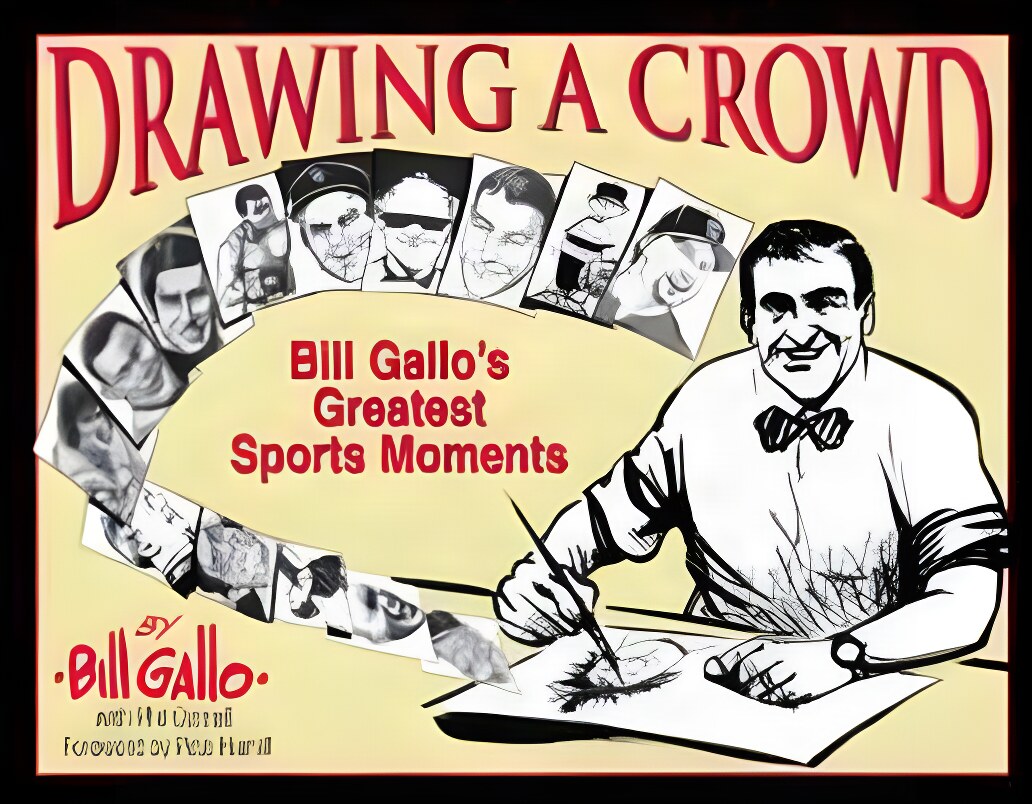
Hardcover. Middle Village, NY, Jonathan David Publishers, reprint, 2000, Book: Very Good, Dust Jacket: Very Good, 368 pages. Hardcover with dust jacket. Extensive b&w illustrations throughout. Gilt titles on spine. Light edge wear to dust jacket, otherwise clean, tight copy. Featuring hundreds of gems that delight the eye as well as the heart, Drawing a Crowd brings together the best of the work of distinguished New York Daily News cartoonist Bill Gallo. Laugh, ponder, even shed a tear as Bill, Basement Bertha, Yuchie, and the rest of the Gallo cast of characters relive the most memorable sports moments of the past forty years and share some little-known things about some very well-known people. Here, you'll experience the magnificence of a Michael Jordan and the reticence of a Sandy Koufax, the fury of a Vince Lombardi and the dignity of an Arthur Ashe, the grace of a Nancy Kerrigan and the majesty of a Sugar Ray Robinson. In Drawing a Crowd, you'll also come to know the personal Gallo: the eleven-year-old who suddenly lost a father; the resilient young man who landed a job as a News copyboy; the Marine who saw comrades fall on the black sands of Iwo Jima; the gentleman's gentleman who has earned the respect and friendship of the greats of our time. Peppered with the artists unique perspective, good-natured wit, and reminiscences on everyone from Ali to Joe D, Sinatra to Stengel, Torre to Trump, Broadway Joe to Johnny U, Drawing a Crowd demonstrates why Bill Gallo, long a New York secret, is truly a national treasure.
Hardcover. Santa Fe, Museum of New Mexico Press, 1st, 2011, Book: Very Good, Dust Jacket: Very Good, Hardcover in a bright, unclipped dust jacket, 188 pages, color and b&w photos. Since its invention, photography has been used to document and interpret the landscape. Survey photographers in the 1860s were the first environmental advocates, arguing for the U.S. national park system. During the first half of the 20th century photographers Ansel Adams and Eliot Porter were central figures in influencing American attitudes toward wilderness and conservation. This book traces the development of environmental photography beginning with Adams, Porter and others, and the next generation of landscape photographers - Robert Adams, Richard Misrach, Robert Glenn Ketchum, Patrick Nagatani, Mark Klett, whose works confronted the issues of landscape and the environment in less idealised terms. Shifting from the historical framework, the book presents new work by twenty-three photographers working in the U.S., the next wave of artists using the camera to engage the environmental issues of the day. Clean copy.
Hardcover. NY, Rizzoli, Revised Ed., 2007, Book: Very Good, Dust Jacket: None, Hardcover, 777 pages. In the art of Edward Hopper (1882-1967), tense, unhappy men and women, in whom we recognize something of our neighbors and ourselves, play out mysterious dramas in silent, stripped-down spaces - stages raked by an unrelenting and revealing light. These paintings, and Hopper's equally evocative landscapes and houses, make us wonder: what kind of man had this haunting vision, and what kind of life engendered this art? No one is better qualified to answer these questions than the art historian Gail Levin, author of the major studies of Hopper's work (including the catalogue raisonne) and curator of many exhibitions that explored his development and cultural context. Delving deeply into his art and into a rich archive of unpublished letters and diaries, she now constructs "An Intimate Biography, " which reveals the true nature and personality of the man himself - and of the woman who shared his life and helped to shape his art. Jo Hopper's diaries permit an intimate look at the interactions of an indissolubly bonded couple, revealing for the first time the personal tensions that lie behind some of Hopper's most haunting works. Lacks dust jacket but a clean, bright copy.
Hardcover. Berkeley, University of California Press, 1st, 1990, Book: Very Good, Dust Jacket: Very Good, Hardcover in a bright dust jacket, 480 pages. Although he is referred to as a "genius" more often than any other scholar of his period, Edward Sapir has received no full-scale biography since his death in 1939. At long last, Regna Darnell provides a comprehensive assessment of the life, ideas, and wide-ranging interests of this remarkable man. Sapir, the foremost linguist and anthropologist of his generation, contributed substantially to the professionalization of linguistics as an independent discipline. He was the first to apply comparative Indo-European methods to the study of American Indian languages, on which he conducted extensive fieldwork. His theoretical work on the relationship of the individual personality to culture remains fundamental to culture theory in anthropology, as does his insistence on the symbolic nature of culture and the importance of culture as understood by its members, in their own words.Sapir became the first professional anthropologist in Canada and teacher of a whole generation of linguists and anthropologists at Chicago and Yale. Holding to a humanistic view of anthropology (his own work included poetry and literary criticism), he was the most articulate spokesman for the interdisciplinary social science of the late 1920s and 1930s. In both linguistics and anthropology Sapir is a revered master whose ideas continue to inspire discussion and research. A sixteen-volume Collected Works is now in progress. Clean copy.
Hardcover. New York, George Braziller, 2nd pr., 1988, Book: Very Good, Dust Jacket: Very Good, Hardcover, 89 pages. Front board features reproduction of front cover of artist's original work. Illustrated in color throughout. Dust jacket with light wear. Slight yellowing to edges. Clean inside. Splendid reproduction of works from Kiefer's trip to Norway.
Hardcover. London, George Routledge & Sons, Ltd., 1st, 1907, Book: Very Good, Dust Jacket: None, Hardcover, 249 pages, 97 b&w photographs. Green cloth covers w/ gilt lettering and design. Top edge gilt. Previous owner's signature on front fly leaf. Light rubbing to cover corners. Binding slightly weak in some places. Else a nice, clean copy.
Hardcover. London, Merrell Holberton/Natural History Museum, 1st, 1999, Book: Very Good, Dust Jacket: Very Good, Hardcover, 128 pages, 62 color plates, 33 b&w illustrations. A detailed monograph on this early 19th century natural history artist. In publisher's shrinkwrap.
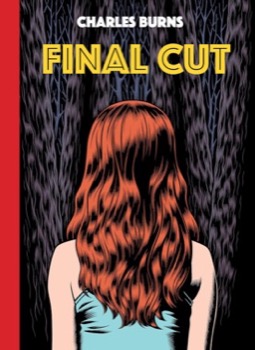
Hardcover. NY, Pantheon, 1st, 2024, Book: Very Good, Dust Jacket: None, Hardcover, pictorial boards with red cloth spine. The beloved and award-winning author's haunting and visually arresting story of an artist's obsessions, and the value and cost of pushing the boundaries of creativity. As a child, Brian and his friend Jimmy would make sci-fi films in their yards, convincing their friends to star as victims of grisly murders, smearing lipstick on the "bodies" to simulate blood. Now a talented artist and aspiring filmmaker, Brian, along with Jimmy, Jimmy's friend Tina, and Laurie--his reluctant muse--sets off to a remote cabin in the woods with an old 8 millimeter camera to make a true sci-fi horror movie, an homage to Brian's favorite movie: Invasion of the Body Snatchers. But as Brian's affections for Laurie go seemingly unreciprocated, Brian writes and draws himself into a fantasy where she is the girl of his dreams, his damsel in distress, and his savior wrapped into one. Rife with references to classic sci-fi and horror movies and filled with panels of stunning depictions of nature, film and the surreal, Burns blurs the line between Brian's dreams and reality, imagination and perception. A master of the form at his finest, Final Cut is an astonishing look at what it means to truly express oneself through art. Clean, bright copy.
Hardcover. US, Bulfinch, 1st, 2001, Book: Very Good, Dust Jacket: Very Good, 139 pages, illustrated throughout in color. Light shelf-wear to dust jacket with small tear to upper edge. Clean, tight copy. Foliage is an amazing plant book filled with artistic photos of "the architecture of nature." Close-up photos fill the 13" x 11" pages. From grasses and ferns, edibles, leaf coloration, cati and succulents, the essence of green, to seeds of change the reader is in for a visual treat.
Hardcover. Los Angeles, Bunker Hill Publishing Inc, 1st, 2006, Book: Very Good, Dust Jacket: Very Good, Hardcover, 96 pages. Illustrated throughout in color and b&w. Clean, unmarked copy in excellent condition. In the 80 images throughout this book, Haas has forced Nature to do his bidding. Still, Haas's trees are portraits of Los Angeles in all its complexity and quirkiness, and his views of individual trees reveal much about their surroundings and the humans with whom they share their habitat.
Hardcover. Los Angeles, Bunker Hill Publishing Inc, 1st, 2006-11-13, Book: Very Good, Dust Jacket: Very Good, Hardcover, 96 pages. Illustrated throughout in color and b&w. Clean, unmarked copy in excellent condition. In the 80 images throughout this book, Haas has forced Nature to do his bidding. Still, Haas's trees are portraits of Los Angeles in all its complexity and quirkiness, and his views of individual trees reveal much about their surroundings and the humans with whom they share their habitat.

 "Changing Perceptions: Milestones in Twentieth-Century British Portraitureby: Elizabeth Cayzer")

 "Charles Willson Peale and His Worldby: Richardson, Edgar P., Brooke Hindle")


 "Clayfeld Rejoices, Clayfeld Laments: A Sequence of Poemsby: Robert Pack")

 "Compleat Angler, Theby: Walton, Izaak and Arthur Rackham")
 "Corpus der Goethezeichnungen. Band VB. Nr. 1-264. Die naturwissenschaftlichen Zeichnungen mit Ausnahme der Farbenlehre. by: Goethe -- Femmel, Gerhard; Kuhn, Dorothea;")
 "David Boringby: Clowes, Daniel")
 "Dear Friends: American Photographs of Men Together, 1840-1918 by: David Deitcher")

 "Edward Sapir. Linguist Anthropologist Humanistby: Darnell, Regna")
 "Erotik im Fernen Osten oder: Transition from cool to warmby: Kiefer, Anselm")
 "Farm-Cottage, Camp and Canoe in Maritime Canadaby: Silver, Arthur P.")
 "Ferdinand Bauer: The Nature of Discoveryby: Mabberley, David")
 "Foliageby: Feinstein, Harold")
 "Forcing Nature: Tree in Los Angelesby: Haas, George")
 "Forcing Nature: Tree in Los Angelesby: Haas, George")