Hardcover. privately printed, 1st, 2007, Book: Very Good, Dust Jacket: Very Good, Hardcover, 64 pages. With over 60 beautiful color plates, this gorgeous book of flower photographs is bound to appeal to a wide audience of anyone interested in Nature, Beauty, Meditation or Art. Tenneson explores the world of botanicals in a way that is completely unique. These photographs transcend mere documentation; they encourage the viewer to see flowers in a whole new way. Joyce Tenneson's breathtaking photographs have graced the covers of major magazines, as well as museums and galleries. Her ethereal portraits of roses, tulips, poppies and other garden blooms also come accompanied by select quotes from authors such as Emily Dickinson, William Carlos Williams, and Anais Nin.
Hardcover. Canada, 5 Continents, 1st, 2016, Book: Very Good, Dust Jacket: None, Like new in publisher's shrink-wrap. light ding to bottom edge front board. 272 pages, many color and b&w photos. Josef Sudek (1896-1976) was a Czech photographer, best known for his photographs of Prague. He was a bookbinder before turning to photography after losing his right arm in WWI. This book, published to accompany an exhibition, examines how Sudek's photographs reflect his relationship to the world around him, from intimate explorations of cherished objects and views through his window to his night walks through the streets of Prague and its periphery, as well as excursions into the surrounding countryside. With essays, reminiscences by two former assistants, and stunning illustrations, here is a compelling view of Sudek's photographs, and the art of his friends and fellow artists. Sudek's legacy includes some of the 20th century's most haunting images of nature, monuments, city streets, and objects--all transformed by his sensitivity to the power of light to reveal and the power of darkness to render all impenetrable.
Hardcover. Steidl, 1st, 2015, Book: Very Good, Dust Jacket: None, Hardcover, 148 pages. In this new monograph, Jamey Stillings (born 1955) synthesizes environmental interests with his longstanding fascination with the intersections of nature and human activity. In October 2010, Stillings began a three-and-a-half-year aerial exploration over what has become the world's largest concentrated solar power plant, the Ivanpah Solar Electric Generating System in the Mojave Desert of California. From the simple and stark terrain of the preconstruction landscape to the angular forms of the completed solar plant producing 392 megawatts of electricity on 14 square kilometers of public land, Stillings explores dynamic interactions between raw organic forms of nature and those defined by the project's precise geometric lines. Shot from a helicopter during first and last light, Stillings' black-and-white images intrigue with tight abstractions, oblique views of geologic and geometric forms, and broad open views of the dramatic desert basin.
Softcover. Baltimore, John Hopkins University Press, 1st, 1995, Book: Very Good, Dust Jacket: None, Softcover in illustrated wrappers, 304 pages. Illustrated with B&W engravings. Jens Jensen was one of America's greatest landscape designers and conservationists. Using native plants and "fitting" designs, he advocated that our gardens, parks, roads, playgrounds, and cities should be harmonious with nature and its ecological processes-a belief that was to become a major theme of modern American landscape design. In Jens Jensen: Maker of Natural Parks and Gardens, Robert E. Grese draws on Jensen's writings and plans, interviews with people who knew him, and analyses of his projects to present a clear picture of Jensen's efforts to enhance and preserve "native" landscapes.
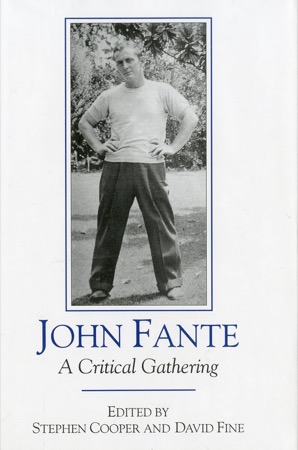
Hardcover. Fairleigh Dickinson University Press, 1st, 1999, Book: Very Good, Dust Jacket: Very Good, Hardcover in a bright dust jacket, 160 pages. This book offers eleven essays on Fante's career, ranging from close thematic analysis of individual stories and novels to broadly informed assessments of Fante's life and art in the context of his times. Major areas explored in the book include Fante's treatment of the Italian-American experience; his relationship to other American writers of the 1930s and beyond; the deeply Catholic nature of Fante's fiction; his unique and still-seminal vision of Los Angeles; and his lifelong concern to render in fiction both the comedy and the horrors of the writing life. Clean copy.
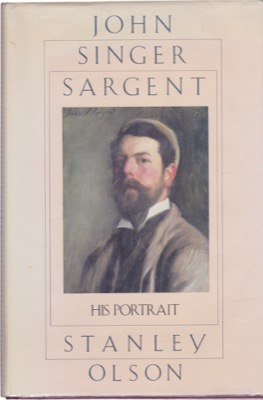
Hardcover. NY, St. Martin's Press, 1st, 1986, Book: Very Good, Dust Jacket: Very Good, Hardcover in a bright, unclipped dust jacket, 309 pages. b&w illustrations. In this meticulous and witty work, Stanley Olson uncovers the complex nature of Sargent's life and stunning career. Probable ex-lib with label on spine but no other markings.
Hardcover. Princeton NJ, Princeton University Press, 1st, 1992, Book: Very Good, Dust Jacket: Very Good, Hardcover in a bright dust jacket, 281 pages, b&w illustrations. "For, Lo! We live in an Iron Age--In the age of Steam and Fire!" wrote a poet mesmerized by the engines that were transforming American transportation, agriculture, and industry during his lifetime. Indeed, by the nineteenth century fire had become America's leitmotif--for good and for ill. "Keeping the flame" was deadly serious: even the slightest lapse of attention could convert a fire from friendly ally to ravaging destroyer. To examine the cultural context of fire in "combustible America," Margaret Hazen and Robert Hazen gather more than a hundred illustrations, most never before published, together with anecdotes and information from hundreds of original sources, including newspapers, diaries, company records, popular fiction, art, and music. What results is an immensely entertaining and encyclopedic history that ranges from stories of the tragic "great fires" of the century to fire imagery in folktales and popular literature. Dealing more with technology than with fire in nature, the book provides a vast amount of information on fire manipulation and prevention in urban life. Hazen and Hazen discuss the people who worked with fire--or against it. Founders, gaffers, blacksmiths, boilers at saltworks, and housewives knew how to "read" a fire and employ it for their purposes. A few dedicated investigators inquired about the scientific nature of heat and flame. And firefighters gradually progressed from "bucket brigades" to "using fire to fight fire" with the newly invented steam engine. The colorful stories of these Americans--the risks they took and the rewards they received--will fascinate not only social historians but also a broad audience of general readers. Clean copy.
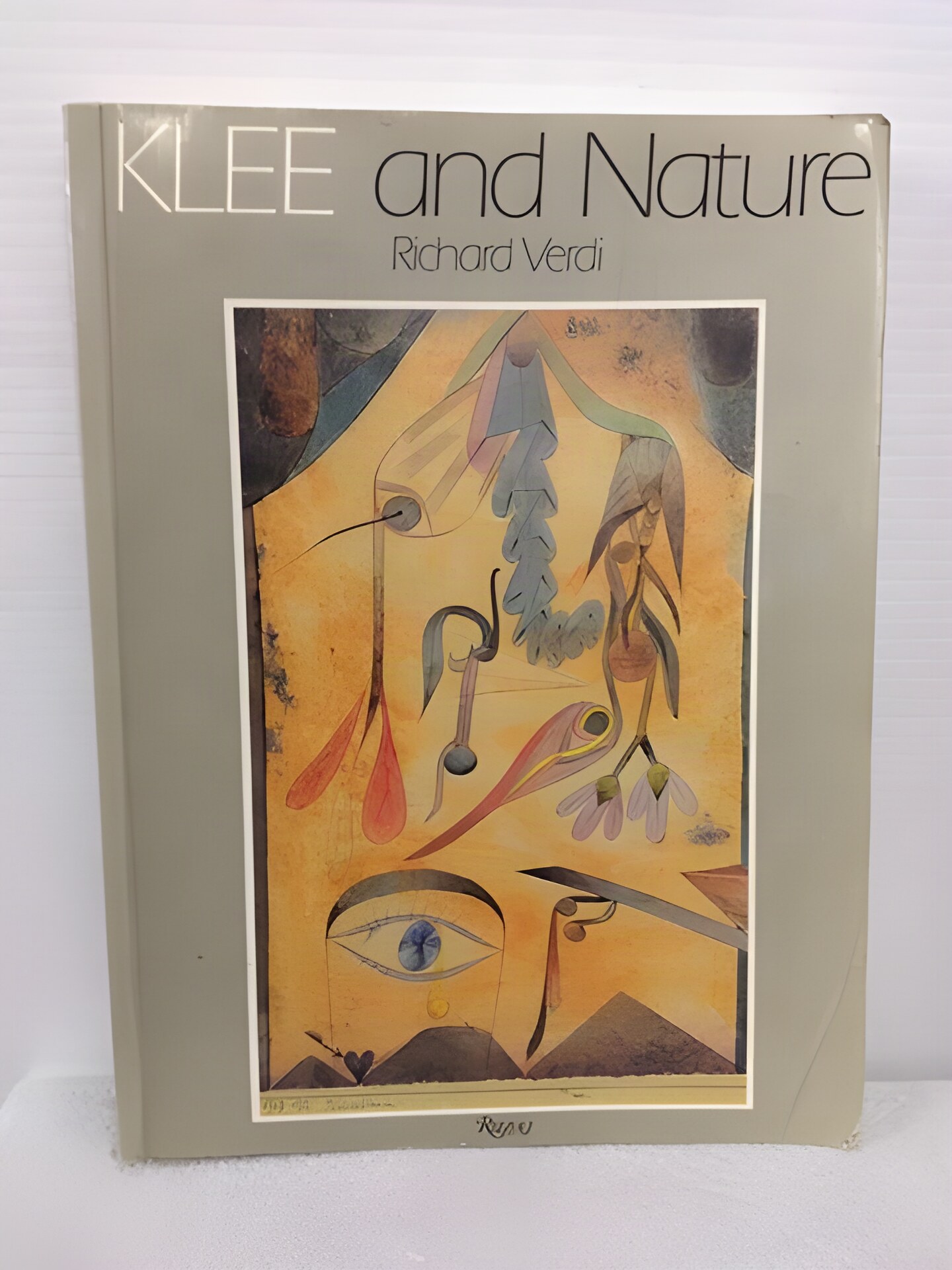
Softcover. NY, Rizzoli , 1st US, 1985, Book: Very Good, Dust Jacket: None, Softcover, 258 pages, b&w and color illustrations. Initials on front fly leaf, otherwise tight and clean copy.
Softcover. Argentum, 1st, 2008, Book: Very Good, Dust Jacket: None, Softcover, 126 pages in color. Critically acclaimed photographer David Ward explores the essential attributes of a successful landscape photograph--simplicity, ambiguity, and beauty--in this intriguing companion to his first book, Landscape Within. David discusses how the notion of beauty has been viewed by artists and psychologists and how, despite various modifications over the centuries, the concept of beauty remains relevant. David suggests that all photographers' work either poses a question or seeks to impose the photographer's viewpoint, and he goes on to investigate how photography affects our interpretation of the world around us. Accompanied by a selection of David's stunning, large-format landscape images, this is an elegant and insightful look into the nature of photography. Clean copy.
Hardcover. Los Angeles, CA, J. Paul Getty Museum, 1st, 2012, Book: Very Good, Dust Jacket: Very Good, 112 pages. Hardcover with dust jacket. Very clean, unmarked copy with only minor wear to dust jacket edges. Like painters and draftsmen before them, photographers turned to the landscape as a source of inspiration after the invention of the medium in 1839. Since then, changing artistic movements and technical advancements have provided opportunities for camera artists to approach the subject in diverse and imaginative ways, as illustrated by the wide range of works from the extensive collection of the J. Paul Getty Museum in Landscape in Photographs.
Hardcover. Ithaca NY, Cornell University Press, 1st, 1993, Book: Very Good, Dust Jacket: Very Good, Hardcover in a bright dust jacket, 209 pages with index. Why do we laugh? Do we really want to know why? We are torn between desire to understand the joyous human response of laughter and reluctance to expose the secret of our spontaneity to the rigors of intellectualizing, the labors of analysis. Marcel Gutwirth here offers a fresh approach to laughter and the full range of funny occasions-- from the artistry of Molire's Misanthrope to the unique nature of Beckett's comic wisdom. Clean copy.
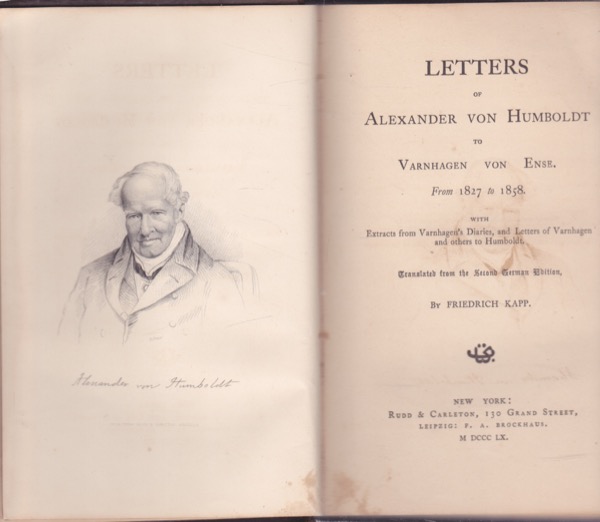
Hardcover. NY, Rudd and Carleton, 1st US, 1860, Book: Good, Dust Jacket: None, Hardcover, embossed brown cloth with gilt lettering on spine, 407 pages plus publisher's ads. A collection of correspondence written in the 19th century. This compilation features Humboldt's letters to his friend Varnhagen von Ense, reflecting their intellectual friendship and offering insightful glimpses into Humboldt's thoughts, scientific inquiries, and the sociopolitical landscape of his time. The letters encapsulate Humboldt's legacy as a pioneering scientist and thinker, showcasing his multifaceted contributions to various fields of knowledge. At the start of the work, we are introduced to Humboldt as he begins his correspondence with Varnhagen, exemplifying their close friendship and the candid nature of their exchanges. Humboldt expresses gratitude for Varnhagen's acknowledgement of his literary endeavors and shares details about his scholarly work, specifically discussing the titles and themes of his upcoming publications. The initial letters highlight Humboldt's artistic and scientific pursuits, while also touching on broader social issues of the era, providing a rich context for readers interested in the intersection of science, literature, and personal relationships among intellectuals of the time. Light edgewear to covers, faint marginal water stain to first 10 pages along foredge.
Hardcover. NY, Artisan, 1st, 2008, Book: Very Good, Dust Jacket: Very Good, Hardcover in a bright dust jacket. 145 pages. A master craftsman provides timeless wisdom from working with stone. Beautifully illustrated with color and black and white photographs from the work-field. In his highly anticipated second book, Vermonter Dan Snow once again proves that he is not just one of America's premier artisans, but also one of our most articulate voices on the natural world and our relationship to it. Snow's medium is stone: He is the nation's premier drystone wall builder. Schooled in this ancient craft, he painstakingly creates structures as breathtaking as sculpture with nothing but gravity as their glue. In Listening to Stone, Peter Mauss's tactile photographs of Snow's artistry are matched by the artisan's quietly compelling prose. Clean, bright copy.
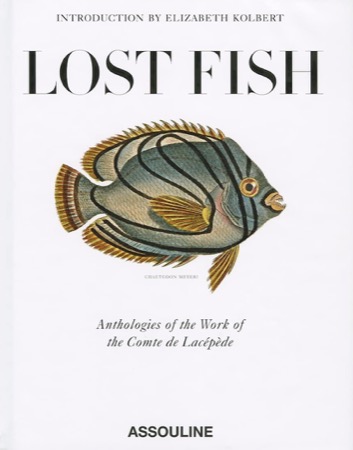
Hardcover. NY, Assouline, 1st, 2008, Book: Very Good, Dust Jacket: Very Good, Hardcover in a bright dust jacket. Lost Fish is a stunning collection of antique illustrations featuring endangered marine life, published by luxury book publisher Assouline. With over 200 detailed illustrations, this book offers a unique opportunity to appreciate the beauty of life underwater while reflecting on the changing aquatic environment. The illustrations are taken from the nineteenth-century scientific anthology of The Count de Lapecede, a leading authority on aquatic species at the time. Through these intricate prints, readers are reminded of the fragility of our environment and provided with a visual history. The ornate details and lavish colors pay homage to the fleeting species of the ocean and serve as a poignant reminder of the importance of conservation. Clean copy.
Hardcover. UK, Oxford University Press, 1st, 2013, Book: Very Good, Dust Jacket: Very Good, Hardcover in a bright dust jacket, 326 pages. Lucretius' didactic masterpiece De Rerum Natura (On the Nature of Things) is one of the most brilliant and powerful poems in the Latin language, a passionate attempt at dispelling humanity's fear of death and its enslavement by false beliefs about the gods, and a detailed exposition of Epicurean atomist physics. For centuries, it has raised the question of whether it is primarily a poem or primarily a philosophical treatise, which also presents scientific doctrine. The current volume seeks to unite the three disciplinary aspects -- poetry, philosophy, and science -- in order to offer a holistic response to an important monument in cultural history. With ten original essays and an analytical introduction, the volume aims not only to combine different approaches within single covers, but to offer responses to the poem by experts from all three scholarly backgrounds. Philosophers and scholars of ancient science look closely at the artistic placement of individual words, while literary critics explore ethical matters and the contribution of Lucretius' poetry to the argument of the poem. Topics covered include death and grief, evolution and the cosmos, ethics and politics, perception, and epistemology.Name and date on front fly leaf, light pencil marking to about 25 pages.
Hardcover. Camden SC, Briar Patch Press, 1st, 1989, Book: Very Good, Dust Jacket: Very Good, 200 pages, illustrated in color and b&w. Oblong folio, 11 X 12, embossed blue cloth binding stamped in gilt. Dust jacket has some fading to colors at the edges. Book is clean, very good.
Hardcover. Edition Stemmle, 1st, 2001, Book: Very Good, Dust Jacket: Very Good, Hardcover, 136 pages. Bauhaus photography is well served by this first monograph on Max Baur, with many of the previously unpublished photographs also serving as a new source for Bauhaus studies. Working in Germany, at first providing images for postcards, Baur expanded his efforts to encompass landscape, portrait, and architectural images. In each of these genres, his work reflects the cool, objective approach of the Bauhaus style combined with the artist's elegant handling of light and perspective. In photos of stairways and colonnades, factories, and everyday objects, Baur was able to eliminate the extraneous and offer the essential nature of his subject. The book covers a period of vast changes in the world and in the life of the artist, but throughout there is a consistency of vision. An essay by William Ewing, director of the Mus e de l'Elys e (which specializes in photography), gives a brief description of the life and career of Baur with enthusiasm and warmth, while Edelmann-Pomplitz writes movingly about her experience as his student. In a letter to her, Baur expresses his credo most eloquently: "it is with light alone that we create images." This lovely work is a fine example of excellent printing and composition in harmony with content.
Hardcover. New York, Whitney Museum of American Art/Steidl, 1st, 2002, Book: Very Good, Dust Jacket: None, Flexible boards, 264 pages. B/w and color illustrations throughout. Published to accompany exhibition at Whitney Museum of American Art in New York. Super clean. By repeatedly re-photographing her images, transferring them from video to film and back again, and manipulating them digitally, Michal Rovner creates photographic and video imagery that abstract familiar subjects like houses, animals, and people into ambiguous and iconic forms. Working with representation but against the traditions of narrative and documentary purpose, her artworks imply a tentative universe, one that is paradoxically peaceful and unsettled, vivid and shrouded, and completely counter-factual. If the changing nature of art has resulted in a general blurring of boundaries--between painting and photography, reality and memory, presence and absence--Rovner mines this haziness, refuses to respect borders, and exists completely in The Space Between.
Hardcover. Montreal, Drawn and Quarterly, 1st, 2007, Book: Very Good, Dust Jacket: None, Hardcover with pictorial boards. No dj issued. In the second volume of Tove Jansson's humorous yet melancholic Moomin comic strip, we get four new stories about jealousy, competition, child rearing, and self-reinvention. The Moomins try to hibernate in the fashion of their ancestors but insomnia places them smack-dab into a winter carnival with the winter-sports-loving Mr. Brisk. The fickle and eternally lovestruck Mymble and Snorkmaiden find themselves in competition over a thrilling new man. Moominmamma meets her new neighbor, the Fillyjonk, causing her to hire the depressed and secretive Misabel as her new maid. Mymble's mother arrives on the Moomin family's doorstep with her seventeen new children. Finally, a prophet arrives on the scene declaring that the happy Moomins are in fact not happy at all and need to get back to nature and be free. Moomin, of course, becomes more and more miserable the freer he gets.
Softcover. Middlebury, VT, Middlebury College Museum of Art, 1st, 2015, Book: Very Good, Dust Jacket: None, 111 pages. Softcover with paper wrappers. Color pictures throughout. In 1899 Gustav Klimt's painting Nuda Veritas shook up the Austrian public with what many deem to be the painter's most political exploration of the nude female body. Klimt's provocative allegory challenged viewers to consider their own beliefs about the relationship between the nude (female) body and contemporary morality; this "naked truth" was shocking. Transcending accusations of pornography, Klimt's work paved the way for artistic examinations of the nude body as the site through which questions of freedom, desire, beauty, nature, culture, power, and their antonyms could be represented and negotiated. Taking these ideas as one critical point of departure, this volume and the accompanying exhibition feature selected prints, drawings, and watercolors by Klimt, Egon Schiele, Otto Dix, George Grosz, Max Beckmann and Kathe Kollwitz, among others. It explores the conceptions of the human body and the manner of its visualization in the period leading up to and following the First World War, which changed the world's notions of flesh and blood forever.
Hardcover. Hanover NH, UPNE, 1st, 2013, Book: Near Fine, Dust Jacket: Near Fine, Hardcover, 132 pages. Like new in publisher's shrink-wrap. In an age of specialization it is amazing to find an artist who has mastered the complexities of painting both the urban landscape and the Maine wilderness. Joel Babb achieves all this with absolute clarity, attention to detail, and meticulous realism. His vision is very much of our time a contemporary dialogue between nature and culture. This first-ever overview of Joel Babb s work offers a full complement of his major paintings created over the past several decades and a compelling account of Babb s evolution as an artist by art critic Carl Little.
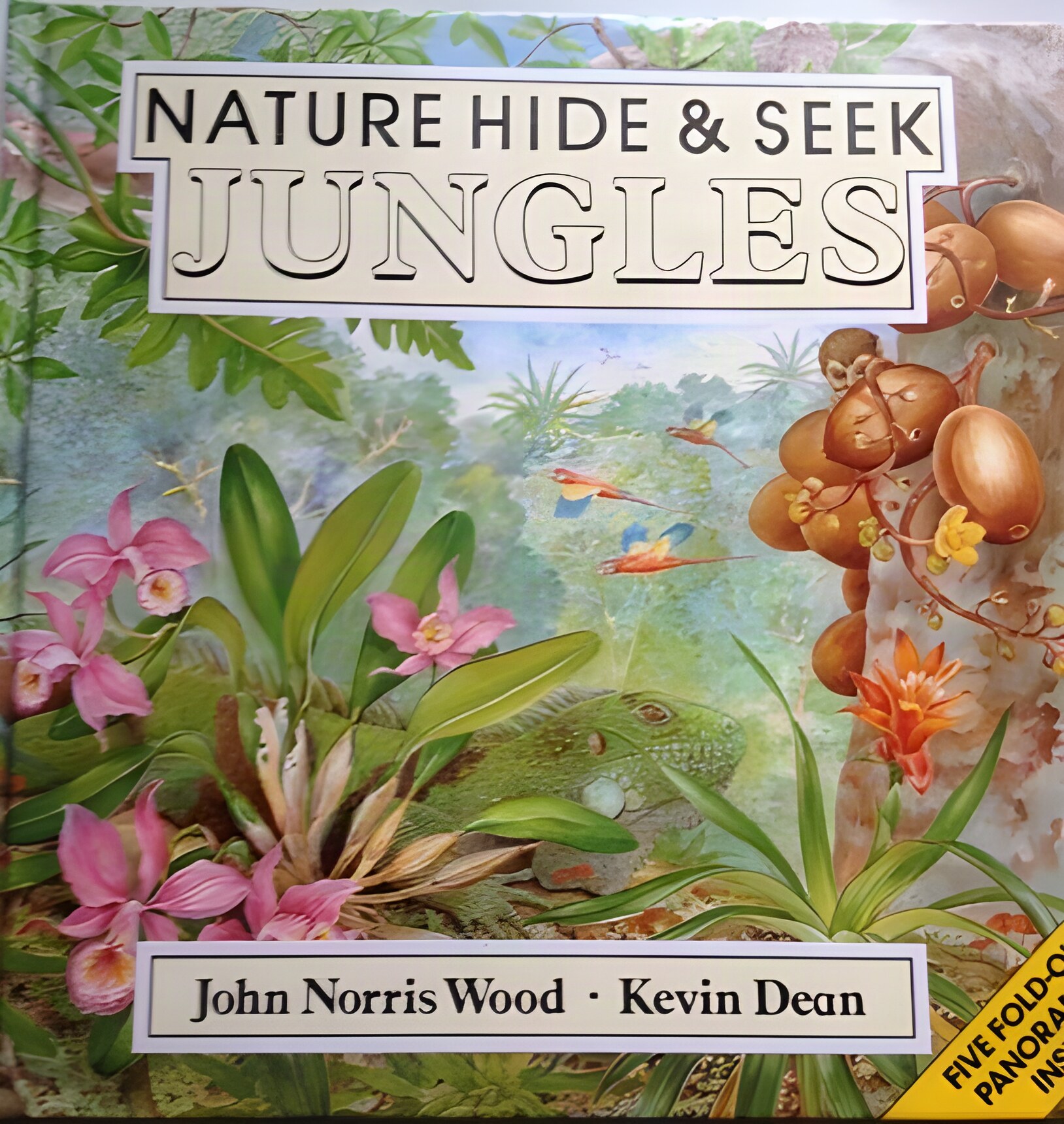
Hardcover. NY, Alfred A. Knopf, 2nd pr., 1987, Book: Very Good, Dust Jacket: None, Hardcover, Beautifully illustrated scenes from the world's jungles teem with hidden life. Can you spot the wonderful selection of camouflaged creatures? Test your powers of observation to find the answers and more information about them. Includes intricate die-cut gatefolds. John Norris Wood is a renowned wildlife artist who has exhibited at London's Royal Academy of Arts, Natural History Museum, and Victoria and Albert Museum. He lives on his own nature reserve in England with his boa constrictor.
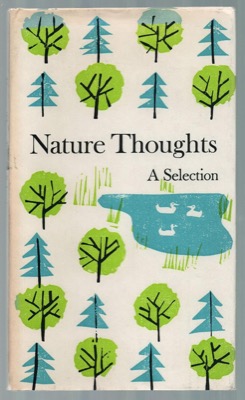
Hardcover. NY, Peter Pauper Press, 1st, 1965, Book: Very Good, Dust Jacket: Very Good, Small hardcover in a bright dust jacket. A lovely little book containing poems and short essays about nature. Beautiful woodcuts in color by Eric Carle. One of the award-winning children's illustrator's early books. small ownership stamp on front fly leaf, otherwise clean.
Softcover. New York, Jordan-Volpe Gallery, 1st, 1995, Book: Very Good, Dust Jacket: None, Softcover, 160 pages. Front cover completely illustrated in full-color, 77 b&w figures throughout text and chronology, 45 beautiful full-page full-color plates, 91 b&w figures through catalogue of selected still-lifes. Very slight rubbing to covers, else a beautiful copy.

 "Intimacy: The Sensual Essence of Flowersby: Tenneson, Joyce")
 "Intimate World of Josef Sudek, Theby: Thomas, Ann")
 "Jamey Stillings: The Evolution of Ivanpah Solarby: Jamey Stillings , Anne Tucker, et al.")
 "Jens Jensen: Maker of Natural Parks and Gardensby: Grese, Robert E.")
 "Keepers of the Flame: The Role of Fire in American Culture, 1775-1925by: Margaret Hindle and Robert M Hazen")
 "Landscape Beyond: A Journey into Photographyby: David Ward")
 "Landscape in Photographsby: Hellman, Karen")
 "Laughing Matter: An Essay on the Comicby: Marcel Gutwirth")





 "Masters of the Wild: The Art of Bob Kuhnby: Davis, Tom")
 "Max Baur: In the Bauhaus Spirit: Photographs 1925-1960by: Stephan Steins")
 "Michael Rovner: The Space Betweenby: Wolf, Sylvia")
 "Moomin: The Complete Tove Jansson Comic Strip - Book Twoby: Jansson, Tove")
 "Naked Truth: Approachers to the Body in Early-twentieth-Century German-Austrian Artby: Matthias, Bettina")
 "Nature and Culture: The Art of Joel Babbby: Little, Carl")
 "Nature Vivante: The Still Lifes of John La Fargeby: L. Yarnell, James")