Hardcover. NY, Farrar Straus Giroux, 1st US, June 12, 2007, Book: Very Good, Dust Jacket: Very Good, Hardcover, 458 pages, b&w illustrations. Brown cloth, gilt lettering to spine, pictorial dust jacket. Lovely copy. Like new.
Softcover. Augusta GA, Morris Communications Company, 1st, 2004-01-01, Book: Very Good, Dust Jacket: None, Softcover, 100 pages, illustrated throughout in color. Clean, unmarked copy with only minor wear to wrappers.
Hardcover. London, Thames & Hudson, 1st, 2001, Book: Very Good, Dust Jacket: Very Good, Hardcover, 192 pages. 106 illustrations 97 in color. Still in shrinkwrap. The first exploration of the art that Georgia O'Keeffe retained for her personal collection, including works that have never been publicly exhibited. Georgia O'Keeffe was one of America's preeminent artists and one of the first to experiment with abstract form, though she never abandoned her deep response to and observation of nature. An enormously popular artist, she became identified and respected as an independent American spirit through both her art and her life. At the time of her death in 1986, Georgia O'Keeffe owned more than half of the approximately 2,000 works she had produced during the eighty years she was active as an artist: some 400 works in oil, charcoal, pastel, pencil, and watercolor, as well as more than 700 sketches. For various reasons, she had always kept a portion of her art out of the public eye and these works were not published, exhibited, or available for purchase during her lifetime. Among the works that had been exhibited and sold over the years, some were repurchased by O'Keeffe as they became available. This book explores for the first time the significance of O'Keeffe's collection of her own work. Approximately 75 seminal works, dating from about 1910 through the 1960s and reproduced in full color, document the range and quality of the art that O'Keeffe either chose to retain in her estate or consciously distributed to institutions in her lifetime and as bequests.
Softcover. NY, Jordan Volpe Gallery, 1st, 1980, Book: Very Good, Dust Jacket: None, Softcover, 89 pages, b&w and color photographs. Very light edge wear, rubbing to wrappers, else a very clean, tight copy.The catalogue of an exhibition at the Jordan-Volpe Gallery, New York, April 15 - June 30, 1980. Illustrated with 18 color plates and 11 figures in the text.
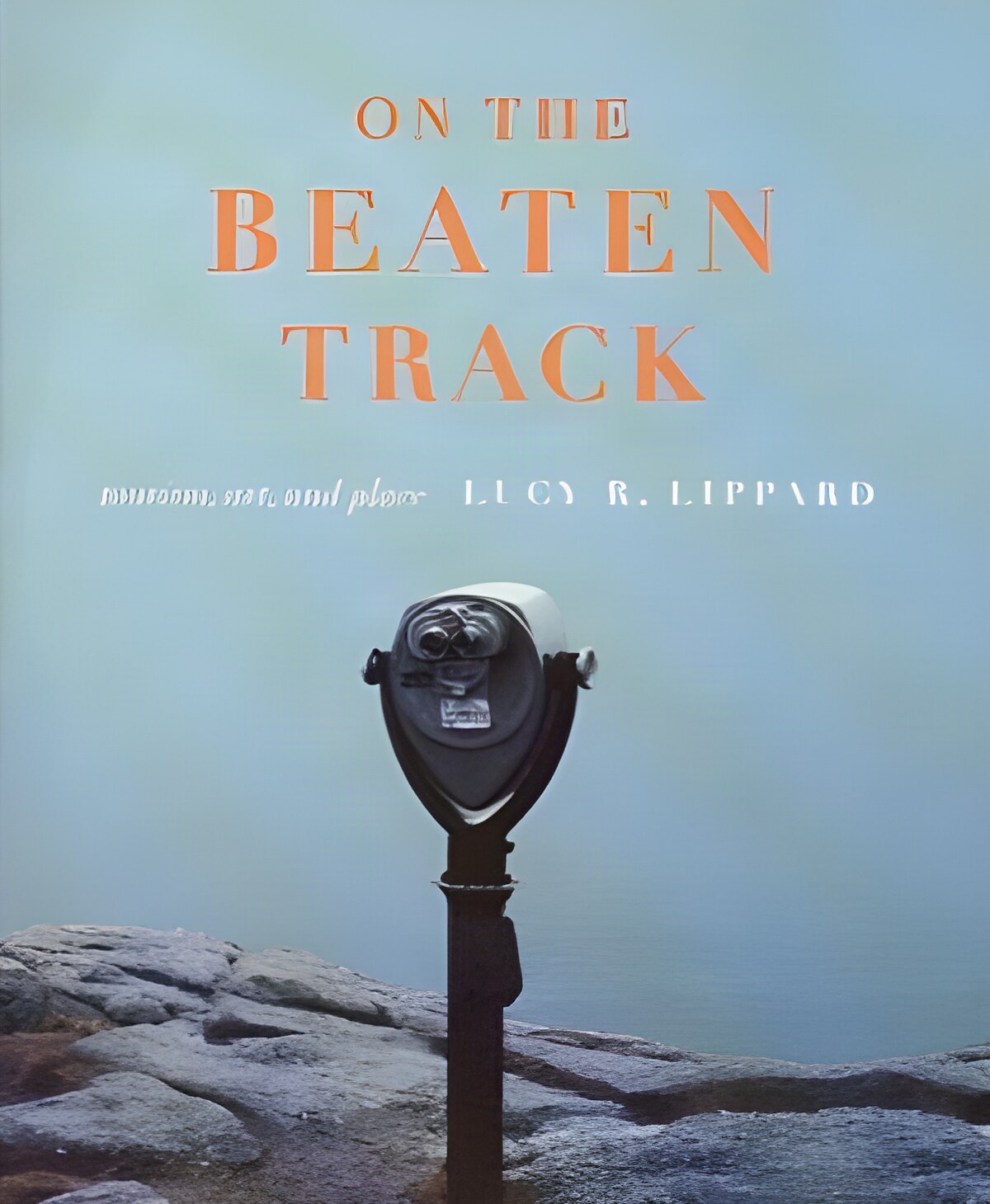
Hardcover. NY, The New Press, 1st, 1999, Book: Very Good, Dust Jacket: Very Good, Hardcover in a bright, unclipped dust jacket, 182 pages, b&w illustrations. Lucy R. Lippard weaves together cultural criticism, anthropology, and community activism for an in-depth look at how tourism sites are conceived and represented, and how they affect the places they transform. Critic Andrew Ross calls Lippard "the most surefooted tour guide you could hope for" in her exploration of being a tourist in one's own home, of how advertising and photography define place, of how antique shops function as populist museums, and of the commodification of indigenous cultures. With her characteristic breadth and critical eye, Lippard discusses the political economies of leisure spaces, the tourist's fascination with tragic destinations (such as the sites of massacres and nuclear weapons tests, or Holocaust memorials), and our willingness to let national parks and heritage sites define nature and history. Clae copy.
NY, Harper & Brothers, 1911, Book: Very Good, Dust Jacket: None, Painting of little girl enticing squirrel in tree holding a nut. Art by Arthur Dove. Approx. 10 X 13". PLEASE NOTE The image shown is a scan of the actual product you are purchasing. What you see is what you get. The sheet may have some imperfections beyond the cropped area shown. You are buying THIS PAGE ONLY- not the entire magazine. Your order will be placed carefully between stiff paper and an acetate overlay, then packed in a rigid cardboard sleeve to prevent bending.
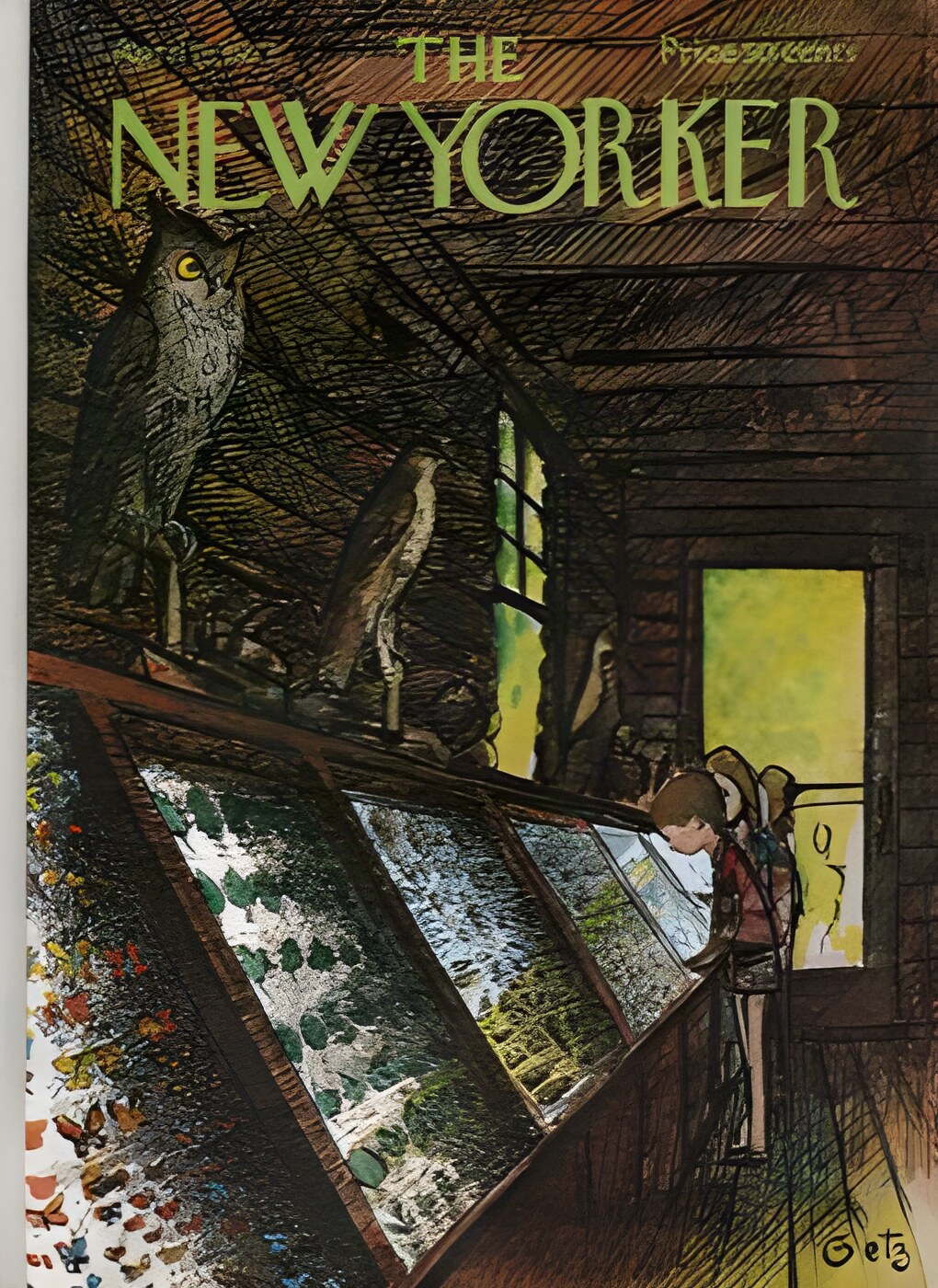
1972, Book: Very Good, Color art of children viewing specimens in nature camp setting. 8 3/4 X 12", very good. PLEASE NOTE: The image shown is a scan of the actual product you are purchasing. What you see is what you get. The sheet may have some imperfections beyond the cropped area shown. You are buying THE COVER ONLY- not the entire magazine. Your order will be placed carefully between stiff paper in clear plastic envelope, then packed in a rigid cardboard sleeve to prevent bending.
Hardcover. University of Washington Press, 1st, 2001, Book: Very Good, Dust Jacket: Very Good, Hardcover in a bright dust jacket, 285 pages. Over the Line: The Art and Life of Jacob Lawrence includes essays by eight distinguished art historians examining the ways in which Jacob Lawrence's art speaks so powerfully to different audiences. It is the first multi-author, in-depth probe of the artist's entire career: the nature of his work, his education, the critical climate in which he worked, and his use of materials and techniques. It reproduces, in full color, more than 200 works, most of which have not been published in color, or at all, in other books on the artist.
Softcover. Duke University Press, 1st, 2017, Book: Very Good, Dust Jacket: None, Softcover, 381 pages, color and b&w illustrations. Photography is one of the principal filters through which we engage the world. The contributors to this volume focus on Walter Benjamin's concept of the optical unconscious to investigate how photography has shaped history, modernity, perception, lived experience, politics, race, and human agency. In essays that range from examinations of Benjamin's and Sigmund Freud's writings to the work of Kara Walker and Roland Barthes's famous Winter Garden photograph, the contributors explore what photography can teach us about the nature of the unconscious. They attend to side perceptions, develop latent images, discover things hidden in plain sight, focus on the disavowed, and perceive the slow. Of particular note are the ways race and colonialism have informed photography from its beginning. The volume also contains photographic portfolios by Zoe Leonard, Kelly Wood, and Kristan Horton, whose work speaks to the optical unconscious while demonstrating how photographs communicate on their own terms. The essays and portfolios in Photography and the Optical Unconscious create a collective and sustained assessment of Benjamin's influential concept, opening up new avenues for thinking about photography and the human psyche. Clean, bright copy.
Softcover. NY/London, Routledge, reprint, 2007, Book: Very Good, Dust Jacket: None, Softcover, 470 pages. Forty of the world's most active art historians and theorists, including Victor Burgin, Joel Snyder, Rosalind Krauss, Alan Trachtenberg, Geoffrey Batchen, Carol Squiers, Margaret Iversen and Abigail Solomon-Godeau in animated debate on the nature of photography. Photography has been around for nearly two centuries, but we are no closer to understanding what it is. For some people, a photograph is an optically accurate impression of the world, for others, it is mainly a way of remembering people and places. Some view it as a sign of bourgeois life, a kind of addiction of the middle class, whilst others see it as a troublesome interloper that has confused people's ideas of reality and fine art to the point that they have difficulty even defining what a photograph is. For some, the whole question of finding photography's nature is itself misguided from the beginning. This provocative second volume in the Routledge The Art Seminar series presents not one but many answers to the question what makes a photograph a photograph? Clean copy.
Hardcover. Oxford, Oxford University Press, 1st, 1973, Book: Very Good, Dust Jacket: Good, 193 pages, 8 color and 100 b&w plates. Examines the approach of the Pre-Raphaelite Brotherhood and their associates to the natural world. It is the first serious examination of the consequences of the Pre-Raphaelite creed of 'exact truth to nature', which led to the ever increasing importance of natural detail in Pre-Raphaelite school of landscape painting. Following a discussion of the developing interest in the precise depiction of nature by the Pre-Raphaelites from 1848 to 1851, chapters on individual artists, many hitherto almost forgotten, trace the history of the Pre-Raphaelite landscape in the 1850s and 1860s and its relation to earlier and later art in England and abroad. Much new light is cast on Ruskin's central role as theorist, patron, and critic of mid Victorian art.
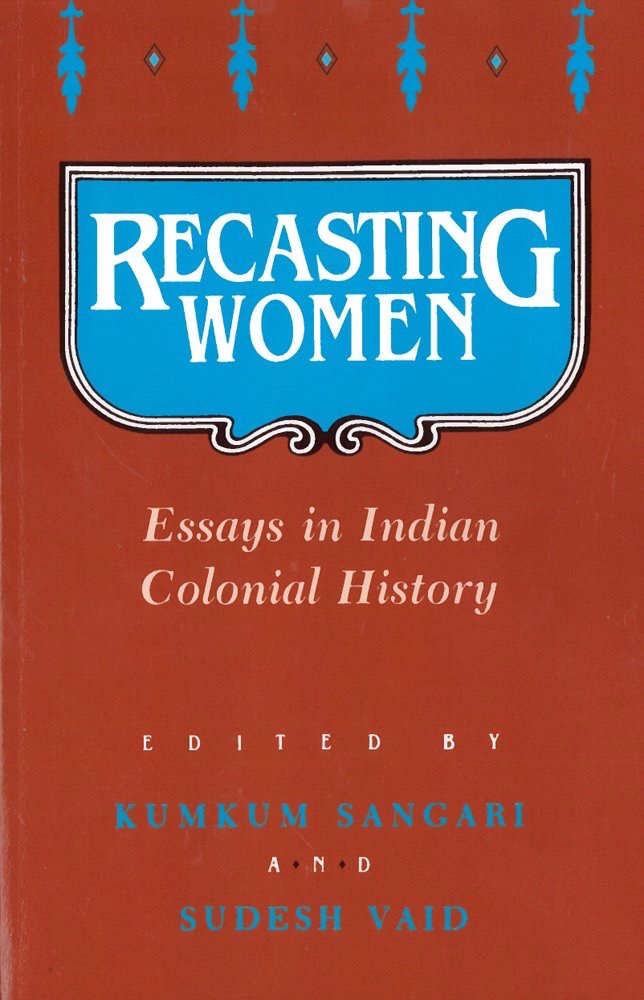
Softcover. New Brunswick NJ, Rutgers University Press, 1st pbk., 1990, Book: Very Good, Dust Jacket: None, Softcover, 372 pages. The first set of essays seeks to analyze the patriarchal discourses of a colonial society and includes an analysis of the shaping of Hindu-Aryan identity, the parameters of the discourse on widow-immolation, the "defeminization" of popular culture in nineteenth-century urban Calcutta, the nature of the reforms proposed by early women's journals in Hindi, and the implications of the nationalist movement and of Indo-Anglian literature on middle-class patriarchal norms. The second set of articles relates to women of the productive classes--the reconstitution of patriarchies in the agrarian transition in Haryana, in the Oudh peasant movement, in the armed peasant struggle in Telangana, and among the working class in Bengal. The contributors explore the interrelation of patriarchies with political economy, law, religion, and culture, and suggest a different history of "reform" movements, and of class and gender relations. Clean copy.
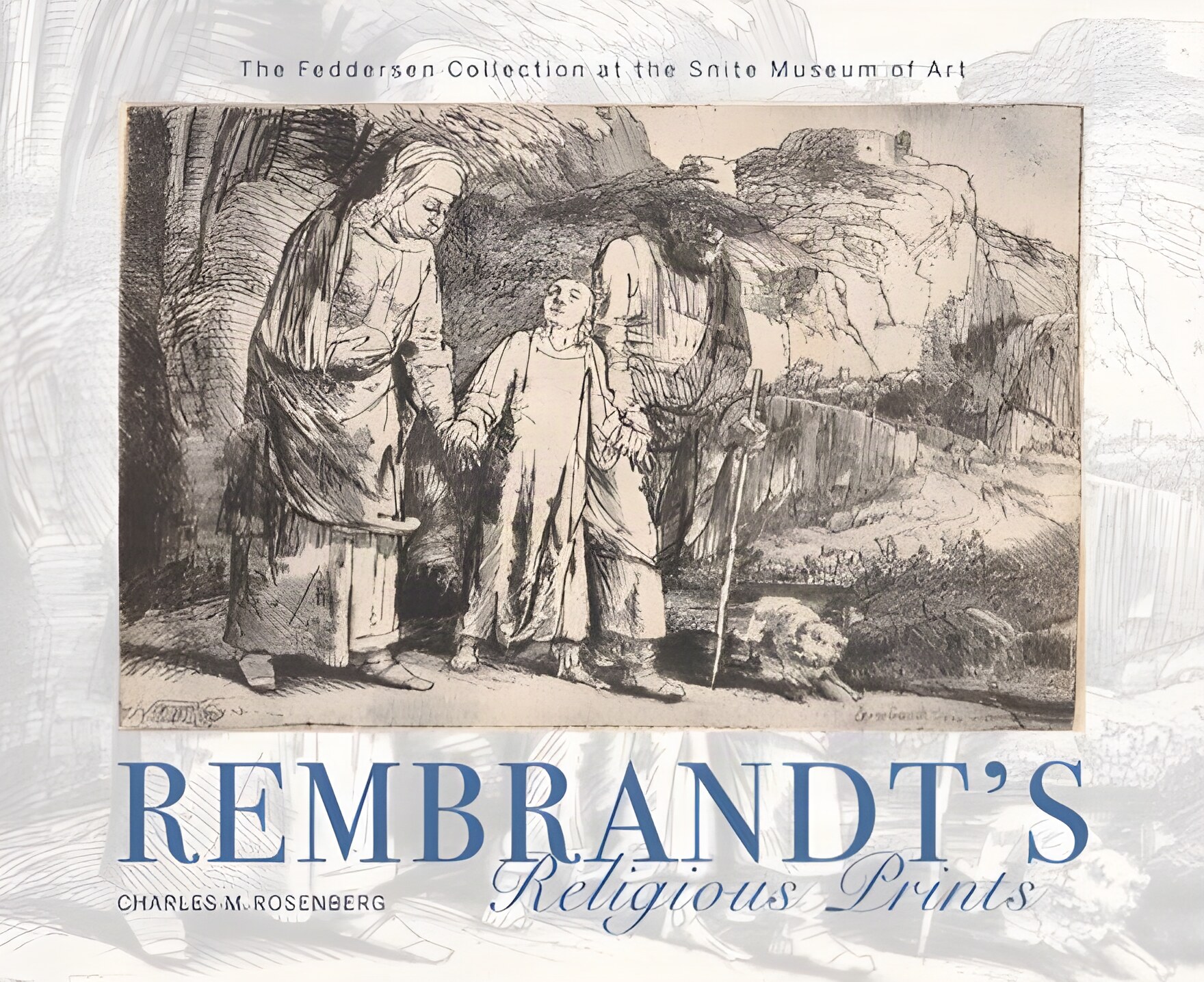
Hardcover. Indiana University Press, 1st, 2017, Book: Very Good, Dust Jacket: Very Good, Hardcover in a bright dust jacket, 475 pages. Rembrandt's stunning religious prints stand as evidence of the Dutch master's extraordinary skill as a technician and as a testament to his genius as a teller of tales. Here, several virtually unknown etchings, collected by the Feddersen family and now preserved for the ages at the University of Notre Dame, are made widely available in a lavishly illustrated volume. Building on the contributions of earlier Rembrandt scholars, noted art historian Charles M. Rosenberg illuminates each of the 70 religious prints through detailed background information on the artist's career as well as the historical, religious, and artistic impulses informing their creation. Readers will enjoy an impression of the earliest work, The Circumcision (1625-26); the famous Hundred Guilder Print; the enigmatic eighth state of Christ Presented to the People; one of a handful of examples of the very rare final posthumous state of The Three Crosses; and an impression and counterproof of The Triumph of Mordecai. From the joyous epiphany of the coming of the Messiah to the anguish of the betrayal of a father (Jacob) by his children, from choirs of angels waiting to receive the Virgin into heaven to the dog who defecates in the road by an ancient inn (The Good Samaritan), Rembrandt's etchings offer a window into the nature of faith, aspiration, and human experience, ranging from the ecstatically divine to the worldly and mundane. Ultimately, these prints? modest, intimate, fragile objects?are great works of art which, like all masterpieces, reward us with fresh insights and discoveries at each new encounter. Clean copy.
Hardcover. London/NY, Routledge, 1st, 2005, Book: Very Good, Dust Jacket: None, Hardcover, pictorial boards, 280 pages with index. Color and b&w illustrations. Why does art matter to us, and what makes it good? Why is the role of imagination so important in art? Illustrated with carefully chosen color and black-and-white plates of examples from Michaelangelo to Matisse and Poussin to Pollock, Revealing Art takes us on a compelling and provocative journey. Kieran explores some of the most important questions we can ask ourselves about art: how can art inspire us or disgust us? Is artistic judgement simply a matter of taste? Can art be immoral or obscene, and should it be censored? He brings such abstract issues to life with fascinating discussions of individual paintings, photographs and sculptures, such as Michelangelo's Pieta, Andres Serrano's Piss Christ and Francis Bacon's powerful paintings of the Pope. He also suggests some answers to problems that any one in an art gallery or museum is likely to ask themselves: what is a beautiful work of art? and can art really reveal something true about our own nature? Clean copy.
Hardcover. New York, George Braziller, 1st, 1993, Book: Very Good, Dust Jacket: Very Good, Hardcover in a bright dust jacket, Unpaginated. Color and black & white photography. British artist Long ( Walking in Circles ) takes nature treks--in England's Lake District, the Sahara, Japan, Nepal--and creates site-specific works along the way. He fashions a mud circle in the river Avon, traces a line of snow near a temple in Kyoto and erects a circle of stones on a Swiss mountainside. The spare, deeply meditative photographs that he took en route sometimes call to mind prehistoric British megalithic monuments or Native American earthworks, as if he wants to tune in on planetary patterns of energy. At other times Long simply records what he sees, providing dramatic vistas of Iceland's vast rolling hills, Bolivia's high plateau, Washington's forests and Mount Everest's calm majesty. His images, poetic captions and unobstrusive siteworks reflect an artist who is at once traveler, nature-lover and adventurer.
Softcover. New Haven CT, Yale University Press, 1st, 2011, Book: Very Good, Dust Jacket: None, Softcover, 202 pages. color and b&w illustrations. Italian couturier Roberto Capucci (b. 1930) is revered by contemporary fashion designers for his innovative silhouettes and masterful use of color and materials. Capucci refers to his creations as "studies in form," and draws inspiration from a multitude of sources, including art, architecture, and nature. This beautifully illustrated book, the companion to the first exhibition of Capucci's work in the United States, examines his career from the 1950s to the present in the context of the rise of Italian fashion.
Hardcover. La Jolla CA, Green Tiger Press, 2nd pr., 1986, Book: Good, Dust Jacket: None, Hardcover, illustrated boards, no dust jacket. Rover and Coo Coo is a story in the traditional style of story telling, a story that was told to generations of the Hay family around an open fire in winter or on an open porch in summer. It takes place when Indiana was a frontier, and Charles Hay left his family in their log cabin and went to the distant mill to have his corn ground. The adventure takes place in the dark forest with a chase by hungry wolves, and Charles' faithful hounds saving the day. There are beautiful and clear descriptions of the surroundings in those pristine times. The illustrations of the highly acclaimed artist, Tim Soliday, bring it all alive. In the end Charles is safe with his wife and two small children, and he speaks of nature and how all creatures have a place in the larger picture of the oneness of the world.
Hardcover. Madison, WI, The University of Wisconsin Press, 1st, 1948, Book: Good, Dust Jacket: None, Volume dedicated to the rural art originating in Wisconsin. Discusses 30 different artists and contains illustrations (color and black/white) of their pieces. Good condition; cloth bound book shows some wear on the edges of the covers. No dust jacket. Commemorates the 100th Anniversary of the founding of the University of Wisconsin by means of the work of rural Wisconsin artists such as Ambrose G. Ammel, Joan Arend, John M. Black, WIlliam H. Boose, Frances Burt, Frank H. Engebretson, Francis D. Grady, Louis Grebetz, Rachel Gertrude Grimm, Lois Ireland, Arthur Johnson, and many more.
Softcover. Princeton NJ, Princeton University Press, reprint, 1996, Book: Very Good, Dust Jacket: None, Softcover, pictorial wraps, 490 pages. By explaining how to sire multicolored horses, produce nuts without shells, and create an egg the size of a human head, Giambattista Della Porta's Natural Magic (1559) conveys a fascination with tricks and illusions that makes it a work difficult for historians of science to take seriously. Yet, according to William Eamon, it is in the "how-to" books written by medieval alchemists, magicians, and artisans that modern science has its roots. These compilations of recipes on everything from parlor tricks through medical remedies to wool-dyeing fascinated medieval intellectuals because they promised access to esoteric "secrets of nature." In closely examining this rich but little-known source of literature, Eamon reveals that printing technology and popular culture had as great, if not stronger, an impact on early modern science as did the traditional academic disciplines. Clean copy.
Softcover. Cambridge MA, MIT Press, 4th pr., 1977, Book: Very Good, Dust Jacket: None, Softcover, 82 pages, b&w illustrations. The collected writings of the "dean of the New York School of Abstract-Expressionist Painting." "The creative process lies not in imitating, but in paralleling nature; translating the impulse received from nature into the medium of expression, thus vitalizing this medium. The picture should be alive, the statue should be alive and every work of art should be alive." Thus Hans Hofmann wrote nearly half a century ago. He left the Old World, Germany, for the New, at the age of 50. In 1948, when the retrospective exhibition was held at the Addison Gallery of American Art, Hofmann was 68; he had been in the United States for 18 years, a citizen for seven years. Yet he was scarcely recognized in Europe or America as an artist of significance and had never had a full-scale retrospective exhibition of his work. Beginning with a group exhibition in Germany in 1909, he had been given 12 one-man shows and had been included in four group exhibitions before the exhibit at Andover. Subsequently, he was to have 33 one-man shows and to be in over 60 group exhibitions, including the 1960 Venice Biennale, in which he was one of the four artists chosen to represent America. Clean copy.
Hardcover. London, Methuen, 1st, 1984, Book: Very Good, Dust Jacket: Very Good, Hardcover in a bright, lightly worn dust jacket, 283 pages. Shopkeepers and master artisans had a striking presence in the history of nineteenth-century Europe, not only in the development of industrial and urban economies, but also the fabric of social life and the politics of protest. The experience of 1848, the differing pace of various forms of nationalism and liberalism and, at the end of the century, the shift towards right-wing nationalist or Catholic political movements reflected a developing 'crisis' in the petite bourgeoisie. The essays examine the nature of this crisis and ask critical questions about the social relations of the petite bourgeoisie with the developing working classes. This book as a whole provides a fresh and integrated approach to the world of these shopkeepers and master artisans and illuminates much else besides in the social history of nineteenth-century Europe. Clean copy.
Hardcover. New York, The Monacelli Press, 1st, 2009, Book: Very Good, Dust Jacket: None, Hardcover, 127 pages, color plates. Like new in publishers shrink-wrap. Lynn Davis, known for surveys of natural and man-made wonders, has long been fascinated with the objects and venues of space exploration. Her photographs of the architectural icons, cornerstones, and abandoned sites of the space race reflect the many facets of a historically complex industry: the beginnings of space exploration; the changing nature of technology; and a fascination with otherworldly ruins. She emphasizes the bold modernism of these sites while evoking the presence of obsolete technologies. Davis traveled to historic sites in Kazakhstan, Russia, Germany, French Guiana, and the United States. She received special permission to visit Baikonur in Kazakhstan, a leading launch site shrouded in secrecy since the 1950s, and her photographs offer one of the first inside glimpses of launches, transmission towers, fuel lines, and satellites.
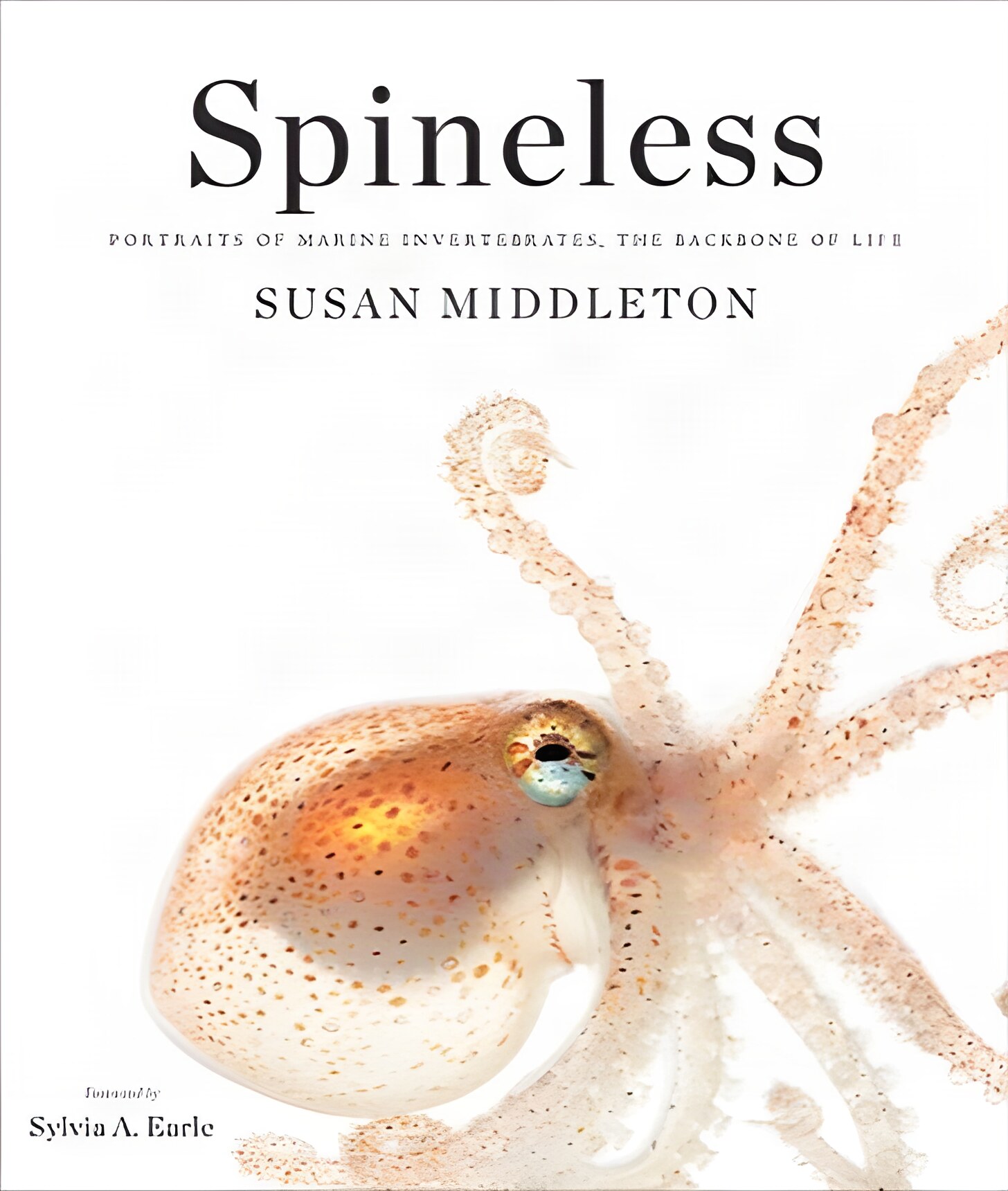
Hardcover. NY, Abrams, 1st, 2014, Book: Very Good, Dust Jacket: Very Good, Hardcover in a bright dust jacket. This collection of more than 250 remarkable images is the result of seven years of painstaking fieldwork across the Pacific Ocean, using photographic techniques that Middleton developed to capture these extremely fragile creatures on camera, creatures who are astonishingly diverse in their shapes, patterns, textures, and colors--in nature's fashion show, they are the haute couture of marine life. Middleton also provides short essays that examine the place these invertebrates occupy on the tree of life, their vast array of forms, and their lives in the ocean. Scientist Bernadette Holthuis contributes profiles describing each species, many of them for the first time. Middleton's book is a stunning view of nature that harmoniously combines art and science. 255 pages in color. Clean copy. PLEASE NOTE: DUE TO SIZE & WEIGHT, DOMESTIC SHIPPING ONLY.

 "Nature's Engraver: A Life of Thomas Bewickby: Uglow, Jenny")
 "Northern Adventure, A: The Art of Fred Machetanzby: Woodward, Kesler E.")
 "O'Keeffe's O'Keeffes - The Artists Collectionby: Lynes, Barbara Buhler")
 "Ode to nature: Flowers and landscapes of the Rookwood Pottery, 1880-1940, April 15-June 30, 1980by: Trapp, Kenneth R")

 "Over the Line: The Art and Life of Jacob Lawrenceby: Elizabeth Hutton Turner, Patricia Hills, et al.")

 "Photography Theoryby: James Elkins")
 "Pre-Raphaelite Landscape, The by: Staley, Allen")
 "Richard Long: Mountains and Watersby: Long, Richard")

 "Roberto Capucci: Art into Fashionby: Dilys E. Blum")
 "Rover and Coo Cooby: John Hay/Tim Solliday")
 "Rural Artists of Wisconsinby: Barton, John Rector")
 "Science and the Secrets of Nature: Books of Secrets in Medieval and Early Modern Cultureby: William Eamon")
 "Search for the Real and Other Essays by: Hans Hofmann")
 "Shopkeepers and Master Artisans in Nineteenth-Century Europeby: Crossick, Geoffrey & Heinz-Gerhard Haupt")
 "Space Projectby: Davis, Lynn")