Softcover. Kitchen Sink Press, reprint, 2009, Book: Very Good, Dust Jacket: None, Softcover, 168 pages. In 1945, World War II ended and a new age dawned. In Li'l Abner, Al Capp moved along with everyone else into this age, guiding vbhis immensely popular adventure strip into satire. At the top of his artistic and storytelling form, Capp was more than ready to greet the postwar era. In this book you'll meet Orson Waggon (Orson Welles), boy radio genius, who has a sensational idea: kill somebody during an actual broadcast --a somebody named Abner Yokum. Also in this volume: Timberwolf McHowl, Moonbeam McSwine (who prefers the company of pigs to men) gets a bath; Fleabrain, Lonesome Polecat, Barbara Seville and another wild Sadie Hawkins Day Race. Orson Welles parody and more! Introduction by Madeline Gardner, Al Capp's sister (with early family photos) and another fine intro by Dave Schreiner putting the year in historic context.12 x 9 horizontal format
Softcover. Kitchen Sink Press, 1st, 1989, Book: Very Good, Dust Jacket: None, Softcover, 176 pages, b&w reprints of the early strips. This book contains a complete set of the 1940 daily strips. The first Hollywood adaptation of Li'l Abner was made in 1940. Newspaper columnist Michael Price and the late film historian George Turner provide a fascinating history of this largely forgotten movie, complete with 9 rare stills and lobby cards. The back cover features the very rare Li'l Abner movie poster and another lobby card in full color. Buster Keaton plays Lonesome Polecat in the film but the once hugely popular silent star was in such professional disgrace by 1940 that he was not even listed among the seven acting credits on the film poster! A sidebar provides backgrounds on the producer, director and actors. A second introduction by editor Dave Schreiner provides a political and historical context for the strip itself in 1940. The year begins with Capp's parody of John Steinbeck's The Grapes of Wrath (also made into a movie this year). Dogpatch is wiped out by turnip termites, so our favorite hillbillies are lured to Boston to pick oranges in winter! Li'l Abner also learns how to woo "Dogpatch style" from Adam Lazonga, whom Schreiner speculates is based on controversial philosopher and free thinker Bertrand Russell or possibly playwright George Bernard Shaw. In another episode Mammy and Pappy Yokum get a 100 year-old letter and rush off to the California gold rush. Earthquake McGoon is introduced in the daily strip this year, as is the popular phrase, "As any fool kin plainly see!" Plus the annual Sadie Hawkins Day Race. The cover is drawn by Peter Poplaski.
Hardcover. Jackson [Miss.], University Press of Mississippi, 1st, 2009, Book: Very Good, Dust Jacket: Very Good, 284 pages, b&w illustrations. Minor edgewear to dust jacket else a clean, tight copy.
Softcover. Kitchen Sink Press, 1st, 1992, Book: Very Good, Dust Jacket: None, Softcover, 176 pages. The most popular of Capp's hundreds of distinctive characters was the Shmoo. This lovable little creature loved mankind so much that it would sacrifice itself and turn into a ham steak, a gallon of milk or a dozen eggs: whatever its owner desired. Its whiskers made nice toothpicks and its eyes could be recycled as buttons. Most important, a Shmoo could reproduce faster than a rabbit. Thus, if you had one Shmoo, you were set. You didn't need to work at all. Thus did the apparent book for mankind become its curse and the powers that be decreed that all Shmoos must be exterminated. Capp's insightful morality tale was so popular that it spawned an unprecedented merchandising bonanza. Two introductions, by David Schreiner and by science fiction writer Harlan Ellison, are illustrated with various Shmoo toys manufactured. The large back cover photograph shows a selection of Shmoo merchandise in color from the Denis Kitchen collection. Also featured in this volume: Flying Sausages (parody of "Flying Saucers," a term first coined a few months earlier; Fearless Fosdick, Nightmare Alice, Salomey, Adam Lazonga, Moonbeam McSwine, Cousin Weak-Eyes and Marryin' Sam. See also our Shmoo Facts Sheet for some amazing statistics about this character's popularity.
Softcover. Kitchen Sink Press, 1st, 1992, Book: Very Good, Dust Jacket: None, Softcover, 176 pages. The most popular of Capp's hundreds of distinctive characters was the Shmoo. This lovable little creature loved mankind so much that it would sacrifice itself and turn into a ham steak, a gallon of milk or a dozen eggs: whatever its owner desired. Its whiskers made nice toothpicks and its eyes could be recycled as buttons. Most important, a Shmoo could reproduce faster than a rabbit. Thus, if you had one Shmoo, you were set. You didn't need to work at all. Thus did the apparent book for mankind become its curse and the powers that be decreed that all Shmoos must be exterminated. Capp's insightful morality tale was so popular that it spawned an unprecedented merchandising bonanza. Two introductions, by David Schreiner and by science fiction writer Harlan Ellison, are illustrated with various Shmoo toys manufactured. The large back cover photograph shows a selection of Shmoo merchandise in color from the Denis Kitchen collection. Also featured in this volume: Flying Sausages (parody of "Flying Saucers," a term first coined a few months earlier; Fearless Fosdick, Nightmare Alice, Salomey, Adam Lazonga, Moonbeam McSwine, Cousin Weak-Eyes and Marryin' Sam.
Hardcover. New York , Abrams, 1st, 1991, Book: Very Good, Dust Jacket: Very Good, Hardcover, 135 pages, illustrated throughout in color. Light shelf-wear to dust jacket. Faint foxing to edges, otherwise a clean, tight copy. 100 color plates with 39 black & white illustrations.
Hardcover. Library of American Comics, 1st, 2014, Book: Very Good, Dust Jacket: None, Oblong hardcover, 336 pages. In Alley Oop, Hamlin created a unique concept, marrying his fascination with dinosaurs and prehistoric times to a rollicking style of storytelling and drawing that was simultaneously serious, fantastic, and loaded with slapstick. The series was set in the kingdom of Moo and starred Alley Oop, the club-wielding caveman, his girlfriend Ooola, friends Dinny the dinosaur and Foozy (who speaks in rhyme), plus Oop's rival, King Guz, and Guz's Queen Umpateedle. Yet Hamlin knew that the strip's horizons in Moo were limited. So it was, in early 1939, that Alley Oop and Ooola see a mysterious box and, to the utter amazement of Guz and his minions, promptly fade from view, followed by the caption: "Dear Reader: you must now say goodbye to Moo...if you are to follow Alley Oop in this strangest of many strange adventures. --V. T. Hamlin". Oop and Ooola had entered a time machine and were now living in the modern-day 20th Century! Their host was the inventor of the time machine, Dr. Elbert Wonmug! No change of such magnitude had ever occurred in a continuing newspaper strip, and readers responded enthusiastically. With every time period in history available as a backdrop, Alley Oop became even more popular. This volume features Oop's final Moo adventure, followed by his trips to the 20th Century and ancient Greece, where he and Ooola share adventures with brave Ulysses, the lovely Helen of Troy, and the mighty Hercules. V.T. Hamlin would send his characters everywhere and everywhen--but the classic Alley Oop begins with the stories contained in this volume. The book is introduced by Michael T. Price, who first met V. T. Hamlin in the 1960s and remained friendly with him for the rest of the cartoonist's life. Price also composed the musical score for Hip Pocket Theatre's production, Alley Oop.
Hardcover. Insight Editions, 1st, 2008, Book: N, Hardcover, 14 pages. From the demented pages of MAD Magazine comes a depraved and uproarious look at contemporary politics' juiciest scandals. Revel in the salacious animation of our fearless leaders' most embarrassing moments. Hunt with Dick Cheney, learn how to spell with Dan Quayle, take speech lessons with George W. Bush, and find out why Alfred E. Neuman is running for President...again and again and again. Mad About Politics: A Pop-Up Book spares nothing at the expense of our elected officials, highlighting the unbearable truth about who's in charge. With precise pop-up ingenuity American power players have never looked so enjoyably foolish. If you're wondering who to vote for on Election Day let MAD About Politics give you some pointers. Suitable for the sardonic this tome of asinine political parody will have anyone with a sense of humor rolling in the aisles.
Hardcover. NY, Bloomsbury , 1st, 2016, Book: Very Good, Dust Jacket: Very Good, Hardcover, pictorial boards with wrap-around dust jacket band with title. 403 pages, color and b&w illustrations. Claude Monet's water lily paintings are among the most iconic and beloved works of art of the past century. Yet these entrancing images were created at a time of terrible private turmoil and sadness for the artist. The dramatic history behind these paintings is little known; Ross King's Mad Enchantment tells the full story for the first time and, in the process, presents a compelling and original portrait of one of our most popular and cherished artists. Clean, bright copy.
Hardcover. Springfield MA, McLoughlin Bros., 1st, 1943, Book: Good, Dust Jacket: None, Color illustrated boards, spiral bound, color art by McKean. Seven color spreads feature moveable sliding frames with pull-ribbons. All functional and attached. The red plastic spiral binding needs repair. The top 3 rings have on ring missing and the bottom three rings are missing. All the holes are intact, untorn and appear repairable. Good plus condition, fragile, clean.
Hardcover. Lexington KY, University Press of Kentucky, 1st, 2013, Book: Very Good, Dust Jacket: Very Good, Hardcover in a bright dust jacket. An Armenian national raised in Russia, Rouben Mamoulian (1897--1987) studied in the influential Stanislavski studio, renowned as the source of the "method" acting technique. Shortly after immigrating to New York in 1926, he created a sensation with an all-black production of Porgy (1927). He then went on to direct the debut Broadway productions of three of the most popular shows in the history of American musical theater: Porgy and Bess (1935), Oklahoma! (1943), and Carousel (1945). Mamoulian began working in film just as the sound revolution was dramatically changing the technical capabilities of the medium, and he quickly established himself as an innovator. Not only did many of his unusual camera techniques become standard, but he also invented a device that eliminated the background noises created by cameras and dollies. Seen as a rebel earlier in his career, Mamoulian gradually gained respect in Hollywood, and the Directors Guild of America awarded him the prestigious D. W. Griffith Award for Lifetime Achievement in 1983. In this meticulously researched biography, David Luhrssen paints the influential director as a socially conscious artist who sought to successfully combine art and commercial entertainment. Luhrssen not only reveals the fascinating personal story of an important yet neglected figure, but he also offers a tantalizing glimpse into the extraordinarily vibrant American film and theater industries during the twenties, thirties, and forties.
Hardcover. London, Faber and Faber, 1st, 2013, Book: Very Good, Dust Jacket: Very Good, Unpaginated. Hardcover no dusk jacket issued. Color boards with black and white comics throughout. Light rubbing to rear board. Marble Season is the semiautobiographical novel by the acclaimed cartoonist Gilbert Hernandez, author of the epic masterpiece Palomar and cocreator, with his brothers, Jaime and Mario, of the groundbreaking Love and Rockets comic book series. Marble Season is his first book with Drawn & Quarterly, and one of the most anticipated books of 2013. It tells the untold stories from the early years of these American comics legends, but also portrays the reality of life in a large family in suburban 1960s California. Pop-culture references-TV shows, comic books, and music-saturate this evocative story of a young family navigating cultural and neighborhood norms set against the golden age of the American dream and the silver age of comics. Middle child Huey stages Captain America plays and treasures his older brother's comic book collection almost as much as his approval. Marble Season subtly and deftly details how the innocent, joyfully creative play that children engage in (shooting marbles, backyard performances, and organizing treasure hunts) changes as they grow older and encounter name-calling naysayers, abusive bullies, and the value judgments of other kids. An all-ages story, Marble Season masterfully explores the redemptive and timeless power of storytelling and role play in childhood, making it a coming-of-age story that is as resonant with the children of today as with the children of the sixties.
Hardcover. Watkins, reprint, 2011, Book: Very Good, Dust Jacket: Very Good, Hardcover in a bright dust jacket, 272 pages. Marco Polo (c.1254-1324) was a Christian merchant from the Venetian Republic who learned about trading while his father and uncle were absent on an extended journey through Asia, which culminated in a visit with the great khan Kublai. In 1269 the brothers returned to Venice and met Marco for the first time. The three of them then embarked on a new journey to Asia and the court of the khan, returning after more than two decades to find Venice at war. Marco was imprisoned in Genoa, whereupon he dictated his romantic-sounding stories to a cellmate. The popularity of his account is a rare example of a success in publishing before the age of printing. Introduction by John Masefield.
Hardcover. Berkeley CA, University of California Press, 1st, 2008, Book: Very Good, Dust Jacket: None, Hardcover, 287 pages. Pictorial boards, no dust jacket issued. This beautifully illustrated book-the definitive volume on American sculptor Mark di Suvero-features more than two hundred images of his most important works, interspersed with short texts by the artist and by other writers who have inspired his art-making practice, plus a contribution by Francois Barre. Humanist in approach and populist in sensibility, di Suvero's sculpture is accessible, inviting, and inclusive. Praised in particular for his monumental assemblages incorporating steel and wood, di Suvero emerged as a superstar in the 1960s. He was the first living artist to show his sculpture at the Tuileries Gardens, Paris, and the first honored with three major exhibitions at Storm King Art Center. His distinctive, bold pieces can be found in museums and public collections all over the world, and he continues to be the subject of numerous exhibitions both in the United States and in Europe. Mark di Suvero: Dreambook is a celebration of his artistic oeuvre and of his long, distinguished career.
Hardcover. NY, Marvel, 1st, 2006, Book: Very Good, Dust Jacket: Very Good, Hardcover in a bright dust jacket, 248 pages. Collects Marvel Westerns from the 1960s: Marvel Comics has a long history of producing comics in the western genre, going back as far as the 1940s, before the company was even called Marvel. Some of their most popular gunfighters, like the Rawhide Kid, Two-Gun Kid, and Kid Colt, even hung on well after the superhero explosion of the 1960s, but it's been a long time since Marvel put any effort into its western universe. In this volume they attempt to harken back to their cowboy glory days by publishing a four-issue series called Marvel Westerns, which combines classic 1960s stories by Stan Lee and Jack Kirby with 21st-century interpretations of Marvel's classic western heroes. This hardcover contains the four issues of that series, along with some supplemental material. The Two-Gun Kid, Marvel Westerns: Western Legends, Marvel Westerns: Kid Colt and the Arizona Girl, Marvel Westerns: Strange Westerns Starring the Black Rider. Clean copy.
Softcover. San Francisco, Chronicle Books, 1st, 2007, Book: Very Good, Dust Jacket: None, Softcover, 132 pages, color illustrations. Culling more than 150 of the most colorful and sometimes unbelievable posters from 1957-1990. Includes an illuminating bilingual essay discussing the posters' creation, the role of cinema in Mexican popular culture, and the ups and downs of its film industry.
Softcover. San Francisco, Chronicle Books, 1st, 2007, Book: Very Good, Dust Jacket: None, Softcover, 132 pages, color illustrations. Culling more than 150 of the most colorful and sometimes unbelievable posters from 1957-1990. Includes an illuminating bilingual essay discussing the posters' creation, the role of cinema in Mexican popular culture, and the ups and downs of its film industry.
Hardcover. New Haven CT, Yale University Press, 1st, 2004, Book: Very Good, Dust Jacket: Very Good, Hardcover in a bright, unclipped dust jacket, 398 pages. From colonial times to the present, American composers have lived on the fringes of society and defined themselves in large part as outsiders. In this stimulating book Michael Broyles considers the tradition of maverick composers and explores what these mavericks reveal about American attitudes toward the arts and about American society itself. Broyles starts by examining the careers of three notably unconventional composers: William Billings in the eighteenth century, Anthony Philip Heinrich in the nineteenth, and Charles Ives in the twentieth. All three had unusual lives, wrote music that many considered incomprehensible, and are now recognized as key figures in the development of American music. Broyles goes on to investigate the proliferation of eccentric individualism in all types of American music-classical, popular, and jazz-and how it has come to dominate the image of diverse creative artists from John Cage to Frank Zappa. The history of the maverick tradition, Broyles shows, has much to tell us about the role of music in American culture and the tension between individualism and community in the American consciousness. Leer menos
Hardcover. Edison NJ, The Wellfleet Press, 1st, 2004, Book: Very Good, Dust Jacket: Very Good, Hardcover in a bright dust jacket, large oblong volume, 448 pages illustrated in color. First printing of arguably the finest work in print on the life and work of Maxfield Parrish. SIGNED on the title page by both Cutlers, founders of the National Musem of American Illustration. Maxfield Parrish's images achieved remarkable popularity and critical acclaim when they appeared on the covers of countless periodicals and books making him the most celebrated illustrator of the first half of the 20th century as well as incredibly famous and immensely wealthy. Clean copy. PLEASE NOTE: DUE TO SIZE & WEIGHT, DOMESTIC SHIPPING ONLY.
Hardcover. CA, Pomegranate Art Books, 1st, 1994, Book: Very Good, Dust Jacket: None, Non-paginated. Hardcover with moveable parts. Based on Maxfield Parrish's paintings. Clean, tight copy.
Softcover. Tuscaloosa, University of Alabama Press, 1st, 1999, Book: Very Good, Dust Jacket: None, Softcover. This collection of Ford's works focuses on the development of ceramic chronology-a key tool in Americanist archaeology. When James Ford began archaeological fieldwork in 1927, scholars divided time simply into prehistory and history. Though certainly influenced by his colleagues, Ford devoted his life to establishing a chronology for prehistory based on ceramic types, and today he deserves credit for bringing chronological order to the vast archaeological record of the Mississippi Valley. This book collects Ford's seminal writings showing the importance of pottery styles in dating sites, population movements, and cultures. These works defined the development of ceramic chronology that culminated in the major volume Archaeological Survey in the Lower Mississippi Alluvial Valley, 1940-1947, which Ford wrote with Philip Phillips and James B. Griffin. In addition to Ford's early writings, the collection includes articles written with Griffin and Gordon Willey, as well as other key papers by Henry Collins and Fred Kniffen. Clean copy in publisher's shrinkwrap.
Hardcover. Berkeley CA, Lancaster-Miller Publishers, 1st, 1979, Book: Very Good, Dust Jacket: Good, Hardcover, small format art book. The artist Mel Ramos (1935-2018), often associated with the pop artists of the 1960s, here presents female nudes executed in watercolor, many of which 'salute' some of the classical nudes of art history. "Paintings which both reveal and destroy some of our fondest cultural stereotypes". 68 pages, color plates. Dust jacket with chip at top of spine, otherwise clean, very good.
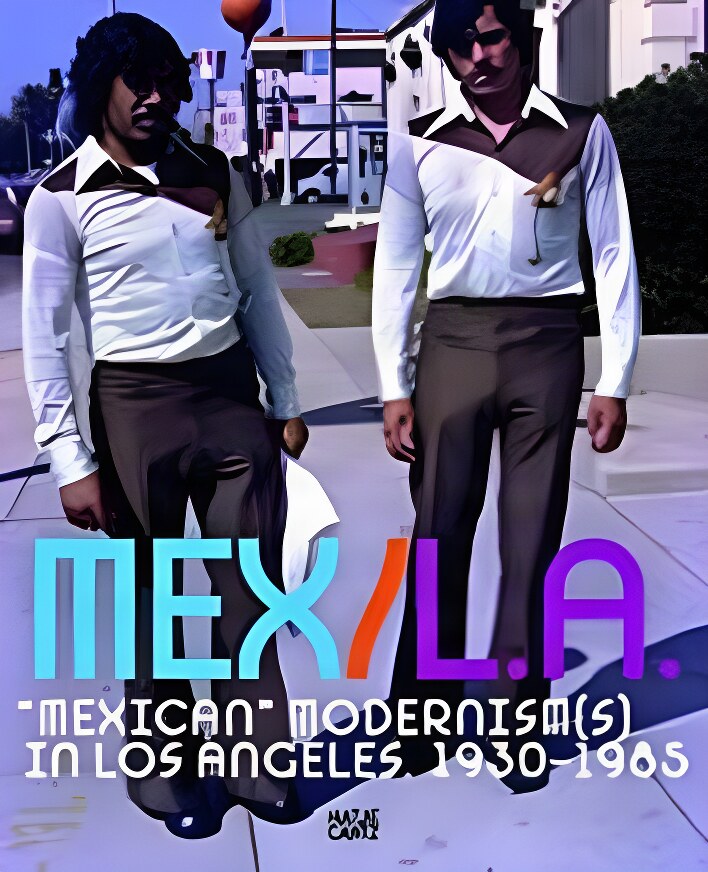
Hardcover. Hatje Cantz, 1st, 2011, Book: Very Good, Dust Jacket: Very Good, Hardcover, 224 pages. The years from 1945 to 1985 are often identified as the moment in which Los Angeles established itself as a leading cultural center in America. However, this conception of its history entirely excludes the very controversial presence of the Mexican muralists, as well as the work of other artists who were influenced by them and responded to their ideas. It is likewise often thought that Los Angeles' Mexican culture arrived full formed from outside it, when in fact that culture originated within the city--it was in Los Angeles and Southern California that Jose Vasconcelos, Ricardo Flores Magon, Octavio Paz and other intellectuals developed the iconography of modern Mexico, while Anglos and Chicanos were developing their own. David Alfaro Siqueiros, Clemente Orozco, Alfredo Ramos Martinez and Jean Charlot made some of their earliest murals in Los Angeles, influencing the Mexican, Mexican-American and Chicano artists of the 1970s and 80s. MEX/LA: Mexican Modernism(s) in Los Angeles 1930-1985 focuses on the construction of different notions of "Mexicanidad" within modernist and contemporary art created in Los Angeles. From the Olvera Street mural by Siqueiros, to the Golden Age of Mexican cinema and the Disney silver-screen productions, to the revitalization of the street mural, up to the performance art of Guillermo Gomez-Pena, MEX/LA explores the bi-national and hybrid forms of artistic practices, popular culture and mass-media arts that have so uniquely shaped Los Angeles' cultural panorama.
Softcover. New York, Monacelli Press, 1st, 2004, Book: Very Good, Dust Jacket: None, Softcover, 183 pages, illustrated in color and b&w.Since 1988, New York-based architect Michael Bell has created a series of projects and essays that explore architectural and urban design for California, New York, and Texas -- the three most populous regions of the United States and, coincidentally, the three states in which he has lived and practiced. The first monograph on the architect, Michael Bell: Space Replaces Us; Essays and Projects on the City, includes both design work and writings.Bell has organized and designed two important installations, both of which include his work: "Endspace: Michael Bell and Hans Hofmann," at the University Art Museum, Berkeley, and "16 Houses: Owning a House in the City," at DiverseWorks in Houston, which featured his seminal Glass House @ 2 Degrees. Other projects included are an urban renewal scheme for a huge site in Far Rockaway, New York, and a series of residential projects, including the Ghent House, a modernist glass house currently under construction in upstate New York. Complementing the design projects are three major essays: "Having Heard Mathematics: The Topologies of Boxing," "Eyes in the Heat: RSE," and "New York City."

 "Li'L Abner Dailies, Vol. 11 1945by: Capp, Al")
 "Li'l Abner: Dailies, Vol. 6: 1940by: Capp, Al")
 "Life on the Press: The Popular Art and Illustrations of George Benjamin Luksby: Gambone, Robert L.")
 "Lil Abner: Meets the Shmoo, 1948, Vol. 14by: Al Capp and Dave Schreiner")
 "Lil Abner: Meets the Shmoo, 1948, Vol. 14by: Capp, Al")
 "Liubov Popovaby: Dabrowski, Magdalena")

 "MAD About Politics: An Outrageous Pop-Up Political Parodyby: Idiots/john Ficarra, The Usual Gang of")

 "Magic Fairy Tales: Alice in Wonderlandby: McKean, Emma and Lewis Carroll")
 "Mamoulian: Life on Stage and Screenby: David Luhrssen")
 "Marble Seasonby: Hernandez, Gilbert")
 "Marco Polo's Silk Road: The Art of the Journey - An Italian at the Court of Kublai Khanby: N/A")
 "Mark di Suvero: Dreambookby: Suvero/Francois Barr")

 "Mas! Cine Mexicano: Sensational Mexican Movie Posters 1957 - 1990by: Rogelio, Jr, Agrasanchez")
 "Mas! Cine Mexicano: Sensational Mexican Movie Posters 1957 - 1990by: Rogelio, Jr, Agrasanchez")
 "Mavericks and Other Traditions in American Musicby: Michael Broyles")

 "Maxfield Parrish Pop-up Book, Theby: Parrish Family Trust, Maxfield")
 "Measuring the Flow of Time: The Works of James A. Ford, 1935-1941by: Ford, James A., Foreword: Willey, Gordon R./ Editor: Lyman, R. Lee/ Editor: O'Brien, Professor Mi")

 "Michael Bell: Space Replaces Us - Essays and Projects on the Cityby: Bell, Michael")