Hardcover. New Haven, CT, Yale University Press, 1st, 2012, Book: Very Good, Dust Jacket: Very Good, 170 pages. Hardcover with dust jacket. A very clean, unmarked copy still in shrink wrap. Many color illustrations throughout. Jasper Johns most popular works spanning 1950 through 1960. Tight copy.
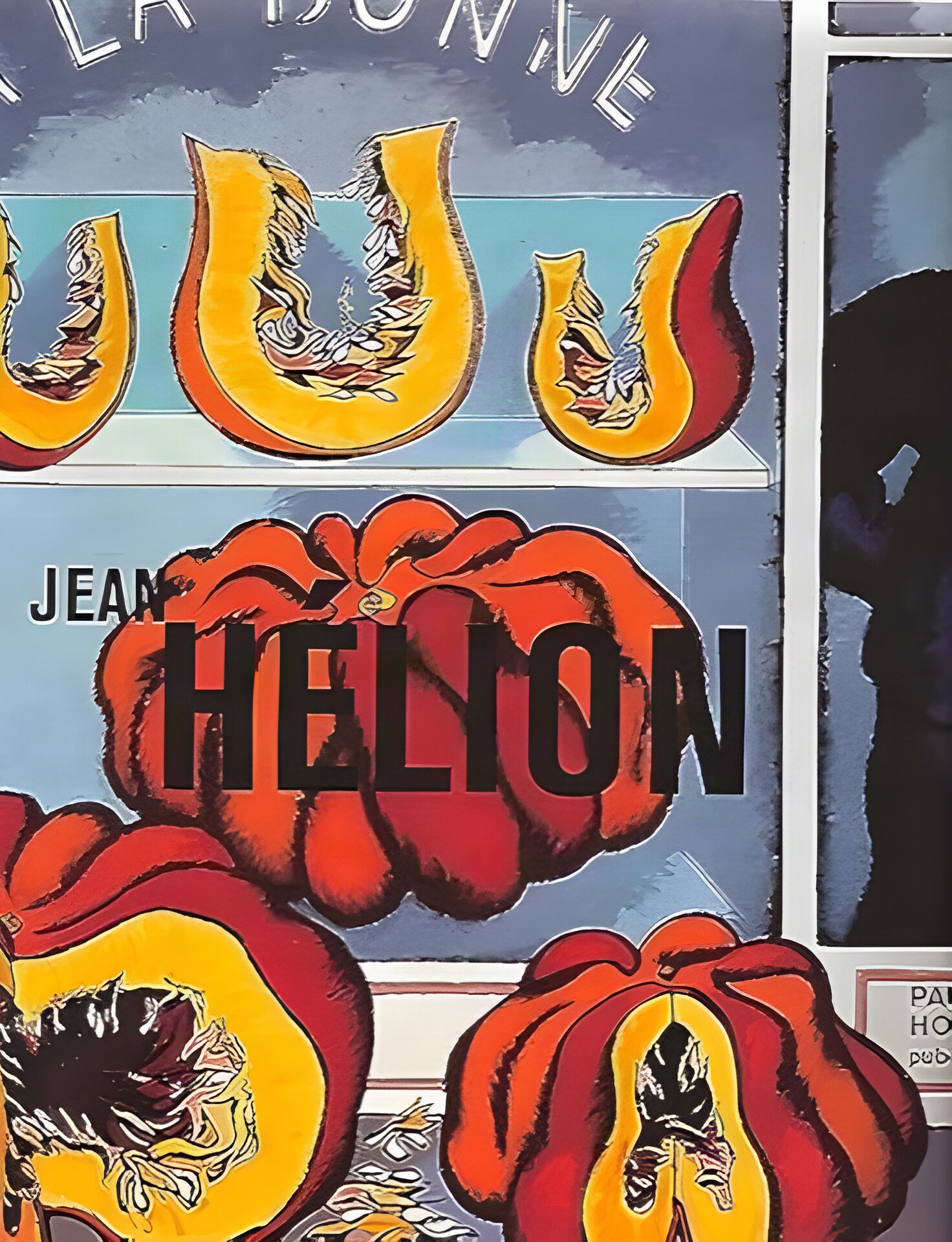
Softcover. Paris / London, Paul Holberton, 1st, 2004, Book: Very Good, Dust Jacket: None, Softcover, 216 pages in color. Jean Helion (1904-1987) became a leading member of the international Abstraction-Creation group in the early 1930s. He then took abstraction to New York, where he advised the avant-garde collector A. E. Gallatin on purchases for his Gallery of Living Art, a crucial influence on the early phases of the developing New York School. In France after World War II, however, he evolved a unique language of painting, employing people and objects that are both contructivist and naturalistic--his own language of signs populated by shop-window dummies, newspaper readers, and startling nudes. In his return to figuration he may be compared to his close friends Balthus and Alberto Giacometti, even though his style is unique. This book is the first in English on the artist for some thirty years. Mild crease to front cover, otherwise a clean, bright copy. DOMESTIC SHIPPING ONLY.
Softcover. Berkeley CA, Celtic Book Company, 1st, 1986, Book: Very Good, Dust Jacket: None, Softcover, 64 pages. Color reproductions from the golden age of one of America's most popular comic strips.
Softcover. NY, Whitney Museum of American Art, 1st, 1970, Book: Very Good, Dust Jacket: None, Softcover, yellow wraps with die-cut heart in front cover. 98 pages. 99 color & bw plates. Issued in conjunction with a 1970 exhibition of work by American pop artist Jim Dine (b. 1935). With opening essays and an artist statement. The catalogue addresses 126 works, and quite a few are pictured here. Includes a lengthy bibliography and exhibition history. Clean.
Hardcover. New Haven, CT, Yale University Press, 1st, 2014, Book: Very Good, Dust Jacket: Very Good, 240 pages. Hardcover with dust jacket. Very clean, like new in publishers shrink-wrap. A tight copy. The American realist artist John Sloan is best known for his portrayals of daily life in early 20th-century New York and as a member of The Eight and the Ashcan School, alongside peers like Robert Henri, Everett Shinn, and George Luks. Sloan's artistic approach was shaped by his experience as a commercial illustrator, a type of work that inaugurated his professional career-at newspapers like the Philadelphia Press and later for mass-market magazines-and which he pursued even after he turned his focus to painting. In John Sloan: Drawing on Illustration, Michael Lobel explores the impact of Sloan's illustrating on his wider output, including his paintings, his drawings for the radical journal The Masses, and his response to the watershed 1913 Armory Show. Illuminating the interaction between art and popular culture, this book provides an important new framework for understanding the modern genre of illustration, and in so doing touches on major 20th-century currents, including the rise and expansion of the mass media and the visual legacy of European modernism.
Hardcover. New Haven, CT, Yale University Press, 1st, 2014, Book: Very Good, Dust Jacket: Very Good, 240 pages. Hardcover with dust jacket. Very clean, like new in publishers shrink-wrap. A tight copy. The American realist artist John Sloan is best known for his portrayals of daily life in early 20th-century New York and as a member of The Eight and the Ashcan School, alongside peers like Robert Henri, Everett Shinn, and George Luks. Sloan's artistic approach was shaped by his experience as a commercial illustrator, a type of work that inaugurated his professional career-at newspapers like the Philadelphia Press and later for mass-market magazines-and which he pursued even after he turned his focus to painting. In John Sloan: Drawing on Illustration, Michael Lobel explores the impact of Sloan's illustrating on his wider output, including his paintings, his drawings for the radical journal The Masses, and his response to the watershed 1913 Armory Show. Illuminating the interaction between art and popular culture, this book provides an important new framework for understanding the modern genre of illustration, and in so doing touches on major 20th-century currents, including the rise and expansion of the mass media and the visual legacy of European modernism.
Hardcover. NY, Thames & Hudson, 1st, 2012, Book: Very Good, Dust Jacket: None, Hardcover, 152 pages. A fabulous facsimile of an almost unknown masterpiece by Joseph Cornell, presented in a box, along with a volume of essays and an interactive DVD One of Joseph Cornell's favorite pastimes was to meander through the used bookstalls of lower Manhattan, sorting through old books, magazines, postcards, photos, and other ephemera in search of items to spark his creative impulses. Sometime in the early 1930s he came upon the Journal d'Agriculture Practique (Volume 21, 1911), a voluminous handbook of advice for farmers. Though he was very much an urban creature, he adored French culture of that period, and the book was filled with charming black and white engraving and photographs of pigs, horses, vegetables, and farm machinery. Over time Cornell altered and reinvented many of the pages in the Journal. He inserted collages, photomontages, and occasional drawings; he crossed out words in the text and made French puns with others. Hand-colored engravings, cutouts, and lift-ups intricately transport the reader from page to page. The dazzling elegance of Cornell's work on the Journal has rarely been viewed. It was discovered in his basement studio soon after his death in 1972 and is now in the collection of the Philadelphia Museum of Art. Due to its fragility, the work is not well known, even among Cornell scholars. Now, in a unique venture, sixty of the most extraordinary pages have been re-created in virtual facsimile, with cutouts, glue-ons, and other unique handmade details. Included in a specially designed box are a DVD of the entire work, including pop-up commentaries, and a volume of illustrated essays on the Journal and Cornell's artistic practice. 103 illustrations
Softcover. Bowling Green OH, Journal of Popular Culture, 1st, 1977, Book: Very Good, Dust Jacket: None, Softcover, pages 701-909. Articles include: Philip Gordon on Ayn Rand. Louis F. Helbig on Struwwelpeter: an inquiry into the effects of violence in children's literature. French folk songs. D. L. Ashliman on the American Indian in German Travel Narratives and Literature. Clean.
Softcover. Bowling Green OH, Journal of Popular Culture, 1st, 1976, Book: Very Good, Dust Jacket: None, Softcover, pages 1-258. Articles include: The tragedy of Bert Williams, mystery writer John D. MacDonald, Edward R. Murrow's WW2 radio broadcasts, the dance marathon craze, Spider-Man - Superhero in the Liberal Tradition, others. Clean.
Hardcover. NY, New York University Press, 1st, 1968, Book: Very Good, Dust Jacket: Very Good, Hardcover in a bright dust jacket. 200 pages. Joyce Cary long a popular author among discriminating readers, is gaining a wider audience for his novels every year. This critical study of his work considers the developing relationship between his matter and his manner. It especially emphasizes his growth as artist and thinker. Looking closely at the language and structure of Cary's books, the author examines all the novels- the African ones, the historical ones, and the two trilogies most of them in detail. To gain an overall view he also considers Cary's nonfiction and some as yet unpublished material. While this study is essentially non-biographical, it does analyze Cary's interpretations of history, sociology and politics as they are gathered from the actions and words of his colorful characters. One of the most intriguing features of Dr. Wolkenfeld's book is the dialogue between characters of the various novels, where likenesses as well as dissimilarities, which reveal so much about Cary as a writer, become evident. Clean copy.
Hardcover. Hatje Cantz, 1st, 2008-08-01, Book: Very Good, Dust Jacket: Very Good, Hardcover, pages. Like new in publisher's shrink-wrap. In the early 1950s, Berlin-born photographer Jurgen Schadeberg captured Nelson Mandela, (then a young attorney), singer Miriam Makeba and the nightlife in Sophiatown, a dynamic black neighborhood in Johannesburg. Revealing the poverty endemic to the majority of South Africa's black population became Schadeberg's chief focus. He arrived there in 1950, at the advent of apartheid, to work for Drum, the first magazine for black readers. In 1964, when Drum was banned, Schadeberg left South Africa for Europe and the United States, creating a body of portraits unique in their ability to cut across race, class and social standing. In 1994, Schadeberg created an iconic image of Nelson Mandela, by then the first black President of South Africa, standing at the window of his former prison cell on Robben Island, where he had been detained on charges of conspiracy from 1964-1982. Schadeberg, whose work has been highly influential to younger artists, now lives and works near Paris. This substantial volume collects 250 images from across his career.
Softcover. NY, Guggenheim Museum, 1st, 2003, Book: Very Good, Dust Jacket: None, 267 pages, illustrated throughout in color and b&w. Clean, unmarked copy with only minor wear to wrappers. In 1915, Kazimir Malevich changed the future of modern art when his experiments in painting led the Russian avant-garde into pure abstraction. He called his innovation Suprematism--an art of pure geometric form meant to be universally comprehensible regardless of cultural or ethnic origin. His Suprematist masterpiece, White Square on White (1920-27), continues to inspire artists throughout the world. Focused exclusively on this defining moment in Malevich's career, Kazimir Malevich: Suprematism features nearly 120 paintings, drawings and objects, among them several recently discovered masterworks. In addition, the book includes previously unpublished letters, essays and diaries, along with essays by international scholars, who shed new light on this popular figure and his devotion to the spiritual in art.
Hardcover. Princeton NJ, Princeton University Press, 1st, 1992, Book: Very Good, Dust Jacket: Very Good, Hardcover in a bright dust jacket, 281 pages, b&w illustrations. "For, Lo! We live in an Iron Age--In the age of Steam and Fire!" wrote a poet mesmerized by the engines that were transforming American transportation, agriculture, and industry during his lifetime. Indeed, by the nineteenth century fire had become America's leitmotif--for good and for ill. "Keeping the flame" was deadly serious: even the slightest lapse of attention could convert a fire from friendly ally to ravaging destroyer. To examine the cultural context of fire in "combustible America," Margaret Hazen and Robert Hazen gather more than a hundred illustrations, most never before published, together with anecdotes and information from hundreds of original sources, including newspapers, diaries, company records, popular fiction, art, and music. What results is an immensely entertaining and encyclopedic history that ranges from stories of the tragic "great fires" of the century to fire imagery in folktales and popular literature. Dealing more with technology than with fire in nature, the book provides a vast amount of information on fire manipulation and prevention in urban life. Hazen and Hazen discuss the people who worked with fire--or against it. Founders, gaffers, blacksmiths, boilers at saltworks, and housewives knew how to "read" a fire and employ it for their purposes. A few dedicated investigators inquired about the scientific nature of heat and flame. And firefighters gradually progressed from "bucket brigades" to "using fire to fight fire" with the newly invented steam engine. The colorful stories of these Americans--the risks they took and the rewards they received--will fascinate not only social historians but also a broad audience of general readers. Clean copy.
Softcover. San Diego, CA, IDW Publishing, Reprint, 2018, Book: Very Good, Dust Jacket: None, 308 pages. Softcover. A very clean, unmarked copy with only minor edgewear. This book is a centennial birthday bash hosted by Dean Mullaney, Bruce Canwell, and Brian Walker, with contributions by Brendan Burford, Lucy Shelton Caswell, Jared Gardner, Ron Goulart, Jeffrey Lindenblatt, Carl Linich, Paul Tumey, and Germund von Wowern. More than just comics, it's a celebration of the profound impact that King Features has had on popular culture!
Hardcover. New York , Abrams, 1st, 1999, Book: Very Good, Dust Jacket: Very Good, Hardcover, 254 pages, 173 illustrations, 131 in color. Although he is now seen as a progenitor of the "naive" style, during his lifetime Edward Hicks (1780-1849) was known only as a devout, impoverished Quaker minister who liked to paint. With a few exceptions, his extant body of work is made up of 62 "Peaceable Kingdom" pictures, based on Isaiah's biblical prophecy. Although these paintings, known for their charmingly wide-eyed and sensuous beasts, use potent color and effective design, they are technically unsophisticated and repetitive in the extreme. But they contain a powerfully serene devoutness, a mood probably expressed in compensation for Hicks's guilt about an avocation viewed as frivolous by other Quakers. As the popularity of folk art boomed in the early 20th century, Hicks's homely visions were popularized and became the focus of scholarly attention, and this work is probably the best to date. Weekley, the director of museums at Colonial Williamsburg, shrewdly considers Hicks's "secular" life and art through the filter of his intense piety and copiously illustrates her large-format book with brilliant color plates.
Hardcover. NY, Abrams, 1st, 2008, Book: Very Good, Dust Jacket: Very Good, Hardcover, 224 pages. Color illustrations. Jack Kirby created or co-created some of comic books' most popular characters including Captain America, The X-Men, The Hulk, The Fantastic Four, The Mighty Thor, Darkseid, and The New Gods. More significantly, he created much of the visual language for fantasy and adventure comics. There were comics before Kirby, but for the most part their page layout, graphics, and visual dynamic aped what was being done in syndicated newspaper strips. Almost everything that was different about comic books began in the forties on the drawing table of Jack Kirby. This is his story by one who knew him well-the authorized celebration of the one and only "King of Comics" and his groundbreaking work.
Hardcover. NY, Abrams, 1st, 2008, Book: Very Good, Dust Jacket: Very Good, Hardcover, 224 pages. Color illustrations. Jack Kirby created or co-created some of comic books' most popular characters including Captain America, The X-Men, The Hulk, The Fantastic Four, The Mighty Thor, Darkseid, and The New Gods. More significantly, he created much of the visual language for fantasy and adventure comics. There were comics before Kirby, but for the most part their page layout, graphics, and visual dynamic aped what was being done in syndicated newspaper strips. Almost everything that was different about comic books began in the forties on the drawing table of Jack Kirby. This is his story by one who knew him well-the authorized celebration of the one and only "King of Comics" and his groundbreaking work.
Hardcover. Seattle, Fantagraphics Books, 1st, 2024, Book: Very Good, Dust Jacket: None, Hardcover in pictorial boards with a red cloth spine, color plates. Master cartoonist Charles Burns has never hidden his passion for comic books and pop culture from the 1950 and 1960s. Inspired by the romance, horror, and sci-fi comics of his youth, as well as the 1960s American underground, the author of Black Hole has created a collection of 80 original comic book covers that, through his own inimitable aesthetic, present an alternate universe of stories that never were, but that you will wish existed. The covers - some with otherworldly titles in alien letterforms, and others that riff on classic genres (Throbbing Hearts, Unwholesome Love) and eras (Drug Buddy, Huss) - each inspire a multitude of interpretations, build entire worlds, and suggest entire narratives that lie within their non-existent guts. This is Burns at his most playful, imaginative, and suggestive, using the format of the comic book to continue to explore many of the themes that run through all his longer-form work. Clean copy
Hardcover. New York, Abrams ComicArts, 1st, 2011, Book: Very Good, Dust Jacket: None, 176 pages. Hardcover. Extensive color illustrations by George Herriman throughout. Illustrated end papers and paste downs. Clean, tight copy. Krazy Kat & the Art of George Herriman is a tribute to one of the most influential and innovative comic strips and creators of all time. This unique collection of rare art, essays, memorabilia, and biography highlights the career of the first genius of comics, George Herriman, and his iconic creations, Krazy Kat and Ignatz Mouse. During its 31-year run, Krazy Kat was enormously popular with the public, as well as influential writers, artists, and intellectuals of the time. This book includes original essays by Jay Cantor, Douglas Wolk, Harry Katz, Richard Thompson, Dee Cox (Herriman's granddaughter), Craig McCracken, Bill Watterson, and authorized reprints of two seminal essays on Herriman by Gilbert Seldes and E. E. Cummings, alongside newly discovered vintage essays by TAD, Summerfield Baldwin, and Toots Herriman. With Krazy Kat & the Art of George Herriman, Craig Yoe reveals this influential artist and writer for a whole
Hardcover. East Petersburg PA, Fox Chapel Publishing, 1st, 2011, Book: Very Good, Dust Jacket: Very Good, Hardcover in a bright dust jacket. Cigar box labels in the late 19th and early 20th centuries were not only amusing and beautiful to admire, they were a testament to the printing process of chromolithography and an important precursor to today's methods of product advertising. Labeling America: Popular Culture on Cigar Box Labels showcases the unique collection of John Grossman which covers 90 years of cigar box labels and bands printed by four generations of George Schlegel Lithographers. What makes this archive unique is that the Schlegel Company kept meticulous sample albums and files showing an unbroken record of American graphic style evolution. The work of many other lithographers of that era either destroyed or irreversibly dispersed their work. Now housed at the Winterthur Museum in Delaware, the carefully cataloged Grossman collection gives a glimpse into life at the turn of the century, when over 5 billion cigars were being sold in the United States via boxes with colorful labels depicting everything from women, animals, and sports icons to actors, heroes, and political figures. This book takes these beautifully printed slices of American culture and combines them with the history of chromolithography into an interesting story of America's changing tastes. Clean, bright copy.
Hardcover. Boston NY, Bulfinch, 1st, 2002, Book: Very Good, Dust Jacket: Very Good, Hardcover, 184 pages, 83 color plates, 53 duotone plates. Foreword by David Levy. Rivers, one of the original Pop artists on the 1950s art scene, is known for his bold and eclectic style. Inspired by sources as diverse as the impressionists, Napoleon, and Hollywood movies, Rivers' work shows a keen sense of history and an adventurous spirit.
Hardcover. NY, Powerhouse Books, 1st, 2012, Book: Very Good, Dust Jacket: None, Hardcover, 240 pages, color illustrations. The history of American comics through the stories of comics' most important and influential creators -- tracing the medium's journey all the way from its beginnings as junk culture for kids to its current status as legitimate literature and pop culture. Featuring artists such as Jerry Siegel, Will Eisner, Jerry Robinson, Al Jaffee, Neal Adams, Peter Kuper, Stan Lee and many more.
Hardcover. NY, Dutton, 1st, 2003, Book: Very Good, Dust Jacket: None, Illustrated cardboard covers, illustrated throughout in color by Byrd, 48 pages. Famous in his time as a painter, prankster, and philosopher, Leonardo da Vinci was also a musician, sculptor, and engineer for dukes, popes, and kings. What remains of his work-from futuristic designs and scientific inquiry to artwork of ethereal beauty-reveals the ambitious, unpredictable brilliance of a visionary, and a timeless dreamer. Robert Byrd celebrates this passionate, playful genius in a glowing picture book replete with the richness and imagination of Leonardo's own notebooks. Twenty lavish spreads, including side drawings, supplemental texts, and quotes from Leonardo's writings, highlight distinct periods and make the master's art, jokes, explorations, and inventions wonderfully vivid and accessible. A striking tribute to an irrepressible mind and to the potential within all who are curious.
Hardcover. Leningrad, Aurora Art Publishers, 1st, 1975, Book: Very Good, Dust Jacket: None, 170 pages. Brown cloth w/ color pictorial label on front. Color pictorial slipcase shows minor edgewear. Text in French, captions next to pictures also in English. Beautiful color plates throughout. Tight, clean, unmarked.

 "Jasper Johns: Seeing with the Mind's Eyeby: Bernstein, Roberta")
 "Jiggs Is Backby: George McManus; introduction by William Kennedy; comment and analysis by Bill Blackbeard")

 "John Sloan: Drawing on Illustrationby: Lobel, Michael")
 "John Sloan: Drawing on Illustrationby: Lobel, Michael")
 "Joseph Cornell's Manual of Marvels: How Joseph Cornell reinvented a French agricultural manual to create an American masterpieceby: Dickran Tashjian and Analisa Leppa")
 "Jurgen Schadebergby: Schadeberg, Jurgen")
 "Kazimir Malevich: Suprematismby: Gurianova, Nina/ Jean-Claude Marcade , Tatyana Mikhienko")
 "Keepers of the Flame: The Role of Fire in American Culture, 1775-1925by: Margaret Hindle and Robert M Hazen")
 "King of the Comics: 100 Years of King Featuresby: Canwell, Bruce")
 "Kingdoms of Edward Hicks, Theby: Weekley, Carolyn J.")
 "Kirby: King of Comics by: Evanier, Mark")
 "Kirby: King of Comics by: Evanier, Mark")

 "Krazy Kat & the Art of George Herriman : A Celebrationby: Yoe, Craig/ George Merriman")



 "Larry Rivers - Art and the Artistby: Rose, Barbara and Jacquelyn Days Serwer")
 "Leaping Tall Buildings: The Secret Origins of American Comics by: Irving Christopher Kushner Seth Photographer")
 "Leonardo: Beautiful Dreamerby: Byrd, Robert")


 "Les Miniatures russes du XIe au XVe siecleby: Popova, O.")