Hardcover. Chicago, Art Institute of Chicago, 1st, 2017, Book: Very Good, Hardcover,324 pages. Published on the centenary of the Russian Revolution, this landmark book gathers information from the forefront of current research in early Soviet art, providing a new understanding of where art was presented, who saw it, and how the images incorporated and conveyed Soviet values. More than 350 works are grouped into areas of critical importance for the production, reception, and circulation of early Soviet art: battlegrounds, schools, the press, theaters, homes and storefronts, factories, festivals, and exhibitions. Paintings by El Lissitzky and Liubov Popova are joined by sculptures, costumes and textiles, decorative arts, architectural models, books, magazines, films, and more. Also included are rare and important artifacts, among them a selection of illustrated children's notes by Joseph Stalin's daughter, Svetlana Allilueva, as well as reproductions of key exhibition spaces such as the legendary Obmokhu (Constructivist) exhibition in 1921; Aleksandr Rodchenko's 'Workers' Club in 1925; and a Radio-Orator kiosk for live, projected, and printed propaganda designed by Gustav Klutsis in 1922. Bountifully illustrated, this book offers an unprecedented, cross-disciplinary analysis of two momentous decades of Soviet visual culture.
Hardcover. Lexington KY, University Press of Kentucky, 1st, 2014, Book: Very Good, Dust Jacket: Very Good, Hardcover, 328 pages, in a bright unclipped dust jacket, b&w illustrations. Noted for his charisma, talent, and striking good looks, director Rex Ingram (18931950) is ranked alongside D. W. Griffith, Marshall Neilan, and Erich von Stroheim as one of the greatest artists of the silent cinema. Ingram briefly studied sculpture at the Yale University School of Art after emigrating from Ireland to the United States in 1911; but he was soon seduced by the new medium of moving pictures and abandoned his studies for a series of jobs in the film industry. Over the next decade, he became one of the most popular directors in Hollywood, directing smash hits such as The Four Horsemen of the Apocalypse (1921), The Prisoner of Zenda (1922), and Scaramouche (1923). n Rex Ingram, Ruth Barton explores the life and legacy of the pioneering filmmaker, following him from his childhood in Dublin to his life at the top of early Hollywood's A-list and his eventual self-imposed exile on the French Riviera. Ingram excelled in bringing visions of adventure and fantasy to eager audiences, and his films made stars of actors like Rudolph Valentino, Ramon Novarro, and Alice Terry-his second wife and leading lady. With his name a virtual guarantee of box office success, Ingram's career flourished in the 1920s despite the constraints of an increasingly regulated industry and the hostility of Louis B. Mayer, who regarded him as a dangerous maverick. Barton examines the virtuoso director's career and controversial personal life-including his conversion to Islam, the rumors surrounding his ambiguous sexuality, and the circumstances of his untimely death. This definitive biography not only restores the visionary filmmaker to the spotlight but also provides an absorbing look at the daring and exhilarating days of silent-era Hollywood.
Hardcover. NY, Twayne Publishers, 1st, 1996, Book: Very Good, Dust Jacket: Very Good, Hardcover in a bright dust jacket, 162 pages. The first full-length critical treatment of this significant and neglected figure in American realism. Arguing that raw naturalism and subtle craftsmanship - seemingly incompatible qualities join to make Yates one of the most accomplished writers of the post - World War II period, the authors provide a comprehensive survey of his life and work. An introductory chapter outlines the historical, literary, and social contexts important to Yates's writings, comparing him, for example, with his contemporaries Philip Roth and Mary McCarthy and articulating strong lines of continuity between his themes and the ideas of the French historian Alexis de Tocqueville, the Marxist-oriented socialist C. Wright Mills, and the social theoretician Erving Goffman. Next a thorough biographical portrait illuminates Yates's obsession with the American middle class and its dislocated, disordered, and psychologically stifled populace, followed by sharp readings of the novels and story collections, including unfinished and minor works. Clean copy.
Hardcover. New Haven, Yale University Press, 1st, May 11, 2000, Book: Very Good, Dust Jacket: Very Good, Hardcover, 303 pages, illustrated throughout. Very clean and tight copy. Although lumped together with Pop artists such as Roy Liechtenstein and Andy Warhol, and often the movement's spokesperson, Indiana and his paintings actually have an uneasy fit in Pop company, mostly because his work isn't grounded in the commodity-oriented (Campbell Soup) realism of most Pop Art. Instead, his work engages with literature and poetry and with the popular rhetoric of the American dream-all permeated by the particularities of his upbringing and life. Ryan's dual accomplishments are in articulating the dynamics of Indiana's art-especially the connections between the artworks and the sources of imagery and themes in his own biography-and in rendering a sophisticated and judicious roundup of the Pop Art movement.
Hardcover. NY, Columbia University Press, 1st, Book: Very Good, Dust Jacket: Good, Hardcover in a bright dust jacker with a closed tear. 297 pages, color plates. Robert Rauschenberg is a work of collaborative oral biography that tells the story of one of the twentieth century's great artists through a series of interviews with key figures in his life-family, friends, former lovers, professional associates, studio assistants, and collaborators. The oral historian Sara Sinclair artfully puts the narrators' reminiscences in conversation, with a focus on the relationship between Rauschenberg's intense social life and his art. The book opens with a prologue by Rauschenberg's sister and then shifts to New York City's 1950s and '60s art scene, populated by the luminaries of abstract expressionism. It follows Rauschenberg's eventual move to Florida's Captiva Island and his trips across the globe, illuminating his inner life and its effect on his and others' art.
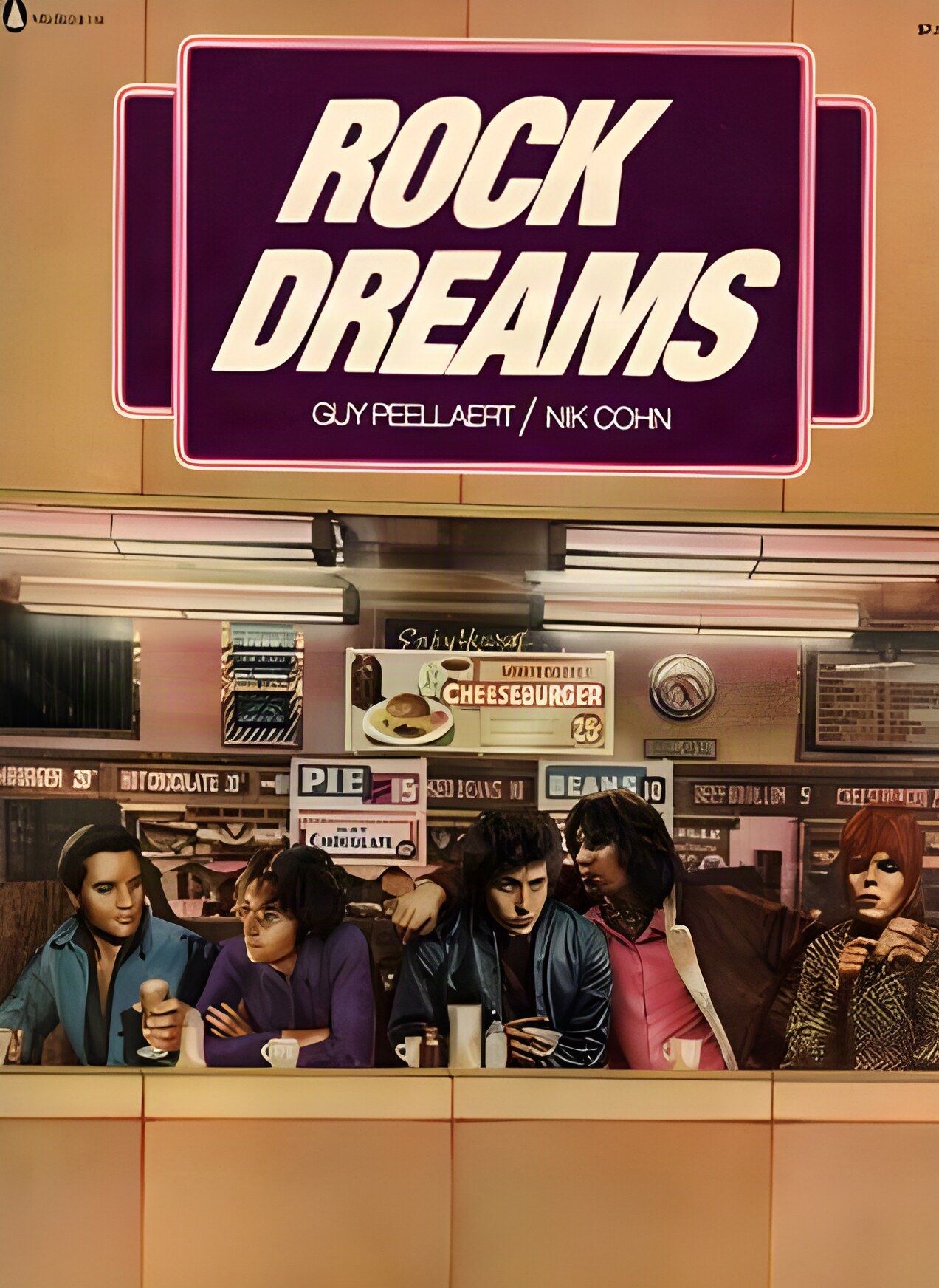
Softcover. New York , Popular Library, 1st, 1973, Book: Very Good, Dust Jacket: None, Wraps with Bob Dylan and Mick Jagger hanging out, no page numbers, [146 pages]. The book consists of Rock n Roll icons in fantasy settings created by Cohn and Peel;aert as a tribute to these Rock n Roll and other musical greats. Color illustrations throughout. Back cover with some rubbing, light scratches, otherwise clean, bright copy.
Softcover. Montclair, NJ, Montclair Art Museum, 1st, 2005, Book: Very Good, Dust Jacket: None, Paperback. 90 pages, color and b&w illustrations. An exhibition catalog, not published in hardcover.
Hardcover. Manchester VT , Hudson Hills, 1st, 2001, Book: Very Good, Dust Jacket: Very Good, Hardcover. Text by numerous authors. 104 pages, over 100 color plates. 4to, cloth. Museum of Contemporary Art in association with New York, Hudson Hills Press. This book brings together works from Lichtenstein's "Interiors" series, most of which he painted in the last decade of his career. In addition to paintings, the book includes prints, sculptures, drawings, and some of the source materials Lichtenstein used to develop this imagery. Like new in publisher's shrink-wrap.
Hardcover. Hatje Cantz, 1st, 2010, Book: Very Good, Hardcover, 208 pages. Between 1961 and 1968, at the height of the Pop art movement, Roy Lichtenstein (1923-1997) created about 50 large black-and-white drawings. Not only was their imagery, culled from consumer culture, entirely new--baked potatoes, ads for foot medication and BB Guns--but so was their treatment, which drew on the rudimentary character of cheaply printed commercial drawings. Conceived independently from Lichtenstein's paintings, these drawings recast illustrations from newspaper ads and comic books into works of keen visual intensity, curiously echoing the clean-edge aesthetic of 1960s geometric abstraction. "Drawing is the basis of my art," Lichtenstein later affirmed; "It is where my thinking takes place." Published for an exhibition at the Morgan Library in New York, this richly illustrated publication offers 120 color illustrations, plus essays on Lichtenstein's technique and on his little-known 1967 Aspen project, in which the artist transformed a room into a black-and-white cartoon drawing.
Hardcover. Los Alamitos, CA, Art Bagnall Publishing, 1st, 1990, Book: Very Good, Dust Jacket: None, Hardcover, 379 pages, with photographs throughout and illustrated cover. Minor corner and edge wear, previous owner's embossed stamp on title page, otherwise, very clean and tight copy. Richter was a professional auto racer in Southern California in the 1930s and 1940s who then founded Bell Auto Parts and devoted his life to creating specialty safety products for auto and motorcycle sports, including the Bell helmet, which quickly became an essential and popular part of driving gear.
Hardcover. New York , Simon and Schuster, 1st, 2000, Book: Very Good, Dust Jacket: Very Good, 190 pages, b&w cartoon contraptions by the master. Bright, clean copy in unclipped dust jacket. A collection of Rube Goldberg's wackiest inventions features more than two thousand "schematics" from the immensely popular comic for everything from suicide machines to a pick-pocket device designed for politicians.
Hardcover. NY, Cooper Square Press, 1st, 2002, Book: Very Good, Dust Jacket: Very Good, Hardcover, 432 pages. The most popular painter of his day, yet an artist whose reputation has fluctuated among art scholars and critics of the succeeding centuries, Peter Paul Rubens (1577-1640) is chiefly remembered today for his large canvases of sensual gardens, religious scenes, and voluptuous "Rubenesque" women. In Oppenheimer's account of his life, Rubens emerges not only as a talented painter but also as an intellectual with a unique conception of beauty that proved very influential and ahead of his time. Oppenheimer explores Rubens' ideas as he tells the story of his life, which included years as a diplomat, and illuminates his response to the humanism of the Renaissance in which he lived.
Hardcover. NY, Thames & Hudson, 1st, 2022, Book: Very Good, Dust Jacket: None, Hardcover, pictorial boards, oversize format. 408 pages with 534 color illustrations. Rudolph de Harak (1924-2002) is one of the most influential graphic designers of the mid-twentieth century. This beautifully produced, comprehensive monograph is devoted to this fascinating and significant figure and provides an in-depth account of de Harak's life and work. From his early years in Los Angeles to his success as a design consultant and educator in New York City, de Harak brought inventiveness to everything he designed, from record covers to book jackets, from furniture to exhibitions. De Harak's work was influenced by early modernist masters, such as Will Burtin, Gyorgy Kepes, Alvin Lustig, and Max Bill, as well as by the rigor, simplicity, and rationalism of the International Style, Abstract Expressionism, Op Art, and Pop Art. Organized chronologically into six chapters that cover de Harak's life and career, each supported by sidebars on the designers, architects, and art movements that have influenced his work, Rudolph de Harak Graphic Designer documents de Harak's pioneering and prolific fifty-year career in graphic, experiential, industrial, and furniture design for a wide range of clients, including the Metropolitan Museum of Art, Cummins engine company, McGraw Hill publishing, and many others. PLEASE NOTE: DUE TO WEIGHT, DOMESTIC SHIPPING ONLY.
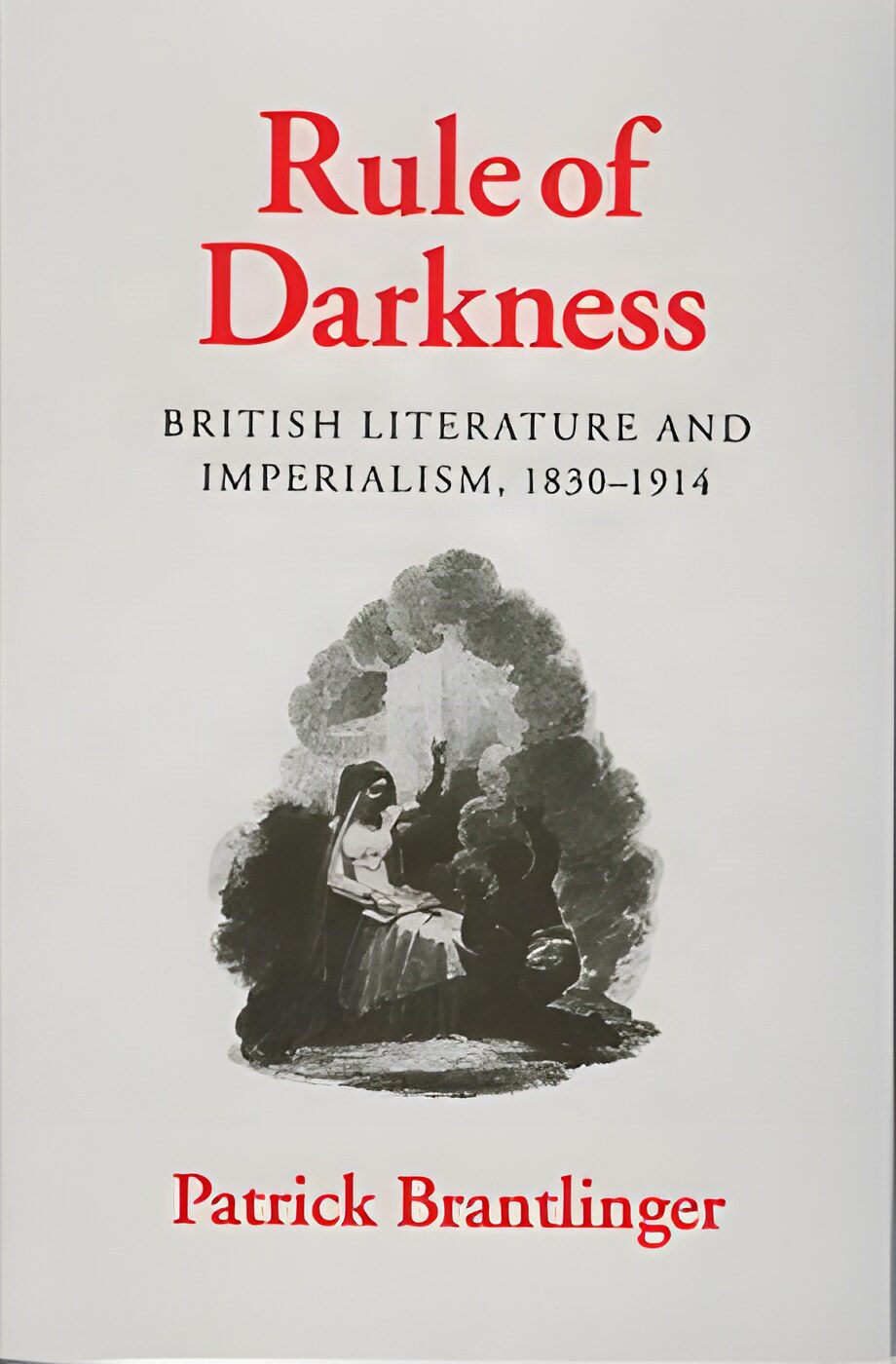
Softcover. Ithaca NY, Cornell University Press, reprint, 1990, Book: Very Good, Dust Jacket: None, Softcover, 309 pages. A major contribution to the cultural and literary history of the Victorian age, Rule of Darkness maps the complex relationship between Victorian literary forms, genres, and theories and imperialist, racist ideology. Critics and cultural historians have usually regarded the Empire as being of marginal importance to early and mid-Victorian writers. Patrick Brantlinger asserts that the Empire was central to British culture as a source of ideological and artistic energy, both supported by and lending support to widespread belief in racial superiority, the need to transform "savagery" into "civilization," and the urgency of promoting emigration. Rule of Darkness brings together material from public records, memoirs, popular culture, and canonical literature. Brantlinger explores the influence of the novels of Captain Frederick Marryat, pioneer of British adolescent adventure fiction, and shows the importance of William Makepeace Thackeray's experience of India to his novels. He treats a number of Victorian best sellers previously ignored by literary historians, including the Anglo-Indian writer Philip Meadows Taylor's Confessions of a Thug and Seeta. Brantlinger situates explorers' narratives and travelogues by such famous author-adventurers as David Livingstone and Sir Richard Burton in relation to other forms of Victorian and Edwardian prose. Through readings of works by Arthur Conan Doyle, Joseph Conrad, H. Rider Haggard, Rudyard Kipling, John Hobson, and many others, he considers representations of Africa, India, and other non-British parts of the world in both fiction and nonfiction. Clean, bright copy.
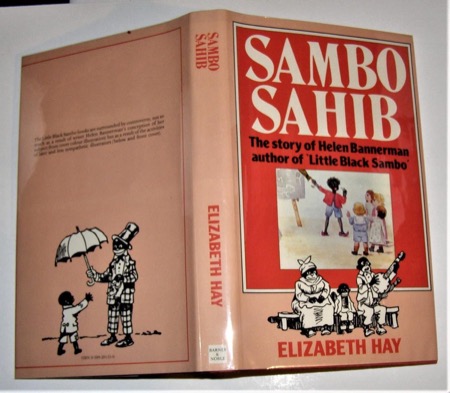
Hardcover. NY, Barnes & Noble, reprint, 1981, Book: Very Good, Dust Jacket: Very Good, Hardcover in a bright dust jacket, 194 pages. Includes a bibliography of Bannerman's books and 47 reproductions of the first British and first American editions and her illustrations for them. Phyllis Yuill and Justin Schiller helped with the publishing history and supplied illustrations. Hay shows that it was the illustrations of later artists that provoked the controversy over THE STORY OF LITTLE BLACK SAMBO, not Bannerman's original text or pictures. Bound in the original gilt-stamped red boards. From the dust jacket: "This first biography of Helen Bannerman covers much new ground and is based on the vast collection of letters to the children, usually lovingly illustrated, in the possession of the Bannerman family. As well as telling the story of one of the most popular children's books of all time, Elizabeth Hay's biography offers an intimate picture of the daily life of a British memsahib in the heyday of the Raj." Clean copy.
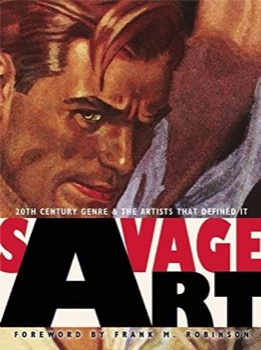
Hardcover. Nevada City NV, Underwood Books, 1st, 2010, Book: Very Good, Dust Jacket: Very Good, Hardcover in a bright dust jacket, 112 pages illustrated in color. Showcases the popular period illustration which prefigured and helped create the violent visual language in today's popular aboveground cinema, comic books, and ultra-violent multi-million copy video games. Featuring full-page illustrations by pulp artists Walter Baumhofer, Rafael de Soto, Margaret Brundage, Jerome Rozen, Virgil Finlay, Norman Saunders, H.J. Ward, Harold McCauley, Austin Briggs, Emsh and others, this beautifully produced full-color collection documents Depression-era masculine violence, in fantasy and reality, as depicted on the covers of popular literature. Clean copy.
Softcover. Princeton NJ, Princeton University Press, reprint, 1996, Book: Very Good, Dust Jacket: None, Softcover, pictorial wraps, 490 pages. By explaining how to sire multicolored horses, produce nuts without shells, and create an egg the size of a human head, Giambattista Della Porta's Natural Magic (1559) conveys a fascination with tricks and illusions that makes it a work difficult for historians of science to take seriously. Yet, according to William Eamon, it is in the "how-to" books written by medieval alchemists, magicians, and artisans that modern science has its roots. These compilations of recipes on everything from parlor tricks through medical remedies to wool-dyeing fascinated medieval intellectuals because they promised access to esoteric "secrets of nature." In closely examining this rich but little-known source of literature, Eamon reveals that printing technology and popular culture had as great, if not stronger, an impact on early modern science as did the traditional academic disciplines. Clean copy.
Hardcover. New Haven CT, Yale University Press, 1st, 2008, Book: Very Good, Dust Jacket: Very Good, Hardcover in a bright dust jacket, oblong format, color illustrations throughout. "Combining pictures, words, and a wealth of personal ephemera, scrapbook makers preserve on the pages of their books a moment, a day, or a lifetime. This illustrated book focus on the history of American scrapbooks - their origins, their makers, their diverse forms, the reasons for their popularity, and their place in American cultural life." Examines the evolution of scrapbooks from the beginning of the nineteenth century to the present, concentrating on the first half of the twentieth century. She includes color photographs from more than two hundred scrapbooks, some made by private individuals and others by the famous, including Zelda Fitzgerald, Lillian Hellman, Anne Sexton, Hilda Doolittle, and Carl Van Vechten.
Hardcover. Seattle, Fantagraphics Books, 1st, 2006, Book: Very Good, Dust Jacket: Very Good, Hardcover, 144 pages. Sex, Rock 'N' Roll, & Optical Illusions is Victor Moscoso's first major, career-spanning retrospective, from his earliest poster work in 1966 to his most recent graphic experimentation. Optical Illusions contains his best posters that advertised bands playing in San Francisco's famous dance ballrooms of the time - the Avalon, the Matrix, and the Fillmore - as well as many of his Zap Comix contributions, and his solo comix work, many in Moscoso's signature color. This wide-ranging career retrospective - Moscoso's famous technique employing "vibrating colors" that he pioneered in his posters is impeccably reproduced with as much fidelity to the original as modern printing can achieve, his black-and-white and full color comix work is collected here for the first time - is an intense, vibrant, and revelatory experience. Introductions by Steve Heller and Milton Glaser.
Hardcover. New York , Prestel , 1st, 2012-09-25, Book: Near Fine, Dust Jacket: Near Fine, 207 pages, profusely illustrated. One of the most famous and popular photographers of his time, Jeanloup Sieff photographed some of the most beautiful women and men of his era. This wide-ranging collection of his work captures some of his most famous photographs spanning a career of nearly forty years. Like new in publisher's shrink-wrap.
Hardcover. New York , Prestel , 1st, 2012, Book: Near Fine, Dust Jacket: Near Fine, 207 pages, profusely illustrated. One of the most famous and popular photographers of his time, Jeanloup Sieff photographed some of the most beautiful women and men of his era. This wide-ranging collection of his work captures some of his most famous photographs spanning a career of nearly forty years. Like new in publisher's shrink-wrap.
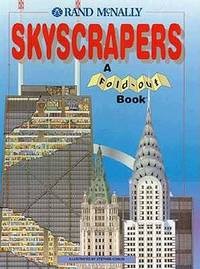
Hardcover. NY, Rand McNally , 1st, 1995, Book: Very Good, Dust Jacket: None, Hardcover, color art by Stephen Conlin. With the turn of each page, the book's illustrations will grow to five feet. On one side of the book, peer into a cut away of Chicago's John Hancock Center. On the flip side, size up the world's tallest structures, from Ulm Cathedral spire to the CN Tower, all drawn to scale. Climb to the top as the story of skyscrapers unfolds in this unforgettable book.
Hardcover. NY, Simon & Schuster, 1st, 1973, Book: Very Good, Dust Jacket: Very Good, Hardcover, 184 pages. Color photographic endpapers (soda pop bottles), 36 full-color photographs and 41 b&w photos. Here is the fascinating history of America's love affair with soda-pop - and particularly Coco-Cola - with clear examples of their developing range of popular memorabilia .. drink trays, press ads, bottles, drink dispensers, posters, transport vehicles, pendants, badges, and even lampshades!
Hardcover. New Haven CT, Yale University Press, 1st, 2013, Book: Very Good, Dust Jacket: Very Good, Hardcover in a bright dust jacket, 430 pages. SIGNED BY MONOD on the tile page, also INSCRIBED on the half-title page. The late seventeenth and eighteenth centuries are known as the Age of Enlightenment, a time of science and reason. But in this illuminating book, Paul Monod reveals the surprising extent to which Newton, Boyle, Locke, and other giants of rational thought and empiricism also embraced the spiritual, the magical, and the occult. Although public acceptance of occult and magical practices waxed and waned during this period they survived underground, experiencing a considerable revival in the mid-eighteenth century with the rise of new antiestablishment religious denominations. The occult spilled over into politics with the radicalism of the French Revolution and into literature in early Romanticism. Even when official disapproval was at its strongest, the evidence points to a growing audience for occult publications as well as to subversive popular enthusiasm. Ultimately, finds Monod, the occult was not discarded in favor of "reason" but was incorporated into new forms of learning. In that sense, the occult is part of the modern world, not simply a relic of an unenlightened past, and is still with us today. Clean copy.

 "Revoliutsiia! Demonstratsiia!: Soviet Art Put to the Testby: Matthew S. Witkovsky, Devin Fore, et al.")
 "Rex Ingram: Visionary Director of the Silent Screenby: Ruth Barton")

 "Robert Indiana: Figures of Speechby: Ryan, Professor Susan Elizabeth")

 "Roy Lichtenstein - American Indian Encountersby: Stavitsky, Gail and Twig Johnson")
 "Roy Lichtenstein: Interiorsby: Fitzpatrick, Robert")
 "Roy Lichtenstein: The Black-and-White Drawings, 1961-1968by: Isabelle Dervaux , Graham Bader, et al.")



 "Rubens: A Porraitby: Oppenheimer, Paul")
 "Rudolph de Harak Graphic Designer: Rational Simplicity by: Richard Poulin")


 "Science and the Secrets of Nature: Books of Secrets in Medieval and Early Modern Cultureby: William Eamon")

 "Sex, Rock & Optical Illusionsby: Moscoso, Victor")
 "Sieff Fashionby: Sieff, Barbara and Jeanloup")
 "Sieff Fashionby: Sieff, Barbara and Jeanloup")
 "Soda Pop: The History, Advertising, Art and Memorabilia of Soft Drinks in America by: Dietz, Lawrence")
