Hardcover. New York, Scalo, 1st, 1995, Book: Very Good, Dust Jacket: Very Good, 240 pages. Hardcover with dust jacket. A very clean, unmarked copy with only minor wear to dust jacket edges. This is Lagerfeld's own album of the photographic stories and sequences that he has created over the last eight years. Shot in black and white, often with models and costumes, his photos are at once beautifully composed, stylish, sensuous, literate and full of fantasy.
Hardcover. New York, Scalo, 1st, 1995, Book: Very Good, Dust Jacket: Very Good, 240 pages. Hardcover with dust jacket. A very clean, unmarked copy with only minor wear to dust jacket edges. This is Lagerfeld's own album of the photographic stories and sequences that he has created over the last eight years. Shot in black and white, often with models and costumes, his photos are at once beautifully composed, stylish, sensuous, literate and full of fantasy.
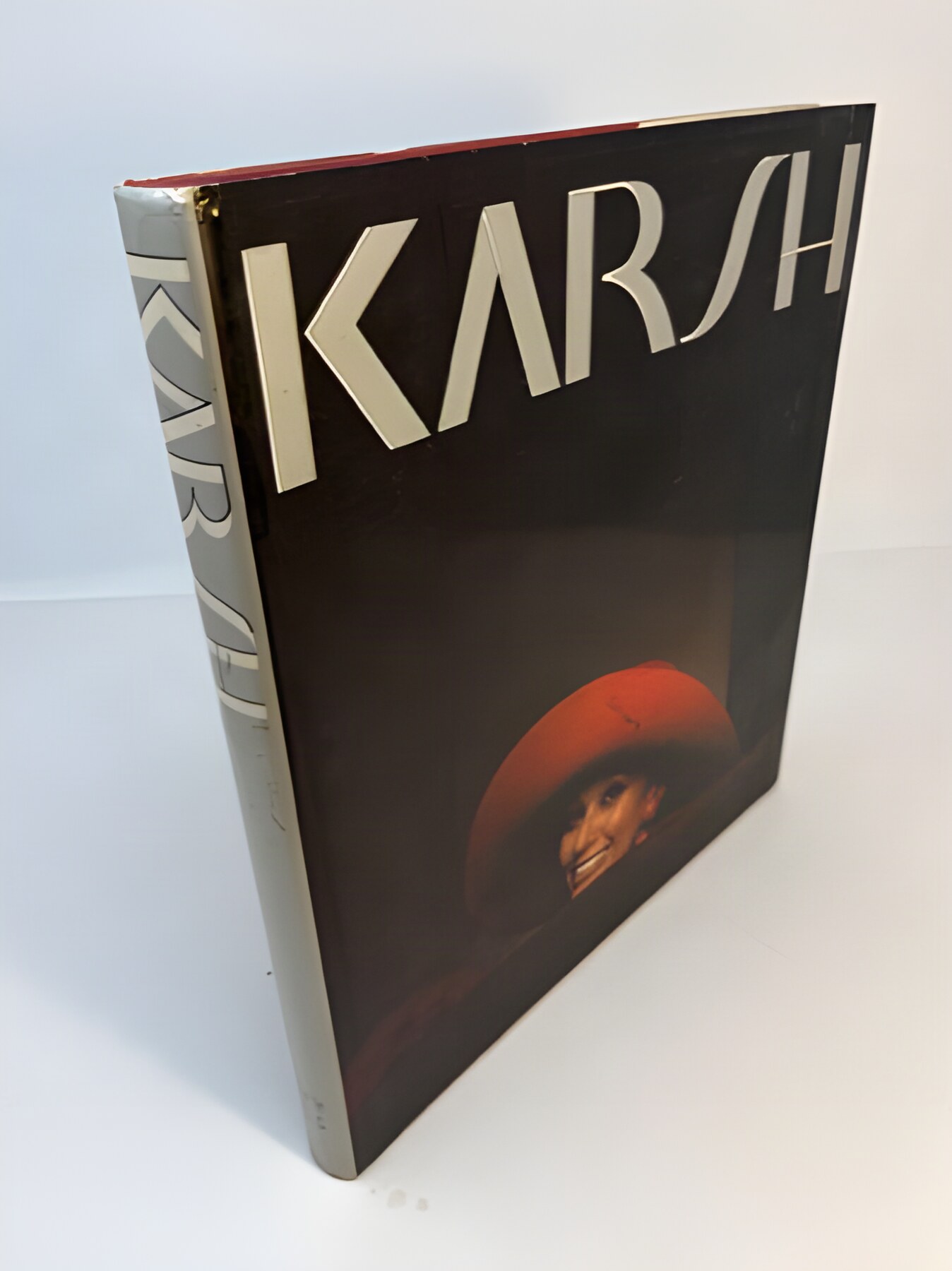
Hardcover. Boston, New York Graphic Society, 1st, 1983, Book: Very Good, Dust Jacket: Very Good, Hardcover in a bright, unclipped dust jacket. 202 pages. A collection of 188 portraits of world leaders, artists, writers, and celebrities by Armenian-Canadian photographer, Yousuf Karsh . With portraits of Muhammad Ali, Winston Churchill, Albert Einstein, Ernest Hemingway, John F. Kennedy, Martin Luther King, Jr. and numerous other twentieth-century luminaries. 12 in color. Small nick to dj cover at bottom edge, previous owner's inscription on verso of front fly leaf, otherwise a clean, very good copy.
Softcover. Art Gallery of Ontario, 1st, 2003, Book: Very Good, Dust Jacket: None, Softcover, 72 pages, exhibition catalog. Essay by Jay Clarke. Kathe Kollwitz (1867-1945) was a leading 20th century German artist. Kollwitz's art was rooted in socialism and naturalism, and focused on the lives of the common people, usually working class women. Through her involvement in the sufferings of the poor in the slums of Berlin, her exposure to the horrors of two world wars, and the experience of living through several personal tragedies, she came to see herself as the "voice of suffering" and "an advocate" for the people. Among her preferred themes were motherhood, sacrifice, separation, oppression and death. She also created many moving self-portraits. Includes 45 reproductions (15 colour, and 30 b&w). Contents of the catalogue include: a brief history of the Stuttgart Kollwitz collection by the former curator Dr. Gunther Thiem.
Hardcover. San Francisco, Fraenkel Gallery, 1st, 2014, Book: Very Good, Dust Jacket: None, 160 pages. Two volumes in slipcase. Very clean, like new in publishers shrink-wrap. The result of three years of work in California's Central Valley, Katy Grannan's new series The 99 features large-scale color portraits and black-and-white photographs. Grannan's recent photographs are set in the parched landscape and forgotten towns along Highway 99, including Modesto, Fresno and Bakersfield. In her intensely vivid color portraits, the artist works at midday when the sun is direct and the heat is unrelenting, presenting each individual, often simultaneously heroic and vulnerable, against stark, white backgrounds. In the black-and-white photographs, many of her subjects re-appear on Modesto's South 9th Street and along the banks of the Tuolumne River. Everyday rituals, small interactions and moments of beauty on the fringes of society are depicted in detail, conferring significance to what is often overlooked. This large-format, two-volume, slipcased monograph gathers this series for the first time.
Hardcover. San Francisco, Fraenkel Gallery, 1st, 2014, Book: Very Good, Dust Jacket: None, 160 pages. Two volumes in slipcase. Both very clean, unmarked copies. Only minor edgwear to slipcase. The result of three years of work in California's Central Valley, Katy Grannan's new series The 99 features large-scale color portraits and black-and-white photographs. Grannan's recent photographs are set in the parched landscape and forgotten towns along Highway 99, including Modesto, Fresno and Bakersfield. In her intensely vivid color portraits, the artist works at midday when the sun is direct and the heat is unrelenting, presenting each individual, often simultaneously heroic and vulnerable, against stark, white backgrounds. In the black-and-white photographs, many of her subjects re-appear on Modesto's South 9th Street and along the banks of the Tuolumne River. Everyday rituals, small interactions and moments of beauty on the fringes of society are depicted in detail, conferring significance to what is often overlooked. This large-format, two-volume, slipcased monograph gathers this series for the first time.
Softcover. US, University of Kentucky Art Museum, na, 1981, Book: Good, Dust Jacket: None, 151 page catalog of the January 25-March 15, 1981, exhibition at the University of Kentucky Art Museum. Numerous black and white illustrations. Five color plates. Mild crease on front and back cover. No marking. Kentucky's Resident-painters: From the Ante-Bellum Era to World War I by Arthur F. Jones; In Pursuit of Success: Kentucky and the Visiting Artist, 1805-1865 by Bruce Weber; Selected Bibliography; Catalog Entries; Illustrations.
Hardcover. Swindon, English Heritage, 1st, 2012, Book: Very Good, Dust Jacket: Very Good, Hardcover, 434 pages, illustrated throughout in color and b&w. Clean, unmarked copy with only minor wear to dust jacket. The Iveagh Bequest at Kenwood House in Hampstead, London, is one of the world's great private art collections assembled by an individual. In quality it challenges the Frick collection in New York, with whose eponymous collector Iveagh was in competition for acquisitions during the great age of the industrial barons on both sides of the Atlantic, and the Wallace collection in London. They all saw collecting great art - much as the oligarchs of today - as ultimate status symbols.
Hardcover. NY, Harry N Abrams, 1st, 1989, Book: Very Good, Dust Jacket: Very Good, 264 pages, illustrated throughout in b&w. Clean, unmarked copy with only minor wear to dust jacket. "A lavish, information-packed look at the people and places of an important, exciting era in art history. "?Publishers Weekly. From 1900 to 1930, Montparnasse was the center of artistic life for the whole world. A major contribution to the social and cultural history of the period? with its informative text and hundreds of photographs?. As The Washington Post said, Kiki's Paris "celebrates the people who made the modern movement in art, music and literature, most of whom were friends or lovers of Kiki, the woman Hemingway called 'The Queen of Montparnasse.'"
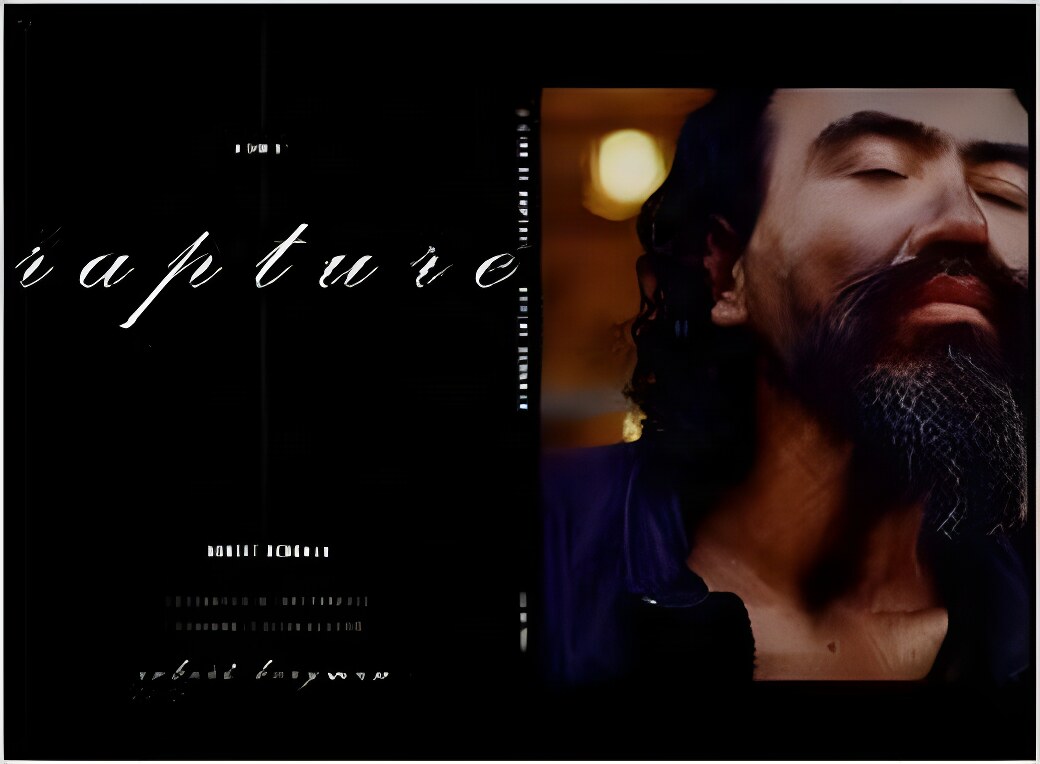
Hardcover. New York , Pantheon, 1st, 1998, Book: Very Good, Dust Jacket: Very Good, 60 pages. Clean, unmarked copy with only minor wear to dust jacket. For more than ten years, Robert Bergman--a brilliant artist who has purposefully withheld himself from the mainstream--traveled by car with two friends, for months at a time, throughout the Rust Belt (Chicago, Detroit, Pittsburgh, Gary) and the East Coast, taking color pictures of everyday people who moved him profoundly. Even as he used a simple 35-mm camera, amateur film, no tripod, and no special lighting, his was a monumental, Whitmanesque project: to document the physical appearance and spirit of Americans, and to gauge the climate of our times. A Kind of Rapture, which is certain to be a classic work of photography, brings together the first selection from Bergman's epic enterprise. Having taken, developed, and printed his own pictures since the age of five, Bergman has now, for A Kind of Rapture, created his own color separations, using high-resolution digital equipment, in an effort to exercise more control over the quality of reproduction than photographers have ever had. Bergman and his colleagues have helped define a new paradigm for art-book publishing--each and every image in this book is extraordinary for its fidelity to the artistic sensibility that informs its original print.
Hardcover. University of Wisconsin Press, 1st, 2005, Book: Very Good, Dust Jacket: Very Good, Hardcover, 92 pages. Kings in Their Castles, a collective portrait of the gay urban community in America, offers a personal view of some of our leading artists, writers, filmmakers, composers, musicians, and designers. Among the celebrities Atwood photographs in their playful, revealing homes are Edward Albee, Todd Oldham, John Waters, Ross Bleckner, Joel Schumacher, Junior Vasquez, Michael Cunningham, Simon Doonan, Andrew Solomon, Ned Rorem, James Dale, David Del Tredici, Tommy Tune, John Ashbery, Edmund White, and John Bartlett. Atwood also documents the bohemians, beatniks, mavericks, and iconoclasts, an urban community that is slowly disappearing. Capturing whimsical, intimate moments of daily life and portraying the complexity and diversity of this loosely linked society, Atwood reveals some of the most intriguing characters and homes in gay America. These beautiful fine art prints--shifting between the pictorial and the theatrical--become both a witness and a celebration.
Hardcover. NY, Prestel , 1st, 2016, Book: Very Good, Dust Jacket: Very Good, Hardcover in a bright, unclipped dust jacket, 320 pages. This authoritative and generously illustrated book highlights Gustav Klimt's portrayals of women in his work. Klimt was a central figure in Vienna at the turn of the twentieth century, and a crucial link between nineteenth-century Symbolism and Modernism. His sensual portrayals of women are among his most celebrated works and the focus of this book. Highlights of the publication include Klimt's most important society portraits, such as Serena Lederer (1899); Gertrud Loew (1902); Adele Bloch-Bauer I (1907); Mada Primavesi (1913); Elisabeth Lederer (1914-16); and Ria Munk III (1917). These works cover the gamut of Klimt's portrait style, from his early ethereal works influenced by Symbolism and the Pre-Raphaelite movement to his so-called "golden style," as well as his almost Fauvist depictions.
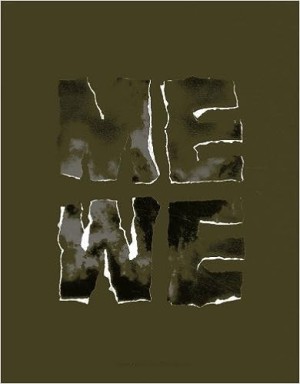
Hannibal Publishing , 1st, 2013, Book: Very Good, Dust Jacket: None, Hardcover, pictorial boards. 394 pages; in English and Dutch. First overview of portrait photographer Koos Breukel's work at the retrospective at Den Haag. 'Me, We' was the full text of the improvised poem that Muhammad Ali delivered to a crowd of Harvard students in 1975. It can be interpreted as a cheerful tribute to life, expressing unity and at the same time individuality. Dutch photographer Koos Breukel (1962) chose it as the title for this book that assembles portraits from the first 30 years of his career, focusing on the circle of life: be born, grow up, develop and express yourself, love, suffer and die. Koos Breukel is a portraitist of farmers and artists, newborn babies and politicians, the sick and the old. ME WE, with a poignant contribution by the prizewinning author Erwin Mortier, is Breukel's mid-career retrospective as well as his homage to life. Still in publisher's shrinkwrap. NOTE: DUE TO SIZE & WEIGHT, DOMESTIC SHIPPING ONLY.
Hardcover. GR, Hatje Cantz, 1st, 2008, Book: Very Good, Dust Jacket: None, Hardcover, 128 pages. Red cloth-covered boards with mounted color plate on front panel.Kyungwoo Chun, born in Korea in 1969 and now based in Germany, is known for his poetically blurred long exposure photographic portraits. Chun's last name means "thousand," and derives from a Chinese general who emigrated to Korea 407 years ago. For this project, Chun photographed thousands of people in China with his last name.
Hardcover. New York , Thames & Hudson, 1st, 1995, Book: Very Good, Dust Jacket: None, Illustrated throughout in b&w. Faint foxing to top edge, otherwise a clean, tight copy. From the legendary David Bailey comes this collection of photographs - a tribute to his wife, the model Catherine Bailey. Divided into five sections - nudes, fashion, pregnancy, children and beauty - these images capture her in different incarnations, as wife, mother, lover, seductress...and as tramp. The text is provided by Fay Weldon, a close friend of both David and Catherine Bailey. She explores the relationship between the photographer and his wife, and wider themes such as the interaction of commerce and art, the status of photography as a "real" art-form and the different ways men and women see the world.
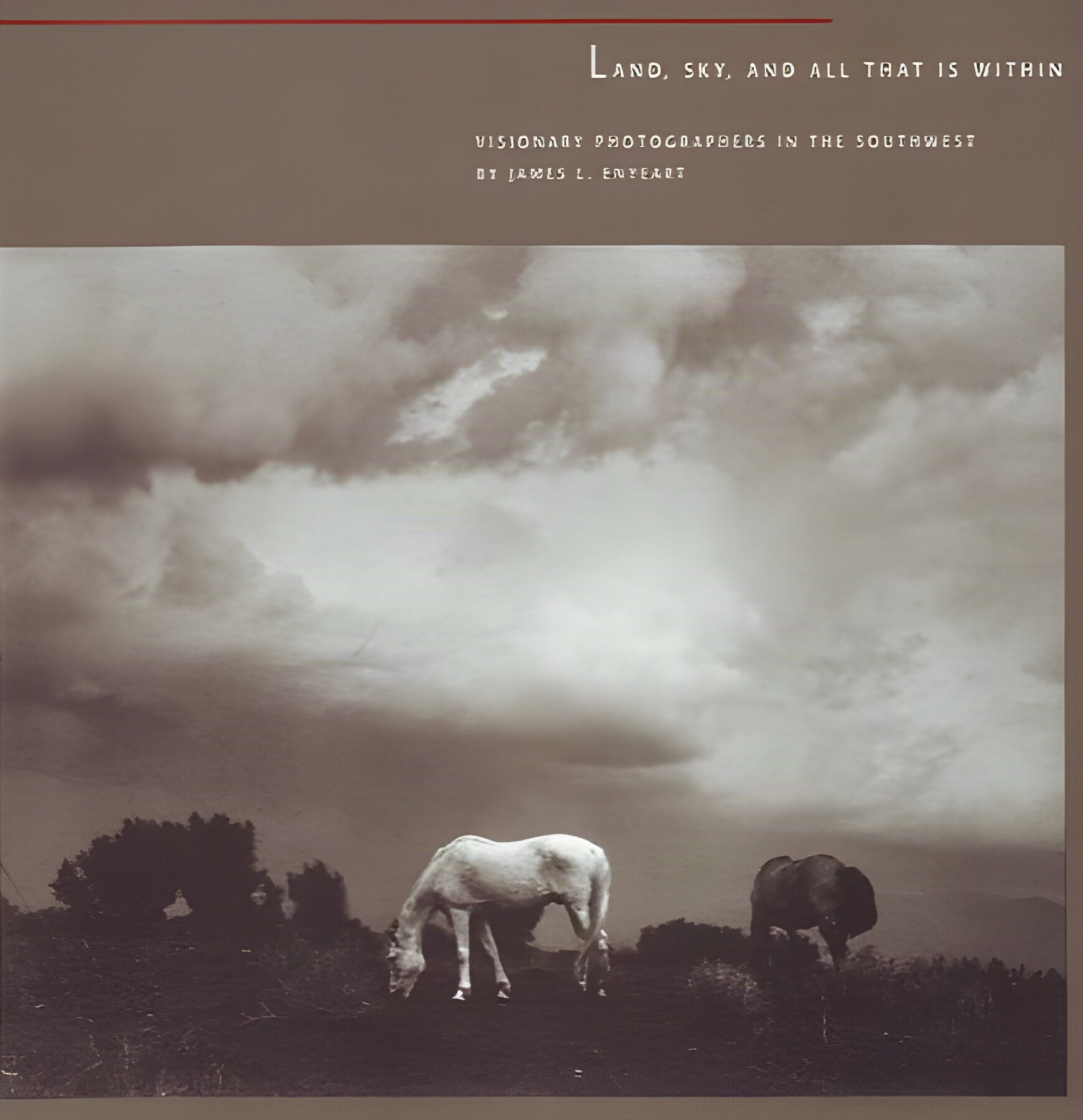
Softcover. Santa Fe, Museum of New Mexico Press, 1st, 1998, Book: Very Good, Dust Jacket: None, Softcover, 126 pages. The American Southwest has shaped the lives and work of many artists and literary figures over the last century--Georgia O'Keeffe, D. H. Lawrence, N. Scott Momaday, to name a few--individuals unquestionably drawn to the unrivaled landscape, moved to express its beauty through the written word or through their art, and forever altered by the experience. The survey of photographers and photography in the Southwest between 1870 and 1970 begins with Timothy O'Sullivan and other late nineteenth-century expedition photographers and ends with the color landscape photography of Eliot Porter. In between are Laura Gilpin's portraits of Navajos taken during the 1930s and the documentary images of rural Hispanic communities by Farm Security Administration photographers John Collier Jr. and Russell Lee in the 1940s. Nineteen photographers in all are represented--also including Ansel Adams, Paul Strand, Edward Weston--along with 102 photographs. Clean copy.
Softcover. New York, Princeton Architectural Press, 1st, 2006, Book: Very Good, Dust Jacket: None, 192 pages. Softcover. A very clean, unmarked copy with only minor wear to edges. Black and white portraits of citizens of Indiana, taken over 4 decades.
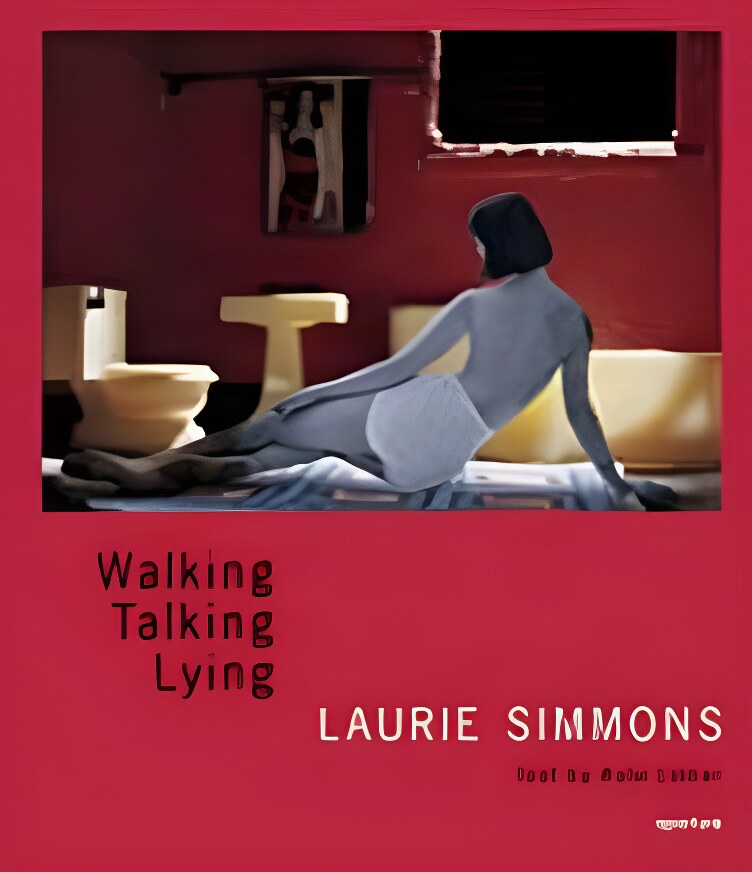
Hardcover. NY, Aperture, 1st, 2005, Hardcover, 156 pages, 104 color plates. The intimate ache of the dollhouse and its air of manipulation (whether as consumer object or ventriloquist dummy) has become as identified with pioneering photographer Laurie Simmons as with Ibsen. She's even designed a dollhouse for a toy company. Mostly self-taught, Simmons began working in the 1970s, when color and staged tableaux were first being explored by fine-art photographers, and has since mapped out a world all her own, mostly in haunting miniature. Over the past 25 years, her photographs have conveyed a bittersweet nostalgia for the 1950s, while edgily commenting on consumerism, feminism and other fraught aspects of postwar American culture. The accompanying essay by Kate Linker concentrates on selected series that cover the artist's entire oeuvre--from "Ventriloquism," "Walking Objects" and "Lying Objects" to the 1997 "Self-Portraits" and "Cafe of the Inner Mind"--and so is essential reading for any photography aficionado.
Softcover. London, Hamish Hamilton Ltd., Reprint, 1988, Book: Very Good, Dust Jacket: None, 454 pages. Softcover with moderate wear to edges, creases to cover & spine. Light foxing throughout & to top edge. Toning to edges. Includes drawings in bw by the author, decorating his letters, memoirs. Over 20 additional portraits in black & white. Clean copy.
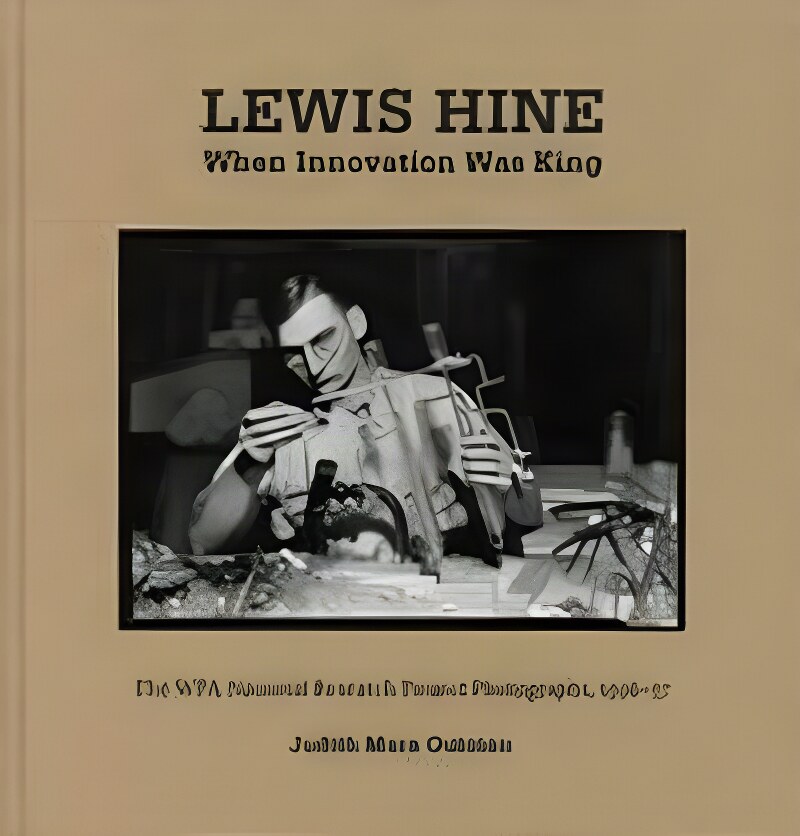
Hardcover. Gottingen GR, Steidl/Howard Greenberg Library, 1st, 2018, Book: Very Good, Dust Jacket: None, Hardcover, 143 pages. Tan cloth with pictorial paste-down. In 1936, science-teacher turned photographer Lewis Hine was commissioned by the National Research Project, a division of the Works Progress Administration, to produce a visual document of the industries that the US government hoped would provide the jobs that would lift the country out of the Great Depression. Hine, already well-established as a chronicler of social conditions of his day, produced more than 700 photographs for this project, the last major work of his career.By emphasizing the inherent tension between machinery and workers, Hine imbued these compelling images with his characteristic rigor and aesthetic appeal. These photographs, and their implied message, are particularly relevant today given high unemployment rates and radical shifts in the role of the worker in the rapidly changing world economy. Included in this book is an essay by the eminent photographic historian, Judith Mara Gutman, in which she discusses the project and the photographs in the context of the economic conditions of the time and the artistic and technological innovations of the era.
Hardcover. Boston, The Taylor Press, 1st, 1915, Book: Very Good, Dust Jacket: None, Hardcover, 285 pages. Brown cloth covers, b&w frontispiece. Previous owner's bookplate to blank endpaper, light wear to covers, edges and spine; overall a very clean, tight copy.
Hardcover. New York, Doubleday and Co., reprint, 1963, Book: Very Good, Dust Jacket: Very Good, Hardcover. Photographs and text by Edward Steichen. Includes a biographical outline. Illustrated end pages. 249 black and white plates. Measures 11.5x10 inches. Edward Steichen (1879-1973) was the most frequently featured photographer in Alfred Stieglitz' groundbreaking magazine Camera Work during its run from 1903 to 1917. Later he worked for Conde Nast magazines Vogue and Vanity Fair. After World War II he became the Director of the Department of Photography at New York's Museum of Modern Art. Note: This book is the First edition, second printing (The book was originally published in 1963 with duotone and color plates, this second printing is in black and white only). In a very good dust jacket.
Hardcover. NY, Henry Holt, 1st, 2019, Book: Very Good, Dust Jacket: Very Good, Hardcover in a bright, unclipped dust jacket. An up close and personal portrait of a legendary filmmaker, theater director, and comedian, drawing on candid conversations with his closest friends in show business and the arts-from Dustin Hoffman and Meryl Streep to Natalie Portman and Lorne Michaels. The work of Mike Nichols pervades American cultural consciousness-from The Graduate and Who's Afraid of Virginia Woolf? to Angels in America, The Birdcage, Working Girl, and Primary Colors, not to mention his string of hit plays, including Barefoot in the Park and The Odd Couple. If that weren't enough, he was also one half of the timelessly funny duo Nichols & May, as well as a founding member of the original improv troupe. Over a career that spanned half a century, Mike Nichols changed Hollywood, Broadway, and comedy forever. Most fans, however, know very little of the person behind it all. Since he never wrote his memoirs, and seldom appeared on television, they have very little sense of his searching intellect or his devastating wit. They don't know that Nichols, the great American director, was born Mikail Igor Peschkowsky, in Berlin, and came to this country, speaking no English, to escape the Nazis. They don't know that Nichols was at one time a solitary psychology student, or that a childhood illness caused permanent, life-altering side effects. They don't know that he withdrew into a debilitating depression before he "finally got it right," in his words, by marrying Diane Sawyer. Remainder dot to bottom edge otherwise clean.
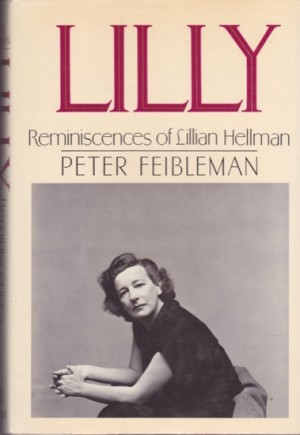
NY, William Morrow, 1988, Book: Very Good, Dust Jacket: Very Good, Hardcover in a bright, price-clipped dust jacket. 364 pages, b&w photos. Novelist Peter Feibleman first met world-famous playwright Lillian Hellman when he was ten and she was thirty-five-years old, and out of that first encounter there grew romantic friendship that was to blossom into a love affair--one that ended only with her death. Drawing on many of her letters, private journals, and conversations recorded by them both specifically for this memoir, and on her later published and unpublished works, as well as on his own diaries, Feibleman brings to life one of the most glittering, fascinating, and complex women of our time. LILLY is replete with anecdotes about Miss Hellman's celebrated friends, including Dashiell Hammett, with whom she shared her life for many years; Dorothy Parker; Elizabeth Taylor, who made a triumphant stage appearance in 'The Little Foxes'; Mike Nichols; Elaine May; Leonard Bernstein; and her Martha's Vineyard neighbors--Jules Feiffer, Barbara and John Hersey, Ann and Art Buchwald, Rose and William Styron, and many, many others. Her animosities are depicted as well, including her lengthy and virulent feud with Mary McCarthy. What emerges is an intensely personal portrait, unique and fully realized, of an immensely talented writer, her ways of loving, and her world.

 "Karl Lagerfeld: Off the Recordby: Lagerfeld, Karl")
 "Karl Lagerfeld: Off the Recordby: Lagerfeld, Karl")
 "Kathe Kollwitz: The Art of Compassionby: Kathe Kollwitz/Brenda D. Rix")
 "Katy Grannan: The Ninety Nine and The Nineby: Grannan, Katy (Photographer)")
 "Katy Grannan: The Ninety Nine and The Nineby: Grannan, Katy (Photographer)")
 "Kentucky Painter from the Frontier Era to the Great War, Theby: Jones, Arthur F., and Bruce Weber")
 "Kenwood: Paintings in the Iveagh Bequestby: Bryant, Julius")
 "Ki Ki's Paris: Artists and Lovers 1900-1930by: Kluver, Billy/ Julie Martin")
 "Kings in Their Castles: Photographs of Queer Men at Homeby: Tom Atwood and Charles Kaiser")
 "Klimt and the Women of Vienna's Golden Age, 1900-1918by: Tobias G. Natter")
 "Kyungwoo Chun: Thousandsby: Kyungwoo Chun (Artist)")
 "Lady Is a Tramp, The: Portraits of Catherine Baileyby: Bailey, David")
 "Laporte, Indianaby: Bitner, Jason")
 "Letters of Edwin Lutyens to His Wife, Lady Emily, Theby: Lutyens, Edwin/Clayre Percy & Jane Ridley (Editors)")


 "Life and Works of John Singleton Copley, Theby: Bayley, Frank W.")
 "Life in Photography, Aby: Steichen, Edward")