Hardcover. New York, Skira Rizzoli, 1st, 2014, Book: Very Good, Dust Jacket: None, Hardcover, 336 pages, color and b&w images. Like new in publisher's shrink-wrap. This book is the definitive celebration of the extraordinary photographic career of Horst P. Horst (1906 - 99). One of Vogue's most prolific and creative contributors, Horst worked in Paris and New York, photographing fashions by leading designers and making portraits of the century's stars. His important work made outside the realms of fashion photography is also included here. Horst excelled at nude studies and still-life photography, fusing Hellenic and Surrealist motifs and drawing inspiration from artists such as Salvador Dali.
Hardcover. NY, Harcourt, 1st, 2008, Book: Very Good, Dust Jacket: Very Good, Hardcover, 288 pages. From the late 1950s until her death in 1971, renowned photographer Diane Arbus took pictures of oddball performers at the now-forgotten Hubert's Museum, a typical freak show in New York City's seedy Times Square. One frequent subject was Charlie Lucas, first a freak himself, later an inside talker. In 2003, Bob Langmuir, an anxiety-ridden, pill-popping, obsessive antiquarian book dealer from Philadelphia, unearthed a collection of photographs and memorabilia, including Lucas's journals and what he thought were Arbus's photos. This trove of genuine American kookiness came to dominate his life. Following Langmuir's quest--from the slums of Philadelphia to the halls of the Metropolitan Museum of Art--as he gathered, priced and ultimately came to understand this collection, author Gibson (Gone Boy: A Walkabout), himself an antiquarian book dealer, effortlessly twists these strands together with an emotional wallop. His toil in Hubert's vineyard, Gibson writes of Langmuir, amounted to no more or less than the continuing archaeology of the old, weird America. Gibson's laser focus on Langmuir's shifting state of mind as he struggles to master his personal demons and navigate the pitfalls of his own obsession gives this story its heart and opens a window onto a lost part of the American soul. 21 b&w photos.
Hardcover. Oxford UK, Clarendon Press, 1st, 1986, Book: Very Good, Dust Jacket: Very Good, Hardcover in a very good dust jacket with light fading to dj spine. 139 pages of text, 124 b&w plates in rear section. This is the second volume of Edgar Wind's selected papers, a companion to The Elegance of Symbols. Of all the scholars associated with the early development of the Warbur Institute Edgar Wind was the first to apply different theoretical principles to the study of English Art, above all in his early study of English portraiture, now a classic art history text. As the seminal essay, it gives title to the present volume, and is here translated into English for the first time. In this essay, which marked a change of direction in Wind's own development, he argues that two opposing styles of portraiture, exemplified in the art of Gainsborough and Reynolds, can be related to the different notions of humanity subscribed to by the philosophers David Hume and James Beattie. Other important studies, also reprinted here, make this volume an excellent resource to Wind's tremendous contributions to art history. Clean copy.
Softcover. NY, Villard, 1st, 2011, Book: Very Good, Dust Jacket: None, Softcover, 176 pages. Huntington, West Virginia "On the Fly" is prime Pekar, recounting the irascible everyman's on-the-road encounters with a cross section of characters--a career criminal turned limo-driving entrepreneur, a toy merchant obsessed with restoring a vintage diner, comic-book archivists, indie filmmakers, and children of the sixties--all of whom have stories to tell. By turns funny, poignant, and insightful, these portraits a la Pekar showcase a one-of-a-kind master at work, channeling the stuff of average life into genuine American art.
Softcover. NY, Princeton Architectural Press, 1st, 2000, Book: Very Good, Dust Jacket: None, Softcover, 262 pages. The designers at San Francisco-based design firm Cahan & Associates, in their hunger for fresh ideas, find inspiration in the most unexpected places, such as an oddly sculptural piece of discarded metal in the alley near their office, or a conversation with an elaborately tattooed bicycle messenger. From these eclectic ingredients the office serves up in-your-face graphics that are exceptional for their visceral impact yet still convey the strategic thinking behind each piece. The firm's working methods, involving extensive exploration, collaborations, and play, are documented in this monograph through interviews with founder Bill Cahan, clients, and vendors; writings by colleagues; photo essays; proposals to clients that were accepted and rejected; and finished pieces, providing a portrait of a firm for whom process is just as important as product. Clean copy. DUE TO WEIGHT, DOMESTIC SHIPPING ONLY.
Softcover. Seattle, University of Washington Press, 1st, 2000, Book: Very Good, Dust Jacket: None, Softcover. Like new in publishers shrink-wrap. Chief Joseph's exhausted words of surrender, 'Hear me, my chiefs, I am tired; my heart is sick and sad. From where the sun now stands, I will fight no more forever', are the accepted end of the Nez Perce War of 1877, in which several bands of Nez Perce attempting to find a new home outside their diminished Idaho reservation clashed with the U.S. military (and occasionally other Indians) along the Clearwater and Big Hole Rivers, and finally at the foot of the Bear Paw Mountains. However, a number of Nez Perce escaped transportation to Indian Territory with Joseph and continued their flight to Canada, with perhaps a hundred eventually joining Sitting Bull's Lakota."I Will Tell of My War Story" reproduces, describes, and discusses a remarkable series of drawings by an anonymous Indian artist who fought with Chief Joseph and later reached Canada. The drawings, in red, blue, and black pencil, include portraits of principal participants in the war, battle scenes, and views of Nez Perce camp life and celebrations during the war and after. The drawings are preserved in a small pocket ledger labeled 'Cash Book' on the front, which was acquired by Indian Agent Charles D. Warner in the 1880s. It was willed by him to a family living in northern Idaho, and is now in the collection of the Idaho State Historical Society. Scott Thompson worked closely both with the owners and with members of the Nez Perce community in preparing his manuscript. Thompson's detective work and research methods to identify Nez Perce and other parties pictured in the Cash Book make fascinating reading. He is careful to point out what is speculation and what has been documented or attested to by experts on dress, weapons, ceremony, and other aspects of Native culture. The Cash Book drawings are unique in several ways. They are one of very few firsthand pictorial records of the Nez Perce War, representing an even scarcer record of this war as seen from the Indian viewpoint. They contain invaluable historical and ethnographic information not only explicit in the form of military and Native dress, regalia, and quite graphic battle scenes, but also implicit. The drawings reveal an important stage of cultural adaptation as shown by the mixture of white and Native goods combined in Nez Perce material culture during the 1870s and 1880s, and by the artist's assimilation of white/European drawing techniques such as texture and perspective. The artist combined these drawing techniques with Native art traditions to make exceptionally effective pictorial communications. Scott M. Thompson is an art teacher at Chase Middle School in Spokane, Washington.
Hardcover. NY, Harcourt Brace Jovanovich, 1st, 1988, Book: Very Good, Dust Jacket: Very Good, 100 + black & white illustrations, 219 pages. Hardcover with dust jacket. Tight copy. 40 of Baskin's interpretive essays on artists from the 14th to 20th centuries, with Baskin's "portraits-in-homage" of each artist: Rembrandt, Goya, Soutine, etc.
Softcover. Gent, Netherlands, Museum Voor Schone Kunsten, 1st, 1987, Book: Very Good, Dust Jacket: None, Softcover, Dutch text. 160 pages, b&w and color illustrations. Frontispiece portrait, many plates & text-illustrations, essays, catalogue of 136 items depicted & described, bibliography, list of exhibitions. Light edge wear, rubbing to wrappers. Else a clean, tight copy.
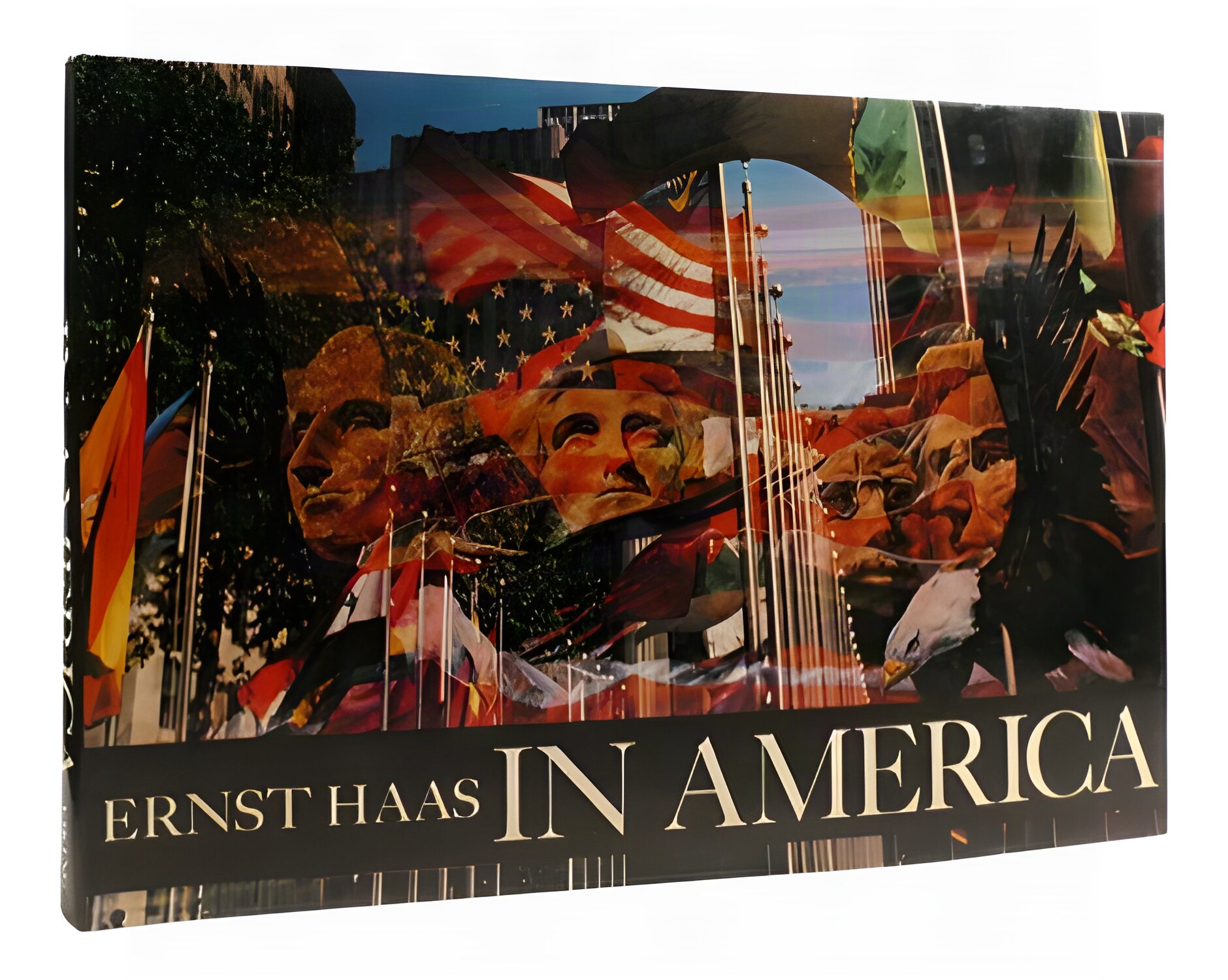
Hardcover. NY, Viking Press, 1st, 1975, Book: Very Good, Dust Jacket: Very Good, Hardcover, oblong format, in a bright, price-clipped dust jacket. A photographic collection by renowned photographer Ernst Haas, showcasing a vibrant and colorful portrait of the United States through his lens, capturing diverse landscapes, people, and cultural moments across the country, often utilizing saturated colors and creative composition to depict the essence of "living Americana" with a unique artistic perspective; considered a landmark work in color photography, particularly for its innovative use of Kodachrome film to portray the American experience in rich detail.
New York, Philomel, 1st, 1997, Book: Very Good, Dust Jacket: Very Good, Hardcover in a bright dust jacket. Unpaginated. Color illustrations by author. As she has so many times before, Polacco has drawn on her inspiration for an appealing picture book from a family story; this time, it's what might have happened at her bearded husband Enzo's Italian garden restaurant. The rhyming text begins: "This is the bee that stopped on a tree in Enzo's splendid gardens." A riotous chain of events is set into motion, including broken dishes, smashed deserts, and a cat tangled in spaghetti--all in Enzo's fancy outdoor eatery. The verse can be a bit forced, but it is always energetic. As usual, Polacco's distinctive artwork is wonderful. Her realistic portraits of a lively cast of characters are richly colored, expressively individualized, and humorously captured.
Softcover. Washington, DC, National Portrait Gallery, 1st, 1995, Book: Very Good, Dust Jacket: None, Softcover. Exhibiton catalog.176 pages. Over 175 B&W illustrations throughout. Black pictorial cover with very slight wear. Price tag on bottom right corner of back cover. Overall, a clean, tight copy.
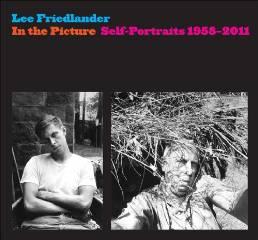
Hardcover. New Haven, CT, Yale University Press : Yale University Art Gallery, 1st, 2011, Book: Very Good, Dust Jacket: None, Hardcover, 379 pages. Like new in publishers shrink wrap. Lee Friedlander (b. 1934) has been tackling the challenge of self-portraiture throughout his prolific career. What began as an unorthodox investigation of the genre has become a masterful engagement spanning five decades. In this extraordinary compilation, which includes hundreds of previously unpublished pictures, we follow the famous photographer through the years as his personal and creative lives unfold and intertwine. Produced to the highest production standards and featuring over 400 duotone images--from his first self-portraits, taken with cable release in hand, to recent images of the photographer with his family and extended network of friends--In the Picture explores Friedlander's various guises throughout a rich and colorful life.
Softcover. Taschen, 1st, 2013, Book: Very Good, Dust Jacket: None, Softcover in a pictorial slipcase. Inez van Lamsweerde and Vinoodh Matadin's work has graced the walls and pages of some of the world's finest galleries and fashion magazines, and if it is surprising that their photographs easily float between these worlds, it is by virtue of their ease in creating imagery that seeks homes in both culturally elite and mainstream outlets. For some of their photographs, such as their portrait of Bjork or campaign for Givenchy, van Lamsweerde and Matadin have worked in collaboration with the art directors M/M (Paris), who have also designed this retrospective that looks back at pretty much everything? that the photographers have been working on for over two decades and that has brought them to the forefront in the fields of both art and fashion. 702 pages. 11 x 11 inches.
Softcover. Milano, 5 Continents , 1st, 2004, Book: Very Good, Dust Jacket: None, Softcover, pictorial wraps, 96 pages. Considered one of the greatest French draughtsmen of all time, Jean-Auguste-Dominique Ingres (1780-1867). left thousands of preparatory drawings for his paintings, along with an incomparable series of almost five hundred graphite portraits that have always been deemed the highest expression of his genius. The Louvre collection offers excellent examples of these two aspects of Ingres' graphic activity; each work is accompanied by a brief comment. Clean copy.
Hardcover. Penn State University Press, 1st, 2012, Book: Very Good, Dust Jacket: Very Good, Hardcover in a bright dust jacket, 328 pages illustrated in color. Jean-Auguste-Dominique Ingres has long been recognized as one of the great painters of the modern era and among the greatest portraitists of all time. Over a century and a half of scholarly writing on the artist has grappled with Ingres's singular identity, his relationship to past and future masters, and the idiosyncrasies of his art. Ingres and the Studio: Women, Painting, History makes a unique contribution to this literature by focusing on the importance of Ingres's training of students and the crucial role played by portraits-and their subjects-for Ingres's studio and its developing aesthetic project. Rather than understanding the portrait as merely a screen onto which the artist's desires were projected, the book insists on the importance of accounting for the active role of portrait sitters themselves. Through careful analysis of familiar and long-overlooked works, Ingres and the Studio traces a series of encounters between painters and portrait subjects in which women sitters-such as the artist Julie Mottez, art critic, salonniere, and historian Marie d'Agoult, and tragic actress Rachel-emerge as vital interlocutors in a shared aesthetic project. Still in publisher's shrinkwrap.
Hardcover. privately printed, 1st, 2007, Book: Very Good, Dust Jacket: Very Good, Hardcover, 64 pages. With over 60 beautiful color plates, this gorgeous book of flower photographs is bound to appeal to a wide audience of anyone interested in Nature, Beauty, Meditation or Art. Tenneson explores the world of botanicals in a way that is completely unique. These photographs transcend mere documentation; they encourage the viewer to see flowers in a whole new way. Joyce Tenneson's breathtaking photographs have graced the covers of major magazines, as well as museums and galleries. Her ethereal portraits of roses, tulips, poppies and other garden blooms also come accompanied by select quotes from authors such as Emily Dickinson, William Carlos Williams, and Anais Nin.
Hardcover. New York, Riverside Book Company, Inc., 1st Edition, 2008, Book: Very Good, Dust Jacket: Very Good, 111 pages. Hardcover. INSCRIBED BY AUTHOR. Dust jacket unclipped, has two small tears at fop of front cover (see image). Gray cover boards, gilt title on spine. Pages clean and bright. Binding tight. Spine straight.
Capetown SA, Fernwood Press/Rembrandt van Rijn Art Foundation, 1st, 1995, Book: Very Good, Dust Jacket: Very Good, Hardcover in a bright dust jacket with minor edgewear 156 pages. Irma Stern (1894-1966) became a renowned artist in South Africa, the country she chose to live and paint the diversity of life and objects. She painted numerous portraits and still life and Rose to fame as one of their great artists. Herart works are exhibitted around the world, and this book is an attempt to shed some lights on Irma Stern?s life and her paintings. Printed on high quality stock, this oversized volume is jampacked with some of her finest works. Clean copy.
Hardcover. New York, Museum of Modern Art, 1st, 1984, Book: Very Good, Dust Jacket: Very Good, Hardcover, 216 pages, illustrated throughout in color and b&w. Clean, unmarked copy with only minor wear to dust jacket. The first major retrospective of the work of Irving Penn in more than twenty years will open at The Museum of Modern Art on September 13, 1984. The exhibition surveys Penn"s long career, spanning the past four decades, and features his work in portraiture, fashion, advertising, the nude, ethnographic subjects and still life, as well as a selection of Penn"s early, unpublished photographs.
Hardcover. Schirmer/Mosel, 1st, 2002, Book: Very Good, Dust Jacket: Very Good, Hardcover, 144 pages. Self-reflection by celebrities tends to be fraught with unmentionable difficulties. Not, though, when the star in question is the ever intelligent, self-aware, articulate, and magnificent Isabella Rossellini. For years, a wall in the entrance of Rossellini's apartment has been covered in pictures taken of her by different photographers. Looking at the "Me Wall," Rossellini writes that she never really saw herself; instead she "saw the photographer's work, their ideas, and our collaboration in capturing fantasies." Looking at Me gathers together Rossellini's private collection of portraits taken of herself by some of the world's leading photographers, including Eve Arnold, Richard Avedon, Michel Comte, Patrick Demarchelier, Fabrizio Ferri, Horst P. Horst, Brigitte Lacombe, Annie Leibovitz, Peter Lindbergh, Robert Mapplethorpe, Steven Meisel, Irving Penn, Herb Ritts, Paolo Roversi, Ellen von Unwerth, and Bruce Weber, as well as filmmakers David Lynch and Wim Wenders. Rossellini invites us to join her as she looks at her favorite portraits, privileging us with her witty, humorous, and self-ironical comments. She traces her career, in photographs, from boxing reporter in Muhammad Ali's training camp to highly successful model, from actress in some of Hollywood's more controversial films to head of her own cosmetic line, Manifesto. Mixed in with these public images are pictures of Rossellini in private, with her children, her dog Macaroni, and her pig Spanky. Irresistibly charming, intelligent yet whimsical, Looking At Me proves the perfect complement to Rossellini herself.
Hardcover. Boston, Little Brown, 1st, 1985, Book: Very Good, Dust Jacket: None, Hardcover, 287 pages, 442 b&w illustrations. The famous photojournalist presents, among other events, the abdication of Edward VIII; the Anschluss; the Warsaw ghetto, before and after its destruction; Tito's guerrilla war against the Nazis; and Isr'l's battle for independence. He recorded the fall of Hungary to the Communists; he was with Churchill at Teheran; and with Khrushchev at Belgrade. There are also exotic parties given by Cecil Beaton and Lady Juliet Duff. Portraits of the last glories of the English aristocracy and the old French Bourgeoisie; the industrialists and artists who made Italy's miraculous postwar recovery possible. In 60,000 words of text he captures the extraordinary adventures and bizarre characters that together made up the author's life. The combination of words and pictures provides a rich, powerful portrait of a fascinating career. Missing dust jacket.
Softcover. NY, Harry N Abrams, 1st, 1995, Book: Very Good, Dust Jacket: None, Softcover, large format, 64 pages. A catalog for an exhibition at The Corcoran Gallery of Art showcasing works that blend mundane, found materials with sophisticated graphic design. The collection highlights, with text by Dore Ashton, how Chermayeff repurposed, for example, office scraps, envelopes, and paper, creating complex, often whimsical, portraiture. Clean, bright copy.
Bologna, Damiani, 1st, 2017, Book: Very Good, Dust Jacket: None, Hardcover, 280 pages. American fashion photographer James Moore (1936-2006) was an influential voice in mid-20th-century fashion photography, working for Harper's Bazaar during its 1960s heyday under the leadership of legendary editor Carmel Snow. Shooting languid mod gamines and luxe bohemians in arresting, often surreal or cinematic compositions, Moore helped shape the visual vocabulary of '60s fashion alongside better-known colleagues such as art director Alexey Brodovitch (under whom Moore studied). Moore also directed television commercials and contributed photographs to European magazines in the 1980s and 1990s, and taught photography at the School of Visual Arts, New York, and the Rochester Institute of Technology. Every Moore photograph is an intricate exploration of space and beauty, with an attention to detail that betrays the photographer's peerless eye. Something of a "photographer's photographer," Moore influenced the next generation of great fashion photographers but has been somewhat neglected in histories of 1960s fashion and culture--until now. James Moore: Photographs 1962-2006 collects a half century of extraordinary photographs by Moore, the first time his work has been collected in a single monograph. Including texts from the leading editors, models, photographers and designers of the day, this volume takes stock of James Moore's astounding career and an extraordinary cultural moment.

 "Horst: Photographer of Styleby: Garner Philippe; Wilcox Claire; Muir Robin")
 "Hubert's Freaks: The Rare-Book Dealer, the Times Square Talker, and the Lost Photos of Diane Arbusby: Gibson, Gregory")

 "Huntington, West Virginia \"On the Fly\" by: Pekar, Harvey")
 "I Will Tell of My War Story: A Pictorial Account of the Nez Perce War (Samuel and Althea Stroum Book)by: Thompson, Scott M.")
 "Iconologiaby: Baskin, Leonard")


 "In Enzo's Splendid Gardensby: Polacco, Patricia")
 "In Pursuit of the Butterfly: Portraits of James McNeill Whistlerby: Denker, Eric")


 "Ingres and the Studio: Women, Painting, Historyby: Betzer, Sarah")

 "Intimacy: The Sensual Essence of Flowersby: Tenneson, Joyce")
 "Intimate Eye, The: Portraits by Bernard Godfryd (INSCRIBED BY AUTHOR)by: Gotfryd, Bernard")


![Irma Stern: A Feast for the Eye by: Arnold, Marion ; Stern, Irma [Painter]](javascript:largeIMTop('https://www.browsingisarousing.com/shop/images/Irma-Stern-A-Feast-for-the-Eye_by_Arnold-Marion-Stern-Irma-Painter-379759-417403.jpg','https://www.browsingisarousing.com/shop/images/Irma-Stern-A-Feast-for-the-Eye_by_Arnold-Marion-Stern-Irma-Painter-379759-417403.jpg',0,'379759',0,'') "Irma Stern: A Feast for the Eye by: Arnold, Marion ; Stern, Irma [Painter]")
 "Irving Pennby: Szarkowski, John")
 "It Happened In Our Lifetime: A Memoir In Words and Pictures by: Phillips, John")
 "James Moore: Photographs 1962-2006by: Martin Harrison (Author), Holly Brubach (Author), Nicolas Moore (Editor), James Moore (Photographer)")

