Hardcover. NY, Grove Press, 1st US, 2005, Book: Very Good, Dust Jacket: Very Good, Hardcover in a bright, unclipped dust jacket. In 1753, Voltaire -- playwright, poet, philosopher, and one of the most feted figures in Europe -- was forced by Louis XV into exile, where he remained for the last twenty-five years of his life. These years heralded a startling new beginning for this remarkable man. Voltaire carved out a new and vibrant world in his isolation, becoming a successful entrepreneur and writing his masterpiece Candide. In Voltaire in Exile, Ian Davidson re-creates this period in the life of one of the giants of the Enlightenment. By painstakingly translating the rich correspondence between Voltaire and his family, members of the Court at Versailles, and the French intellectual elite, Davidson allows us to discover Voltaire the artist, the campaigner, the aesthete, the lover, the humorist. The result is a wonderfully vivid portrait of this extraordinarily funny, iconoclastic, complex, and, above all, ferociously intelligent individual. Clean copy.
Hardcover. New Haven CT, Yale University Press/Wadsworth Atheneum Museum of Art, 1st, 2015, Book: Very Good, Dust Jacket: Very Good, Hardcover, 184 pages, 148 color plates. A landmark examination of iconic and provocative portraits by Warhol and Mapplethorpe, presented side by side and in depth for the first time.
Hardcover. New York, Monacelli, 1st, 2008, Book: Very Good, Dust Jacket: None, Hardcover, 224 pages, Full-page photographs throughout, most b&w, minor edge wear and remainder line on bottom edge, otherwise, very clean and tight copy. Ron Galella, the photographer who made his name capturing celebrities in unguarded, often private moments, was a favorite of Andy Warhol, who shared his fascination with the great and near-great. Warhol himself recorded his nightly rounds through a seemingly endless parade of parties, openings, and happenings in his diaries. In these photographs Galella presents the definitive visual diary of Warhol's life and times, his entourage, and his haunts.
Hardcover. Prestel Publishing/ Montreal Museum of Fine Arts, 1st, 2008, Book: Very Good, Dust Jacket: Very Good, Hardcover, 286 pages, color illustrations. This catalogue reveals the myriad ways Warhol immersed himself in the music of his time. Tracing back to Warhol's introduction to music through the musical comedies. songs and soundtracks of his youth. this book opens with Warhol's portraits of the great films stars of his childhood. As the fascinating essays collected in this volume discuss. Warhol's renowned portraits of pop music icons such as Mick Jagger. Debbie Harry and Grace Jones are just one manifestation of his interest in music. Warhol collaborated with choreographer Merce Cunningham. served as producer for the Velvet Underground. incorporated music into his films. produced video-clips. designed dozens of record albums. filmed live concerts and created multimedia spectacles. Although never a musician himself. Warhol appropriated the imagery of a pop icon for some of his most arresting and haunting self portraits.
Softcover. NY, New American Library, 1st, 1989, Book: Very Good, Dust Jacket: None, Softcover, 128 pages. Over one hundred photos of Warhol, his friends and activities. Name on front fly leaf. otherwise clean.
Hardcover. Boston, Bulfinch Press, 2nd pr., 1989, Book: Very Good, Dust Jacket: Very Good, Hardcover in a bright, price-clipped dust jacket. Seventy full-size plates and seventy-five smaller illustrations, all reproduced in tri-tone plus tinted varnish, convey the subtlety and power of the extraordinary figurative work of Edward Weston (1886-1958). This is the first major publication focusing solely upon his portraiture and nudes, offering new insights into the breadth and quality of Weston's considerable achievement. The book was published on the occasion of a major traveling exhibition of Weston's portraits and nudes organized by the Museum of Fine Arts, Boston. All the prints are drawn from the collection of William H. Lane, who acquired them from the heirs of Edward Weston. Clean copy.
Hardcover. NY, Abbeville Press, 1st, 2015, Book: Very Good, Dust Jacket: Very Good, Hardcover in a bright, unclipped dust jacket, 408 pages, b&w illustrations. This remarkable collection of stories, hand-picked from the archive of legendary New York Post columnist Leonard Lyons by his son, film critic Jeffrey Lyons, will transport readers back to the sparkling peak of New York City nightlife. This was the time when notables of every sort--film producers and stars, writers, politicians, comedians, athletes, and artists--gathered nightly at such famed restaurants and nightclubs as Sardi's, the Stork Club, and the Copacabana. From 1934 to 1974, Leonard Lyons was a fixture at these clubs, befriending celebrities of all stripes and gathering exclusive tidbits for his syndicated newspaper column, The Lyons Den. What a Time It Was! offers candid portraits of stars and statesmen at work and at play--especially at play--but still, effortlessly, larger than life. Illustrated with snapshots and glamour shots, it offers a unique window onto the lives of iconic figures from Ethel Barrymore and Muhammad Ali to Tennessee Williams and Jackie Kennedy, as well as their favorite haunts. Here are four decades of popular culture seen from the front row, by a man who said, "Give me lights and sound and people, and music into the night. Late into the night!"
Hardcover. New Haven CT, Yale University Press, 1st, 2014, Book: Very Good, Dust Jacket: Very Good, Hardcover in a bright dust jacket, 440 pages, colo and b&w illustrations. The first biography in more than twenty years of James McNeill Whistler (1834-1903) is also the first to make extensive use of the artist's private correspondence to tell the story of his life and work. This engaging personal history dispels the popular notion of Whistler as merely a combative, eccentric, and unrelenting publicity seeker, a man as renowned for his public feuds with Oscar Wilde and John Ruskin as for the iconic portrait of his mother. The Whistler revealed in these pages is an intense, introspective, and complex man, plagued by self-doubt and haunted by an endless pursuit of perfection in his painting and drawing. In his beautifully illustrated and deeply human portrayal of the artist, Daniel E. Sutherland shows why Whistler was perhaps the most influential artist of his generation, and certainly a pivotal figure in the cultural history of the nineteenth century. Whistler comes alive through his own magnificent work and words, including the provocative manifestos that explained his bold artistic vision, sparked controversy in his own time, and resonate to this day.
Hardcover. New Haven CT, Yale University Press, 1st, 2014, Book: Very Good, Dust Jacket: Very Good, 440 pages, illustrations in color and b&w. Clean, unmarked copy with only minor wear to dust jacket. The first biography in more than twenty years of James McNeill Whistler (1834-1903) is also the first to make extensive use of the artist's private correspondence to tell the story of his life and work. This engaging personal history dispels the popular notion of Whistler as merely a combative, eccentric, and unrelenting publicity seeker, a man as renowned for his public feuds with Oscar Wilde and John Ruskin as for the iconic portrait of his mother. The Whistler revealed in these pages is an intense, introspective, and complex man, plagued by self-doubt and haunted by an endless pursuit of perfection in his painting and drawing. In his beautifully illustrated and deeply human portrayal of the artist, Daniel E. Sutherland shows why Whistler was perhaps the most influential artist of his generation, and certainly a pivotal figure in the cultural history of the nineteenth century. Whistler comes alive through his own magnificent work and words, including the provocative manifestos that explained his bold artistic vision, sparked controversy in his own time, and resonate to this day.
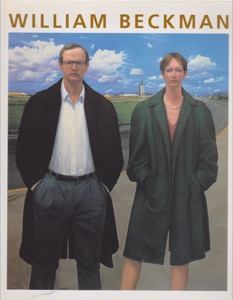
Softcover. Seattle WA, Frye Art Museum, 1st, 2002, Book: Very Good, Dust Jacket: None, Softcover, 108 pages in color. Catalogue of an exhibition held at Frye Art Museum, Seattle, WA, 2002. Firm binding, clean inside copy. *** A major exhibition devoted to the American painter William Beckman, one of the leading exponents of the Realist "school." A figurative artist, he leans heavily upon classical tradition. The nude portraits can be sometimes jarring. Less well-known are his scenes of rural America, with farms and silos. *** "William Beckman (b. 1942) paints himself, loved ones, and the land he has lived upon, creating edgy portraits and landscapes. His subjects, whether mother or lover, are delivered to the viewer with gripping details, without embelishment. He creates his figurative art using a unique method. He applies paint, then shaves of layer after layer from the surface with a razor, repainting and polishing the canvas to create lustrous, absorbing images. His realism is stripped of sentiment, his idealized portraits scrupulously rendered, and his expansive tracts of Minnesota farmland theatrically scaled. Each painting is epic in significance and matter-of-fact at the same ime. This is the first book that offers a comprehensive view of Beckman's art and career.
Hardcover. Indianapolis, IN, Indianapolis Museum of Art, 1st, 1979, Book: Very Good, Dust Jacket: Very Good, Volume devoted to the work of painter and portraitist William McGregor Paxton. Includes 30 black/white and 52 color plates, many full-page. Includes essay on Impressionism and biographical information on the artist. Very good condition; dust jacket shows some wear on the edges, but cloth bound book has no internal flaws. 165 pages, essay by R.H. Ives Gammel.
Hardcover. New Haven CT, Yale University Press, 1st, 2007, Book: Very Good, Dust Jacket: Very Good, Hardcover, 296 pages. The great American artist William Merritt Chase (1849-1916) completed a wide variety of portraits over his long career. Among his subjects were presidents, businessmen, celebrities, New York luminaries, and members of his family as well as a number of self-portraits. Chase's ability to capture a likeness was renowned, yet it was his dashing and bravura brushwork that truly set his portraits apart. This highly anticipated book presents the entire collection of Chase's known portraits in oil. Each is gorgeously reproduced, and many are published in color for the first time. This is the second of four volumes cataloguing the complete works of William Merritt Chase.
Hardcover. New York , E. P. Dutton , 1st U.S., 1913, Book: Good, Dust Jacket: None, Hardcover, 325 pages. Green cloth cover, beveled edges, gilt design,some wear to corners and edges. Light foxing and shadows on front and rear endpages. With an introduction by R. B. Cunninghame Graham. Frontispiece is b&w portrait of William Morris. Binding slightly cocked. Inside pages are bright and clean. A nice copy.
Softcover. Philadelphia, Pa. , Pennsylvania Academy of the Fine Arts, 1st, 1982, Book: Very Good, Dust Jacket: None, Exhibition catalog. 211 pages, illustrated throughout in color and b&w. Pictorial gray stiff wrappers. Light wear and rubbing to edges and spine, lower front corner dog-eared, else a very nice, tight copy.
Softcover. New Haven CT, Yale University Press, 1st, 2006, Book: Very Good, Dust Jacket: None, Softcover, 304 pages. A comprehensive and intriguing look at the witty and sophisticated art of William Wegman, beloved by the general public and held in critical esteem within the international art world This fascinating book reveals the full range of William Wegman's art. Beloved by the general public for signature photographs of his troupe of Weimaraners, Wegman is also an immensely important figure in the contemporary art world. A pioneer video-maker, conceptualist, performer, photographer, painter, draftsman, and writer, Wegman moves fluidly among various media: from conceptual works to commissioned magazine shots; from videos shown in museums to television segments made for Sesame Street and Saturday Night Live; from artist's books parodying nineteenth-century naturalist studies to children's books revealing tongue-in-cheek portraits of town and country life. William Wegman: Funney--Strange is illustrated with some 250 images. It is the first retrospective volume to consider the artist's entire career from the 1960s to the 2000s and is an essential book for any fan of Wegman's work.
Softcover. NY, Crown, 1st, 1993, Book: Very Good, Dust Jacket: None, Softcover, oblong format. 158 pages. A book of quietly beautiful photographic portraits of Native-American women, accompanied by their own reflections on what it means to be a woman and an Indian in America. The result is a startlingly honest and often poetic work. The women within these pages defy stereotype: they are mothers, activists, artists, environmentalists, and community leaders. Whether living on reservations or in cities, they have struggled to preserve an ancient culture and a land under siege. 85 black-and-white photographs. Clean copy.
Hardcover. NY, Rizzoli, 1st, 2010, Book: Very Good, Dust Jacket: Very Good, 208 pages, color and b&w illustrations. Hardcover with dust jacket. Like new in publisher's shrink-wrap. A collection of rarely seen black-and-white photographs taken of women in the 1950s and 1960s, captured by the renowned New York City fashion photographer and filmmaker. Designed by Ruth Ansel, this elegantly produced volume captures the romance and glamour of women in the 1950s and 1960s. A mix of fashion and portraiture, it includes intimate and striking portraits of Nico, Faye Dunaway, Edie Sedgwick, Sharon Tate, and Catherine Deneuve. Jerry Schatzberg's moody snapshots of a more innocent and whimsical New York on the brink of the important societal changes of the sixties form a compellingly nostalgic portrait of a stylish moment. Images of jetsetters at an airport terminal, lovers embracing in Central Park, and a woman waltzing in the street in the Financial District portray a time as well as a style. A New York City native, Schatzberg documented the period with the insider's sensibility of Woody Allen or Martin Scorsese, but with the high-fashion style of Irving Penn and Richard Avedon. With a keen eye for the magic of the in-between moment, Schatzberg stealthily captured the elegance and beauty of a woman as her role was redefined in the sixties, while at the same time retaining an element of humor and surprise.
Hardcover. NY, Random House, 1st, 1999, Book: Very Good, Dust Jacket: Very Good, The photographs by Annie Leibovitz in Women, taken especially for the book, encompass a broad spectrum of subjects: a rap artist, an astronaut, two Supreme Court justices, farmers, coal miners, movie stars, showgirls, rodeo riders, socialites, reporters, dancers, a maid, a general, a surgeon, the First Lady of the United States, the secretary of state, a senator, rock stars, prostitutes, teachers, singers, athletes, poets, writers, painters, musicians, theater directors, political activists, performance artists, and businesswomen. "Each of these pictures must stand on its own," Susan Sontag writes in the essay that accompanies the portraits. "But the ensemble says, So this what women are now -- as different, as varied, as heroic, as forlorn, as conventional, as unconventional as this."
Hardcover. New York, Farrar, Straus and Giroux, 1st, 2008, Dust Jacket: Very Good, Hardcover, 873 pages. Light shelf-wear to dust jacket. Clean, tight copy. Robert Lowell once remarked in a letter to Elizabeth Bishop that "you ha[ve] always been my favorite poet and favorite friend." The feeling was mutual. Bishop said that conversation with Lowell left her feeling "picked up again to the proper table-land of poetry," and she once begged him, "Please never stop writing me letters-they always manage to make me feel like my higher self (I've been re-reading Emerson) for several days." Neither ever stopped writing letters, from their first meeting in 1947 when both were young, newly launched poets until Lowell's death in 1977. Presented in Words in Air is the complete correspondence between Bishop and Lowell. The substantial, revealing-and often very funny-interchange that they produced stands as a remarkable collective achievement, notable for its sustained conversational brilliance of style, its wealth of literary history, its incisive snapshots and portraits of people and places, and its delicious literary gossip, as well as for the window it opens into the unfolding human and artistic drama of two of America's most beloved and influential poets.
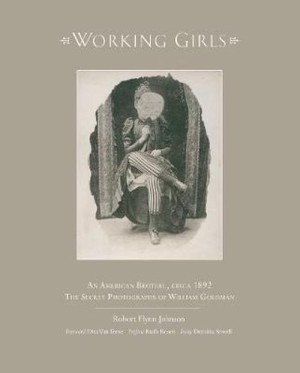
Hardcover. NY, Glitterati, 1st, Book: Very Good, Dust Jacket: Very Good, Hardcover in a bright dust jacket. After becoming captivated by the beauty and originality of a group of nineteenth-century photographs, Robert Flynn Johnson has uncovered more than two hundred vintage images of women who lived and worked at a brothel in Reading, Pennsylvania, circa 1892, and showcases them here for the first time for a wider public. Working Girls details the private, creative archive of commercial photographer William Goldman, whose imagery paints a complete picture of the environments that these women inhabited - from inside the brothel, posing artistically for the camera, to their off-duty routines, such as reading, smoking, and bathing. Taken two decades before the famous E. J. Bellocq photographs of prostitutes in Storyville, New Orleans, circa 1913, Johnson chronicles the aesthetic, historical, and sociological importance of Goldman's artwork in the history of photography, referencing them alongside paintings and photographs by such artists as Degas, Eakins, and Monsieur X. With essays that provide an insightful historical overview of Goldman's work in context of the period in which they were taken, by feminist and cultural luminaries including Dita Von Teese, Ruth Rosen and Dennita Sewell, this extraordinary collection provides a personal visual record of lives of these women while also offering a deeper understanding of the 'working girls' that existed in that era. Clean copy.
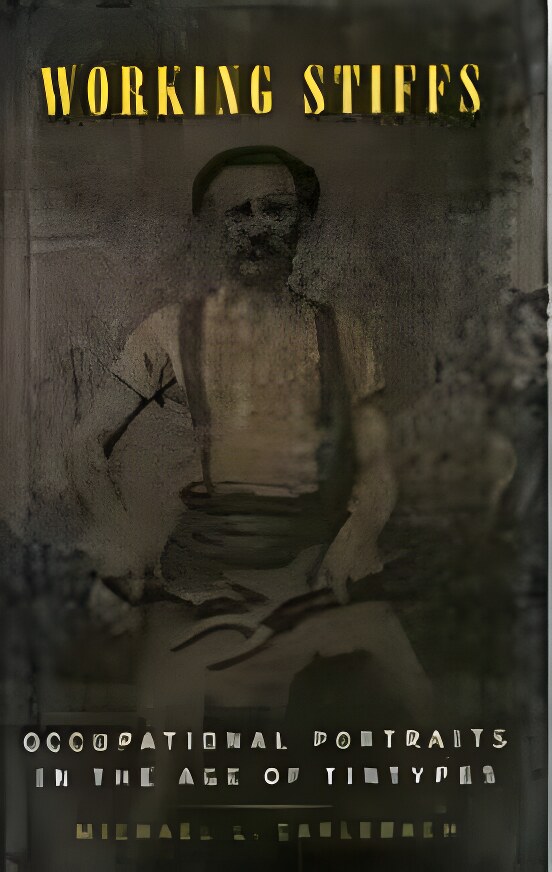
Hardcover. Washington DC, Smithsonian Institution Scholarly Press, 1st, 2002, Book: Very Good, Dust Jacket: Very Good, Hardcover, 144 pages. The tintype, patented in 1856, was a cheap, fast, easy-to-make, practically indestructible type of photograph that became enormously popular among the working class in the late nineteenth century. For common laborers and their families, the opportunity to join the ranks of those who owned pictures of family and friends--the upper classes--was momentous. This collection exhibits more than eighty examples of a specific kind of tintype: occupational portraits, photographs of working people with the tools of their trade. Michael L. Carlebach examines the historical significance of these tintypes and finds that they reveal a great deal about late nineteenth-century values. The subjects of these images are plumbers proudly holding their wrenches and pipe cutters, carpenters with their saws and lathing hatchets, textile workers with their spindles and yarn, icemen with their tongs. These people lived and worked at a time when a depersonalized factory system run by production and efficiency experts was beginning to dominate American industry and culture. Many of the men and women in these tintypes were part of a disappearing class of self-employed artisans and journeymen; their portraits proudly stress their individuality and the essential nobility of their work.
Hardcover. New Haven, Yale University Press, 1st, 1951, Book: Very Good, Dust Jacket: Good, Hardcover in near fine condition with dust jacket in good condition--tears to upper and bottom spine of book, as well as nicks to upper, front edges. ix+ 185 pp. + color frontpiece; 148 b/w illustrations. Catalogue of 1108 works by 412 known artists (127 works by unidentified artists) in all media except prints. Preface by John Marshall Phillips; portraits arranged alphabetically by subject, with biographies of each; index of artists, with list of portraits by each.
Softcover. NY, Hirschl & Adler Galleries, 1996, Book: Very Good, Dust Jacket: None, Softcover, stapled wraps. 39 pages, 15 b&w, 25 color plates. Issued in conjunction with a 1996 exhibition. With a preface by Stuart P. Feld and a 7-page illustrated introduction by Gregory Hedberg. The 30 catalogue entries are annotated. Artists include Henry Inman, James McNeil Whistler, Winslow Homer, John Singer Sargent, John Wellington, et al. Also includes Andy Warhol's portrait of John Lennon and Nelson Shanks portrait of Princess Diana.
Hardcover. Munich, Hirmer, 1st, 2024, Book: Very Good, Dust Jacket: None, Hardcover in pictorial boards, 240 pages. Ylla (1911-1955) devoted herself exclusively to animal portraiture at a time when no one had thought of only photographing animals. Driven by her symbiotic relationship with animals, she created a new genre in animal photography: the expression and personality in animals. Ylla: The Birth of Modern Animal Photography recounts the eventful odyssey of a "New Woman" par excellence, fearless and knowing no limits. She was part of artists' circles in Belgrade and Paris, however during WW II she fled to New York via Marseille where she started her career again from square one. Originally taking beguiling photos in her studio and zoos, Ylla finally traveled to Africa and India where she died in a tragic accident during a water buffalo race. Her Animals in Africa and Animals in India are some of the first books on the subject. Ylla also introduced photography to children's literature. Her books The Sleepy Little Lion and Two Little Bears are juvenile classics. This book details her remarkable life and work.

 "Voltaire In Exile: The Last Years, 1753-78 by: Ian Davidson")
 "Warhol & Mapplethorpe: Guise & Dollsby: Pacelli, Maria Luisa and Patricia Hickson (Ed.)")
 "Warhol by Galella: That's Great!by: Galella, Ron (Photographer)")
 "Warhol Live: Music and Dance in Andy Warhol's Work by: Andy Warhol; Stephane Aquin; Emma Lavigne; Matt Wrbican")
 "What a Time It Was!: Leonard Lyons and the Golden Age of New York Nightlife by: Jeffrey Lyons")
 "Whistler: A Life for Art's Sakeby: Daniel E. Sutherland")
 "Whistler: A Life for Art's Sakeby: Sutherland, Daniel E.")
 "William McGregor Paxton 1869-1941by: Lee, Ellen Wardwell")
 "William Merritt Chase: The Complete Catalogue of Known and Documented Work by William Merritt Chase (1849-1916), Vol. 2: Portraits in Oilby: Pisano, Ronald G.")
 "William Morris: A Study in Personality.by: Compton- Rickett, Arthur")
 "William Rush: American Sculptorby: Pennsylvania Academy of Fine Arts")
 "William Wegman: Funney/Strangeby: William Wegman and Joan Simon")

 "Women Then: Photographs 1954-1969by: Morton, Julia and Jerry Schatzberg")
 "Womenby: Leibovitz, Susan Sontag, Annie")
 "Words in Air: The Complete Correspondence Between Elizabeth Bishop and Robert Lowellby: Travisano, Thomas (Ed.)")
 "Yale University Portrait Index 1701-1951by: Phillips, John Marshall, intro.")