Hardcover. Bloomington, IN, Indiana University Press, 1st, 2016, Book: Very Good, Dust Jacket: Very Good, 152 pages. Hardcover with dust jacket. A very clean, unmarked copy with only minor wear to dust jacket edges. A tight copy. As a photographer for Life and Fortune magazines, Margaret Bourke-White traveled to Russia in the 1930s, photographed the Nazi takeover of Czechoslovakia in 1938, and recorded the liberation of Buchenwald at the end of WWII. In 1949, Life sent her to South Africa to take photographs in a country that was becoming racially polarized by white minority rule. Life published two photo-essays highlighting Bourke-White's photographs, but much of her South African work remained unpublished until now. Here, these stunning photographs collected by Alex Lichtenstein and Rick Halpern offer an unparalleled visual record of white domination in South Africa during the early days of apartheid. In addition to these powerful and historically significant photographs, Lichtenstein and Halpern include two essays that explore Bourke-White's artistic and political formation and provide background material about the cultural, political, and economic circumstances that produced the rise and triumph of Afrikaner nationalism in South Africa. This richly illustrated book brings to light a large body of photography from a major American photographer and offers a compelling history of a reprehensible system of racial conflict and social control that Bourke-White took such pains to document.
Hardcover. NY, powerHouse, 1st, 2005, Book: Very Good, Dust Jacket: None, Hardcover, pictorial boards, 128 pages. During the early 80s, New York's Lower East Side was a hotbed of creative activity. Unknown artists were synthesizing the fertile ground at the legendary New York nightclubs Studio 54, the Mudd Club, Club 57, Palladium, and Danceteria while on their way to international fame and acclaim. Among those emerging were Madonna, Jean-Michel Basquiat, Grace Jones, Keith Haring, Kenny Scharf, Vincent Gallo, Anna Sui, Exene Cervenka, Kid Creole, and Diego Cortez. Maripol was part of a collective of artists, graffiti writers, street dancers, and performers who all thrived together in the explosive downtown eccentricity. As an image maker and stylist for Madonna during her "Like a Virgin" days, jewelry designer, art director, and producer Maripol relentlessly documented the movers and shakers of the early 80s scene through the lens of her instant Polaroid SX-70. Collected for the first time in Maripolarama, Maripol's photographs vividly depict the extraordinary personalities that inhabited the "forever" hip, arty Manhattan clubland during the post-punk era when hip hop was in its earliest stages and graffiti covered the landscape. Whether it's Andy Warhol, Debbie Harry, Basquiat, or Madonna modeling a bright pink wig, Maripolarama provides lively and inspiring insight into a time long gone.
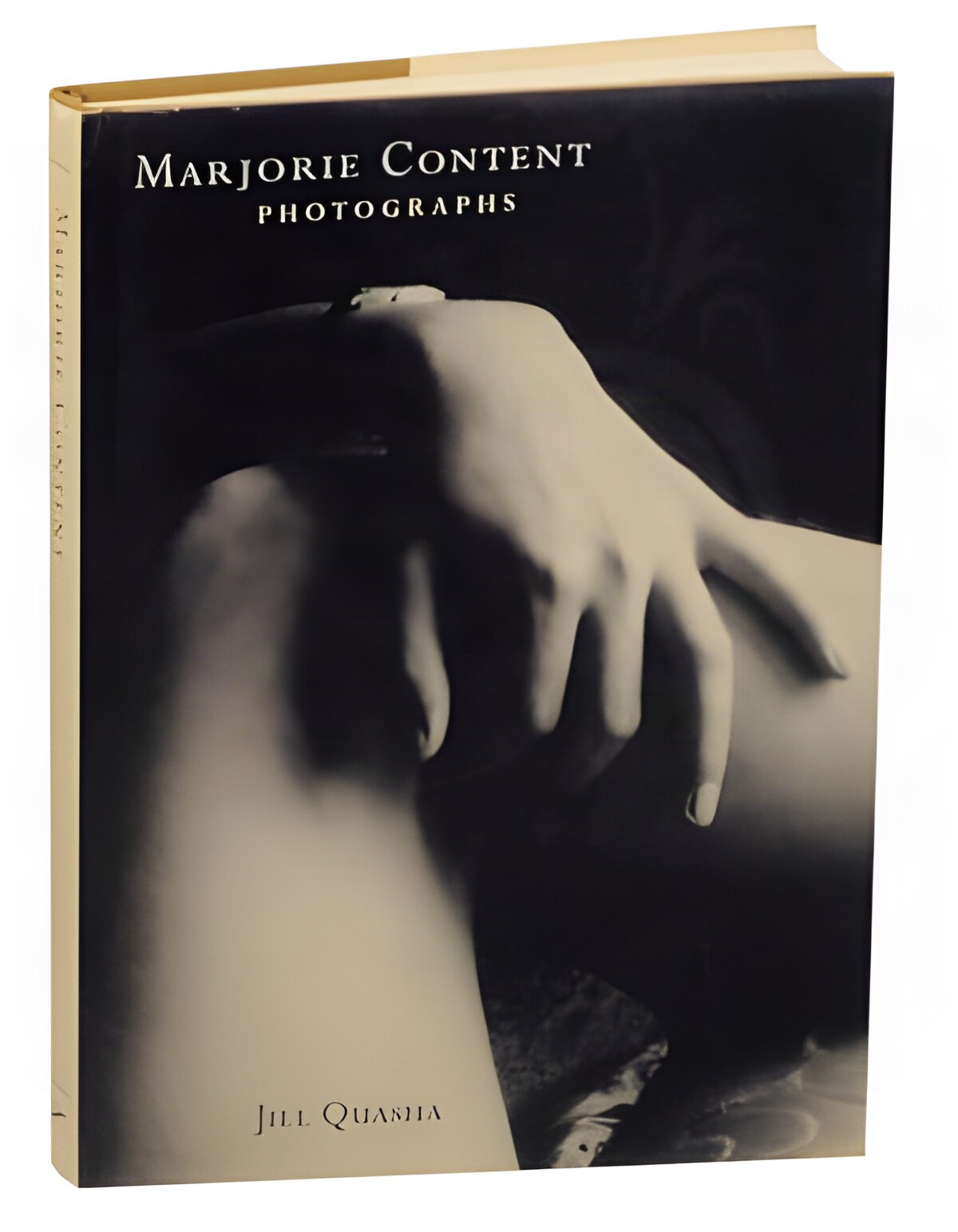
Hardcover. New York, Norton, 1st, 1994, Book: Very Good, Dust Jacket: Very Good, Hardcover, 159 pages. Black & white photography by Marjorie Content. Marjorie Content, a well-bred, intelligent woman who moved in artistic circles that included Georgia O'Keeffe and Jean Toomer (her last and worst husband), produced a body of sensitive black-and-white photographs in the 1920s and 1930s that were little known then but may reach a wider audience now. Quasha gathers them and a biographical essay in a lovely, pocketable volume that is a pleasure for those weary from hefting usually much heavier photography tomes. The pictures themselves are of familiar, early modernist types: close-ups of calla lilies and other plants, head-only portraits, and city vignettes. Quasha writes, "The photographs will not change our sense of photographic history . . . [but] will add to our understanding of what photography is capable of, especially in the lyric mode." More interesting, perhaps, is that Content exemplifies the kind of woman (more common in the past) who gives of herself to others and doesn't take her own work seriously enough, in spite of which she left behind a few lovely things that photography collections will cherish.
Hardcover. Munchen, Schirmer/Mosel., 1st US, 1984, Book: Very Good, Dust Jacket: Very Good, Hardcover in a bright dust jacket, 269 pages. "Here is a breathtaking visual celebration of this all-time movie goddess, with the world's greatest photographers contributing their most famous landmark portraits collected from the thirty-five years during which Marlene Dietrich reigned supreme in the history of motion pictures."
Hardcover. New York, Alfred A. Knopf, 1st, 1966, Book: Very Good, Dust Jacket: Good, Hardcover, 179 pages, with photographs throughout by Martha Swope. Minor dust jacket edge wear and rub, otherwise, very clean and tight copy.
Hardcover. Flammarion, 1st, 2012, Book: Very Good, Dust Jacket: Very Good, Hardcover, 448 pages. This elegant, large-format volume presents twenty masters of photography via 300 extraordinary authorial photographs, providing a broad yet accessible overview of twentieth-century photography. From Man Ray's pioneering experimentations to the elegant and provocative fashion shots of Helmut Newton and Herb Ritts, the twenty master photographers featured in this handsome tome are masters of their craft across different photographic genres, from reportage and documentary to art and portraiture to fashion and glamour photography. A portfolio for each photographer features a selection of their legendary images, an introduction to the photographer's oeuvre, a brief biography, and commentary on each of the featured photographs. The volume features a striking, elegant design and large format, bringing these iconic photographs into sharp focus.Master Photographers features the work of Araki Nobuyoshi, Gabriele Basilico, Margaret Bourke-White, Robert Capa, Henri Cartier-Bresson, Robert Doisneau, Elliott Erwitt, Walker Evans, Mario Giacomelli, Mimmo Jodice, William Klein, Peter Lindbergh, Man Ray, Robert Mapplethorpe, James Nachtwey, Helmut Newton, Martin Parr, Herb Ritts, Sebastiao Salgado, and August Sander.
Hardcover. NY, Aperture, 1st, 1997, Book: Very Good, Dust Jacket: Very Good, Hardcover in a bright dust jacket. In 1918, August Sander meticulously photographed the defeated citizenry of Germany who needed photo identification cards for the occupying forces. By 1929 he had photographed all classes and types of people. During this time, Sander came under the influence of modern art and its intellectual practitioners whom he befriended in Cologne. Through his discussions with them he came to understand the importance of his portrait work and was encouraged to continue. He produced the first volume of an extended series he hoped would provide an exhaustive catalogue, but in the 1930s his work fell into disfavor and was banned by the Nazis. The photography of August Sander comprises an extraordinary human document. This volume of the Masters of Photography series, which includes 43 portraits of a cross section of German society, from pastry chefs to industrialists, is a provocative glance at the Weimar Republic. Clean copy.
Softcover. Philadelphia PA, Philadelphia Museum of Art , 1st, 1984, Book: Very Good, Dust Jacket: None, Softcover, 397 pages, 127 color plates, many bw plates. Issued in conjunction with a series of 1984 exhibitions. "The Dutch in the seventeenth century placed a premium on naturalistic accounts of their surroundings, be they in the form of portraits, landscapes, still lifes, or scenes of everyday life -- what we have come to call 'genre' painting. With this art, the painter recorded the look, the manners, the character of those quotidian events, which comprise day-to-day existence." This book features essays on both the artists and on life and culture during this time. The catalogue addresses 127 paintings: first, in color plates, and secondly, with lengthy annotations and small BW illus. The concluding bibliography is substantial. Clean copy.
Hardcover. New York, NY, Collins Design, 1st, 2010, Book: Very Good, Dust Jacket: Very Good, 205 pages. Hardcover with dust jacket. Minor yellowing to dust jacket edges. Minor soiling to dust jacket rear and top edge of front. An otherwise clean, unmarked copy with only minor wear to dust jacket edges. Match Prints is a visual and editorial dialogue between two renowned photographers of music and film celebrities, Jim Marshall and Timothy White. Marshall, one of the foremost photographers of the rock music scene in the 1960s and 1970s, shot some of the most iconic images of the era, including Jimi Hendrix burning his guitar at Woodstock; White, one of the most in-demand music and Hollywood photographers working today, has built an equally impressive portfolio of photos in his 20 year career. Match Prints features images from the worlds of film and music, compares the work of the two photographers, and provides first-hand behind-the-scenes anecdotes. With an introduction by renowned music writer Anthony DeCurtis.
Hardcover. Middletown, Connecticut, Wesleyan University Press, reprint, 1982, Book: Very Good, Dust Jacket: Good, Hardcover in a lightly worn dust jacket. Biography and critical analysis of American painter and portraitist Mather Brown. 297 pages illustrated with 9 full-color plates and 160 other black/white reproductions of paintings. Book is in near fine condition, very slight bumping at the ends of the spine. Dust jacket shows some rubbing and edge wear.
Hardcover. New Haven, CT, Yale University Press, 1st, 2001, Book: Very Good, Dust Jacket: Very Good, 289 pages. Hardcover with dust jacket. A very clean, unmarked copy with minor wear to dust jacket edges. Klein surveys the history of Matisse's portraits and their sitters, with attention to the details of the financial transaction or other agreement that caused the painting to be made. An analysis of Matisse's self-portraits is also provided. Klein works chronologically, detailing the artist's developing style, but remains attached to his biography as well, with many quotes about Matisse or his works from contemporary sources. This volume is well illustrated with b&w and color plates.
Hardcover. Germany , Steidl, 1st, 2010, Book: Very Good, Dust Jacket: None, 156 pages. Hardcover with no dust jacket. Very clean, unmarked copy with only minor edgewear. Color photographs throughout. In the early 1970s, the workers at a steel smelting factory east of Havana wrote to Fidel Castro describing their housing needs. Out of this exchange a new city called Alamar was born, conceived by the same workers who would build it and live there. Today it is abandoned; Mauro D'Agati's photographs examine its eccentric spaces.
Hardcover. Seattle, Fantagraphics , 1st, 2022, Book: Very Good, Dust Jacket: None, Hardcover, pictorial boards, 214 pages. Perverted, Insane, Degenerate, Brilliant. Artist Drew Friedman pays tribute to the great underground comix creators from Z (Zap) to A (Arcade). With the publication of R. Crumb's debut issue of Zap in 1968, the Underground Comix revolution exploded, creating a major paradigm shift and blowing the lid off the traditional comic book. Maverix and Lunatix features 101 full page portraits (and more) by a cartooning icon in his own right, Drew Friedman, spotlighting the essential artists, writers, and editors who defined one of the great art and countercultural movements of the 20th century. Featuring R. Crumb, Gilbert Shelton, S. Clay Wilson, Melinda Gebbie, Art Spiegelman, Vaughn Bode, Trina Robbins, Bill Griffith, Jay Lynch, Sharon Rudahl, Larry Gonick, Rick Veitch, Joyce Farmer, Justin Green, "Grass" Green, George DiCaprio, Diane Noomin, Harvey Pekar, Robert Williams, Howard Cruse, Dan O'Neill, Spain Rodriguez, Shary Flenniken, Richard Corben, and so many others... all of whom helped to reinvent an entire artistic medium and became icons of underground comix. Featuring a foreword by Marc Maron (WTF with Marc Maron) and an afterword by historian Patrick Rosenkranz (Rebel Visions: The Underground Comix Revolution 1963-1975), each portrait in Maverix and Lunatix is also accompanied by a short biography of its subject by Friedman, making the book both a gorgeous art book and a valuable historical resource.
Hardcover. Edition Stemmle, 1st, 2001, Book: Very Good, Dust Jacket: Very Good, Hardcover, 136 pages. Bauhaus photography is well served by this first monograph on Max Baur, with many of the previously unpublished photographs also serving as a new source for Bauhaus studies. Working in Germany, at first providing images for postcards, Baur expanded his efforts to encompass landscape, portrait, and architectural images. In each of these genres, his work reflects the cool, objective approach of the Bauhaus style combined with the artist's elegant handling of light and perspective. In photos of stairways and colonnades, factories, and everyday objects, Baur was able to eliminate the extraneous and offer the essential nature of his subject. The book covers a period of vast changes in the world and in the life of the artist, but throughout there is a consistency of vision. An essay by William Ewing, director of the Mus e de l'Elys e (which specializes in photography), gives a brief description of the life and career of Baur with enthusiasm and warmth, while Edelmann-Pomplitz writes movingly about her experience as his student. In a letter to her, Baur expresses his credo most eloquently: "it is with light alone that we create images." This lovely work is a fine example of excellent printing and composition in harmony with content.
Hardcover. Australia, T & G Publishing, 1st, 2006, Book: Very Good, Dust Jacket: Very Good, 296 pages. Hardcover with dust jacket. A very clean, unmarked copy with only minor wear to dust jacket edges. Color photographs throughout. Max Pam is one of Australia's most important contemporary photographers. His success is based on a body of provocative and compellingly intimate images of people from all over the world. This substantial publication with notes gives an emotional, sometimes lyrical, provocative, always intimate portrait of the artist as much as the people and places he has witnessed.
Softcover. Philadelphia, Pennsylvania Academy of the Fine Arts, 1st, 1922, Book: Very Good, Dust Jacket: None, Softcover, 181 pages, b&w illustrations. Rubbing, chipping to wrappers and edges. Wrinkling on spine. Else a clean, tight copy.
Hardcover. Oxford UK, Bodleian Library, 1st, 2012, Book: Very Good, Dust Jacket: None, Hardcover. pictorial boards, 112 pages. This book celebrates the Bodleian Library's acquisition of Tom Phillips's archive of over 50,000 photographic postcards dating from the first half of the twentieth century, a period in which, thanks to the ever cheaper medium of photography, 'ordinary' people could afford to own their portraits. Each title in this series is thematically assembled and designed by the artist, the covers featuring a linked painting specially created for each title from Tom Phillips's signature work, A Humument. With an illuminating foreword by Eric Musgrave, 'Menswear' presents postcards of men in all manner of outfits, whether formal, practical or casual, dating from around 1900 up to c. 1949. Most of the subjects are posing for portraits, displaying both their individual style and an interpretation of the fashions of the time. The rich variety of accessories on display includes ties, gloves, pocket squares, walking sticks, canes, boutonnieres and spats. Clean copy.
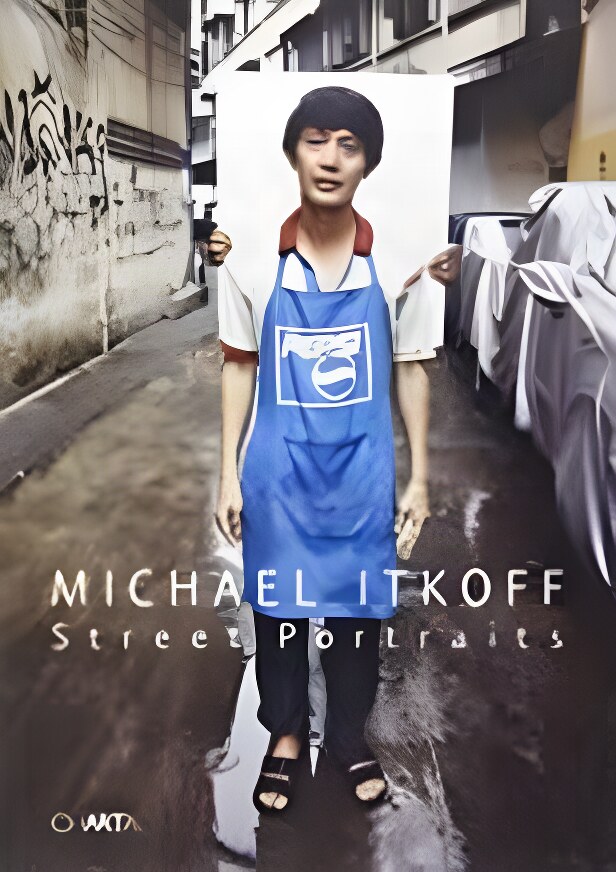
Softcover. Italy, Charta, 1st, 2009, Book: Very Good, Dust Jacket: None, Like new in publisher's shrink-wrap. 64 pages, color photos. Michael Itkoff has traveled the world since 2002 taking portraits of everyday people in the street. In the photographs gathered here, a makeshift backdrop is held behind subjects in London, Sydney, Hanoi, Bangkok and New York, allowing the larger urban scene to fill out the frame. Born in 1981 in Philadelphia, Itkoff is a Founding Editor of Daylight magazine.
Softcover. US, Damiani, 1st, 2014, Book: Very Good, Dust Jacket: None, 110 pages, softcover. Like new in publisher's shrink-wrap. Absence of Subject and Two Crowns of the Egg are Somoroff's most intriguing books of photography. In this edition of Two Crowns, the still life art work is as stunning as the female nudes. Of note, the rare combinations of objects (such. books of literature, high polished knives, exquisite dishes) and life matter (such pomegranates, honey, eggs, human skulls) set one's imagination in fire. These strange image compositions are as odd as the pairing of words by Postmodern poet Giannina Braschi who writes love poems to objects, animals, beings. The scholarly introduction by art historian Donald Kuspit is respectable but a bit dry. Regardless the imagery and poetry tower over any essay that one could write about them.
Hardcover. Swan Isle Press, 1st, 2008, Book: Very Good, Dust Jacket: Very Good, Hardcover, 180 pages. Spanish filmmaker Luis Bunuel (1900-83), known for his surrealist themes and unflinching social criticism, was an artist defined by intellectual ambition and controversy. An exile who produced some of his most famous work in Mexico and France during Franco's dictatorship, he left a complicated imprint on the creative landscape of the twentieth century and on generations of younger filmmakers--including his Mexican friend Claudio Isaac. Drawn from Isaac's personal papers, Midday with Bunuel: Memories and Sketches, 1973-1983 is an intimate and unconventional portrait of this cinematic icon--and memoir of Isaac's own artistic development.The text includes sketches, vignettes, and anecdotes from Isaac's notebooks, revealing his perspective first as a precocious boy and then as a young man. Isaac reflects on Bunuel's presence among a community of exiles, artists, actors, writers, and intellectuals in Mexico City. These are at once touching, perceptive, and critical glimpses into Bunuel's roles as husband and father, friend and colleague, surrealist, philosopher, and iconoclast during his last years. Throughout, Isaac's words reveal his deep admiration and affection for an older friend full of contradictions. Intimate photographs from the Isaac family archive complement the writing, and Bryan Thomas Scoular's careful translation makes this text available for the first time in English.
Hardcover. Essex, Pequot Press, First Edition, 1971, Book: Very Good, Dust Jacket: Very Good, 69 pages. Hardcover. Gray cloth boards with gilt titles to spine. Black & white illustrations throughout. Frontis illustration, The Harpist, A Portrait of Miss Florence by Alphonse Jonghers, tipped-in & in full color. Dust jacket with same full color image on bright blue background. Dj has age related wear to edges. Clean, unmarked. A nice copy.
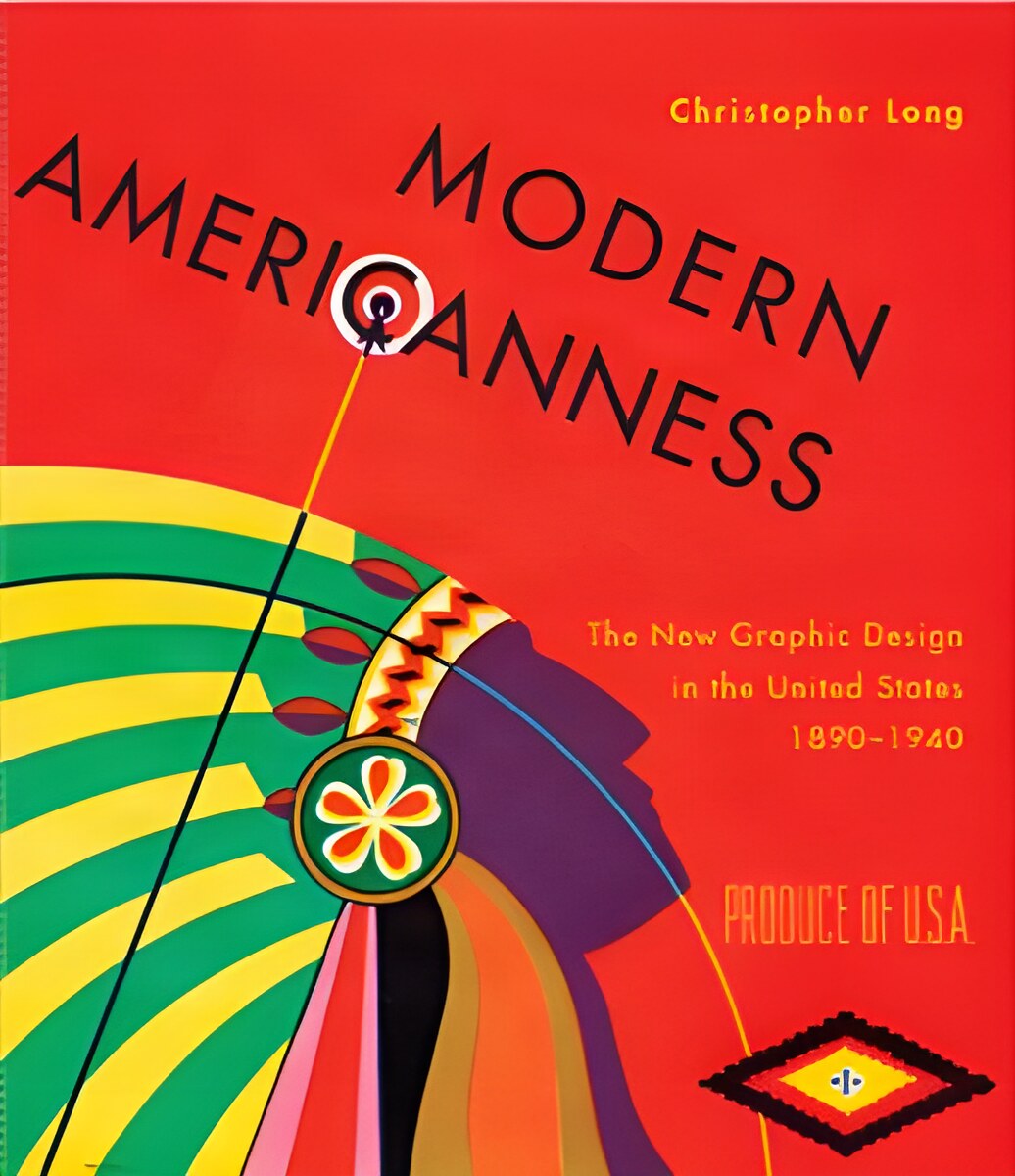
Hardcover. Czech Republic, Kant, 1st, 2025, Book: Very Good, Dust Jacket: None, Hardcover, pictorial boards, 264 pages. Venturing across five decades of American culture, this landmark book explores how modern graphic design emerged in the United States and how it became an intrinsic feature of the country's identity. Author and design professor Christopher Long tells this story in a wholly new way, exposing many long-forgotten figures and movements and resurrecting the debates and conceptions that were integral to the new art. In a series of deeply involving portraits of American artists and innovators who helped shape the very look of the modern age, Modern Americanness offers a sweeping story of the country's visual culture and its distinctiveness across a variety of designed objects: magazine covers, food labels, event posters, chapbooks, advertisements, propaganda and much more. Still in publisher's shrinkwrap.
Hardcover. Munch/London/NY, Prestel, 1st, 2022, Book: Very Good, Dust Jacket: Very Good, Hardcover in a bright dust jacket. Still in publisher's shrinkwrap. 656 pages. Published on the twentieth anniversary of the founding of Neue Galerie New York, this stunning volume celebrates the varied achievements of modern art history in the German-speaking world by examining historical developments in Austria and Germany from 1890 to 1940. Illustrated throughout with exquisite reproductions of the museum's holdings, this book considers the influence of Friedrich Nietzsche and his writings on the fine arts and examines the founding of the Secessionist artists' organizations in Germany and Austria. Insightful essays trace the emergence of Expressionism and abstraction, as well as the development of such movements as Dada and New Objectivity. Evolutions in architecture and design are appraised through the legacy of the Arts and Crafts movement, as well as the establishment of the Darmstadt Artists' Colony and the Wiener Werkstatte. The book also examines the role of the German Werkbund and the founding of the Bauhaus school. Finally, the book briefly addresses the horrific impact of the National Socialists' degenerate art campaign, which resulted in incalculable damage and led to the exile and death of artists and designers of the era. From well-known artists such as Otto Dix, Josef Hoffmann, Vasily Kandinsky, Gustav Klimt, and Egon Schiele, to lesser recognized but equally important figures, including Albert Birkle, Alfred Kubin, Felix Nussbaum, and Dagobert Peche, this book offers an authoritative and kaleidoscopic look at a crucial moment in history and a portrait of radical thought that changed forever the way we experience art in our lives. DOMESTIC SHIPPING ONLY.
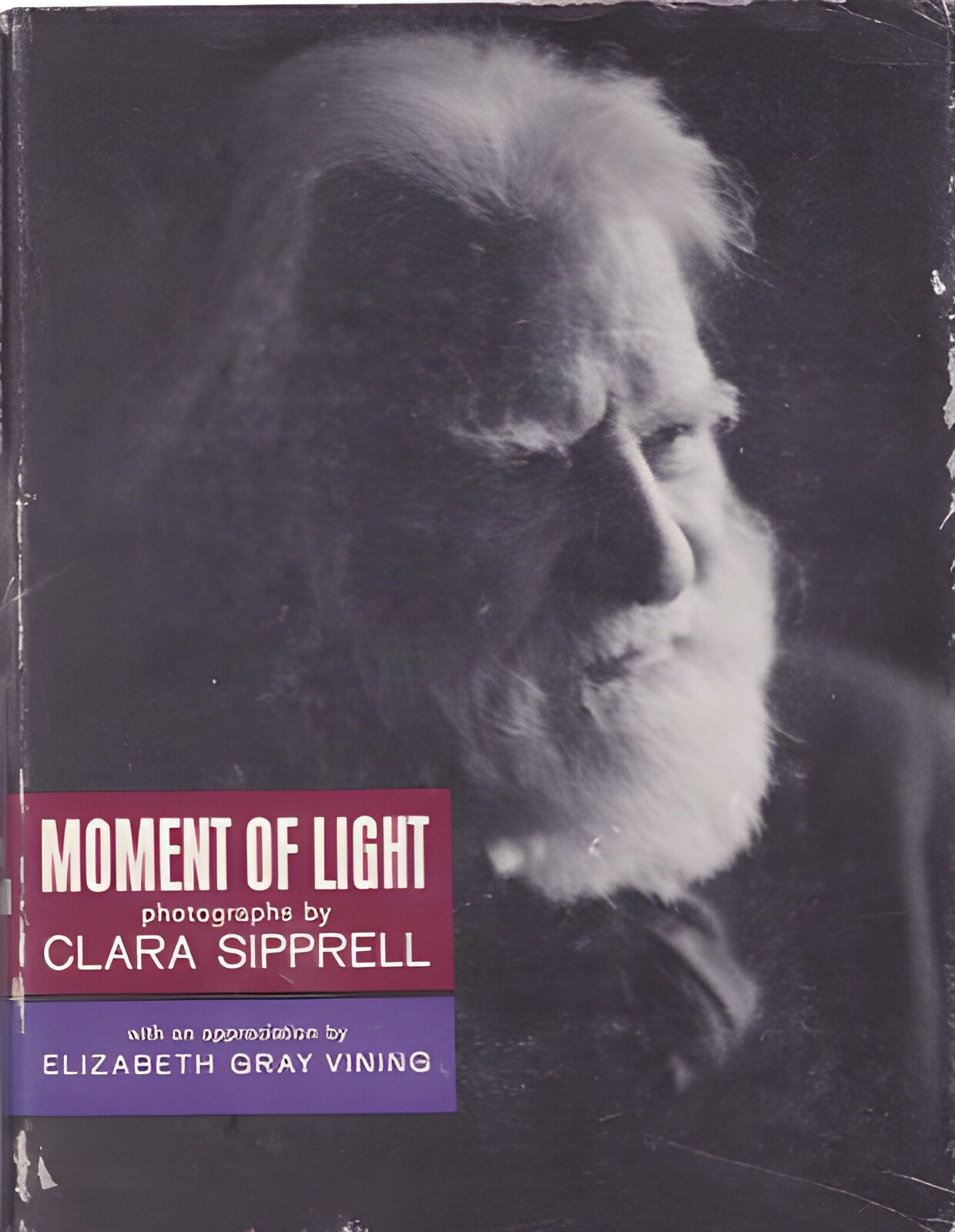
Hardcover. New York, John Day, 1st, 1966, Book: Very Good, Dust Jacket: Good, Hardcover. Non-Paginated. Illustrated with black & white photographs. INSCRIBED BY SIPPRELL on the half-title page and dated in 1966. Dust jacket shows standard wear. Clean, tight copy. Clara Sipprell (1885-1975) was a Canadian-born, early 20th-century photographer who lived most of her life in the United States. She was well known for her pictorial landscapes and for portraits of many famous actors, artists, writers and scientists.

 "Margaret Bourke-White and the Dawn of Apartheidby: Lichtenstein, Alex")
 "Maripolaramaby: Anna Sui (Author), Glenn O'Brien (Author, Introduction), Diego Cortez (Author, Afterword)")


 "Marlene Dietrich: Portraits, 1926-1960 by: Wensinger, Arthur S.")
 "Martha Graham: Portrait of the Lady as an Artistby: Letherman, LeRoy")
 "Master Photographersby: Roberto Koch , Laura Leonelli, et al.")
 "Masters of Photography: August Sanderby: August Sander and John von Hartz")
 "Masters of Seventeenth-Century Dutch Genre Painting.by: Peter C. Sutton")
 "Match Printsby: Marshall, Jim")
 "Mather Brown: Early American Artist in Englandby: Evans, Dorinda")
 "Matisse Portraitsby: Klein, John")
 "Mauro D'Agati: Alamarby: D'Agati, Mauro (Photographer)")
 "Maverix and Lunatix: Icons of Underground Comixby: Drew Friedman (Author), Patrick Rosenkranz (Afterword), Marc Maron (Foreword)")
 "Max Baur: In the Bauhaus Spirit: Photographs 1925-1960by: Stephan Steins")
 "Max Pam: Atlas Monographsby: Muecke, Stephen")
 "Memorial Exhibition of Portraits by Thomas Sullyby: Pennsylvania Academy of the Fine Arts")
 "Menswear: Vintage People on Photo Postcards Photo Postcards by: Tom Phillips")
 "Michael Somoroff: Two Crowns of the Eggby: Kuspit, Donald")
 "Midday with Bunuel: Memories and Sketches, 1973-1983by: Claudio Isaac , Bryan T. Scoular, et al.")
 "Miss Florence and the Artists of Old Lymeby: Heming, Arthur/James Stevenson (Illustrator)")
 "Modern Worlds: Austrian and German Art, 1890-1940by: Price, Renee / Lauder, Ronald S./Peters, Olaf/ Staggs, Janis")