Hardcover. Charlottesville, VA, University Press of Virginia, 1st, 1981, Book: Very Good, Dust Jacket: Very Good, 185 pages. Black cloth cover with silhouette of Jefferson's head embossed to front and gilt lettering to spine, b&w illustrated dust jacket, 60 b&w figures, 8 b&w plates. Light wear to dust jacket; otherwise a very tight, clean copy.
Hardcover. London, Faber & Faber, 1st UK, 1988, Book: Very Good, Dust Jacket: None, Hardcover illustrated in color by Agee. Some wrinkling to the laminate on covers, Clean copy. Art imitates life in this hilarious, absurdist picture book--one of Jon Agee's most beloved titles. Outrageous the judges cried. Ridiculous! Who would dare enter a portrait of a duck in the Grand Contest of Art? But when Felix Clouseau's painting quacks , he is hailed as a genius. Suddenly everyone wants a Clousseau masterpiece, and the unknown painter becomes an overnight sensation.
Hardcover. NY, Harper, 1st, 1999, Book: Very Good, Dust Jacket: Very Good, Hardcover, 80 pages. In this unique collaboration Arturo Patten, one of the most important portrait photographers of our time, and acclaimed writer Russell Banks visit the hardscrabble north country of Patten, Maine, to study its inhabitants. Patten's haunting portraits of the town's residents evoke characters who exist in Russell Banks's fiction. Banks, the author of Cloudsplitter, The Sweet Hereafter, and Affliction, observes Patten's "characters" from his remote cabin in the Adirondack hills of upstate New York, where he surrounds himself with the thirty-seven portraits and contemplates what they tell us about Patten, Maine, about portraiture, and ultimately about ourselves.
Hardcover. NY, HarperCollins, 1st, 1999, Book: Very Good, Dust Jacket: Very Good, Hardcover, 80 pages. In this unique collaboration Arturo Patten, one of the most important portrait photographers of our time, and acclaimed writer Russell Banks visit the hardscrabble north country of Patten, Maine, to study its inhabitants. Patten's haunting portraits of the town's residents evoke characters who exist in Russell Banks's fiction. Banks, the author of Cloudsplitter, The Sweet Hereafter, and Affliction, observes Patten's "characters" from his remote cabin in the Adirondack hills of upstate New York, where he surrounds himself with the thirty-seven portraits and contemplates what they tell us about Patten, Maine, about portraiture, and ultimately about ourselves.
Hardcover. Greenwich CT, New York Graphic Society, 1st, 1960, Book: Very Good, Dust Jacket: None, Hardcover, pebbles white cloth stamped in gilt. 170 pages. 83 tipped in color plates throughout. This enormous volume features full-color photography of art rarely seen in the West. From one of the most extensive - yet hidden - collections in Europe comes this treasury of works of art, statuary, tapestry, jewelry, and much, much more. Comprehensively annotated by one of the foremost art historians specializing in Russian artworks. Hairline crack to cover at spine, overall clean with tight binding. No dust jacket.
Hardcover. New Haven CT, Yale University Press, 1st, 1984, Book: Very Good, Dust Jacket: Very Good, Two large hardcover volumes in bright dust jackets. 940 total pages. John Constable, one of the most beloved of British painters, is renowned for his poetic approach to nature and his extraordinary use of broken color. In this beautiful two-volume set, the dean of Constable scholars, Graham Reynolds, discusses all the paintings and drawings the artist produced between 1790 and 1816, both before and after his breakthrough into the original style that is the basis of his fame. Together with Reynolds`s award-winning The Later Paintings and Drawings of John Constable (1984), the books are a catalogue raisonne, of this artist`s monumental oeuvre.The two volumes, one of text and one of plates, describe and reproduce 1370 paintings and drawings in chronological order. They begin with Constable`s juvenilia and tentative experiments before he went to London in 1799 to become a professional artist. Next are some lesser-known works-elegant figure studies of girls, Constable`s first portraits, and his Lake District watercolors. Finally are the works after 1808-Dedham Vale: morning, Flatford Mill from a Lock on the Stour, A Summerland, The Stour Valley and Dedham Village, and the recently rediscovered The Wheatfield-works that made Constable a major force in British landscape painting. The volumes also include Constable`s numerous sketches of his homeland around East Bergholt and Dedham from this period, drawings on which he based his later masterpieces. An appendix records and reproduces, as addenda to The Later Paintings and Drawings, 94 works produced between 1817 and 1836 that have come to light since those books were published. Small 1/2" closed tear to front corner of dust jacket, otherwise a clean, crisp set. DOMESTIC SHIPPING ONLY.
Hardcover. NY, Da Capo Press, reprint, 1967, Book: Very Good, Dust Jacket: Very Good, Hardcover in a bright yellow price-clipped dust jacket. Frontis portrait, 174 plates. All of the best drawings from Beardsley's later period, including the illustrations for "The Yellow Book", "The Savoy" and "The Rape of the Lock". Reprinted from the second London edition of 1911. Previous owner's initials on front fly leaf, otherwise clean.
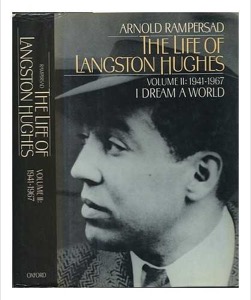
Hardcover. NY, Oxford University Press, 1st, 1988, Book: Very Good, Dust Jacket: Very Good, Hardcover in a bright, unclipped dust jacket, 512 pages. The second volume in this masterful biography finds Hughes rooting himself in Harlem, receiving stimulation from his rich cultural surroundings. Here he rethought his view of art and radicalism, and cultivated relationships with younger, more militant writers such as Richard Wright, Ralph Ellison, James Baldwin, and Amiri Bakara. Illustrated with black & white photographs, a few by Roy DeCarava with whom Hughes published "The Sweet Flypaper of Life" and a portrait by Henri Cartier-Bresson. Clean copy.
Hardcover. NY, Knopf, 1st, 2021, Book: Very Good, Dust Jacket: Very Good, Hardcover in a bright, unclipped dust jacket. 557 pages, b&w and color illustrations. In this brilliant second and final volume of the definitive biography of Lucian Freud--one of the most influential, enigmatic and secretive artists of the twentieth century--William Feaver, the noted art critic, draws on years of daily conversations with Freud, on his private papers and letters and on interviews with his friends and family to explore the intimate life of Freud, from age forty-five to his death in 2011 at the age of eighty-nine. The final forty years of Freud's life were a period of increasing recognition and fame, and of prodigious output. He was obsessed with his art, and with the idea of producing paintings that "astonish, disturb, seduce, convince." He was equally energetic and ambitious in his private life. This book opens with his dramatic affair with Jacquetta Eliot, which led to some of his most intimate portraits and to the start of two important, lifelong friendships, with Jane Willoughby and Susanna Chancellor. Freud talks about his art at all stages, how it changed in the seventies and his first retrospective in London in 1974. Small remainder dot on bottom edge otherwise clean.
Hardcover. NY, Knopf, 1st, 2019, Book: Very Good, Dust Jacket: Very Good, Hardcover in a bright, unclipped dust jacket. The first biography of the epic life of one of the most important, enigmatic and private artists of the 20th century. Drawn from almost 40 years of conversations with the artist, letters and papers, it is a major work written by a well-known British art critic. This is an extremely intimate, lively and rich portrait of the artist, full of gossip and stories recounted by Freud to Feaver about people, encounters, and work. Freud's art was his life--"my work is purely autobiographical"--and he usually painted only family, friends, lovers, children, though there were exceptions like the famous small portrait of the Queen. With his later portraits, the subjects were often nude, names were never given and sittings could take up to 16 months, each session lasting five hours but subjects were rarely bored as Freud was a great raconteur and mimic.Small remainder dot on bottom edge otherwise clean.
Hardcover. NY, Knopf, 1st, 2019, Book: Very Good, Dust Jacket: Very Good, Hardcover in a bright, unclipped dust jacket. The first biography of the epic life of one of the most important, enigmatic and private artists of the 20th century. Drawn from almost 40 years of conversations with the artist, letters and papers, it is a major work written by a well-known British art critic. This is an extremely intimate, lively and rich portrait of the artist, full of gossip and stories recounted by Freud to Feaver about people, encounters, and work. Freud's art was his life--"my work is purely autobiographical"--and he usually painted only family, friends, lovers, children, though there were exceptions like the famous small portrait of the Queen. With his later portraits, the subjects were often nude, names were never given and sittings could take up to 16 months, each session lasting five hours but subjects were rarely bored as Freud was a great raconteur and mimic.Small remainder dot on bottom edge otherwise clean.
Hardcover. NY, Farrar, Straus and Giroux, 2nd pr, 2021, Book: Very Good, Dust Jacket: Very Good, Hardcover in a bright, unclipped dust jacket. 312 pages, color and b&w illustrations. A bristling and brilliant memoir of the mid-twentieth-century New York School of painters and their times by the renowned artist and critic Edith Schloss, who, from the early years, was a member of the group that shifted the center of the art world from Paris to New York. Schloss was born in Germany and moved to New York City during World War II. She became part of a thriving community of artists and intellectuals that included Elaine and Willem de Kooning, Larry Rivers, John Cage, and Frank O'Hara. She married the photographer and filmmaker Rudy Burckhardt. She was both a working artist and an incisive critic, and was a candid and gimlet-eyed witness of the close-knit community that was redefining the world of art. In Italy she spent time with Giorgio Morandi, Cy Twombly, Meret Oppenheim, and Francesca Woodman. Remainder dot to top edge otherwise clean.
Hardcover. Brooklyn NY, Handprint, 1st, 2001, Book: Very Good, Dust Jacket: None, Hardcover with illustrated boards, 40 pages. n his magnificent interpretation of Henry Wadsworth Longfellow s poem, Christopher Bing seamlessly weaves history and imagination into a rich portrait of an American hero. A meticulous researcher, Bing includes material that provides texture to history, maps that follow the British campaign to quell the rebellious citizenry, as well as the patriot s ride into the Massachusetts night of April, 1775. Documents firmly affixed into the book, including the British general s orders to his troops and Revere s own deposition relating the events, give the reader not only a visual experience but a tactile one as well. Far more than a brilliantly presented history lesson, this book represents a tour de force of coherent artistic vision. In an extraordinary series of rich and moody engravings, from the mysteriously shimmering rigging of the British sloop, The Somerset, looming in a moonlit Boston harbor to the taut urgency of a man and his horse galloping at a combustible moment in the American experience, this book illuminates our country s past unlike any other. Small inscription on inside front cover, otherwise clean.
Hardcover. Center for American Places, 1st, 2005, Book: Very Good, Dust Jacket: Very Good, Hardcover, 232 pages. The Mississippi River flows through American history and culture as a mythic waterway brimming with tragedy and hope, and awash in passionate ambitions and harsh realities. In 1953, a young Charles Dee Sharp traveled twice down the Mississippi (first by towboat and then by car along the renowned river road Highway 61) to make a documentary film of it, taking black-and-white photographs of the river, its communities, and its people. While Sharp's documentary never came to fruition, the striking images he captured survived as moving and evocative historical testaments to a lost era, now collected in his new book The Mississippi in 1953. These images create a vivid portrait of America's heartland a half century ago, and they are enriched with excerpts from Sharp's original trip journal, intriguing anecdotes from the people he encountered along his journey, and an engaging environmental history of the river by historian John O. Anfinson. The Mississippi in 1953 offers an original and poignant look at the living artery of the American landscape and how it molded the United States into the nation it is today.
Hardcover. Chicago, University of Chicago Press, 1st, 2017, Book: Very Good, Dust Jacket: Very Good, Hardcover in a bright dust jacket, 541 pages. b&w illustrations. As Joel Dinerstein reveals in this book, cool began as a stylish defiance of racism, a challenge to suppressed sexuality, a philosophy of individual rebellion, and a youthful search for social change. Through portraits of iconic figures, Dinerstein illuminates the cultural connections and artistic innovations among Lester Young, Humphrey Bogart, Robert Mitchum, Billie Holiday, Frank Sinatra, Jack Kerouac, Albert Camus, Marlon Brando, and James Dean, among others. We eavesdrop on conversations among John-Paul Sartre, Simone De Beauvoir, and Miles Davis, and on a forgotten debate between Lorraine Hansberry and Norman Mailer over the 'white negro' and Black cool. We come to understand how the cool worlds of Beat writers and Method actors emerged from the intersections of film noir, jazz, and existentialism. Clean copy.
Hardcover. New Haven CT, Yale University Press, 1st, 2007, Book: Very Good, Dust Jacket: Very Good, Hardcover, 288 pages. The meaning of a painted portrait and even its subject may be far more complex than expected, Tamar Garb reveals in this book. She charts for the first time the history of French female portraiture from its heyday in the early nineteenth century to its demise in the early twentieth century, showing how these paintings illuminate evolving social attitudes and aesthetic concerns in France over the course of the century.
Hardcover. NY, Harry N. Abrams, 1st, 2021, Book: Very Good, Dust Jacket: Very Good, Hardcover in a bright, unclipped dust jacket. Color illustrations by Evan Turk. As an observant child growing up in Lithuania, Ben Shahn yearns to draw everything he sees--and, after seeing his father banished by the Czar for demanding workers' rights, he develops a keen sense of justice, too. So when Ben and the rest of his family make their way to America, Ben brings both his sharp artistic eye and his desire to fight for what's right. As he grows, he speaks for justice through his art--by disarming classmates who bully him because he's Jewish, by defying his teachers' insistence that he paint beautiful landscapes rather than true stories, by urging the US government to pass Depression-era laws to help people find food and jobs. In this moving and timely portrait, award-winning author Cynthia Levinson and illustrator Evan Turk honor an artist, immigrant, and activist whose work still resonates today: a true painter for the people.
Hardcover. NY, Abrams, 1st, 2008, Book: Very Good, Dust Jacket: Very Good, Hardcover, 300 pages. In this lavishly produced volume, journalist Gaudriault accompanies photographer Rancinan to Africa, Asia, Europe and the United States to interview 23 masters of contemporary photography, paying homage to fashion photographers and photojournalists, traditional chroniclers of their times and conceptual artists. Rancinan's photographs record each encounter in portraits that encapsulate each subject's relationship with his shared discipline. Readers follow paparazzo Ron Galella fending off the camera; Martin Parr, the sardonic chronicler of middle-class British life, having tea in a cafe; Rankin, the creator of the hip magazine Dazed and Confused, hopping into a trashcan filled with his own cast-off images. Gaudriault's short essays quote liberally from her interviews and provide both biographical information and incisive commentary. Several of the older photographers strike an elegiac tone and confess to finding themselves at the end of the eras that gave birth to their visions, but optimism reigns among younger practitioners: David LaChapelle is reinventing himself in Hawaii; Rankin is bearing witness to an age that is still young; and Oliviero Toscani, the radical combination of journalist and marketer behind the Benetton campaigns, describes billboards as the church frescoes of today.
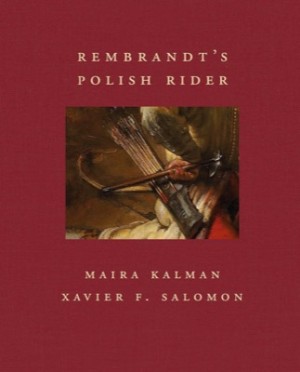
Hardcover. Giles , 1st, 2019, Book: Very Good, Dust Jacket: None, Hardcover, red cloth with a color illustration label, 64 pages. Marking the 350th anniversary of the death of Rembrandt van Rijn, this fourth volume in the Frick Diptych series offers fresh insight into one of the artist's most romantic and enigmatic portraits-The Polish Rider. This painting has been on view at The Frick Collection since the museum opened to the public in December 1935, and has inspired countless theories about its subject, meaning and history. An illuminating essay by Xavier F. Salomon, the Frick's Peter Jay Sharp Chief Curator, addresses the many questions of provenance, attribution, and historical and artistic context. In a creative, vibrant piece, New York based author and illustrator Maira Kalman, captures the elusive nature of the painting; an imaginary musing about Rembrandt, being Polish, a traveller, and her enduring fascination with the Frick. Still in publisher's shrinkwrap.
Hardcover. NY, Pantheon Books, 1st, 1966, Book: Very Good, Dust Jacket: Good, Hardcover, 12th volume of the A.W. Mellon lectures in the fine arts. The Bollingen Series XXXV. Profusely illustrated with b/w plates. Arntzen calls this book `a good critical treatment of the development of the Renaissance portrait.' Light edgewear to dust jacket.
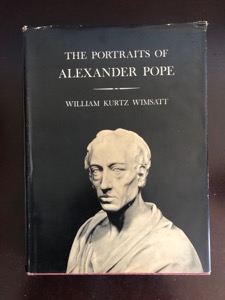
Hardcover. New Haven CT, Yale University Press, 1st, 1965, Book: Very Good, Dust Jacket: Good, Hardcover in a lightly worn and chipped dust jacket, 391 pages. "The two aims of this vast work are to present for the first time a catalogue raisonne of the Pope portraits and to tell the story of his life as a valued friend, constant associate, and willing subject of the artists of his day." More than 200 illustrations, over 45 published here for the first time. Clean copy.
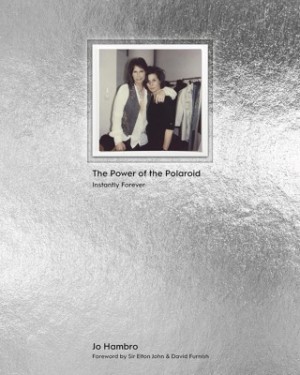
Hardcover. London, Clearview, 1st, 2019, Book: Very Good, Dust Jacket: None, Hardcover, pictorial boards with a paste-down label, 160 pages, illustrated in color and b&w. Foreword by Elton John and David Furnish. A polaroid is the physical and organic reminder of a particular moment, enabling the creative team to step back and fully consider the technical and artistic direction of a photoshoot. The excitement of watching the image slowly developing and seeing the final result makes the polaroid a tiny artwork all of its own.In this book, uber-stylist and storyteller Jo Hambro showcases some of her vast personal records of polaroids taken from the fashionshoots she has worked on over the last two decades. Combined with her extraordinary notebooks, scribbles and sketches formulating the stories that each shoot is based on, (in which polaroids are an indispensable part), we are taken into the hidden world of fashion's creative process. Clean copy.
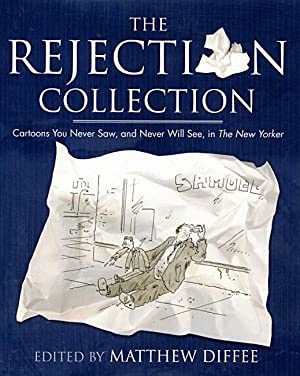
Hardcover. NY, Simon Spotlight Enterteinment, 1st, 2006, Book: Very Good, Dust Jacket: Very Good, Hardcover in a bright, unclipped dust jacket. We are accustomed to enjoying no more than 20 cartoons in each issue of the New Yorker Magazine. These are chosen from ten ideas, submitted weekly, by some 50 New Yorker cartoonists. This is an anthology of "the rejects" from known contributors edited by Matthew Diffee (himself a contributing cartoonist since 1999), and a foreword from Cartoon Editor Robert Mankoff of some 20 years. 264 pgs of hilarious rejected cartoons, accompanied by handwritten questionnaires & photographed self-portraits. Clean copy.
Hardcover. London, Phaidon Press, 1st, 1966, Book: Very Good, Dust Jacket: Very Good, Hardcover in a bright dust jacket, 286 pages. 120 plates and 106 B&W text illustrations. Portrait frontispiece. Light brown cloth cover. Foxing to edges. Otherwise, a clean, tight copy.

 "The Image of Thomas Jeffersonby: Cunningham, Jr., Noble E.")
 "The Incredible Painting of Felix Clousseauby: Jon Agee")
 "The Invisible Stranger: The Patten, Maine, Photographs of Arturo Pattenby: Russell Banks and Arturo Patten")





 "The Later Work of Aubrey Beardsley by: Beardsley, Aubrey")
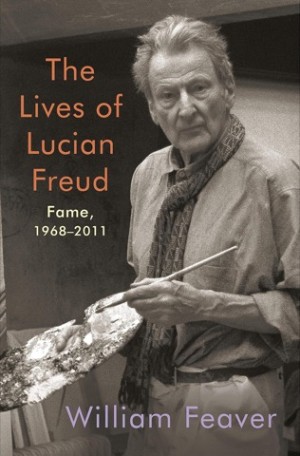
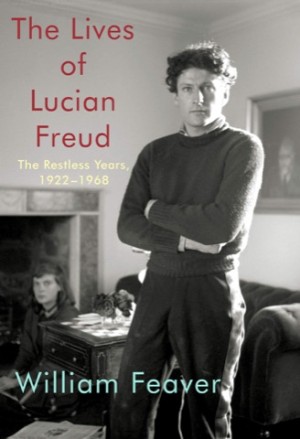
 "The Lives of Lucian Freud: The Restless Years, 1922-1968by: William Feaver")
 "The Loft Generation: From the de Koonings to Twombly: Portraits and Sketches 1942 2011 by: Schloss, Edith")
 "The Midnight Ride of Paul Revereby: Henry Wadsworth Longfellow / Christopher Bing (Illust.)")


 "The Mississippi River in 1953: A Photographic Journey from the Headwaters to the Deltaby: Sharp, Charles Dee")

 "The Painted Face: Portraits of Women in France, 1814-1914by: Tamar Garb")
 "The People's Painter: How Ben Shahn Fought for Justice with Artby: Levinson, Cynthia/Evan Turk")


 "The Photographer by: Gerard Rancinan and Caroline Gaudriault")