Paperback. np, Book: Good, Dust Jacket: None, Unpaginated. Delicate softcover in green wraps, with white spine. 9.5" x 15". Cover is faded with some rubbing. 18 prints on rice paper from the urns at the Mieu Temple in Vietnam. No date or publisher.
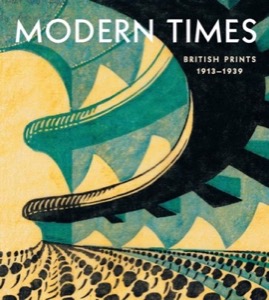
Hardcover. NY, Metropolitan Museum of Art, 1st, 2021, Book: Very Good, Dust Jacket: None, Hardcover, pictorial boards, 200 pages. A look at the artistic and technical innovation of British printmaking from World War I to the eve of World War II, as artists from the Grosvenor School and beyond harnessed an emerging modernist style. This richly illustrated volume reintroduces rare print works from the collection of Leslie and Johanna Garfield into the narrative of modernism, demonstrating their relationship to other movements such as Cubism, Futurism, and Constructivism. Essays explore how artists turned to printmaking to alleviate trauma, memorialize their wartime experiences, and capture the aspirations and fears of the twenties and thirties. Special attention is given to the linocut technique revolutionized by Claude Flight and his students at London's Grosvenor School of Modern Art. Highlighted as well are the pioneering works of artists such as C. R. W. Nevinson, Sybil Andrews, Cyril E. Power, Paul Nash, Edward Wadsworth, Edith Lawrence, Ursula Fookes, and Lill Tschudi. In their quest to promote a more democratic art, these artists created innovative graphics that portrayed in subject, form, material, and technique the dynamic era in which they lived. In publisher's shrinkwrap.
Softcover. Chicago, Illinois, Mongerson Galleries, 1st, 1981, Book: Very Good, Dust Jacket: None, Softcover, 100 page catalog from October 1981 exhibition at The Mongerson Gallery. Numerous black and white prints and photographs. Brief artist biographies. Textured cover features color artwork and exhibits some wear, particularly along binding edge. Interior in near fine condition.
Softcover. New York, David & Long , 1st, 1979, Book: Very Good, Dust Jacket: None, 148 pages, b&w and color illustrations. Light rubbing, soiling to wrappers. Previous price sticker on back cover. Else a clean, tight copy.
Softcover. New York, David & Long , 1st, 1979, Book: Very Good, Dust Jacket: None, 148 pages, b&w and color illustrations. Light rubbing, soiling to wrappers. Spine slightly cocked. Else a clean, tight copy.
Softcover. NY, Museum of Modern Art, 1st, 1953, Book: Very Good, Dust Jacket: None, 7 1/2" x 10 1/2", twenty-four page exhibition catalog is bound in stapled wrappers and is in VG+ condition. B&W reproductions and photographs. Foreword by William S. Lieberman, Curator of Prints for MOMA.
Softcover. Middlebury, VT, Middlebury College Museum of Art, 1st, 2015, Book: Very Good, Dust Jacket: None, 111 pages. Softcover with paper wrappers. Color pictures throughout. In 1899 Gustav Klimt's painting Nuda Veritas shook up the Austrian public with what many deem to be the painter's most political exploration of the nude female body. Klimt's provocative allegory challenged viewers to consider their own beliefs about the relationship between the nude (female) body and contemporary morality; this "naked truth" was shocking. Transcending accusations of pornography, Klimt's work paved the way for artistic examinations of the nude body as the site through which questions of freedom, desire, beauty, nature, culture, power, and their antonyms could be represented and negotiated. Taking these ideas as one critical point of departure, this volume and the accompanying exhibition feature selected prints, drawings, and watercolors by Klimt, Egon Schiele, Otto Dix, George Grosz, Max Beckmann and Kathe Kollwitz, among others. It explores the conceptions of the human body and the manner of its visualization in the period leading up to and following the First World War, which changed the world's notions of flesh and blood forever.
Hardcover. NY, Windmill Books/Simon & Schuster, 1st, 1969, Book: Very Good, Dust Jacket: Good, Hardcover. Color illustrations by Rockwell. Dust jacket with mild edgewear, light soil. Previous owner's inscription also on front fly leaf. First Printing stated. 23 full-page color Norman Rockwell prints of his wonderful art work. The Rockwell pictures are complimented with one-page short stories.
Softcover. San Francisco, Kayak Press, 1st, 1968, Book: Very Good, Dust Jacket: None, Softcover, stapled wraps. One of 800 copies, decorative blue wraps, colored papers, colorful silkscreen art prints by George Hitchcock mixed in text. Second book by the Swedish-American poet, 68 pages. Small name on copyright page otherwise clean.
NY, The Press of the American Institute of Architects., 1st, 1925, Book: Good, Dust Jacket: None, Hardcover. Complete with 24 watercolor prints and 44 plates. Loosely bound in case with cloth ties which has cracking along spine. Interior very good. Number 677 of 1000. Elephant folio 23" tall. "A Series of Historical Examples from Roman Times to the End of the XVIIIth Century." An appreciation of historic French infrastructure that survived WWI. Beautiful large color reproductions of original watercolors of bridges by Pierre Vignal; 35 black and white drawings by Louis C. Rosenberg & Samuel Chamberlain; 44 measured drawings, photographs, diagrams, and maps. DUE TO SIZE & WEIGHT, DOMESTIC SHIPPING ONLY.
Hardcover. Berkeley CA, University of California Press, 1st, 2007, Book: Very Good, Dust Jacket: Very Good, Hardcover, 318 pages. In Origins of the Chinese Avant-Garde, Xiaobing Tang studies the art and art theories of the first half of the twentieth century, when modern Chinese art and literature emerged. He argues that the most consequential expression of the avant-garde was the modern woodcut movement that thrived in China in the 1930s. In this innovative study--also the first comprehensive account of this Chinese movement available in English--Tang examines the aesthetic, intellectual, and social appeal of the modern woodcut and places the movement at the intersection of historical events, individual efforts, and competing discourses on art. He also shows how the woodcut movement drew upon international inspiration--from German Expressionism, Soviet wood engravings, and Japanese creative prints.
Hardcover. NY, Curt Valentin, 1st, 1948, Book: Very Good, Dust Jacket: Very Good, Hardcover in a lightly worn dust jacket. 150 pages, 67 illustrations (frontispiece in color). A greatly expanded version of the catalogue published the previous year for the exhibition of Picasso's lithographs from 1945-1947.
Hardcover. Germany, Hatje Cantz Publishers, 1st, 2000, Book: Very Good, Dust Jacket: Very Good, 303 pages. Hardcover with dust jacket. Clean, unmarked copy with only minor wear to dust jacket. Color and Black and white pictures throughout. This catalogue raisonne of Picasso's lithographic work contains 855 pieces with entries for every printed sheet as an individual work, including test and state printings, and unpublished sheets. Scholarly essays from various contributors. Light fraying to bottom spine cover.
Hardcover. New York, Oxford University Press, 1st, 1999, Book: Near Fine, Dust Jacket: Near Fine, Hardcover, 242 pages. B&w and color prints. Lavishly illustrated catalog presenting a fascinating cultural history of an idyllic vision of California that still figures prominently in the American imagination. Red cloth, gilt lettering to spine. Pictorial dust jacket. Copy in mint condition, looks brand new.
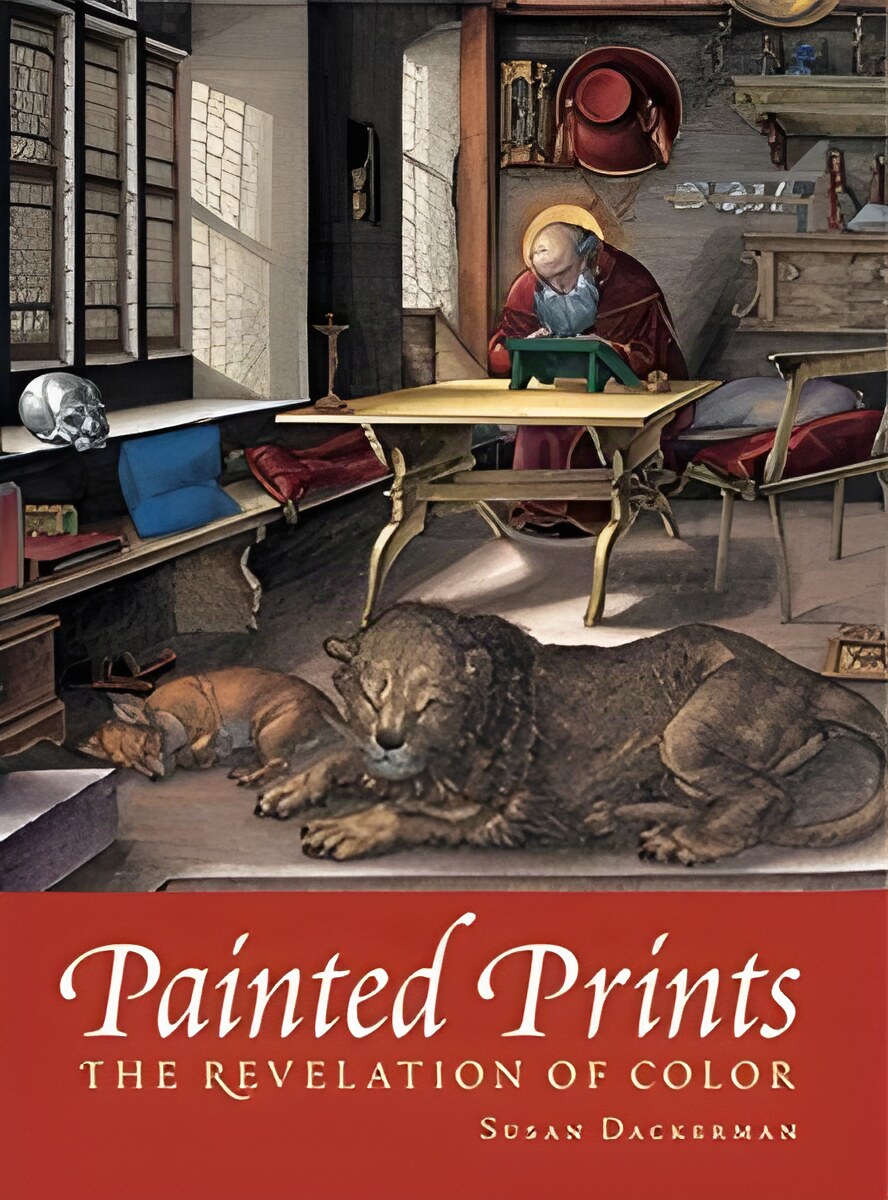
Hardcover. Baltimore Museum of Art/Pennsylvania State University Press, 1st, 2002, Book: Very Good, Dust Jacket: Very Good, Hardcover in a bright dust jacket, 297 pages. 119 color illustrations and 10 b&w. With an essay by Thomas Primeau. Catalogue entries by Deborah Carton, Susan Dackerman, Richard S. Field, Katherine Crawford Luber, Elizabeth Mansfield, Walter S. Melion, Thomas Primeau and Robert Wheaton. An old master print with color is almost invariably regarded as a suspect object because the color is presumed to be a cosmetic addition made to compensate for deficiencies of design or condition. Painted Prints challenges this deeply entrenched assumption about the material and aesthetic structure of old master prints by showing that in many cases hand coloring is not a dubious supplement to a print but is instead an integral element augmenting its expressive power, beauty, and meaning. Clean, bright copy. NOTE: Due to size and weight, DOMESTIC SHIPPING ONLY.
Hardcover. Lanham MD, Derrydale Press, 1st, 2010, Book: Very Good, Dust Jacket: None, 149 pages. Hardcover. Extensive b&w and color illustrations throughout. Clean, unmarked copy with only minor wear to wrappers. The definitive book on an artist who is widely regarded as the preeminent American illustrator of equestrian subjects. Based on extensive interviews with Brown's family, friends, and artistic contemporaries, Paul Brown includes a biography of the man and contains a complete listing of all the published works that include Brown's art as well as listings of all of Brown's prints, items sometimes attributed to Brown, and methods of identifying first editions of Paul Brown's art. Although Brown is primarily known for his wonderful paintings, drawings and sketches of horses and equestrian sports, he is also well known for his elegant and prolific illustrations for Brooks Brothers catalogs over three decades.
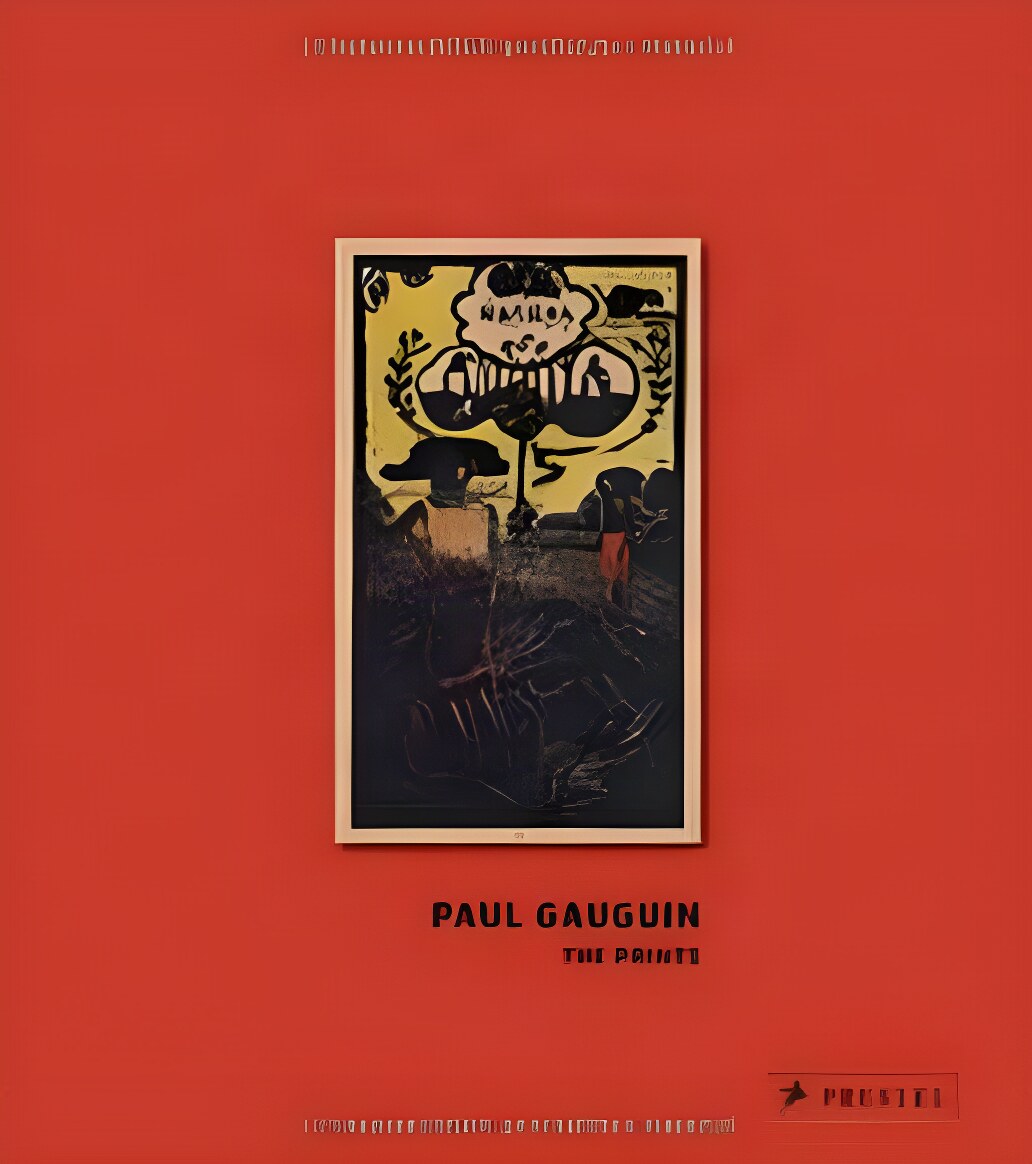
Hardcover. New York , Prestel, 1st, 2012, Book: Very Good, Dust Jacket: None, Hardcover, 160 pages. Color illustration to front cover. Like new in publisher's shrink-wrap. Universally revered as one of the founding fathers of modern painting, Paul Gauguin was also an accomplished printer. Working mostly in woodcuts, he translated his fascination with life in the South Seas into pieces of extraordinary beauty and simplicity. This volume presents the three print series that Gauguin created: a dozen zinc etchings made in 1889; his most famous series, the partially hand-tinted woodcuts created for his famed book Noa Noa, which were made after Gauguin's first trip to Tahiti; and a third series of woodcuts completed during his second stay on the island. This small printed oeuvre demonstrates how the medium was an ideal outlet for Gauguin's experimental and audacious artistry.
Hardcover. New York, Charles Scribner's Sons, 1st Edition, 1907, Book: Very Good, Dust Jacket: None, Hardcover. 126 pages plus 50 plates. Vivid color illustrated tipped-in plates (vibrant, excellent condition) with captioned tissue guards, as well as b/w illustrations throughout. Plates glued to brown heavy stock. Cover boards bound in green cloth, gilt title on spine, gilt title and design embossed on front cover board. Some light spotting to boards and spine, bump to front cover board's right top corner (see image). Binding tight. Spine straight. Pages quite bright and unmarked. Scarce. In Peter Pan in Kensington Gardens, J.M. Barrie first created Peter Pan as an infant, living a wild and secret life with birds and fairies in the middle of turn of the century London. This edition is beautifully illustrated by Rackham, one of the leading figures of the Golden Age of British book illustration.
Softcover. Scranton, PA, Whitney Museum of American Art, 1st, 1960, Book: Very Good, Dust Jacket: None, Exhibition catalog. Approx. 115 pages. 91 B&W and color prints. Red pictorial cover with slight wear around edges and spine. Black marks on front endpaper and flyleaf, binding glue also visible. Previous owner marking (Evergood) on spine. Overall, a clean, nice copy.
Softcover. New York, Tudor Publishing, 1st, 1968, Book: Very Good, Dust Jacket: None, Softcover, 104 pages, 24 color and 76 b&w plates. The first 4 pages, including the paper wrapper, have a crease down the center. Otherwise a very good copy of this scarce book.
Hardcover. NY, Harry N. Abrams, 1st, 1965, Book: Very Good, Dust Jacket: Very Good, Hardcover in bright dust jacket. Light beige cloth with Picasso signature design in red and blue. 183 pages with 118 tipped-in color plates, and 2 lithographic prints. Previous owner's gift inscription on front fly leaf signed by 14 people. Otherwise clean, like new.
Hardcover. Preinceton NJ, Princeton University Press, 2nd pr., 2006, Book: Very Good, Dust Jacket: Very Good, Hardcover in a bright, unclipped dust jacket. "What is abstract art good for? What's the use-for us as individuals, or for any society-of pictures of nothing, of paintings and sculptures or prints or drawings that do not seem to show anything except themselves?" In this invigorating account of abstract art since Jackson Pollock, eminent art historian Kirk Varnedoe, the former chief curator of painting and sculpture at the Museum of Modern Art, asks these and other questions as he frankly confronts the uncertainties we may have about the nonrepresentational art produced in the past five decades. He makes a compelling argument for its history and value, much as E. H. Gombrich tackled representation fifty years ago in Art and Illusion, another landmark A. W. Mellon Lectures volume. Realizing that these lectures might be his final work, Varnedoe conceived of them as a statement of his faith in modern art and as the culminating example of his lucidly pragmatic and philosophical approach to art history. He delivered the lectures, edited and reproduced here with their illustrations, to overflowing crowds at the National Gallery of Art in Washington in the spring of 2003, just months before his death. 297 pages; approx. 250 color and bw figures. Remains a nice, sharp and bright copy.
Softcover. NY, The Museum of Modern Art, 1st, 2002, Book: Very Good, Dust Jacket: None, Softcover, 192 pages. Selected from 17 million prints preserved in the archives of The New York Times, the spectacular photographs in this book provide a spellbinding sample from the rich archive that is the twentieth century, as seen through the eyes of a great newspaper. Revealed is the extraordinary and omnivorous breadth of photography's gaze: vivid pictures of both World Wars; of presidents, mayors, dictators and celebrities; of Beatles fans and Halley's comet; of victims and perpetrators, riots and disasters; of Bill Bradley on the court and Willie Mays sliding into home--and a great many more. Underlying them all is the gripping immediacy that makes news photography not only an indispensable presence in the daily paper but a vital part of history. This book includes an illustrated chronology that traces the evolution of the technology and business of news photography, with special attention to the role of The New York Times and to the recent rise of digital technologies in newspaper production. Originally published to accompany an exhibition at The Museum of Modern Art, New York.
Hardcover. Berkeley CA, University of California Press, 1st, 2006, Book: Very Good, Dust Jacket: Very Good, Hardcover in a bright dust jacket, 287 pages. Pieter Bruegel (ca. 1525-1569), generally considered the greatest Flemish painter of the sixteenth century, was described in 1604 by his earliest biographer as a supremely comic artist, few of whose works failed to elicit laughter. Today, however, we approach Bruegel's art as anything but a laughing matter. His paintings and drawings are thought to conceal profound allegories best illuminated with scholarly erudition. In this delightfully engaging book, Walter S. Gibson takes a new look at Bruegel, arguing that the artist was no erudite philosopher, but a man very much in the world, and that a significant part of his art is best appreciated in the context of humor. In his illuminating examination of the witty and amusing elements in Bruegel's paintings, prints, and drawings in relation to the sixteenth century European culture of laughter, Gibson reminds us exactly why Bruegel was one of the most original artists of his time. Clean copy.

 "Mieu Temple 18 Basreliefs of the Nine Urns, Theby: n/a")
 "Mongersonby: Mongerson Galleries")
 "Monotypes of Maurice Prendergast, The: A Loan Exhibitionby: N/A")
 "Monotypes of Maurice Prendergast, The: A Loan Exhibitionby: N/A")
![Museum of Modern Art Bulletin, Vol. XXI ['21], No. 1), Fall 1953. Jacques Villon/His Graphic Art.by: William S. Lieberman](javascript:largeIMTop('https://www.browsingisarousing.com/shop/images/Museum-of-Modern-Art-Bulletin-Vol.-XXI-21-No.-1-Fall-1953.-Jacques-VillonHis-Graphic-Art._by_William363594-399808.jpg','https://www.browsingisarousing.com/shop/images/Museum-of-Modern-Art-Bulletin-Vol.-XXI-21-No.-1-Fall-1953.-Jacques-VillonHis-Graphic-Art._by_William363594-399808.jpg',0,'363594',0,'') "Museum of Modern Art Bulletin, Vol. XXI ['21], No. 1), Fall 1953. Jacques Villon/His Graphic Art.by: William S. Lieberman")
 "Naked Truth: Approachers to the Body in Early-twentieth-Century German-Austrian Artby: Matthias, Bettina")
 "Norman Rockwell Storybook, Theby: Wahl/Norman Rockwell, Jan")
 "Observations: An Agenda by: Bruce Lennart")
 "Old Bridges of France by: Emerson William and Georges Gromort")

 "Pablo Picasso Lithographs 1945-1948 by: Picasso, Pablo; Geiser, Bernhard")
 "Pablo Picasso: The Lithographsby: Reusse, Felix (Compiler)")
 "Pacific Arcadia: Images of California 1600-1915 by: Perry, Claire")
 "Paul Brown: Master of Equine Artby: Biscotti, M. L.")


 "Philip Evergoodby: Bauer, John I. H.")
 "Picasso Linocuts 1958-1963by: Karshan, Donald H.")
 "Picasso: The Artist and His Model, and Other Recent Works by: Parmelin, Helene")
 "Pictures of Nothing: Abstract Art since Pollock (The A. W. Mellon Lectures in the Fine Arts, 38)by: Kirk Varnedoe , Adam Gopnik, et al.")
 "Pictures of the Times: A Century of Photography from The New York Timesby: Safire, William/ Peter Galassi, Susan Kismaric")
 "Pieter Bruegel and the Art of Laughterby: Walter S. Gibson")