Hardcover. New Haven CT, Yale University Press, 1st, 2001, Book: Very Good, Dust Jacket: Very Good, Hardcover in a bright dust jacket, 387 pages. Color and b&w illustrations. Leading medieval historian Nicholas Orme draws together a vast range of sources and disciplines-history, literature, religion, and art-to create a picture of medieval childhood more comprehensive than ever before. Beginning with pregnancy and childbirth, Orme explores the succeeding stages of a child's growth to adulthood. He discusses baptism, the significance of birthdays and ages, and family life, including upbringing, food, clothes, sleep, and the plight of the poor. He also chronicles the misfortunes of childhood, from disablement, abuse, and accidents to illness and death. In a fascinating review of the special culture of children, the author describes their rhymes, toys, and games; their religion and relationship to the Church; and their learning to read the literature for children. The final chapter of the book explains how adolescents grew up and entered the adult world. Mild fade to spine, front fly leaf with two small scars to black paper, otherwise a clean, bright copy.
Hardcover. New York, Harry N. Abrams, 1st, 2005, Book: Very Good, Dust Jacket: Very Good, 128 pages. Hardcover with dust jacket. Very clean, unmarked copy still in publishers shrink-wrap. A photographic tribute to the beatified founder of the Mission of Charity visually documents her work in the impoverished streets of Calcutta, offering numerous images of her daily spiritual commitment to fighting poverty, in a volume complemented by the author's remembrances of their nearly thirty-year relationship.
Hardcover. Princeton, Princeton University Press, 1st, 1974, Book: Very Good, Dust Jacket: Very Good, 552 pages. Hardcover. Bollingen Series C. Dust jacket with light wear, tears to edges, price clipped. Full color and black & white photographs throughout. Clean unmarked text.
Softcover. UK, Cambridge University Press, reprint, 1991, Book: Very Good, Dust Jacket: None, Softcover, 298 pages. Friedrich Nietzsche haunts the modern world. His elusive writings with their characteristic combination of trenchant analysis of the modern predicament and suggestive but ambiguous proposals for dealing with it have fascinated generations of artists, scholars, critics, philosophers, and ordinary readers. Maudemarie Clark's highly original study gives a lucid and penetrating analytical account of all the central topics of Nietzsche's epistemology and metaphysics, including his views on truth and language, his perspectivism, and his doctrines of the will-to-power and the eternal recurrence. CLEAN COPY.
Softcover. NY, Scala, 1st, 2002, Book: Very Good, Dust Jacket: None, Softcover, 224 pages. The diversity of New York City's people, cultures, religions, and backgrounds make it the indicator of American sexuality. It is black, white, gay, straight, rich, poor, rough, and tender all at once. From Margaret Sanger's dissemination of birth control to the Stonewall riot of 1969, New York City has repeatedly seen its sexual dynamics changed and American and international culture follow suit. Published to coincide with the much-anticipated opening of the Museum of Sex in New York, NYC Sex features conversations between major cultural figures and historians on sexual topics, including Grady T. Turner on "Sodom on the Hudson"; Martin Duberman and Joan Nestle on queers; Timothy J. Gilfoyle, Xaviera Hollander, and Tracy Quan on whores; Karen Finley, Luc Sante, Gene Simmons, and Art Spiegelman on the underground; and Vanessa del Rio, Legs McNeil, and Annie Sprinkle on porn. And what's a book about sex without pictures? In between the steamy conversation, NYC Sex posts photographs by Mapplethorpe, Ferrato and Gatewood; 19th-century drawings and photographs; film stills; posters; magazine pin-ups; and images of sex symbols past and present. It's a treat the whole family can enjoy. NYC Sex is the official book of the inaugural exhibition of the Museum of Sex, which will open in New York in September.
Softcover. NY, Scala, 1st, 2002, Book: Very Good, Dust Jacket: None, Softcover, 224 pages. The diversity of New York City's people, cultures, religions, and backgrounds make it the indicator of American sexuality. It is black, white, gay, straight, rich, poor, rough, and tender all at once. From Margaret Sanger's dissemination of birth control to the Stonewall riot of 1969, New York City has repeatedly seen its sexual dynamics changed and American and international culture follow suit. Published to coincide with the much-anticipated opening of the Museum of Sex in New York, NYC Sex features conversations between major cultural figures and historians on sexual topics, including Grady T. Turner on "Sodom on the Hudson"; Martin Duberman and Joan Nestle on queers; Timothy J. Gilfoyle, Xaviera Hollander, and Tracy Quan on whores; Karen Finley, Luc Sante, Gene Simmons, and Art Spiegelman on the underground; and Vanessa del Rio, Legs McNeil, and Annie Sprinkle on porn. And what's a book about sex without pictures? In between the steamy conversation, NYC Sex posts photographs by Mapplethorpe, Ferrato and Gatewood; 19th-century drawings and photographs; film stills; posters; magazine pin-ups; and images of sex symbols past and present. It's a treat the whole family can enjoy. NYC Sex is the official book of the inaugural exhibition of the Museum of Sex, which will open in New York in September.
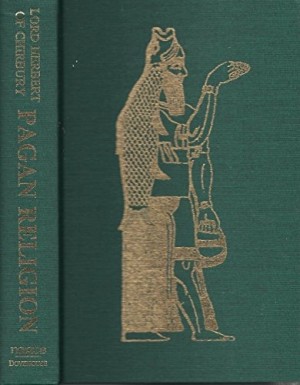
Hardcover. Ottawa CAN, Dovehouse Editions, reprint, 1996, Book: Very Good, Dust Jacket: None, Hardcover, green cloth stamped with gilt lettering on spine and decoration to front cover. 379 pages. Originally written in 1645 by the author who was also known as Lord Herbert of Chirbury. Herbert's major work is the De veritate, prout distinguitur a revelatione, a verisimili, a possibili, et a falso](On Truth, as It Is Distinguished from Revelation, the Probable, the Possible, and the False). He published it on the advice of Grotius. In the De veritate Herbert produced the first purely metaphysical treatise, written by an Englishman. Herbert's real claim to fame is as the father of English Deism. The common notions of religion are the famous five articles, which became the charter of the English deists. Name, light pencil notations to front endpaper and about a dozen pages.
Softcover. UK, Oxford University Press, reprint, 2010, Book: Very Good, Dust Jacket: None, Softcover, 331 pages. This is a revised and expanded edition of a seminal work in the logic and philosophy of time, originally published in 1968. Arthur N. Prior (1914-1969) was the founding father of temporal logic, and his book offers an excellent introduction to the fundamental questions in the field. Several important papers have been added to the original selection, as well as a comprehensive bibliography of Prior's work and an illuminating interview with his widow, Mary Prior. In addition, the Polish logic which made Prior's writings difficult for many readers has been replaced by standard logical notation. This new edition will secure the classic status of the book. Clean, bright copy.
Softcover. Notre Dame, University of Notre Dame Press, First Thus, 1986, Book: Very Good, Dust Jacket: None, 344 pages. Softcover. Black & white illustrations throughout including maps, photographs. Bright front cover, sunfade to rear cover. Clean, unmarked copy.
Softcover. Albany, State University of New York Press , 1st, 1983, Book: Very Good, Dust Jacket: None, Softcover, 317 pages. Phenomenology in a Pluralistic Context contains papers selected from three years of meetings of the Society for Phenomenology and Existential Philosophy (SPEP). The essays are representative of the most current thinking among North American philosophers who have been influenced by the phenomenological movement. A majority of the selections reveals a considerable mutual influence between phenomenology and other philosophical currents. Special emphasis is given to issues in social and political theory; the philosophy of medicine, of art, of language, and of religion; phenomenology's relationship to Kantianism and to Marxism; and the figures of Merleau-Ponty, Sartre, and Heidegger. Clean copy.
Softcover. Rochester NY, University of Rochester Press, reprint, 1994, Book: Very Good, Dust Jacket: None, Softcover, 539 pages. The essays in this collection illustrate the interdisciplinary approach to the history of ideas fostered by the Journal of the History of Ideas. Science, philosophy and religion were closely connected in the 17th and 18th centuries, and common threads run through all the articles. A number of essays revolve around Locke: the implications of his doctrines for religion, and their relation to and support of the new science; several of these articles refer to Descartes, Leibniz andHume. There are essays on optics and vision in the work of Berkeley, Reid and Newton, and on the relation between biology and physiology, especially as these disciplines contribute to the science of man. The authors include HENRY GUERLAC, MARGARET C. JACOB, SHIRLEY ROE, L. LAUDAN, NICHOLAS JOLLEY, JAMES FORCE, G. A. J. ROGERS and CATHERINE WILSON. Name on front fly leaf, otherwise clean.
Hardcover. New York, William Morrow and Company, Inc., 1st, 1994, Book: Very Good, Dust Jacket: Very Good, 128 pages. Hardcover. Color and b/w illustrations throughout. Dust jacket unclipped. Gilt title on spine. Dust jacket has a little bit of chipping at top of spine, patched with tape. Otherwise great. Clean and unmarked inside. Gilt endpapers.
Hardcover. New York, W. W. Norton, 1st, 1976, Book: Very Good, Dust Jacket: Good, Hardcover in a very good plus dust jacket. 192 pages. Color frontispiece, color photographs, illustrations, diagrams, bibliography, index. The dust jacket has very minor edgewear. A photographic look at some of the earlier churches built in North America.
Hardcover. Cambridge UK, Cambridge University Press, 1st, 2004, Book: Very Good, Dust Jacket: Very Good, Hardcover in a bright dust jacket, 218 pages. The Timaeus-Critias is concerned with cosmology and Plato's claim that its central task is to articulate the way in which the cosmos manifests the values of goodness and beauty. This book examines this important dialogue in its entirety using current methods of Platonic scholarship. Arguing that Aristotle's physics is far closer to the Timaeus than usually realized, the study's other prominent findings reinforce the dialogue's essentially moral message, and clarify its literary character.
Hardcover. Cambridge MA, Harvard University Press, 1st, 2001, Book: Very Good, Dust Jacket: Very Good, Hardcover in a very good dust jacket with light fading to spine, 342 pages. The Platonic Theology is a visionary work and the philosophical masterpiece of Marsilio Ficino (1433-1499), the Florentine scholar-philosopher-magus who was largely responsible for the Renaissance revival of Plato. A student of the Neoplatonic schools of Plotinus and Proclus, he was committed to reconciling Platonism with Christianity, in the hope that such a reconciliation would initiate a spiritual revival and return of the golden age. His Platonic evangelizing was eminently successful and widely influential, and his Platonic Theology, translated into English for the first time in this edition, is one of the keys to understanding the art, thought, culture, and spirituality of the Renaissance.
Hardcover. Cambridge MA, Harvard University Press, 1st, 2002, Book: Very Good, Dust Jacket: Good, Hardcover in a dust jacket with fading to spine and front cover, 397 pages. The Platonic Theology is a visionary work and the philosophical masterpiece of Marsilio Ficino (1433-1499), the Florentine scholar-philosopher-magus who was largely responsible for the Renaissance revival of Plato. A student of the Neoplatonic schools of Plotinus and Proclus, he was committed to reconciling Platonism with Christianity, in the hope that such a reconciliation would initiate a spiritual revival and return of the golden age. His Platonic evangelizing was eminently successful and widely influential, and his Platonic Theology, translated into English for the first time in this edition, is one of the keys to understanding the art, thought, culture, and spirituality of the Renaissance. Clean copy.
Hardcover. Cambridge MA, Harvard University Press, 1st, 2003, Book: Very Good, Dust Jacket: Very Good, Hardcover in a very good dust jacket with light fading to spine, 362 pages. The Platonic Theology is a visionary work and the philosophical masterpiece of Marsilio Ficino (1433-1499), the Florentine scholar-philosopher-magus who was largely responsible for the Renaissance revival of Plato. A student of the Neoplatonic schools of Plotinus and Proclus, he was committed to reconciling Platonism with Christianity, in the hope that such a reconciliation would initiate a spiritual revival and return of the golden age. His Platonic evangelizing was eminently successful and widely influential, and his Platonic Theology, translated into English for the first time in this edition, is one of the keys to understanding the art, thought, culture, and spirituality of the Renaissance. Name on front fly leaf otherwise clean.
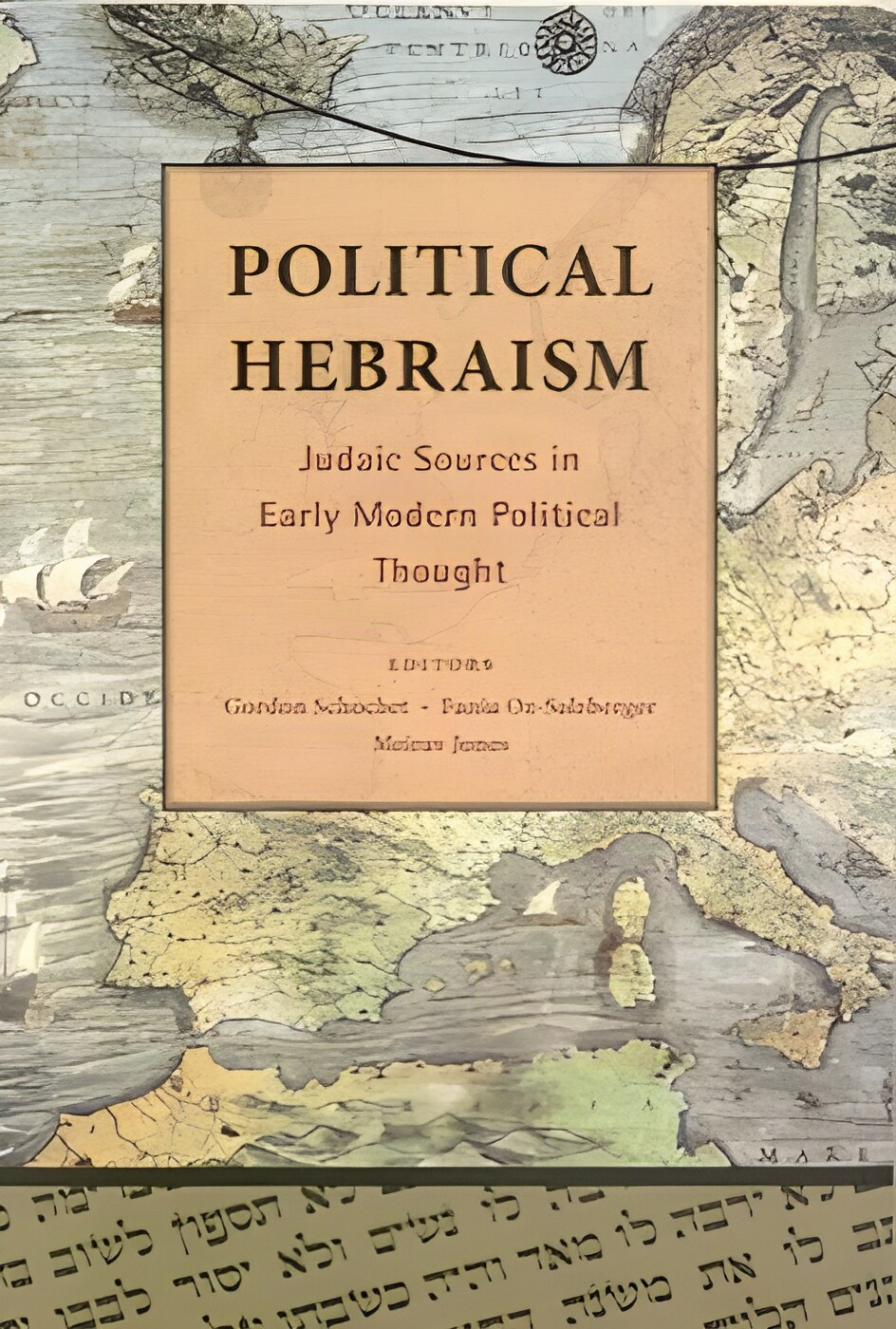
Softcover. Jerusalem/NY, Shalem Press, 1st, 2008, Book: Very Good, Dust Jacket: None, Softcover, 287 pages. Between the 16th and 18th centuries, European political philosophy felt intimately at home with the Hebrew Bible, enjoyed some familiarity with later Jewish texts and exegeses, and accommodated a small number of Jews within its political discourse. The period was characterized by a search for Hebraica Veritas, a view of De Republica Hebraeorum as the idealized polity, and biblical and Jewish ideas permeating the political imagination through art, literature, and legal codes. This volume is comprised of papers from the first ever international conference on political Hebraism held in Jerusalem in August 2004 under the auspices of the Shalem Center. The topic of political Hebraism is broached here from a number of approaches, including historical, literary, philosophical, theological, critical, and sociopolitical.
Hardcover. Hatje Cantz, 1st, 2013, Book: Very Good, Dust Jacket: None, Hardcover with illustrated boards, 212 pages. Since the late 1970s, as a pioneer of Southern California underground culture, Raymond Pettibon has blurred the boundaries of "high" and "low," from the deviations of marginal youth to art history, literature, sports, religion, politics and sexuality. Rich in detail, his obsessively worked drawings pull freely from myriad sources spanning the cultural spectrum. The resulting, highly poetic constructions function as acute reflections of contemporary society. Throughout the years, his subjects have included political figures and historical events, with particular intensity since the events of September 11, 2001. Seen here are images of Ronald and Nancy Reagan, J. Edgar Hoover, both Bush presidents, the Kennedys, Hitler, scenes from the Vietnam War and protest movements, wars in Iraq and Afghanistan, the prisoner abuse of Abu Ghraib, President Obama and Osama bin Laden. Raymond Pettibon (born 1957) studied economics at UCLA around the same time he joined his brother in the punk band Black Flag. He soon began to contribute artwork to album covers, flyers and t-shirts, for the band and its label, SST Records, and exhibited his work in group shows in galleries in the 1980s. Since the 1990s his work has been the subject of numerous major solo exhibitions.
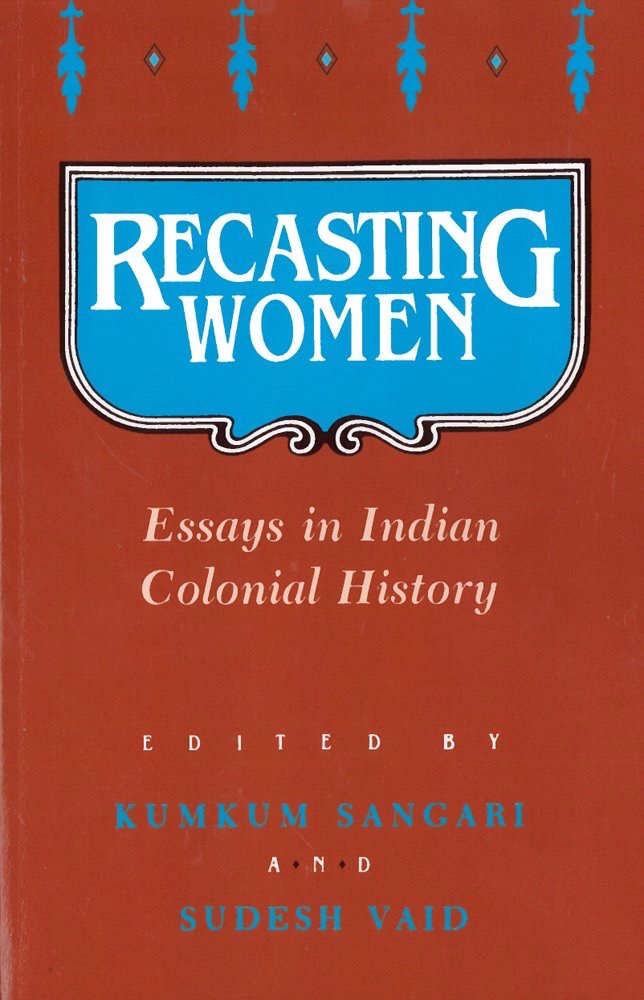
Softcover. New Brunswick NJ, Rutgers University Press, 1st pbk., 1990, Book: Very Good, Dust Jacket: None, Softcover, 372 pages. The first set of essays seeks to analyze the patriarchal discourses of a colonial society and includes an analysis of the shaping of Hindu-Aryan identity, the parameters of the discourse on widow-immolation, the "defeminization" of popular culture in nineteenth-century urban Calcutta, the nature of the reforms proposed by early women's journals in Hindi, and the implications of the nationalist movement and of Indo-Anglian literature on middle-class patriarchal norms. The second set of articles relates to women of the productive classes--the reconstitution of patriarchies in the agrarian transition in Haryana, in the Oudh peasant movement, in the armed peasant struggle in Telangana, and among the working class in Bengal. The contributors explore the interrelation of patriarchies with political economy, law, religion, and culture, and suggest a different history of "reform" movements, and of class and gender relations. Clean copy.
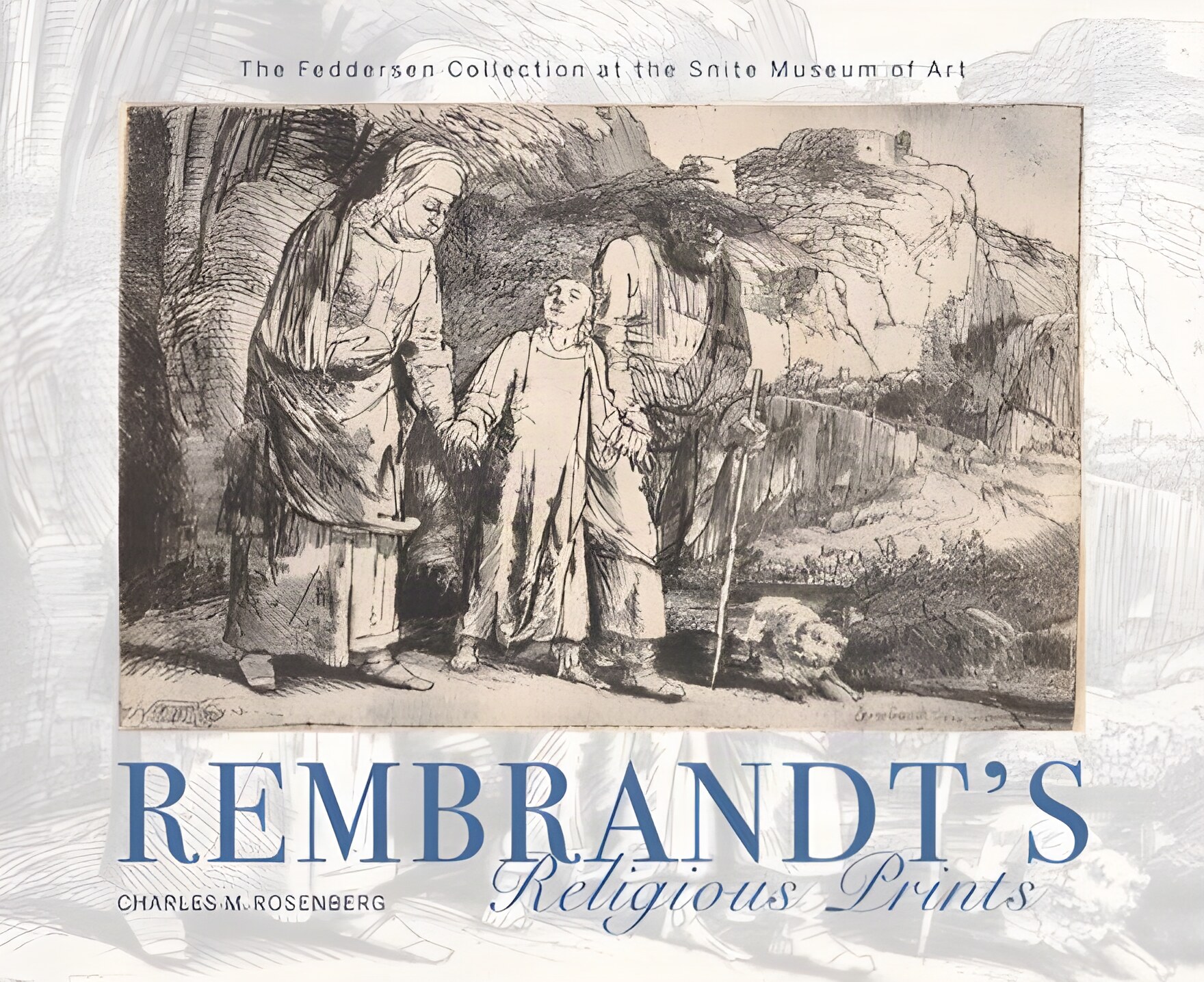
Hardcover. Indiana University Press, 1st, 2017, Book: Very Good, Dust Jacket: Very Good, Hardcover in a bright dust jacket, 475 pages. Rembrandt's stunning religious prints stand as evidence of the Dutch master's extraordinary skill as a technician and as a testament to his genius as a teller of tales. Here, several virtually unknown etchings, collected by the Feddersen family and now preserved for the ages at the University of Notre Dame, are made widely available in a lavishly illustrated volume. Building on the contributions of earlier Rembrandt scholars, noted art historian Charles M. Rosenberg illuminates each of the 70 religious prints through detailed background information on the artist's career as well as the historical, religious, and artistic impulses informing their creation. Readers will enjoy an impression of the earliest work, The Circumcision (1625-26); the famous Hundred Guilder Print; the enigmatic eighth state of Christ Presented to the People; one of a handful of examples of the very rare final posthumous state of The Three Crosses; and an impression and counterproof of The Triumph of Mordecai. From the joyous epiphany of the coming of the Messiah to the anguish of the betrayal of a father (Jacob) by his children, from choirs of angels waiting to receive the Virgin into heaven to the dog who defecates in the road by an ancient inn (The Good Samaritan), Rembrandt's etchings offer a window into the nature of faith, aspiration, and human experience, ranging from the ecstatically divine to the worldly and mundane. Ultimately, these prints? modest, intimate, fragile objects?are great works of art which, like all masterpieces, reward us with fresh insights and discoveries at each new encounter. Clean copy.
Hardcover. Scalo, 1st, 1998, Book: Very Good, Dust Jacket: Very Good, Hardcover, 104 pages. Selected as the United States representative to the 2001 Venice Biennale, the sculptor and installation artist Robert Gober has, thanks to several major museum exhibitions in recent years, established himself as perhaps the most important artist of his generation, thanks to his symbolically charged re-creations of everyday objects that he makes into installations that question the ideals and values of childhood, family, home, and religion. This catalogue presents his work for the United States pavilion at the Biennale.
Hardcover. Paris, Zodiaque, 1st, 1984, Book: Very Good, Dust Jacket: Very Good, 334 pages plus index. Color, b&w gravure photographs, plans of churches, cathedrals, abbeys and monasteries in France. Text in French. Ribbon marker. Clean, tight copy in a bright dust jacket.

 "Medieval Childrenby: Nicholas Orme")
 "Mother Teresa: A Life of Dedicationby: Rai, Raghu")
 "Mythic Image, Theby: Campbell, Joseph")
 "Nietzsche on Truth and Philosophy by: Maudemarie Clark")
 "NYC Sex: How New York Transformed Sex in Americaby: Grady T. Turner, Martin Duberman, et al.")
 "NYC Sex: How New York Transformed Sex in Americaby: Grady T. Turner, Martin Duberman, et al.")
 "Objects of Thoughtby: Prior, Arthur N./P. T. Geach/A. J. P. Kenny (Editors)")



 "Peoples of Ireland, The - From Prehistory to Modern Timesby: de Paor, Liam")

 "Pioneer Churchesby: Kalman, John De Visser (photographe), Harold")
 "Plato's Natural Philosophy: A Study of the Timaeus-Critiasby: Johansen, Thomas Kjeller")

 "Platonic Theology, Volume 2: Books V-VIII (The I Tatti Renaissance Library)by: Ficino, Marsilio/ Editor: Hankins, James / Translator: Allen, Michael")
 "Raymond Pettibon: Here's Your Irony Back: Political Works 1975-2013by: Raymond Pettibon/Benjamin Buchloh")


 "Robert Goberby: Paul Schimmel , Hal Foster , et al.")
 "Routes Romanes - 2: La Route aux Solitudesby: Oursel, Raymond")