Hardcover. Paris, Zodiaque, 1st, 1982, Book: Very Good, Dust Jacket: Very Good, Hardcover, 407 pages plus index. Color and b&w gravure plates, plans of medieval churches of France. French text. A clean, tight copy in a bright dust jacket.
Hardcover. Chatham UK, The Limited Editions Club, Ltd Ed, 1969, Book: Very Good, Dust Jacket: None, Hardcover, embossed gray cloth covers with gilt lettering on spine, slipcased. Illustrated with wood engravings by Reynolds Stone. No. 38 of 1500 copies, signed by the artist. Designed by Will Carter and printed by W & J Mackay & Company. Bright, clean copy with minor wear to slip case.
Hardcover. Bristol UK, Thoemmes Press, reprint, 1995, Book: Very Good, Dust Jacket: None, Hardcover, red cloth with gilt lettering on spine, 182 pages. Mostly written in 1712, "Second Characters" contains the plan and fourth treatise of a work intended as a complement to the "Characteristics" and represents an application of the theoretical principles of that work to the realm of art. B&w frontispiece. Includes dictionary of art terms and index of ease. A facsimile reprint of the 1914 edition. Clean copy.
Paperback. Albany, NY, Education Department, Albany Institute of History and Art., revised, 1984, Book: Very Good, Dust Jacket: None, Softcover, 201 pages. Very little wear to cover. Inside is bright and clean with many b&w illustrations throughout.
Softcover. Cambridge UK, Cambridge University Press, 1st, 1996, Book: Very Good, Dust Jacket: None, Softcover, 216 pages. This remarkable expression of republican thought has never before been published. Algernon Sidney was among the most unrelenting republican partisans of the seventeenth century, and was executed for his opposition to Charles II. Written during Sidney's continental exile, the vivid Court Maxims was only recently rediscovered. The work presents a lively discussion about the principles of government and the practice of politics, articulating a vital tradition of republicanism in an absolutist age.
Hardcover. NY, Little Brown, 1st, 2005, Book: Very Good, Dust Jacket: Very Good, Hardcover in a bright, unclipped dust jacket. This is a biography of C.L. Franklin, one of the black preachers in American history. It tells the story of black migration and activism, alongside the rise of gospel, blues, and soul music, with a cast of characters including Martin Luther King, Jr., B.B. King, Art Tatum, and Coleman Young.
Softcover. NY, Schocken Books, reprint, 1967, Book: Very Good, Dust Jacket: None, Softcover, 520 pages. In order to understand the English Revolution and Civil War we need to understand Puritanism. Using his consummate skill as a historian, Professor Hill suggests that there might have been non-theological reasons for supporting the Puritans, or for being a Puritan. He shows Puritanism as a living faith, answering the hopes and fears of yeomen and gentlemen, merchants and artisans. He looks at oath-taking, the Sabbath, bawdy courts, and poor relief and assesses the significance of the household (rather than the Parish) and the dignity of labor. He shows Puritanism in daily life and discusses the emergence of the seemingly paradoxical Puritan revolutionaries. Light bump to top corner of about 50 pages, clean copy.
Hardcover. Bloomington IN, Indiana University Press, 1st, 1987, Book: Very Good, Dust Jacket: None, Hardcover, green cloth stamped with gilt lettering and design. artfully explains the initial spirit and modern understanding of Tamil bhakti poetry. His fluent translations make the poems -- songs of the experience of God -- live for us as they did for their first audience nearly fifteen centuries ago. Clean, bright copy.
Hardcover. New Delhi, privately printed/Pasang Wangdu, 1st, 2003, Book: Very Good, Dust Jacket: Very Good, Hardcover in a bright dust jacket. 282 pages., profusely illustrated throughout in color and black and white painting schematics. Parallel text in English and Tibetan. Private printing. Ribbon marker, clean copy. NOTE: DUE TO SIZE AND WEIGHT, DOMESTIC SHIPPING ONLY.
Softcover. Washington DC, National Gallery of Art , 2nd pr., 203, Book: Very Good, Dust Jacket: None, Softcover, 334 pages illustrated with 224 color plates, 86 black & white. One of America's most innovative artists, Romare Bearden (1911-1988) made colorful and passionate images that reflected his life in a time of creative ferment. His influences ranged from the old masters to African art, as well as the world around him: popular religion and ritual, jazz clubs and brothels, the history and literature of his time, and the places he lived (the rural South, Pittsburgh and Harlem, the Caribbean island of St. Martin). The resulting images are fresh and evocative, filled with quirky details and rhythmic forms. This authoritative and beautiful book, which accompanies a major retrospective opening at the National Gallery of Art in Washington, D.C., provides a provocative and absorbing look at a beloved artist. The Art of Romare Bearden showcases compelling examples of his pioneering work: complex collages and photostats; watercolors, gouaches, and oils; little-known landscapes; his only known sculpture; costume designs; and book illustrations. Mildwear to corners otherwise very good, clean copy.
Hardcover. NY, Summit Books, 1st US, 1988, Book: Very Good, Dust Jacket: Very Good, Hardcover in a bright, price-clipped dust jacket. Color illustrations through by Steadman. His take on the creation of the universe, man:- and, what we have done to the earth!
Hardcover. Lexington KY, University of Kentucky Press, 1st, 1968, Book: Very Good, Dust Jacket: None, Hardcover, light green cloth, 307 pages. This volume of Eaton's selected writings forms a rich and provocative mosaic of southern life from the years of Thomas Jefferson to the close of the Civil War. These selections, perceptively edited by Albert D. Kinvan, show the wide range of Eaton's interests, including the impact of slavery, the influence of religion, and the art of politics, and they demonstrate the depth of his insight into the civilization of the Old South. Name on front fly leaf, otherwise clean.
Hardcover. Amherst MA, University of Massachusetts Press, 1st US, 1976, Book: Very Good, Dust Jacket: Very Good, Hardcover in a bright blue dust jacket, 143 pages. Edited by P. T. Geach and A. J. P. Kenny. Name on front fly leaf, light pencil notations to 20 pages.
Hardcover. NY, Oxford University Press, 1st, 2018, Book: Very Good, Dust Jacket: Very Good, Hardcover in a bright dust jacket, 239 pages. The Harvard philosopher Donald C. Williams (1899-1983) was a key figure in the history of analytic philosophy. He played a crucial role in reviving metaphysics at a time when other philosophers ridiculed, criticized, and committed it to the flames. He constructed an explanatorily powerful and parsimonious ontology and cosmology founded on logic, science, and common sense. His most influential articles were on the metaphysics of properties ('The Elements of Being') and the meta-physics of time ('The Sea Fight Tomorrow', 'The Myth of Passage'). His ontology of abstract particulars or tropes and his four-dimensional manifold theory of time remain leading hypotheses in metaphysics. Because of his novel contributions and his defense of metaphysics he made a lasting impact on philosophers of the next generation who in turn believed in the substance of metaphysical inquiry. Name on front fly leaf, light pencil marking to first 30 pages. Otherwise clean, very good.
Softcover. Berkeley CA, University of California Press, 1st pbk, 1981, Book: Very Good, Dust Jacket: None, Softcover, yellow wrappers, 258 pages. Examines the unique religious brotherhoods of Morocco, tracing their origins to two saints from the late 17th and early 18th centuries, Sidi Ali ben Hamdush and Sidi Ahmed Dghughi. Known for their dramatic and sometimes controversial rituals, such as trance dances and acts of self-mutilation, the Hamadsha are healers who address spiritual and psychogenic ailments through symbolic and therapeutic practices. Their activities, deeply rooted in the Moroccan cult of saints, reflect a complex interplay of Islamic mysticism, local traditions, and social dynamics. Through these rituals, the Hamadsha incorporate patients into their brotherhoods, providing them with new roles and a symbolic framework to articulate and resolve personal and societal tensions. Drawing on extensive fieldwork, historical analysis, and psychoanalytic perspectives, this study explores the Hamadsha's history, their organizational structure, and their relationship with Moroccan culture and religion. It examines the saints' tombs as focal points of veneration, the social dynamics of the brotherhoods, and their therapeutic methods, including pilgrimages and trance dances. Clean copy.
Hardcover. Garden City, NY, Doubleday & Company, Inc., 1st thus, 1970, Book: Very Good, Dust Jacket: None, 1715 pages. Hardcover. color illustrations throughout, illustrated by Salvador Dali. Pages unmarked (including back pages intedend for recording of family information). 2 red ribbon book marks attached at spine. No slipcase. Marbled decorated endpapers. leather cover boards, gilt title and decoration on spine and front cover board. Gilt edges (slightly faded). Binding beautiful. Spine straight. DOMESTIC SHIPPING ONLY.
Hardcover. NY, Charles Scribner's Sons, 2nd Ed., 1922, Book: Very Good, Dust Jacket: None, Five hardcover volumes, complete set. Matching maroon cloth covers, gilt lettering on spine faded. Titles include: Introduction and Reason in Common Sense, Reason in Society, Reason in Religion, Reason in Art, Reason in Science. Name on front fly leaf on 3 volumes, front hinge cracked on 2 volumes, light pencil marking to 20 pages. DUE TO WEIGHT, DOMESTIC SHIPPING ONLY.
Hardcover. Cambridge MA, The MIT Press, 1st, 2011, Book: Very Good, Dust Jacket: Very Good, Hardcover in a bright blue dust jacket, 344 pages. Santayana's Life of Reason, published in five books from 1905 to 1906, ranks as one of the greatest works in modern philosophical naturalism. Acknowledging the natural material bases of human life, Santayana traces the development of the human capacity for appreciating and cultivating the ideal. It is a capacity he exhibits as he articulates a continuity running through animal impulse, practical intelligence, and ideal harmony in reason, society, art, religion, and science. The work is an exquisitely rendered vision of human life lived sanely.In this first book of the work, Santayana provides an account of how the human animal develops instinct, passion, and chaotic experience into rationality and ideal life. Inspired by Aristotle's De Anima, Darwin's evolutionary theory, and William James's The Principles of Psychology, Santayana contends that the requirements of action in a hazardous and uncertain environment are the sources of the development of mind. More specifically, instinct and imagination are crucial to the emergence of reason from chaos. Separating himself from the typical thought of the time by his recognition of the imagination, Santayana in this volume offers extensive critiques of various philosophies of mind, including those of Kant and the British empiricists. Clean copy.
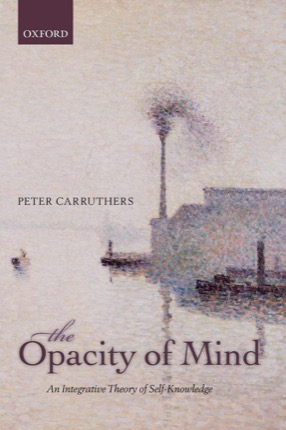
Hardcover. UK, Oxford University Press, 1st, 2011, Book: Very Good, Dust Jacket: Very Good, Hardcover in a bright dust jacket, 437 pages. It is widely believed that people have privileged and authoritative access to their own thoughts, and many theories have been proposed to explain this supposed fact. The Opacity of Mind challenges the consensus view and subjects the theories in question to critical scrutiny, while showing that they are not protected against the findings of cognitive science by belonging to a separate "explanatory space." The book argues that our access to our own thoughts is almost always interpretive, grounded in perceptual awareness of our own circumstances and behavior, together with our own sensory imagery (including inner speech). In fact our access to our own thoughts is no different in principle from our access to the thoughts of other people, utilizing the conceptual and inferential resources of the same "mindreading" faculty, and relying on many of the same sources of evidence. Peter Carruthers proposes and defends the Interpretive Sensory-Access (ISA) theory of self-knowledge. This is supported through comprehensive examination of many different types of evidence from across cognitive science, integrating a diverse set of findings into a single well-articulated theory. One outcome is that there are hardly any kinds of conscious thought. Another is that there is no such thing as conscious agency. Clean, like new.
Softcover. NY, Onassis Foundation, 1st, 2009, Book: Very Good, Dust Jacket: None, Softcover, 131 pages illustrated in color. The Origins of El Greco focuses on the evolution of the multifaceted relationship of Cretan painters with Western art during this rich period. The icon painters in the workshops on Crete in the 15th and 16th centuries-the setting in which El Greco was trained-were renowned for their skill in painting impeccable panels not only in the traditional Byzantine manner but also in a style inspired by Western models. The Origins of El Greco presents an extraordinary group of 15th and 16th century paintings, including works by El Greco. The color-illustrated catalogue features detailed descriptions of all 46 masterpieces included in the exhibition, some of them published for the first time, as well as 3 informative essays: Anastasia Drandaki, Curator, Byzantine Collection, Benaki Museum, Athens writes on "Between Byzantium and Venice: Icon Painting in Venetian Crete in the Fifteenth and Sixteenth Centuries", Olga Gratziou, Professor of Byzantine Art and Archaeology, University of Crete writes on "Cretan Architecture and Sculpture in the Venetian Period" and Nicos Hadjinicolaou, Professor Emeritus in Art History, University of Crete, and Honorary Fellow of the Institute for Mediterranean Studies, writes on "Early and Late El Greco". Clean, bright copy.
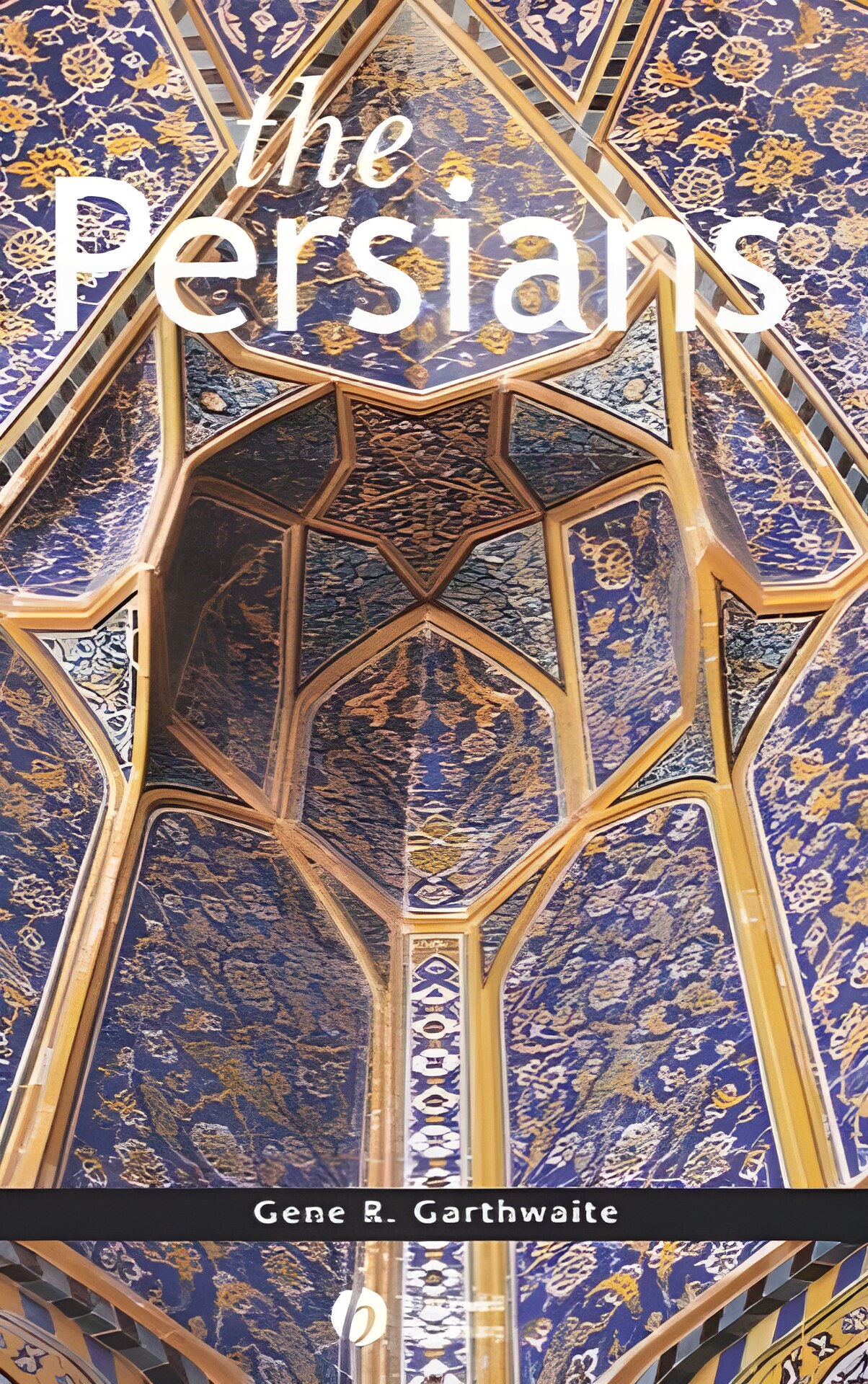
Hardcover. Malden MA, Blackwell , 1st, 2005, Book: Very Good, Dust Jacket: Very Good, Hardcover in a bright dust jacket, 311 pages, b&w illustrations. A succinct narrative of Iranian history from the time of Cyrus the Great in 558 BC to the present day. The book traces events from the rise of the Persian empire, through competition with Rome and conquest by the Arabs, through to the re-establishment of a Persian state in the sixteenth century, and finally the Islamic Revolution of 1979 and the establishment of the current Islamic Republic. For each period, the author utilizes the most recent scholarship in order to examine Iran's political, social, and cultural history. He presents this history within an analytical framework which focuses on rulership as the central theme of identity for Iranians. He also considers the part played in Iranian identity by land, political culture, religion, and the arts. Clean copy.
Hardcover. La Salle IL, Open Court, reprint, 1971, Book: Very Good, Dust Jacket: None, Hardcover, blue cloth with gilt lettering on spine, 698 pages. Clean copy.
Hardcover. London, Edmund Spettigue, 1841, Book: Very Good, Dust Jacket: None, Hardcover, half leather with marbled boards, 460 pages. Ornate gilt design on spine with 4 raised bands. Copy block with marbled edges. A contemporary note on a blank prelim page suggests this copy was a gift from Hawker's daughter. A classic that received its unique name because it was originally published in small penny portions so as to be affordable to the poor. Each morning and evening portion contains between 150 and 600 words; the size of a newspaper article or bulletin. The lessons and thought offered are to-the-point, teaching about a given Bible phrase, psalm, or proverb. Every nugget of spiritual wisdom is prefaced with a Biblical quotation that directly pertains to the author's explanations and instruction. Clean, tight copy.
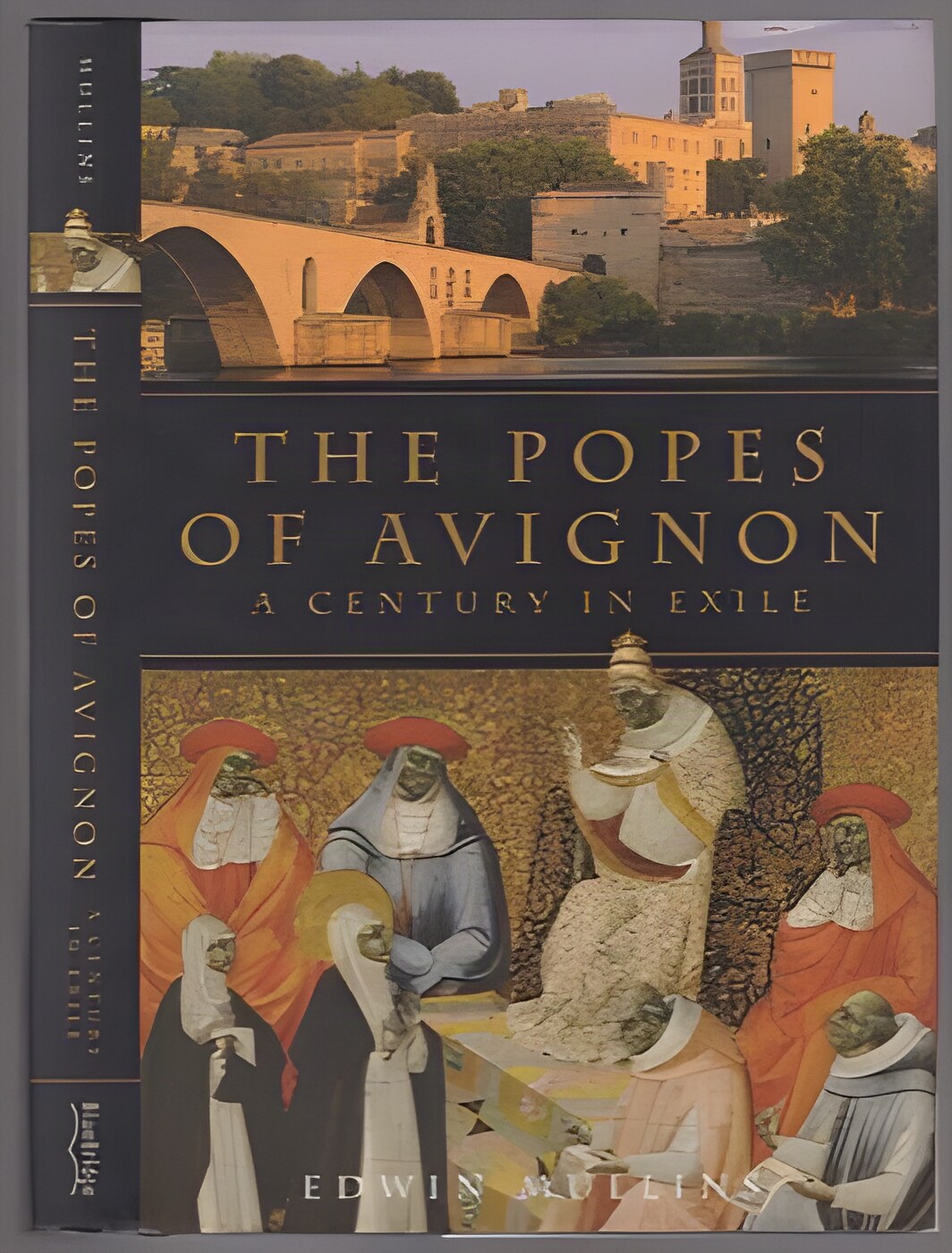
Hardcover. NY, BlueBridge, 1st US, 2008, Book: Very Good, Dust Jacket: Very Good, Hardcover in a bright dust jacket, 246 pages. This narrative history masterfully weaves together the sweeping events surrounding what has become known as the "Babylonian captivity" of the popes into the broader story of 14th-Century Europe?one of the most turbulent times in the continent's history. It was a time of fear, ferocity, and religious agony, which saw the suppression of the Knights Templar and the Cathars, the first onslaught of the plague, and the beginning of the Hundred Years' War. The century also produced some of the greatest writers and artists in the western tradition, including Giotto, Boccaccio, Petrarch, and Chaucer. Central to this period was the movement of the papal seat from Rome to Avignon in the south of France, where seven successive popes held power from 1309 to 1377. The drama, intrigue, and tumult associated with the papacy in exile forms the perfect lens through which to clearly see a Europe making the transition from the Middle Ages to the Renaissance. Clean copy.




 "Second Characters or the Language of Formsby: Anthony Ashley Cooper Earl of Shaftesbury")
 "Seventeenth Century Albany: A Dutch Profile.by: Wilcoxen, Charlotte")

 "Singing in a Strange Land: C. L. Franklin, the Black Church, and the Transformation of Americaby: Nick Salvatore")

 "Songs of Experience. The Poetics of Tamil Devotion by: Cutler, Norman")
 "Thanka Painting of the Tsang-Pa Tradition of Tibetby: Sangpo, Phuntsok")
 "The Big I Amby: Steadman, Ralph")


 "The Elements and Patterns of Being: Essays in Metaphysics by: Williams, Donald C. (Editor: Fisher, A. R. J.)")

 "The Jerusalem Bibleby: Jones, Alexander (General Editor) Salvador Dali (Illust.)")


 "The Life of Reason or the Phases of Human Progress - Five Volumesby: Santayana, George")