Hardcover. Bologna, Italy, Damiani, 1st, 2011, Book: Very Good, Dust Jacket: None, White cloth covers with gilt lettering and color picture on front. Like new in publisher's shrink-wrap. Holy Works is the culmination of Andres Serrano's vision of Christian iconography, reinterpreted photographically for the present. Serrano's intention with these works is not to recreate specific medieval or renaissance religious paintings, nor to invest them with the iconoclasm that made his name in the 1980s, but rather to renew the genre of sacred portraiture: "Rather than destroy sacred icons," says the artist, "I reinvent and reinforce them." Serrano's subjects for this series are selected from among his friends and acquaintances, emphasizing (like Caravaggio before him) the ordinariness of human features. The genres and themes are familiar, and Holy Works includes a "Last Supper" and a "Stations of the Cross" (rendered as a triptych panel), as well as bolder portrayals typical of Serrano--a "Blood Madonna" and a "Chinoise Madonna," for example. This volume is Serrano's major statement of his religious and artistic belief.
Hardcover. Princeton NJ, Princeton University Press, 1st, 1995, Book: Very Good, Dust Jacket: Very Good, Hardcover in a bright dust jacket. 327 pages, clean copy. Few diseases have exercised the Western imagination as chronically as hysteria--from the wandering womb of ancient Greek medicine, to the demonically possessed witch of the Renaissance; from the "vaporous" salon women of Enlightenment Paris, through to the celebrated patients of Sigmund Freud, with their extravagant, erotically charged symptoms. In this fascinating and authoritative book, Mark Micale surveys the range of past and present readings of hysteria by intellectual historians; historians of science and medicine; scholars in gender studies, art history, and literature; and psychoanalysts, psychiatrists, clinical psychologists, and neurologists. In so doing, he explores numerous questions raised by this ever-growing body of literature: Why, in recent years, has the history of hysterical disorders carried such resonance for commentators in the sciences and humanities? What can we learn from the textual traditions of hysteria about writing the history of disease in general? What is the broader cultural meaning of the new hysteria studies? In the second half of the book, Micale discusses the many historical "cultures of hysteria." He reconstructs in detail the past usages of the hysteria concept as a powerful, descriptive trope in various nonmedical domains, including poetry, fiction, theater, social thought, political criticism, and the arts. His book is a pioneering attempt to write the historical phenomenology of disease in an age preoccupied with health, and a prescriptive remedy for writing histories of disease in the future.
Hardcover. London, Batsford, 1st, Book: Very Good, Dust Jacket: None, A history of the evolution of the Arts of Building, Decoration and Garden Design under classical influence. Many b&w photos, Illustrations. 528 pgs. Some sun-fading to spines, else a clean, tight set.
Hardcover. Notre Dame IN, University of Notre Dame Press, 1st, 1990, Book: Very Good, Dust Jacket: None, Hardcover, red cloth stamped in black and gilt. 227 pages plus a section of b&w plates in rear.. A series of nine papers delivered at a conference with the same name in 1988 at the University of Notre Dame. It considered the relationship between politics and the literary and visual arts. Political scientists and anthropologists focus on the institutions that express power relationships. The aim of the Notre Dame Conference was to consider the relationship between politics and the literary and visual arts. The visual arts considered in this volume range from the traditional fine arts categories of painting, sculpture and architecture to minor art objects such as medals, badges, banners and seals. In general terms, the study of politics denotes the study of power relationships. Within this larger framework political scientists and anthropologists have chosen to focus on the institutions and structures that express these relationships and/or the actions that are undertaken by individuals and groups to define, alter, or reinforce them. Clean copy.
Softcover. NY, Skyhorse, 1st, 2014, Book: Very Good, Dust Jacket: None, Softcover, 361 pages, b&w illustrations. Burlesque was one of America's most popular forms of live entertainment in the first half of the 20th century. Gaudy, bawdy, and spectacular, the shows entertained thousands of paying customers every night of the week. And yet the legacy of burlesque is often vilified and misunderstood, left out of the history books. By telling the intimate and surprising stories from its golden age through the women (and men!) who lived it, Behind the Burly Q reveals the true story of burlesque, even as it experiences a new renaissance. Lovingly interviewed by burlesque enthusiast Leslie Zemeckis who produced the hit documentary of the same name, are former musicians, strippers, novelty acts, club owners, authors, and historians--assembled here for the first time ever to tell you just what really happened in a burlesque show. From Jack Ruby and Robert Kennedy to Abbott and Costello--burlesque touched every corner of American life. The sexy shows often poked fun at the upper classes, at sex, and at what people were willing to do in the pursuit of sex. Sadly, many of the performers have since passed away, making this their last, and often only interview. Behind the Burly Q is the definitive history of burlesque during its heyday and an invaluable oral history of an American art form. Funny, shocking, unbelievable, and heartbreaking, their stories will touch your hearts. We invite you to peek behind the curtain at the burly show.
Hardcover. Washington, DC, Princeton University Press, 1st, 1989, Book: Very Good, Dust Jacket: Very Good, 352 pages. Hardcover with dust jacket. Tight copy with minor wear to edges. Previous owner's notes in pencil near rear end paper.
Hardcover. Princeton NJ, Princeton University Press, 1st, 2018, Book: Very Good, Dust Jacket: Very Good, Hardcover in a bright dust jacket, 358 pages, color and b&w illustrations. What we call classical art did not simply appear in ancient Rome, or in the Renaissance, or in the eighteenth-century Academy. Endlessly repackaged and revered or rebuked, Greek and Roman artifacts have gathered an amazing array of values, both positive and negative, in each new historical period, even as these objects themselves have reshaped their surroundings. Vout shows how this process began in antiquity, as Greeks of the Hellenistic period transformed the art of fifth-century Greece, and continued through the Roman empire, Constantinople, European court societies, the neoclassical English country house, and the nineteenth century, up to the modern museum. Clean copy.
Hardcover. New York , Princeton University Press, 1st, 1997, Book: Very Good, Dust Jacket: Very Good, Hardcover, 158 pages with 4 color plates. 132 black & white photos. 11 line illustrations.
Softcover. Greenville NC, Bob Jones University Museum & Gallery, 1st, 2008, Book: Very Good, Dust Jacket: None, Softcover, 112 pages; 7 paintings studied 67+ color illustrations including the technical analysis. Clean copy.
Softcover. Bloomington IN, Indiana University Press/Electa , 1st, 1996, Book: Very Good, Dust Jacket: None, 253 pages, color and b&w illustrations. Softcover in excellent, clean condition. Domenico Tiepolo, 1727-1804, the son of Giambattista, left a corpus of drawings which show him to be one of the talented Venetian artists of the 18th century. 176 drawings plus many photographs of details and of paintings.
Hardcover. Univ of Georgia Georgia Museum, 1st, 2002, Book: Very Good, Dust Jacket: Very Good, 360 pages. Hardcover with dust jacket. Clean, unmarked copy with only minor wear to dust jacket.
Hardcover. NY, Metropolitan Museum of Art, 1st, 1997, Book: Very Good, 406 pages. Hardcover published to accompany the exhibition bearing the same title and held at the Metropolitan Museum of Art from October 28, 1997 to January 11, 1998. Canvas cloth boards with grey embossed titles to spine. Full page, full color & bw illustrations throughout. Dust jacket with only light marginal wear. Tight binding, sharp corners, clean & unmarked pages throughout.
Hardcover. NY, The Morgan Library & Museum, 1st, Book: Very Good, Dust Jacket: None, Hardcover, pictorial boards, 294 pages. Clean, bright copy. A sumptuous collection of master drawings from the Renaissance to the current era, all reproduced in color.
Hardcover. Christie's, 1987-1989, Book: Very Good, Dust Jacket: None, Complete 7 volume set including index, bound handsomely in red cloth over boards with gilt lettering and insignia to front covers, gilt titles to spines. Part I, Eighteenth Century Books Including the Gutenberg Bible; Part II, Medieval and Renaissance Manuscripts; Part III, Printed Books and Manuscripts Including Western Americana; Part IV, Printed Books and Manuscripts Including Early Printing, Literature, and Fine Bindings; Part V, Printed Books and Manuscripts Including Americana, Literature, and Fine Bindings; Part VI, Printed Books and Manuscripts Concerning William Morris and His Circle; Index and Price Lists. (12" x 9"). 302pp, 125pp, 320pp, 344pp, 316pp, 102pp, 99pp. Color and b/w plates throughout.
Softcover. London, V & A Publications, 1st pbk, 1996, Book: Very Good, Dust Jacket: None, Softcover, 191 pages. Containing over 100 masterpieces from a major collection, this volume traces the history of European sculpture, from the early-Christian period through to the beginning of the 20th century. Highlights include the medieval ivories, works by many of the Italian Renaissance masters, English 18th-century pieces, such as Roubillac's statue of Handel and sculptures by Rodin. Clean, bright copy.
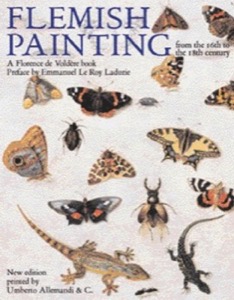
Hardcover. Turin, Umberto Allemandi & Co., Revised Ed., 2010, Book: Very Good, Dust Jacket: Very Good, Hardcover, 320 pages, Illustrated throughout in color. Real 'honest men', the Brueghels took part in the intellectual epic of their day which, from humanism to the spirit of the Enlightenment, brought about a renewal in thought and laid the foundations of Modernity. Through the human adventure of the Brueghel dynasty, progressing from obscure beginnings to recognition by the very greatest, Florence de Voldere introduces us to the genius of these men who created the Flemish aesthetic identity. Voldere takes us through the Renaissance in Flanders in the form of a story in pictures. Through this approach based on a dynamic reading of the paintings, this book shows the crucial role of art at one moment of civilization, and opens up some decidedly novel perspectives for interpreting Flemish art. Clean, like new. DOMESTIC SHIPPING ONLY.
Hardcover. New York, St. Martins Press, 1st Edition, 1985, Book: Very Good, Dust Jacket: Very Good, 338 pages. Hardcover. Black & white illustrations throughout. Bright dust jacket with only minor wear. Light foxing to edges. Otherwise clean unmarked copy.
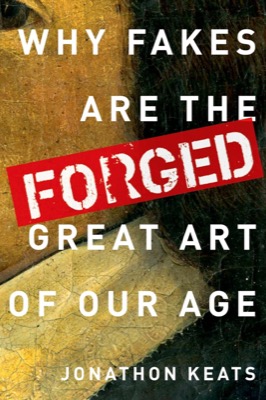
Hardcover. NY, Oxford University Press, 2nd pr., 2013, Book: Very Good, Dust Jacket: Very Good, Hardcover in a bright dust jacket, 197 pages. Forged explores art forgery from ancient times to the present. In chapters combining lively biography with insightful art criticism, Jonathon Keats profiles individual art forgers and connects their stories to broader themes about the role of forgeries in society. From the Renaissance master Andrea del Sarto who faked a Raphael masterpiece at the request of his Medici patrons, to the Vermeer counterfeiter Han van Meegeren who duped the avaricious Hermann G?ring, to the frustrated British artist Eric Hebborn, who began forging to expose the ignorance of experts, art forgers have challenged "legitimate" art in their own time, breaching accepted practices and upsetting the status quo. They have also provocatively confronted many of the present-day cultural anxieties that are major themes in the arts. Keats uncovers what forgeries --and our reactions to them-- reveal about changing conceptions of creativity, identity, authorship, integrity, authenticity, success, and how we assign value to works of art. The book concludes by looking at how artists today have appropriated many aspects of forgery through such practices as street-art stenciling and share-and-share-alike licensing, and how these open-source "copyleft" strategies have the potential to make legitimate art meaningful again. Clean copy.
Hardcover. Bethlehem, Lehigh Univ. Press, 1st , 1992, Book: Very Good, Dust Jacket: Very Good, Hardcover in a very good dust jacket. Black & white illustrations, 298 pages. This work presents Di Giorgio's codex of machine and fort drawings for the Duke of Urbino, his sketchbook of machines, and archeological sketches in the Uffizi.
Softcover. Rome, Bulzoni Editore, 1st, 2008, Book: Very Good, Dust Jacket: None, Softcover, 700 pages, Color plates in rear section. Very good condition. Card wraps. Appendices appear to have original text from letters in Italian. Previous owner's inscription on front fly leaf, otherwise clean.
hardcover. New Haven, CT, Yale University Press, 1st, 2013, Book: Very Good, Dust Jacket: Very Good, 246 pages. Hardcover with dust jacket. Very clean, unmarked copy with only minor wear to dust jacket edges. 194 color plates and 13 black and white illustrations. Tight copy.
Softcover. Bloomington IN, Indiana University Press, 1st, 2003, Book: Very Good, Dust Jacket: None, Softcover, 209 pages. This groundbreaking study explores the Harlem Renaissance as a literary phenomenon fundamentally shaped by same-sex-interested men. Christa Schwarz focuses on Countee Cullen, Langston Hughes, Claude McKay, and Richard Bruce Nugent and explores these writers' sexually dissident or gay literary voices. The portrayals of men-loving men in these writers' works vary significantly. Schwarz locates in the poetry of Cullen, Hughes, and McKay the employment of contemporary gay code words, deriving from the Greek discourse of homosexuality and from Walt Whitman. By contrast, Nugent-the only "out" gay Harlem Renaissance artist-portrayed men-loving men without reference to racial concepts or Whitmanesque codes. Schwarz argues for contemporary readings attuned to the complex relation between race, gender, and sexual orientation in Harlem Renaissance writing. Clean copy.
Hardcover. New York, Arcade Publishing, 1st, 2005, Book: Very Good, Dust Jacket: Very Good, Hardcover, 440 pages, illustrations in color and b&w. Clean, unmarked copy with only minor wear to dust jacket. A pioneer of modern art and founder of Cubism, Georges Braque was a creative genius and tireless innovator, constantly pushing back the boundaries of the possible. In this magisterial work, Alex Danchev taps a wide range of new sources to reveal the heart and mind of one who helped usher in the greatest revolution in the ways of seeing since the Renaissance and changed the face of modern art. Chapters include: "Memories in anticipation:" The Confirmed Painter, "Mon vieux Wilbourg:" The Encounter with Picasso, "If I should Ide Out There:" The Great War, The prong of the rade" : Late Braque. And much more.
Hardcover. New York, Arcade Publishing, 1st, 2005, Book: Very Good, Dust Jacket: Very Good, Hardcover, 440 pages, illustrations in color and b&w. Clean, unmarked copy with only minor wear to dust jacket. A pioneer of modern art and founder of Cubism, Georges Braque was a creative genius and tireless innovator, constantly pushing back the boundaries of the possible. In this magisterial work, Alex Danchev taps a wide range of new sources to reveal the heart and mind of one who helped usher in the greatest revolution in the ways of seeing since the Renaissance and changed the face of modern art. Chapters include: "Memories in anticipation:" The Confirmed Painter, "Mon vieux Wilbourg:" The Encounter with Picasso, "If I should Ide Out There:" The Great War, The prong of the rade" : Late Braque. And much more.

 "Andres Serrano: Holy Worksby: Serrano, Andres")
 "Approaching Hysteriaby: Micale, Mark S.")
 "Architecture of the Renaissance in France, The 1492-1830 (2 vols)by: Ward, W.H.")

 "Behind the Burly Q: The Story of Burlesque in Americaby: Leslie Zemeckis, Blaze Starr (foreword)")
 "Cezanne and America: Dealers, Collectors, Artist and Critics 1891-1921by: Rewald, John")

 "Correggio's Frescoes in Parma Cathedralby: Smyth, Carolyn")
 "Discovering a Pre-Renaissance Master: Tommaso Del Mazzaby: Barbara Deimling; John Nolan; Carl Brandon Strehlke; Yvonne Szafran")
 "Domenico Tiepolo: Master Draftsmanby: Gealt, Adelheid M. and George Knox")
 "Drawing in Renaissance and Baroque Siena: 16Th- And 17Th-Century Drawings from Sienese Collectionsby: Ciampolini, Marco")
 "Drawings of Filippino Lippi and His Circle, Theby: Goldner, George R./Carmen C. Bambach")

 "Estelle Doheny Collection, The: From The Edward Laurence Doheny Memorial Library St. John`s Seminary, Camarillo, California. Catalogued by Felix de Marez Oyens and Paul Needham (7 Volumes)by:")
 "European Sculpture at the Victoria and Albert Museumby: Williamson, Paul")
 "Flight of Fancy - The Banishment and Return of Ornamentby: Brolin, Brent C.")
 "Francesco di Giorgio: Checklist and History of Manuscripts and Drawings in Autographs and Copies from ca.1470-1687 and Renewed Copies, (1764-1839by: Scaglia, Gustina")
 "Francesco II Gonzaga: The soldier-prince as patronby: Bourne, Molly")
 "Francesco Vanni: Art in Late Renaissance Sienaby: Marciari, John J.")
 "Gay Voices of the Harlem Renaissance by: Schwarz, A.B. Christa")
 "Georges Braque: A Lifeby: Danchev, Alex")
 "Georges Braque: A Lifeby: Danchev, Alex")