Hardcover. Boston, Massachusetts, Harry N. Abrams, 1st, 1992, Book: Very Good, Dust Jacket: Very Good, 470 pages. Brown cloth cover, color illustrated dust jacket, 113 color and 206 illustrations. Still in original shrink wrap; book in excellent condition. American artists have been inspired by Italy since the 1760s, when Benjamin West, the first American painter to travel there, was drawn to the ancient Roman ruins and magnificent Renaissance architecture, statuary, and frescoes. This intriguing, superbly illustrated book is the first to explore the fascination Italy held for the American artist from West's time to the eve of World War I.The unique sense of the past found in Italy, where tangible evidence exists of a continual civilization from antiquity to the present, lured countless American artists to its cities, towns, and countryside. Painters from West and Copley in the eighteenth century to Cole, Inness, Whistler, Sargent, and Prendergast in the nineteenth century were inspired to create many of their finest works in Italy, as were American sculptors such as Hiram Powers and Harriet Hosmer and writers from Washington Irving to Henry James. This in-depth study includes 319 illustrations, of which 113 are reproduced in full color, many of works that have not previously been published. Theodore E. Stebbins, Jr., John Moors Cabot Curator of American Paintings at the Museum of Fine Arts, Boston, and Professor of Art History at Boston University, provides a broad overview of the American perception of Italy and the unique role that Italy played in the formation of American art.
Softcover. Cambridge MA, Harvard University Press, reprint, 1986, Book: Very Good, Dust Jacket: None, Softcover, 426 pages plus 322 b&w plates in rear of book. Name on front fly leaf, otherwise clean and bright.
Hardcover. NY, Free Press, 1st, 2005, Book: Very Good, Dust Jacket: Very Good, Hardcover in a bright, unclipped dust jacket. No artist looms so large in Western consciousness and culture as Michelangelo Buonarroti, the most celebrated sculptor of all time. And no place on earth provides a stone so capable of simulating the warmth and vitality of human flesh and incarnating the genius of a Michelangelo as the statuario of Carrara, the storied marble mecca at Tuscany's northwest corner. It was there, where shadowy Etruscans and Roman slaves once toiled, that Michelangelo risked his life in dozens of harrowing expeditions to secure the precious stone for his Pieta, Moses, and other masterpieces. Many books have recounted Michelangelo's achievements in Florence and Rome. Michelangelo's Mountain goes beyond all of them, revealing his escapades and ordeals in the spectacular landscape that was the third pole of his tumultuous career and the third wellspring of his art. Eric Scigliano brings this haunting place and eternally fascinating artist to life in a sweeping tale peopled by popes and poets, mad dukes and mythic monsters, scheming courtiers and rough-hewn quarrymen. In showing how the artist, land, and stone transformed one another, Scigliano brings fresh insight to Michelangelo's most cherished works and illuminates his struggles with the princes and potentates of Carrara, Rome, and Medici Florence, who raised intrigue to a high art.
Softcover. London, Batsford, 1st, 2012, Book: Very Good, Dust Jacket: Very Good, Softcover in pictorial dust jacket, 224 pages, color illustrations. A stunning survey of modern illustration that uses older styles of artistic expression to evoke a sense of another time and place. These vintage-style illustrations play with the past, subvert it, on occasion, but always feel fresh. Organized into 12 chapters by historical or cultural period, the book features hundreds of the best examples of modern retro illustration including styles as varied as Constructivist, Dada and Art Noveau. From work showing the ornamentation of Victorian fonts, the stylized angles of Art Deco, the lines of soviet poster art, the influence of Saul Bass and Blue Note record sleeves to the new slant on photorealism, and the renaissance of punk and comic art. Hundreds of artists from all over the world have contributed to a beautiful, witty and inspiring collection of vintage illustration. Clean copy.
Hardcover. NY, Assouline, 1st, 2005, Book: Very Good, Dust Jacket: Very Good, Hardcover, 80 pages. Morris Lapidus, the famous mid-century architect, outraged the architectural profession and riled critics with an architecture that was popularly embraced. His Miami Beach resort hotels - the Fontainebleau, the Eden Roc, and the Bal Harbour Sheraton - are synonymous with the glamour of Miami Beach in the 50s. Lapidus hotels are infamous as the stomping grounds of the Rat Pack and their fellow movie stars. Yet, during his life he was never published in architectural magazines and was discredited by the architectural profession - before undergoing a renaissance as a prophet of postmodernism. This book establishes the importance of his work and offers private insights into a man who once said why be exotic in private?
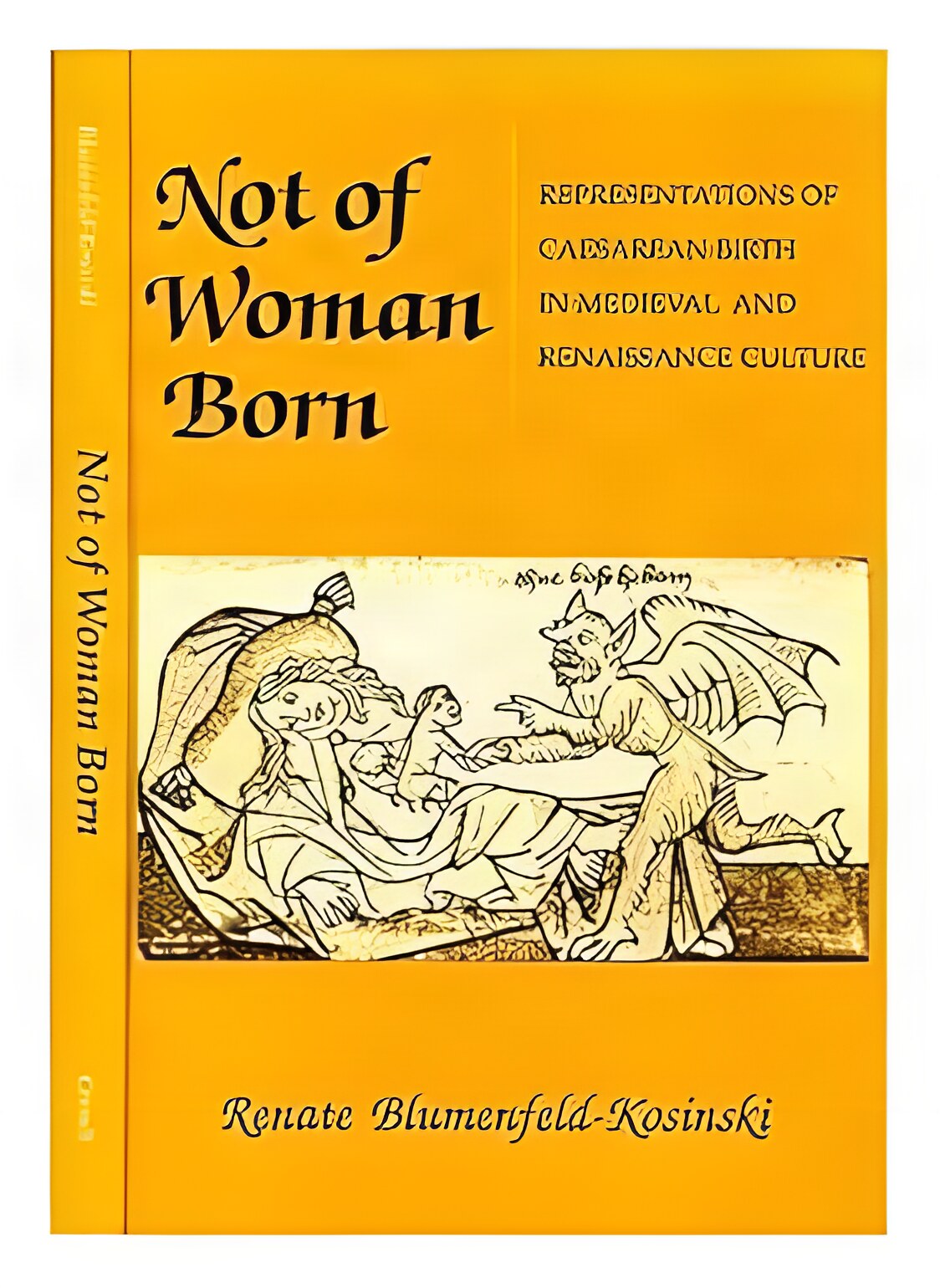
Softcover. Ithaca NY, Cornell University Press, reprint, 1991, Book: Very Good, Dust Jacket: None, Softcover, 204 pages. "Not of woman born," "the Fortunate," "the Unborn" - the terms designating those born by Caesarean section in medieval and Renaissance Europe were mysterious and ambiguous. In antiquity, children fortunate enough to have survived a Caesarean birth were believed to be marked for a special destiny. Vividly tracing the evolution of Caesarean birth from the early 1300s (when the operation was performed almost exclusively by midwives) through the Renaissance period (when midwives were considered witches and male surgeons took control), Blumenfeld-Kosinski . . . does more than provide [an] engrossingly accessible, historical account of the now-commonplace procedure--she unveils the roots of a medical misogyny that still prevails today. A richly cross-disciplined study utilizing depictions of Caesarean delivery in art, literature, and medical texts and illuminations (illustrations), [this book] is a captivating and revealing work that will be relished by readers of medical and cultural history, as well as by those who are interested in the subject of male dominance over women. Clean copy.
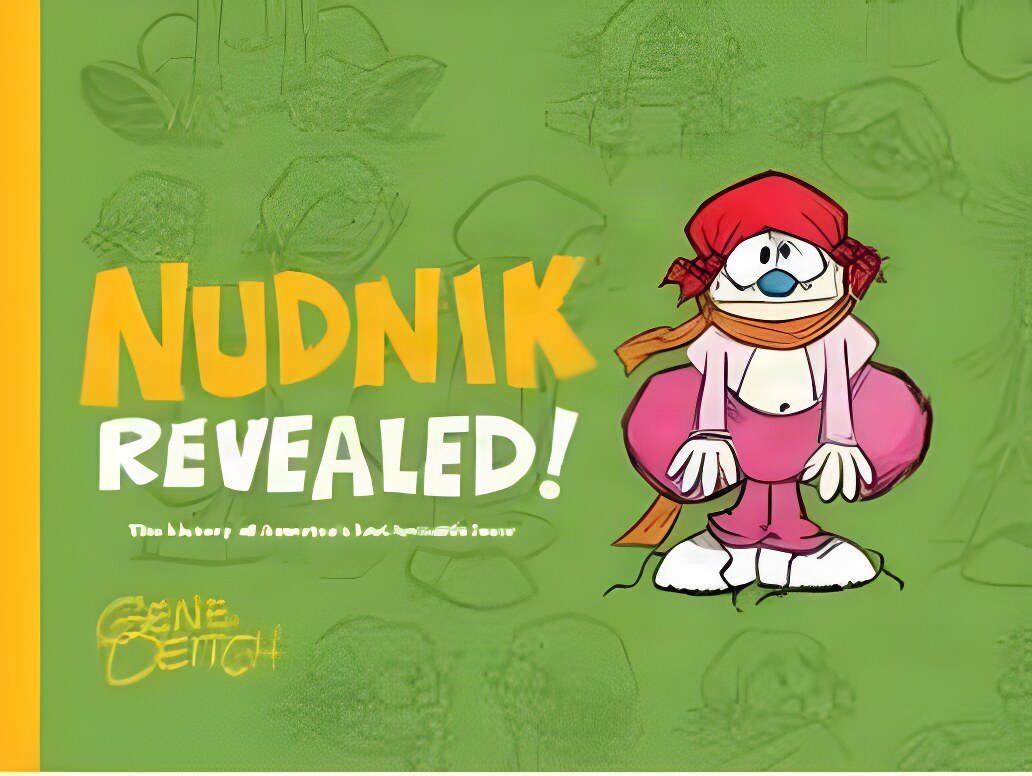
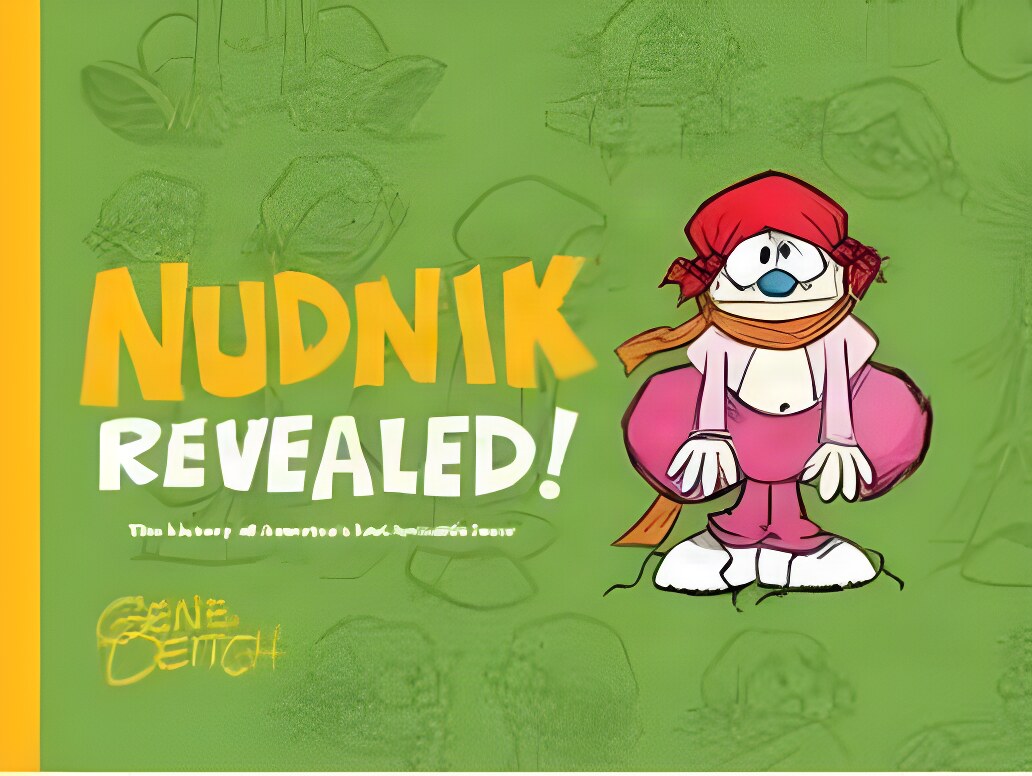
Hardcover. Seattle, WA, Fantagraphics Books, 1st, 2013, Book: Very Good, Dust Jacket: None, Non paginated. Hardcover without dust jacket. Extensive color and b&w illustrations throughout. Slight stains to front cover, otherwise clean, tight copy. Inspired by a real-life incident -getting his tie caught in a moving Moviola editing machine- Gene Deitch, cartoonist, animator, memoirist, renaissance man, created Nudnik, his Everyman character, a cross between Candide and Godot. The star of 12 Paramount-produced animated shorts that ran in theatres as an opening to the main movie in 1964 and 1965, Nudnik was one of Deitch's most creatively personal and commercially successful creations in a long career of innovative and successful work, including the award-winning animated versions of Jules Feiffer's Munro and Maurice Sendak's Where the Wild Things Are. Nudnik is the well-intentioned, kind, cheerful, but bumbling naf, inspired by and reflecting such archetypal characters as Jackie Gleason's Poor Soul, Charlie Chaplin's Tramp, and Charles Schulz's Charlie Brown. He never gets a break, can't do anything right, but somehow muddles through, dignity more or less intact. Nudnik Revealed! finally collects all of Deitch's original drawings, sketches, model sheets, storyboards, and color set-up that he drew during the Nudnik production season of 1964-1965, all reproduced from original art, showcasing his lively pencil line and his slick, authoritative pen and ink work. Deitch, a born storyteller and one of the great raconteurs of comics and animation, accompanies the copious examples of art with a running commentary by turns, funny, spirited, and chock full of historical insights.
Hardcover. Seattle, WA, Fantagraphics Books, 1st, 2013, Book: Very Good, Dust Jacket: None, Non paginated. Hardcover without dust jacket. Extensive color and b&w illustrations throughout. Slight stains to front cover, otherwise clean, tight copy. Inspired by a real-life incident -getting his tie caught in a moving Moviola editing machine- Gene Deitch, cartoonist, animator, memoirist, renaissance man, created Nudnik, his Everyman character, a cross between Candide and Godot. The star of 12 Paramount-produced animated shorts that ran in theatres as an opening to the main movie in 1964 and 1965, Nudnik was one of Deitch's most creatively personal and commercially successful creations in a long career of innovative and successful work, including the award-winning animated versions of Jules Feiffer's Munro and Maurice Sendak's Where the Wild Things Are. Nudnik is the well-intentioned, kind, cheerful, but bumbling naf, inspired by and reflecting such archetypal characters as Jackie Gleason's Poor Soul, Charlie Chaplin's Tramp, and Charles Schulz's Charlie Brown. He never gets a break, can't do anything right, but somehow muddles through, dignity more or less intact. Nudnik Revealed! finally collects all of Deitch's original drawings, sketches, model sheets, storyboards, and color set-up that he drew during the Nudnik production season of 1964-1965, all reproduced from original art, showcasing his lively pencil line and his slick, authoritative pen and ink work. Deitch, a born storyteller and one of the great raconteurs of comics and animation, accompanies the copious examples of art with a running commentary by turns, funny, spirited, and chock full of historical insights.
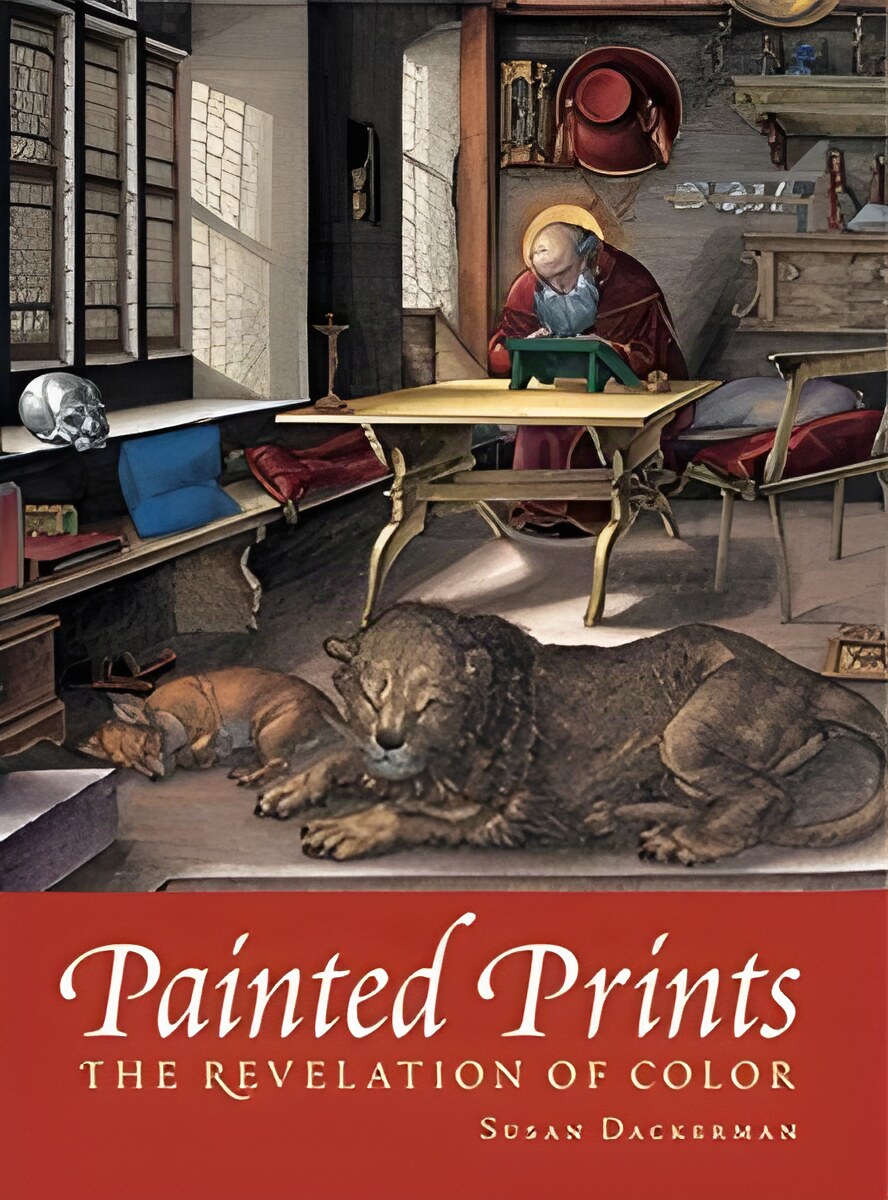
Hardcover. Baltimore Museum of Art/Pennsylvania State University Press, 1st, 2002, Book: Very Good, Dust Jacket: Very Good, Hardcover in a bright dust jacket, 297 pages. 119 color illustrations and 10 b&w. With an essay by Thomas Primeau. Catalogue entries by Deborah Carton, Susan Dackerman, Richard S. Field, Katherine Crawford Luber, Elizabeth Mansfield, Walter S. Melion, Thomas Primeau and Robert Wheaton. An old master print with color is almost invariably regarded as a suspect object because the color is presumed to be a cosmetic addition made to compensate for deficiencies of design or condition. Painted Prints challenges this deeply entrenched assumption about the material and aesthetic structure of old master prints by showing that in many cases hand coloring is not a dubious supplement to a print but is instead an integral element augmenting its expressive power, beauty, and meaning. Clean, bright copy. NOTE: Due to size and weight, DOMESTIC SHIPPING ONLY.
Hardcover. NY, Prestel, 1st, 2018, Book: Very Good, Dust Jacket: None, Hardcover in pictorial boards. While sheets of paper are disappearing from our homes and offices, the medium is experiencing a renaissance in the worlds of art, design, and architecture. Suddenly, paper is everywhere--but not only in the old familiar places or forms. This fascinating book looks at every aspect of paper: its history, composition, production, application, and trade. Beginning with the anatomy of paper and its earliest forms, this book looks at paper as a symbol of political and economic importance and as a carrier of ideas, from literature to art, design, and music. It looks at the different surfaces, opacities, weights and volumes of paper and how it is used for printing, typography, graphics, and maps as well as a vehicle for origami, architecture, and fashion. Sumptuously illustrated with photographs and drawings, this book includes a variety of papers for readers to examine and feel, highlighting the sensual aspects of this seemingly ordinary product. Engaging, entertaining, and informative, this book contains a wealth of useful and surprising information on every printed, colored, and textured page
Hardcover. NY, Metropolitan Museum of Art, 1st, 2005, Book: Very Good, Dust Jacket: Very Good, Hardcover in a bright dust jacket. 332 pages with 145 color plates, 151 b&w illustrations. In publisher's shrinkwrap.
Hardcover. Florence, Italy, Cantini, 1st, 1989, Book: Very Good, Dust Jacket: Very Good, 271 pages. Hardcover with dust jacket in SLIPCASE cover. ITALIAN TEXT. Color pictures. Previous owner's bookplate on end paper, otherwise clean, unmarked copy with only minor wear to dust jacket. Slipcase has some tape repair on bottom edge. Red cloth covers with gilt lettering on spine.
Hardcover. New Haven, Yale University Press, 1st US, 1992, Book: Very Good, Dust Jacket: Very Good, Hardcover, 240 pages, illustrated throughout in full color and b&w. Light edgewear to dust jacket, faint foxing to bottom edge. Clean, tight copy.
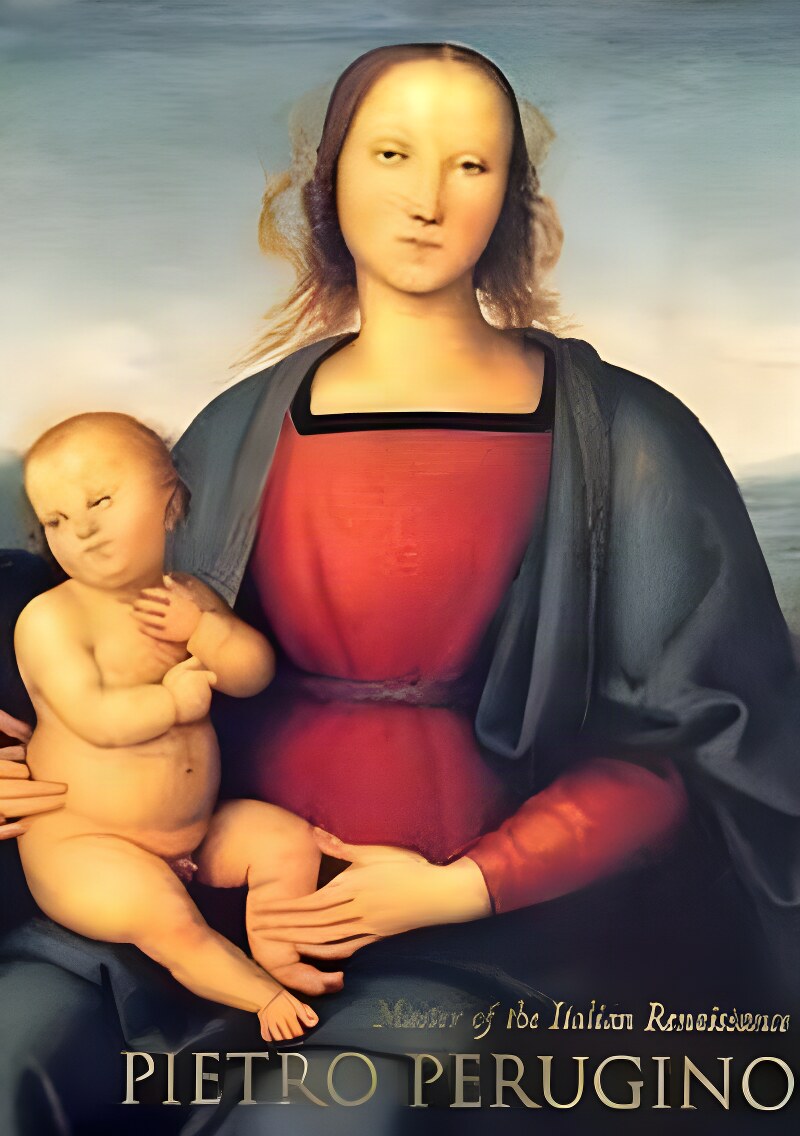
Hardcover. Grand Rapids MI, Rizzoli for the Grand Rapids Art Museum, 1st, 1997, Book: Very Good, Dust Jacket: Very Good, Hardcover in a bright dust jacket, 317 pages. illustrated throughout in color, some b/w., major scholarly exhibition catalogue on Perugino, known as Raphael's teacher. Contains 7 essays by 8 contributors and much reference material. Clean copy. PLEASE NOTE: Due to weight, domestic shipping only.
Hardcover. Cambridge MA, Harvard University Press, 1st, 2001, Book: Very Good, Dust Jacket: Very Good, Hardcover in a very good dust jacket with light fading to spine, 342 pages. The Platonic Theology is a visionary work and the philosophical masterpiece of Marsilio Ficino (1433-1499), the Florentine scholar-philosopher-magus who was largely responsible for the Renaissance revival of Plato. A student of the Neoplatonic schools of Plotinus and Proclus, he was committed to reconciling Platonism with Christianity, in the hope that such a reconciliation would initiate a spiritual revival and return of the golden age. His Platonic evangelizing was eminently successful and widely influential, and his Platonic Theology, translated into English for the first time in this edition, is one of the keys to understanding the art, thought, culture, and spirituality of the Renaissance.
Hardcover. Cambridge MA, Harvard University Press, 1st, 2002, Book: Very Good, Dust Jacket: Good, Hardcover in a dust jacket with fading to spine and front cover, 397 pages. The Platonic Theology is a visionary work and the philosophical masterpiece of Marsilio Ficino (1433-1499), the Florentine scholar-philosopher-magus who was largely responsible for the Renaissance revival of Plato. A student of the Neoplatonic schools of Plotinus and Proclus, he was committed to reconciling Platonism with Christianity, in the hope that such a reconciliation would initiate a spiritual revival and return of the golden age. His Platonic evangelizing was eminently successful and widely influential, and his Platonic Theology, translated into English for the first time in this edition, is one of the keys to understanding the art, thought, culture, and spirituality of the Renaissance. Clean copy.
Hardcover. Cambridge MA, Harvard University Press, 1st, 2003, Book: Very Good, Dust Jacket: Very Good, Hardcover in a very good dust jacket with light fading to spine, 362 pages. The Platonic Theology is a visionary work and the philosophical masterpiece of Marsilio Ficino (1433-1499), the Florentine scholar-philosopher-magus who was largely responsible for the Renaissance revival of Plato. A student of the Neoplatonic schools of Plotinus and Proclus, he was committed to reconciling Platonism with Christianity, in the hope that such a reconciliation would initiate a spiritual revival and return of the golden age. His Platonic evangelizing was eminently successful and widely influential, and his Platonic Theology, translated into English for the first time in this edition, is one of the keys to understanding the art, thought, culture, and spirituality of the Renaissance. Name on front fly leaf otherwise clean.
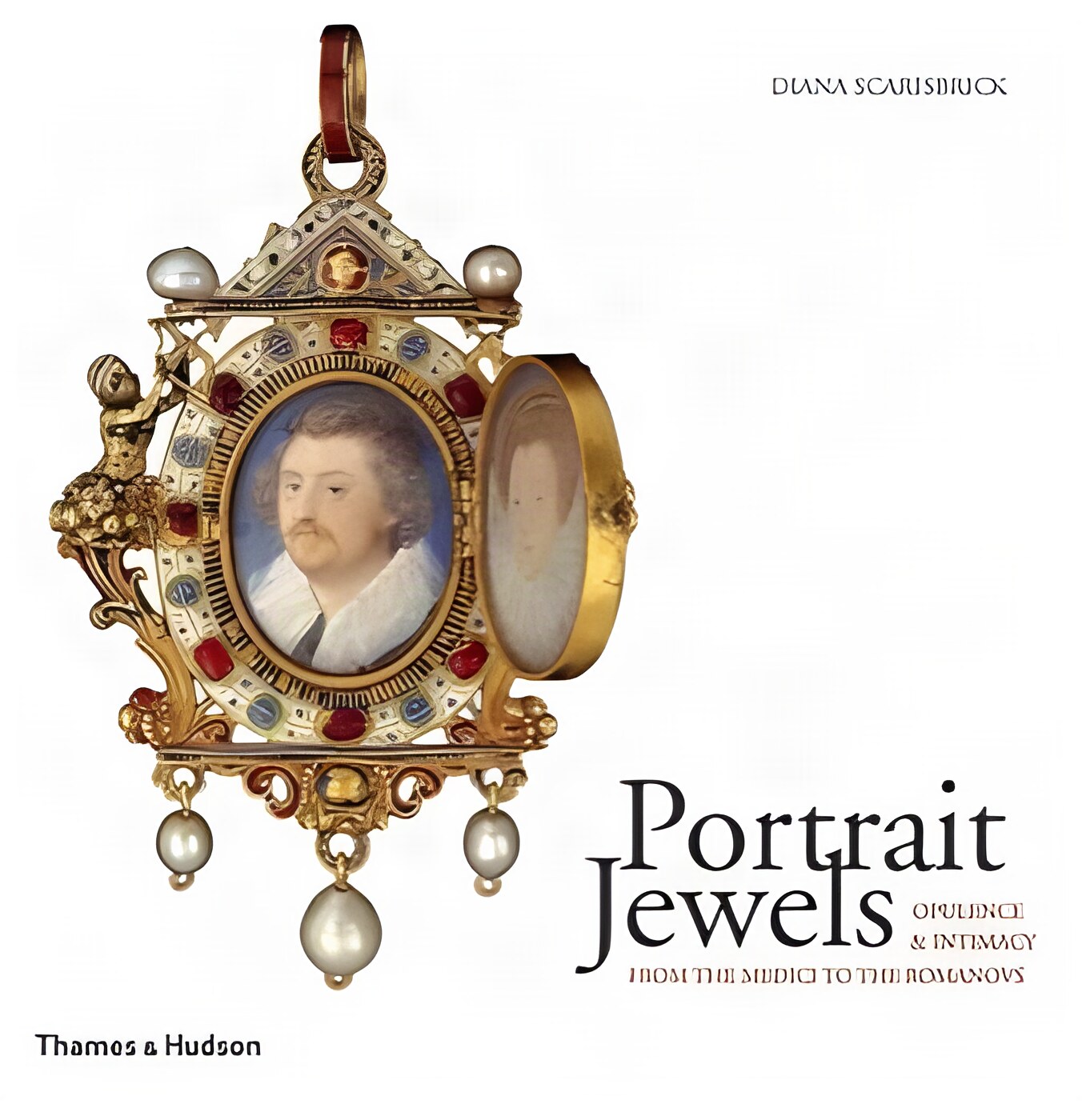
Hardcover. NY, Thames & Hudson, 1st, 2011, Book: Very Good, Dust Jacket: Very Good, Hardcover in a bright dust jacket, 352 pages, color illustrations. While cameo and intaglio portraits, other forms of deluxe jewelry, medals, and miniatures featuring famous personalities have been surveyed, a historian and curator of jewelry and engraved gems, notes that their settings have surprisingly not attracted as much attention. Covering periods from 16th to early 17th centuries Renaissance Europe to the Napoleonic to World War I eras, the author describes the pieces and names their designers in historical and personal contexts. A chapter is devoted to the portrait diamond from the Medici dynasty to the fall of the Romanovs. Clean copy. DOMESTIC SHIPPING ONLY.
Softcover. Paris, Les Editions De L'illustration, 1st, 1946, Book: Very Good, Dust Jacket: None, Softcover, oblong, 112 tipped-in color illustrations, tall 4to, printed tan boards. French art from the Middle Ages to the the 1940's. PLEASE NOTE: DUE TO WEIGHT, DOMESTIC SHIPPING ONLY.
Hardcover. London/NY, Hodder And Stoughton, 1st, 1917, Book: Very Good, Dust Jacket: None, Hardcover, turquoise cloth with gilt and black stamping, 207 pages. Illustrated with 20 tipped-in color plates. Discover the life and world that shaped Raphael, from a quiet Umbrian town to the heart of Florence. This vividly written study traces how the artist's birthplace and family, the Montefeltro court, and the great patrons of Urbino and Florence formed the talents and vision that define his early masterpieces. It weaves biography with analysis, showing how environment, training, and early works set the path for Raphael's maturation as a painter and his emergence as a master of portraiture, Madonnas, and revolutionary composition. Small name, date on front fly leaf, otherwise clean.
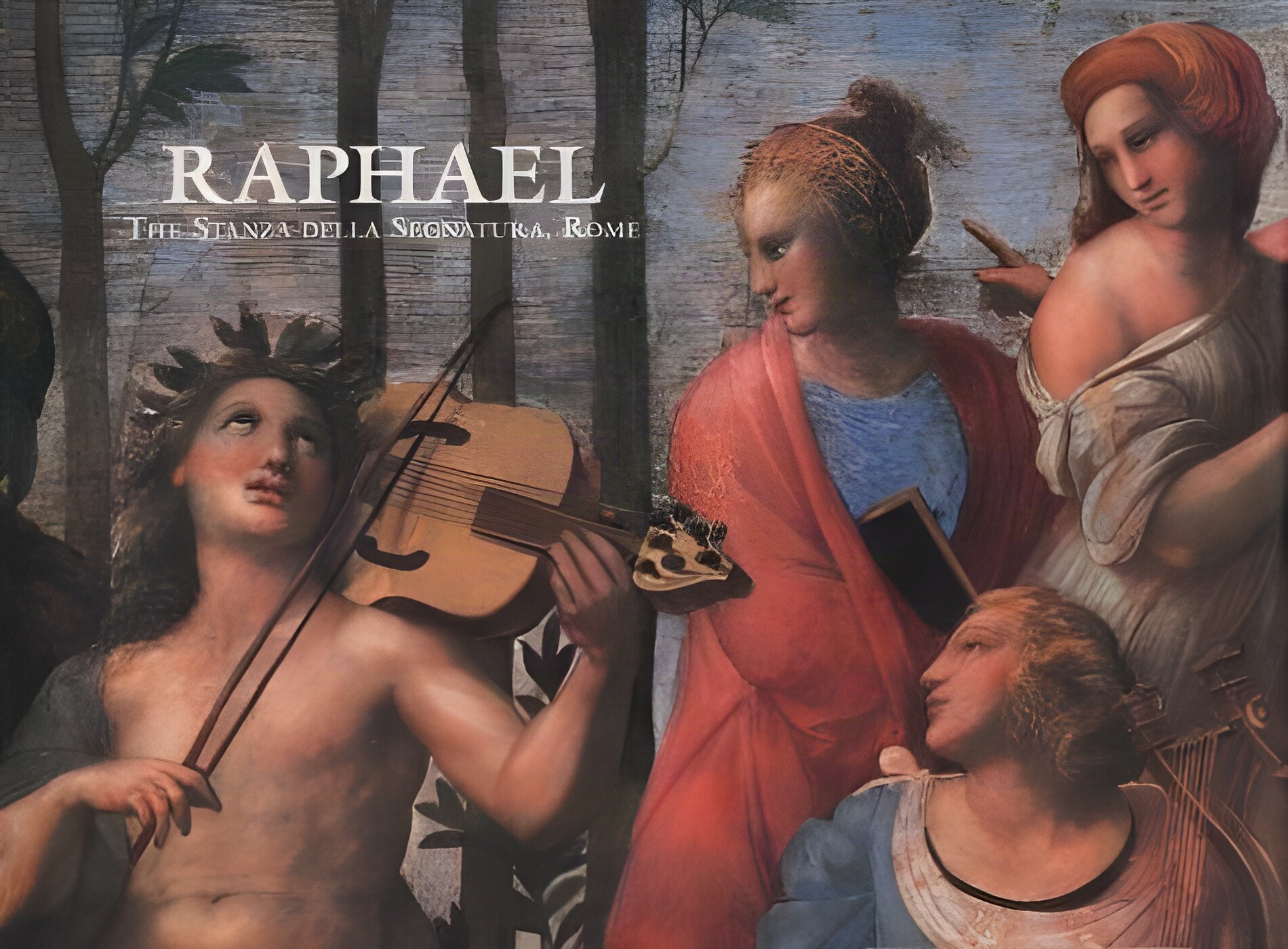
Hardcover. NY, George Braziller , 1st, 1993, Book: Very Good, Dust Jacket: Very Good, Hardcover in a bright dust jacket, 95 pages. Oblong format. 33 color plates of the artist's fresco in the Vatican. Other b&w illustrations. Recognizing the precocious talent of Raphael, then age twenty-six, Pope Julius II commissioned the artist in 1509 to paint four monumental murals and numerous smaller scenes that gave visual form to the enlightened world of the Renaissance. Guided by the leading scholars of his day, Raphael chose themes that glorified the four branches of learning required for a general education, particularly that of a pope: Theology, Poetry, Jurisprudence, and Philosophy. The painting of the latter, perhaps best known today as "The School of Athens," shows Plato and Aristotle striding through a vast, open hallway and flanked by scientists and philosophers of the ancient world; rediscovered in the Renaissance, they hold a convention where they discuss issues that will inspire a new age. Short inscription on front fly leaf, otherwise clean.
Hardcover. NY, Phaidon, 1st, 2007, Book: Very Good, Dust Jacket: None, Hardcover, 240 pages. This monograph explores the life and work of one of the most important artists in the history of the West, Raphael (1483-1520). Its scope covers Raphael's origins, his early influences, his important Urbino period and subsequently the extraordinary series of frescoes and portraits of his last phase in Rome. No dust jacket.
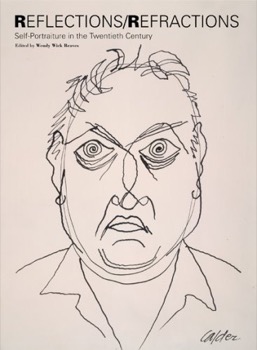
Hardcover. Washington DC, Smithsonian Institution Scholarly Press , 1st, 2009, Book: Very Good, Dust Jacket: Very Good, Hardcover in a bright, unclipped dust jacket. At least since the Renaissance, artists have created wonderful images of themselves. Some self-portraits are the equivalent of a painter's "signature," while others were inspired by the need to establish social status or gain a commission. In the twentieth century, however, self-representation turned inward, becoming a means by which artists sought to navigate passageways of the mind. In Reflections/Refractions, some of the greatest modern artists--including Andy Warhol, Edward Hopper, Grant Wood, Jasper Johns, Robert Rauschenberg, Jacob Lawrence, Louise Bourgeois, David Hockney, Alexander Calder, and Alex Katz--use sinuous line and gorgeous color to trace the intricacies of their personalities, whether dark and gloomy or bright and fanciful. The book is at once a catalog of twentieth-century self-portraits in the collection of the National Portrait Gallery, Smithsonian Institution, and an exploration of how modern artists view themselves and the world. Eighty color illustrations--drawings and paintings--are accompanied by lively and informative captions, making this volume an endlessly fascinating book. Clean copy.
Hardcover. London, National Gallery London, 1st, 1999, Book: Very Good, Dust Jacket: Very Good, 360 pages. Softcover with dust jacket. Slight soiling to dust jacket. An otherwise clean, unmarked copy with only minor edgewear. Color illustrations throughout.

 "Lure of Italy, The: American Artists and The Italian Experience, 1760 - 1914by: Stebbins, Theodore E. Et al.")

 "Michelangelo's Mountain: The Quest For Perfection in the Marble Quarries of Carraraby: Eric Scigliano")
 "Modern Vintage Illustration by: Dawber, Martin/ Bayley, Stephen (Foreward)")
 "Morris Lapidusby: Desilets, Deborah")
 "Paper: Material, Medium, Magicby: Nicola Von Velsen (Editor), Neil Holt (Editor)")

 "Piero della Francesca (Italian Edition)by: Paolucci, Antonio")
 "Piero della Francescaby: Bertelli, Senior Carlo")

 "Platonic Theology, Volume 2: Books V-VIII (The I Tatti Renaissance Library)by: Ficino, Marsilio/ Editor: Hankins, James / Translator: Allen, Michael")

 "Pour une Renaissance de la Peinture Francaiseby: Baschet, Jacques")
 "Raphaelby: Bette Talvacchia")
 "Renaissance Florence: The Art of the 1470'sby: Rubin, Patricia Lee")