Softcover. London, Tate, 1st, 2012, Book: Very Good, Dust Jacket: None, 208 pages. Softcover. Color and black and white pictures throughout. Light edgewear to wrappers.
Hardcover. London, Fuel, 1st, 2007, Book: Very Good, Dust Jacket: Very Good, Hardcover. 192 pages. Plutser-Sarno has been collecting Russian street messages, usually hand-written and posted on walls, for two decades; this book is a sampling from his Museuam of Ads and Announcements. The notes are of a great variety: seeking recruits for cults or prostitution, offering items, some of them bizzare ones, for barter, warning miscreants of dire harm should they, for example, continue to steal light bulbs from a common corridor, prohibiting--predictably--a wide range of activities, and occasionally pleading in tones of insanity. Many of the messages are shown in illustrations, and Pluter-Sarno offers brief comments, sometimes necessary ones: Without them I shouldn't have known, for example, that 'artificial rock' was a euphemism for a concrete slab. (I'm sorry though that he didn't explain what curious Slavic behaviors created the need for notices in public lavoratories asking users to abstain from standing on toilet bowls.) Given the range of notes here, it's possible for the reader to get a hint of Soviet and post-Soviet customs and beliefs, the daily struggling with poverty and paucity, and the impact of the political upon the individual. Because Fuel, the publisher, is a design company it's small wonder that as an object this is a wonderful book. It's a small hardback with a cover done in relief, and sewn in signatures. The outer 2/3 of the pages are a kraft-paper brown and the inner 1/3, with colour illustrations, a cream color.
Softcover. Cambridge MA, MIT Press, 1st, 1978, Book: Very Good, Softcover, 128 pages. INSCRIBED BY BOTH EDITORS on the front endpapers. Contributors include Dziga Vertov ('The Factory of Facts and Other Writings'), Alfred H. Barr, Jr. ('Russian Diary 1927-28', along with Jere Abbott, John E. Bowlt, and Elizabeth Jones), A. V. Lunacharsky ('Gogol-Meyerhold's "The Inspector-General"'), Paul Schmidt (on Meyerhold), Margit Rowell (on Vladimir Tatlin), and Michelson. Related ephemera laid in.
Hardcover. London, B. T. Batsford Ltd., 1st, 1949, Book: Very Good, Dust Jacket: Good, 169 pages. Hardcover. Red cloth edition. Top edge stained red. Illustrated with 126 black & white photographs and a few in color. Previous owners name embossed at top of rear interior dust jacket flap. Dust jacket with darkening to spine, minor smudges at upper left corner - jacket now protected with clear plastic cover. Clean, tight copy.
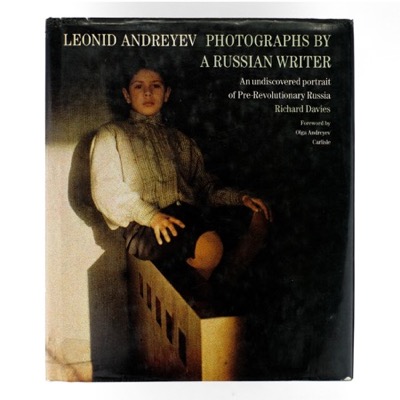
Hardcover. London, Thames and Hudson, 1st, 1989, Book: Very Good, Dust Jacket: Very Good, Hardcover in a bright dust jacket, green cloth, gilt lettering, 144 pages. Discovered in Paris in 1987, these 80 color and 30 b&w photographs, taken about 1910-14, are artistic studies of the expressionist Russian writer, his family and friends, his home, and the countryside around St. Petersburg. Includes a biographical essay and a review of the Lumiere autochrome photographic process. Mild wear to top of dj spine, otherwise a clean, tight copy.
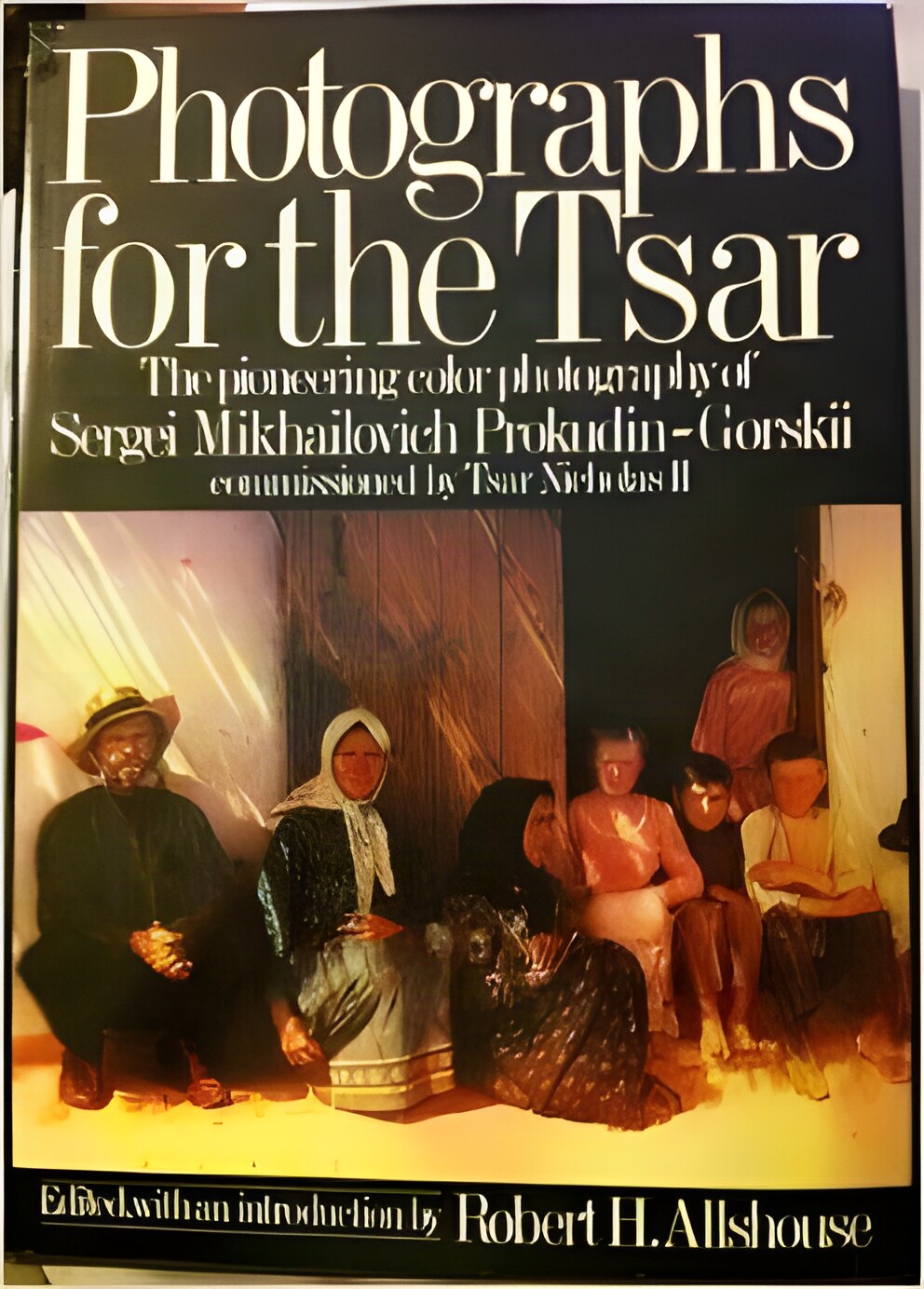
Hardcover. Dial Press, 1st, 1980, Book: Very Good, Dust Jacket: Very Good, 216 pages. Hardcover. Color photographs. Clean, unmarked copy in excellent condition with minor wear to dust jacket. Sergei Prokudin-Gorskii was a chemist and photographer commissioned by Tzar Nicholas II to photograph as much of the Russian Empre as possible in color. Prokudin-Gorskii used three color separations for his photos and as a result some pictures are astoundingly sharp and brilliantly colored, and some the colors are out of register slightly. That's irrelevant, because the photos are spectacular and show the Russian Empire from end to end on the eve of its collapse.
Hardcover. NY, William Edwin Rudge, 1st, 1930, Book: Good, Dust Jacket: None, Hardcover, red cloth, 46 pages + 51 b&w plates (color frontispiece). Russian artist and diplomatic secretary Paul or Pavel Svinin (1787-1839) toured the northeastern United States in the early 1800s. Here are excerpts of his notes, details about the time and his trip, and 51 BW reproductions of landscapes he rendered along the way. Most of the paintings show scenes from Pennsylvania, New York, New Jersey, Virginia and Maryland. Of interest to both cultural and art historians. With an introduction by R.T.H. Halsey. One of 1000 copies. Ex-lib with stamping, residue to endpapers, gilt lettering on spine faded, otherwise clean.
Hardcover. New York, Harry N. Abrams , 1st US , 1990, Book: Fine, Dust Jacket: Fine, Hardcover, 396 pages. Co-written with Natalia Adaskina, translated from Russian by Marian Schwartz. Originally published in French as "Lioubov Popova" by Philippe Sers Editieur, Paris, 1989. 433 illustrations, 130 full-color plates. Blue cloth cover with red lettering on spine. Dust jacket like new. Pristine inside and out.
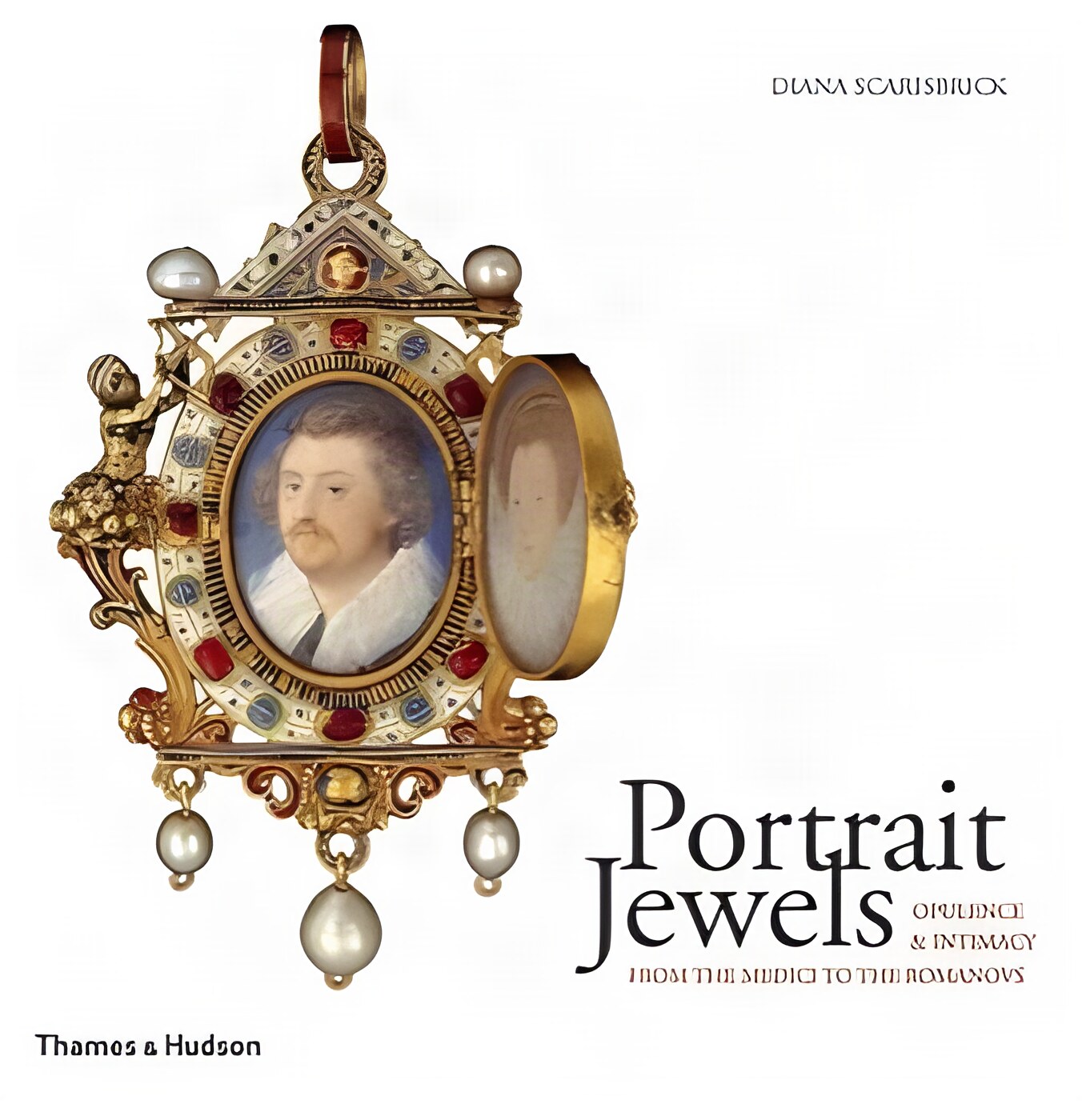
Hardcover. NY, Thames & Hudson, 1st, 2011, Book: Very Good, Dust Jacket: Very Good, Hardcover in a bright dust jacket, 352 pages, color illustrations. While cameo and intaglio portraits, other forms of deluxe jewelry, medals, and miniatures featuring famous personalities have been surveyed, a historian and curator of jewelry and engraved gems, notes that their settings have surprisingly not attracted as much attention. Covering periods from 16th to early 17th centuries Renaissance Europe to the Napoleonic to World War I eras, the author describes the pieces and names their designers in historical and personal contexts. A chapter is devoted to the portrait diamond from the Medici dynasty to the fall of the Romanovs. Clean copy. DOMESTIC SHIPPING ONLY.
Hardcover. New Haven CT, Yale University Press, 1st, 2015, Book: Very Good, Dust Jacket: None, Hardcover, 238 pages. Like new in publisher's shrink-wrap. Covering the period from the Revolution to the beginning of World War II, this book considers Soviet avant-garde photography and film in the context of political history and culture. Three essays trace this generation of artists, their experiments with new media, and their pursuit of a new political order. A wealth of stunning photographs, film stills, and film posters, as well as magazine and book designs, demonstrate that their output encompassed a spectacular range of style, content, and perspective, and an extraordinary sense of the power of the photograph to change the world.
Hardcover. Burlington, VT, Lund Humphries, Reprint, 2008, Book: Very Good, Dust Jacket: None, 208 pages. Hardcover with no dust jacket. Very clean, unmarked copy with only minor edgewear. Color illustrations throughout. Tight copy. Power to the People presents the Israel Museum's major collection of propaganda posters from the early years of the Soviet Union, documenting one of the most interesting chapters in twentieth-century graphic design. Inspired by the traditional vernacular of political cartoons, by the lubok wood-cut technique of Russian folk art, and by the ideas of Futurism, the poster artists employed a new visual language to explain the results of the Revolution to the Soviet people. The Israel Museum's collection of Soviet propaganda posters is the largest museum collection of its kind outside Russia. This book illustrates the entire collection for the first time.
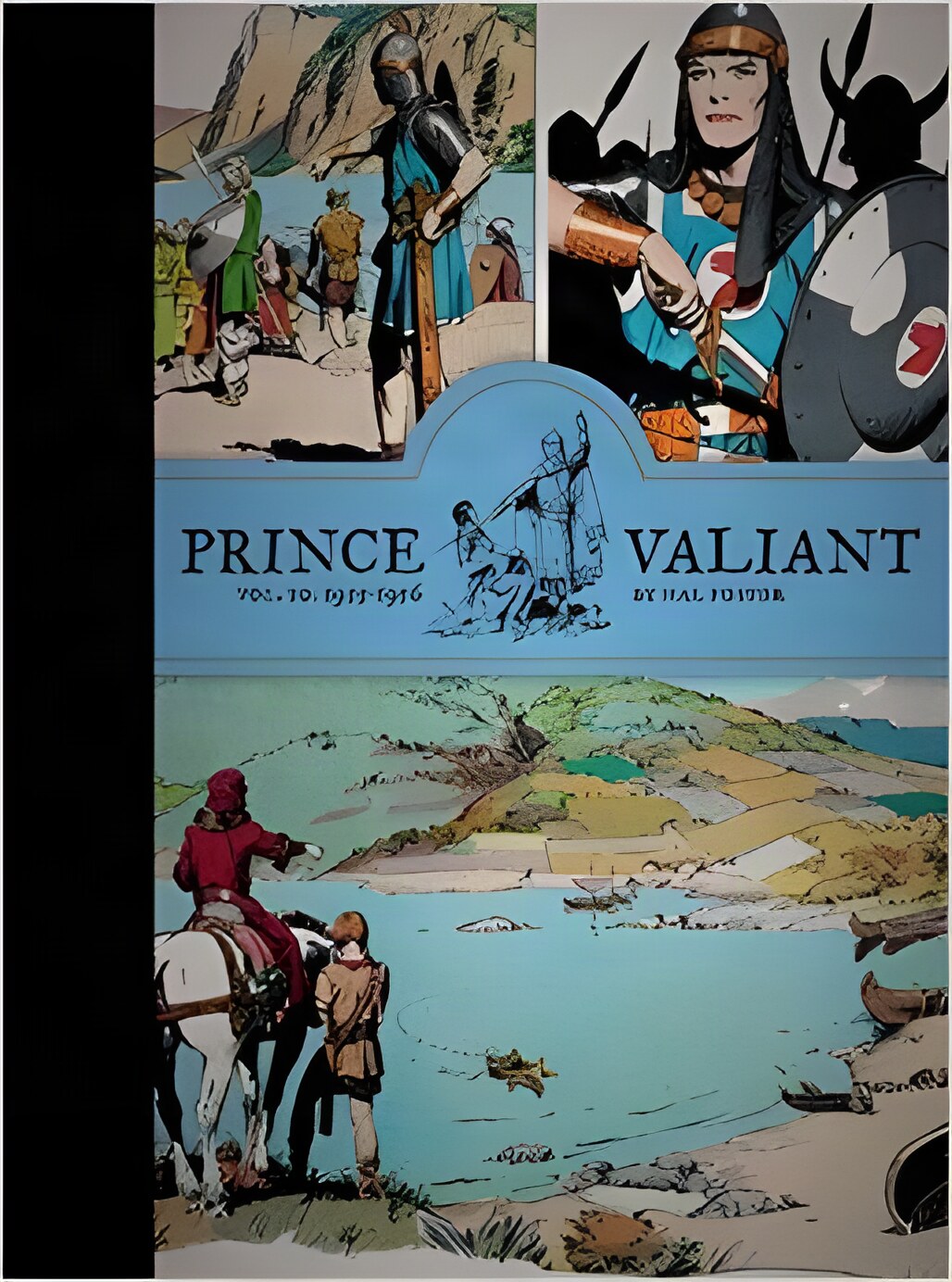
Hardcover. Seattle, Fantagraphics, 1st, 2015, Book: Very Good, Dust Jacket: None, Volume 10. Hardcover, 112 pages. Illustrated throughout in color. Clean, tight copy. This tenth volume finds our band of heroes making their way back to the Kingdom of Thule by way of Constantinople and Eastern Russia. Soon they are attacked by a tribe of barbarians who kidnap Aleta for the great Dragada Khan who wants to make her one of his wives. After nearly being killed in battle, Valiant returns to his homeland only to find the threat of hunger hovers over Thule. As Val explores new ways of feeding the kingdom's growing populace, raiders threaten the lives of his family and friends. The volume ends with Val's return to Camelot, a tournament of champions, and the threat of new treachery in Cornwall. This volume also includes an introduction by legendary comics artist Timothy Truman, and a special gallery containing more of Hal Foster's incredible Mountie paintings annotated by comics historian Brian M. Kane.
Hardcover. Berkeley CA, Counterpoint, 2nd pr., 2014, Book: Very Good, Dust Jacket: Very Good, Hardcover in a bright dustjacket, 161 pages. An unsuccessful writer and an inveterate alcoholic, Boris Alikhanov has recently divorced his wife Tatyana, and he is running out of money. The prospect of a summer job as a tour guide at the Pushkin Hills Preserve offers him hope of regaining some balance in life as his wife makes plans to emigrate to the West with their daughter Masha, but during Alikhanov's stay in the rural estate of Mikhaylovskoye, his life continues to unravel. Populated with unforgettable characters?including Alikhanov's fellow guides Mitrofanov and Pototsky, and the KGB officer Belyaev? Pushkin Hills ranks among Dovlatov's renowned works The Suitcase and The Zone as his most personal and poignant portrayal of the Russian attitude towards life and art.
Hardcover. Chicago, Art Institute of Chicago, 1st, 2017, Book: Very Good, Hardcover,324 pages. Published on the centenary of the Russian Revolution, this landmark book gathers information from the forefront of current research in early Soviet art, providing a new understanding of where art was presented, who saw it, and how the images incorporated and conveyed Soviet values. More than 350 works are grouped into areas of critical importance for the production, reception, and circulation of early Soviet art: battlegrounds, schools, the press, theaters, homes and storefronts, factories, festivals, and exhibitions. Paintings by El Lissitzky and Liubov Popova are joined by sculptures, costumes and textiles, decorative arts, architectural models, books, magazines, films, and more. Also included are rare and important artifacts, among them a selection of illustrated children's notes by Joseph Stalin's daughter, Svetlana Allilueva, as well as reproductions of key exhibition spaces such as the legendary Obmokhu (Constructivist) exhibition in 1921; Aleksandr Rodchenko's 'Workers' Club in 1925; and a Radio-Orator kiosk for live, projected, and printed propaganda designed by Gustav Klutsis in 1922. Bountifully illustrated, this book offers an unprecedented, cross-disciplinary analysis of two momentous decades of Soviet visual culture.
Hardcover. Chicago, Art Institute of Chicago, 1st, 2017, Book: Very Good, Hardcover,324 pages. Published on the centenary of the Russian Revolution, this landmark book gathers information from the forefront of current research in early Soviet art, providing a new understanding of where art was presented, who saw it, and how the images incorporated and conveyed Soviet values. More than 350 works are grouped into areas of critical importance for the production, reception, and circulation of early Soviet art: battlegrounds, schools, the press, theaters, homes and storefronts, factories, festivals, and exhibitions. Paintings by El Lissitzky and Liubov Popova are joined by sculptures, costumes and textiles, decorative arts, architectural models, books, magazines, films, and more. Also included are rare and important artifacts, among them a selection of illustrated children's notes by Joseph Stalin's daughter, Svetlana Allilueva, as well as reproductions of key exhibition spaces such as the legendary Obmokhu (Constructivist) exhibition in 1921; Aleksandr Rodchenko's 'Workers' Club in 1925; and a Radio-Orator kiosk for live, projected, and printed propaganda designed by Gustav Klutsis in 1922. Bountifully illustrated, this book offers an unprecedented, cross-disciplinary analysis of two momentous decades of Soviet visual culture.
Hardcover. Milwaukee WI, Amadeus, 1st, 2016, Book: Very Good, Dust Jacket: Very Good, Hardcover in a bright dust jacket, 406 pages, illustrations. INSCRIBED by co-editor Malcolm Crocker. A rare, revealing look at the composer, written by his granddaughter Tatiana. Featuring a wealth of correspondence and photographs from his family's archives, this book provides new, fascinating details about the composer's life, work, and relations with close friends and colleagues, including Borodin, Mussorgsky, and Tchaikovsky. It also sheds new light on his wife, Nadezhda Purgold, an accomplished composer and pianist who helped her husband with his own compositions. Many letters involve Rimsky-Korsakov's other family members and important figures in art, history, literature, and music of the late 19th and early 20th centuries. Clean copy.
Hardcover. Pantheon, 1st, 1979, Book: Very Good, Dust Jacket: Very Good, Hardcover, 136 pages. Numerous black & white and sepia illustrations, a few in color. Details Rodchenko's art, photography and domestic design work in the context of a transformative period in Russian society.
Hardcover. New York, Oxford University Press, 1st, 1990, Book: Very Good, Dust Jacket: Very Good, Hardcover, 239 pages. Minor edge wear to dust jacket. Else a very clean, tight copy. The dramatic events of the twentieth century have often led to the mass migration of intellectuals, professionals, writers, and artists. One of the first of these migrations occurred in the aftermath of the Russian Revolution, when more than a million Russians were forced into exile. With this book, Marc Raeff, one of the world's leading historians of Russia, offers the first comprehensive cultural history of the "Great Russian Emigration." He examines the social and institutional structure of the emigration and describes its rich cultural and intellectual life. He points out that what distinguishes this emigration from other such episodes in European history is the extent to which the emigres succeeded in reconstituting and preserving their cultural creativity in the West. The flourishing Russian communities of Paris, Berlin, Prague and Kharbin not only enriched Russian arts and letters, but also significantly influenced the culture of their Western hosts, and Raeff concludes with an assessment of their impact on the development of modern Western and Soviet culture.
Hardcover. Moscow, Sovietsky Khudozhnik, 1st, 1990, Book: Very Good, Dust Jacket: Very Good, 359 pages. Hardcover with dust jacket. Russian text only. Profusely illustrated in full color and black & whiite. A survey of Russia's brief Art Nouveau movement in architecture. Bright, clean copy in a similar dust jacket. In a plain cardboard slipcase.
Hardcover. Princeton NJ, Princeton University Press, 1st, 1993, Book: Very Good, Dust Jacket: Very Good, Hardcover in a bright dust jacket, 236 pages. INSCRIBED BY THE AUTHOR on the front fly leaf. In the three decades following Stalin's death, major underground Russian writers have subverted Soviet ideology by using parody to draw attention to its basis in utopian thought. Referring to utopian writing as diverse as Defoe's Robinson Crusoe, Dostoevsky's Notes from Underground, and Orwell's Animal Farm, they have tested notions of truth, reality, and representation. They have gone beyond their precursors by experimenting with the tensions between ludic and didactic art. Edith Clowes explores these "meta-utopian" narratives, which address a wide range of attitudes toward utopia, to expose the challenge that literary play poses to dogmatism and to elucidate the sense of renewal it can bring to social imagination. Using both structural analysis and reception theory, she introduces readers outside Russia to a fascinating body of literature that includes Aleksandr Zinoviev's The Yawning Heights, Abram Terts's Liubimov, Vladimir Voinovich's Moscow 2042, and Liudmila Petrushevskaia's "The New Robinsons."
Hardcover. London, VIVAYS, 1st, 2012, Book: Very Good, Dust Jacket: Very Good, 200 pages. Hardcover with dust jacket. Like new in publisher's shrink-wrap. "This volume, based on rarely seen Russian archives, traces the history of the silent film poster in Russia, starting with a poster designed by Paul Assaturov ("Stenka Razin", 1908) in the style of ancient naive Russian imagery to the latest advertise- ment for a silent movie by Yuri Pimenov from 1934. Full-page reproductions of 161 Russian silent film posters are presented here in chronological order - from the very beginning of the 20th century until the 1930s.
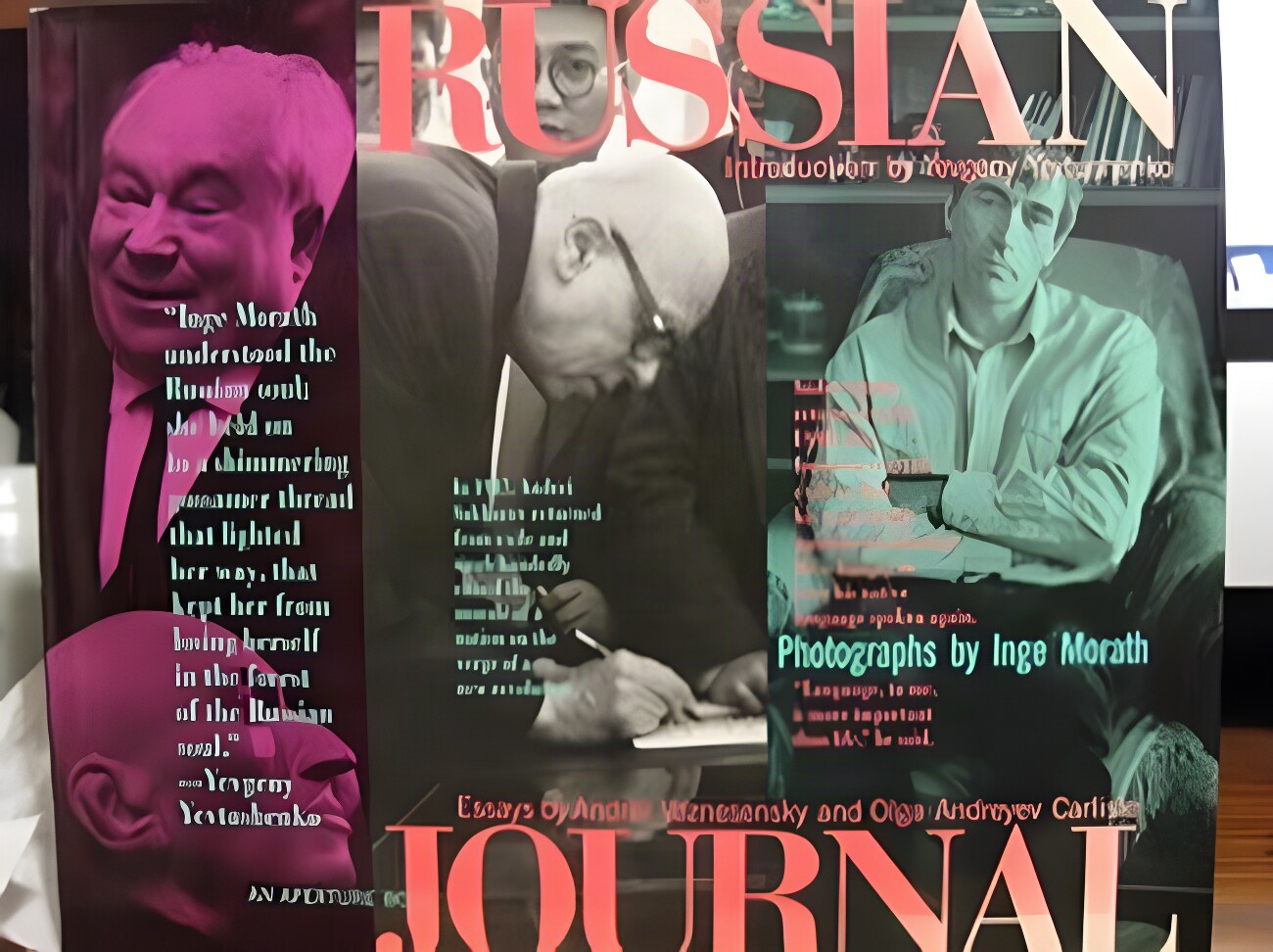
Hardcover. NY, Aperture, 1st, 1991, Book: Very Good, Dust Jacket: Very Good, Hardcover in a bright dust jacket. An acclaimed photographer's images and the words of Russia's foremost writers combine in an intimate record of the contemporary Russian experience: an intractable culture in the throes of irrevocable change. 30 color and 70 black-and-white photographs. This handsome photo album with Morath's own foreword and captions depicts a world to which many Russians in the grip of post-Soviet nostalgia long to return. Morath's Russia is devoid of Soviet excresence: no ugly concrete apartment blocks, Stalinist skyscrapers, or exhortative banners appear. Landscapes and street scenes are poetic and largely deserted. Sidetrips to Armenia, Georgia, Kyrgyzstan, Lithuania, and Uzbekistan are subsumed under "Russian culture." The people shown are mainly artists and intellectuals, and portraits of embattled dissident writers (Nadezhda Mandelstam and Joseph Brodsky) testify to the moral support Morath and her husband Arthur Miller offered them in the 1960s. The album includes fond letters from Mandelstam and poet Andrei Voznesensky, as well as Olga Andreyev Carlisle's reminiscence of her 1967 trip to the Soviet Union with Morath. Clean copy.

 "Naum Gaboby: Sidlina, Natalia")
 "Notes From Russiaby: Alexei Plutser-Sarno")

 "Pasternak on Art & Creativityby: Livingstone, Angela")
 "Peter Carl Faberge - Goldsmith and Jeweller to the Russian Imperial Court and the Principal Crowned Heads of Europe - An Illustrated Record and Review of his Life and Work, A.D. 1846-1920by:")


 "Picturesque United States of America 1811 1812 1813 being a Memoir on Paul Svinin Russian Diplimatic Officer Artist and Author Containing Copious Excerpts from His Account of His Travels in America with Fifty two Reproductions of Wat")
 "Popovaby: Sarabianov, Dmitri V. and Natalia Adaskina")
 "Power of Pictures, The: Early Soviet Photography, Early Soviet Filmby: Goodman, Susan Tumarkin")
 "Power to the People: Early Soviet Propaganda Posters in The Israel Museum, Jerusalemby: Ward, Alex")
 "Revoliutsiia! Demonstratsiia!: Soviet Art Put to the Testby: Matthew S. Witkovsky, Devin Fore, et al.")
 "Revoliutsiia! Demonstratsiia!: Soviet Art Put to the Testby: Matthew S. Witkovsky, Devin Fore, et al.")
 "Rimsky-Korsakov: Letters to His Family and Friends by: Tatiana Rimsky-Korsakov")
 "Rodchenko and the arts of revolutionary Russia by: Elliott, David")
 "Russia Abroad: A Cultural History of the Russian Emigration, 1919-1939by: Raeff, Marc")
 "Russia's Art Nouveauby: Borisova, Elena and Grigory Sternin")
 "Russian and Soviet Collages : 1920s - 1990sby: Vasily Elkin/ et al")
 "Russian Film Posters: 1900-1930by: Boerner, Maria-Christina")