Hardcover. Boston, Houghton Mifflin, 1st, 2001, Book: Very Good, Dust Jacket: None, Hardcover, illustrated boards. Tells of the true adventures of Ibn Battuta, a fourteenth-century traveler who, like Marco Polo, set forth on a seventy-five thousand mile journey of discovery through many lands, including Tanzania, China, Russia, and Morocco. Rumford's simply written adaptation is often surprisingly eloquent. For example, Ibn Battuta comments on his voyage: "Traveling-it leaves you speechless, then turns you into a storyteller." "Traveling-it had captured my heart, and now my heart was calling me home." On each page, a portion of the text appears within its own bright white narrow road crossing elegantly bordered illustrations that shine with generous amounts of gold, red, and deep blue. This text also flows into and out of larger frames. The artist adorns many of these illustrations with Arabic and Chinese calligraphy, providing translations for the longer phrases at the end of the book. A few maps are included and they are executed with the same attention to presentation. A glossary of names, places, and important words provides essential information in an accessible format.
Hardcover. New York, Simon and Schuster, 1st US, 2016, Book: Very Good, Dust Jacket: None, Hardcover, 367 pages, a graphic novel illustrated in color by Igort. Color illustrated boards, no dust jacket issued. After spending two years in Ukraine and Russia, collecting the stories of the survivors and witnesses to Soviet rule, masterful Italian graphic novelist Igort was compelled to illuminate two shadowy moments in recent history: the Ukraine famine and the assassination of a Russian journalist. Now he brings those stories to new life with in-depth reporting and deep compassion. In The Russian Notebooks, Igort investigates the murder of award-winning journalist and human rights activist Anna Politkoyskaya. Anna spoke out frequently against the Second Chechen War, criticizing Vladimir Putin. For her work, she was detained, poisoned, and ultimately murdered. Igort follows in her tracks, detailing Anna's assassination and the stories of abuse, murder, abduction, and torture that Russia was so desperate to censor. In The Ukrainian Notebooks, Igort reaches further back in history and illustrates the events of the 1932 Holodomor. Little known outside of the Ukraine, the Holodomor was a government-sanctioned famine, a peacetime atrocity during Stalin's rule that killed anywhere from 1.8 to twelve million ethnic Ukrainians. Told through interviews with the people who lived through it, Igort paints a harrowing picture of hunger and cruelty under Soviet rule.
Hardcover. New York, Harry N. Abrams, 1st, 2014, Book: Very Good, Dust Jacket: Very Good, Hardcover, 320 pages illustrated in color. The sumptuous fashions of Valentin Yudashkin, the first post-Soviet designer to bring a contemporary Russian look to the international fashion world.
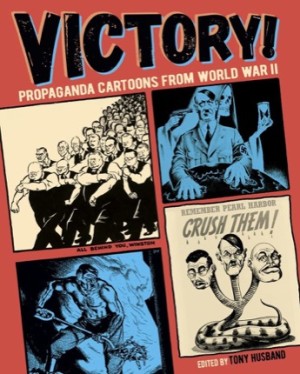
Softcover. London, Sirius, 1st, 2022, Book: Very Good, Dust Jacket: None, Softcover, 192 pages. Award-winning cartoonist Tony Husband tells the story of World War II through a selection of the era's finest political cartoons. Satire is one of the key weapons of war. Forget 'sticks and stones', each country uses cartoons to hit the enemy where it really hurts and to maintain morale on the home front. Each country brought their own unique style and this collection features work from Britain, the USA, Germany, Russia and Japan and features the work of some of World War II's greatest cartoonists including Bill Mauldin, Fougasse, Emett, David Low and Graham Laidler. Clean, bright copy.
Hardcover. NY, Thames & Hudson;, 1st, 2009, Book: Very Good, Dust Jacket: Very Good, Hardcover in a bright, unclipped dust jacket. The best pages from the sensational photo magazine published in France in the 1920s and 1930s. Established in Paris in 1928, VU combined stunning photography with dynamic layouts and first-rate reporting, creating a revolution in journalism and setting the stage for future photo magazines like Life, Stern, and Paris Match. For a weekly magazine that only published 665 issues (21 March 1928 -- 5 June 1940) VU left behind a remarkable legacy as revealed in these pages. There are eight main chapters: Page layouts; Faces; Photo stories; Photomontages; The rise of Hitler; Sensation and spectacle; Image innovations; Covers and each is crammed with spreads and covers from the magazine and lots of them are big enough to read the stories and captions (assuming you know French). VU was created by publisher Lucien Vogel with editor Carlo Rim and art editor Alexander Liberman (who became US Vogue's art editor and later creative director of Conde Nast) as a general interest picture weekly, some years before Life and Look in the US and Picture Post in Britain. They all took advantage of developing technologies of the day like wire transmission of photos and rotogravure printing. VU was the first though to use photos in a very creative way, especially with cover montages created by Liberman, no doubt influenced by Russian magazines of the twenties designed Rodchenko, Tellingater, Lissitzky and Stepanova.
Hardcover. NY, Thames and Huson, 1st, 2007, Book: Very Good, Dust Jacket: Very Good, Hardcover, 256 pages. Published to accompany an exhibition at London's Imperial War Museum, this book features more than 250 superb full-color illustrations of hard-hitting propaganda and groundbreaking graphic art. It encompasses iconic images such as Alfred Leete's "Your Country Needs You" as well as additional material drawn from the world of advertising and documentary photographs of posters in situ. Through posters, the author examines the social, political, ethnic, and cultural aspirations of America, Britain, Ireland, Germany, France, the Netherlands, Belgium, Russia, Austria, Hungary, and the Czech Republic. Covering topics as diverse as advertising in World War I, the Bolshevik Revolution, the Spanish Civil War, Germany and Occupied Europe in World War II, anti-nuclear campaigns, and Vietnam, the book is comprehensive and highly analytical, yet accessible. 300 illustrations, 250 in color.
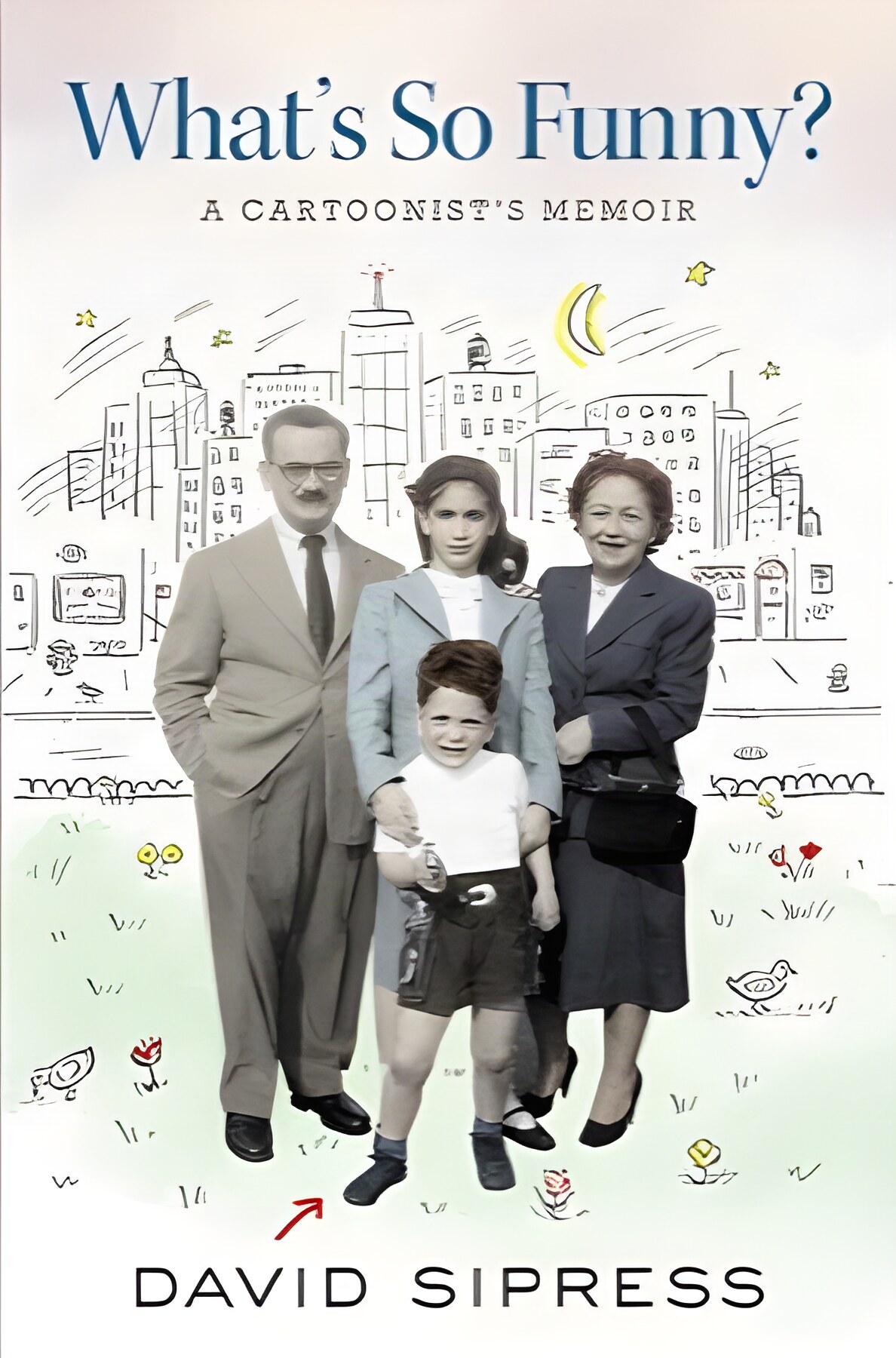
Hardcover. Boston, Mariner Books, 1st, 2022, Book: Very Good, Dust Jacket: Very Good, Hardcover in a bright dust jacket, 253 pages, b&w illustrations. From a longtime New Yorker staff cartoonist, an evocative family memoir, a love letter to New York City, and a delightful exploration of the origins of creativity--richly interleaved with the author's witty, beloved cartoons. David Sipress, a dreamer and obsessive drawer living with his Upper West Side family in the age of JFK and Sputnik, goes hazy when it comes to the ceaselessly imparted lessons-on-life from his meticulous father and the angsty expectations of his migraine-prone mother. With wry and brilliantly observed prose, Sipress paints his hapless place in the family, from the time he is tricked by his unreliable older sister into rocketing his pet turtle out his twelfth-floor bedroom window to the moment he walks away from a Harvard PhD program in Russian history to begin his life as a professional cartoonist. Sipress's cartoons appear in the story with spot-on precision, inducing delightful Aha! moments in answer to the perennial question aimed at cartoonists: Where do you get your ideas?
Hardcover. NY, Merrell Publishing, 1st, 2008, Book: Very Good, Dust Jacket: Very Good, Hardcover, 240 pages. In the early twentieth century Zaida Ben-Yusuf (1869?1933) was one of the busiest photographers in New York City, maintaining a fashionable studio on Fifth Avenue, exhibiting her distinctly modern portraits across America, Europe and Russia, and publishing work in many magazines. Her self-portraits also challenged traditional perceptions of female identity. This striking book celebrates Ben-Yusuf ?s achievement, showcasing a significant selection of her elegant and compelling portraits featuring prominent artistic and political figures of the day, including Lincoln Steffens, Edith Wharton, Elsie de Wolfe and Robert Henri.

 "Traveling Man: The Journey of Ibn Battuta, 1325-1354 by: Rumford, James")
 "Ukrainian and Russian Notebooks, The: Life and Death under Soviet Ruleby: Igort (Igor Tuvert)")
 "Valentin Yudashkin: 25 Years of Creationby: Tarkhanov, Alexey")
 "Vu: The Story of a Magazineby: C")
 "War Posters: Weapons of Mass Communicationby: James Aulich")
 "Zaida Ben-Yusuf: New York Portrait Photographer by: Goodyear, Frank H. (Author), Elizabeth O. Wiley (Contributor), Jobyl A. Boone (Contributor)")