Hardcover. New Haven CT, Yale University Press, 1st, 2009, Book: Very Good, Dust Jacket: None, 240 pages, profusely illustrated in color and b&w. Quarter cloth with pictorial paper-covered boards. Like new in publishers shrink-wrap.
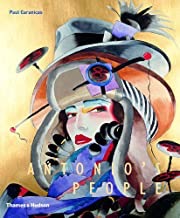
Softcover. NY, Thames & Hudson, 1st, 2004, Book: Very Good, Dust Jacket: None, Softcover, 176 pages. An unparalleled virtuoso, he captured the pulse of style from the 1960s to the 1980s, and is still revered as the most inspiring illustrator by today's practitioners. Recording and predicting contemporary style trends, Antonio also used his immense versatility to adopt a broad range of art movements, from Pop Art to Surrealism. The man himself, his life and friendships, particularly with Juan Ramos, his constant collaborator, define his oeuvre. For Antonio, life-bestial and sublime-surpassed any fiction. His illustrations and photographs capture the beautiful people who are part of celebrity folklore, and who were more often than not his friends: Jerry Hall (to whom he was engaged), Grace Jones, Mick Jagger, Audrey Hepburn, Andy Warhol (with whom he worked on Interview magazine), Paloma Picasso and Marlene Dietrich. Packed with previously unpublished material, this is a thrilling retrospective about an artist who is represented in major collections from the Metropolitan to the Louvre. Even posthumously, Antonio has not relinquished his grip on the fashion world: his style and quest for beauty live on. 230 illustrations, 155 in color
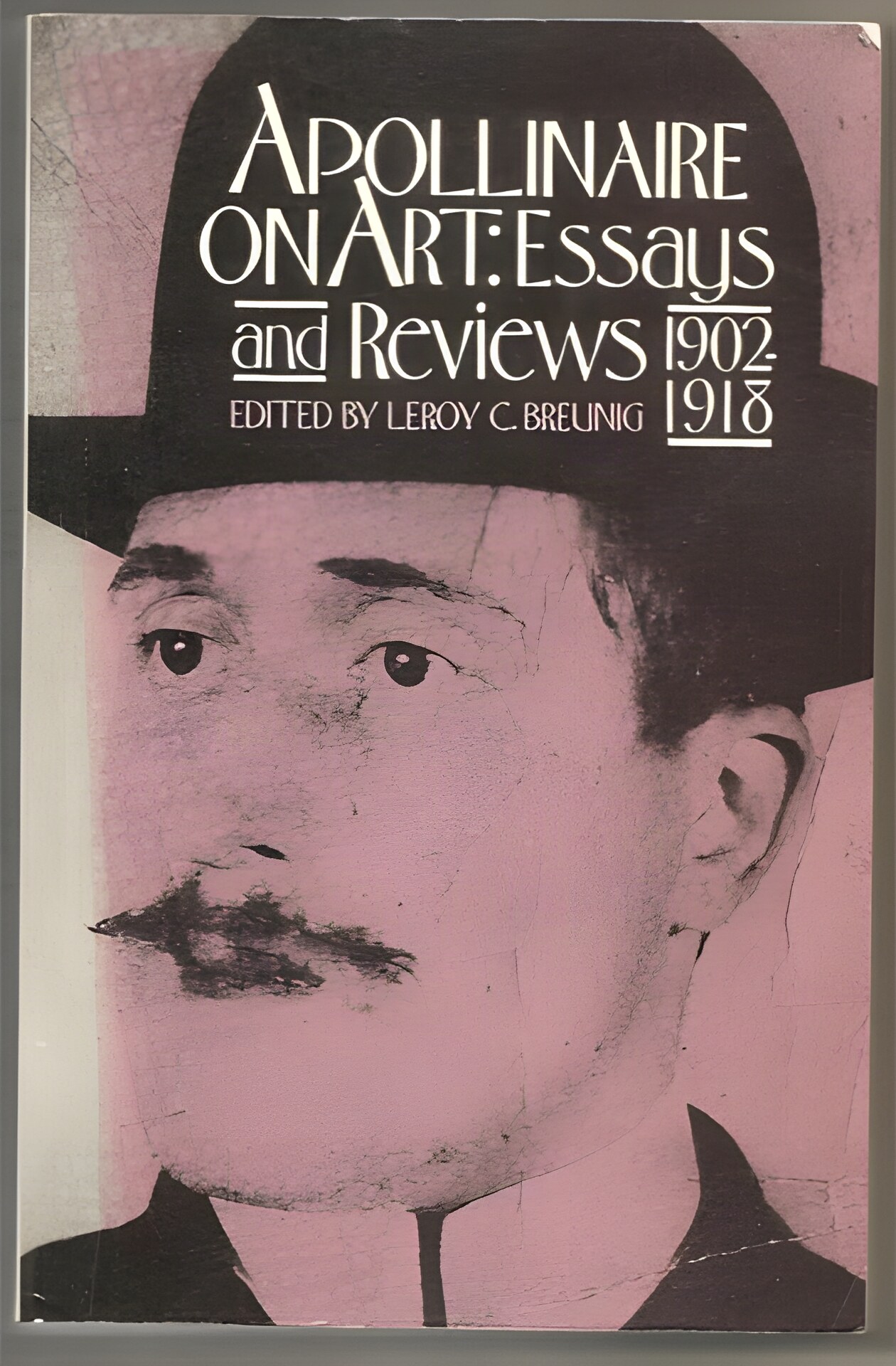
Softcover. NY, Da Capo Press, 1st pbk., 1972, Book: Very Good, Dust Jacket: None, Softcover, 546 pages, b&w illustrations, Apollinaire champions Picasso, Braque, Cezanne, Delaunay, Duchamp, Rousseau ,cubism, surrealism, and much more. Clean copy.
Softcover. NY, Albright-Knox Gallery, 1st, 1995, Book: Very Good, Dust Jacket: None, Softcover, This solid, authoritative presentation of Gorky's pivotal art of the 1940s accompanies an exhibit of paintings and drawings showing this year at the National Gallery in Washington, D.C., as well as Buffalo and Fort Worth. Biographical and art-historical essays by Auping, a Modern Art Museum of Fort Worth curator, as well as Dore Ashton and Matthew Spender summarize the critical consensus of Gorky, placing him between Surrealism and Abstract Expressionism in the development of 20th-century art. Excellent reproductions of the paintings and drawings in the show are supplemented by close-ups from several paintings, photographs of Gorky, and selections from Gorky's letters. While not a comprehensive or groundbreaking work, this volume is an excellent summary of or introduction to Gorky for both general and informed lay readers. Clean copy.
Hardcover. Cambridge MA, The MIT Press, 1sr, Book: Very Good, Dust Jacket: Very Good, Hardcover in a bright gold foil dust wrapper, 476 pages. The artist Francis Picabia -- notorious dandy, bon vivant, painter, poet, filmmaker, and polemicist -- has emerged as the Dadaist with postmodern appeal, and one of the most enigmatic forces behind the enigma that was Dada. In this first book in English to focus on Picabia's work in Paris during the Dada years, art historian and critic George Baker reimagines Dada through Picabia's eyes. Such reimagining involves a new account of the readymade -- Marcel Duchamp's anti-art invention, which opened fine art to mass culture and the commodity. But in Picabia's hands, Baker argues, the Dada readymade aimed to reinvent art rather than destroy it. Picabia's readymade opened art not just to the commodity, but to the larger world from which the commodity stems: the fluid sea of capital and money that transforms all objects and experiences in its wake. The book thus tells the story of a set of newly transformed artistic practices, claiming them for art history -- and naming them -- for the first time: Dada Drawing, Dada Painting, Dada Photography, Dada Abstraction, Dada Cinema, Dada Montage.Along the way, Baker describes a series of nearly forgotten objects and events, from the almost lunatic range of the Paris Dada "manifestations" to Picabia's polemical writings. Clean copy.
Hardcover. University of Nebraska, 1st, 1996, Book: Very Good, Dust Jacket: Very Good, Hardcover in a dust jacket with minor fading to edges, b&w illustrations, 179 pages. Contemporary feminist critics have often described Surrealism as a misogynist movement. In Automatic Woman, Katharine Conley addresses this issue, confirming some feminist allegations while qualifying and overturning others. Through insightful analyses of works by a range of writers and artists, Conley develops a complex view of Surrealist portrayals of Woman. Conley begins with a discussion of the composite image of Woman developed by such early male Surrealists as Andre Breton, Francis Picabia, and Paul Eluard. She labels that image "Automatic Woman"--a term that comprises views of Woman as provocative and revolutionary but also as a depersonalized object largely devoid of individuality and volition. This analysis largely confirms feminist critiques of Surrealism. The heart of the book, however, examines the writings of Leonora Carrington and Unica Zurn, two women in the Surrealist movement whose works, Conley argues, anticipate much contemporary feminist art and theory. In concluding, Conley shows how Breton's own views on women evolved in the course of his long career, arriving at last at a position far more congenial to contemporary feminists.
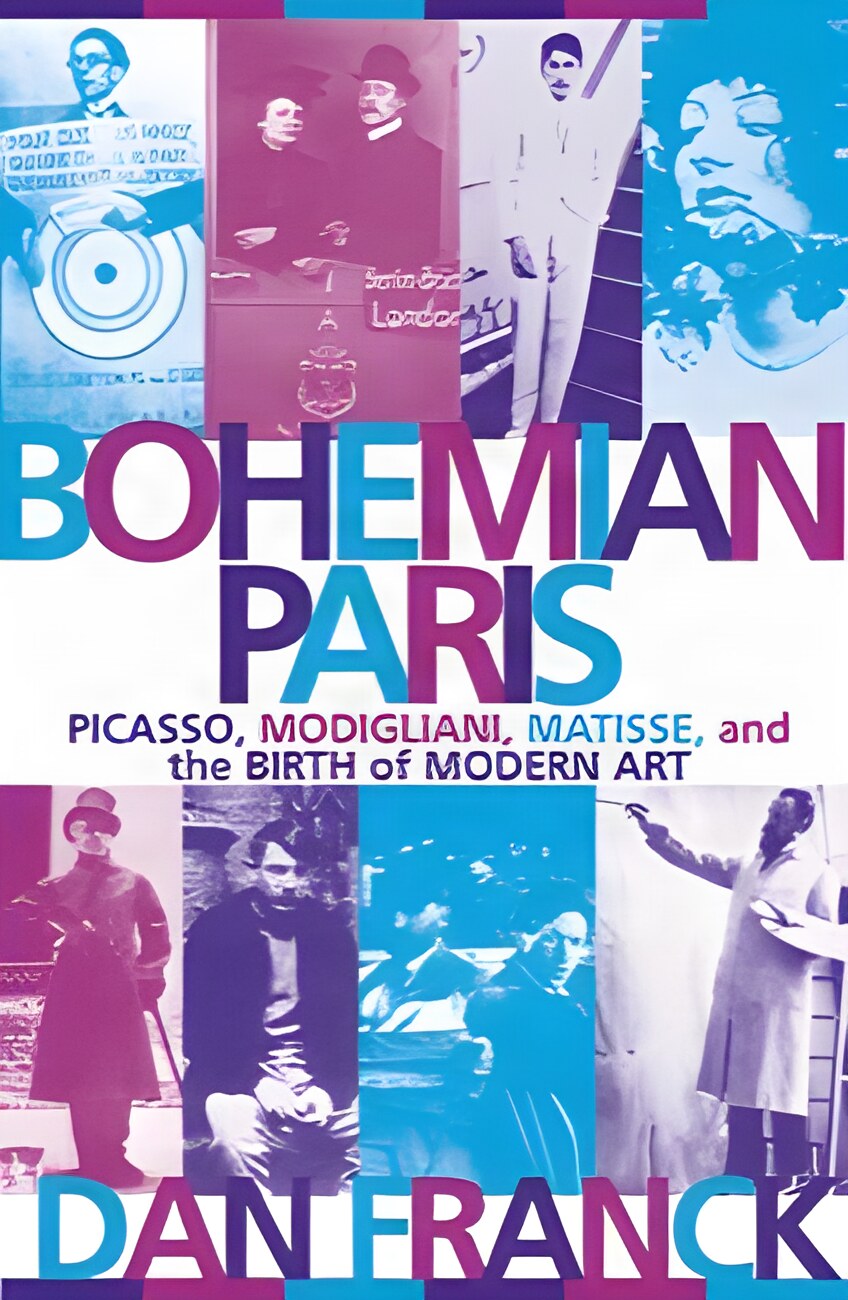
Softcover. NY, Grove Press, 1st pbk, 2003, Book: Very Good, Dust Jacket: None, Softcover, 430 pages, b&w illustrations. A legendary capital of the arts, Paris hosted some of the most legendary developments in world culture -- particularly at the beginning of the twentieth century, with the flowering of fauvism, cubism, dadaism, and surrealism. In Bohemian Paris, Dan Franck leads us on a vivid and magical tour of the Paris of 1900-1930, a hotbed of artistic creation where we encounter Apollinaire, Modigliani, Cocteau, Matisse, Picasso, Hemingway, and Fitzgerald, working, loving, and struggling to stay afloat. Clean, bright copy.
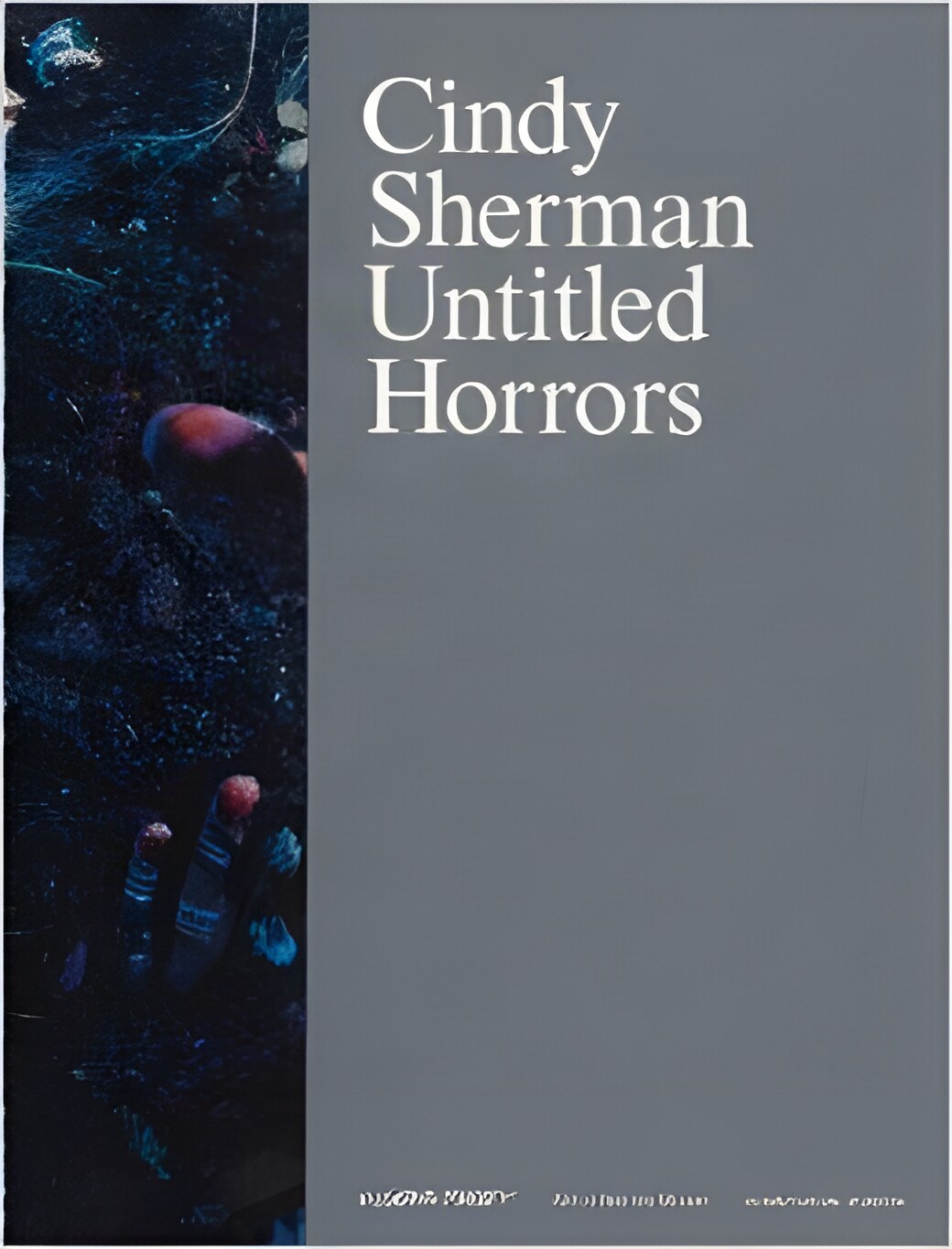
Softcover. Hatje Cantz, 1st, 2013, Book: Very Good, Dust Jacket: None, Like new in publisher's shrink-wrap. Softcover, 220 pages. Throughout her career, Cindy Sherman (born 1954) has been interested in exposing the darker sides of human nature, noticeable both in her selection of subject matter (fairytales, disasters, sex, horror, surrealism) and in her disquieting interpretations of well-established photographic genres, such as film stills, fashion photography and society portraiture. Delving relentlessly into the more grotesque extremes of delusion, vanity and self-image, Sherman probes deeply into the masks and distractions we all employ to set apart our public and our private personae, and challenges us to consider how bizarre and unconvincing our attempts at projecting a semblance of normality can be. Attracting a certain degree of notoriety, intense and ongoing public interest as well as extensive critical acclaim, Sherman's works continue to challenge and intrigue in equal measure. This richly illustrated publication deploys a selection of works from across her career to highlight and acknowledge these particular aspects of her art. These images are accompanied by more recent work, as well as essays from well-known authors, filmmakers and artists who likewise deal with the grotesque, the uncanny and the extraordinary in their practice.
Hardcover. New York, D.A.P./The National Gallery of Art, Washington, 1st, 2005, Book: Very Good, Dust Jacket: Very Good, 432 pages. Hardcover with dust jacket. A very clean, unmarked copy with only minor wear to dust jacket edges. Covered here are works by some 40 artists made in the period from circa 1916, when the Cabaret Voltaire was founded in Zurich, to 1926, by which time most of the Dada groups had dispersed or significantly transformed. The city sections bring together painting, sculpture, photography, collage, photomontage, prints and graphic work. Relying on dynamic design and vivid documentary images, Dada takes us through these six cities via topical essays and extensive plate sections; an illustrated chronology of the movement; witty chronicles of events in each city center; a selected bibliography; and biographies of each artist--accompanied by Dada-era photographs.
Hardcover. New York , Museum of Modern Art, 1st, 2007, Book: Very Good, Dust Jacket: Very Good, Hardcover, 238 pages, 150 color and b&w illustrations. 4to, boards. New Exhibition also at the Tate Modern, London, the Los Angeles County Museum of Art, and the Salvador Dali Museum, St. Petersburg, FL.
Hardcover. Zurich, Verlag Scheidegger and Spiess, 1st, 2008, Book: Very Good, Dust Jacket: Very Good, Hardcover, 182 pages. Illustrated in b&w and some color. An account by art historian and controversial author Catherine Millet of a highly personal encounter with the artist s celebrated paintings and self-reflective writings. One of the first studies of the notoriously idiosyncratic artist s essays, this revolutionary book reveals all the narcissism, anxiety, and visual genius of the most famous and infamous of the surrealists. In a bright dust jacket.
Softcover. Spain, Fundacion La Caixa, 1st, 2004, Book: Very Good, Dust Jacket: None, 284 pages. Softcover. A very clean, unmarked copy with only minor edgewear. Beautiful color illustrations and photographs throughout.
Softcover. London , Tate Publishing, 1st, 2008, Book: Very Good, Dust Jacket: None, 197 pages. Softcover. Extensive color photographs and illustrations throughout. Illustrated frontispiece. Gilt titles on cover. Clean, unmarked copy with only minor wear to wrappers.
Softcover. London, Tate Publishing, 1st, 2008, Book: Very Good, Dust Jacket: None, Softcover, 248 pages, color and b&w illustrations. This book examines the work of Duchamp, Man Ray, and Picabia, three pioneering figures in the history of modernism. It explores the points of convergence and the parallels in their development throughout their careers. Central to this is their response to photography and film, and to the challenges posed to fine art by the development of mass production. Duchamp's paintings of 1911-12 were influenced by the representation of movement in photography, while Picabia's were shaped in part by the belief that the advent of the camera spelled the end of traditional painting. Man Ray used photography first to record his own art works and those of others, but soon saw in it a means of creating images of a status and inventiveness traditionally restricted to fine art. And, as this fully illustrated book shows, humor and eroticism were themes common to the work of all three artists.
Hardcover. New York, The Museum of Modern Art, 1st, 2005, Book: Very Good, Dust Jacket: None, Hardcover, 236 pages, color illustrations. Like new in publisher's shrink-wrap. Elizabeth Murray has radically altered the structure of Modernist painting. Her shaped and constructed canvases, often topologically modeled in three dimensions or fitted together out of multiple jigsaw-like parts, treat figure and ground in unprecedented ways, giving the elastic shapes of classic Surrealism a space in their own image. The alternatively comfortable and cataclysmic world that her images depict would crack irrevocably if it followed Euclidean logic; instead; it constantly metamorphoses under stress. With a chaptered essay by Robert Storr, plate section, and in-depth interview, the book explores Murray's relation to artists such as Joan Miro, Stuart Davis, Claes Oldenburg and Frank Stella, as well as to the mainstream and opened up options for rising generations. This book accompanies the most detailed examination of Murray's art yet mounted, showing its development from Pop-oriented reliefs in the 1960s to the extraordinary volumetric of her recent work.
Hardcover. New York, Rizzoli, 1st, 1987, Book: Very Good, Dust Jacket: Very Good, Hardcover, 235 pages, illustrated with 300 duotone, 56 color plates. A scholarly study of surrealism's influence on fashion from the 1920s through the 1980s. Like new in a bright, unclipped dust jacket.
Softcover. Washington DC, Smithsonian Institution, 1st, 1989, Book: Very Good, Dust Jacket: None, Softcover, 187 pages, illustrated throughout in color and b&w. Light edgewear to wrappers, else a clean, tight copy.
Hardcover. Cambridge MA, Harvard University Press, 2nd pr., 1945, Book: Good, Dust Jacket: Fair, Hardcover in a worn and chipped dust jacket, 247 pages. SIGNED BY THE AUTHOR on the title page. Illustrated with 10 b&w plates.
Hardcover. New Haven CT, Yale University Press, 1st, 2015, Book: Very Good, Dust Jacket: Very Good, Hardcover in a bright dust jacket. 282 pages, illustrated in b&w and color. Although Surrealism is usually associated with the 1920s and 1930s, it remained a vital force in Paris throughout the postwar period. This important book offers the first detailed account in English of the trajectory of the French Surrealists in the 1950s and 1960s, giving particular emphasis to the significance of myth for the group in its reception of science fiction and its engagement with fantastic art. Offering new readings of the art and writings of the later generation of Surrealists, Gavin Parkinson demonstrates how they were connected to the larger cultural and political debates of the time. Whereas earlier Surrealist art and writing drew on psychoanalytic practices, younger Surrealists engaged with contemporary issues, ideas, and themes of the period of the Cold War and Algerian War such as parapsychology, space travel, fantastic art, increasing consumerism in Europe, emerging avant-gardes such as Nouveau Realisme, and the rise of the whole genre of conspiracy theory, from Nazi occultism to flying saucers. Futures of Surrealism offers a unique perspective on this brave new world. Clean copy.
Hardcover. Richmond, Va., Candela Books, 1st, 2010, Book: Good, Dust Jacket: None, 100 pages. Hardcover. Extensive b&w photography throughout. Tipped in plate on front cover. Small stain to front cover, otherwise clean, tight copy. Working primarily from the 1940s through the early 1960s, the American photographer Gita Lenz (1910-2011) made documents of New York street life that won her early recognition and inclusion in two group shows curated by Edward Steichen for The Museum of Modern Art, a three-person show at the Brooklyn Museum and numerous articles and features in photography magazines of the time. Equally given to inflecting her portraiture with hints of social realism one on hand, and surrealism on the other, and also influenced by her close friend Aaron Siskind, Lenz produced abstract compositions, city still lifes, surreal still lifes and intimate portraits. She receded from view in the 1960s as financial demands impeded her practice, but in 2002, a chance meeting with photographer Gordon Stettinius led to the retrieval of this small but charming body of work, and the publication of this superbly printed first monograph.
Hardcover. NY, Penguin Press, 1st, 2019, Book: Very Good, Dust Jacket: Very Good, Hardcover in a bright, unclipped dust jacket., 310 pages, color and b&w illustrations. In Montparnasse begins on the eve of the First World War and ends with the 1936 unveiling of Dali's Lobster Telephone. As those extraordinary years unfolded, the Surrealists found ever more innovative ways of exploring the interior life, and asking new questions about how to define art. In Montparnasse recounts how this artistic revolution came to be amidst the salons and cafes of that vibrant neighborhood. Sue Roe is both an incisive art critic of these pieces and a beguiling biographer with a fingertip feel for this compelling world. Beginning with Duchamp, Roe then takes us through the rise of the Dada movement, the birth of Surrealist photography with Man Ray, the creation of key works by Ernst, Cocteau, and others, through the arrival of Dali. On canvas and in their readymades and other works these artists juxtaposed objects never before seen together to make the viewer marvel at the ordinary--and at the workings of the subconscious. We see both how this art came to be and how the artists of Montparnasse lived. Roe puts us with Gertrude Stein in her box seat at the opening of The Rite of Spring; with Duchamp as he installs his famous urinal; at a Cocteau theatrical with Picasso and Coco Chanel; with Breton at a session with Freud; and with Man Ray as he romances Kiki de Montparnasse.
Hardcover. Germany, Hatje Cantz, reprint, 2009, Book: Very Good, Dust Jacket: Very Good, 480 pages. Hardcover with dust jacket with slip case. Clean, unmarked copy with only minor wear to dust jacket. Color/ Black and white pictures throughout. Coinciding with renewed interest in James Ensor, this catalogue raisonne comes as an essential and definitive volume for Ensor buffs and all serious libraries of modern art. A legend in his own lifetime, Ensor (1860-1949) was--alongside Vincent van Gogh and Edvard Munch--a fearless independent whose work led directly to the development of German Expressionism and French Surrealism. Ensor achieved fame as the "painter of masks," and for his bizarre still lifes and grotesque carnival scenes, in harsh, contrasting, brilliant colors, evolving out of the traditional Flemish dance of death. Now, the reader can explore the Belgian painter's oeuvre thoroughly, in this opulently illustrated, full-color, slipcased catalogue raisonne. A comprehensive illustrated chronology offers additional details about the artist's life and work, and forms an integral part of this splendid, highly valuable contribution to art historical research, ensuring the legacy of a great artist who continues to inspire contemporary art.

 "Alias Man Ray: The Art of Reinvention (Jewish Museum)by: Klein, Mason")
 "Arshile Gorky: The Breakthrough Yearsby: Spender, Matthew,Auping, Michael,Ashton, Dore")
 "Artwork Caught by the Tail:Francis Picabia and Dada in Parisby: Baker, George")
 "Automatic Woman:The Representation of Women in Surrealism by: Katharine Conley")
 "Dada: Zurich, Berlin, Hannover, Cologne, New York, Parisby: Dickerman, Leah")
 "Dali & Filmby: Ades, Dawn and Matthew Gale")
 "Dali and Meby: Millet, Catherine")
 "Dali: Mass Cultureby: Dali, Salvador")
 "Duchamp Book, The: Tate Essential Artists Seriesby: Parkinson, Gavin")
 "Duchamp, Man Ray, Picabiaby: Mundy, Jennifer")
 "Duchamp, Man Ray, Picabiaby: Mundy, Jennifer")
 "Elizabeth Murrayby: Storr, Robert")
 "Fashion and Surrealismby: Martin, Richard")
 "Francis Baconby: GOWING, Lawrence")
 "Futures of Surrealism Myth, Science Fiction and Fantastic Art in France 1936-1969 by: Parkinson, Gavin")
 "Gita Lenzby: Lenz/Gordon Stettinius, Gita")
 "In Montparnasse: The Emergence of Surrealism in Paris, from Duchamp to Daliby: Sue Roe")
 "James Ensor: The Complete Paintingsby: Tricot, Xavier")