Hardcover. New York, Rizzoli, 1st, 2006, Book: Very Good, Dust Jacket: Very Good, 275 pages, color illustrations throughout. In publisher's shrinkwrap. Owen Jones was, and still remains, a highly influential force in the world of architecture and design. His prolific and impressive work--captured here in its various stages through drawings, architectural plans, and photographs--is as current, imaginative, and important now as when it first emerged more than 125 years ago. Owen Jones: Design, Ornament, Architecture & Theory in an Age in Transition fills a serious gap in the history of Victorian design. In his early career Jones was recognized as an authority on Oriental design. In the 1850s he was commissioned to decorate the interior of Joseph Paxton's magnificent World's Fair Crystal Palace in London. Other signature projects include St. James' Hall, the Crystal Palace Bazaar, Osler's Glass Shop, and Eynsham Hall at Oxford. In 1856 he completed his monumental Grammar of Ornament, which remains one of the most influential works on design ever published and is a source for many artists and designers today. More than just an architect, Jones' skills were applied to designing interiors, books, textiles, furniture, and carpet. His philosophy can most accurately be expressed in his words, "Form without color is like a body without a soul."
Hardcover. New York, Rizzoli, 1st, 2006, Book: Very Good, Dust Jacket: Very Good, 275 pages, color illustrations throughout. In publisher's shrinkwrap. Owen Jones was, and still remains, a highly influential force in the world of architecture and design. His prolific and impressive work--captured here in its various stages through drawings, architectural plans, and photographs--is as current, imaginative, and important now as when it first emerged more than 125 years ago. Owen Jones: Design, Ornament, Architecture & Theory in an Age in Transition fills a serious gap in the history of Victorian design. In his early career Jones was recognized as an authority on Oriental design. In the 1850s he was commissioned to decorate the interior of Joseph Paxton's magnificent World's Fair Crystal Palace in London. Other signature projects include St. James' Hall, the Crystal Palace Bazaar, Osler's Glass Shop, and Eynsham Hall at Oxford. In 1856 he completed his monumental Grammar of Ornament, which remains one of the most influential works on design ever published and is a source for many artists and designers today. More than just an architect, Jones' skills were applied to designing interiors, books, textiles, furniture, and carpet. His philosophy can most accurately be expressed in his words, "Form without color is like a body without a soul."
Softcover. Santa Fe NM, School of American Research Press, 1st, 1983, Book: Very Good, Dust Jacket: None, Softcover, 118 pages illustrated in color and b&w. Light sunning to front wrapper. Otherwise clean.
Hardcover. Chicago, Art Institute of Chicago, 1st, 2017, Book: Very Good, Hardcover,324 pages. Published on the centenary of the Russian Revolution, this landmark book gathers information from the forefront of current research in early Soviet art, providing a new understanding of where art was presented, who saw it, and how the images incorporated and conveyed Soviet values. More than 350 works are grouped into areas of critical importance for the production, reception, and circulation of early Soviet art: battlegrounds, schools, the press, theaters, homes and storefronts, factories, festivals, and exhibitions. Paintings by El Lissitzky and Liubov Popova are joined by sculptures, costumes and textiles, decorative arts, architectural models, books, magazines, films, and more. Also included are rare and important artifacts, among them a selection of illustrated children's notes by Joseph Stalin's daughter, Svetlana Allilueva, as well as reproductions of key exhibition spaces such as the legendary Obmokhu (Constructivist) exhibition in 1921; Aleksandr Rodchenko's 'Workers' Club in 1925; and a Radio-Orator kiosk for live, projected, and printed propaganda designed by Gustav Klutsis in 1922. Bountifully illustrated, this book offers an unprecedented, cross-disciplinary analysis of two momentous decades of Soviet visual culture.
Hardcover. Chicago, Art Institute of Chicago, 1st, 2017, Book: Very Good, Hardcover,324 pages. Published on the centenary of the Russian Revolution, this landmark book gathers information from the forefront of current research in early Soviet art, providing a new understanding of where art was presented, who saw it, and how the images incorporated and conveyed Soviet values. More than 350 works are grouped into areas of critical importance for the production, reception, and circulation of early Soviet art: battlegrounds, schools, the press, theaters, homes and storefronts, factories, festivals, and exhibitions. Paintings by El Lissitzky and Liubov Popova are joined by sculptures, costumes and textiles, decorative arts, architectural models, books, magazines, films, and more. Also included are rare and important artifacts, among them a selection of illustrated children's notes by Joseph Stalin's daughter, Svetlana Allilueva, as well as reproductions of key exhibition spaces such as the legendary Obmokhu (Constructivist) exhibition in 1921; Aleksandr Rodchenko's 'Workers' Club in 1925; and a Radio-Orator kiosk for live, projected, and printed propaganda designed by Gustav Klutsis in 1922. Bountifully illustrated, this book offers an unprecedented, cross-disciplinary analysis of two momentous decades of Soviet visual culture.
Hardcover. NY, Abrams, 1st, 2001, Book: Very Good, Dust Jacket: Very Good, Hardcover, 176 pages. Before there was Martha Stewart, there was Russel Wright (1904-1976), the great mid-century modern American designer who pioneered the concept of "easier living" for the middle class, a uniquely American lifestyle that was gracious but contemporary and informal. Yet despite Wright's enormous influence, there has been no major survey of his work until now. This handsome volume-which accompanies an exhibition at Cooper-Hewitt, National Design Museum in New York City-showcases more than 125 of Wright's best designs for inexpensive, mass-produced dinnerware, textiles, and furniture. As the flurry of Wright auction activity on Ebay shows, there is a thriving collectors' market for his designs. 125 illustrations, 65 in full color, 176 pages, 71/2 x 10".
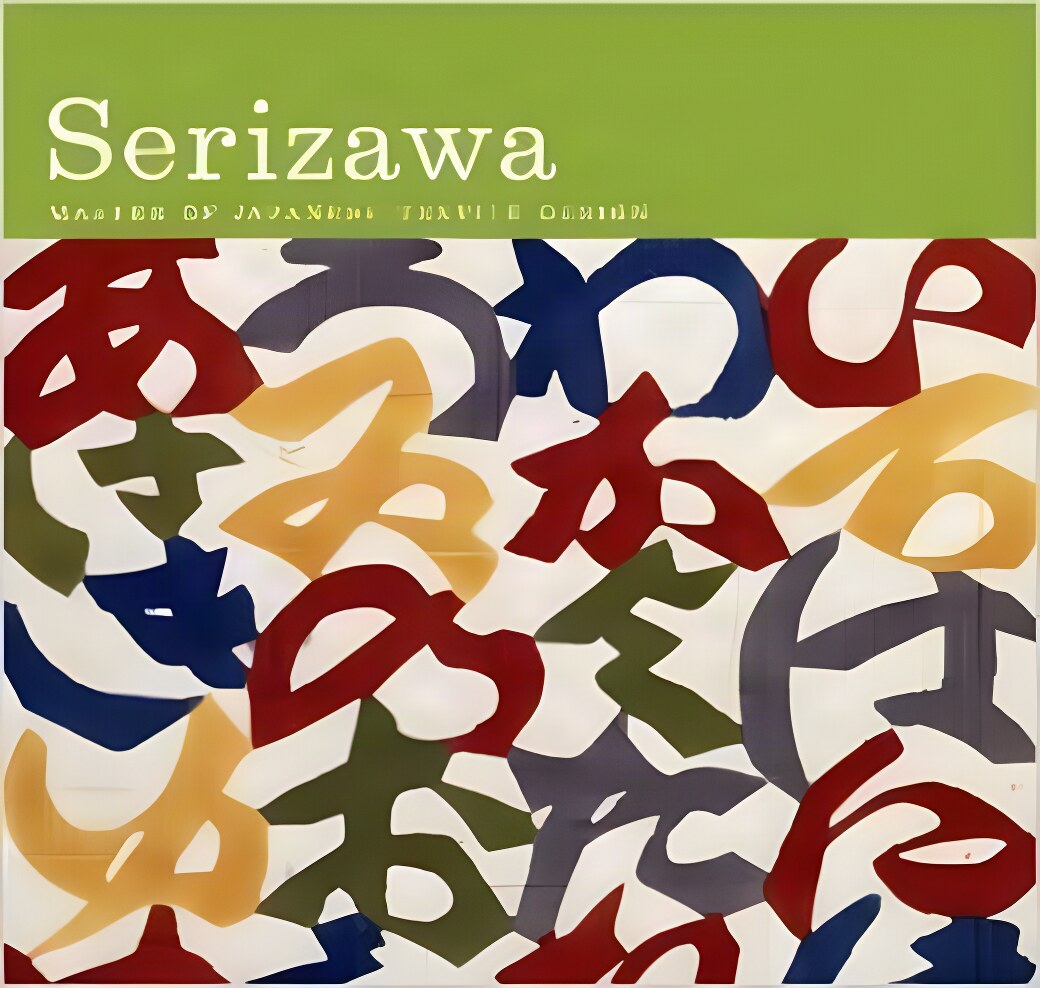
Softcover. New Haven CT, Yale University Press, 2009, Book: Very Good, Dust Jacket: None, Softcover, 144 pages. Like new in publisher's shrink-wrap. Designated a Living National Treasure in 1956, Serizawa Keisuke (1895-1984) was one of the greatest artists of 20th-century Japan. This is the first book in English to trace Serizawa's artistic biography in detail using the finest examples of his work from leading Japanese collections. A major exponent of the mingei (people's crafts) movement, Serizawa achieved fame as a textile designer using traditional stencil-dyeing techniques and often working in large-scale formats such as folding screens or kimonos. The stunning works in this catalogue are important not only for the originality of their conception, but also for the variety of their materials: cotton, silk, hemp and a range of other fibers, and paper decorated with the brilliant yet warm hues of vegetable dyes. Dramatic in design, Serizawa's textiles have an expressive power that far transcends expectations of a "craft" medium.
Hardcover. London , Thames and Hudson, 1st, 1989, Book: Very Good, Dust Jacket: Very Good, 224 pages. Hardcover with dust jacket. Light fraying, small tape repair on spine, to dust jacket. Color pictures throughout. Adhesive residue on back cover.
Softcover. New York, Hudson Hills, 1st, 1987, Book: Very Good, Dust Jacket: None, Softcover, 130 pages, color and b&w photographs. Exhibition catalogue dedicated to the contemporary Navajo artist and her weaving of Chant Rugs; a majority of the 83 textiles (shown in color plates) that have been selected are a well-balanced demonstration of the very finest weaving skills of any period in Navajo history.
Hardcover. San Francisco, Chronicle Books, 1st, 1996, Book: Very Good, Dust Jacket: Very Good, Hardcover in a bright dust jacket, 344 pages. Includes the following essays: Painted and Block-Printed Cloths, Cloths Decorated with Gold & Silver Leaf / Roller-Printed Cloths, Tie-Dyed Cloths / Woven Cloths & Embroideries / History of Indian Textiles, by Zahid Sardar / etc. Color illustrations throughout. Foreword and afterword by Kokyo Hatanaka; Clean, bright copy. DUE TO WEIGHT, DOMESTIC SHIPPING ONLY.
Hardcover. Crowood Press, 1st, 2008, Book: Very Good, Dust Jacket: Very Good, Hardcover, 222 pages., color plates. This impressive work encompasses history, anthropology, and an expert exposition of textile arts from this region where textiles may denote group identity and may represent a large portion of a family's wealth. The author draws upon both published information and her own extensive travels in the area, describing practices and techniques that she observed in use in situ. She illustrates cultural and historical patterns in costume, often with the aid of temple paintings, sculpture, and historic photographs to supplement current images. Her descriptions of techniques, for example of weaving, are admirably balanced -- detailed enough to inform while presented with sufficient general information for a non-specialist reader. The illustrative material is good, often her own or her son's photographs, that shows the labor-intensive processes and world-class skills as well as the resulting spectacular museum pieces.
Softcover. Brookville, NY, Hillwood Art Museum, 1st, 2007, Book: Very Good, Dust Jacket: None, Softcover. Side-stapled, 42 pages. Full-color catalog featuring essays and images of traditional and contemporary African textiles.
Softcover. Berkeley CA, University of California Press, 1st pbk., 1990, Book: Very Good, Dust Jacket: None, Softcover, 273 pages, b&w illustrations. The first in-depth analysis of the rich spiritual and artistic traditions of the Carib-speaking Yekuana Indians of Venezuela, who live in the dense rain forest of the upper Orinoco. Within their homeland of Ihuruna, the Yekuana have succeeded in maintaining the integrity and unity of their culture, resisting the devastating effects of acculturation that have befallen so many neighboring groups. Yet their success must be attributed to more than natural barriers of rapids and waterfalls, to more than lack of "contact" with our "modern" world. The ethnographic history recounted here includes not only the Spanish discovery of the Yekuana but detailed indigenous accounts of the entire history of Yekuana contact with Western culture, revealing an adaptive technique of mythopoesis by which the symbols of a new and hostile European ideology have been consistently defused through their incorporation into traditional indigenous structures. Clean copy.
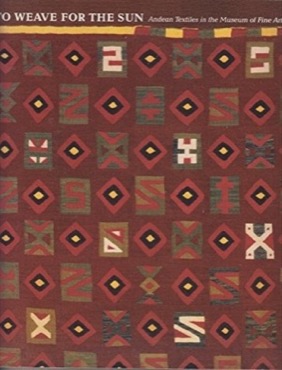
Softcover. Boston, Museum of Fine Arts, 1st, 1992, Book: Very Good, Dust Jacket: None, Softcover, 271 pages illustrated in color and b&w. Textiles were the Incas' most prized possessions. Their first gifts to European strangers were made not of gold and silver, but of camelid fibre and cotton. They believed that the highest form of weaving was created expressly for the sun, which they considered the greatest of the celestial powers. This book uses this image to symbolize Andean tradition as a whole and documents the collection of ancient and Colonial Andean textiles in the Museum of Fine Arts, Boston, which is among the most comprehensive of its kind in the world. Described and illustrated here, in many cases for the first time are the finest examples from the collection: weavings of astonishing virtuosity with striking geometric designs, elaborate carpets and covers, mantles, tunics, featherwork, woven shoes with metal decoration and intriguing figural sculptures with tapestry faces - representing the major cultures of the pre-Columbian period as well as the achievements of Spanish Colonial times. Mild wear to outer wraps, otherwise a clean, bright copy.
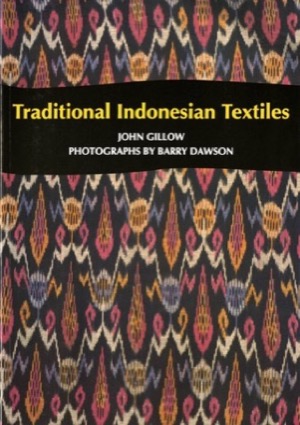
Softcover. NY, Thames & Hudson, reprint, 1995, Book: Very Good, Dust Jacket: None, Softcover, pictorial wrappers, 160 pages in color. The fabrics of Indonesia have long held an allure. They have now won universal popularity, so much so that local names for techniques of dying and weaving - batik, ikat, tritik - have been adopted internationally as generic terms. The reverence accorded to textile art on the islands is reflected in every area of production; precision of weave and exquisite patterning are testimony to superlative craftsmanship. Lying at the heart of a vast network of trading routes, Indonesia has absorbed a wealth of foreign influences that have spawned an eclectic culture uniquely mirrored in its textile art. Over 200 color plates. Clean copy.
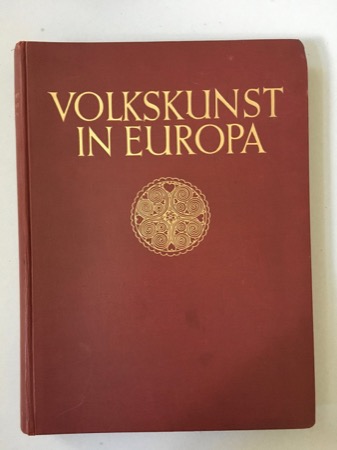
Hardcover. NY, E. Weyhe, 1st US, Book: Very Good, Dust Jacket: None, Hardcover, large folio, ( over 12" - 15" tall ), red cloth stamped in gilt. 56 pages of German text, comprising introduction and detailed catalogue of plates, the origins of objects (textiles, ceramics and wood) which demonstrate the origins and continued use of traditional design in the folk arts of Europe. Followed by 132 color plates of the objects mostly from Eastern Europe, most pasted in. First published in Germany in 1926, this appears to be the first US edition produced the same year. Architect Albert Kahn's copy with his ownership signature in pencil and date of 1926 on the front fly leaf. DOMESTIC SHIPPING ONLY.
Hardcover. New York, Rizzoli, reprint, 2011, Book: Very Good, Dust Jacket: Good, Hardcover, 248 pages. Extensive color photography throughout. Some shelf wear and minor tear to printed acetate dust jacket. Slight rubbing to top corner. Otherwise clean, tight copy. "This book showcases a wide range of styles by such fashion luminaries as Cassini, Chanel, Dior, Armani, and McQueen, among others. The beautiful fashions, photographed by such notable photographers as Patrick Demarchelier, Benno Graziani, Horst, Arthur Elgort, Milton Greene, David LaChapelle, and Irving Penn capture the effervescent spirit that is associated with the wedding dress. The Wedding Dress begins with an overview of the sumptuous wedding gown, chronicling its history from royal weddings to today's celebrities."
Hardcover. London, Hardie Grant, 1st, 2015, Book: Very Good, Dust Jacket: None, 272 pages. Hardcover with no dust jacket. Clean, unmarked copy with only minor wear to boards. Color pictures throughout. Photographer, art director and fashion enthusiast Giuseppe Santamaria takes us to the streets of six incredible cities to showcase the unique and stylish women that inhabit these towns. From classic elegance to menswear-inspired casual, a woman's dress style speaks volumes about her personality - and the city she inhabits. Featuring interviews with the everyday women whose distinctive styles cut a fine figure in the world of women's fashion, this striking photographic collection will take you on a global sartorial adventure.

 "Owen Jones: Design, Ornament, Architecture, and Theory in an Age in Transitionby: Flores, Carol A. Hrvol")
 "Owen Jones: Design, Ornament, Architecture, and Theory in an Age in Transitionby: Flores, Carol A. Hrvol")

 "Revoliutsiia! Demonstratsiia!: Soviet Art Put to the Testby: Matthew S. Witkovsky, Devin Fore, et al.")
 "Revoliutsiia! Demonstratsiia!: Soviet Art Put to the Testby: Matthew S. Witkovsky, Devin Fore, et al.")
 "Russel Wright: Creating American Lifestyleby: Donald Albrecht , Robert Schonfeld, et al.")
 "Shoes: Fashion and Fantasy by: McDowell, Colin")
 "Song of the Loom, The/ New Traditions in Navajo Weavingby: Dockstader, Frederick")


 "Textiles of South-East Asiaby: Thompson, Angela")
 "Threads of Time: African Textiles from the Traditional to the Contemporaryby: Lisa Aronson")



 "Wedding Dress, The by: Cassini, Oleg")
 "Women In This Town: New York, Paris, Melbourne, Tokyo, Madrid and Londonby: Santamaria, Giuseppe")