Hardcover. San Francisco, Ten Speed Press, 1st, 2006, Book: Very Good, Dust Jacket: None, Hardcover, 128 pages. A GRAND TOUR OF ASIA recreates a time and a place that no longer exists except in the lyrical images so lovingly preserved by the lens of a wandering American, and so wryly captured in the prose of his mysterious companions nearly a century ago. Christian Rub, a character actor in Hollywood films, presented the intriguing album to its current owner, Hania Tallmadge, in 1949, when she was a child.A historically unique collection of photographs taken in the spring of 1910 on a four-month tour of the Far East, presented in an exquisite facsimile edition of the album in which they were originally discovered.Includes more than 150 images reproduced in their actual size, their hand-tinted colors authentic and un-retouched. Even the handwritten script has been carefully replicated.
Hardcover. Leipzig, F.H. Brockhaus, 1st?, 1912, Book: Very Good, Dust Jacket: None, Hardbound, 414 pages. German text. Many black & white photos and color plate illustrations. Fold-out map at rear of book. Stapled binding. Big color illustration front cover with engraved dark blue & gold decoration and gold embossed lettering. Spine gold lettering, has markings. Minor scratches to back cover. Endpapers green illustration. Previous owner's signature preliminary page. Corners a bit bumped.
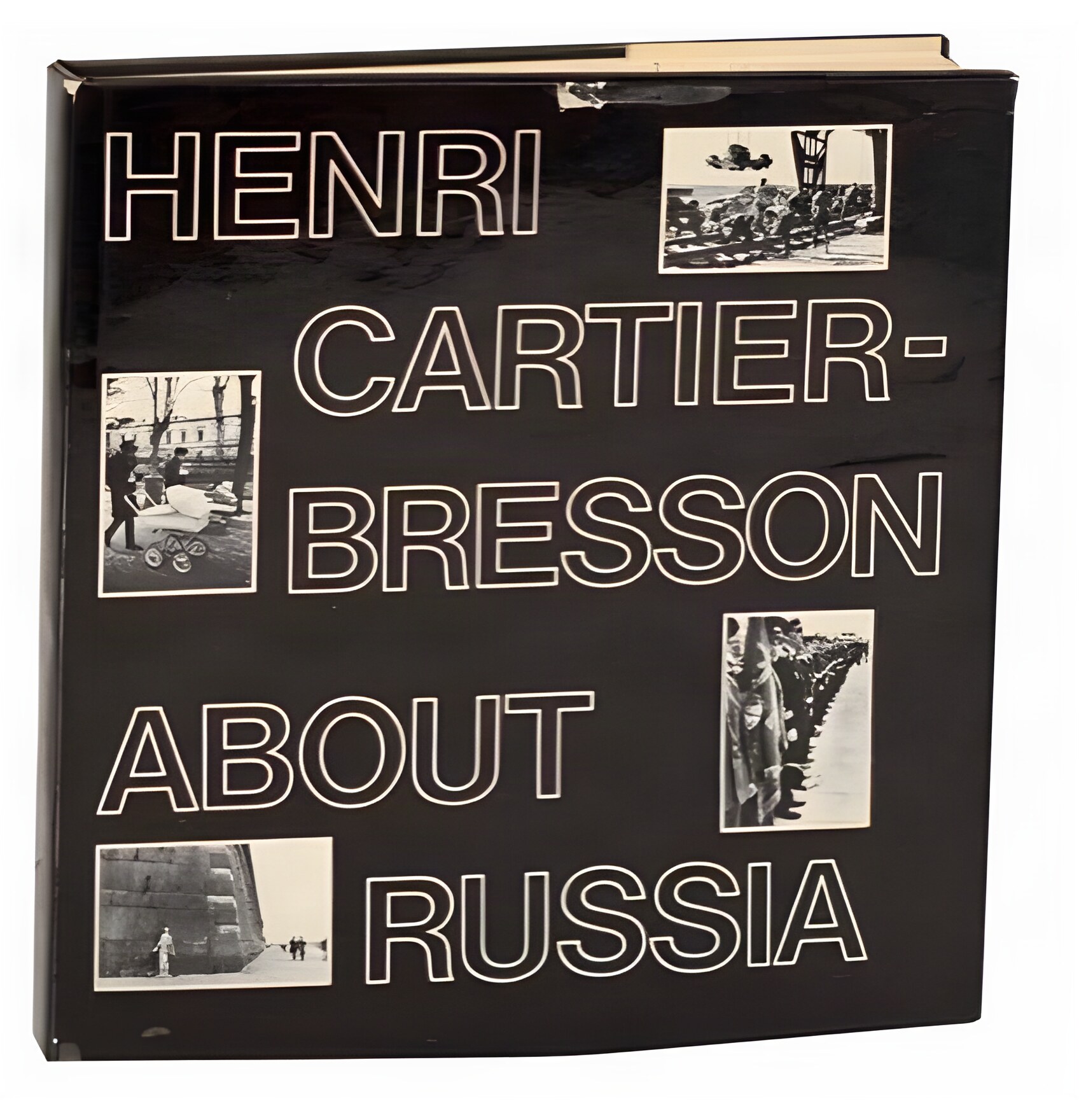
Hardcover. NY, The Viking Press, 1st, 1974, Book: Very Good, Dust Jacket: Very Good, Hardcover in a bright, price-clipped dust jacket, 141 pages. Cartier-Bresson's usual stunning photos that capture the people and culture of place; this time, Russia/The Soviet Union. Included are the people and spaces of Leningrad, Moscow, Russian SSR, Baltic Countries, The Caucasus, and Central Asia (the "Stans"), with an introduction by the photographer. Clean copy.
Hardcover. London, Octagon Press, reprint, 1984, Book: Very Good, Dust Jacket: Very Good, Hardcover in dust jacket with fading to spine, 203 pages. Subtitled: "An Account of Travels in Asia and Africa, and Four Years Studying the Dervishes, Sufis and Fakirs, by Living Among Them." The author documents the largely ignored and forgotten ancient mystic organizations and their practices. Pages tanning otherwise a clean copy.
Softcover. self-published, 1st, 1981, Book: Very Good, Dust Jacket: None, Softcover, 267 pages. INSCRIBED BY AUTHOR on title page. The autobiography of an American missionary recalling her travel and adventures in China and later Africa. Clean copy with mild warp to book.
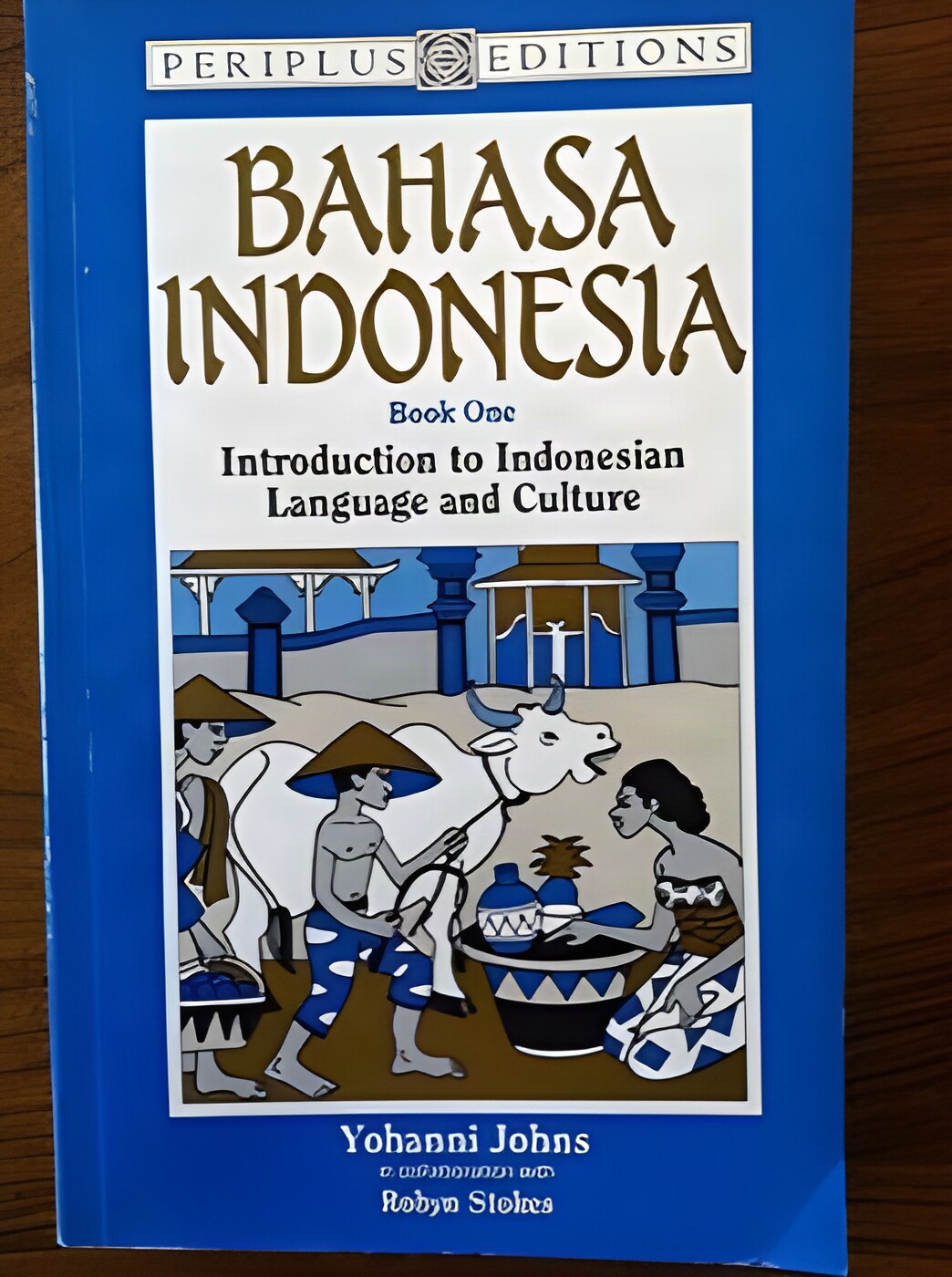
Softcover. Periplus Editions, reprint, Book: Very Good, Dust Jacket: None, Softcover, 362 pages. Presents graded courses in Bahasa Indonesia. It is used by universities all over the world and is accessible to those who wish to master the language through self-study at the intermediate and advanced levels. Most comprehensive approach to the Indonesian language and culture. Not a phrase book for travelers. Be prepared for university level curriculum. Logical in approach to all aspects of the language. Book One only. Clean copy.
Hardcover. Boston, Little Brown, 1st, 1971, Book: Very Good, Dust Jacket: Very Good, Hardcover in a bright, unclipped dust jacket. 282 pages, b&w illustrations. A graceful, witty and dramatic biography of one of the most fabulous cities in the world. Clean copy.
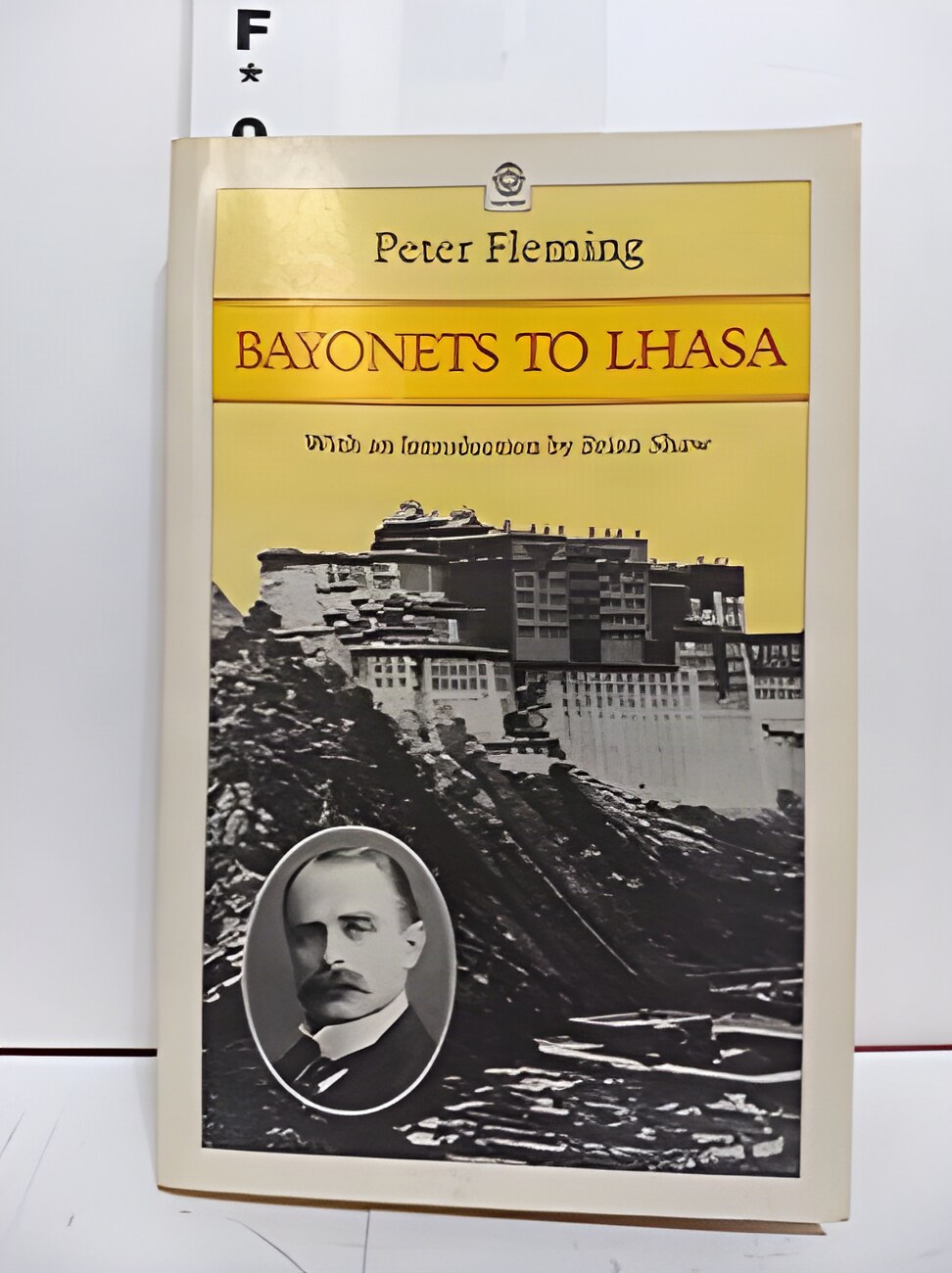
Softcover. NY, Oxford University Press, reprint, 1986, Book: Very Good, Dust Jacket: None, Softcover, 319 pages, Introduction by Brian Shaw. The story of the British invasion of Tibet at the turn of the Nineteenth Century. Robert Peter Fleming (31 May 1907 - 18 August 1971) was a British adventurer, journalist, soldier and travel writer. He was the elder brother of Ian Fleming, creator of James Bond. Clean copy.
Hardcover. Melbourne AUS, Macmillan Art Publishing, 1st, 2009, Book: Near Fine, Dust Jacket: Near Fine, Like new in publisher's shrink-wrap. Hardcover, 256 pages. This book, offering more than three hundred beautiful photographic studies, spans the years 1986-2006. Each image captures a special moment at a certain place in Australasia, Asia, Europe and the Middle East. Each image is unique and can never be re-captured. Christine Wu Ramsay's excursion into photography began when she established Raya Gallery in Melbourne one of the first to exhibit the works of modern artists from the Asian region. With an eye for detail and atmosphere, she brings a unique sensibility to her captured moments, producing photographs that stir memories in anyone who has travelled the world.
Softcover. NY, Oxford University Press, 2nd pr., 1995, Book: Very Good, Dust Jacket: Very Good, Hardcover in a bright, unclipped dust jacket. George Schuyler, a renowned and controversial black journalist of the Harlem Renaissance, and Josephine Cogdell, a blond, blue-eyed Texas heiress and granddaughter of slave owners, believed that intermarriage would "invigorate" the races, thereby producing extraordinary offspring. Their daughter, Philippa Duke Schuyler, became the embodiment of this theory, and they hoped she would prove that interracial children represented the final solution to America's race problems. Able to read and write at the age of two and a half, a pianist at four, and a composer by five, Philippa was often compared to Mozart. During the 1930s and 40s she graced the pages of Time and Look magazines, the New York Herald Tribune, and The New Yorker. Philippa grew up under the adoring and inquisitive eyes of an entire nation and soon became the role model and inspiration for a generation of African-American children. But as an adult she mysteriously dropped out of sight, leaving America to wonder what had happened to the "little Harlem genius." Suffering the double sting of racism and gender bias, Philippa had been rejected by the elite classical music milieu in the United States and forced to find an audience abroad, where she flourished as a world-class performer and composer. She traveled throughout South America, Europe, Africa, and Asia performing for kings, queens, and presidents. By then Philippa had added a second career as an author and foreign correspondent reporting on events around the globe--from Albert Schweitzer's leper colony in Lamberene to the turbulent Asian theater of the 1960s. She would give a command performance for Queen Elisabeth of Belgium one day, and hide from the Viet Cong among the ancient graves of the Annam kings another.
Softcover. Paris, Imprimerie Nationale , 1st, 1954, Book: Very Good, Dust Jacket: None, Softcover, stiff paper covers with light edgewear, tanning, 356 pages, TEXT IN FRENCH. Illustrated throughout, folding map.
Hardcover. Paris, Editions Place de Victoires, 1st, 2010, Book: Very Good, Dust Jacket: Very Good, Hardcover, 599 pages. Like new in publishers shrink-wrap. This vivid photo-essay on the great adventure of discovery and exploration 1860-1930 is drawn from the collection of The Royal Geographical Society in London. It begins with Stanley and Livingstone in Africa and proceeds through Asia and Oceania, the Americas, and the Middle East. The work of twenty-three intrepid photographers are included.
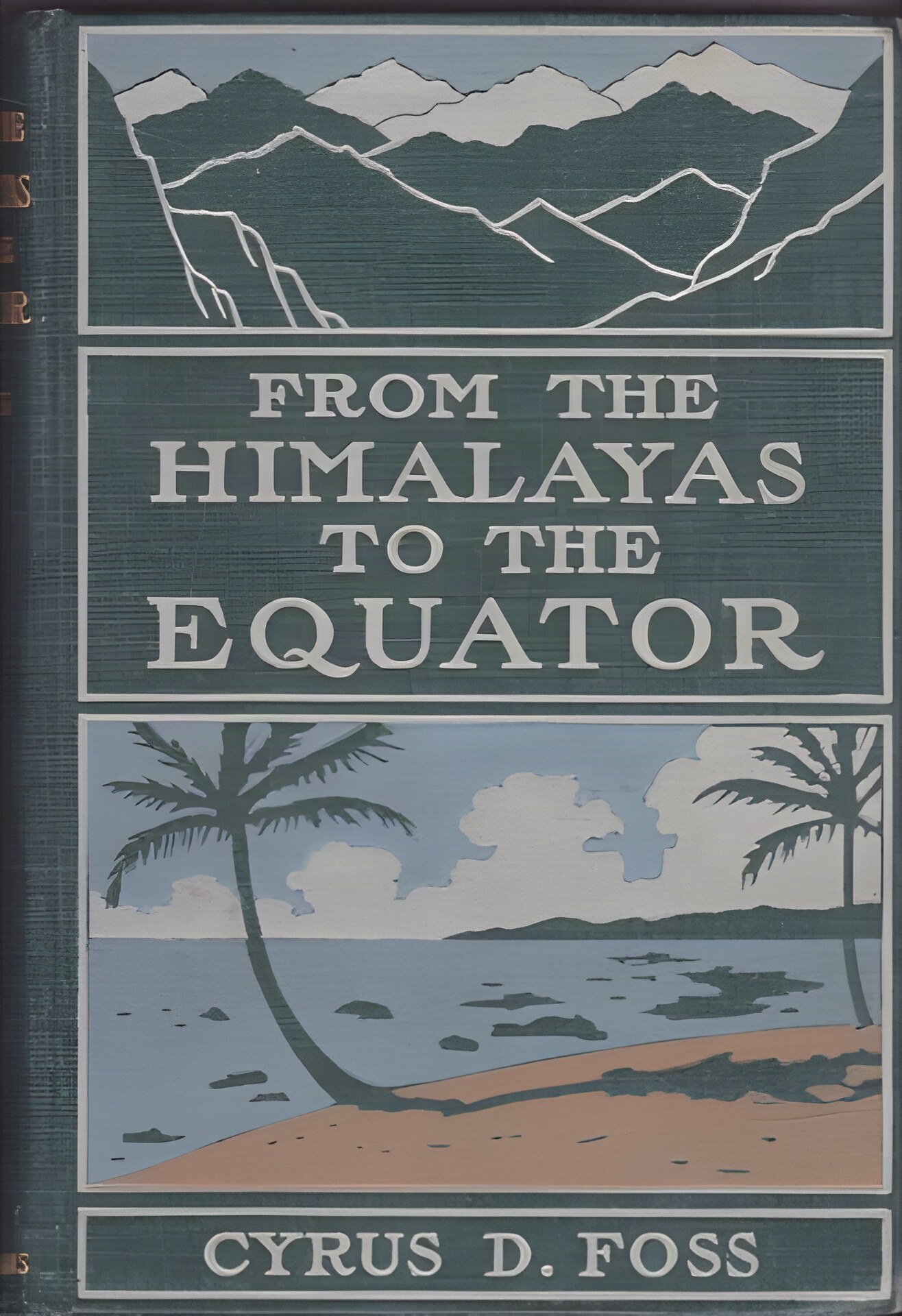
Hardcover. NY, Eaton and Means, 1st, 1899, Book: Very Good, Dust Jacket: None, Hardcover, decorated cloth, gilt lettering on spine, 262 pages. An Account of the visitation of Bishop Foss and Dr. Goucher to the Indian and Malaysian Missions of the Methodist Episcopal Church. This book gives the reader new information as to the needs of the different fields which are under discussion, grasps more vividly the magnitude of the modern missionary movement, and gathers fresh confidence in the final triumph of the Messiah throughout the heathen world. B&w illustrations. Old ink price on front fly leaf, otherwise clean.
Hardcover. London, Hamish Hamilton, 1st, 2008, Book: Very Good, Dust Jacket: Very Good, Hardcover, 496 pages. SIGNED BY THEROUX on title page. In 1975 a young and ambitious writer named Paul Theroux made his literary mark by taking the 28,000-mile intercontinental journey via rail from London to Tokyo and back home again. Thirty years later, an older and wiser Theroux decided to retrace his steps. The result is Ghost Train to the Eastern Star, a fascinating account of the places you vaguely knew existed, yet definitely should know something about. Get on board Theroux's fast-moving travelogue, which features some of the most astute commentary on our distorted notions of time, space, and each other in the age of jet speed, broadband connections, and cultural extinction. A railway journey through Eastern Europe, India, and Asia. Clean copy
Hardcover. Damiani, 1st, 2015, Hardcover in a bright dust jacket, still sealed in publisher's shrinkwrap, 156 pages. Outside the Studio is photographer Greg Gorman's tenth monograph. This book takes Gorman (born 1949) outside the reaches of his studio portrait and figure-study work, for which he is best known, and onto the streets of Southeast Asia-uncharted territory for the artist. Traveling initially on behalf of Epson, giving symposiums on fine art digital printing throughout Singapore, Malaysia, China and India, Gorman got a firsthand look at these very different cultures at the very beginning of the digital revolution. The transition from analogue to digital cameras was another new experience for Gorman, who had shot film for more than 30 years. For Gorman, being in the studio with the likes of Marlon Brando or Robert De Niro was second nature, but being thrust in front of strangers in China, Kuala Lampur, India, Thailand, Cambodia and Vietnam was a new adventure.
Hardcover. NY, Thomas Y. Crowell , 1st, 1955, Book: Very Good, Dust Jacket: Good, Hardcover in a worn, chipped dust jacket, 273 pages. B&w photographs. Previous owner's label on front fly leaf. Otherwise clean.
Hardcover. London, Phaidon Press, 1st, 1994, Book: Very Good, Dust Jacket: Very Good, Hardcover, 320 pages. George Rodger began his photographic career with the BBC as a stills photographer. His baptism as a photo reporter came with his appointment as a 'stringer' for Life magazine during the Blitz on London in the most threatening days of 1940. Many of his images from that time are still in constant use, because his instinct has always been to concentrate on the humanity of his subjects, even in the face of terrible adversity.It was for Life that George Rodger embarked on a series of adventures that were to take him to almost every theatre of the Second World War in Africa, the Middle East and Asia. The fulcrum of his career came with the liberation of Belsen. As for the first few days he was the only photographer present, the images he captured became crucially important in making known the depravity of the camps. 1948 he embarked on a campaign of photography rediscovering humanity, starting with an expedition from Cape Town to Cairo by road. He found in Africa tribes almost untouched by European influence and was able to create images of enormous power that quickly became world-famous.This book presents the pictures that define George Rodger's long career and a commentary on his extraordinary journey. With a Foreword by Henri Cartier-Bresson and over 260 powerful images, it represents a fitting tribute to George Rodger and a celebration of his life's work.
Hardcover. Santa Fe NM, Twin Palms Publishers, 1st, 2007, Book: Very Good, Dust Jacket: None, Folio, 60 pages, VG+ in pictorial boards, as issued, without dust jacket. Lavishly illustrated in b&w. Bill Burke's seminal book originally published by Nexus Press in 1987. In the early 1980's Burke traveled to Thailand and Viet Nam, as well as Cambodia where he documented the aftermath of the Khmer Rouge regime. The book was produced using the original plates, and features the same layout and scale as the first edition.
Hardcover. Santa Fe NM, Twin Palms Publishers, 1st, 2007, Book: Very Good, Dust Jacket: None, Folio, 60 pages, VG+ in pictorial boards, as issued, without dust jacket. Lavishly illustrated in b&w. Bill Burke's seminal book originally published by Nexus Press in 1987. In the early 1980's Burke traveled to Thailand and Viet Nam, as well as Cambodia where he documented the aftermath of the Khmer Rouge regime. The book was produced using the original plates, and features the same layout and scale as the first edition.
Hardcover. Sydney AU, T&G PUBLISHING, 1st, 2011, Book: Very Good, Dust Jacket: Very Good, Like new in publishers shrink-wrap. Hardcover, 296 pages. This is Pam's 'visual anthropology' of his engagement with various Asian cultures, where he was photographing his life and experiences.
Hardcover. Sydney AU, T&G PUBLISHING, 1st, 2011, Book: Very Good, Dust Jacket: Very Good, Like new in publishers shrink-wrap. Hardcover, 296 pages. This is Pam's 'visual anthropology' of his engagement with various Asian cultures, where he was photographing his life and experiences.
Hardcover. Atlanta, Nexus Press, 1st, 1995, Book: Very Good, Dust Jacket: None, Hardcover, 118 pages. Glossy color illustrated boards, color illustrated end-papers, color and black-and-white illustrations from photographs throughout, accompanying 16 page facsimile journal laid in (no publishing info) with reproductions of polaroids of Burke's. 'Mine Fields' (a sequel to Bill Burke's justly famous I Want To Take Picture), is Burke's scrapbook of his life and his pursuit of the history and daily life of Cambodia. Part adventure story, part personal confession, part travelogue, and always fascinating, Burke's negotiation of the mine fields of divorce and war is a compelling collage of photographs, found objects, stories, and the contrast between glorious ancient temples and the horrors of war and genocide.
Hardcover. New York, Viking Studio, 1st US, 2007, Book: Very Good, Dust Jacket: Very Good, 483 pages. Hardcover. Illustrated with full color photographs. Light wear. Clean, unmarked pages.
Hardcover. NY, Bloomsbury USA, 1st, 2013, Book: Very Good, Dust Jacket: Very Good, Hardcover in a bright, unclipped dust jacket, 509 pages. The relationship between man and horse on the Eurasian steppe gave rise to a succession of rich nomadic cultures. Among them were the Mongols of the thirteenth century - a small tribe, which, under the charismatic leadership of Genghis Khan, created the largest contiguous land empire in history. Inspired by the extraordinary life nomads lead, Tim Cope embarked on a journey that hadn't been successfully completed since those times: to travel on horseback across the entire length of the Eurasian steppe, from Karakorum, the ancient capital of Mongolia, through Kazakhstan, Russia, Crimea and the Ukraine to the Danube River in Hungary. From horse-riding novice to spending months in the saddle, he learnt to fend off wolves and would-be horse-thieves, and grapple with the haunting extremes of the steppe as he crossed sub-zero plateaux, the scorching deserts of Kazakhstan and the high-mountain passes of the Carpathians. As he travelled he formed a close bond with his horses and especially his dog Tigon, and encountered essential hospitality - the linchpin of human survival on the steppe - from those he met along the way. Cope bears witness to how the traditional ways hang in the balance in the post-Soviet world - an era that has brought new-found freedom, but also the perils of corruption and alcoholism, and left a world bereft of both the Communist system upon which it once relied, and the traditional knowledge of the nomadic forefathers.

 "A Grand Tour of Asia 1910by: Hania Tallmadge and Beverley Jackson")
 "Abenteuer in Tibet (GERMAN TEXT)by: Hedin, Sven v.")

 "At Home in China and Around the World: The life story of Merlin and Eunice Bishop (SIGNED COPY)by: Bishop, Eunice Smith")
 "Bangkok: Biography of a Cityby: Alec Waugh")
 "Captured in Time: Journeys With My Cameraby: Ramsay, Christine Wu")
 "Composition in Black and White: The Life of Philippa Schuyler by: Talalay, Kathryn")


 "Explorations: 1860 - 1930by: Mongibeaux, Jean-Francois")
 "Ghost Train to the Eastern Star: On the Tracks of the Great Railway Bazaar (SIGNED COPY)by: Theroux, Paul")
 "Greg Gorman: Outside the Studioby: Greg Gorman (Introduction), James Nachtwey (Foreword)")
 "Himalayan Tea Garden: a Young Family's Adventures on a Tea Plantation Near Darjeeling by: Fletcher, David Wilson")
 "Humanity and Inhumanity: The Photographic Journey of George Rodger by: BERNARD, Bruce and George Rodger")
 "I Want To Take Pictureby: Burke, Bill")


 "I Want To Take Pictureby: Burke, Bill")


 "Max Pam - Atlas Monographsby: Muecke, Essay Stephen")
 "Max Pam - Atlas Monographsby: Muecke, Essay Stephen")
 "Mine Fieldsby: Burke, Bill")
 "My China - A Feast for All the Sensesby: Kwong, Kylie")
 "On the Trail of Genghis Khan: An Epic Journey Through the Land of the Nomads by: Tim Cope")