Hardcover. NY, Pantheon, 1st US, 1999, Book: Very Good, Dust Jacket: Very Good, Hardcover in a bright, unclipped dust jacket. A magisterial achievement: part biography, part history, part moral meditation on the resurrection of torture as an instrument of political power in the twentieth century, The Good Listener tells the story of Helen Bamber, a good but complex woman now in her seventies, who has spent her life battling to bring the dark side of history into the light. In almost every situation in our century where mankind has demonstrated its capacity to intensify evil--during the Nazi Holocaust, in Algeria, Chile, Africa, the USSR, and Israel, as well as in postwar Britain and Germany--Bamber has served as a witness, an expert, or a reproach, as well as a repository of our collective memory of debasement. Her father, a Polish Jew, had been so obsessed by the Fascist threat that he would read to Helen from Goebbels' speeches, teaching her how corrupting and manipulative language can be. She went to Bergen-Belsen after World War II had ended, and upon her return to London she dedicated herself to caring for the young survivors of the camp. So began Bamber's brave devotion to the grim and dangerous task of undoing the work of the torturer--culminating, after her participation as a central force in Amnesty International, in her establishment in England of the Foundation for the Care of Victims of Torture. Because Bamber's uncanny openness to others has been one of her great skills, Clean copy.
Hardcover. Oxford UK, Clarendon Press, 1st, 1965, Book: Very Good, Dust Jacket: None, Hardcover, blue cloth with gilt lettering on spine, 550 pages. Fold-out chart in rear. "Stevens is included in the D.N.B. as a poet; he was much admired and liked by Anna Seward, The Swan of Lichfield. The journal is pre-eminantly a human document, the frank and full account of his meetings with Fanny Coutts and their love for one another. It is a period peice with an unhappy ending". Bookplate inside front cover, light stamp to copyright page.
Hardcover. Chicago, University of Chicago Press, 1st, 1980, Book: Very Good, Dust Jacket: Very Good, Hardcover in a bright dust jacket, 275 pages, b&w illustrations. Clean copy.
Hardcover. UK, Routledge/Thoemmes, reprint, 1992, Book: Very Good, Dust Jacket: None, Hardcover, red cloth with gilt lettering on spine, 260 pages, b&w illustrations. A reprint of the 1949 edition with a new introduction by David Berman. Clean, bright copy.
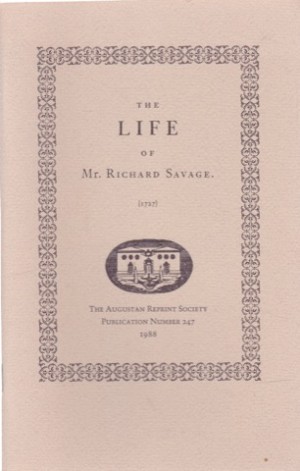
Softcover. Los Angeles, The Augustan Reprint Society , reprint, 1988, Book: Very Good, Dust Jacket: None, Softcover, 29 pages. A facsimile reprint of a pamphlet published in 1727. The subject was a friend of Samuel Johnson who was pardoned after being sentenced to death for a murder in a coffeehouse altercation. The pamphlet, published anonymously, was a defense of Savage based on his character. Clean copy.
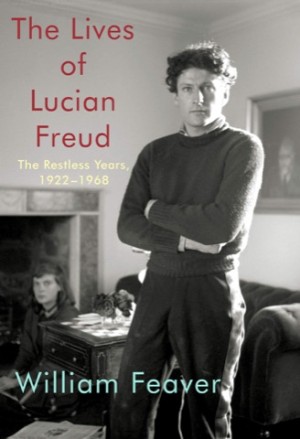
Hardcover. NY, Knopf, 1st, 2021, Book: Very Good, Dust Jacket: Very Good, Hardcover in a bright, unclipped dust jacket. 557 pages, b&w and color illustrations. In this brilliant second and final volume of the definitive biography of Lucian Freud--one of the most influential, enigmatic and secretive artists of the twentieth century--William Feaver, the noted art critic, draws on years of daily conversations with Freud, on his private papers and letters and on interviews with his friends and family to explore the intimate life of Freud, from age forty-five to his death in 2011 at the age of eighty-nine. The final forty years of Freud's life were a period of increasing recognition and fame, and of prodigious output. He was obsessed with his art, and with the idea of producing paintings that "astonish, disturb, seduce, convince." He was equally energetic and ambitious in his private life. This book opens with his dramatic affair with Jacquetta Eliot, which led to some of his most intimate portraits and to the start of two important, lifelong friendships, with Jane Willoughby and Susanna Chancellor. Freud talks about his art at all stages, how it changed in the seventies and his first retrospective in London in 1974. Small remainder dot on bottom edge otherwise clean.
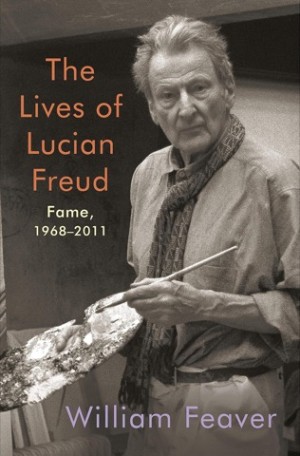
Hardcover. NY, Knopf, 1st, 2019, Book: Very Good, Dust Jacket: Very Good, Hardcover in a bright, unclipped dust jacket. The first biography of the epic life of one of the most important, enigmatic and private artists of the 20th century. Drawn from almost 40 years of conversations with the artist, letters and papers, it is a major work written by a well-known British art critic. This is an extremely intimate, lively and rich portrait of the artist, full of gossip and stories recounted by Freud to Feaver about people, encounters, and work. Freud's art was his life--"my work is purely autobiographical"--and he usually painted only family, friends, lovers, children, though there were exceptions like the famous small portrait of the Queen. With his later portraits, the subjects were often nude, names were never given and sittings could take up to 16 months, each session lasting five hours but subjects were rarely bored as Freud was a great raconteur and mimic.Small remainder dot on bottom edge otherwise clean.
Hardcover. NY, Knopf, 1st, 2019, Book: Very Good, Dust Jacket: Very Good, Hardcover in a bright, unclipped dust jacket. The first biography of the epic life of one of the most important, enigmatic and private artists of the 20th century. Drawn from almost 40 years of conversations with the artist, letters and papers, it is a major work written by a well-known British art critic. This is an extremely intimate, lively and rich portrait of the artist, full of gossip and stories recounted by Freud to Feaver about people, encounters, and work. Freud's art was his life--"my work is purely autobiographical"--and he usually painted only family, friends, lovers, children, though there were exceptions like the famous small portrait of the Queen. With his later portraits, the subjects were often nude, names were never given and sittings could take up to 16 months, each session lasting five hours but subjects were rarely bored as Freud was a great raconteur and mimic.Small remainder dot on bottom edge otherwise clean.
Lebanon NH, University of New Hampshire Press, 1st, 2005, Book: Very Good, Dust Jacket: Very Good, Hardcover in a bright dust jacket. 294 pages, b&w illustrations. Presents a succinct, articulate examination of the work of the pioneering but controversial archaeologist Roland Wells Robbins (1908-1987) and the development of historical archaelogy in America. In 1945, the self-taught Robbins discovered the remains of Thoreau's cabin at Walden Pond. He excavated the site, documented his findings, and in 1947 published a short book, Discovery at Walden, about the experience. This project launched Robbins's career in archaeology, restoration, and reconstruction, and he went on to excavate at a number of New England iron works and other sites, including the Philipsburg Manor Upper Mills in New York, Stawbery Banke in New Hampshire, and Shadwell, Thomas Jefferson's Virginia birthplace. Although lacking academic training, Robbins quickly developed remarkably sophisticated techniques for the period. However, his "pick and shovel" methods were considered suspect and increasingly frowned upon by the emerging American historical archaeological establishment. Clean copy.
Hardcover. NY, Knopf, 1st, 1964, Book: Very Good, Dust Jacket: Very Good, Hardcover in a lightly worn dust jacket. 393 pages plus a 16 page index. With eight pages of illustrations and a frontispiece. Clean copy.
Hardcover. Chicago, Ivan R. Dee, 1st US, 1991, Book: Very Good, Dust Jacket: Very Good, Hardcover in a bright, lightly edgeworn dust jacket. 239 pages including index. Author of The Moonstone and The Woman in White, Wilkie Collins is widely regarded as "the father of the detective story." How curious that his own life has puzzled investigators despite numerous attempts to unravel it. Collins lived a publicly Victorian existence as a contemporary of Dickens, Wordsworth, Coleridge, and Blake in mid-19th-century England. Yet upon his death he left a will dividing his estate equally -- between two mistresses.
Hardcover. NY, E. P. Dutton, reprint, 1977, Book: Very Good, Dust Jacket: Very Good, Hardcover in a bright dust jacket. David Irving's The Trail of the Fox is the best work on Rommel ever written. The circumstances around Rommel's involvement with the attempt on Hitler's life, which is the most speculated aspect of Rommel's life, and how the Gestapo came to believe Rommel was involved, have not been made clear in most of the historiography on Rommel. Irving pieces together what really happened most effectively. There are so many strengths of this book, of which the greatest is probably the fact Irving had access to Rommel's dairy and many of his letters, which he got permission from the family to view. Other items he found in collections in the United States, England, and Germany. Since he worked on this in the 1970's he also was able to interview a number of German officers who were still alive that knew and served with Rommel. The whole work is the way historical research should be done; totally reliant on primary source material, and ignores secondary sources that often use conjecture or just repeat incorrect narratives from earlier books. Every source is from people who fought the war; Germans, Italians, British, French and American officers who were in these campaigns and had either first hand observation of Rommel or were major participants like Eisenhower, Churchill, Goebbels, etc. Clean copy.
Hardcover. NY, Doubleday, 1st, 1999, Book: Very Good, Dust Jacket: Very Good, Hardcover in a bright dust jacket, 480 pages. A fascinating figure of English literary and political history, Radclyffe Hall was born in 1880 in Bournemouth, England. Hall suffered through an exceedingly unhappy childhood until her father's death. With her inheritance, Hall leased a house in Kensington and began to live the way she pleased. She started dressing in chappish clothes, called herself Peter, then John, and wrote her first collection of verse. She was a political reactionary, a reformed Catholic, a member of the Society for Psychical Research, fussy about food and obsessive about work. She got her pipes from Dunhill's, wore brocade smoking jackets, spats in winter, and had her hair cropped off at the barber's. Hall is most famous today for her book, The Well of Loneliness, which she wrote in 1928. A novel about lesbian love, the book caused an enormous scandal on its publication and it was suppressed both in the U.S. and the United Kingdom, where Hall was put on trial under the Obscene Publications Act.
Hardcover. Chevy Chase MD, Posterity Press, 1st, 2006, Book: Very Good, Dust Jacket: Very Good, 261 pages, hardcover with dust jacket. Meticulously researched account of the life of the prominent New England physician and churchman. Foreword by the Most Reverend Frank T. Griswold, with a preface by the Reverend Charles H. Clark. Slight cocking to front panel. Minor rubbing and edgewear to dust jacket. Unmarked. A bright and clean copy.
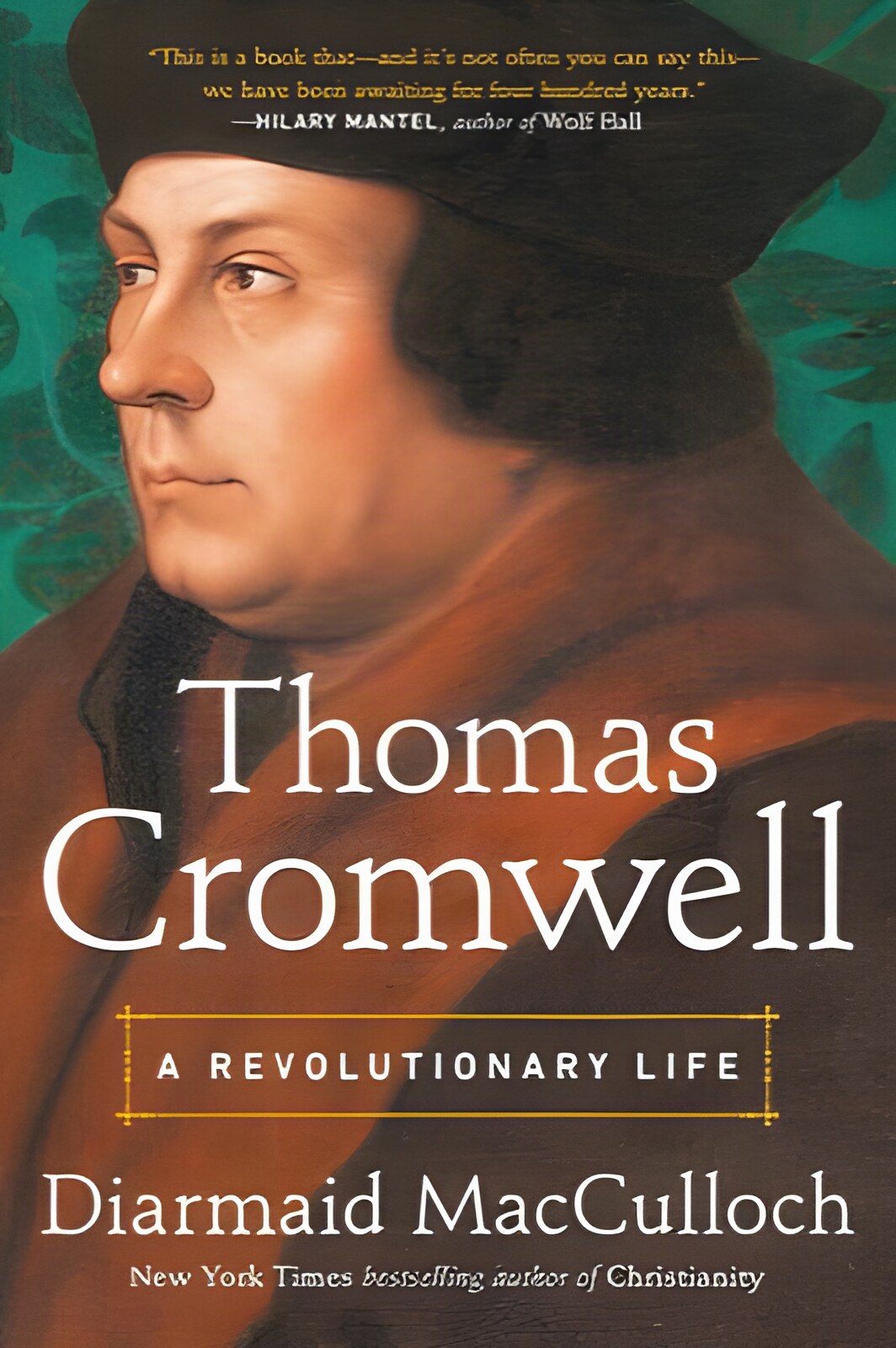
Hardcover. NY, Viking, 1st, 2018, Book: Very Good, Dust Jacket: Very Good, Hardcover in a bright dust jacket, 728 pages. The long-awaited biography of the genius who masterminded Henry VIII's bloody revolution in the English government, which reveals at last Cromwell's role in the downfall of Anne Boleyn. Since the sixteenth century we have been fascinated by Henry VIII and the man who stood beside him, guiding him, enriching him, and enduring the king's insatiable appetites and violent outbursts until Henry ordered his beheading in July 1540. After a decade of sleuthing in the royal archives, Diarmaid MacCulloch has emerged with a tantalizing new understanding of Henry's mercurial chief minister, the inscrutable and utterly compelling Thomas Cromwell. History has not been kind to the son of a Putney brewer who became the architect of England's split with Rome. Where past biographies portrayed him as a scheming operator with blood on his hands, Hilary Mantel reimagined him as a far more sympathetic figure buffered by the whims of his master. So which was he--the villain of history or the victim of her creation? MacCulloch sifted through letters and court records for answers and found Cromwell's fingerprints on some of the most transformative decisions of Henry's turbulent reign. But he also found Cromwell the man, an administrative genius, rescuing him from myth and slander. Clean copy.
Hardcover. London, England, Hammond, Hammond & Co. Ltd., 1st Edition, 1953, Book: Very Good, Dust Jacket: Very Good, 2 Volume Set, DOMESTIC SHIPPING ONLY. 1560 total pages. Hardcovers. Black cover boards, gilt title on spine. Light tanning from age to pages. Bindings good. Spines straight. A record of one of America's most distinguished diplomatic careers.
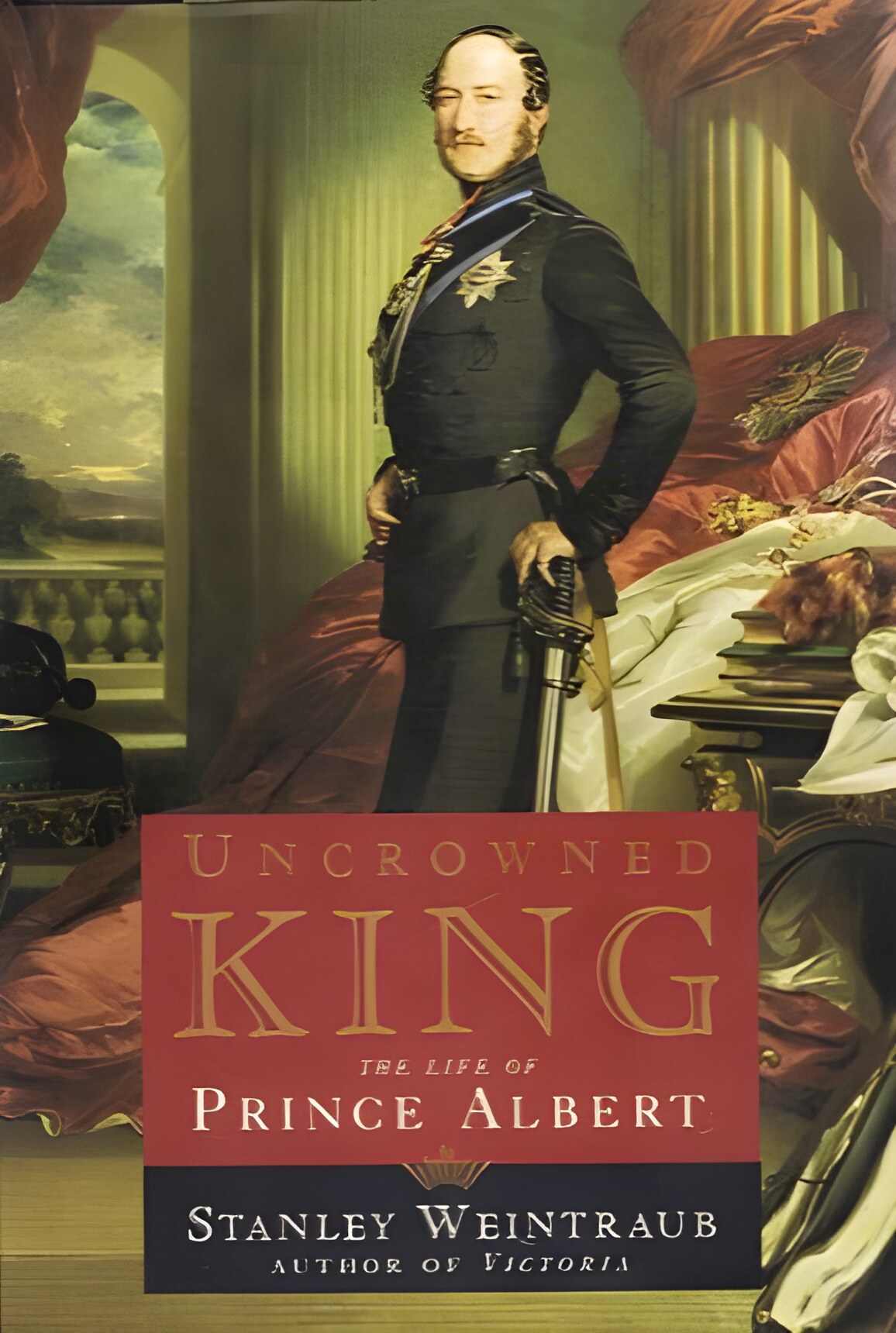
Hardcover. NY, Free Press, 1st, 1997, Book: Very Good, Dust Jacket: Very Good, Hardcover in a bright, unclipped dust jacket. 478 pages, b&w illustrations. When the young, insignificant scion of an unremarkable German principality first came to England to serve as consort to the youthful Queen Victoria, no one could have guessed that he would grow to become one of Britain's great--if uncrowned--kings. Albert's life could not have been an easy one; a man of great intelligence, pride, and ambition, he was forced to move behind the scenes, playing major roles in running the Crimean War and working to keep Britain out of the Civil War being waged in the United States. He was interested in industry and technology, and worked to stage the Crystal Palace exhibition--the first World's Fair. Yet, while his wife adored him, his adopted people scorned him for his German accent, his foreign ways, and his covert activities as a surrogate ruler. Clean copy.
Hardcover. London, Routledge, 1st, 1980, Book: Very Good, Dust Jacket: Very Good, 212 pages, b&w illustrations. SIGNED and INSCRIBED by the author with a note by the author laid-in. Light edgewear to dust jacket, faint foxing to top edge. Clean, tight copy. This book discusses the home life of Queen Victoria in the context of her marriage to Prince Albert and her relationships with her children. Whittle describes the purchase, remodeling and rebuilding of Osborne House and Balmoral Castle, a subject often given little attention in other books on the couple's life together.
Hardcover. London, Weidenfeld and Nicholson, 2nd imp., 1964, Book: Very Good, Dust Jacket: Very Good, Hardcover in a bright, unclipped dust jacket. 635 pages. Contains black and white illustrated plates, and a pull out family tree. Clean, bright copy.
Hardcover. New York, Harcourt, Brace and Company, 1st, 1941, Book: Good, 345 pages. Hardcover. INSCRIBED BY AUTHOR. Gilt title on spine, faded. Covers have some age wear. Age yellowing to edges and pages.
Hardcover. NY, Penguin Press, 1st, 2014, Book: Very Good, Dust Jacket: Very Good, Hardcover in a bright, unclipped dust jacket. 642 pages. Gray cloth boards with silver titles to spine. Black & white illustrations throughout. Crisp dust jacket with only minor wear. Very clean & unmarked. Crisp, tight copy.
Hardcover. Columbia OH, Ohio State University Press, 1st, 2008, Book: Very Good, Dust Jacket: None, 368 pages. Hardcover with no dust jacket. Clean, unmarked copy with only minor wear to corners. While "freaks" have captivated our imagination since well before the nineteenth century, the Victorians flocked to shows featuring dancing dwarves, bearded ladies, "missing links," and six-legged sheep. Indeed, this period has been described by Rosemarie Garland-Thomson as the epoch of "consolidation" for freakery: an era of social change, enormously popular freak shows, and taxonomic frenzy. Victorian Freaks: The Social Context of Freakery in Britain, edited by Marlene Tromp, turns to that rich nexus, examining the struggle over definitions of "freakery" and the unstable and sometimes conflicting ways in which freakery was understood and deployed. As the first study centralizing British culture, this collection discusses figures as varied as Joseph Merrick, "The Elephant Man"; Daniel Lambert, "King of the Fat Men"; Julia Pastrana, "The Bear Woman"; and Laloo "The Marvellous Indian Boy" and his embedded, parasitic twin. The Victorian Freaks contributors examine Victorian culture through the lens of freakery, reading the production of the freak against the landscape of capitalist consumption, the medical community, and the politics of empire, sexuality, and art. Collectively, these essays ask how freakery engaged with notions of normalcy and with its Victorian cultural context.
Hardcover. New Haven CT, Yale University Press, 1st, 2014, Book: Very Good, Dust Jacket: Very Good, 440 pages, illustrations in color and b&w. Clean, unmarked copy with only minor wear to dust jacket. The first biography in more than twenty years of James McNeill Whistler (1834-1903) is also the first to make extensive use of the artist's private correspondence to tell the story of his life and work. This engaging personal history dispels the popular notion of Whistler as merely a combative, eccentric, and unrelenting publicity seeker, a man as renowned for his public feuds with Oscar Wilde and John Ruskin as for the iconic portrait of his mother. The Whistler revealed in these pages is an intense, introspective, and complex man, plagued by self-doubt and haunted by an endless pursuit of perfection in his painting and drawing. In his beautifully illustrated and deeply human portrayal of the artist, Daniel E. Sutherland shows why Whistler was perhaps the most influential artist of his generation, and certainly a pivotal figure in the cultural history of the nineteenth century. Whistler comes alive through his own magnificent work and words, including the provocative manifestos that explained his bold artistic vision, sparked controversy in his own time, and resonate to this day.




 "The Life of George Berkeley Bishop of Cloyne by: Luce, A. A.")
 "The Lives of Lucian Freud: The Restless Years, 1922-1968by: William Feaver")
 "The Man Who Found Thoreau: Roland W. Robbins and the Rise of Historical Archaeology in America by: Donald W. Linebaugh")
 "The Royal George 1819-1904: the life of H.R.H. Prince George, Duke of Cambridge by: Giles St. Aubyn")
 "The Secret Life of Wilkie Collinsby: Clarke, William M.")
 "The Trail of the Fox: The Search for the True Field Marshal Rommel by: David Irving")



 "Things Temporal and Things Eternal: The Life of George Cheyne Shattuck, Jr.by: Marshall, J.C. Douglas")
 "Turbulent Era: A Record of Forty Years in the U.S. Diplomatic Service, 1904-1945 (2 Volume set)by: Grew, Joseph C. , Walter Johnson (editor)")


 "Unthinkable Swift, The - The Spontaneous Philosophy of a Church of England Manby: Montag, Warren")
 "Victoria and Albert at Home (SIGNED COPY)by: Whittle, Tyler")
 "Victoria R.I.by: Elizabeth Longford")
 "Victoria's Heir: The Education of a Prince (INSCRIBED BY AUTHOR)by: Dangerfield, George")
 "Victoria: A Life by: A. N. Wilson")
 "Victorian Freaks: The Social Context of Freakery in Britainby: Tromp, Ph.D. Marlene (editor)")
 "Whistler: A Life for Art's Sakeby: Sutherland, Daniel E.")