Hardcover. New Haven CT, Yale University Press, 1st, 1997, Book: Very Good, Dust Jacket: Very Good, Hardcover in a bright dust jacket, 354 pages, b&w illustrations. An illustrated study brings to life the atmosphere and personalities of pre-revolutionary Paris, traces their influence on the American envoy, and recounts his participation in the life of the city and its intrigues at court. Clean copy.
Hardcover. University AL, University of Alabama Press, 1st, 1981, Book: Very Good, Dust Jacket: Very Good, Hardcover, red cloth covers in a lightly worn dust jacket. Here are the passionate memoirs of the French Communard leader, a hero, saint and martyr to the socialists and anarchists battling the injustices of the Third Republic. 202 pages with a bibliography. Clean copy.
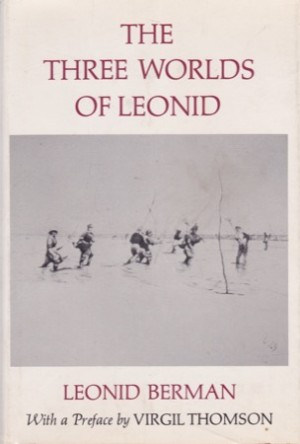
Hardcover. NY, Basic Books, 1st, 1978, Book: Very Good, Dust Jacket: Very Good, Hardcover in a bright dust jacket, 275 pages. Translated from the French by Olivier Bernier. Preface by Virgil Thomson. The autobiography of a Jewish painter who fled from Bolshevik Russia to Spain, moved to France and who was imprisoned during WWWII by the Germans and who moved eventually to the U.S.
Hardcover. Boston, Houghton Mifflin, 1st, 1947, Book: Very Good, Dust Jacket: Fair, Hardcover in a worn, chipped dust jacket. Drawings by Saul Steinberg. Mississippi author, and war correspondent, who toured the World during WWII for the US Army Service Forces (Supply). Foreword says "This book is a personal record. It has to do with a journey that I made in 1944-45 to Great Britain, France, Belgium, Corsica, Italy, Egypt, Palestine, Iraq, Iran, India, Burma, China."
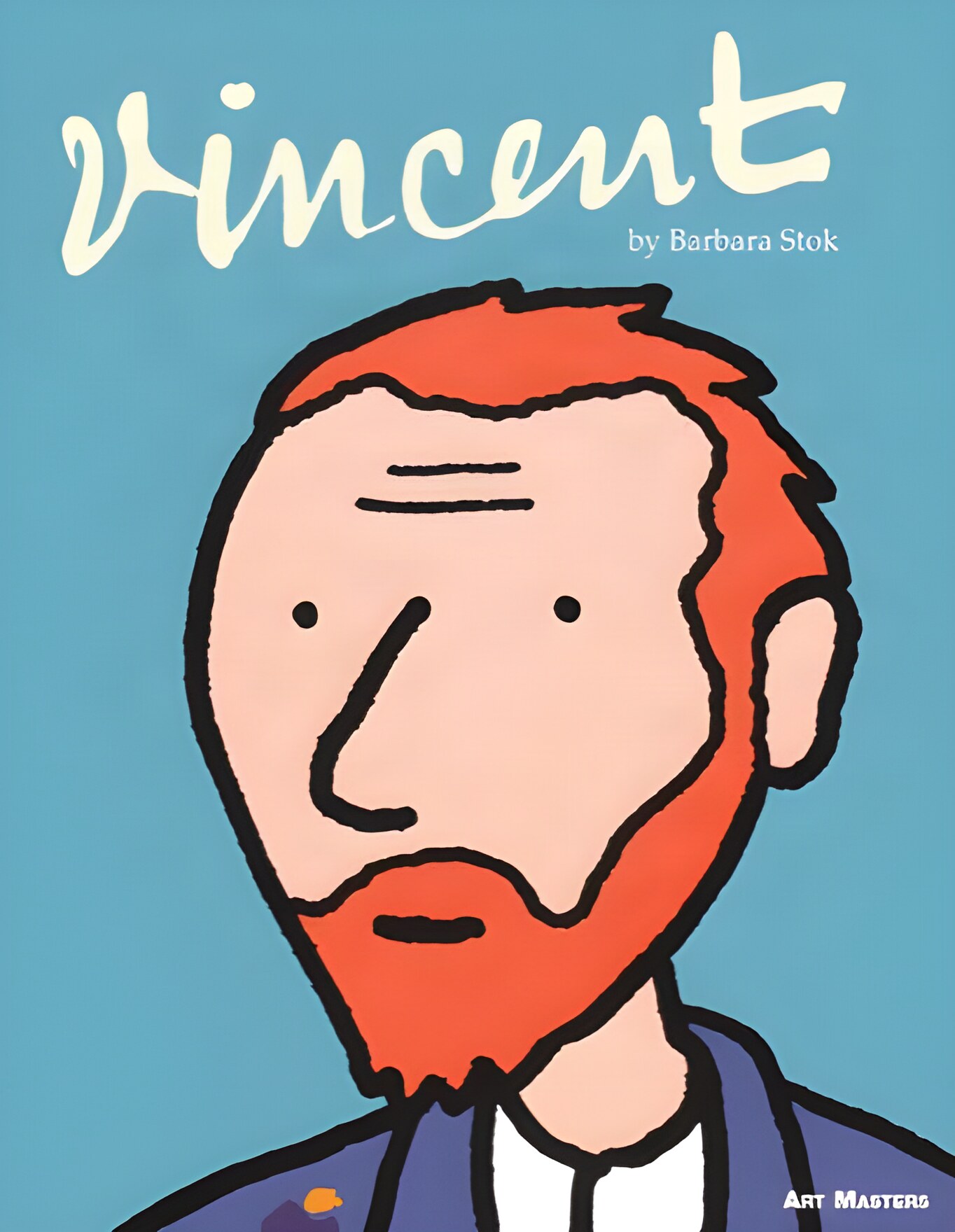
Softcover. SelfMadeHero, 1st US, 2015, Softcover, 142 pages illustrated in color by Stok. Translated from the Dutch by Laura Watkinson. This graphic biography documents the brief and intense period of creativity Vincent van Gogh (1853-1890) spent in Arles, Provence, in southern France. Here van Gogh dreams of setting up an artists' studio--a haven where he and his friends can paint together. But attacks of mental illness leave the painter confused and disoriented. When his friend and fellow artist Paul Gauguin refuses to reside permanently at the Yellow House, a distraught van Gogh cuts off part of his own ear. Throughout this period of intense emotion and hardship, Vincent's brother, Theo, stands by him, offering constant and unconditional support. Writer and illustrator Barbara Stok breathes riveting new life into a fascinating episode of art history, creating a vivid portrait of one of the world's most beloved and legendary artists. Clean copy.
Hardcover. NY, Grove Press, 1st US, 2005, Book: Very Good, Dust Jacket: Very Good, Hardcover in a bright, unclipped dust jacket. In 1753, Voltaire -- playwright, poet, philosopher, and one of the most feted figures in Europe -- was forced by Louis XV into exile, where he remained for the last twenty-five years of his life. These years heralded a startling new beginning for this remarkable man. Voltaire carved out a new and vibrant world in his isolation, becoming a successful entrepreneur and writing his masterpiece Candide. In Voltaire in Exile, Ian Davidson re-creates this period in the life of one of the giants of the Enlightenment. By painstakingly translating the rich correspondence between Voltaire and his family, members of the Court at Versailles, and the French intellectual elite, Davidson allows us to discover Voltaire the artist, the campaigner, the aesthete, the lover, the humorist. The result is a wonderfully vivid portrait of this extraordinarily funny, iconoclastic, complex, and, above all, ferociously intelligent individual. Clean copy.
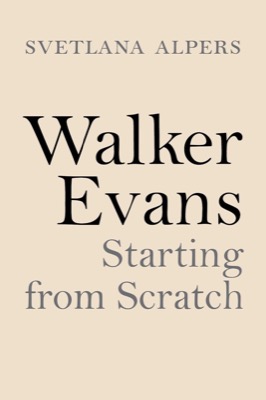
Hardcover. Princeton NJ, Princeton University Press, 1st, 2020, Book: Very Good, Dust Jacket: Very Good, Hardcocer in a bright dust jacket, 257 pages plus 143 b&w pages of photographs in the front of the book. Walker Evans (1903-75) was a great American artist photographing people and places in the United States in unforgettable ways. He is known for his work for the Farm Security Administration, addressing the Great Depression, but what he actually saw was the diversity of people and the damage of the long Civil War. In Walker Evans, renowned art historian Svetlana Alpers explores how Evans made his distinctive photographs. Delving into a lavish selection of Evans's work, Alpers uncovers rich parallels between his creative approach and those of numerous literary and cultural figures, locating Evans within the wide context of a truly international circle. Alpers demonstrates that Evans's practice relied on his camera choices and willingness to edit multiple versions of a shot, as well as his keen eye and his distant straight-on view of visual objects. Illustrating the vital role of Evans's dual love of text and images, Alpers places his writings in conversation with his photographs. She brings his techniques into dialogue with the work of a global cast of important artists--from Flaubert and Baudelaire to Elizabeth Bishop and William Faulkner--underscoring how Evans's travels abroad in such places as France and Cuba, along with his expansive literary and artistic tastes, informed his quintessentially American photographic style.
Hardcover. NY, Scribner, 2nd pr., 1997, Book: Very Good, Dust Jacket: Very Good, Hardcover, 475 pages, b&w photos, in a bright, unclipped dust jacket. Remainder line on bottom edge. A biography of Frances Marion, one of the earliest--and for many years the most successful--screenwriters in Hollywood. Cari Beauchamp masterfully combines biography with social and cultural history to examine the lives of Frances Marion and her many female colleagues who shaped filmmaking from 1912 through the 1940s.

 "The Paris Years of Thomas Jeffersonby: William Howard Adams")
 "The Red Virgin: Memoirs of Louise Michel by: Michel Louise edited by Bullitt Lowry and Elizabeth Ellington Gunter")
 "This Is the Story by: David L. Cohn")
 "Voltaire In Exile: The Last Years, 1753-78 by: Ian Davidson")


 "Without Lying Down: Frances Marion and the Powerful Women of Early Hollywoodby: Beauchamp, Cari")