Hardcover. NY, Harry N. Abrams, 1st, 2000, Book: Very Good, Dust Jacket: Very Good, Hardcover, 240 pages. This stylish book re-creates the charmed life of two American expatriates in France at the turn of the 20th century-the noted artist Walter Gay and his wife, Matilda, whose glittering social circle included John Singer Sargent, Edith Wharton, Henry James, and many other artists and aristocrats. Narrated by witty excerpts from Matilda Gay's recently discovered journal, and richly illustrated with Walter Gay's remarkable, sought-after paintings of the rooms in which they and their friends lived, in Paris, Fontainebleau, Venice, and elsewhere, A Charmed Couple offers an intimate glimpse of a long-gone social milieu whose hold on the popular imagination continues to this day. WILLIAM RIEDER is a curator in the Department of European Sculpture and Decorative Arts at the Metropolitan Museum of Art in New York. Author of numerous articles, most on European furniture, in such journals as Architectural Digest, Connoisseur, and Antiques, he lives in New York City. 128 illustrations, 55 in full color, 81/2 x 101/2".
Hardcover. NY, St. Martin's Press, 2nd pr., 2018, Book: Very Good, Dust Jacket: Very Good, Hardcover in a bright, unclipped dust jacket. 388 pages, b&w illustrations. A revealing biography of Florence Gould, fabulously wealthy socialite and patron of the arts, who hid a dark past as a Nazi collaborator in 1940's Paris. Born in turn-of-the-century San Francisco to French parents, Florence moved to Paris at the age of eleven. Believing that only money brought respectability and happiness, she became the third wife of Frank Jay Gould, son of the railway millionaire Jay Gould. She guided Frank's millions into hotels and casinos, creating a luxury hotel and casino empire. She entertained Zelda and Scott Fitzgerald, Pablo Picasso, Joseph Kennedy, and many Hollywood stars-like Charlie Chaplin, who became her lover. While the party ended for most Americans after the Crash of 1929, Frank and Florence stayed on, fearing retribution by the IRS. During the Occupation, Florence took several German lovers and hosted a controversial Nazi salon. As the Allies closed in, the unscrupulous Florence became embroiled in a notorious money laundering operation for Hermann Goring's Aerobank. Yet after the war, not only did she avoid prosecution, but her vast fortune bought her respectability as a significant contributor to the Metropolitan Museum and New York University, among many others. It also earned her friends like Estee Lauder who obligingly looked the other way. A seductive and utterly amoral woman who loved to say "money doesn't care who owns it," Florence's life proved a strong argument that perhaps money can buy happiness after all.
Hardcover. NY, Knopf, 1st, 20, Book: Very Good, Dust Jacket: Very Good, Hardcover in a bright dust jacket. Drawing on original and exhaustive research from interviews and never-before-seen material in the Picasso family archives, this book opens with a visit by the Hungarian-French photographer Brassai to Picasso's chateau in Normandy, Boisgeloup, where he would take his iconic photographs of the celebrated plaster busts of Marie-Therese, Picasso's mistress and muse. Picasso was contributing to Andre Breton's Minotaur magazine and he was also spending more time with the likes of Man Ray, Salvador Dali, Lee Miller, and the poet Paul Eluard, in Paris as well as in the south of France. It was during this time that Picasso began writing surrealist poetry and became obsessed with the image of himself as the mythic Minotaur--head of a bull, body of a man--and created his most famous etching, Minotauromachie. Richardson shows us the artist is as prolific as ever, painting Marie-Therese, but also painting the surrealist photographer Dora Maar who has become a muse, a collaborator and more. In April 1937, the bombing of the town of Guernica during the Spanish Civil War inspires Picasso's vast masterwork of the same name, which he paints in just a few weeks for the Spanish Pavilion at the Paris World's Fair. When the Nazis occupy Paris in 1940, Picasso chooses to remain in the city despite the threat that his art would be confiscated. In 1943, Picasso meets Francoise Gilot who would replace Dora, and as Richardson writes, "rejuvenate his psyche, reawaken his imagery and inspire a brilliant sequence of paintings." As always, Richardson tells Picasso's story through his work during this period, analyzing how it shows what the artist was feeling and thinking. His fascinating and accessible narrative immerses us in one of the most exciting moments in twentieth century cultural history, and brings to a close the definitive and critically acclaimed account of one of the world's most celebrated artists.
Hardcover. New Haven, Yale University Press, 1st, 1985, Book: Very Good, Dust Jacket: None, Hardcover, blue cloth, 262 pages. Illustrated with black & white photographs. Clean, tight copy. This portrait of Disderi and the carte de visite he patented in Paris in 1854 is far more than a biography. The c-d-v, or photographic calling card, was a relatively inexpensive product that made the photographic portrait available to the middle class . McCauley's carefully documented work explores Disderi's career and oeuvre , the impact of mass-produced celebrity cartes on the social and cultural life of mid-19th-century France, and aesthetics in c-d-v portraiture. The final third of the book is an art historical evaluation of the importance of the c-d-v for portrait painting of the period . The fine bibliography, generous illustrative matter, and detailed notes add to the value of this work for the avid student of photohistory or 19th-century studies.
Hardcover. Boston, Houghton Mifflin, 2nd pr., 1969, Book: Very Good, Dust Jacket: Good, Hardcover in a worn, chipped dust jacket, 505 pages with b&w illustrations. Amazing detail, yet easily flowing narrative of the governor who preceded FDR, who--with Frances Perkins assistance as Industrial Commissioner--shaped a state's humane response to sweatshops, immigration. His 1928 presidential campaign faced burning Klu Klux Klan crosses and harrassment when he ventured outside the Northeast. After losing to Herbert Hoover he left his successor to Governor of New York, Franklin D. Roosevelt, a working government and blueprint for social reform that Roosevelt would later put to use as President. Name on half title page, otherwise clean internally.
Hardcover. New Havn CT, Yale University Press, 1st , 2001, Book: Very Good, Dust Jacket: Very Good, 333 pages. Hardcover with dust jacket. Illustrated in color, B&W. Clean, tight copy. Few painters lived the intellectual adventures of the early twentieth century as intensely as Albert Gleizes. At the centre of the public scandal over Cubism that broke out in Paris in 1911, he was with Marcel Duchamp and Francis Picabia in New York during the war and was one of the first European avant-garde artists to respond to the scale and vigour of New York life. Gleizes was also one of the few French painters of the 1920s to recognise nonrepresentational painting as the logical development of Cubism. His work as a painter is accompanied by an immense body of theoretical work, addressing the question posed so starkly by Duchamp and Picabia: why should we paint? What is the justification for the work of art? Over his life he touches on many spheres of human activity - religious, political and cultural history, physics and the philosophy of work. This book follows Gleizes' argument as it evolves, drawing on painting, and both published and unpublished writings. It reveals Gleizes, not just as a significant historical personality, but as a man whose work and thinking remains surprisingly fresh and relevant to the needs of our own time.
Softcover. New York, Doubleday, 1st, 1990, Book: Very Good, Dust Jacket: None, 297 pages. Softcover. A very clean, unmarked copy with only minor edgewear to paper wrappers. Faded spine. A Livingston descendant once called the Hudson Valley, Livingston Valley, and with good reason. The original 1686 Royal patent of 160,000 acres on the east side of New York's Hudson River to Scottish merchant Robert Livingston grew within two generations to nearly one million acres and included vast portions of the Catskill Mountains as well. Intermarriages with other wealthy and influential Hudson Valley families, the Roosevelts, Delanos, Van Rensselaers, Schuylers, Astors, and Beekmans, to name a few created a dynasty and a landed aristocracy on the banks of the new republic s most important river an irony embedded at the core of the American experiment. At one time forty Livingston mansions lined the east shore, and the family s reach into NYS and American politics, economics, and social scene was profound and enduring. Their influence on early American politics was pervasive, with Livingstons on the Provincial Assembly, as members of the Continental Congress, on the committee to draft a Declaration of Independence, as first Chancellor of New York State and co-drafter with John Jay of the state s Constitution, justice of the NYS Supreme Court, Minister to France the list goes on. And, of course, there was the patron of Robert Fulton who brought a revolution to commerce with the world s first steamship, known as the Clermont after the Livingston estate in Columbia County that is now a State Historic Site Text includes a map of the Hudson Valley showing Livingston family land holdings, and a family genealogy from 1654 to 1964.
Hardcover. London, Frances Lincoln, 1st US, 2024, Book: Very Good, Dust Jacket: None, Hardcover in pictorial boards. A biography of the Pop artist told in a graphic novel format. Follow Warhol through his upbringing in Pittsburgh, moving to New York City, finding inspiration and conquering the creative world, in this unique graphic biography. Discover what made Warhol tick - his delights, drives and frustrations. Immerse yourself in his fascinating lifestyle within the New York scene and the incredible way that he continually evolved as an artist. 126 pages in color. Clean copy.
Hardcover. GR, Steidl, 1st, 2007, Book: Very Good, Dust Jacket: Very Good, Hardcover, 232 pages. When celebrated photographer Arnold Newman began his career in 1938 in chain portrait studios in Philadelphia, Baltimore and West Palm Beach, he also immediately began to make abstract and documentary photography on his own, studying people and places impoverished by the Depression. In June of 1941, Beaumont Newhall of The Museum of Modern Art, New York, and Alfred Stieglitz "discovered" him, and he was given an exhibit with Ben Rose at the A.D. Gallery that September. There Newman began to combine his independent work with the portraiture that had been his bread-and-butter, developing the approach for which he is best known, which came to be called "environmental portraiture," and which is so widely influential today that it might be the new standard practice. This style made Newman a distinctive contributor to publications like Life, Vanity Fair, and the New York Times Magazine, brought him into the collections of museums around the world, including The Museum of Modern Art, The Metropolitan Museum of Art, and the International Center of Photography in New York, and led to his recognition in photography histories and with awards including France's Commander of the Order of Arts and Letters. The photographs collected here were made before Newman achieved recognition as a pioneering portraitist, during the formative years from 1938 to 1942. They highlight the early stirrings of a great photographic master.
Hardcover. Cambridge MA, The MIT Press, 1sr, Book: Very Good, Dust Jacket: Very Good, Hardcover in a bright gold foil dust wrapper, 476 pages. The artist Francis Picabia -- notorious dandy, bon vivant, painter, poet, filmmaker, and polemicist -- has emerged as the Dadaist with postmodern appeal, and one of the most enigmatic forces behind the enigma that was Dada. In this first book in English to focus on Picabia's work in Paris during the Dada years, art historian and critic George Baker reimagines Dada through Picabia's eyes. Such reimagining involves a new account of the readymade -- Marcel Duchamp's anti-art invention, which opened fine art to mass culture and the commodity. But in Picabia's hands, Baker argues, the Dada readymade aimed to reinvent art rather than destroy it. Picabia's readymade opened art not just to the commodity, but to the larger world from which the commodity stems: the fluid sea of capital and money that transforms all objects and experiences in its wake. The book thus tells the story of a set of newly transformed artistic practices, claiming them for art history -- and naming them -- for the first time: Dada Drawing, Dada Painting, Dada Photography, Dada Abstraction, Dada Cinema, Dada Montage.Along the way, Baker describes a series of nearly forgotten objects and events, from the almost lunatic range of the Paris Dada "manifestations" to Picabia's polemical writings. Clean copy.
Hardcover. Frances Lincoln Children's Books, 1st, 2020, Book: Very Good, Dust Jacket: None, Hardcover, pictorial boards with a black cloth spine. Part of the Little People, Big Dreams series, the author tells the inspiring story of the Swedish author and creator of Pippi Longstocking, Astrid Lindgren. Color illustrations by Linzie Hunter. Clean copy.
Hardcover. Wilmington, DE, Scholarly Resources Inc., 1st, 1984, Book: Very Good, Dust Jacket: Very Good, 298 pages. Hardcover. Dust jacket unclipped. Cover boards bound in blue, gilt title on spine and front cover. Dust jacket has a touch of agewear, A little foxing on top edge. Clean inside, binding tight, in great shape.
Hardcover. New York, Alfred A. Knopf, 1st, 1949, Book: Very Good, Dust Jacket: Good, 374 pages. Hardcover. Dust jacket with short tape repaired tears along edges, fading to spine. Clean, unmarked pages.
Hardcover. Cambridge MA, MIT Press, 1st, 1979, Book: Very Good, Dust Jacket: Very Good, Hardcover in a mildly worn dust jacket. 361 pages, index, b&w illustrations. Benjamin Thompson, later Count Rumford, was one of the most fascinating and complex men of his period (1753~1814). Soldier of fortune, spy, womanizer, brilliant scientist, intriguer, autocrat, inventor, adventurer, an American expatriated to England who did his most productive scientific work in Munich and who died in France, a man devoted to relieving the suffering of the poor, Rumford was all this and more, and Sanborn Brown's biography makes clear that all these aspects merge into a whole human being. The man who conducted experiments on the caloric theory of heat and the ladies' man are one and the same. Clean copy
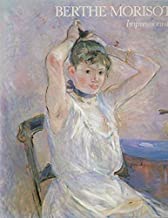
Hardcover. NY, Hudson Hills Press, 1st, 1987, Book: Very Good, Dust Jacket: Very Good, Hardcover, 228 pages, 123 color plates. Morisot was a gutsy pioneer among the French impressionists. As a standard-bearer of the avant-garde, she created a scandal by helping to organize a public auction of their works, something very few artists had dared to do. Defying the advice of her parents and Manet, she remained in Paris when Prussian troops besieged the city. In her artistic technique she was no less daring. Around 1874, in pictures of tourists and yacht-filled rivers, she broke through to an abbreviated, shorthand style ahead of her contemporaries. Disregarding her own view that Monet had taken landscape painting to its farthest limits, her late oils of gardens are brilliant fireworks of color. This catalogue of a retrospective exhibition that is to tour the country stands on its own as a valuable study.
Hardcover. New York, Coward, McCann & Geoghegan, Inc., 1st US, 1975, Book: Very Good, Dust Jacket: Good, Hardcover, 319 pages. Hardcover. Previous owners bookplate on preliminary pages. 16 pages of black & white illustrations. Foxing to top edge. Dust jacket with chipping along edges.
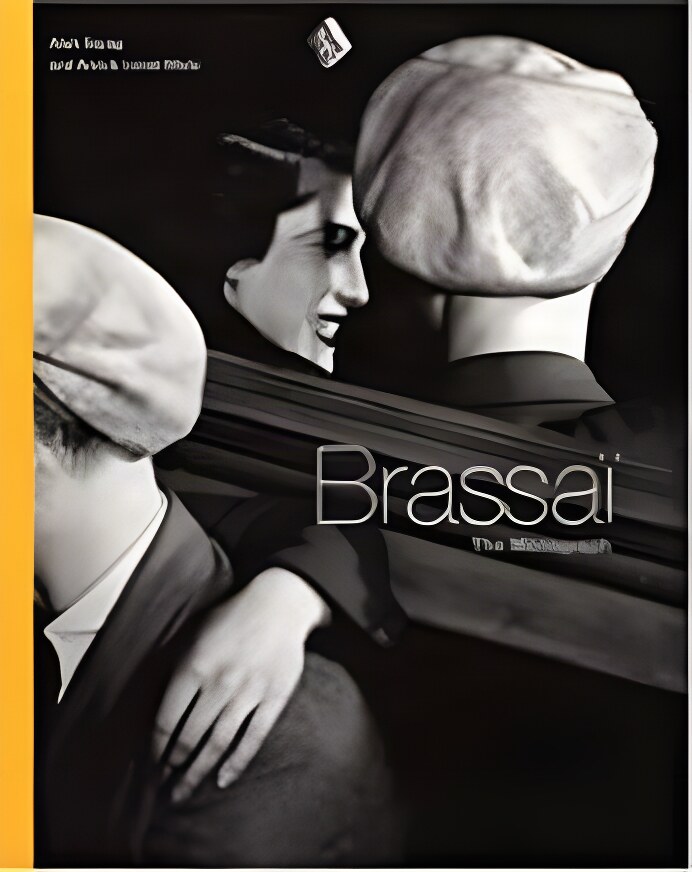
NY, Abrams, 1st, 1999, Book: Very Good, Dust Jacket: Very Good, Hardcover, 367 pages. Brassai: The Eye of Paris is both the catalog of an exhibition of Brassai's photographs organized by the Houston Fine Arts Museum and a valuable biography of the artist. In 1932, only three years after he purchased his first camera (a Leica), Brassai published a portfolio of 64 photos titled Paris by Night that caused an immediate sensation. His lively eye (seen in an enigmatic photograph at the beginning of the book) captured fresh, unique images of the city and its citizens. Fascinated by the underworld, he moved easily among gangsters and prostitutes in bars and bordellos; he was equally at home among the fashionable and wealthy, and just as devastating in his depiction of them. He used magnesium flares for low-contrast shadows, catching his subjects in natural poses at significant moments. The wide range of Brassai's work is suggested by his formal nudes, which have an affinity with Edward Weston's, and his informal portraits, which remind viewers of Diane Arbus, who admired his work. Brassai was a central figure in the intellectual and artistic circles of Montparnasse that made Paris the most exciting city in the world during the 1930s. In a long essay that includes lively anecdotes of the photographer's relationships with Picasso, Henry Miller, Kertesz, and many other luminaries, the author re-creates the aesthetic and philosophical ferment of the period. Brassai: The Eye of Paris recognizes the artist's talents in five different media--photography, filmmaking, sculpture, writing, and drawing--but focuses on what he is best known for: lyrical and penetrating photographs of the City of Light.
Hardcover. Boston, Bulfinch Press, 1st, 2000, Book: Very Good, Dust Jacket: Very Good, Hardcover in a bright, unclipped dust jacket, 319 pages, mostly b&w photographs (some color), essays by 7 contributors including Henry Miller. Preface by Jean-Jacques Aillagon. Text essays excerpted from the work of Brassai himself as well as contributions from his wife Mme. Gilberte Brassi and close friends Roger Grenier, Henry Miller, Jacques Prevert and Werner Spies. End-matter includes Biography, Bibliography, Exhibitions and List of Illustrations. Illustrated with 308 photographs, 14 of which are in color. Stated first American edition. A presentation of Brassi's art from his nude drawings and sculpture to his fascination with graffiti but principally featuring on his photographs of nocturnal Paris and the demimonde creatures which inhabited its streets. Remainder mark to top edge, otherwise clean. DOMESTIC SHIPPING ONLY.
Hardcover. France, Editions Artlys, 1st, 2005, Book: Very Good, Dust Jacket: None, 256 pages. Hardcover no dust jacket. Like new in publisher's shrink-wrap. At once Dior scrapbook, survey and autobiography, this magnificent compendium offers a panorama of the life and art of one of the twentieth century's most influential fashion designers. It reprints Dior's 1956 autobiography Christian Dior et moi--in which the designer contrasted his reputation as both an individual and as a company with his own sense of himself--alongside eight articles by Dior first published in Elle magazine in 1951, which were then collected as Je suis couturier. Throughout, the volume takes as its thematic anchor the designer's beautiful childhood home in Granville, elaborating his lifelong attachment to the house (now the Christian Dior Museum) and its gardens, and showing how his work was influenced by these resplendent environs--a theme that especially preoccupied Dior himself, who once affirmed his "tender and wonderful memories of my childhood home," declaring that "my life and my style owe everything to its location and architecture." Many of the copious illustrations that accompany these writings are supplied by the Christian Dior Museum collection, and reproduce family albums and archival photographs, fashion sketches and formal presentations of classic Dior dresses, hats, shoes and jewelry. Dior scholar Jean-Luc Dufresne conducts a tour of the Dior house and garden, narrating its long and fascinating history.
Hardcover. London, George Routledge and Sons, Reprint, 1867, Book: Very Good, Dust Jacket: None, Two hardcover volumes. Translated by Thomas Johnes. 102 engravings. 3/4 blue leather & patterned paper on boards, Spine with gilt & raised bands. All edges gilt. Previous owner's name stamp on front end paper. Volume 1 - 640 pages. Light wear. Clean, unmarked text. Volume 2 - 552 pages. Light wear. Clean, unmarked pages.
Hardcover. UK, This England Books, 1st, 1991, Book: Very Good, Dust Jacket: Very Good, Hardcover in a bright dust jacket, 205 pages. The author - Josephine Butler - was recruited by Winston Churchill in 1942, and was the only woman member of his elite 'Secret Circle' - Churchill's closest ring of intelligence agents. Codenamed 'Jay Bee' she worked with the French Resistance in occupied France. Map. Clean coy.
Hardcover. London, Arthur Baker, 1st, 1967, Book: Very Good, Dust Jacket: Good, Hardcover in a dust jacket with partial fading, 449 pages, b&w illustrations. The definitive biography of the larger-than-life figure of the French Revolution who was found guilty of loyalist inclinations and executed at the guillotine. Name on front fly leaf otherwise clean.
Hardcover. London, Oxford University Press, 1st, 1995, Book: Very Good, Dust Jacket: Near Fine, 499 pages. Hardcover. B/w illustrations throughout. Black cover boards, gilt title on spine. Dust jacket unclipped, excellent. Beautiful, like new condition. This is the first intellectual biography of Descartes in English; it offers a fundamental reassessment of all aspects of his life and work.

 "A Charmed Couple: The Art and Life of Walter and Matilda Gayby: Rieder, William")
 "A Dangerous Woman: American Beauty, Noted Philanthropist, Nazi Collaborator - The Life of Florence Gould by: Susan Ronald")
 "A Life of Picasso IV: The Minotaur Years 1933-1943by: John Richardson")
 "A.A.E. Disderi and the Carte de Visite Portrait Photographby: McCauley, Elizabeth Anne")

 "Albert Gleizes - For and Against the Twentieth Century by: Brooke, Peter")
 "American Aristocracy, An: The Livingstonsby: Brandt, Clare")



 "Arnold Newman: The Early Workby: Philip Brookman , Arnold Newman")
 "Artwork Caught by the Tail:Francis Picabia and Dada in Parisby: Baker, George")

 "Autobiography of Du Pont de Nemours, Theby: Du Pont, Pierre Samuel, Elizabeth Fox-Genovese (Translator and Introduction)")
 "Beaumarchaisby: Lemaitre, Georges")

 "Benjamin Thompson, Count Rumfordby: Brown, Sanborn C.")
 "Blanche of Castileby: Pernoud, Regine")
 "Brassai: The Eye of Parisby: Tucker, Anne W.")
 "Christian Dior: Man of the Centuryby: Dufresne, Jean-Luc")
 "Chronicles of Enguerrand de Monstrelet, The - Containing an Account of the Cruel Civil Wars Between the Houses of Orleans and Burgundy; Of the Possession of Paris and Normandy by the English; Their Expulsion Thence; and of Other Memo")


