Hardcover. New York, W W Norton & Co Inc, 1st, 1989, Book: Very Good, Dust Jacket: Very Good, Hardcover, 568 pages. Clean, unmarked copy in excellent condition. Profiles the enigmatic soldier, statesman, and man of letters, offering a wealth of never-before-published missives that shed light on his role in the Arab revolt, his sexuality, and his retreat into obscurity.
Hardcover. NY, Total Sports, 1st, 1997, Book: Very Good, Dust Jacket: Very Good, Hardcover in a bright, unclipped dust jacket. 296 pages, Foreword by Hank Aaron. In the crisp, evocative prose of Lawrence S. Ritter and in Mark Rucker's glorious selection of 350 rare photographs, this lavish gift book celebrates George Herman Ruth and the big-bang game he invented. Originally issued in 1988, this book created a new form of sports biography that has been widely imitated since, but never with such commercial success or critical acclaim. Includes unopened CD Rom game for Windows 95. (Will work on later Windows). DUE TO SIZE & WEIGHT, DOMESTIC SHIPPING ONLY.
Hartford CT, Clapp and Benton, 1st, 1832, Book: Good, Hardcover, leather bound, 422 pages. A rare, early 19th-century account of the famed American President, focusing primarily on his career as a military officer and as a lawyer. This 1832 first edition of Goodwin's book includes a portrait frontispiece of Andrew Jackson. It is filled with information regarding his early childhood, civil life as lawyer senator and judge, as well as heroics in the War of 1812, the Creek War, and the American Revolution with an inclusion of his time in the presidency. Previous owner's name on verso of frontis. Covers show edgewear, top 2" of title page missing, frontispiece engraving of Jackson has a repaired tear. Still a solid copy, spine label with gilt title.
Hardcover. NY, One World/Ballantine, 1st, 2000, Book: Very Good, Dust Jacket: Very Good, Hardcover in a bright, unclipped dust jacket. A fictional narrative base on the life of America's first black female millionaire. Born to former slaves on a Louisiana plantation in 1867, Madam C.J. Walker rose from poverty and indignity to become America's first black female millionaire, the head of a hugely successful company, and a leading philanthropist in African American causes. Renowned author Alex Haley became fascinated by the story of this extraordinary heroine, and before his death in 1992 he embarked on the research and outline of a major novel based on her life. Now with The Black Rose, critically acclaimed writer Tananarive Due brings the work to inspiring completion. "I got my start by giving myself a start," Madam C.J. was fond of saying as she recounted her transformation from the uneducated laundress Sarah Breedlove to a woman of wealth, culture, and celebrity. Madam C.J. was nearing forty and married to a maverick Denver newspaperman when the wonder-working hair care method she discovered changed her life. Seemingly overnight, she built a marketing empire that enlisted more than twenty thousand bright young African American women to demonstrate and sell her products door-to-door. By the time she died in 1919, Madam C.J. Walker had constructed her own factory from the ground up, established a training school, and built a twenty-room mansion at Irvington on the Hudson, New York, called Villa Lawaro.
Softcover. Madison WI, University of Wisconsin, reprint., 2005, Book: Very Good, Dust Jacket: None, Softcover in pictorial wraps, 244 pages. The Blind African Slave recounts the life of Jeffrey Brace (ne Boyrereau Brinch), who was born in West Africa around 1742. Captured by slave traders at the age of sixteen, Brace was transported to Barbados, where he experienced the shock and trauma of slave-breaking and was sold to a New England ship captain. After fighting as an enslaved sailor for two years in the Seven Years War, Brace was taken to New Haven, Connecticut, and sold into slavery. After several years in New England, Brace enlisted in the Continental Army in hopes of winning his manumission. After five years of military service, he was honorably discharged and was freed from slavery. As a free man, he chose in 1784 to move to Vermont, the first state to make slavery illegal. There, he met and married an African woman, bought a farm, and raised a family. Although literate, he was blind when he decided to publish his life story, which he narrated to a white antislavery lawyer, Benjamin Prentiss, who published it in 1810. Upon his death in 1827, Brace was a well-respected abolitionist. In this first new edition since 1810, Kari J. Winter provides a historical introduction, annotations, and original documents that verify and supplement our knowledge of Brace's life and times. Clean copy.
Hardcover. NY, Citadel Press, 1st, 1970, Book: Very Good, Dust Jacket: Very Good, Hardcover in a bright, lightly chipped dust jacket. Profusely illustrated review of Ingrid Bergman's films in the classic Citadel Press style. 242 pages. Clean copy.
Hardcover. Binghamton NY, Medieval & Rennaissance Texts & Studies, 1st, 1993, Book: Very Good, Dust Jacket: None, Hardcover, blue cloth with gilt lettering and design to spine and front cover. 652 pages. Identical binding to the Harvard University Press set. Clean, bright copy.
Hardcover. Binghamton NY, Medieval & Rennaissance Texts & Studies, 1st, 1993, Book: Very Good, Dust Jacket: None, Hardcover, blue cloth with gilt lettering and design to spine and front cover. pages 653-1247. Identical binding to the Harvard University Press set. Errata slip taped to front fly leaf, otherwise clean, bright copy.
Hardcover. Cambridge MA, Harvard University Press , 1st, 1981, Book: Very Good, Dust Jacket: None, Hardcover, blue cloth with gilt lettering and design to spine and front cover. The writings of Richard Hooker are of central interest to those studying English Renaissance thought and literature. In this, the third volume of a much-needed critical edition of the Works of Richard Hooker, are the posthumous books of the Laws of Ecclesiastical Polity. Hooker planned the Laws in eight books, but he died shortly after publication of Book Five. Books Six, Seven, and Eight, which contain his analysis of jurisdiction, episcopacy, and the royal supremacy, are here transcribed from versions that have the most authority. The volume also includes Hooker's autograph notes toward those texts (brought to light by P. G. Stanwood in the course of his research) and the contemporary notes by George Cranmer and Edwin Sandys on a lost draft of Book Six. Mr. Stanwood's introduction lays to rest all doubts about the authenticity of the last three books as we have them, doubts current since publication of Walton's Life of Hooker in 1662.Clean, bright copy.
Hardcover. Cambridge MA, Harvard University Press , 1st, 1990, Book: Very Good, Dust Jacket: None, Hardcover, blue cloth with gilt lettering and design to spine and front cover, 926 pages. Although Richard Hooker (1554-1600) is now known principally as the author of the Laws of Ecclesiastical Polity, in his lifetime the Tractates and Sermons brought him greater notoriety. Hooker's views on justification, the perseverance of faith, and the relationship of the Church of Rome to the reformed Church of England were widely reported, and texts of the tracts were extensively circulated in manuscript. Thanks to the meticulous editing of Laetitia Yeandle, Curator of Manuscripts at the Folger Shakespeare Library, the contemporary impact of these debates can now be appreciated for the first time. These tracts provide a unique perspective on the turbulent world of late Elizabethan theology. In addition, they lay the doctrinal foundations of the Laws of Ecclesiastical Polity itself and-with the excellent commentary of Egil Grislis, Professor of Theology at the University of Manitoba in Winnipeg, enable us to trace the intellectual formation of sixteenth-century England's most innovative and provocative theologian. The volume includes a newly discovered letter; three newly attributed sermon fragments; and analysis by P. F. Forte of Hooker's distinctive preaching style. Clean, bright copy.
NY, Simon & Schuster, 1st, 2021, Book: Very Good, Dust Jacket: Very Good, Hardcover in a bright, unclipped dust jacket. 609 pages, b&w illustrations. They say that history is written by the victors. But not in the case of the most famous dissenter on the Supreme Court. Almost a century after his death, John Marshall Harlan's words helped end segregation and gave us our civil rights and our modern economic freedom. But his legacy would not have been possible without the courage of Robert Harlan, a slave who John's father raised like a son in the same household. After the Civil War, Robert emerges as a political leader. With Black people holding power in the Republican Party, it is Robert who helps John land his appointment to the Supreme Court. At first, John is awed by his fellow justices, but the country is changing. Northern whites are prepared to take away black rights to appease the South. Giant trusts are monopolizing entire industries. Against this onslaught, the Supreme Court seemed all too willing to strip away civil rights and invalidate labor protections. So as case after case comes before the court, challenging his core values, John makes a fateful decision: He breaks with his colleagues in fundamental ways, becoming the nation's prime defender of the rights of Black people, immigrant laborers, and people in distant lands occupied by the US. Harlan's dissents, particularly in Plessy v. Ferguson, were widely read and a source of hope for decades. Thurgood Marshall called Harlan's Plessy dissent his "Bible"--and his legal roadmap to overturning segregation. In the end, Harlan's words built the foundations for the legal revolutions of the New Deal and Civil Rights eras.
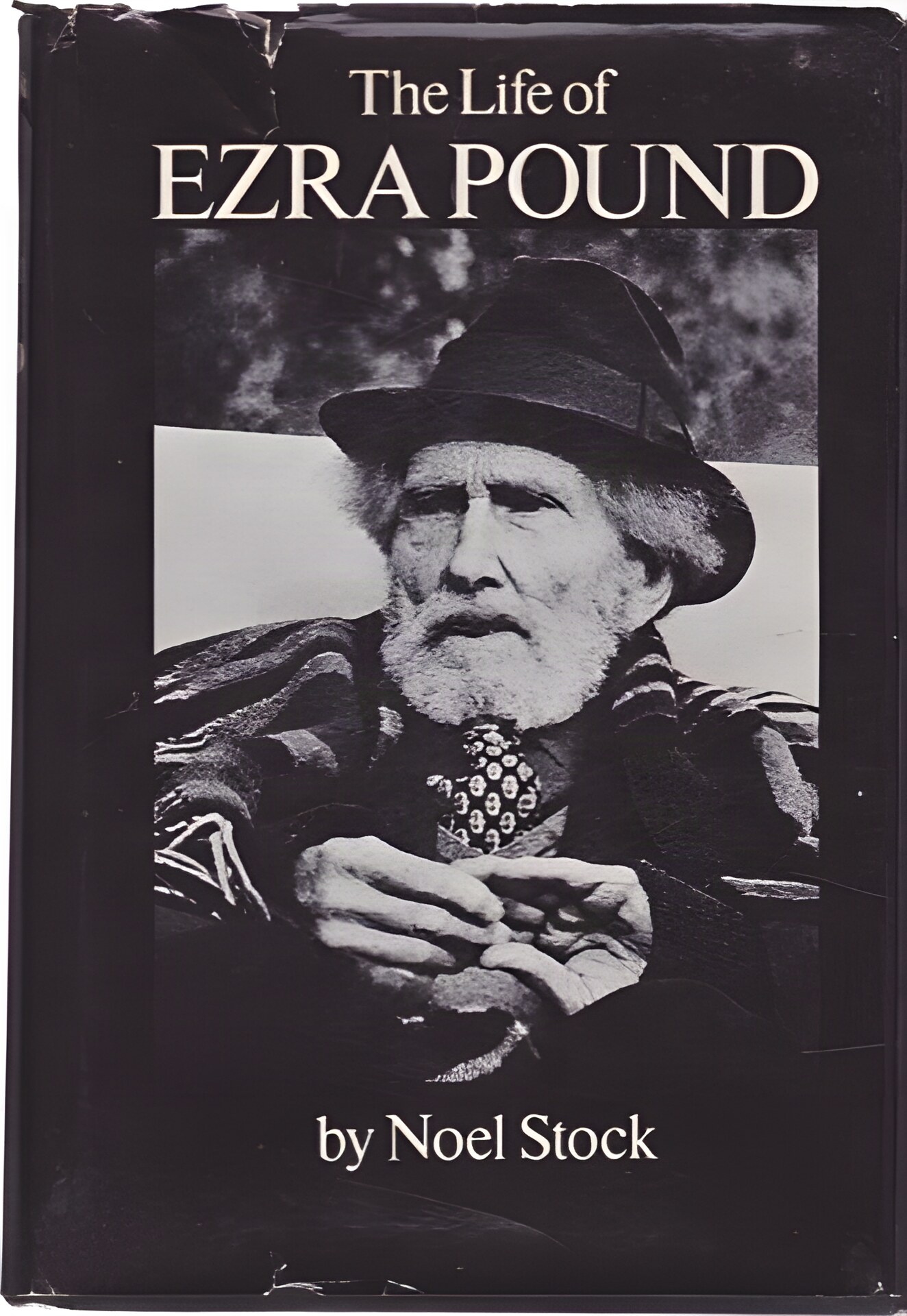
Hardcover. NY, Pantheon, 1st, 1970, Book: Very Good, Dust Jacket: Good, Hardcover in an edgeworn, chipped dust jacket. This is the first detailed and balanced biography of one of the most controversial literary figures of the twentieth century. It includes much material - poetry, prose, and letters - which has not previously been published. Ezra Pound, an American who left home for Venice and London at the age of twenty-three, was a leading member of "the modern movement," a friend and helper of Joyce, Eliot, Yeats, and Hemingway, and an early supporter of Lawrence and Frost. Clean copy.
Hardcover. London, Jonathan Cape, 1st thus, 1973, Book: Very Good, Dust Jacket: Very Good, Hardcover, 204 pages. With a portrait frontispiece. Original publisher's brown cloth, lettered in gilt, pictorial dustwrapper. Very minor shelf-wear, some spotting to dustwrapper. A 1973 reprint of the unexpurgated edition of T. E Lawrence's The Mint. Two editions were published simultaneously in 1955; an unexpurgated text in a limited edition, and an expurgated version (reprinted once in the same year); the present publication is a reissue of the former. The memoir records his service in the ranks of the R.A.F. Lawrence enlisted in 1922; in an effort to escape public and media attention he assumed the name John Hulme Ross. Upon the discovery of his identity he was discharged, but two and a half years later was permitted to re-enlist, this time using the name of Shaw, under which he had meanwhile served in the Tank Corps.
Hardcover. Baltimore, Johns Hopkins University Press, 1st, 2007, Book: Very Good, Dust Jacket: Very Good, Hardcover in a bright dust jacket. The seventh volume of the Papers of Frederick Law Olmsted presents the record of his last years of residence in New York City. It includes reports on the design of Riverside and Morningside parks and Tompkins Square in Manhattan, as well as his comprehensive plan for the street system and rapid transit routes of the Bronx. It records his continuing work on Central Park and presents his final retrospective statement, The Spoils of the Park. In addition, volume seven contains an annotated version of the journal in which Olmsted recorded instances of political maneuvering and patronage politics in the years before his dismissal from the New York parks department in 1878. Later documents chronicle the early stages of his planning of the Boston park system--the Back Bay Fens, Arnold Arboretum, and Riverway. Other major commissions, each with its own political complications, were the grounds of the U.S. Capitol, the completion of the new state capitol in Albany, the designing of a park on Mount Royal in Montreal, and construction of the park system of Buffalo, New York. The volume also presents Olmsted's commentary on issues of the times including federal Reconstruction policy and civil-service reform.
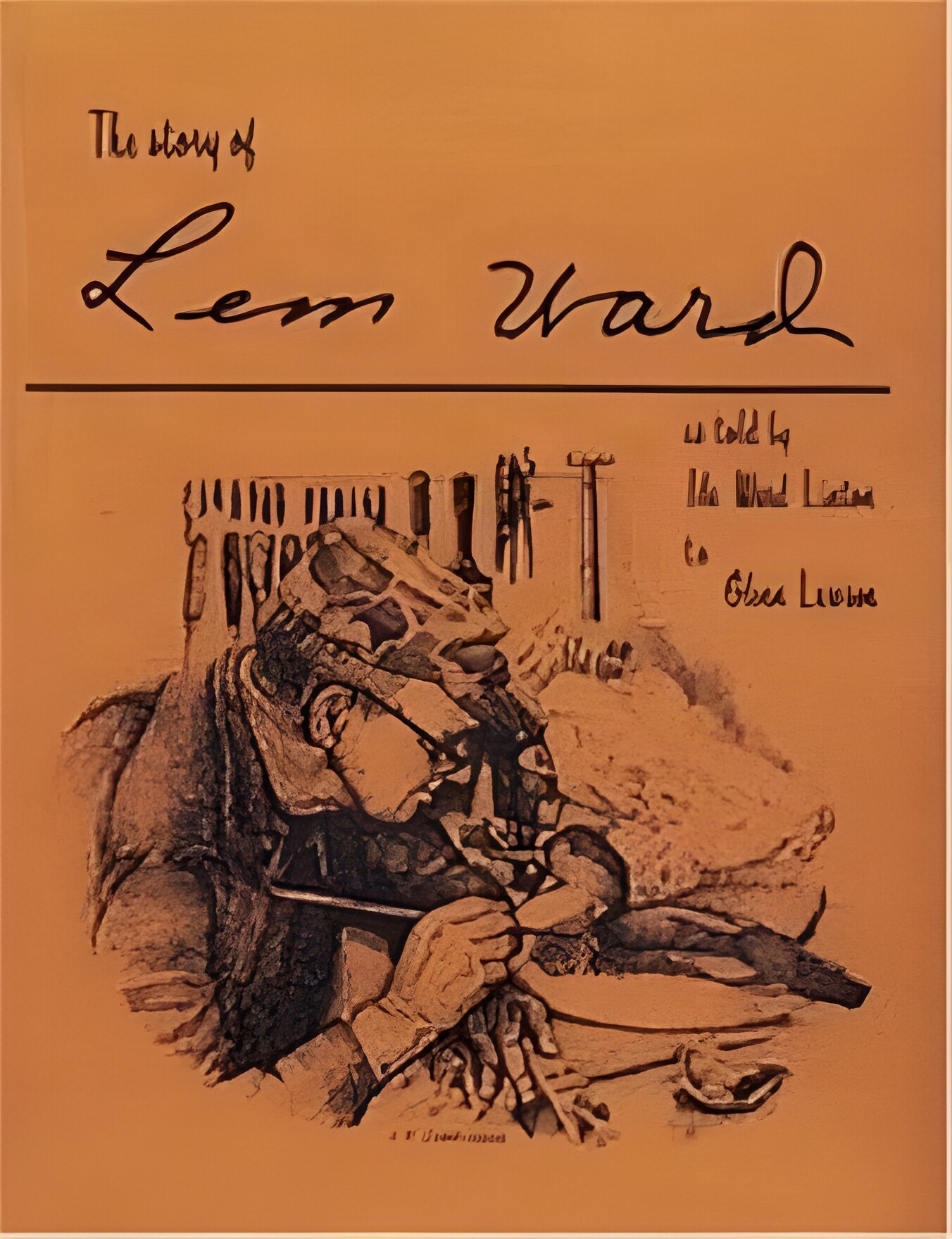
Hardcover. West Chester PA, Schiffer Publishing, 1st, 1984, Book: Very Good, Dust Jacket: Very Good, Hardcover in a bright dust jacket, 128 pages illustrated in color and b&w. The story of the life and works of an American wildfowl artist. Lem's life is a tale of courage - of a man who overcame a withered arm, lack of formal education, cultural isolation, and severe illness to become one of the founders of American Wildfowl Art. This is a close look at how he and his brother, Steve, grew up together in the marshes along the Chesapeake Bay, how they subsisted as barbers and foragers, how they retained their independent spirits to create birds that pleased them - wildfowl art - while carvers around them were creating decoys just good enough for hunting ducks. Lem's work is described in pictures, accompanied by colorful comments and interesting insights by a collector who became one of the artist's closest friends. Clean copy.
Hardcover. Birmingham AL, Legal Classics Library, reprint, 1988, Book: Very Good, Dust Jacket: None, Hardcover, full black leather with ornate gilt design on cover. all edges gilt, ribbon marker, marbled endpapers, raised bands. This is a facsimile of the 1932 first edition. Considered a 'sophisticated country lawyer', Darrow remains notable for his wit; he was quoted as saying, 'The trouble with law is lawyers.' Here, his autobiography, together with the additional 59-pg. Darrow's Plea, written in his own defense to the jury that exonerated him of the charge of bribery at Los Angeles, August, 1912. Clean, bright copy.
Hardcover. NY, Wiley, 2nd pr., 2001, Book: Very Good, Dust Jacket: Very Good, Hardcover in a bright, unclipped dust jacket. The long-awaited, untold, inside story of the rise of the legendary actor, singer, scholar, and activist. The first volume of this major biography breaks new ground. The greatest scholar-athlete-performing artist in U.S. history, Paul Robeson was one of the most compelling figures of the twentieth century. Now his son, Paul Robeson Jr., traces the dramatic arc of his rise to fame, painting a definitive picture of Paul Robeson's formative years. His father was an escaped slave; his mother, a descendent of freedmen; and his wife, the brilliant and ambitious Eslanda Cardozo Goode. With a law degree from Columbia University; a professional football career; title roles in Eugene O'Neill's plays and in Shakespeare's Othello; and a concert career in America and Europe, Robeson dominated his era. 383 pages, b&w illustrations. Clean copy.
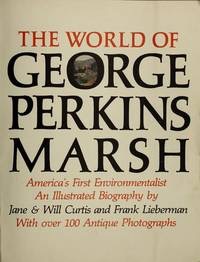
Softcover. Woodstok VT, The Woodstock Foundation, 1st, 1982, Book: Very Good, Dust Jacket: None, Softcover, 123 pages, b&w illustrations. SIGNED BY JANE AND WILL CURTIS on the front fly leaf. This work was published in observance of the 100th anniversary of Marsh's death in 1882. It graphically portrays the many-faceted career of this extraordinarily versatile Vermonter. Marsh is best known for his pioneering environmental study, Man and Nature, which was first published in 1864. Marsh was a lawyer, linguist, businessman, farmer, designer, Congressman, and diplomat (he was Minister to Turkey and to the newly-united Kingdom of Italy, where he spent the last twenty-one years of his life, a tour of duty unprecedented in American diplomacy). In Congress he supported creating of the Smithsonian Institution.
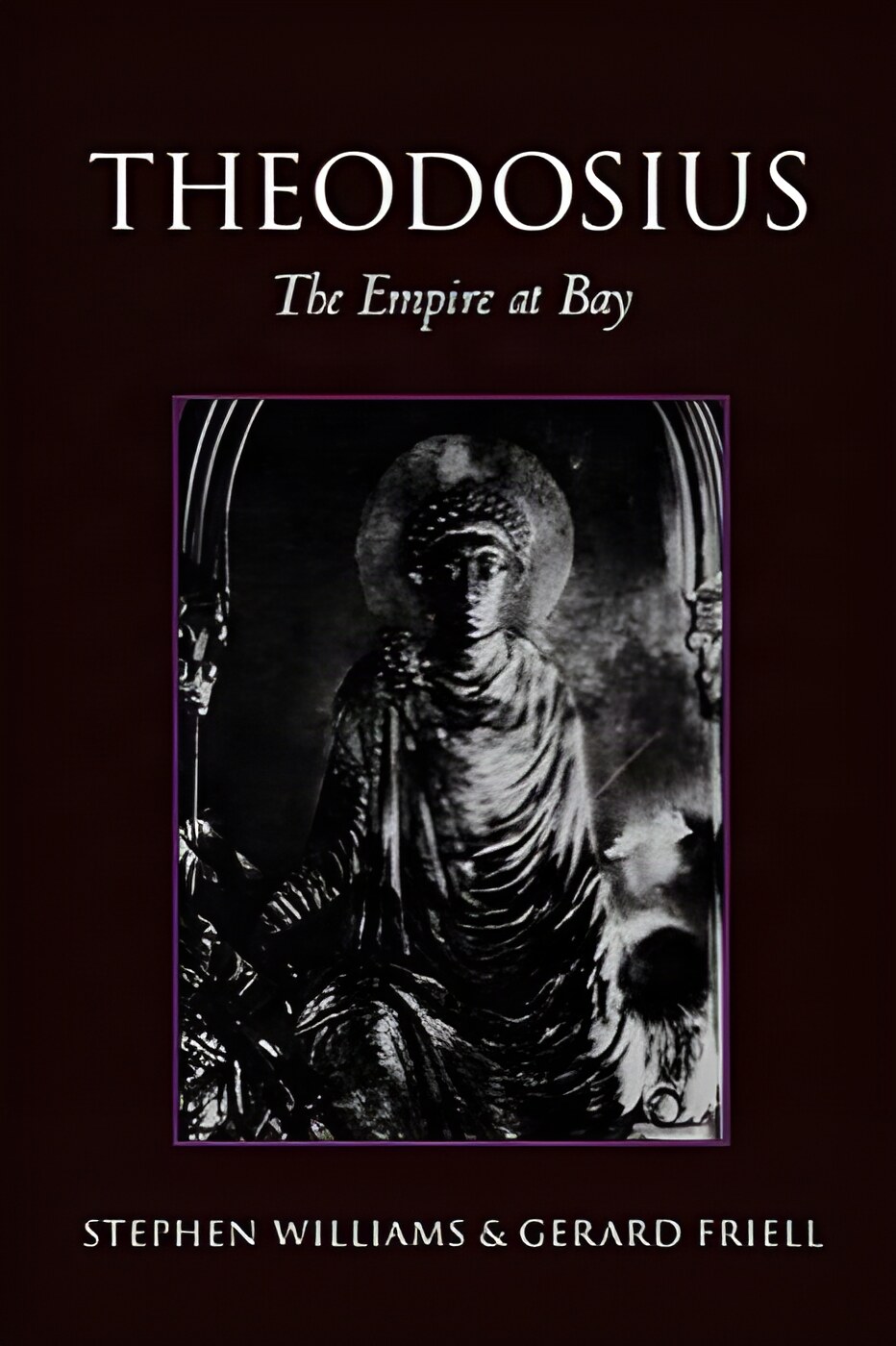
Hardcover. New Haven CT, Yale University Press, 1st, 1994, Book: Very Good, Dust Jacket: Very Good, Hardcover in a bright dust jacket, 238 pages. Theodosius I was the last Roman emperor to rule over both East and West. After the military disaster of Adrianople he had to rebuild the state by adopting a new policy of cooperation with the barbarians. He also suppressed paganism and established a unified Catholic Church by law. His reign was a turning point in the history of the late Roman Empire. The authors describe the military, political, and religious struggles of this turbulent period and analyze the far-reaching effects of his policies in the fourth and fifth centuries. Clean copy.
Hardcover. South Windsor, CT, Barney E. Daley, 1st, 1998, Book: Very Good, Dust Jacket: None, 300+ pages. Hardcover. INSCRIBED BY AUTHOR. Bound in green cloth; gilt lettering & design on spine and front cover. From the introduction (Evan Lawn): "Whether one reads straight through or reads here and there in a checkered fashion, every reader will enjoy meeting Barney. ...And if the reader happens to be an historian, these memoirs will be prized as a treasure trove of living information about rural, daily life before electricity and indoor plumbing."
Hardcover. Woodstock, NY, WoodstockArts, 2nd, 2012, Book: Very Good, Dust Jacket: Very Good, 192 pages. Hardcover with dust jacket. Clean, unmarked copy with only minor wear to dust jacket. Color and black and white pictures throughout.
NY, Simon & Schuster, 1st, 2001, Book: Very Good, Dust Jacket: Very Good, Hardcover in a bright, unclipped dust jacket. Uphill with Archie is a beautifully written and deeply involving look at the life and the world of the great literary icon, poet Archibald MacLeish, by his youngest son. Partly an homage, partly an attempt to come to terms with the man (and the legend), Uphill with Archie speaks to all sons and daughters who have never completely resolved their feelings about powerful parents. Young William MacLeish grew up both captivated and cowed by the fame of a father who won Pulitzer Prizes for his poetry and comparable honors for his work as a lawyer, playwright, teacher, and government official. William's mother, Ada, began her marriage as a successful concert singer in Paris but later felt compelled to give up her art for her family. When Archie was working for Henry Luce and Fortune magazine, his younger children, watched over by a governess, stayed with their grandfather in Connecticut. But it is of the time spent with his family at Uphill Farm, a beautiful old house above a Massachusetts hilltown, that MacLeish has his fondest and most telling memories: "Archie and Ada gave me great gifts: music, the sound of the language beautifully spoken, the draw of knowledge, the arts of humor," William writes. "I learned to perform for them, and in time found myself addicted to getting a nice tan from Archie's sun. And the more I bathed in his light, the harder I found it to go looking for my own."

 "T. E. Lawrence: The Selected Lettersby: Lawrence, T. E. (Malcolm Brown)")



 "The Black Roseby: Tananarive Due")
 "The Blind African Slave: Or Memoirs of Boyrereau Brinch, Nicknamed Jeffrey Brace by: Jeffrey Brace; Editor Kari J. Winter; Contributor Benjamin F. Prentiss")
 "The Films of Ingrid Bergmanby: Quirk, Lawrence J.")


 "The Great Dissenter: The Story of John Marshall Harlan, America's Judicial Heroby: Peter S. Canellos")

 "The Mintby: Lawrence, T. E.")
 "The Papers of Frederick Law Olmsted: Parks, Politics, and Patronage, 1874?1882 (Volume 7) by: Frederick Law Olmsted; Editor-Charles E. Beveridge")
 "The Story of My Life Together With Darrow's Plea in His Own Defense to the Jur That Exonerated Him of the Charge of Bribery at Los Angeles, August, 1912by: Darrow, Cl")


 "The Undiscovered Paul Robeson , An Artist's Journey, 1898-1939by: Paul Robeson Jr.")
 "Tobacco Parish: A Collection of South Windsor's Memories (INSCRIBED BY AUTHOR)by: Daley, Barney E.")
 "Under the North Light: The Life and Work of Maud and Miska Petershamby: Webster, Lawrence")
 "Uphill with Archie: A Son's Journey by: William H. MacLeish")