Softcover. Providence RI, Berghahn Books, 1st, 1996, Book: Very Good, Dust Jacket: None, Softcover, 256 pages. Known as one of the great producers and promoters of the film industry, Eric Pommer had a life-long commitment to German film - despite his emigration in 1933 - and worked in France and Britian, as well as the United States. As German producer, studio executive, and film politician in the pre-Hitler era Erich (later Eric) Pommer (1889-1966), a native of Germany, was an innovator and pioneer, a vital force in leading German cinema to international acclaim with successes such as The Cabinet of Dr Caligari, The Nibelungen and The Blue Angel. As Motion Picture Control Officer of the US Military Government he undertook , from 1946-49, the difficult task of rebuilding West Germany's film industry from the ashes of the Second World War. He succeeded brilliantly, but not without paying the hefty price of becoming embroiled in the turmoil of postwar German politics which made him many friends, but also many enemies. This book is the first detailed account in English of the remarkable career of Pommer who became a legend in his own lifetime. Clean copy.
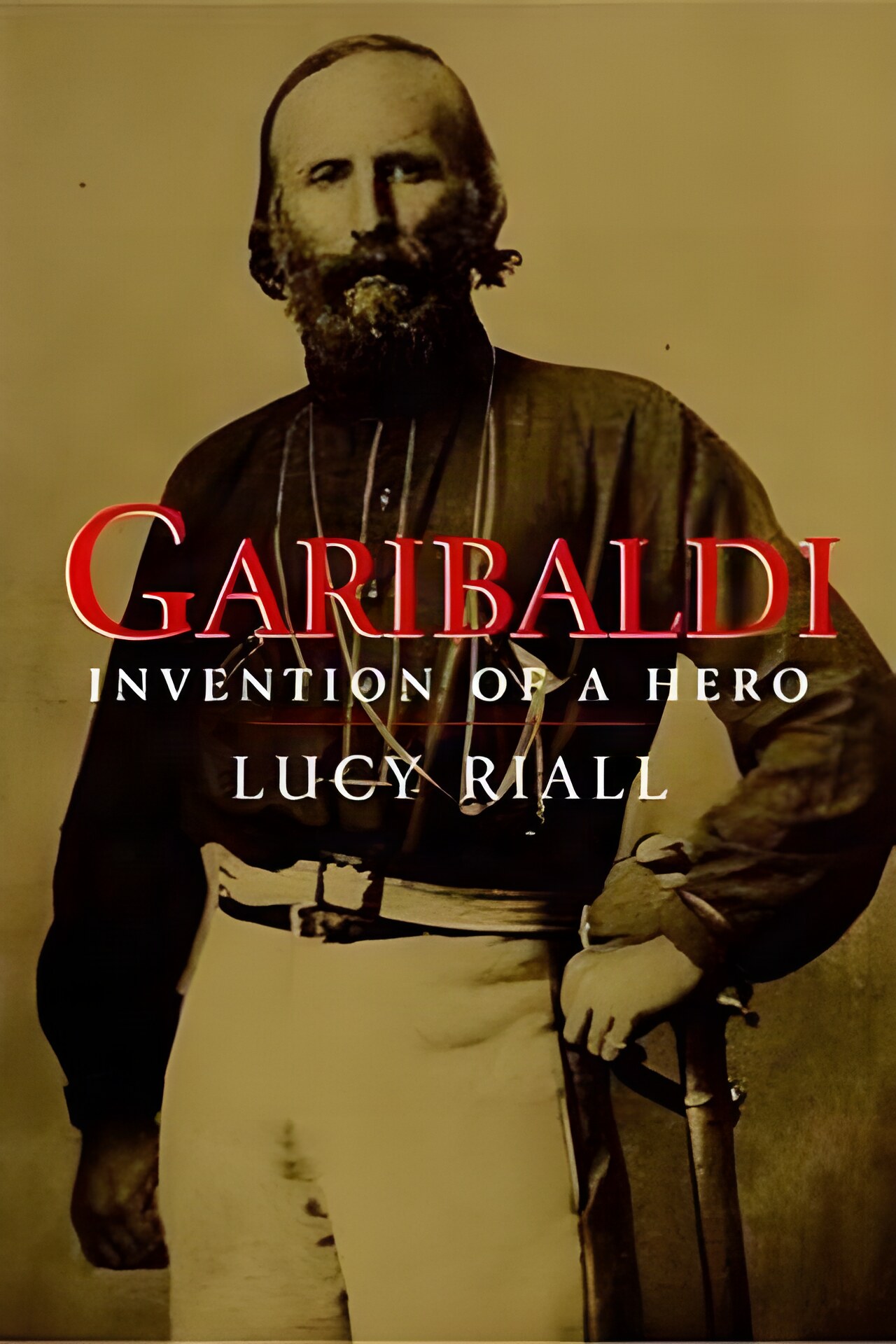
Hardcover. New Haven CT, Yale University Press, 1st, 2007, Book: Very Good, Dust Jacket: Very Good, Hardcover in a bright dust jacket, 482 pages with index. The first sustained analysis of the cult of the legendary Italian hero Giuseppe Garibaldi, the Italian revolutionary leader and popular hero, was among the best-known figures of the nineteenth century. This book seeks to examine his life and the making of his cult, to assess its impact, and understand its surprising success. For thirty years Garibaldi was involved in every combative event in Italy. His greatest moment came in 1860, when he defended a revolution in Sicily and provoked the collapse of the Bourbon monarchy, the overthrow of papal power in central Italy, and the creation of the Italian nation state. It made him a global icon, representing strength, bravery, manliness, saintliness, and a spirit of adventure. Handsome, flamboyant, and sexually attractive, he was worshiped in life and became a cult figure after his death in 1882. Lucy Riall shows that the emerging cult of Garibaldi was initially conceived by revolutionaries intent on overthrowing the status quo, that it was also the result of a collaborative effort involving writers, artists, actors, and publishers, and that it became genuinely and enduringly popular among a broad public. 33 b&w illustrations.
Hardcover. NY, Harper, 1st, 2014, Book: Very Good, Dust Jacket: Very Good, Hardcover in a bright, unclipped dust jacket. A major historical biography of George C. Marshall--the general who ran the U.S. campaign during the Second World War, the Secretary of State who oversaw the successful rebuilding of post-war Europe, and the winner of the Nobel Peace Prize--and the first to offer a complete picture of his life. While Eisenhower Patton, Bradley, Montgomery, MacArthur, Nimitz, and Leahy waged battles in Europe and the Pacific, one military leader actually ran World War II for America, overseeing personnel and logistics: Chief of Staff of the U.S. Army from 1939 to 1945, George C. Marshall. This interpretive biography of George C. Marshall follows his life from his childhood in Western Pennsylvania and his military training at the Virginia Military Institute to his role during and after World War II and his death in 1959 at the age of seventy-eight. It brings to light the virtuous historical role models who inspired him, including George Washington and Robert E. Lee, and his relationships with the Washington political establishment, military brass, and foreign leaders, from Harry Truman to Chiang Kai-shek. It explores Marshall's successes and failures during World War II, and his contributions through two critical years of the emerging Cold War--including the transformative Marshall Plan, which saved Western Europe from Soviet domination, and the failed attempt to unite China's nationalists and communists.
Hardcover. New York, Argosy-Antiquarian Ltd., Ltd Ed. reprint, 1963, Book: Very Good, Dust Jacket: None, 394 pages, red cloth covers, b&w illustrations. Limited to 750 copies, a reprint of the 1934 edition.
Hardcover. Washington DC, Shoemaker & Hoard, 1st, 2004, Book: Very Good, Dust Jacket: None, Hardcover, gray boards with blue cloth spine, 150 pages, b&w illustrations. A singular life often circles around a singular moment, an occasion when one's life in the world is defined forever and the emotional vocabulary set. For the extraordinary writer James Salter, this moment was contained in the fighter planes over Korea where, during his young manhood, he flew more than one hundred missions. James Salter is considered one of America's greatest prose stylists. The Arm of Flesh (later revised and retitled Cassada ) and his first novel, The Hunters, are legendary in military circles for their descriptions of flying and aerial combat. A former Air Force pilot who flew F-86 fighters in Korea, Salter writes with matchless insight about the terror and exhilaration of the pilot's life. This book collects passages from two other books he wrote about his military flight career and entries from his personal journal kept during his tours of military flying duty through flight training in late WWII, into combat duty in Korea in 1952, and through his post war flying up into the early 1960s. Masterfully edited by Jessica and William Benton, it has been organized chronologically and simply is wonderful. You can read from the journal entry, and then it is followed by fiction he created using that experience. No dust jacket, clean, bright copy.
Hardcover. Hartford CT, J. B. Burr & Company, 1st, 1868, Book: Good, Dust Jacket: None, Hardcover in polished calf, black spine label with gilt lettering. Frontis portrait of Grant, additional full page engravings, 631 pages plus publisher's ads. Both cover hinges cracked but holding, and text block is solid. No foxing in text.
Hardcover. New York & London, G. P. Putnam's Sons, reprint, 1905, Book: Good, Dust Jacket: None, Hardcover, 442 pages, b&w illustrations. Maroon cloth, gilt titles to front and spine. Light wear to edges and boards, faint foxing to a few pages. Neat, tight copy.
Softcover. AuthorHouse, reprint, 2004, Book: Very Good, Dust Jacket: None, 240 pages. Softcover. SIGNED BY AUTHOR. B/w illustrations throughout. Wrapper and pages clean. This book is the story of just one newly graduated nurse told in her own words in her letters home saved by her parents and friends. It is one of the few stories of nurses in the Pacific area.
Hardcover. Middletown CT, Clark & Lyman, 2nd Ed., 1821, Book: Good, Dust Jacket: None, 378 pages, frontispiece plus 3 other engraved plates. Rebound with new cloth spine and endpapers, original calf covers present. The frontispiece has some loss to the gutter edge and has been reattached. Image not affected. Moderate foxing throughout.
Hardcover. New York, William Jackson, 1st, 1835, Book: Good, Dust Jacket: None, 287 pages. Black & white illustrations. Missing approx. 1/4" of cloth at top and bottom of spine. Covers and spine faded. Clean, unmarked text.
Hardcover. Hartford, F. A. Brown, 2nd, 1856, Book: Very Good, Dust Jacket: None, 267 pages of main text plus Appendix and 12 pages of Press reviews. Black & white illustrations. Light foxing throughout. Light wear to cloth covers with fading to spine. Clean, tight copy.
Hardcover. Boston, The Fort Gill Press, 1st, 1909, Book: Good, Dust Jacket: None, Hardcover, 313 pages. B&w frontispiece with tissue guard and b&w illustrations throughout. Ex-lib copy with library plate on front endpaper, number front flyleaf, and stamp on title page. on Light edgewear, rubbing to cover edges. Light fraying to top of spine. Else a clean copy.
Hardcover. Edinburgh, John Ballantyne and Co., Rebound first edition, 1809, Book: Good, Dust Jacket: None, 281 pages. Hardcover. B/w frontispiece portrait of author. Agewear throughout. Rebound with brown boards, Navy blue quarter cloth, title paste down on spine. Binding good. Spine straight. Edward Herbert, 1st Baron Herbert of Cherbury was an English soldier, diplomat, historian, poet and religious philosopher of the Kingdom of England.
Hardcover. New York, Harper and Brothers, reprint, 1846, Book: Very Good, Dust Jacket: None, Two volumes, 260 and 308 pages, b&w engraved portrait of Jones in Vol.1. Both books bound in half black leather and blue boards with gilt lettering and raised bands on spine, top edge gilt. Previous owner's bookplate inside front covers. Light foxing, mainly to preliminary pages. Beautiful set.
Hardcover. Hudson Hills, 1st, 2011, Book: Very Good, Dust Jacket: Very Good, Hardcover in a bright dust jacket, 240 pages, color illustrations. Loring Coleman's voice as a storyteller is full of his humor and sense of wonder as he tells us about his life and then gives us the tales behind the beauty and mystery of over 50 of his paintings, most of which are reflections of a disappearing life in New England. He begins by describing the moment when his eyesight failed, and he learned that after seven decades as an artist, he might never paint again. His creation of this book became his response. With spirited memories of the intriguing characters who affected his life, Loring describes his upbringing in the tough Chicago of the 1930s, his discovery of idyllic rivers in Concord, Massachusetts, and his adventures as a motorcyclist and young student of great art teachers. He tells of marrying his wife Katinka the day before Pearl Harbor, entering the military, and quickly finding himself commanding the U.S. Army's largest World War II art department. He then traces his energetic years as a teacher, traveling art historian, and lover of Bavaria and Austria. In the context of his rich personal life, Loring shows us his paintings, as he reveals the many amusing, exasperating, and provocative experiences surrounding the artistic choices he made as he became one of New England's most revered artists. Clean copy. DUE TO WEIGHT, DOMECTIC SHIPPING ONLY.
Hardcover. Baltimore, MD, Butternut & Blue, 1st, 2000, Book: Very Good, Dust Jacket: Very Good, 335 pages. Hardcover. b/w illustrations throughout. Blue cover boards, black title and design on spine and covers. Dust jacket is unclipped, some scratches/rubbing to back cover, otherwise excellent.
Hardcover. New York, Random House, First Edition, 2008, Book: Very Good, Dust Jacket: Very Good, 354 pages. Hardcover. Black cloth boards with gilt titles to spine. Black & white illustrations throughout. Dust jacket with only light marginal wear. Clean & unmarked.
Hardcover. New York, Harper, 1st, 2009, Book: Very Good, Dust Jacket: Very Good, 720 pages. Hardcover with dust jacket. Clean, unmarked copy with only minor wear to dust jacket. Black and white pictures throughout.
Hardcover. Kent UK, Winterdown Books, 1st , 1988, Book: Very Good, Dust Jacket: Very Good, Hardcover in a bright dust jacket, 107 pages. Limited to 375 copies. Clean copy.
Hardcover. Plattsburgh, NY, O.R. Cook, 1st, 1834, Book: Fair, Dust Jacket: None, 252 pages. Original muslin boards with printed paper label on spine. Pages 153 and 154 missing. Front and rear hinges cracked and fragile. Light soil of cover boards. Foxing on pages.
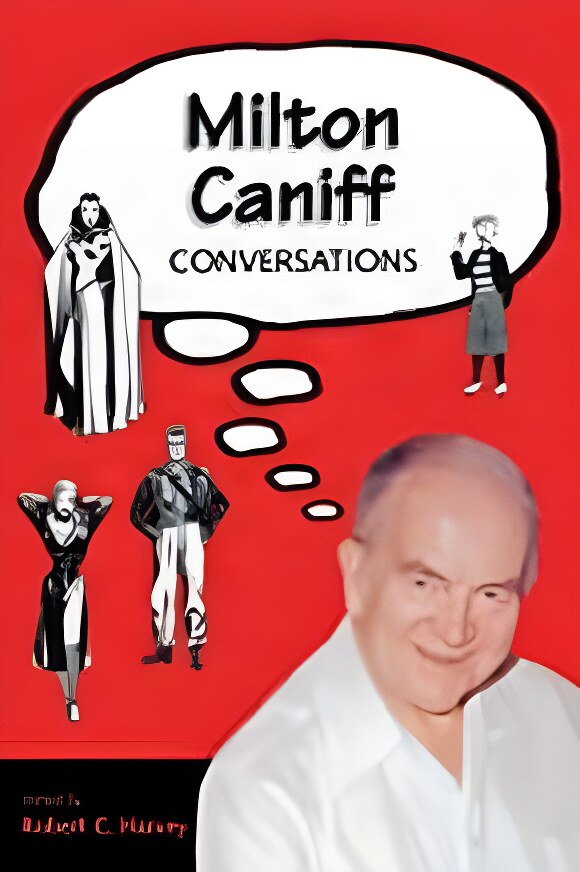
Softcover. Jackson MS, University Press of Mississippi, 1st, 2002, Book: Very Good, Dust Jacket: None, Softcover, 312 pages. In this collection of more than a dozen interviews one of the giants of American comic strips talks about his life and his craft. The years spanning 1937 to 1986, when the interviews were conducted, embrace almost all of Caniff's career as he was producing the legendary Terry and the Pirates and his post-World War II masterpiece Steve Canyon. In long talks with such comics luminaries as Jules Feiffer and Will Eisner, Caniff (1907-1988) discusses his signature chiaroscuro style, his passion for realism in every detail, and his relationships with such other cartooning greats as Al Capp (Li'l Abner), Noel Sickles (Scorchy Smith), and Alex Raymond (Flash Gordon) As Caniff speaks earnestly about his art, his techniques, and his intentions, he discloses his inspirations. He based his characters on real persons and his material on contemporary politics and military issues. He gives candid opinions about the effects of the marketplace, business, and sales upon his art. "I would have created Blondie if I'd known that I could have sold it, you can be damn sure." He notes that the cause for terminating his association with Terry and the Pirates and his creation of Steve Canyon was neither lack of interest nor censorship but the opportunity to exert full creative control over his work.
Hardcover. London, Jonathan Cape, 1st, 1955, Book: Very Good, Dust Jacket: Good, 205 pages. Hardcover with dust jacket. Darkening around edges of dust jacket, light wear on cloth cover boards, light soil on dust jacket, now protected in plastic. Previous owner's signature on end paper. Tight copy.
Hardcover. NY, Stein & Day, Book Club Ed., 1971, Book: Very Good, Dust Jacket: Good, Hardcover in a lightly worn, chipped dust jacket. Frontispiece, photographs, maps, appendix, bibliography, index. Name on front fly leaf, otherwise clean.


 "George Marshall: A Biographyby: Debi Unger / Irwin Unger /Stanley Hirshson")
 "Glory-Hunter: A Life of General Custerby: Van De Water, Frederic F.")




 "Hero of the Empire: The Boer War, a Daring Escape, and the Making of Winston Churchill by: Millard, Candice")
 "Israel Putnam: Poineer, Ranger and Major-General 1718-1790by: Livingston, William Farrand")


 "Life and Character of Stephen Decatur, Late Commodore and Post-Captain in the Navy of the United Statesby: Waldo, S. Putnam")
 "Life of Admiral Viscount Exmouth, Theby: Osler, Edward")

 "Life of Commodore Thomas Macdonough U.S. Navyby: Macdonough, Rodney")
 "Life of Edward Lord Herbert of Cherbury, The: Written by Himself with Prefatory Memoirby: Herbert, Edward Lord")


 "Life of Paul Jones, The (2 Vols.)by: Mackenzie, Alexander Siidell")



 "Man on Mao's Right, Theby: Chaozhu, Ji")
 "Masters and Commanders: How Four Titans Won the War in the West, 1941-1945by: Roberts, Andrew")

 "Memoir of Col. Ethan Allen: Containing the Most Interesting Incidents Connected with his Private and Public Careersby: Moore, Hugh")
 "Mint, The: A day-book of the RAF Depot between August and December 1922 with later notes by 352087 A/C Rossby: Lawrence, T.E.")