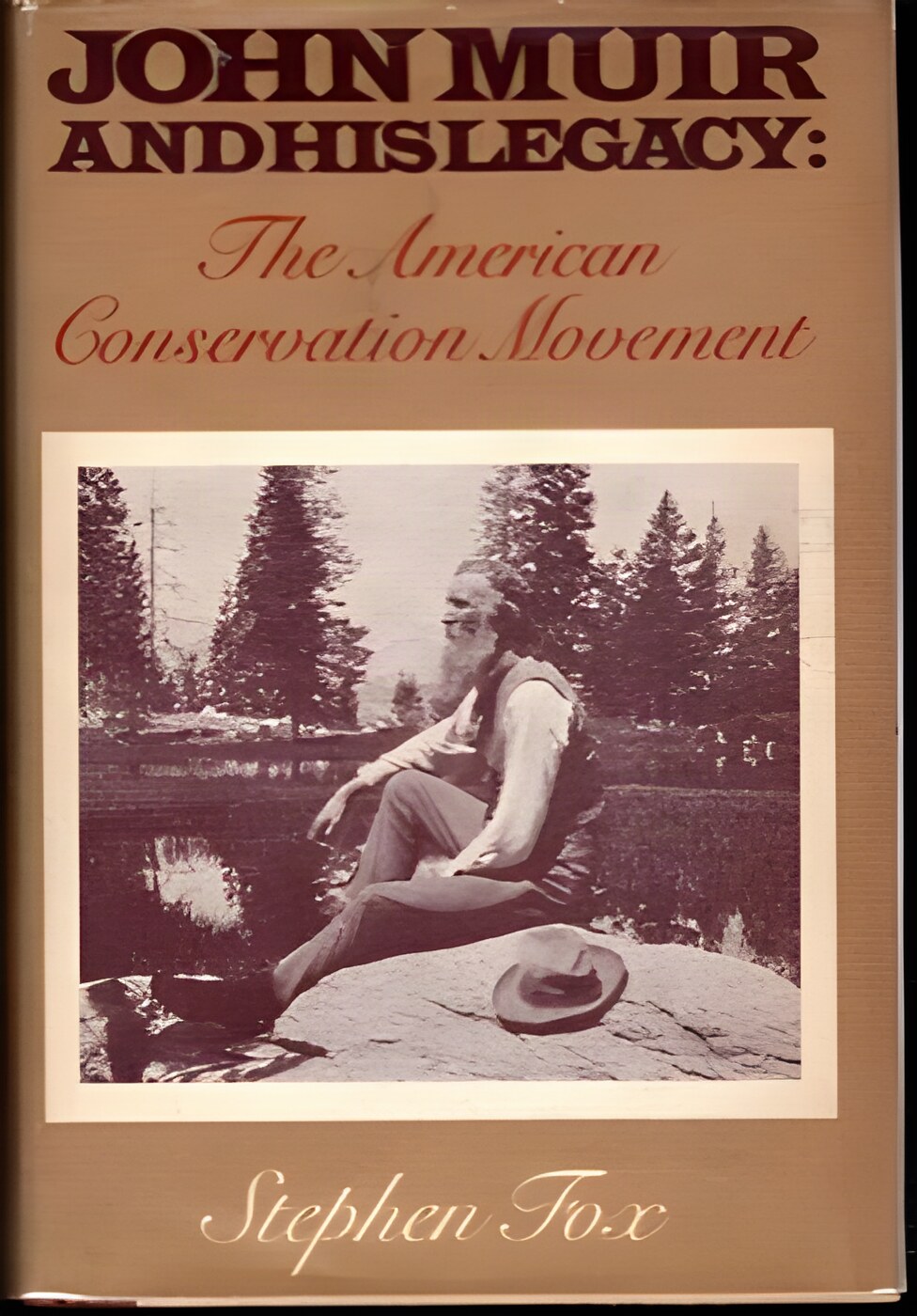
Hardcover. NY/Chicago, Fleming H. Revell, 10th pr., 1915, Book: Very Good, Dust Jacket: Fair, Hardcover. Black & white frontis photograph of Muir (repeated on dust jacket). 11 other plates plus map. Dust jacket worn, chipped (about half of spine missing).
Hardcover. US, Edition Stemmle, 1st, 1998, Book: Very Good, Dust Jacket: Very Good, 208 pages, illustrated throughout in sepia. Light edgewear and tanning to dust jacket, else a clean, tight copy. Alvin Langdon Coburn (1882-1966) is remembered today as one of photography's early masters and great innovators. This monograph investigates the unconventional nature of his personal and artistic achievements. Coburn's landscapes, cityscapes, portraits, and Vortographs reflect his unprecedented steps towards the creation of a photography of symbol and abstraction.
Hardcover. Philadelphia, H.W. Fisher & Company, 1st, 1901, Book: Very Good, Dust Jacket: None, Hardcover, olive green cloth on boards with gilt lettering and border ruling around front, gilt lettering to spine. Book is tight, square. Story about a man from Philadelphia who buys an island in Rangely Lake in western Maine and builds a summer house. Great information about Maine, it's people, the flora and fauna of the area, and history too. Seems to be a blend of fiction and memoir. Color frontis, 15 b&w plates. Small water stain to first 10 pages, in the top of outer margin, not affecting plates or text. Otherwise clean.
Hardcover. Boston, Little Brown , 1st, 1999, Book: Very Good, Dust Jacket: Very Good, Hardcover in a bright, unclipped dust jacket. 306 pages, b&w photos. Best known for his sweet-natured character Latka on Taxi, Andy Kaufman was the most influential comic of the generation that produced David Letterman, John Belushi, and Robin Williams. A regular on the early days of Saturday Night Live (where he regularly disrupted planned skits), Kaufman quickly became known for his idiosyncratic roles and for performances that crossed the boundaries of comedy, challenging expectations and shocking audiences. Kaufmans death from lung cancer at age 35 (hed never smoked) stunned his fans and the comic community that had come to look to him as its lightning rod and standard bearer. Bob Zmuda, Kaufmans closest friend, producer, writer, and straight man, breaks his twenty-year silence about Kaufman and unmasks the man he knew better than anyone. He chronicles Kaufmans meteoric rise, the development of his extraordinary personas, the private man behind the driven actor and comedian, and answers the question most often asked: Did Andy Kaufman fake his own death?
Softcover. Columbia SC, University of South Carolina Press, reprint, 2010, Book: Very Good, Dust Jacket: None, Foftcover in pictorial wraps, 212 pages with index. Belle W. Baruch (1899-1964) could outride, outshoot, outhunt, and outsail most of the young men of her elite social circle-abilities that distanced her from other debutantes of 1917. Unapologetic for her athleticism and interests in traditionally masculine pursuits, Baruch towered above male and female counterparts in height and daring. While she is known today for the wildlife conservation and biological research center on the South Carolina coast that bears her family name, Belle's story is a rich narrative about one nonconformist's ties to the land. In Baroness of Hobcaw, Mary E. Miller provides a provocative portrait of this unorthodox woman who gave a gift of monumental importance to the scientific community. Clean copy.
Hardcover. New York, Longmans, Green and Co., Reprint, 1912, Book: Very Good, Dust Jacket: None, Hardcover, 299 pages, illustrated throughout with photos in b&w. This is an abridged translation by Hugh S.R. Elliot and A.G. Thacker.Introduction by P. Chalmers Mitchell. Red cloth, gilt decorations to front and spine. Slight wear along edges and spine, light soiling to covers, faint foxing to top edge, front hinge cracked, else a very neat copy.
New York, Dutton, 3rd pr., 1950, Book: Very Good, Dust Jacket: None, Hardcover, green cloth with yellow stamping, 142 pages. B&W illustrations by Elinore Blaisdell. A wealth of simple, authoritative information about America's greatest nature lover written for the junior age student. 12 full page illustrations about Audubon's early life.Clean copy, no dust jacket.
NY, Carlton Press, 1st, 1971, Book: Very Good, Dust Jacket: Good, Hardcover in an unclipped dust jacket with edgewear. 120 pages with b&w photos. INSCRIBED BY BAKER on the front fly leaf. The author's account of his 2,000 mile trek from Georgia to Maine in 1964. Scarce.
Hardcover. SUNY Press, 1st, 1992, Book: Very Good, Dust Jacket: Very Good, Hardcover, 768 pages. The personal journals of Charles Burchfield reveal the unique vision and approach to life that established him as America's preeminent watercolorist and painter of nature. When he died in 1967 at the age of seventy-three, Burchfield had filled sixty-seven bound notebooks with his personal entries, comprising some 10,000 pages. He included sketches, doodles, quotations, clippings, weather notes, and other marginalia and insertions offering a rare glimpse into the artist's life. Presented here in book form, the edited journals are organized thematically. The editor's introductions place each section in biographical and art historial context. The material is annotated and informed by the previously unpublished archives of the Burchfield Art Center, and complemented by 41 color plates of Burchfield's paintings and 131 black and white illustrations. Due to size and weight, DOMESTIC SHIPPING ONLY.
Hardcover. New York, Harry N. Abrams, Inc, 1st, 1982, Book: Very Good, Dust Jacket: Very Good, Hardcover in a bright dust jacket, 272 pages. 189 illustrations, including 98 plates in full color. Light brown cloth. Clean, bright copy. As good as new. Peale painted thousands of canvases and that provided a superb record of colonial and federal society. In mid-life Peale turned to the study of nature and assembled a museum in Philadelphia that was, at its time, the most important institution of its kind in the country.
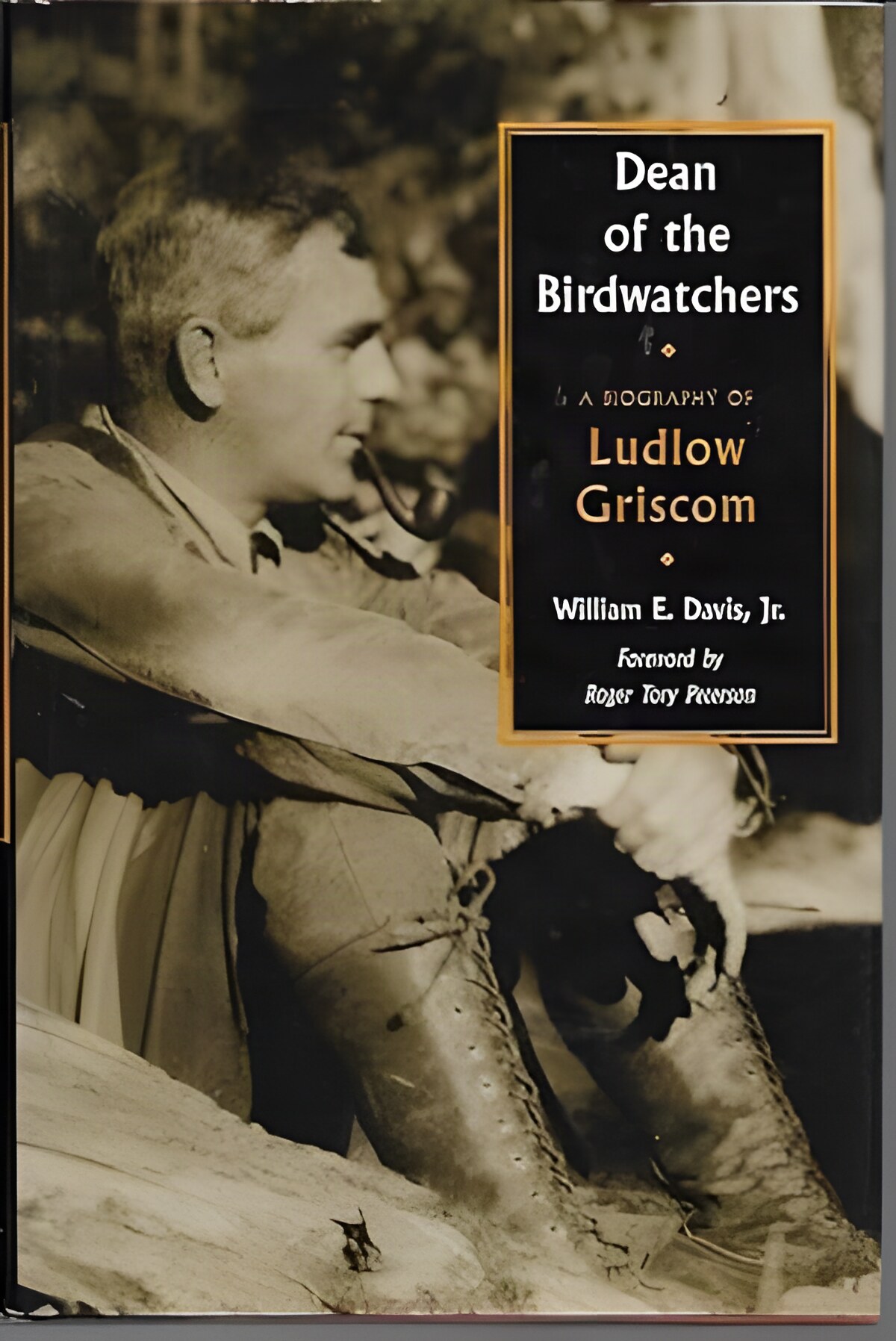
Hardcover. Washington DC, Smithsonian Books, 1st, 1994, Book: Very Good, Dust Jacket: Very Good, Hardcover in a bright dust jacket, 250 pages, photos, notes, bibliography. An influential ornithologist, curator of birds at the American Museum of Natural History; expert on the birds of Central and South America, New York City and Massachusetts, Griscom was influential in the shift to modern "binocular" birding and mentored a generation of notable ornithologists. Draws on Griscom's writings and those of his contemporaries. Clean copy.
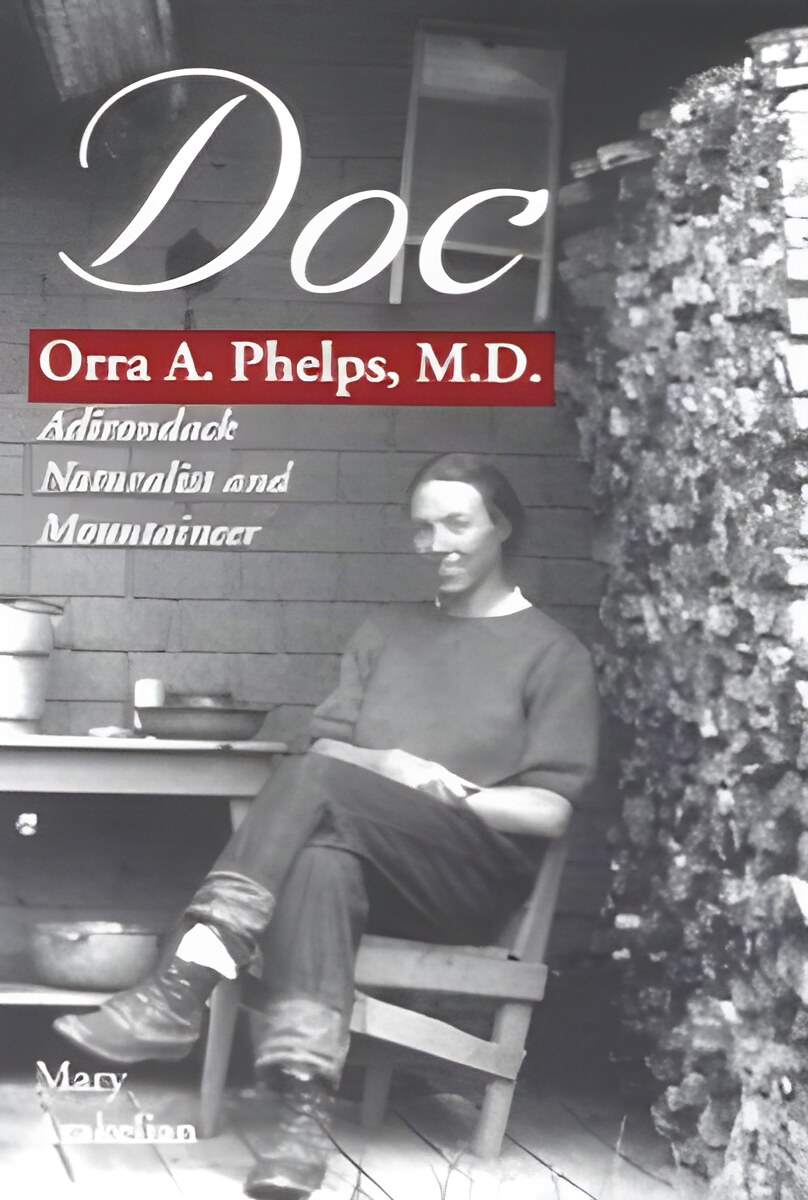
Softcover. Utica NY, North Country Books, 1st, 2000, Book: Very Good, Dust Jacket: None, Softcover, 325 pages, b&w illustrations. Mary Arakelian's biography of Dr. Orra Phelps is the story of an exceptional woman whose unselfish contribution to our knowledge of the Adirondacks is a legacy still enjoyed by lovers of the outdoors. Using letters written between Orra and her mother, the author provides an intimate portrait of Orra's life as a physician, naturalist, botanist, hiker, mountaineer, teacher, and writer. From the hardship of growing up at the turn of the century, through her difficult years as a woman in medical school, to her writing of the Adirondack Mountain Club's 1934 Guide to Adirondack Trails, Arakelian introduces us to a gifted woman. Phelps's intelligence, physical stamina, and boundless enthusiasm underscore her legacy as one of New York State's truly remarkable women of the 20th century. Clean copy.
Hardcover. NY, Rizzoli, Revised Ed., 2007, Book: Very Good, Dust Jacket: None, Hardcover, 777 pages. In the art of Edward Hopper (1882-1967), tense, unhappy men and women, in whom we recognize something of our neighbors and ourselves, play out mysterious dramas in silent, stripped-down spaces - stages raked by an unrelenting and revealing light. These paintings, and Hopper's equally evocative landscapes and houses, make us wonder: what kind of man had this haunting vision, and what kind of life engendered this art? No one is better qualified to answer these questions than the art historian Gail Levin, author of the major studies of Hopper's work (including the catalogue raisonne) and curator of many exhibitions that explored his development and cultural context. Delving deeply into his art and into a rich archive of unpublished letters and diaries, she now constructs "An Intimate Biography, " which reveals the true nature and personality of the man himself - and of the woman who shared his life and helped to shape his art. Jo Hopper's diaries permit an intimate look at the interactions of an indissolubly bonded couple, revealing for the first time the personal tensions that lie behind some of Hopper's most haunting works. Lacks dust jacket but a clean, bright copy.
Hardcover. Berkeley, University of California Press, 1st, 1990, Book: Very Good, Dust Jacket: Very Good, Hardcover in a bright dust jacket, 480 pages. Although he is referred to as a "genius" more often than any other scholar of his period, Edward Sapir has received no full-scale biography since his death in 1939. At long last, Regna Darnell provides a comprehensive assessment of the life, ideas, and wide-ranging interests of this remarkable man. Sapir, the foremost linguist and anthropologist of his generation, contributed substantially to the professionalization of linguistics as an independent discipline. He was the first to apply comparative Indo-European methods to the study of American Indian languages, on which he conducted extensive fieldwork. His theoretical work on the relationship of the individual personality to culture remains fundamental to culture theory in anthropology, as does his insistence on the symbolic nature of culture and the importance of culture as understood by its members, in their own words.Sapir became the first professional anthropologist in Canada and teacher of a whole generation of linguists and anthropologists at Chicago and Yale. Holding to a humanistic view of anthropology (his own work included poetry and literary criticism), he was the most articulate spokesman for the interdisciplinary social science of the late 1920s and 1930s. In both linguistics and anthropology Sapir is a revered master whose ideas continue to inspire discussion and research. A sixteen-volume Collected Works is now in progress. Clean copy.
Hardcover. Princeton NJ, Princeton University Press, 2nd pr., 2013, Book: Very Good, Dust Jacket: Very Good, Hardcover in a bright dust jacket, 332 pages, b&w illustrations. Einstein and the Quantum reveals for the first time the full significance of Albert Einstein's contributions to quantum theory. Einstein famously rejected quantum mechanics, observing that God does not play dice. But, in fact, he thought more about the nature of atoms, molecules, and the emission and absorption of light-the core of what we now know as quantum theory-than he did about relativity. A compelling blend of physics, biography, and the history of science, Einstein and the Quantum shares the untold story of how Einstein-not Max Planck or Niels Bohr-was the driving force behind early quantum theory. It paints a vivid portrait of the iconic physicist as he grappled with the apparently contradictory nature of the atomic world, in which its invisible constituents defy the categories of classical physics, behaving simultaneously as both particle and wave. And it demonstrates how Einstein's later work on the emission and absorption of light, and on atomic gases, led directly to Erwin Schrodinger's breakthrough to the modern form of quantum mechanics. The book sheds light on why Einstein ultimately renounced his own brilliant work on quantum theory, due to his deep belief in science as something objective and eternal. Clean copy.
Hardcover. London, Phaidon, 1st, 2005, Hardcover, 360 pages. A compelling insight into Gilbert & George's everyday enigma. The artists' unfailing politeness, consideration for others and open nature exert an irresistible charm. But it's Jonquet's walks with G & G around their home patch of Spitalfields that shed new light on the work, lavishly illustrated with accompanying personal photos.
Hardcover. London, Phaidon, 1st, 2005, Hardcover, 360 pages. A compelling insight into Gilbert & George's everyday enigma. The artists' unfailing politeness, consideration for others and open nature exert an irresistible charm. But it's Jonquet's walks with G & G around their home patch of Spitalfields that shed new light on the work, lavishly illustrated with accompanying personal photos.
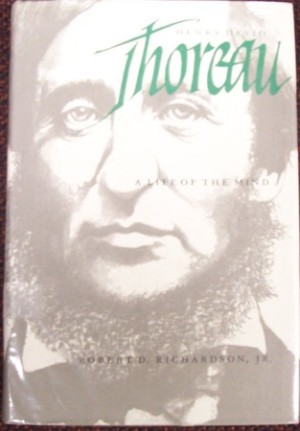
Hardcover. Berkeley , University of California Press, 1st, 1986, Book: Very Good, Dust Jacket: Very Good, Hardcover in a lightly worn, unclipped dust jacket, 455 pages. This biography of Henry Thoreau offers insight into his social activism, his interest in fine arts, William Gilpin and John Ruskin's influence on his nature writing, and his involvement in, and influence by, the Agassiz-Darwin debate over "The Origin of Species." Name on front fly leaf, otherwise clean.
Hardcover. Gotham Books, 1st, 2004, Book: Very Good, Dust Jacket: Very Good, Hardcover in a bright, unclipped dust jacket, 358 pages. Retracing the 1799-1804 odyssey of von Humboldt through South and Central America, Helferich synthesizes the many biographies written about the explorer into a concise appreciation of his personality and scientific significance. The author also appropriately digresses about the history of the places visited by von Humboldt, who was a perceptive reporter of conditions in the Spanish empire immediately before its colonies revolted. Despite almost three centuries of rule by 1799, the Spanish domains still had unexplored territory, tempting von Humboldt, then 30, to seek there the scientific glory he aimed for since his youth in Prussia. Supported by an inheritance and buddy Aime Bonpland, von Humboldt set forth initially to investigate a geographical controversy (Did the Orinoco River connect with the Amazon?) but wowed the world largely with his discoveries in botany, zoology, and geology. Helferich recounts the journey's risks, from piranhas to volcanoes, and his presentation is sure to satisfy reader curiosity about the explorer who had so many places named for him. Clean copy.
Hardcover. New York, Funk and Wagnalls, 1st, 1971, Book: Very Good, Dust Jacket: Very Good, Eric Sloane presents a volume containing autobiographical notes and reproductions of his paintings. 184 pages, featuring 37 color plates of Sloane's oil paintings in addition to numerous other black-ink drawings. Excellent condition; book has no internal flaws but few very light marks on the cover. Dust jacket is in very good condition, very slight rubbing and wear, price-clipped.
Softcover. The MIT Press , reprint, 2005, Book: Very Good, Dust Jacket: None, Softcover, The first publication documenting the work of Brooks Stevens, one of America's most influential twentieth-century designers. A long overdue introduction to the work of visionary industrial designer Brooks Stevens (1911-1995). Believing that an industrial designer "should be a businessman, an engineer, and a stylist, in that order," Stevens created thousands of ingenious and beautiful designs for industrial and household products--including a clothes dryer with a window in the front, a wide-mouthed peanut butter jar, and the Oscar Mayer Wienermobile. ("There's nothing more aerodynamic than a wiener," he explained.) He invented a precursor to the SUV by turning a Jeep into a station wagon after World War II, and streamlined steam irons so that they resembled aircraft. It was Brooks Stevens who, in 1954, coined the phrase "planned obsolescence," defining it as "instilling in the buyer the desire to own something a little newer, a little better, a little sooner than is necessary." This concept has since been blamed for everything from toasters that stop working to today's throwaway culture, but Stevens was simply recognizing the intentionally ephemeral nature of a designer's work. Asked once to name his favorite design, he replied, "none, because every one would have to be restudied for the tastes of tomorrow." Clean copy still in publisher's shrinkwrap.
Softcover. Baltimore, John Hopkins University Press, 1st, 1995, Book: Very Good, Dust Jacket: None, Softcover in illustrated wrappers, 304 pages. Illustrated with B&W engravings. Jens Jensen was one of America's greatest landscape designers and conservationists. Using native plants and "fitting" designs, he advocated that our gardens, parks, roads, playgrounds, and cities should be harmonious with nature and its ecological processes-a belief that was to become a major theme of modern American landscape design. In Jens Jensen: Maker of Natural Parks and Gardens, Robert E. Grese draws on Jensen's writings and plans, interviews with people who knew him, and analyses of his projects to present a clear picture of Jensen's efforts to enhance and preserve "native" landscapes.
Hardcover. Boston, Little Brown & Co., 1st, Book: Very Good, Dust Jacket: Very Good, Hardcover in a lightly worn, price-clipped dust jacket, 436 pages with b&w illustrations. A detailed biography of the eccentric naturalist, John Muir, traces his influence on the American national park system and on the diverse and tumultuous history of the American conservation movement. Clean copy.
Hardcover. NY, St. Martin's Press, 1st, 1986, Book: Very Good, Dust Jacket: Very Good, Hardcover in a bright, unclipped dust jacket, 309 pages. b&w illustrations. In this meticulous and witty work, Stanley Olson uncovers the complex nature of Sargent's life and stunning career. Probable ex-lib with label on spine but no other markings.

 "Alaska Days With John Muirby: Young, S. Hall")
 "Andy Kaufman Revealed!: Best Friend Tells All by: Zmuda, Bob")

 "Beasts And Men Being Carl Hagenbeck's Experiences For Half A Century Among Wild Animals by: Hagenbeck, Carl")
 "Boy of the Woods - The Story of John James Audubonby: Wells, Maie Lounsbury & Dorothy Fox")
 "Campfires Along the Appalachian Trail (SIGNED COPY)by: Raymond Baker")

 "Charles Willson Peale and His Worldby: Richardson, Edgar P., Brooke Hindle")
 "Edward Sapir. Linguist Anthropologist Humanistby: Darnell, Regna")

 "Gilbert & George: Intimate Conversations with Francois Joquetby: Jonquet, Francois")
 "Humboldt's Cosmos: Alexander von Humboldt and the Latin American Journey that Changed the Way We See the World by: Gerard Helferich")
 "I Remember Americaby: Sloane, Eric")
 "Industrial Strength Design: How Brooks Stevens Shaped Your World by: Glenn Adamson / David Gordon (Preface)")
 "Jens Jensen: Maker of Natural Parks and Gardensby: Grese, Robert E.")