Hardcover. NY, Skira Rizzoli, 1st, 2010, Book: Very Good, Dust Jacket: Very Good, Hardcover, 224 pages. Illustrated in color and b&w. The most comprehensive book on the artist to date, offering an insightful look into the legendary musician and his enormous impact on the development of jazz. Miles Davis explores the life and art of one of the greatest visionaries in jazz history--through photographs, handwritten musical scores, album covers, posters, and more--cementing his reputation as the embodiment of cool, both on- and offstage. To examine his extraordinary career is also to examine the history of jazz from the mid-1940s through the early 1990s, as Davis was crucial in almost every important innovation and stylistic development during that time. His genius paved the way for these changes, both with his own performances and recordings, and by choosing collaborators with whom he forged new directions. Miles Davis--trumpeter, bandleader, and composer--was one of the most important figures in jazz history. He was born in a well-to-do family in St. Louis in 1926 and died in a Los Angeles hospital in 1991. He was at the forefront of several major developments in jazz music, including cool jazz, hard bop, free jazz, and fusion. Davis worked with many of the greatest jazz musicians of all time, including Ron Carter, John Coltrane, Chick Corea, Herbie Hancock, Quincy Jones, Charlie Parker, and Max Roach, among numerous others.
Hardcover. New York , Thames & Hudson, 1st, 1990, Book: Very Good, Dust Jacket: Very Good, 255 pages, clean hardcover in a bright, unclipped dust jacket. B&w photographs throughout by Bischof. His images were influenced by the major photo-movements of his time: the formal concepts of Das Neues Sehen (New Vision), the surrealism of Man Ray, and the documentary tradition of photojournalism. From the 1940s through the early 1950s, he covered World War II, the bombing of Hiroshima, and the Korean War for Life , Paris-Match , and other publications; his most famous series, "Famine in India," appeared in Life in 1951. This first major compilation of Bischof's work is nicely complemented by the text, a joint effort by son Marco and Swiss art historian Magnaguagno that vividly integrates biography and history. Dust jacket with minor edgewear, short closed tear to rear panel.
Hardcover. New York , Thames & Hudson, 1st, 1990, Book: Very Good, Dust Jacket: Very Good, 255 pages, clean hardcover in a bright, unclipped dust jacket. B&w photographs throughout by Bischof. His images were influenced by the major photo-movements of his time: the formal concepts of Das Neues Sehen (New Vision), the surrealism of Man Ray, and the documentary tradition of photojournalism. From the 1940s through the early 1950s, he covered World War II, the bombing of Hiroshima, and the Korean War for Life , Paris-Match , and other publications; his most famous series, "Famine in India," appeared in Life in 1951. This first major compilation of Bischof's work is nicely complemented by the text, a joint effort by son Marco and Swiss art historian Magnaguagno that vividly integrates biography and history.
Hardcover. NY, Harper, 1st, 2020, Book: Very Good, Dust Jacket: Very Good, Hardcover in a bright dust jacket, 672 pages. 16 pages of photos. What Becomes a Legend Most is the first definitive biography of this luminary--an intensely driven man who endured personal and professional prejudice, struggled with deep insecurities, and mounted an existential lifelong battle to be recognized as an artist. Philip Gefter builds on archival research and exclusive interviews with those closest to Avedon to chronicle his story, beginning with Avedon's coming-of-age in New York between the world wars, when cultural prejudices forced him to make decisions that shaped the course of his life. Compounding his private battles, Avedon fought to be taken seriously in a medium that itself struggled to be respected within the art world. Gefter reveals how the 1950s and 1960s informed Avedon's life and work as much as he informed the period. He counted as close friends a profoundly influential group of artists--Leonard Bernstein, Truman Capote, James Baldwin, Harold Brodkey, Renata Adler, Sidney Lumet, and Mike Nichols--who shaped the cultural life of the American twentieth century. It wasn't until Avedon's fashion work was exhibited at the Metropolitan Museum of Art in the late 1970s that he became a household name. Balancing glamour with the gravitas of an artist's genuine reach for worldy achievement--and not a little gossip--plus sixteen pages of photographs, What Becomes a Legend Most is an intimate window into Avedon's fascinating world. Dramatic, visionary, and remarkable, it pays tribute to Avedon's role in the history of photography and fashion--and his legacy as one of the most consequential artists of his time.
Hardcover. NY, Harper, 1st, 2020, Book: Very Good, Dust Jacket: Very Good, Hardcover in a bright dust jacket, 672 pages. 16 pages of photos. What Becomes a Legend Most is the first definitive biography of this luminary--an intensely driven man who endured personal and professional prejudice, struggled with deep insecurities, and mounted an existential lifelong battle to be recognized as an artist. Philip Gefter builds on archival research and exclusive interviews with those closest to Avedon to chronicle his story, beginning with Avedon's coming-of-age in New York between the world wars, when cultural prejudices forced him to make decisions that shaped the course of his life. Compounding his private battles, Avedon fought to be taken seriously in a medium that itself struggled to be respected within the art world. Gefter reveals how the 1950s and 1960s informed Avedon's life and work as much as he informed the period. He counted as close friends a profoundly influential group of artists--Leonard Bernstein, Truman Capote, James Baldwin, Harold Brodkey, Renata Adler, Sidney Lumet, and Mike Nichols--who shaped the cultural life of the American twentieth century. It wasn't until Avedon's fashion work was exhibited at the Metropolitan Museum of Art in the late 1970s that he became a household name. Balancing glamour with the gravitas of an artist's genuine reach for worldy achievement--and not a little gossip--plus sixteen pages of photographs, What Becomes a Legend Most is an intimate window into Avedon's fascinating world. Dramatic, visionary, and remarkable, it pays tribute to Avedon's role in the history of photography and fashion--and his legacy as one of the most consequential artists of his time.
Hardcover. US, Focal Point, 1st, 2010, Book: Very Good, Dust Jacket: Very Good, 303 pages, illustrated throughout in color. Clean, unmarked copy with only minor wear to dust jacket. Nearly 50 years of photography by seasoned National Geographic photographer Bill Allard. Allard was a pioneer of color photography with a style that called for entering people's homes and hearts; by winning their confidence he was able to capture "off guard" moments, and reveal the depth of human nature as never before seen in the pages of National Geographic. Always in search of "what is happening at the edges," his work reveals beauty, mystery, and a sense of adventure. Part photography retrospective and part personal memoir, this book paints a full picture -through images and narrative -of the life of a globe-trekking photographer over the past half century.
NY, Viking Press, 1st, 1964, Book: Very Good, Dust Jacket: Very Good, Hardcover, 205 pages. Black & white drawings by Douglas Gorsline. Back & white photos by William Henry Jackson. Dust jacket with chip to spine bottom, closed tear.
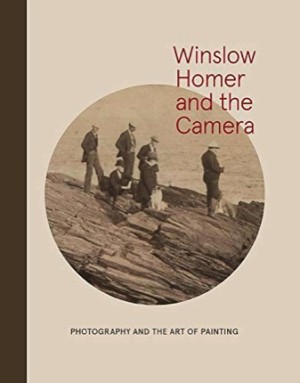
Hardcover. New Haven, Yale University, 1st, 2013, Book: Very Good, Dust Jacket: None, Hardcover with no dust jacket issued. Like new in publisher's shrink wrap. Clean, tight copy. One of the greatest American painters of the 19th century, Winslow Homer (1836-1910) also maintained a deep engagement with photography throughout his career. Focusing on the important, yet often-overlooked, role that photography played in Homer's art, this volume exposes Homer's own experiments with the camera (he first bought one in 1882). It also explores how the medium of photography and the larger visual economy influenced his work as a painter, watercolorist, and printmaker at a moment when new print technologies inundated the public with images. Frank Goodyear and Dana Byrd demonstrate that photography offered Homer new ways of seeing and representing the world, from his early commercial engravings sourced from contemporary photographs to the complex relationship between his late-career paintings of life in the Bahamas, Florida, and Cuba and the emergent trend of tourist photography. The authors argue that Homer's understanding of the camera's ability to create an image that is simultaneously accurate and capable of deception was vitally important to his artistic practice in all media. Richly illustrated and full of exciting new discoveries, Winslow Homer and the Camera is a long-overdue examination of the ways in which photography shaped the vision of one of America's most original painters.
Hardcover. New Haven, Yale University, 1st, 2013, Book: Very Good, Dust Jacket: None, Hardcover with no dust jacket issued. Like new in publisher's shrink wrap. Clean, tight copy. One of the greatest American painters of the 19th century, Winslow Homer (1836-1910) also maintained a deep engagement with photography throughout his career. Focusing on the important, yet often-overlooked, role that photography played in Homer's art, this volume exposes Homer's own experiments with the camera (he first bought one in 1882). It also explores how the medium of photography and the larger visual economy influenced his work as a painter, watercolorist, and printmaker at a moment when new print technologies inundated the public with images. Frank Goodyear and Dana Byrd demonstrate that photography offered Homer new ways of seeing and representing the world, from his early commercial engravings sourced from contemporary photographs to the complex relationship between his late-career paintings of life in the Bahamas, Florida, and Cuba and the emergent trend of tourist photography. The authors argue that Homer's understanding of the camera's ability to create an image that is simultaneously accurate and capable of deception was vitally important to his artistic practice in all media. Richly illustrated and full of exciting new discoveries, Winslow Homer and the Camera is a long-overdue examination of the ways in which photography shaped the vision of one of America's most original painters.
Hardcover. NY, Rizzoli, 1st, 2010, Book: Very Good, Dust Jacket: Very Good, 208 pages, color and b&w illustrations. Hardcover with dust jacket. Like new in publisher's shrink-wrap. A collection of rarely seen black-and-white photographs taken of women in the 1950s and 1960s, captured by the renowned New York City fashion photographer and filmmaker. Designed by Ruth Ansel, this elegantly produced volume captures the romance and glamour of women in the 1950s and 1960s. A mix of fashion and portraiture, it includes intimate and striking portraits of Nico, Faye Dunaway, Edie Sedgwick, Sharon Tate, and Catherine Deneuve. Jerry Schatzberg's moody snapshots of a more innocent and whimsical New York on the brink of the important societal changes of the sixties form a compellingly nostalgic portrait of a stylish moment. Images of jetsetters at an airport terminal, lovers embracing in Central Park, and a woman waltzing in the street in the Financial District portray a time as well as a style. A New York City native, Schatzberg documented the period with the insider's sensibility of Woody Allen or Martin Scorsese, but with the high-fashion style of Irving Penn and Richard Avedon. With a keen eye for the magic of the in-between moment, Schatzberg stealthily captured the elegance and beauty of a woman as her role was redefined in the sixties, while at the same time retaining an element of humor and surprise.
Hardcover. Boston, David R Godine, 1st, 1993, Book: Very Good, Dust Jacket: Very Good, 226 pages. Oversized. Black cloth cover, gilt design, very little wear. Dust jacket with minor wear. Many b&w photographs throughout. A bright, clean copy. The story of William Notman and his sons and proteges who for over 60 years chronicled North America ( Canada and continental United States ) through the eye of a camera. He gives an invaluable view of what was like to live in the latter part of the Victorian era.
Hardcover. Seattle, University of Washington Press, 1st, 2012, Book: Very Good, Dust Jacket: Very Good, 196 pages. Hardcover with dust jacket. Color photographs. Clean, unmarked copy with only minor wear to dust jacket. In Yamuna Walk, photographer and multimedia artist Atul Bhalla documents a five-day trek along the sacred Yamuna River as it passes through his home city of New Delhi, India. Through his vivid and haunting photographs, Bhalla explores the myriad ways that modern life along the Yamuna is shaped by water, from the rural outskirts of the city to the polluted landscape of urban Delhi. Climbing over fences, crossing concrete overpasses, and navigating between blooming fields and piles of waste on his journeys, Bhalla also shows the diverse marks of human development that can be read in the image of the river.

 "We Want Miles: Miles Davis vs. Jazzby: Vincent Bessieres and Franck Bergerot")
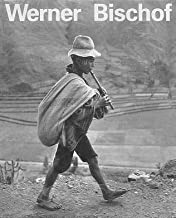
 "Werner Bischof. 1916 - 1954. His Life and Work. Introduction by Hugo Loetscher. Text by Marco Bischof and Guido Magnaguagno. by: Bischof, Marco and Ren")
 "What Becomes a Legend Most: A Biography of Richard Avedonby: Philip Gefter")


 "What Becomes a Legend Most: A Biography of Richard Avedonby: Philip Gefter")


 "William Albert Allard: Five Decadesby: Allard, William Albert")
 "William Henry Jackson - Pioneer Photographer of the Westby: Forsee/Douglas Gorsline, Aylesa")
 "Winslow Homer and the Camera: Photography and the Art of Painting by: Goodyear III Frank; Byrd, Dana E.")
 "Women Then: Photographs 1954-1969by: Morton, Julia and Jerry Schatzberg")
 "World of William Notman, The: The Nineteenth Century Through a Master Lensby: Triggs, Gordon Dodds; Roger Hall; Stanley")
 "Yamuna Walkby: Bhalla, Atul (Photographer)")