Princeton University Art Museum, 1st, 2017, Book: Very Good, Dust Jacket: Very Good, Hardcover, 408 pages. Clarence H. White (1871-1925) was one of the most influential art photographers and teachers of the early 20th century and a founding member of the Photo-Secession. This beautiful publication offers a new appraisal of White's contributions, including his groundbreaking aesthetic experiments, his commitment to the ideals of American socialism, and his embrace of the expanding fields of photographic book and fashion illustration, celebrity portraiture, and advertising. Based on extensive archival research, the book challenges the idea of an abrupt rupture between prewar, soft-focus idealizing photography and postwar "modernism" to paint a more nuanced picture of American culture in the Progressive era. The illustrations are well reproduced and comprehensive.
Hardcover. Brooklyn NY, powerHouse Books, 1st, 2007, Book: Very Good, Dust Jacket: Very Good, Hardcover, 112 pages. Photographer Henry Horenstein presents his earliest photographs, made from 1970 to 1973: a collection of portraits of family and friends, landscapes, and period imagery. These photographs describe a time familiar to everyone, when one moves from adolescence to adulthood-remaining a part of a family while beginning to create a network of one's own.
Hardcover. Brooklyn NY, powerHouse Books, 1st, 2007, Book: Very Good, Dust Jacket: Very Good, Hardcover, 112 pages. Photographer Henry Horenstein presents his earliest photographs, made from 1970 to 1973: a collection of portraits of family and friends, landscapes, and period imagery. These photographs describe a time familiar to everyone, when one moves from adolescence to adulthood-remaining a part of a family while beginning to create a network of one's own.
Softcover. New York, ILR Press, 1st, 2009, Book: Very Good, Dust Jacket: None, 170 pages. Softcover with light edgewear to wrappers. Color pictures throughout. "Career waitresses do more than just serve food. They are part psychiatrist, part grandmother, part friend, and they serve every walk of American life: from the retired and the widowed, to the wounded and the lonely, and from the working class to the wealthy. The classic diner waitress is an icon of American culture.... This book takes a moment to honor and recognize waitresses' contribution to our communities. Doing this project has helped me to redefine my perspective on life, work, and happiness. It has made me reevaluate the myth of the American dream that says you need to have an 'important' job to be happy."
Softcover. NY, ILR Press, 1st, 2009, Book: Very Good, Dust Jacket: None, 170 pages. Softcover with light edgewear to wrappers. Color pictures throughout. "Career waitresses do more than just serve food. They are part psychiatrist, part grandmother, part friend, and they serve every walk of American life: from the retired and the widowed, to the wounded and the lonely, and from the working class to the wealthy. The classic diner waitress is an icon of American culture.... This book takes a moment to honor and recognize waitresses' contribution to our communities. Doing this project has helped me to redefine my perspective on life, work, and happiness. It has made me reevaluate the myth of the American dream that says you need to have an 'important' job to be happy."
Hardcover. Berkeley CA, University of California Press, 1st, 2012, Book: Very Good, Dust Jacket: Very Good, Hardcover, 267 pages, b&w photos. Clean, unmarked copy with only minor wear to dust jacket. This book examines the often-neglected role played by immigrant artists and critics in the circle of Alfred Stieglitz, including Japanese-German author Sadakichi Hartmann, Mexican-born caricaturist Marius de Zayas and English Sri-Lankan curator Ananda Coomaraswamy, as well as better-known U.S.-born painters, including Arthur Dove and Georgia O'Keeffe.
Softcover. NewYork, Aperture, 2nd, 1973, Book: Very Good, Dust Jacket: None, Vol. 1: 214 pages. Softcover. B/w illustrations throughout. Covers slightly yellow with age, clean inside and intact. Vol. 2: 290 pages. Softcover. B/w illustrations throughout. Covers slightly yellow with age, clean inside and intact. Soil/stain on bottom foredge, does not affect pages. From the back cover of Vol. 1: "To see, to react, to create; these are the fundamentals of all art production. But also to share is the measure of the great artist and the great person. In both his magnificent photographs and in the confidences and clarifications of his Daybook, Edward Weston takes us into himself and shares with us his particular mirror of beauty and compassion."
Hardcover. NY/London, Faber & Faber, 1st, 2011, Book: Very Good, Dust Jacket: None, Like new in publisher's shrink-wrap. 304 pages. This is the first of two titles by the Manic Street Preachers' bassist and lyricist, Nicky Wire. For more than twenty years and from Blackwood, Wales to Tokyo, Japan, Nicky Wire has kept a personal visual history of the band in their various stages from "Generation Terrorists" through "Holy Bible" and right up to last year's remarkable album, "Postcards from a Young Man". Edited down from over 1,000 of Wire's personal polaroid's and with accompanying text by the man himself, "Death of The Polaroid" promises to be a rich, visual biography of one of the most loved and iconoclastic British bands of the past two decades.
Hardcover. NY/London, Faber & Faber, 1st, 2011, Book: Very Good, Dust Jacket: None, Like new in publisher's shrink-wrap. 304 pages. This is the first of two titles by the Manic Street Preachers' bassist and lyricist, Nicky Wire. For more than twenty years and from Blackwood, Wales to Tokyo, Japan, Nicky Wire has kept a personal visual history of the band in their various stages from "Generation Terrorists" through "Holy Bible" and right up to last year's remarkable album, "Postcards from a Young Man". Edited down from over 1,000 of Wire's personal polaroid's and with accompanying text by the man himself, "Death of The Polaroid" promises to be a rich, visual biography of one of the most loved and iconoclastic British bands of the past two decades.
Softcover. NY, Harper Design, reprint, 2011, Book: Very Good, Dust Jacket: None, Softcover, 308 pages. Eleanor Dwight delivers the definitive biography of Diana Vreeland, the twentieth century's most influential fashion editor. Lavishly illustrated with exclusive photographs and personal materials from the legendary style maker's private collection, and featuring a new preface from Vogue's Andre LeonTalley, Diana Vreeland is an indispensible look at a grand dame of great couture. Lavishly illustrated with more than three hundred drawings and photographs, many by the best fashion photographers of the time: Louise Dahl-Wolfe, Irving Penn, Cecil Beaton, and Brassai. Here, too, are the trendsetters, artists, models, and celebrities with whom Vreeland worked and played, including Coco Chanel, Yves Saint Laurent, Hubert de Givenchy, Oscar de la Renta, Elsie de Wolfe, Andy Warhol, Truman Capote, and Jacqueline Kennedy.
NY, Knopf, 1st, 1984, Book: Very Good, Dust Jacket: Very Good, Hardcover, 369 pages, b&w illustrations. in a very good, unclipped dust jacket. Examines the life behind the eerie, mesmerizing photographs: Diane"s pampered childhood; her passionate marriage to Allan Arbus and their work together as fashion photographers during the fifties; the emotional upheaval surrounding the end of that marriage; and the radically dark, liberating, and ultimately tragic turn Diane"s art took during the sixties. Bosworth"s engrossing book is a compassionate portrait of the woman behind some of the most powerful photographs of our time.
Hardcover. New York, Ecco, 2nd pr., 2016, Book: Very Good, Dust Jacket: Very Good, Hardcover, 734 pages, b&w illustrations. The definitive biography of the beguiling Diane Arbus, one of the most influential and important photographers of the twentieth century, a brilliant and absorbing exposition that links the extraordinary arc of her life to her iconic photographs. It is impossible to understand the transfixing power of Arbus's photographs without exploring her life. Lubow draws on exclusive interviews with Arbus's friends, lovers, and colleagues; on previously unknown letters; and on his own profound critical insights into photography to explore Arbus's unique perspective and to reveal important aspects of her life that were previously unknown or unsubstantiated. He deftly traces Arbus's development from a wealthy, sexually precocious free spirit into first, a successful New York fashion photographer and then, a singular artist who coaxed secrets from her subjects. Lubow reveals that Arbus's profound need not only to see her subjects but to be seen by them drove her to forge unusually close bonds with these people, helping her discover the fantasies, pain, and heroism within each of them, and leading her to create a new kind of photographic portraiture charged with an unnerving complicity between the subject and the viewer.
Hardcover. New York, Ecco, 2016, 2016, Book: Very Good, Dust Jacket: Very Good, 734 pages. Hardcover. B&w photographs throughout. Clean, unmarked copy with only minor wear to dust jacket.
Hardcover. NY, Random House, 1st, 2003, Book: Very Good, Dust Jacket: Very Good, Hardcover in a btight dust jacket. 352 pages. Monograph published in conjunction with a major exhibition. Essays by by Sandra S. Phillips and Neil Selkirk and an over 100 page chronolgy by Doon Arbus and Elisabeth Sussman. Also features an afterword by Doon Arbus and biographies by Jeff L. Rosenheim. Includes 200 full page duotones, many that have never been published before and numerous other smaller images. Clean copy. DOMESTIC SHIPPING ONLY.
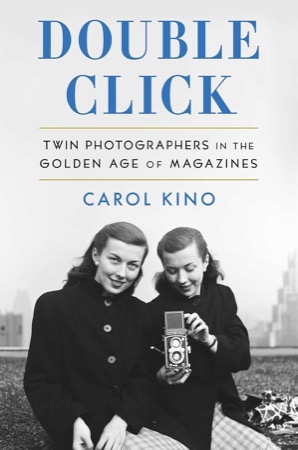
Hardcover. NY, Scribner, 1st, 2024, Book: Very Good, Dust Jacket: Very Good, Hardcover in a bright, unclipped dust jacket, 405 pages, b&w illustrations. The McLaughlin twins were trailblazing female photographers, celebrated in their time as stars in their respective fields, but have largely been forgotten since. Here, in Double Click, Carol Kino brings these two brilliant women and their remarkable accomplishments to vivid life. Frances was the only female photographer on staff in Conde Nast's photo studio, hired just after Irving Penn, and became known for streetwise, cinema verite-style work, which appeared in the pages of Glamour and Vogue. Her sister Kathryn's surrealistic portraits filled the era's new "career girl" magazines, including Charm and Mademoiselle. Both twins married Harper's Bazaar photographers and socialized with a glittering crowd that included the supermodel Lisa Fonssagrives and the photographer Richard Avedon. Kino uses their careers to illuminate the lives of young women during this time, an early 20th-century moment marked by proto-feminist thinking, excitement about photography's burgeoning creative potential, and the ferment of wartime New York.
Hardcover. NY, Farrar, Straus And Giroux, 1st, 2024, Book: Very Good, Dust Jacket: Very Good, Hardcover in a bright dust jacket, 464 pages. A personal exploration of the American West and the work of one of America's greatest photographers. Timothy O'Sullivan is America's most famous war photographer. You know his work even if you don't know his name: A Harvest of Death, taken at Gettysburg, is an icon of the Civil War. He was also among the first photographers to elevate what was then a trade to the status of fine art. The images of the American West he made after the war, while traveling with the surveys led by Clarence King and George Wheeler, display a prescient awareness of what photography would become; years later, Ansel Adams would declare his work 'surrealistic and disturbing.' At the same time, we know very little about O'Sullivan himself. Nor do we know-really know-much more about the landscapes he captured. Robert Sullivan's Double Exposure sets off in pursuit of these two enigmas. This book documents the author's own road trip across the West in search of the places, many long forgotten or paved over, that O'Sullivan pictured. It also stages a reckoning with how the changes wrought on the land were already under way in the 1860s and '70s, and how these changes were a continuation of the Civil War by other means.
Hardcover. Stockholm, Journal, 1st, 2005, Book: Very Good, Dust Jacket: Very Good, 304 pages, 85 color, 210 b&w plates. Hardcover with dust jacket. Like new in publisher's shrink-wrap.
Hardcover. NY, VH1 Press , 1st, 2006, Book: Very Good, Dust Jacket: Very Good, Hardcover, 160 pages. She was riveting to look at, a sprite of the zeitgeist, the living distillation of the over-amped vision of New York in the mid-sixties. Like many exotic creatures that Andy Warhol shed his light on, she initially bloomed--became the symbol for all that was hip and stylish--and just as quickly began to disintegrate. Told with unsparing candor, and with images that capture her at the peak of her Factory stardom, Edie Factory Girl is the short but enduring cultural story of Edie Sedgwick--releasing in time for the film of the same name starring Sienna Miller, and including rare photos of Miller as Edie.
Hardcover. San Francisco, Chronicle Books, 1st, 2006, Book: Very Good, Dust Jacket: Very Good, Hardcover, 192 pages, illustrated with color, b&w photos throughout. A visual biography of Edie Sedgwick, 60's fashion and film icon. Like new in an acetate dust jacket.Model, film star, socialite, friend, lover, addict, Edie Sedgwick was the first "it" girl of the Andy Warhol Factory scene and later muse to Bob Dylan. The arc of Edie's life traced the rise and fall of the 1960s from idyllic experimentation to dissolute recklessness. After being toasted by the whole of New York City, Edie died alone of a drug overdose in California at the age of 28. David Weisman (with John Palmer) filmed Edie for the last five years of her life in his cult film Ciao! Manhattan. When he recently uncovered lost footage of Edie, David was inspired to create Edie: Girl on Fire, a book and a documentary film that explores Edie's true story. He and coauthor Melissa Painter have tracked down and interviewed many of Edie Sedgwick's surviving intimates, including Danny Fields, Baby Jane Holzer, and Ultra Violet. They also unearthed hundreds of never-before-published photos portraits, professional ad shoots, and heartbreaking snapshots of the girl who won New York's heart and nearly burned down the Chelsea hotel. The book also features a CD with Edie's last interview ever, a riveting account of a rollercoaster life.
Softcover. Madrid, La Fabrica, 1st, 2013, Book: Very Good, Dust Jacket: None, 256 pages. Softcover. Very clean, unmarked copy with minor wear to wrapper edges. Over 250 full page black and white photographs. Includes photographs of iconic figures such as, John and Jackie Kennedy, Nikita Khrushchev, Martin Luther King Jr., Muhammed Ali, Alfred Hitchcock, Joan Baez, and Salvador Dali.
Hardcover. NY, Prestel, 1st, 2015, Book: Very Good, Dust Jacket: None, Hardcover, 192 pages, color and b&w images. This first volume in a major new series of illustrated biographies of Magnum photographers traces the life and achievements of Eve Arnold, who captured an incredible array of subjects with remarkable clarity and compassion. Eve Arnold (1912-2012) was born to a poor immigrant family in Philadelphia and became a photographer by chance. In 1950 Arnold was a 38-year-old Long Island housewife when she enrolled in a six-week photography course that led to her groundbreaking photo essay on black fashion models in Harlem. She went on to become the first woman to join Magnum Photos and, eventually, one of the most accomplished photojournalists of her time. Filled with reproductions of Arnold's acclaimed photographs, shot in both color and black and white, as well as previously unseen archival images, this biography relates Arnold's bold images to the fascinating story of their making. Renowned for her intimate portraits of figures such as Marilyn Monroe, Malcolm X, and Queen Elizabeth, Arnold was equally comfortable documenting the lives of the poor and dispossessed. "I don't see anybody as either ordinary or extraordinary. I see them simply as people in front of my lens." To her images of migrant workers, disabled veterans, and protesters for civil rights in the US and against apartheid in South Africa, she brought an unflinching eye and a strong sense of social justice. This highly engrossing narrative tells a compelling story of an intrepid artist whose life's purpose was to report on the lives of others.
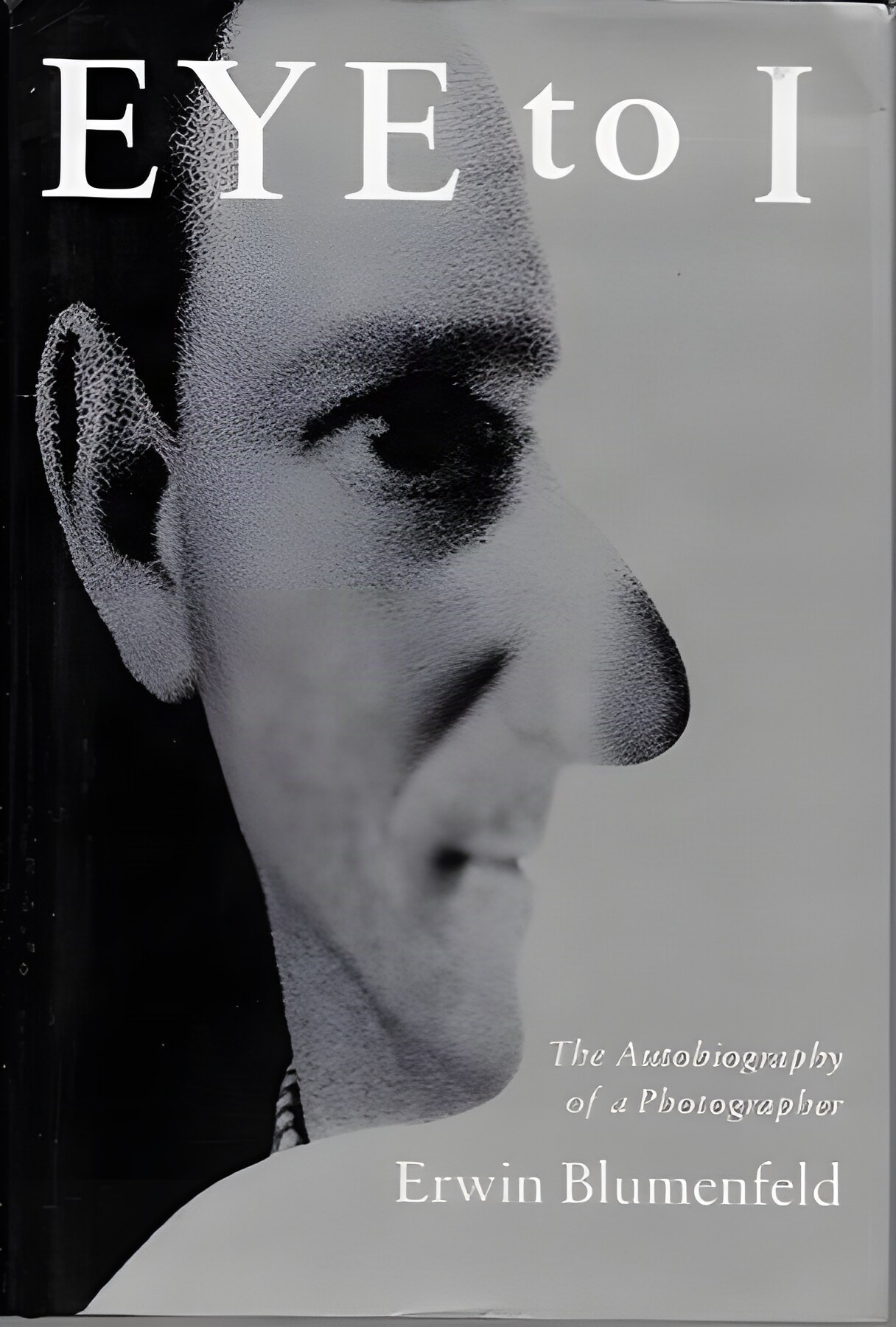
Hardcover. London, Thames and Hudson, 1st, 1999, Book: Very Good, Dust Jacket: Very Good, 384 pages. Hardcover with dust jacket. Clean, tight copy with black and white photographs throughout. Light wear ton dust jacket. The life of Erwin Blumenfeld, one of the century's best-known photographers, was by no means conventional. By turns acerbic, self-mocking, playful, even absurd, his autobiography is a compelling, virtuoso account of an extraordinary man. All his subjects--his Jewish family, the Germans, the Vichy French, his models, New York publishers--are dealt equal measures of wit, mockery, and merciless irony. He spares himself least of all. Born in turn-of-the-century Berlin, Blumenfeld was drafted to serve in the First World War, first as an ambulance driver (although he couldn't drive) and then as a bookkeeper in a field brothel, and he was awarded the Iron Cross for giving his sergeant French lessons. Between the wars he was part of an avant-garde circle that included such artists as Else Lasker-Schler, George Grosz, and members of the Dada movement. During the Second World War, Blumenfeld was interned in a series of French camps but eventually arrived in New York, where he found work with Vogue and Harper's Bazaar, producing many of their most memorable covers and becoming fashion's highest-paid photographer. From the creator of some of the most striking and influential photographs ever taken, Blumenfeld's autobiography--published here in English for the first time--is a biting and iconoclastic take on the century, and the insightful, gripping story of an exceptional life. Remainder line to bottom edge.

 "Clarence H. White and His World: The Art and Craft of Photography, 1895-1925by: McCauley, Anne")
 "Close Relationsby: Horenstein, Henry")
 "Close Relationsby: Horenstein, Henry")
 "Counter Culture: The American Coffee Shop Waitressby: Taylor, Candacy A.")
 "Counter Culture: The American Coffee Shop Waitressby: Taylor, Candacy A.")
 "Creative Composites: Modernism, Race, and the Stieglitz Circle (The Phillips Book Prize Series)by: Kroiz, Lauren")
 "David Bailey: Bailey Exposedby: Bailey, David (Photographer)")
 "David Bailey: Bailey Exposedby: Bailey, David (Photographer)")
 "Daybooks of Edward Weston, The (2 Volumes): Mexico (Vol. 1), California (Vol. 2)by: Weston, Edward")
 "Death of a Polaroidby: Wire, Nicky")
 "Death of a Polaroidby: Wire, Nicky")
 "Diana Vreelandby: Eleanor Dwight")
 "Diane Arbus: A Biographyby: Bosworth, Patricia")
 "Diane Arbus: Portrait of a Photographerby: Lubow, Arthur")
 "Diane Arbus: Portrait of a Photographerby: Lubow, Arthur")
 "Diane Arbus: Revelations by: Arbus, Diane")
 "Double Exposure: Resurveying the West with Timothy O'Sullivan America's Most Mysterious War Photographer by: Robert Sullivan")
 "Dream of Jerusalem, The: Lewis Larsson and the American Colony Photographersby: Grondahl, Mia")
 "Edie Factory Girlby: David Dalton and Nat Finkelstein")
 "Edie: Girl on Fireby: Painter, Melissa and David Weisman")
 "Enrique Meneses: A Reporter's Lifeby: Lafuente, Gumersindo")
 "Eve Arnold: Magnum Legacyby: Janine di Giovanni, Susan Meiselas , et al.")