Hardcover. New York, Simon & Schuster, First Thus, 2013, Book: Very Good, Dust Jacket: Very Good, 603 pages. Hardcover. Ivory & red cloth boards with gilt titles to spine. Dust jacket with only light marginal wear. Bright, clean & unmarked copy.
Hardcover. Brooklyn, NY, PowerHouse Books, 1st, 2013, Book: Very Good, Dust Jacket: Very Good, 200 pages. Hardcover with dust jacket. Remainder mark on bottom edge, otherwise, clean, unmarked copy with only minor wear to dust jacket. Color and Black and white pictures throughout. Explores the genre of self-portraits through nineteenth, twentieth, and twenty-first-century photographic techniques, including also block prints, watercolor drawings, and accompanying essays.
Hardcover. New York , Abaris Books, Inc., 1st, 1974, Book: Very Good, Dust Jacket: None, 344 pages. Oversized red decorated cloth cover, gilt lettering, minor wear to corners. This copy does not have original slipcase. Light foxing on top and fore edge, but inside is bright and clean, with many colored illustrations throughout. Contains a history of the Prayer Book and a synopsis of the life of Emperor Maximilian I.
Hardcover. US, Last Gasp, 1st, 2019, Book: Very Good, Dust Jacket: None, Hardcover with no dust jacket. Like new in publisher's shrink wrap. Clean, tight copy. The Book of Weirdo is the definitive - and hugely entertaining- examination of Weirdo magazine, renowned underground comix cartoonist Robert Crumb's legendary humor comics anthology, which was originally published throughout the 1980s. A "low-brow" counterpoint to Art Spiegelman and Francoise Mouley's rather high-faluttin' RAW comix publication, Weirdo influenced an entire generation of alternative and neo-underground artists, as well as creative refuge for the underground comix veterans, and this book features the complete story of the well-recalled comics magazine, along with testimonials from over 130 of the publication's contributors, including interviews with Weirdo's three editors - R. "Keep on Truckin'" Crumb, Peter "Hate" Bagge, and Aline "The Bunch" Kominsky-Crumb - and publisher "Baba Ron" Turner. 288 pages.
Hardcover. NY, Charles Scribner's Sons, 1st US, 1973, Book: Very Good, Dust Jacket: Very Good, Hardcover in a bright, unclipped dust jacket. 188 pages, b&w illustrations, endpapers map. Rear of dj with 2"X1" piece missing from bottom edge. Otherwise very good.
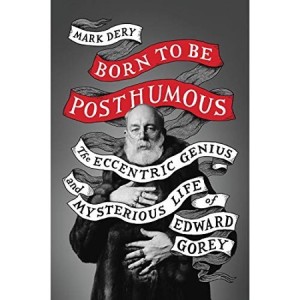
Hardcover. New York, Little, Brown and Company, 2nd pr., 2018, Book: Very Good, Dust Jacket: Very Good, 503 pages. Hardcover with dust jacket. Clean, tight copy. From The Gashlycrumb Tinies to The Doubtful Guest, Edward Gorey's wickedly funny and deliciously sinister little books have influenced our culture in innumerable ways, from the works of Tim Burton and Neil Gaiman to Lemony Snicket. Some even call him the Grandfather of Goth. But who was this man, who lived with over twenty thousand books and six cats, who roomed with Frank O'Hara at Harvard, and was known -- in the late 1940s, no less -- to traipse around in full-length fur coats, clanking bracelets, and an Edwardian beard? An eccentric, a gregarious recluse, an enigmatic auteur of whimsically morbid masterpieces, yes -- but who was the real Edward Gorey behind the Oscar Wildean pose? He published over a hundred books and illustrated works by Samuel Beckett, T.S. Eliot, Edward Lear, John Updike, Charles Dickens, Hilaire Belloc, Muriel Spark, Bram Stoker, Gilbert & Sullivan, and others. At the same time, he was a deeply complicated and conflicted individual, a man whose art reflected his obsessions with the disquieting and the darkly hilarious. Based on newly uncovered correspondence and interviews with personalities as diverse as John Ashbery, Donald Hall, Lemony Snicket, Neil Gaiman, and Anna Sui, Born to Be Posthumous draws back the curtain on the eccentric genius and mysterious life of Edward Gorey.
Hardcover. NY/Boston, Little Brown, 3rd pr., 2018, Book: Very Good, Hardcover in a bright dust jacket, 503 pages. From The Gashlycrumb Tinies to The Doubtful Guest, Edward Gorey's wickedly funny and deliciously sinister little books have influenced our culture in innumerable ways, from the works of Tim Burton and Neil Gaiman to Lemony Snicket. Some even call him the Grandfather of Goth. But who was this man, who lived with over twenty thousand books and six cats, who roomed with Frank O'Hara at Harvard, and was known -- in the late 1940s, no less -- to traipse around in full-length fur coats, clanking bracelets, and an Edwardian beard? Dery draws back the curtain on the eccentric genius and mysterious life of Gorey. Small remainder dot on bottom edge, otherwise clean.
Hardcover. New York, Macmillan Company, 1st US, 1944, Book: Very Good, Dust Jacket: Good, 631 pages. Green cloth, gilt lettering to spine. Dust jacket slightly worn and soiled with small tears to upper edge of spine, in clear brodart cover.
Hardcover. New York , E. P. Dutton, 2nd Printing, 1943, Book: Very Good, Dust Jacket: None, Hardcover, 428 pages, illustrated by the author. Scarce in this edition. Dark gray cloth with gilt titles, no dust jacket. Light fade to spine, else a clean, tight copy.
New York, Dutton, 3rd pr., 1950, Book: Very Good, Dust Jacket: None, Hardcover, green cloth with yellow stamping, 142 pages. B&W illustrations by Elinore Blaisdell. A wealth of simple, authoritative information about America's greatest nature lover written for the junior age student. 12 full page illustrations about Audubon's early life.Clean copy, no dust jacket.
Hardcover. NY, E.P. Dutton, 1st, 1942, Book: Very Good, Dust Jacket: None, Hardcover, dark green cloth with cover label, white lettering on spine. 12 full page illustrations about Audubon's early life by Elinore Blaisdell. Publisher's review slip laid in. Clean copy.
Hardcover. New York, William Morrow, 1st, 2002, Book: Very Good, Dust Jacket: Very Good, Hardcover, 11.5' x 10'', 195 pages. A beautifully produced illustrated biography with high quality color reprints of artwork from Bradbury's novels, comics letters and papers as well as movie stills and posters, with examples from many eras and cultures.
Hardcover. Boston, Houghton Mifflin , 2nd pr., 1957, Book: Very Good, Dust Jacket: Very Good, Hardcover in a bright, unclipped dust jacket. Authorized biography of the early baseball executive who originated the workable farm system, developed efficient scouting, pioneered revolutionary training devises and techniques, and introduced black players to major league baseball. 312 pages includes index.
Hardcover. Lincoln NE, University of Nebraska Press, 1st, 2007, Book: Very Good, Dust Jacket: Very Good, Hardcover in a bright, unclipped dust jacket. 683 pages, b&w illustrations. He was not much of a player and not much more of a manager, but by the time Branch Rickey (1881-1965) finished with baseball, he had revolutionized the sport--not just once but three times. In this definitive biography of Rickey--the man sportswriters dubbed "The Brain," "The Mahatma," and, on occasion, "El Cheapo"--Lee Lowenfish tells the full and colorful story of a life that forever changed the face of America's game. As the mastermind behind the Saint Louis Cardinals from 1917 to 1942, Rickey created the farm system, which allowed small-market clubs to compete with the rich and powerful. Under his direction in the 1940s, the Brooklyn Dodgers became truly the first "America's team." By signing Jackie Robinson and other black players, he single-handedly thrust baseball into the forefront of the civil rights movement. Lowenfish evokes the peculiarly American complex of God, family, and baseball that informed Rickey's actions and his accomplishments. His book offers an intriguing, richly detailed portrait of a man whose life is itself a crucial chapter in the history of American business, sport, and society.
NY, Abrams, 1st, 1999, Book: Very Good, Dust Jacket: Very Good, Hardcover, 367 pages. Brassai: The Eye of Paris is both the catalog of an exhibition of Brassai's photographs organized by the Houston Fine Arts Museum and a valuable biography of the artist. In 1932, only three years after he purchased his first camera (a Leica), Brassai published a portfolio of 64 photos titled Paris by Night that caused an immediate sensation. His lively eye (seen in an enigmatic photograph at the beginning of the book) captured fresh, unique images of the city and its citizens. Fascinated by the underworld, he moved easily among gangsters and prostitutes in bars and bordellos; he was equally at home among the fashionable and wealthy, and just as devastating in his depiction of them. He used magnesium flares for low-contrast shadows, catching his subjects in natural poses at significant moments. The wide range of Brassai's work is suggested by his formal nudes, which have an affinity with Edward Weston's, and his informal portraits, which remind viewers of Diane Arbus, who admired his work. Brassai was a central figure in the intellectual and artistic circles of Montparnasse that made Paris the most exciting city in the world during the 1930s. In a long essay that includes lively anecdotes of the photographer's relationships with Picasso, Henry Miller, Kertesz, and many other luminaries, the author re-creates the aesthetic and philosophical ferment of the period. Brassai: The Eye of Paris recognizes the artist's talents in five different media--photography, filmmaking, sculpture, writing, and drawing--but focuses on what he is best known for: lyrical and penetrating photographs of the City of Light.
Hardcover. Boston, Bulfinch Press, 1st, 2000, Book: Very Good, Dust Jacket: Very Good, Hardcover in a bright, unclipped dust jacket, 319 pages, mostly b&w photographs (some color), essays by 7 contributors including Henry Miller. Preface by Jean-Jacques Aillagon. Text essays excerpted from the work of Brassai himself as well as contributions from his wife Mme. Gilberte Brassi and close friends Roger Grenier, Henry Miller, Jacques Prevert and Werner Spies. End-matter includes Biography, Bibliography, Exhibitions and List of Illustrations. Illustrated with 308 photographs, 14 of which are in color. Stated first American edition. A presentation of Brassi's art from his nude drawings and sculpture to his fascination with graffiti but principally featuring on his photographs of nocturnal Paris and the demimonde creatures which inhabited its streets. Remainder mark to top edge, otherwise clean. DOMESTIC SHIPPING ONLY.
Hardcover. NY, Farrar Straus Giroux, 1st, 1988, Book: Very Good, Dust Jacket: Very Good, Hardcover in a bright, unclipped dust jacket. Color illustrations by Egielski. Very nice, clean condition. Wittily sending up the "child prodigy'' (if not biography, history, and high seriousness itself), Yorinks and Egielski trace the course of Minski's genius. A child of the 18th Century, Minski prankishly ``discovers'' gravity and electricity, soon followed by his serene introduction of the telephone, airplane, automobile, aspirin, light bulb, etc. Leonardo da Vinci appears in 18th-Century Vienna to applaud Minski's ``noodle.'' But when Minski hears the (historical) Farinelli sing, he labors feverishly on a formula to transform himself from scientist to artist, and achieves a triumphant apotheosis as ``unequaled singer.'' Egielski's exuberantly detailed, warmly colored pictures make the most of the anachronisms, the caricatures, and the Old World setting.
Hardcover. US, Atlas & Co, 6th, 2008, 240 pages. Hardcover with dust jacket. Clean, unmarked copy with only minor wear to dust jacket. Black and white pictures throughout.
Hardcover. NY, Pantheon, 1st thus, 2008, Hardcover, pictorial boards. no dust jacket issued. Originally published in a different form in 1977 by Belier Press, this collection of comics by Spiegelman, the Pulitzer Prize-winning author/artist of "Maus," presents the seminal works that changed how comics are made and appreciated today. Revised and re-issued in 2008, with an introduction that's almost as long as the book it introduces, and certainly autobiographically intimate and daring. Clean, very good.
Hardcover. New York , Pantheon, 1st thus, 2008, Book: Very Good, Dust Jacket: None, Hardcover, pictorial boards. no dust jacket issued. Originally published in a different form in 1977 by Belier Press, this collection of comics by Spiegelman, the Pulitzer Prize-winning author/artist of "Maus," presents the seminal works that changed how comics are made and appreciated today. Revised and re-issued in 2008, with an introduction that's almost as long as the book it introduces, and certainly autobiographically intimate and daring. Clean, very good.
Hardcover. New York , Farrar, Straus and Giroux, 1st, 2013, Book: Very Good, Dust Jacket: Very Good, 260 pages, illustrations in color and b&w. Clean, unmarked copy with only minor wear to dust jacket. Lucian Freud's paintings are instantly recognizable: often shocking and disturbing, his portraits convey a profound yet compelling sense of discomfort. Freud was twice married and the father of at least a dozen children, and his numerous relationships with women were the subject of much gossip-but the man himself remained a mystery. An intensely private individual (during his lifetime he prevented two planned biographies from being published), Freud's life, as well as his art, invites questions that have had no answer-until now. In Breakfast with Lucian, Geordie Greig, one of a few close friends who regularly had breakfast with the painter during the last years of his life, tells an insider's account-accessible, engaging, revealing-of one of the twentieth century's most fascinating, enigmatic, and controversial artists. Greig, who has studied his subject's work at length, unravels the tangled thread of a life lived on Freud's own uncompromising terms. Based on private conversations in which Freud held forth on everything from first love to gambling debts to the paintings of Velazquez, and informed by interviews with friends, lovers, and some of the artist's children who have never before spoken publicly about their relationships with the painter, this is a deeply personal memoir that is illuminated by a keen appreciation of Freud's art.
Hardcover. London, Metheun, 1st, 1992, Book: Very Good, Dust Jacket: Very Good, 192 pages. Hardcover with dust jacket. Illustrated in color and b&w. Clean, tight copy.







 "Born Under Saturn: A Biography of William Hazlittby: MacLean, Catherine MacDonald")
 "Boston Days of William Morris Huntby: Shannon, Martha A. S.")
 "Bound for Gloryby: Guthrie, Woody")


 "Boy of the Woods: the Story of John James Audubonby: Wells, Maie Lounsbury And Fox, Dorothy")
 "Bradbury An Illustrated Life : A Journey to Far Metaphorby: Weist, Jerry")




 "Bravo Minskiby: Yorinks, Arthur and Richard Egielski")
 "Breach of Peace: Portraits of the 1961 Mississippi Freedom Ridersby: Etheridge, Eric")
 "Breakdowns: Portrait of the Artist as a Young %@&*!by: Spiegelman, Art")
 "Breakdowns: Portrait of the Artist as a Young %@&*!by: Spiegelman, Art")

