Hardcover. Atlas, 1st, 2008, Book: Very Good, Dust Jacket: Very Good, Hardcover, 224 pages. In the spring and summer of 1961, several hundred Americans--blacks and whites, men and women--converged on Jackson, Mississippi, to challenge state segregation laws. The Freedom Riders, as they came to be known, were determined to open up the South to civil rights: it was illegal for bus and train stations to discriminate, but most did and were not interested in change. Over 300 people were arrested and convicted of the charge "breach of the peace." Collected here in a richly illustrated, large-format book featuring over seventy contemporary photographs, alongside the original mug shots, and exclusive interviews with former Freedom Riders, is that testament: a moving archive of a chapter in U.S. history that hasn't yet closed.
Hardcover. US, Atlas & Co, 6th, 2008, 240 pages. Hardcover with dust jacket. Clean, unmarked copy with only minor wear to dust jacket. Black and white pictures throughout.
Softcover. Oxford UK, Clarendon Press, reprint, 1991, Book: Very Good, Dust Jacket: None, Softcover, green paper wraps, 449 pages. A study of the West Indies in the mid-nineteenth century, this book draws together the experiences of more than a dozen different sugar colonies and forms them into a coherent historical account. The first part of the book examines the West Indies on the eve of emancipation in 1830-1865, a key passage in West Indian history. Green presents a clear general picture of the sugar colonies, and places British governmental policy toward the region in the context of Victorian attitudes toward colonial questions.
Softcover. Charlottesville, University of Virginia Press, 1st pbk, 2007, Book: Very Good, Dust Jacket: None, Softcover. Illustrated with black and white photos.; A history of of the racially-charged integration of black players into baseball's southern minor leagues.
Softcover. Syracuse, NY, Willis N Bugbee Co, 1st, 1932, Book: Very Good, Dust Jacket: None, 16 pages. Softcover booklet. Green paper wrappers with softened edges. Light soil to paper wrappers. tight copy. Lightly faded on rear.
New York, John S. Taylor, 1st, 1836, Book: Good, Hardcover, 296 pages plus 8 pages of publisher's ads in rear. Original black boards with embossed design, gilt lettering and design with number ! on spine. Folding chart/map tipped in at page 196 with short tears. Illustrated title page. The first of three anti-slavery books published by John Taylor, a staunch abolitionist. A few brief notations on prlim pages, otherwise clean.
Hardcover. NY, Charles Scribner's Sons, 2nd pr., 1985, Book: Very Good, Dust Jacket: Very Good, Hardcover in a bright, unclipped dust jacket. Blending biography and social history, this portrait of one of the first Black Americans to win fame and respect in the twentieth century draws on new interview material and translations from German press coverage. 330 pages, b&w illustrations.
Softcover. San Francisco, Backbeat Books, 1st, 1998, Book: Very Good, Dust Jacket: None, Softcover, 271 pages, b&w illustrations. Chasin' That Devil Music has the feel of a documentary about the making of a thrilling motion picture. The main focus is on the Delta blues singers of the early 20th century--artists such as Charley Patton, Tommy Johnson, Son House, and Blind Lemon Jefferson who've achieved near-mythic status in blues circles. In addition, many of the articles gathered in this splendidly illustrated volume capture the process and people involved in tracking long-lost recordings nearly as elusive as the performers who made them. Here, for example, is the story of author/blues scholar Gayle Dean Wardlow's three-year hunt for the death certificate of Robert Johnson, the celebrated Mississippi bluesman and a figure whose legend has grown greater with each year since his much-debated death in 1938. The text here is nearly as raw in spots as the music that sparked it, but, as with those sounds (which can be heard on a terrific CD sampler included with the book), enthusiasts will find Chasin' That Devil Music riveting. Clean, bright copy.
Softcover. Oxford, UK, Clarendon Press, Reprint, 1978, Book: Very Good, Dust Jacket: None, 306 pages. Softcover with light wear to wraps. Sunfade to spine. Spine faded. Small black mark on rear wrap, some lines highlighted on four pages. Light toning throughout, illustrated by tables & figures in bw.
Hardcover. Seattle, University of Washington Press, 1st, 1966, Book: Very Good, Dust Jacket: Good, Hardcover, black cloth stamped in gilt, 204 pages. Dust jacket with partial fading, edgewear. Clean copy. The author's last work, a study of the Dahomean Kingdom, it's history and the part gold, colonialism and the slave trade played in it's fortunes. Scarce title.
Softcover. Urbana IL, University of Illinois Press, 1st, 2015, Book: Very Good, Dust Jacket: None, Softcover, 295 pages, b&w illustrations. INSCRIBED BY BECK on the title page. A daughter of freed African American slaves, Daisy Turner became a living repository of history. The family narrative entrusted to her--"a well-polished artifact, an heirloom that had been carefully preserved"--began among the Yoruba in West Africa and continued with her own century and more of life. In 1983, folklorist Jane Beck began a series of interviews with Turner, then one hundred years old and still relating four generations of oral history. Beck uses Turner's storytelling to build the Turner family saga, using at its foundation the oft-repeated touchstone stories at the heart of their experiences: the abduction into slavery of Turner's African ancestors; Daisy's father Alec Turner learning to read; his return as a soldier to his former plantation to kill his former overseer; and Daisy's childhood stand against racism. Other stories re-create enslavement and her father's life in Vermont--in short, the range of life events large and small, transmitted by means so alive as to include voice inflections. Beck, at the same time, weaves in historical research and offers a folklorist's perspective on oral history and the hazards--and uses--of memory. Clean copy.
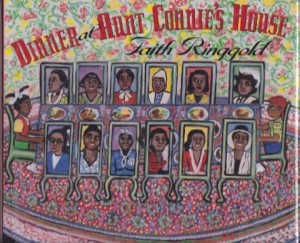
Hardcover. New York, Hyperion Books for Children, 1st, 1993, Book: Very Good, Dust Jacket: Very Good, Unpaginated. Hardcover with matching dust jacket. SIGNED AND INSCRIBED BY AUTHOR ON FRONT FLY LEAF. Clean, tight copy.
Hardcover. Jefferson NC, McFarland, 1st, 1999, Book: Very Good, Dust Jacket: None, Hardcover, 223 pages, b&w photos. Eugene Jackson became a child star in 1924 playing "Pineapple" in the original "Our Gang" comedy shorts. Join him as he shares his life story -- a story that preserves the history of vaudeville and early Hollywood as well as chronicles the African American experience in the entertainment business.
Hardcover. Reno, Center for Basque Studies, 1st, 2012, Book: Very Good, Dust Jacket: None, 333 pages, b&w photos. Black illustrated boards, no dust jacket. Light bumping to corners, else a clean, tight copy. his story--that of the government-in-exile of Lehendakari Jose Antonio Agirre and the multitudes of other Basques who were forced by war and oppression to flee their homeland--has not been written in English before and is rather unknown to the Basque, Spanish, and French historiography. Drawing on primary sources; archival documentation; and interviews with many Basque political exiles, resistance members, and former prisoners of labor camps Professor Xabier Irujo tells a gripping story of the Basque autonomous government, conceived during the beginnings of a bloody civil war, forced to organize a mass exile and then overtaken by necessity to feed and clothe its exiled population. Following this initial period, the exiled Basques were then confronted by World War and forced again into flight, this time mainly to the Americas. Never giving up their opposition to the dictatorship of Francisco Franco, the government continued its struggle during forty long years of existence, through wars hot and cold as well as countless political developments. While tracing the history of Lehendakari Agirre, this book is more the story of all of the Basques who were forced into exile, and it serves as a testimony to their unwavering determination to return to their homeland. In addition, the book contains an extensive biographical index of many of the heretofore unknown exile activists: writers, politicians, soldiers, intellectuals, but even more so, Basque patriots.
Hardcover. NY, Knopf, 1st , 1978, Book: Very Good, 149 pages. Hardcover with laminated boards. Black & white photos. Clean board covers. No dust-jacket issued.
Softcover. Charleston, SC, Arcadia Publishing, 1st, 2004, Book: Very Good, Dust Jacket: None, Softcover, 128 pages, b&w photos throughout. At the foot of the Huachuca Mountains, the U.S. Army founded one of the most crucial military posts for American expansion into the southwest frontier. Soldiers had been stationed in the region for decades, but in 1877 Fort Huachuca became the symbolic cornerstone of America's western domain. The Native American word huachuca, meaning "place of thunder," described the sporadic but marvelous electrical storms in the area, but the skies would not be the only thing booming. During the tumultuous campaigns to resolve American and Indian disputes, the U.S. infantry and famed Buffalo Soldiers faced off with Geronimo and his Apache nation in both tense negotiations and bitter combat. As time marched on, the fort developed into a permanent installation with barracks, modern training grounds, and other facilities to accommodate troop rotations and eventually became the innovative Center for Military Intelligence. Clean copy.
Softcover. NY, Oxford University Press, reprint, 2010, Book: Very Good, Dust Jacket: None, Softcover, 402 pages, b&w illustrations. An insightful examination of the impact of the Civil Rights Movement and African Independence on jazz in the 1950s and 60s, Freedom Sounds traces the complex relationships among music, politics, aesthetics, and activism through the lens of the hot button racial and economic issues of the time. Ingrid Monson illustrates how the contentious and soul-searching debates in the Civil Rights, African Independence, and Black Power movements shaped aesthetic debates and exerted a moral pressure on musicians to take action. Throughout, her arguments show how jazz musicians' quest for self-determination as artists and human beings also led to fascinating and far reaching musical explorations and a lasting ethos of social critique and transcendence. Clean copy.
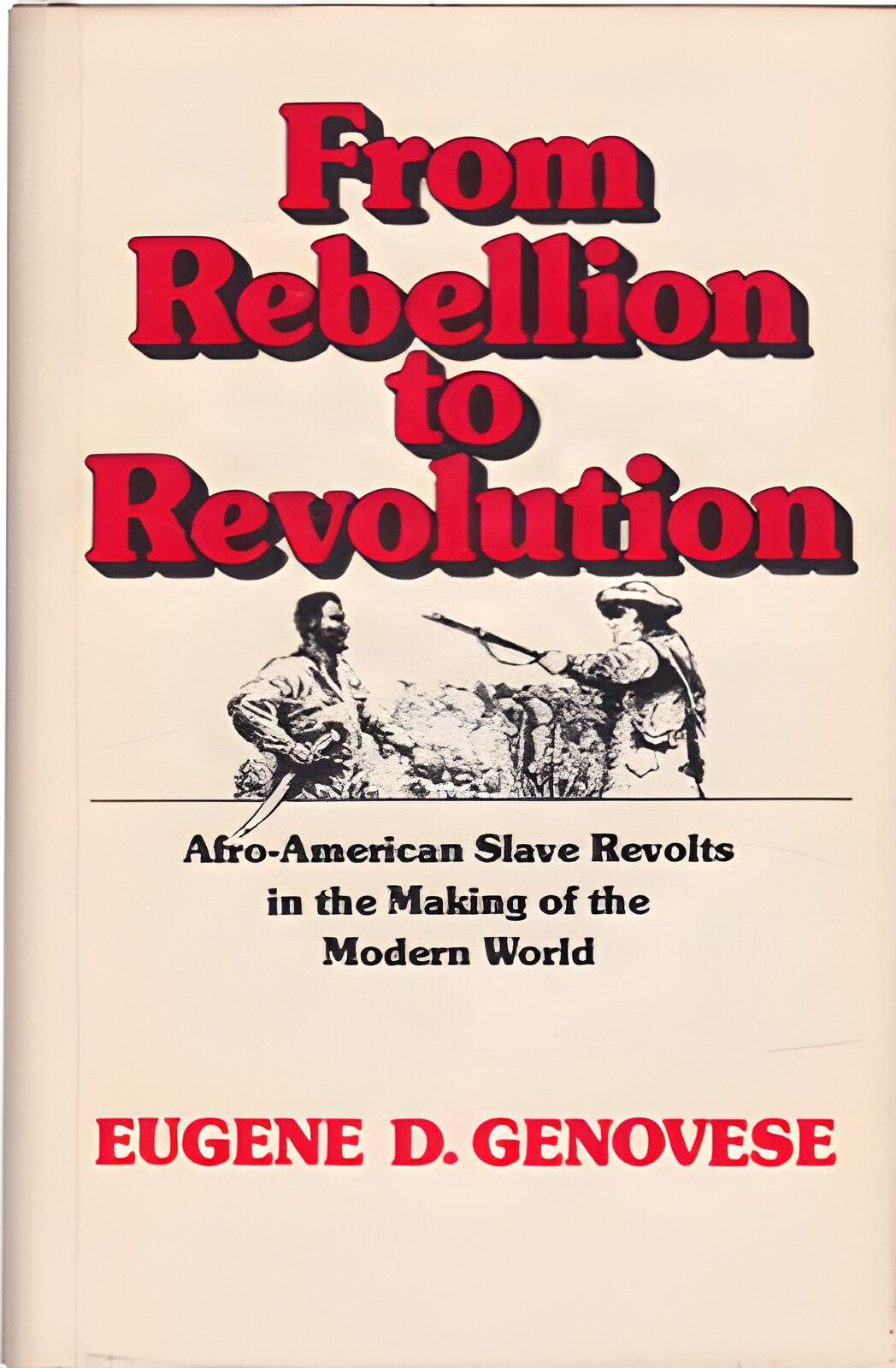
Hardcover. Baton Rouge, Louisiana State University , 1st, 1979, Book: Very Good, Dust Jacket: Very Good, Hardcover in a bright dust jacket, 173 pages. This work is a brief look at worldwide slave revolts in the 17th through 19th centuries, emphasizing their interrelations with European power struggles, which gave rebels hope of finding weak spots in the defenses of the slave powers. The French Revolution also had an influence on slave revolts, but the canny European powers used indigenous peoples to suppress slave revolts (e.g., native Americans) and took advantage of African ethnic divisions as well. American slaves stood little chance of revolt and were under constant surveillance from Southerners, who coward in fear after the successful rebellions in the Caribbean, particularly in Hispaniola, and after Nat Turner and John Brown's efforts. Genovese also brings up religion's double-edged sword: one side used to pacify slaves and the other side to inspire them to break their chains. In short, this scholarly treatise is thought-provoking as well as informative and ends with an inspirational quote from one of Frederick Douglass's lectures. Name on front fly leaf, otherwise a clean copy.
Hardcover. Boston, American Unitarian Association, 1st, 1905, Book: Very Good, Dust Jacket: None, Hardcover, black cloth with white lettering, 232 pages. Collection of six essays, including "Atlanta University" by Professor W. E. Burghardt Du Bois in which the author discusses the significance of Atlanta University. Other institutions and authors include: Howard University by Prof. Kelly Miller; Berea College, by President William G. Frost; Tuskegee Institute by Prof. Roscoe Conkling Bruce; Hampton Institute by Principal H. B. Frissell; and Fisk University by President James G. Merrill. From a church library with label on spine, bookplate and stamp on front endpapers. Otherwise a sharp copy with no other markings or residue. Scarce in original edition.
Hardcover. NY, Abrams, 1st, 2024, Book: Very Good, Dust Jacket: None, Hardcover, pictorial boards, 330 pages. A visually captivating history of the evolution of Glamour magazine and the brands legendary decades at the forefront of female empowerment in an incredible photographic volume For more than 80 years, Glamour has been the preeminent women's empowerment brand in America. But until now, no one has told the extraordinary story of its origins, the famous names who helped shape the magazine into the global powerhouse it is today, and Glamour's many historic firsts. Glamour was the first American fashion magazine to feature a Black cover star, the first to present Gloria Steinem's writing, and the first to feature groundbreaking reporting on reproductive rights. In a gripping journey, follow the group of women editors and journalists who spearheaded the magazine as World War II transformed the female landscape with over 7.5 million working women suddenly in the US workforce in 1940 and repositioned the title from charting Hollywood glamour to the magazine for the girl with a job.
Hardcover. NY, G.P. Putnam's Sons, 1st, 1874, Book: Very Good, Dust Jacket: None, Hardcover, 256 pages. Fold-out frontis, b&w Illustrations, very nice, clean copy. Written by "two of its teachers." Includes "Fifty Cabin and Plantation Songs" arranged by Thomas P. Fenner. Illustrated with a four-fold engraved frontispiece, depicting several of the school's buildings as seen from the water, and many other engravings. An interesting account of the school, including a brief history of Virginia and of slavery and its aftermath in that state, and one of the earliest publications of slave music.
Hardcover. NY, Random House, BC Ed., 1968, Book: Very Good, Dust Jacket: Very Good, Hardcover in a bright dust jacket. Copyright page states first printing, but no price on flap, probably a book club edition. Colorfully illustrated boards with black cloth spine, with gilt lettering; white DJ with red and orange illustration and lettering; 255 pages, profusely illustrated. Long before Harlem became one of the trendiest neighborhoods in the red-hot real estate market of Manhattan, it was a metaphor for African American culture at its richest. Allon Schoener's celebrated Harlem on My Mind is the classic record of Harlem life during some of the most exciting and turbulent years of its history, a beautiful and poignant reminder of a powerful moment in African America history. Including the work of some of Harlem's most treasured photographers, among them James Van Der Zee and Gordon Parks, there are photographs of Harlem's literary lights Langston Hughes, Countee Cullen, and Richard Wright; its politicians Marcus Garvey, Malcolm X, and Adam Clayton Powell Jr.; and its musicians Ethel Waters, Duke Ellington, and Billie Holiday. The book also includes the photographs of the everyday folk who gave life to this legendary community. Clean copy.
Hardcover. Naperville IL, Sourcebooks MediaFusion, 1st, 2006, Book: Very Good, Dust Jacket: Very Good, Hardcover in a bright dust jacket. 502 pages, b&w illustrations. For three decades after World War I, Harlem was the site of burgeoning racial and cultural awareness and ambitions among African Americans. In the opening section of this book, Wintz provides the historical context for what became known as the Harlem Renaissance. In separate sections devoted to poetry, music, politics, art, and the phenomenon of the New Negro, contributors profile many of the era's major figures, including Langston Hughes, Zora Neale Hurston, Bessie Smith, Ethel Waters, Josephine Baker, W. E. B. DuBois, Paul Robeson, A. Phillip Randolph, and Marcus Garvey. The essays place the Harlem Renaissance in the broader context of an awakening of black culture throughout the U.S. The book contains references to the accompanying CD, which offers 60 minutes of music, poetry, interviews, performances, and speeches, giving voice to the vibrant life of Harlem. Photographs, drawings, book covers, and posters add to the richness of this collection. A fabulous resource on the Harlem Renaissance.


 "Breach of Peace: Portraits of the 1961 Mississippi Freedom Ridersby: Etheridge, Eric")
 "British Slave Emancipation: the Sugar Colonies and the Great Experiment, 1830-1865 by: Green, William A.")
 "Brushing Back Jim Crow: The Integration of Minor-League Baseball in the American Southby: Adelson, Bruce")
 "Bugbee's Minstrel Plays: The Honey Boy Minstrelsby: Giles, Billy")
 "Cabinet of Freedom, The: Volume 1by: Jay, William and others")


 "Champion. Joe Louis: Black Hero in White Americaby: Mead, Chris")
 "Chasin' That Devil's Music,: Searching for the Blues (with CD)by: Gayle Dean Wardlow")
 "Classical Economists, Theby: O'Brien, D. P.")
 "Dahomey and the Slave Trade: An Analysis of an Archaic Economyby: Karl Polanyi")
 "Daisy Turner's Kin: An African American Family Saga (INSCRIBED COPY)by: Beck, Jane C.")


 "Eugene \"Pineapple\" Jackson - His Own Storyby: Jackson II, Eugene W. with Gwendolyn Sides St. Julian")
 "Expelled from the Motherland The Government of President Jose Antonio Agirre in Exile, 1937-1960by: Irujo, Xabier")


 "Flashback! - The 50'sby: Arnold, Eve")
 "Fort Huachuca by: Price, Ethel Jackson")
 "Frederic Edwin Church: The Icebergsby: Carr, Gerald R.")

 "From Servitude to Service, Being the Old South Lectures on the History and Work of Southern Institutions for the Education of the Negroby: Du Bois, W.E.B. and others")
 "Glamour: An Extraordinary History: 85 Years of Women Breaking Boundariesby: Pearlman, Natasha; Wolle, Ruhama; Moeslein, Anna")


 "Hampton and Its Students by Two of Its Teachers with 50 Cabin and Plantation Songsby: Armstrong, Mrs. M.I. and Helen W. Ludlow")

 "Harlem Speaks: A Living History of the Harlem Renaissance (with CD)by: Cary D. Wintz")