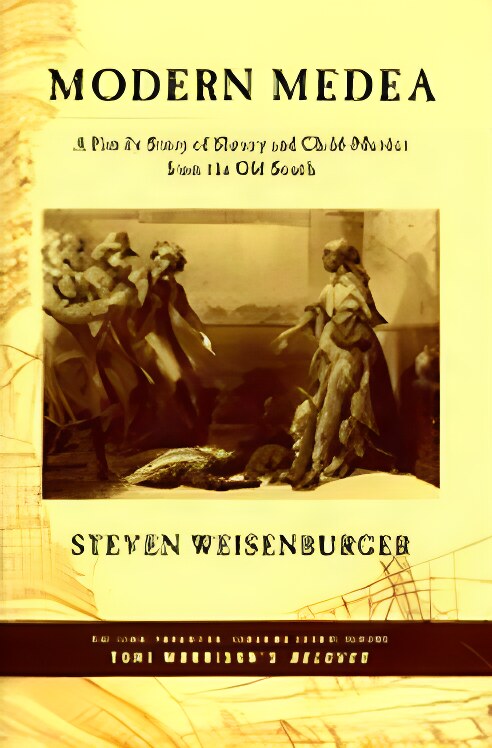
Hardcover. NY, Hill and Wang, BC Ed., 1998, Book: Very Good, Dust Jacket: Very Good, Hardcover, 352 pages, with illustrations. Minor dust jacket edge wear, otherwise, very clean and tight copy. In the middle of a frigid Sunday night in January 1856, a twenty-two-year-old Kentucky slave named Margaret Gamer gathered up her family and raced north, toward Cincinnati and freedom. But Margaret's master followed just hours behind and soon had the fugitives surrounded. Thinking all was lost, Margaret seized a butcher knife and nearly decapitated her two-year-old daughter, crying out that she would rather see her children dead than returned to slavery. She was turning on her other three children when slave catchers burst in and subdued her.Margaret Garner's child-murder electrified the United States, inspiring the longest, most spectacular fugitive-slave trial in history. Abolitionists and slaveholders fought over the meaning of the murder, and the case came to symbolize the ills of the Union in those last dark decades before the Civil War.
Hardcover. NY, Basic Books, 1st, 1968, Book: Very Good, Dust Jacket: Very Good, Hardcover in a bright, unclipped dust jacket, 172 pages. This study examines the realities that the Free North held a substantial population who opposed the abolition of slavery, describing the history of this phenomenon and the attendant aspects of racism towards Black Americans during this period. Name on front fly leaf, otherwise clean.
Hardcover. NY, Oxford University Press, 1st, 1999, Book: Very Good, Dust Jacket: Very Good, Hardcover in a bright, unclipped dust jacket. 455 pages, b&w illustrations. From John Hope Franklin, America's foremost African American historian, comes this groundbreaking analysis of slave resistance and escape. A sweeping panorama of plantation life before the Civil War, this book reveals that slaves frequently rebelled against their masters and ran away from their plantations whenever they could. For generations, important aspects about slave life on the plantations of the American South have remained shrouded. Historians thought, for instance, that slaves were generally pliant and resigned to their roles as human chattel, and that racial violence on the plantation was an aberration. In this precedent setting book, John Hope Franklin and Loren Schweninger demonstrate that, contrary to popular belief, significant numbers of slaves did in fact frequently rebel against their masters and struggled to attain their freedom. By surveying a wealth of documents, such as planters' records, petitions to county courts and state legislatures, and local newspapers, this book shows how slaves resisted, when, where, and how they escaped, where they fled to, how long they remained in hiding, and how they survived away from the plantation. Of equal importance, it examines the reactions of the white slaveholding class, revealing how they marshaled considerable effort to prevent runaways, meted out severe punishments, and established patrols to hunt down escaped slaves. Clean copy.
Hardcover. New York, Thomas Nelson & Sons, 1st, 1938, Book: Good, Dust Jacket: None, Hardbound, 82 pages. Black & white illustrations by Erick Berry. Pink stain front cover. Story of a slave girl who lived at Mt. Vernon and was Nellie Custis's servant. Takes place at Mount Vernon in the years immediately following the Revolutionary War. No dust jacket.
Softcover. Urbana IL, University of Illinois Press, reprint, 2003, Book: Very Good, Dust Jacket: None, Softcover, 433 pages. From the plaintive tunes of woe sung by exiled kings and queens of Africa to the spirited worksongs and "shouts" of freedmen, enslaved people created expansive forms of music from the United States to the West Indies and South America. Dena J. Epstein's classic work traces the course of early black folk music in all its guises. Anchored by groundbreaking scholarship, it redefined the study of black music in the slavery era by presenting the little-known development of black folk music in the United States. Her findings include the use of drums, the banjo, and other instruments originating in Africa; a wealth of eyewitness accounts and illustrations; in-depth look at a wide range of topics; and a collection of musical examples. This edition offers an author's preface that looks back on the twenty-five years of changes in scholarship that followed the book's original publication. Clean copy.
Softcover. New York, Harry N. Abrams, Inc., 1st, 1997, Book: Very Good, Dust Jacket: None, 336 pages. Softcover. Color and b/w illustrations throughout. Covers in excellent condition. Touch of foxing to top edge. Pages clean and bright. The ever-rapacious Nazis looted staggering quantities of great art and antiques from the nations they occupied. Much of it found its way back to Germany, and following the Allied victory, many thousands of rare (and some priceless) pieces were identified, and returned to the countries from which they had been taken. But not all of the paintings, statues, and archaeological treasures were recovered: Some were taken by Soviet troops and disappeared into Russia. Still others slipped into the black market in western Europe, and were snapped up by wealthy (if unprincipled) collectors. A 1995 symposium at the Bard Graduate Center for Studies in the Decorative Arts brought together European and American investigators and historians to discuss both the the Nazi thefts and the current state of knowledge of the whereabouts of the many still missing treasures. Those papers are reprinted here. While the pieces are detailed, dry, and likely to be of most interest to specialists, there are some extraordinary stories, most prominently the description of the recent rediscovery of ``Priam's treasure,'' excavated by Schliemann at Troy and hidden since WW II in a Russian museum. (123 illustrations, 25 in color).
Softcover. Norman OK, University of Oklahoma Press , reprint, 1996, Book: Very Good, Dust Jacket: None, Softcover, 167 pages. After nearly 200,000 African-American soldiers fought in the Civil War, Congress enacted legislation to authorize regiments of cavalry and infantry for service in the West. The Ninth and Tenth cavalries won fame as "buffalo soldiers" in the Indian wars, nearly overshadowing the critical support role of the Twenty-fourth and Twenty-fifth infantries. Now Arlen L. Fowler brings to light the story of African-American infantry service from 1869 to 1891 in Texas, Indian Territory, the Dakotas, Montana, and Arizona.
Softcover. Madison WI, University of Wisconsin, reprint., 2005, Book: Very Good, Dust Jacket: None, Softcover in pictorial wraps, 244 pages. The Blind African Slave recounts the life of Jeffrey Brace (ne Boyrereau Brinch), who was born in West Africa around 1742. Captured by slave traders at the age of sixteen, Brace was transported to Barbados, where he experienced the shock and trauma of slave-breaking and was sold to a New England ship captain. After fighting as an enslaved sailor for two years in the Seven Years War, Brace was taken to New Haven, Connecticut, and sold into slavery. After several years in New England, Brace enlisted in the Continental Army in hopes of winning his manumission. After five years of military service, he was honorably discharged and was freed from slavery. As a free man, he chose in 1784 to move to Vermont, the first state to make slavery illegal. There, he met and married an African woman, bought a farm, and raised a family. Although literate, he was blind when he decided to publish his life story, which he narrated to a white antislavery lawyer, Benjamin Prentiss, who published it in 1810. Upon his death in 1827, Brace was a well-respected abolitionist. In this first new edition since 1810, Kari J. Winter provides a historical introduction, annotations, and original documents that verify and supplement our knowledge of Brace's life and times. Clean copy.
Hardcover. Norman OK, University of Oklahoma Press, Revised Ed., 2003, Book: Very Good, Dust Jacket: Very Good, Hardcover in a bright dust jacket, 319 pages. B&w illustrations. A well-researched and authoritative study of 'negro' soldiers who wished to remain in the United States Army following the Civil War. They were eventually organized into the Ninth and Tenth Cavalry Regiments their service in controlling Indians on the Great Plains during the next twenty years was as invaluable as it was unpraised. With Bibliography and Index. Clean copy.
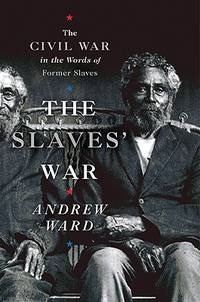
Hardcover. Boston, Houghton Mifflin, 1st, 2008, Book: Very Good, Dust Jacket: Very Good, Hardcover in a bright dust jacket, 386 pages. The first narrative history of the Civil War told by the very people it freed. Groundbreaking, compelling, and poignant, The Slaves' War delivers an unprecedented vision of the nation's bloodiest conflict. An acclaimed historian of nineteenth-century and African-American history, Andrew Ward gives us the first narrative of the Civil War told from the perspective of those whose destiny it decided. Woven together from hundreds of interviews, diaries, letters, and memoirs, here is the Civil War as seen from not only battlefields, capitals, and camps, but also slave quarters, kitchens, roadsides, farms, towns, and swamps. Speaking in a quintessentially American language of wit, candor, and biblical power, army cooks and launderers, runaways, teamsters, and gravediggers bring the war to vivid life. From slaves' theories about the causes of the war to their frank assessments of such major figures as Lincoln, Davis, Lee, and Grant; from their searing memories of the carnage of battle to their often startling attitudes toward masters and liberators alike; and from their initial jubilation at the Yankee invasion of the slave South to the crushing disappointment of freedom's promise unfulfilled, The Slaves' War is a transformative and engrossing vision of America's Second Revolution. Clean copy.
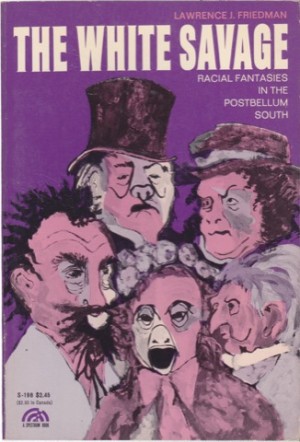
Softcover. NY, Prentice Hall, 1st pbk, 1970, Book: Very Good, Dust Jacket: None, Softcover, 184 pages. Revealing and disturbing study of the racist ideas and fantasies of southern whites after the Civil War and examines their racial fantasies and the social and psychological roots of those fantasies. He reveals how a complex set of anxieties and repressions in Southern life led whites to need "Negro" Inferiority." Name on title page otherwise clean.
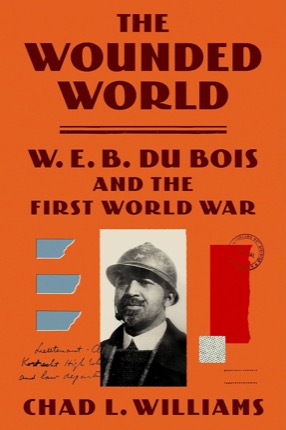
Hardcover. NY, Farrar Straus Giroux, 1st, 2023, Book: Very Good, Dust Jacket: Very Good, Hardcover in a bright, unclipped dust jacket. 530 pages, b&w illustrations. The dramatic story of W. E. B. Du Bois's reckoning with the betrayal of Black soldiers during World War I-and a new understanding of one of the great twentieth-century writers. When W. E. B. Du Bois, believing in the possibility of full citizenship and democratic change, encouraged African Americans to "close ranks" and support the Allied cause in World War I, he made a decision that would haunt him for the rest of his life. Seeking both intellectual clarity and personal atonement, for more than two decades Du Bois attempted to write the definitive history of Black participation in World War I. His book, however, remained unfinished. In The Wounded World, Chad Williams offers the dramatic account of Du Bois's failed efforts to complete what would have been one of his most significant works. The surprising story of this unpublished book offers new insight into Du Bois's struggles to reckon with both the history and the troubling memory of the war, along with the broader meanings of race and democracy for Black people in the twentieth century. Drawing on a broad range of sources, most notably Du Bois's unpublished manuscript and research materials, Williams tells a sweeping story of hope, betrayal, disillusionment, and transformation, setting into motion a fresh understanding of the life and mind of arguably the most significant scholar-activist in African American history. In uncovering what happened to Du Bois's largely forgotten book, Williams offers a captivating reminder of the importance of World War I, why it mattered to Du Bois, and why it continues to matter today. Remainder mark on top edhge, otherwise clean.
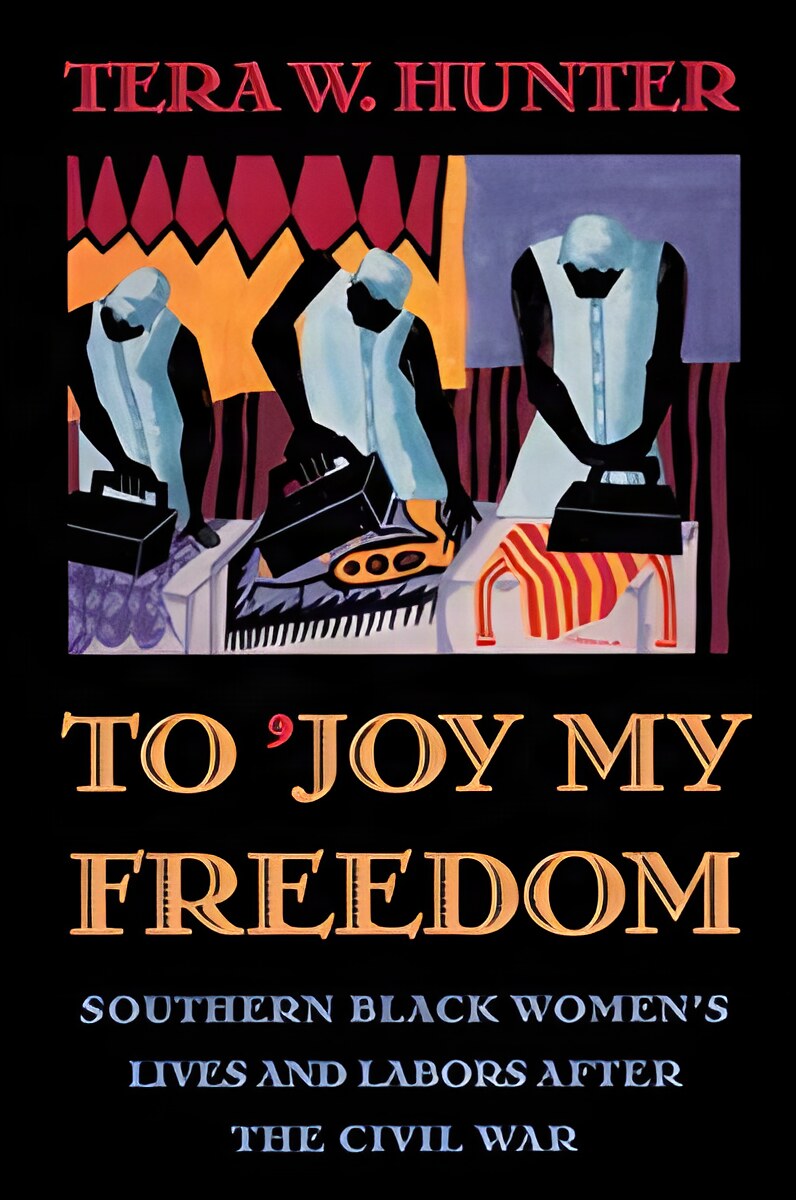
Softcover. Cambridge MA, Harvard University Press, reprint, 1998, Book: Very Good, Dust Jacket: None, Softcover, 311 pages. As the Civil War drew to a close, newly emancipated black women workers made their way to Atlanta-the economic hub of the newly emerging urban and industrial south-in order to build an independent and free life on the rubble of their enslaved past. In an original and dramatic work of scholarship, Tera Hunter traces their lives in the postbellum era and reveals the centrality of their labors to the African-American struggle for freedom and justice. Household laborers and washerwomen were constrained by their employers' domestic worlds but constructed their own world of work, play, negotiation, resistance, and community organization. Hunter follows African-American working women from their newfound optimism and hope at the end of the Civil War to their struggles as free domestic laborers in the homes of their former masters. We witness their drive as they build neighborhoods and networks and their energy as they enjoy leisure hours in dance halls and clubs. We learn of their militance and the way they resisted efforts to keep them economically depressed and medically victimized. Finally, we understand the despair and defeat provoked by Jim Crow laws and segregation and how they spurred large numbers of black laboring women to migrate north. Clean copy.
Hardcover. NY, Oxford University Press, 4th pr., 2000, Hardcover in a bright dust jacket. 670 pages, b&w illustrations. Written by the most prominent of the new generation of historians, this superb volume offers the most up-to-date and authoritative account available of African-American history, ranging from the first Africans brought as slaves into the Americas, to today's black filmmakers and politicians. Here is a panoramic view of African American life, rich in gripping first-person accounts and short character sketches that invite readers to relive history as African Americans experienced it. We begin in Africa, with the growth of the slave trade, and follow the forced migration of what is estimated to be between ten and twenty million people, witnessing the terrible human cost of slavery in the colonies of England and Spain. We read of the Haitian Revolution, which ended victoriously in 1804 with the birth of the first independent black nation in the New World, and of slave rebellions and resistance in the United States in the years leading up to the Civil War. There are vivid accounts of the Civil War and Reconstruction years, the backlash of notorious "Jim Crow" laws and mob lynchings, and the founding of key black educational institutions. The contributors also trace the migration of blacks to the major cities, the birth of the Harlem Renaissance, the hardships of the Great Depression and the service of African Americans in World War II, the struggle for Civil Rights in the 1950s and '60s, and the emergence of today's black middle class. From Harriet Tubman and Frederick Douglass to Martin Luther King, Jr., and Louis Farrakhan, To Make Our World Anew is an unforgettable portrait of a people. Clean copy.
Hardcover. Gretna LA, Pelican Publishing, 1st, 2003, Book: Very Good, Dust Jacket: Very Good, Hardcover in a bright dust jacket. In June 1892, a thirty-year-old shoemaker named Homer Plessy bought a first-class railway ticket from his native New Orleans to Covington, north of Lake Pontchartrain. The two-hour trip had hardly begun when Plessy was arrested and removed from the train. Though Homer Plessy was born a free man of color and enjoyed relative equality while growing up in Reconstruction-era New Orleans, by 1890 he could no longer ride in the same carriage with white passengers. Plessy's act of civil disobedience was designed to test the constitutionality of the Separate Car Act, one of the many Jim Crow laws that threatened the freedoms gained by blacks after the Civil War. This largely forgotten case mandated separate-but-equal treatment and established segregation as the law of the land. It would be fifty-eight years before this ruling was reversed by Brown v. Board of Education. Keith Weldon Medley brings to life the players in this landmark trial, from the crusading black columnist Rodolphe Desdunes and the other members of the Comite des Citoyens to Albion W. Tourgee, the outspoken writer who represented Plessy, to John Ferguson, a reformist carpetbagger who nonetheless felt that he had to judge Plessy guilty. Clean copy.
Art Intitute of Chicago/Yale University Press, 1st, 2021, Book: Very Good, Dust Jacket: None, Hardcover, pictorial cloth, 251 pages illustrated in color. The extraordinary life of a captivating American artist, beautifully illustrated with his dreamlike drawings Much of Joseph Elmer Yoakum's story comes from the artist himself--and is almost too fantastic to believe. At a young age, Yoakum (1891-1972) traveled the globe with numerous circuses; he later served in a segregated noncombat regiment during World War I before settling in Chicago. There, inspired by a dream, he began his artistic career at age seventy-one, producing some two thousand drawings over a decade. How did Yoakum gain representation in major museum collections in Chicago and New York? What fueled his process, which he described as a "spiritual unfoldment"? This volume delves into the friendships Yoakum forged with the Chicago Imagists that secured his place in art history, explores the religious outlook that may have helped him cope with a racially fractured city, and examines his complicated relationship to African American and Native American identities. With hundreds of beautiful color reproductions of his dreamlike drawings, it offers the most comprehensive study of the artist's work, illuminating his vivid and imaginative creativity and giving definition and dimension to his remarkable biography. Clean copy. NOTE: DUE TO WEIGHT, DOMESTIC SHIPPING ONLY.


 "Runaway Slaves: Rebels on the Plantationby: Franklin, John Hope & Schweninger, Loren")
 "Scriptural Ecclesiastical and Historical View of Slavery from the Days of the Patriarch Abraham to the Nineteenth Century Addressed to The Right Rev. Alonzo Potter by:")


 "Shipment for Susannah, Aby: Nolen/Erick Berry, Eleanor Weakley")
 "Sinful Tunes and Spirituals: Black Folk Music to the Civil War Music in American Lifeby: Dena J. Epstein")

 "The Black Infantry in the West, 1869")
 "The Blind African Slave: Or Memoirs of Boyrereau Brinch, Nicknamed Jeffrey Brace by: Jeffrey Brace; Editor Kari J. Winter; Contributor Benjamin F. Prentiss")
 "THE BUFFALO SOLDIERS: A Narrative of the Black Cavalry in the Westby: Leckie William H. & Leckie Shirley A.")
 "To Make Our World Anew: A History of African Americansby: Kelley, Robin D. G./ Lewis, Earl (Editor)")
 "We As Freemen: Plessy v. Fergusonby: Keith Weldon Medley")
