Hardcover. NewYork, Oxford University Press, 1st, 1957, Book: Very Good, Dust Jacket: None, Hardcover, blue cloth with black lettering. Features 40 full-page etchings of Civil War scenes with commentary on opposite page.
Hardcover. New York, G. K. Hall & Company, 1st, 1996, Book: Very Good, Dust Jacket: Very Good, 319 pages. Hardcover with dust jacket. Minor dust jacket edge wear, otherwise, spotless and tight copy.
Hardcover. NY, Warner/Amistad, 1st, 1990, Book: Very Good, Dust Jacket: Very Good, Hardcover in a bright. unclipped dust jacket. Wonderful, inspiring stories of dozens of black women in opera and classical music. Features in-depth portrais of such notables as Sissieretta Jones, Elizabeth Taylor-Greenfield, Marie Selika, Marian Anderson, Flora Batson, Dorothy Maynor and many more. 236 pages including index. B&W photos. Inscription on front fly leaf, otherwise clean.
Softcover. NY, Penguin Books, reprint, Book: Very Good, Dust Jacket: None, Softcover. Thomas Wentworth Higginson, a Unitarian minister, was a fervent member of new England's abolitionist movement, an active participant in the Underground Railroad, and part of a group that supplied material aid to John Brown before his ill-fated raid on Harpers Ferry. When the Civil War broke out, Higginson was commissioned as a colonel of the black troops training in the Sea Islands off the coast of the Carolinas. Shaped by American Romanticism and imbued with Higginson's interest in both man and nature, Army Life in a Black Regiment ranges from detailed reports on daily life to a vivid description of the author's near escape from cannon fire, to sketches that conjure up the beauty and mystery of the Sea Islands. This edition also features a selection of Higginson's essays, including "Nat Turner's Insurrection" and "Emily Dickinson's Letters." Clean copy.
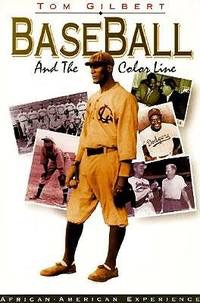
Softcover. NY, Franklin Watts, 1st, 1995, Book: Very Good, Dust Jacket: None, Softcover, 176 pages, b&w photos. The Contents are: Gentleman's Agreement - African Americans and Baseball's Beginning; A Ballplayer from Cooperstown - Post Reconstruction America and the Strange Career of Bud Fowler; False Spring - Fleet Walker and the Grudging Integration of the 1880s; Jim Crow Wins - Cap Anson Gets the Save; War Paint and Feathers - Jim Crow and Chief Tokohama; Second Class Immortals - Satchel Paige and the Black Babe Ruth; The Badge of Martyrdom - The Myth of Rickey and Robinson; and They Never Had It Made - from 1947 to Today; followed by Appendix: Professional Baseball Leagues Chronology; Glossary of Team Names; and an index. Clean copy.
Softcover. Cambridge MA, Harvard University Press, reprint, 1998, Book: Very Good, Dust Jacket: None, Softcover, 310 pages, b&w illustrations. Few Americans, black or white, recognize the degree to which early African American history is a maritime history. W. Jeffrey Bolster shatters the myth that black seafaring in the age of sail was limited to the Middle Passage. Seafaring was one of the most significant occupations among both enslaved and free black men between 1740 and 1865. Tens of thousands of black seamen sailed on lofty clippers and modest coasters. They sailed in whalers, warships, and privateers. Some were slaves, forced to work at sea, but by 1800 most were free men, seeking liberty and economic opportunity aboard ship.Bolster brings an intimate understanding of the sea to this extraordinary chapter in the formation of black America. Because of their unusual mobility, sailors were the eyes and ears to worlds beyond the limited horizon of black communities ashore. Sometimes helping to smuggle slaves to freedom, they were more often a unique conduit for news and information of concern to blacks.But for all its opportunities, life at sea was difficult. Blacks actively contributed to the Atlantic maritime culture shared by all seamen, but were often outsiders within it. Capturing that tension, Black Jacks examines not only how common experiences drew black and white sailors together-even as deeply internalized prejudices drove them apart-but also how the meaning of race aboard ship changed with time. Bolster traces the story to the end of the Civil War, when emancipated blacks began to be systematically excluded from maritime work. Rescuing African American seamen from obscurity, this stirring account reveals the critical role sailors played in helping forge new identities for black people in America.
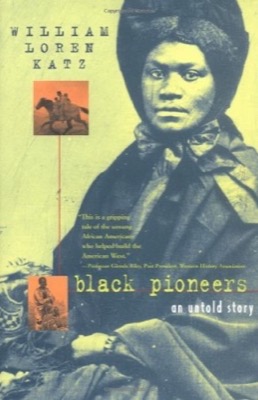
Hardcover. NY, Atheneum, 3rd pr., 1999, Book: Very Good, Dust Jacket: Very Good, Hardcover in a bright, unclipped dust jacket. In a clear, straightforward style, Katz describes the settlement of the Ohio and Mississippi Valleys (covering Ohio, Indiana, Illinois, Michigan, Wisconsin, Minnesota, Iowa, Kansas, and Missouri) by African Americans seeking freedom, including biographical sketches of men and women who formed churches, started schools, or were politically active in their region. Some of these settlers were fugitive slaves; several set up stations on the Underground Railroad with the aid of the Quakers; others were farmers, poets, and soldiers. In several states, they helped form black regiments in the Civil War. Chronologically arranged, the book introduces many lesser-known personages not found in most collective biographies and places them in a broader context of U.S. history as a whole.
Hardcover. NY, Atheneum, 3rd pr., 1999, Book: Very Good, Dust Jacket: Very Good, Hardcover in a bright, unclipped dust jacket. In a clear, straightforward style, Katz describes the settlement of the Ohio and Mississippi Valleys (covering Ohio, Indiana, Illinois, Michigan, Wisconsin, Minnesota, Iowa, Kansas, and Missouri) by African Americans seeking freedom, including biographical sketches of men and women who formed churches, started schools, or were politically active in their region. Some of these settlers were fugitive slaves; several set up stations on the Underground Railroad with the aid of the Quakers; others were farmers, poets, and soldiers. In several states, they helped form black regiments in the Civil War. Chronologically arranged, the book introduces many lesser-known personages not found in most collective biographies and places them in a broader context of U.S. history as a whole.
Hardcover. NY, Amistad/HarperCollins, 3rd pr., 2005, Book: Very Good, Dust Jacket: Very Good, Hardcover in a bright, unclipped dust jacket. 540 pages, b&w illustrations, index. An important book of epic scope on America's first racially integrated, religiously-inspired political movement for change-The Underground Railroad, a movement peopled by daring heroes and heroines, and everyday folk For most, the mention of the Underground Railroad evokes images of hidden tunnels, midnight rides, and hairsbreadth escapes. Yet the Underground Railroad's epic story is much more morally complex and politically divisive than even the myths suggest. Against a backdrop of the country's westward expansion,which brought together Easterners who had engaged in slavery primarily in the abstract alongside slaveholding Southerners and their slaves, arose a clash of values that evolved into a fierce fight for nothing less than the country's soul. Beginning six decades before the Civil War, freedom-seeking blacks and pious whites worked together to save tens of thousands of lives, often at the risk of great physical danger to themselves. Not since the American Revolution had the country engaged in an act of such vast and profound civil disobedience that not only subverted federal law but also went against prevailing mores.
Softcover. San Francisco, Backbeat Books, 1st, 1998, Book: Very Good, Dust Jacket: None, Softcover, 271 pages, b&w illustrations. Chasin' That Devil Music has the feel of a documentary about the making of a thrilling motion picture. The main focus is on the Delta blues singers of the early 20th century--artists such as Charley Patton, Tommy Johnson, Son House, and Blind Lemon Jefferson who've achieved near-mythic status in blues circles. In addition, many of the articles gathered in this splendidly illustrated volume capture the process and people involved in tracking long-lost recordings nearly as elusive as the performers who made them. Here, for example, is the story of author/blues scholar Gayle Dean Wardlow's three-year hunt for the death certificate of Robert Johnson, the celebrated Mississippi bluesman and a figure whose legend has grown greater with each year since his much-debated death in 1938. The text here is nearly as raw in spots as the music that sparked it, but, as with those sounds (which can be heard on a terrific CD sampler included with the book), enthusiasts will find Chasin' That Devil Music riveting. Clean, bright copy.
Softcover. Berkeley CA, University of California Press, 1st pbk, 1997, Book: Very Good, Dust Jacket: None, Softcover, 472 pages. The prose writings of Charles Olson (1910-1970) have had a far-reaching and continuing impact on post-World War II American poetics. Olson's theories, which made explicit the principles of his own poetics and those of the Black Mountain poets, were instrumental in defining the sense of the postmodern in poetry and form the basis of most postwar free verse. The Collected Prose brings together in one volume the works published for the most part between 1946 and 1969, many of which are now out of print. A valuable companion to editions of Olson's poetry, the book backgrounds the poetics, preoccupations, and fascinations that underpin his great poems. Included are Call Me Ishmael, a classic of American literary criticism; the influential essays "Projective Verse" and "Human Universe"; and essays, book reviews, and Olson's notes on his studies. In these pieces one can trace the development of his new science of man, called "muthologos," a radical mix of myth and phenomenology that Olson offered in opposition to the mechanistic discourse and rationalizing policy he associated with America's recent wars in Europe and Asia. Clean copy.
Hardcover. St. Paul MN, Minnesota Historical Society, 1st, 2018, Book: Very Good, Dust Jacket: None, Hardcover, pictorial boards. 143 pages, b&w photos throughout. After serving in World War II, John Glanton returned home to Minnesota and began taking his camera around the streets, parks, clubs, restaurants, and private homes of Minneapolis, capturing the sights and scenes of everyday life for African Americans in the city. The images--from intimate portraits to public gatherings--reveal a dynamic and diverse community at a time when the nation was entering the postwar boom but before the civil rights movement had taken root. Glanton's photos offer a rare look into the lives and lifestyles of families and individuals often left out of histories of Minnesota's past, showing people at work and play, young and old, happy and sad. The images highlight black-owned businesses of the day, the music and club scene, and weddings and other family occasions to depict the experiences of African American people as presented through the lens of an African American photographer. Long forgotten in the garage of a family member, the photo negatives were recently rediscovered and digitized. A selection of 200 of the more than 800 images are featured here, along with commentary that further illuminates the lives and experiences of African Americans in postwar Minnesota.
Hardcover. Reno, Center for Basque Studies, 1st, 2012, Book: Very Good, Dust Jacket: None, 333 pages, b&w photos. Black illustrated boards, no dust jacket. Light bumping to corners, else a clean, tight copy. his story--that of the government-in-exile of Lehendakari Jose Antonio Agirre and the multitudes of other Basques who were forced by war and oppression to flee their homeland--has not been written in English before and is rather unknown to the Basque, Spanish, and French historiography. Drawing on primary sources; archival documentation; and interviews with many Basque political exiles, resistance members, and former prisoners of labor camps Professor Xabier Irujo tells a gripping story of the Basque autonomous government, conceived during the beginnings of a bloody civil war, forced to organize a mass exile and then overtaken by necessity to feed and clothe its exiled population. Following this initial period, the exiled Basques were then confronted by World War and forced again into flight, this time mainly to the Americas. Never giving up their opposition to the dictatorship of Francisco Franco, the government continued its struggle during forty long years of existence, through wars hot and cold as well as countless political developments. While tracing the history of Lehendakari Agirre, this book is more the story of all of the Basques who were forced into exile, and it serves as a testimony to their unwavering determination to return to their homeland. In addition, the book contains an extensive biographical index of many of the heretofore unknown exile activists: writers, politicians, soldiers, intellectuals, but even more so, Basque patriots.
Hardcover. NY, Abrams, 1st, 2024, Book: Very Good, Dust Jacket: None, Hardcover, pictorial boards, 330 pages. A visually captivating history of the evolution of Glamour magazine and the brands legendary decades at the forefront of female empowerment in an incredible photographic volume For more than 80 years, Glamour has been the preeminent women's empowerment brand in America. But until now, no one has told the extraordinary story of its origins, the famous names who helped shape the magazine into the global powerhouse it is today, and Glamour's many historic firsts. Glamour was the first American fashion magazine to feature a Black cover star, the first to present Gloria Steinem's writing, and the first to feature groundbreaking reporting on reproductive rights. In a gripping journey, follow the group of women editors and journalists who spearheaded the magazine as World War II transformed the female landscape with over 7.5 million working women suddenly in the US workforce in 1940 and repositioned the title from charting Hollywood glamour to the magazine for the girl with a job.
Hardcover. Naperville IL, Sourcebooks MediaFusion, 1st, 2006, Book: Very Good, Dust Jacket: Very Good, Hardcover in a bright dust jacket. 502 pages, b&w illustrations. For three decades after World War I, Harlem was the site of burgeoning racial and cultural awareness and ambitions among African Americans. In the opening section of this book, Wintz provides the historical context for what became known as the Harlem Renaissance. In separate sections devoted to poetry, music, politics, art, and the phenomenon of the New Negro, contributors profile many of the era's major figures, including Langston Hughes, Zora Neale Hurston, Bessie Smith, Ethel Waters, Josephine Baker, W. E. B. DuBois, Paul Robeson, A. Phillip Randolph, and Marcus Garvey. The essays place the Harlem Renaissance in the broader context of an awakening of black culture throughout the U.S. The book contains references to the accompanying CD, which offers 60 minutes of music, poetry, interviews, performances, and speeches, giving voice to the vibrant life of Harlem. Photographs, drawings, book covers, and posters add to the richness of this collection. A fabulous resource on the Harlem Renaissance.
Hardcover. Washington DC, Brassey's , 1st, 2003, Book: Very Good, Dust Jacket: Very Good, Hardcover in a bright, unclipped dust jacket, b&w illustrations, 293 pages. The 369th became one of the few U.S. units that American commanding general John J. Pershing agreed to let serve under French command. Donning French uniforms and taking up French rifles, the men of the 369th fought valiantly alongside French Moroccans and held one of the widest sectors on the Western Front. The entire regiment was awarded the Croix de Guerre, the French government's highest military honor. Clean copy.
Hardcover. Cambridge MA, Harvard University Press, 1st, 1989, Book: Very Good, Dust Jacket: Very Good, Vol. 1: Slaves and Liberators, 379 pages with 156 b&w, 40 color illustrations. Vol. 2: 306 pages, 131 b&w, 52 color illustrations. Both volumes like new, shrinkwrapped in cardboard slipcases. DUE TO WEIGHT, DOMESTIC SHIPPING ONLY.
Hardcover. New York, Publishers Company, 2nd edition, 1968, Book: Very Good, Dust Jacket: None, 5 volumes: 291, 291, 317, 304, and 306 pages. Light brown cloth covers, with silver and black titles, profusely illustrated with b&w plates. Slight rubbing to covers, small brown stain to spines of Theater and Civil War volumes, previous owner's embossed stamp to all title pages, ex-lib bookplates to all copyright pages, pages very crisp and unmarked, tight binding; overall, volumes are in clean, tight condition. NOTE: DUE TO WEIGHT AND SIZE, DOMESTIC SHIPPING ONLY.
Softcover. Amherst MA, Warring States Project, 1st, 2017, Book: Very Good, Dust Jacket: None, Softcover, 191 pages. This book is an overview of the history of Early Christianity. Each chapter is based on one selection from Jewish texts or from those produced by the Jesus sect of Judaism. It gives a sense of how things happened, from the words of certain ancient prophets, to Jesus' effort to bring about those prophecies, to the efforts of his followers to reshape their expectations after his death. It follows the movement as it came to regard Jesus himself as divine, a process which eventually led to the separation of the sect from the parent religion. It ends with a glimpse of a surviving early Christian church on the shores of the Black Sea, and how it appeared to the Roman administrator who was in charge of executing those who, like the Early Christians, refused Emperor worship. From the evidence of two deaconesses whom he tortured, which Pliny reported to Emperor Trajan, we too learn what were the regular practices of that church. Clean copy.
Hardcover. Boston/NY, Houghton Mifflin Harcourt, 1st, 1993, Book: Very Good, Dust Jacket: Very Good, Hardcover in a bright, unclipped dust jacket. Boston Globe reporter Haygood ( Two on the River ) weaves together interviews and research to create a nuanced yet vivid narrative about the crusading Harlem congressman who served in the House for 24 years and whose controversial behavior and womanizing often overshadowed his crucial contribution to the War on Poverty. Haygood astutely traces how the light-skinned Powell (1908-1972), who tried to pass as white when a Colgate student, later embraced his blackness and demanded acceptance in the white world. Mixing New York and national political history with Powell's rise as a Baptist minister and politician, Haygood adds deft cameos of characters like Hattie Dodson, Powell's devoted secretary, and Hazel Scott, the jazz star whose wedding to the divorced congressman was "the stuff of grand romance and intrigue." Expelled from Congress in 1966 for alleged misappropriations and an unpaid libel judgment, Powell, Haygood writes poignantly, was shunned by black leaders and, even after reinstatement by the Supreme Court, disparaged by many he had helped. Though less authoritative in assessing Powell's political milieu than Charles V. Hamilton's 1991 book, Adam Clayton Powell Jr.: The Political Biography of an American Dilemma , this is a richer portrait of Powell the man. Clean copy.
Hardcover. NY, Henry Holt, 1st, 2022, Book: Very Good, Dust Jacket: Very Good, Hardcover in a bright dust jacket, unclipped. The moving story of the life of the woman behind A Raisin in the Sun, the most widely anthologized, read, and performed play of the American stage. Written when she was just twenty-eight, Lorraine Hansberry's landmark A Raisin in the Sun is listed by the National Theatre as one of the hundred most significant works of the twentieth century. Hansberry was the first Black woman to have a play performed on Broadway, and the first Black and youngest American playwright to win a New York Critics' Circle Award. Charles J. Shields's authoritative biography of one of the twentieth century's most admired playwrights examines the parts of Lorraine Hansberry's life that have escaped public knowledge: the influence of her upper-class background, her fight for peace and nuclear disarmament, the reason why she embraced Communism during the Cold War, and her dependence on her white husband-her best friend, critic, and promoter. Many of the identity issues about class, sexuality, and race that she struggled with are relevant and urgent today. This dramatic telling of a passionate life-a very American life through self-reinvention-uses previously unpublished interviews with close friends in politics and theater, privately held correspondence, and deep research to reconcile old mysteries and raise new questions about a life not fully described until now.
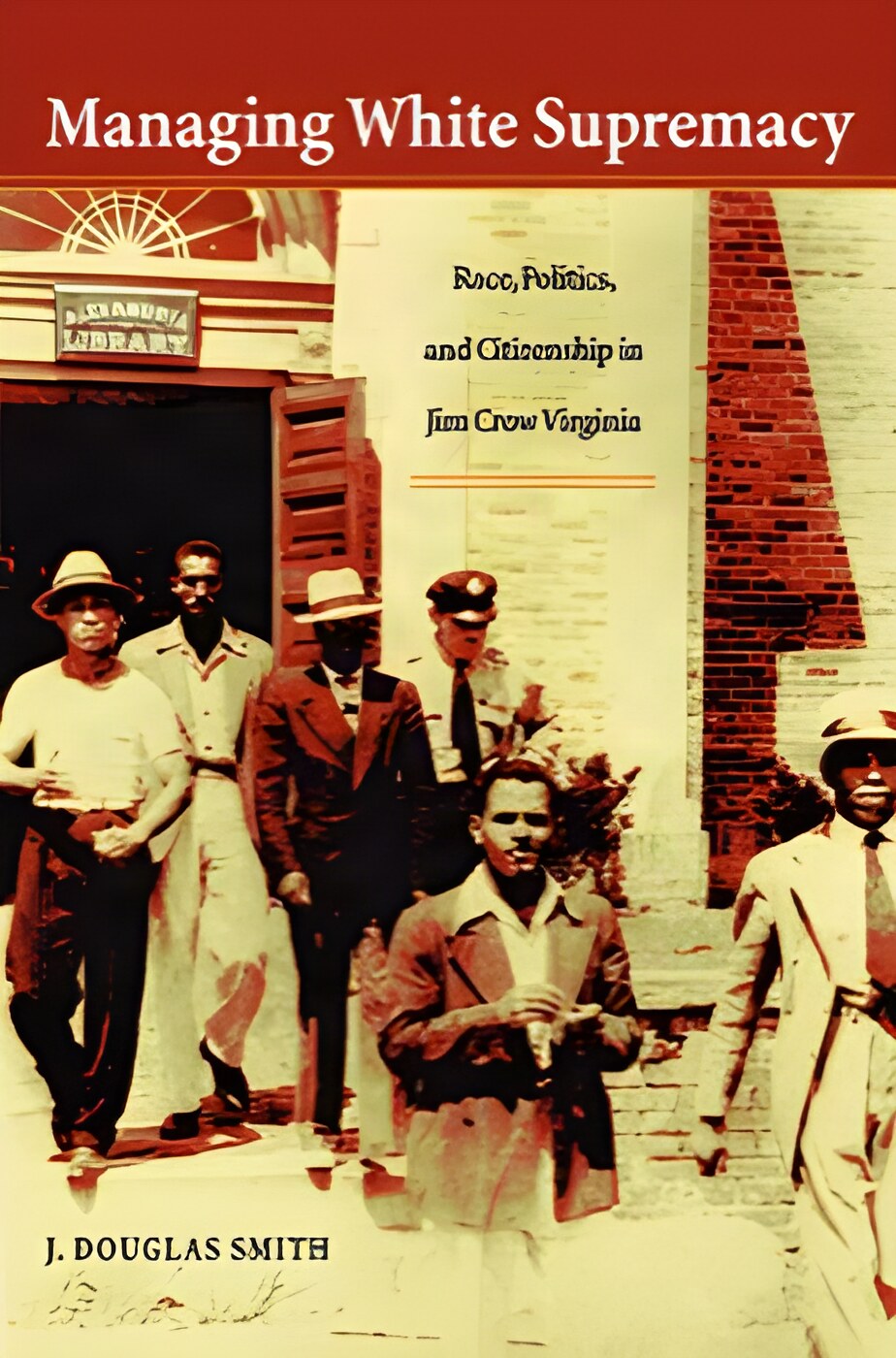
Softcover. Chapel Hill, University of North Carolina Press, 1st pbk, 2002, Book: Very Good, Dust Jacket: None, Softcover, 411 pages, b&w illustrations. Tracing the erosion of white elite paternalism in Jim Crow Virginia, Douglas Smith reveals a surprising fluidity in southern racial politics in the decades between World War I and the Supreme Court's 1954 Brown v. Board of Education decision. Smith draws on official records, private correspondence, and letters to newspapers from otherwise anonymous Virginians to capture a wide and varied range of black and white voices. African Americans emerge as central characters in the narrative, as Smith chronicles their efforts to obtain access to public schools and libraries, protection under the law, and the equitable distribution of municipal resources. This acceleration of black resistance to white supremacy in the years before World War II precipitated a crisis of confidence among white Virginians, who, despite their overwhelming electoral dominance, felt increasingly insecure about their ability to manage the color line on their own terms. Exploring the everyday power struggles that accompanied the erosion of white authority in the political, economic, and educational arenas, Smith uncovers the seeds of white Virginians' resistance to civil rights activism in the second half of the twentieth century. Light marking to 10 pages, otherwise clean, very good.
Hardcover. London, Pandora, 3rd pr., 1993, Book: Good, Dust Jacket: Good, 211 pages. Hardcover with dust jacket. A clean, unmarked copy with only minor wear to dust jacket edges. Pages have darkening on edges. A tight copy. Black and white pictures in center.
Softcover. Lincoln NE, iUniverse, 1st, 2001, Book: Very Good, Dust Jacket: None, Softcover, 236 pages. "Forward! Double-Quick!" and away we all rushed toward the fort... capturing two brass field pieces, one of which the rebels left loaded." A true account of Vermont men of color in battle during the Civil War. A barely known fact is that the tiny state of Vermont provided over one hundred and fifty African American soldiers to fight for the Union and by doing so, free millions of their own race. This is their story. Derived from historical archives and through their own words. Clean copy. Hastily signed by the author on the half-title page.

 "A Civil War Artist at the Front: Edwin Forbes' Life Studies of the Great Armyby: Dawsos, William Forrest")
 "A Narrative of the Negro: Missing Pages in American History : Revealing the Services of Negros in the Early Wars in the United States of America 1641-1815by: Wilkes,")
 "And So I Sing: African-American Divas of Opera and Concert by: Story, Rosalyn M.")
 "Army Life in a Black Regiment: and Other Writingsby: Higginson, Thomas Wentworth")
 "Black Jacks: African American Seamen in the Age of Sailby: W. Jeffrey Bolster")
 "Black Pioneers: An Untold Storyby: William Loren Katz")
 "Bound for Canaan: The Underground Railroad and the War for the Soul of America by: Bordewich, Fergus")
 "Chasin' That Devil's Music,: Searching for the Blues (with CD)by: Gayle Dean Wardlow")

 "Double Exposure: Images of Black Minnesota in the 1940sby: John Glanton")
 "Expelled from the Motherland The Government of President Jose Antonio Agirre in Exile, 1937-1960by: Irujo, Xabier")


 "Glamour: An Extraordinary History: 85 Years of Women Breaking Boundariesby: Pearlman, Natasha; Wolle, Ruhama; Moeslein, Anna")


 "Harlem Speaks: A Living History of the Harlem Renaissance (with CD)by: Cary D. Wintz")
 "Harlem's Hell Fighters: The African-American 369th Infantry in World War I by: Stephen L. Harris")
 "Image of the Black in Western Art, The - Vol. 4, Parts 1 &2 : From the American Revolution to World War 1 (2 Vols.)by: Honour, Hugh")
 "International Library of Negro Life and History, (5 volumes): Historical Negro Biographies, Negro Americans in the Civil War, The History of the Negro in Medicine, The Negro in Music and Art, Anthology of the American Negro in the T")

 "King of the Cats: The Life and Times of Adam Clayton Powell, Jr.by: Wil Haygood")
 "Lorraine Hansberry: The Life Behind A Raisin in the Sunby: Charles J. Shields")
 "Maud Gonne: A Biographyby: Ward, Margaret")
 "Men of Color, to Arms!: Vermont African-Americans in the Civil Warby: Fuller, James")