Hardcover. New York, Harper Collins, 2nd, 1996, Book: Very Good, Dust Jacket: Very Good, Unpaginated. Hardcover with dust jacket. Color illust. by Fred Marcellino. SIGNED BY MARCELLINO ON TITLE-PAGE. Tight and bright copy.
Softcover. Atglen, PA, Schiffer Publishing, 1st, 2008, Book: Very Good, Dust Jacket: None, 160 pages. Softcover with light edgewear to paper wrappers. Clean, tight copy with black and white photographs throughout.
Hardcover. Cambridge, The MIT Press, 1st Edition, 1977, Book: Very Good, Dust Jacket: Very Good, 220 pages. Hardcover. Black & white illustrations throughout.Light foxing to edges, pen markings on a couple pages. Dust jacket with shelf wear, small tears to edges. Previous owner's signature to front flyleaf. Otherwise clean, tight copy.
Hardcover. Boston, Jr. Lit. Guild/Houghton Mifflin, 1st, 1940, Book: Very Good, Dust Jacket: None, 202 pages. Hardcover with black stamped illustration on front cover. B&w illustrations by Manning de V. Lee. Mild stain to several pages and light rubbing to covers, otherwise tight and clean. Faded spine.
Softcover. Paris, Mouton & Co., 1st, 1969, Book: Good, Dust Jacket: None, Softcover, 495 pages. FRENCH TEXT. 10 black-and-white plates. Some creasing along spine. Minor edge wear. Binding a little cracked where plates begin and end. Good, unmarked copy. (Agrarian Systems and Agricultural Progress: Three-Field Crop Rotation in Russia in the 18th and 19th Centuries).
Softcover. NY, Routledge, 1st pbk, 2003, Book: Very Good, Dust Jacket: None, Softcover, 366 pages. The African Diaspora presents musical case studies from various regions of the African diaspora, including Africa, the Caribbean, Latin America, and Europe, that engage with broader interdisciplinary discussions about race, gender, politics, nationalism, and music. Clean copy.
Hardcover. Westport CT, Greenwood Press, 1st, 2003, Book: Very Good, Dust Jacket: None, Hardcover, glazed pictorial boards, 177 pages. Postma draws on primary sources and current historical scholarship to offer secondary readers and researchers a comprehensive and well-written history. He covers the entire Atlantic slave trade era, from the 1400s to the final abolition of chattel slavery in the New World in 1888. The focus is on Africa and the entire New World. While he describes the many horrors of the Middle Passage, he also examines how the slave trade contributed to the development of the modern international economy. The last chapters discuss the efforts to abolish the slave trade and its legacy. Throughout, Postma documents the sources that support his discussion and conclusions. Chapter notes are supplemented by an extensive annotated bibliography that includes books, articles, films, and electronic resources. The volume concludes with biographical sketches of important people and excerpts from primary documents written by enslaved Africans and white officials. The black-and-white reproductions of period illustrations add little to the text. Clean copy.
Hardcover. NY, Abrams Press, 1st, 2022, Book: Very Good, Dust Jacket: Very Good, Hardcover in a bright, unclipped dust jacket. Illustrations, 470 pages with index. A groundbreaking, timely history of the largely unknown early days of Black basketball, bringing to life the trailblazers, entertainers, gangsters, and supremely talented athletes who made the game From the introduction of the game of basketball to Black communities in 1904 to the integration of the NBA in 1950, there was a full era in the development of the game. It was a time when Black players were discriminated against and opportunities were limited, but entrepreneurial men and women nurtured the game and breathed life into a sport they loved. This period was known as the Black Fives Era (teams at the time were often called "fives"), and was akin to the golden age of the Negro Leagues. But despite fierce rivalries between big-city clubs, innovative managers, and star players, this period is almost entirely unknown to basketball fans. Claude Johnson has made it his mission to change that. An advocate fiercely committed to our history, for more than two decades Johnson has conducted interviews, mined archives, collected artifacts, and helped to preserve an important, culturally rich era that otherwise would have been lost. The Black Fives is the result of his work, a landmark narrative history that will braid together the stories of these forgotten pioneers and rewrite our understanding of the story of basketball.
Softcover. Norman OK, University of Oklahoma Press , reprint, 1996, Book: Very Good, Dust Jacket: None, Softcover, 167 pages. After nearly 200,000 African-American soldiers fought in the Civil War, Congress enacted legislation to authorize regiments of cavalry and infantry for service in the West. The Ninth and Tenth cavalries won fame as "buffalo soldiers" in the Indian wars, nearly overshadowing the critical support role of the Twenty-fourth and Twenty-fifth infantries. Now Arlen L. Fowler brings to light the story of African-American infantry service from 1869 to 1891 in Texas, Indian Territory, the Dakotas, Montana, and Arizona.
Hardcover. NY, One World/Ballantine, 1st, 2000, Book: Very Good, Dust Jacket: Very Good, Hardcover in a bright, unclipped dust jacket. A fictional narrative base on the life of America's first black female millionaire. Born to former slaves on a Louisiana plantation in 1867, Madam C.J. Walker rose from poverty and indignity to become America's first black female millionaire, the head of a hugely successful company, and a leading philanthropist in African American causes. Renowned author Alex Haley became fascinated by the story of this extraordinary heroine, and before his death in 1992 he embarked on the research and outline of a major novel based on her life. Now with The Black Rose, critically acclaimed writer Tananarive Due brings the work to inspiring completion. "I got my start by giving myself a start," Madam C.J. was fond of saying as she recounted her transformation from the uneducated laundress Sarah Breedlove to a woman of wealth, culture, and celebrity. Madam C.J. was nearing forty and married to a maverick Denver newspaperman when the wonder-working hair care method she discovered changed her life. Seemingly overnight, she built a marketing empire that enlisted more than twenty thousand bright young African American women to demonstrate and sell her products door-to-door. By the time she died in 1919, Madam C.J. Walker had constructed her own factory from the ground up, established a training school, and built a twenty-room mansion at Irvington on the Hudson, New York, called Villa Lawaro.
Softcover. Madison WI, University of Wisconsin, reprint., 2005, Book: Very Good, Dust Jacket: None, Softcover in pictorial wraps, 244 pages. The Blind African Slave recounts the life of Jeffrey Brace (ne Boyrereau Brinch), who was born in West Africa around 1742. Captured by slave traders at the age of sixteen, Brace was transported to Barbados, where he experienced the shock and trauma of slave-breaking and was sold to a New England ship captain. After fighting as an enslaved sailor for two years in the Seven Years War, Brace was taken to New Haven, Connecticut, and sold into slavery. After several years in New England, Brace enlisted in the Continental Army in hopes of winning his manumission. After five years of military service, he was honorably discharged and was freed from slavery. As a free man, he chose in 1784 to move to Vermont, the first state to make slavery illegal. There, he met and married an African woman, bought a farm, and raised a family. Although literate, he was blind when he decided to publish his life story, which he narrated to a white antislavery lawyer, Benjamin Prentiss, who published it in 1810. Upon his death in 1827, Brace was a well-respected abolitionist. In this first new edition since 1810, Kari J. Winter provides a historical introduction, annotations, and original documents that verify and supplement our knowledge of Brace's life and times. Clean copy.
Hardcover. NY, The Viking Press, reprint, 1956, Book: Very Good, Hardcover, tan cloth covers with brown lettering, 187/189 pages. Lyrics with music and a preface of the songs. Two volumes in one. No dust jacket. Inscription on front fly leaf, otherwise clean.
Hardcover. Norman OK, University of Oklahoma Press, Revised Ed., 2003, Book: Very Good, Dust Jacket: Very Good, Hardcover in a bright dust jacket, 319 pages. B&w illustrations. A well-researched and authoritative study of 'negro' soldiers who wished to remain in the United States Army following the Civil War. They were eventually organized into the Ninth and Tenth Cavalry Regiments their service in controlling Indians on the Great Plains during the next twenty years was as invaluable as it was unpraised. With Bibliography and Index. Clean copy.
Hardcover. Washington DC, Counterpoint, 1999, Book: Very Good, Dust Jacket: Very Good, Hardcover, 642 pages. Hailed in 1849 as "a new department in the literature of civilization," the slave narrative forms the foundation of the African American literary tradition. From the late-eighteenth-century narratives by Africans who endured the harrowing Middle Passage, through the classic American fugitive slave narratives of the mid-nineteenth century, slave narratives have provided some of the most graphic and damning documentary evidence of the horrors of slavery. Riveting, passionate, and politically charged, the slave narrative blends personal memory and rhetorical attacks on slavery to create powerful literature and propaganda.The Civitas Anthology presents the seven classic antislavery narratives of the antebellum period in their entirety: The History of Mary Prince, a West Indian Slave , the first slave narrative published by a woman in the Americas; The Confessions of Nat Turner , written when Turner was asked to record his motivation for leading the bloodiest slave revolt in U.S. history; The Narrative of the Life of Frederick Douglass , an international bestseller and the first narrative to fashion the male fugitive slave into an African American cultural hero; The Narrative of William W. Brown , an account that explored with unprecedented realism the slave's survival ethic and the art of the slave trickster; The Narrative of the Life of Henry Bibb , the story of the struggles of the most memorable family man among the classic slave narrators; Running a Thousand Miles for Freedom , a gripping chronicle of one of the most daring and celebrated slave escapes ever recorded; and Incidents in the Life of Slave Girl , a dramatic text that exposed the sexual abuse of female slaves and pioneered the image of the fugitive slave woman as an articulate resister and survivor.Born out of lives of unparalleled suffering, the slave narrative captures all the bravery, drama, and hope that characterized the African American struggle against slavery. From these beginnings came some of the most influential novels in American literature, for the works of writers such as Harriet Beecher Stowe, Mark Twain, and Toni Morrison owe much of their power and social resonance to the slave narrative tradition. The Civitas Anthology gathers the most important narratives in this tradition into one volume for the first time, an indispensable resource for scholars, students, and general readers. Clean copy.
Softcover. Lincoln NE, University of Nebraska Press, reprint, 1994, Book: Very Good, Dust Jacket: None, Softcover, 311 pages. A 1913 novel about a black homesteader in South Dakota based on the author's experiences in the midwest as a young man. He later went on to fame as a celebrated early filmmaker. Clean copy.
Hardcover. NY, Dial Press, 1st, 1976, Book: Very Good, Dust Jacket: Very Good, Hardcover in a bright, unclipped dust jacket. A view of American film-making from the author's viewpoint.
Hardcover. NY, Robert M. McBride, 2nd pr., 1927, Book: Very Good, Dust Jacket: None, Hardcover, floral decorated boards, black cloth spine, paper title labels, lacking dust jacket. American playwright, Green won the Pulitzer in 1927 for In Abraham's Bosom. 317 pages, top edge stained red. A clean, bright copy.
Hardcover. NY, Thames & Hudson, 1st, 2021, Book: Very Good, Dust Jacket: Very Good, Hardcover in a bright dust jacket. 408 pages, color illustrations, In this provocative and resonant autobiography, world-renowned artist and feminist icon Judy Chicago reflects on her extraordinary life and career. Judy Chicago is America's most dynamic living artist. Her works comprise a dizzying array of media from performance and installation to the glittering table laid for thirty-nine iconic women in The Dinner Party (now permanently housed at the Brooklyn Museum), the groundbreaking Birth Project, and the meticulously researched Holocaust Project. She designed the monumental installation for Dior's 2020 Paris couture show and, in 2019, established the Judy Chicago Portal, which will help to accomplish her lifelong goal of overcoming the erasure that has eclipsed the achievements of so many women. The Flowering is her vivid and revealing autobiography, fully illustrated with photographs of her work, as well as never-before-published personal images and a foreword by Gloria Steinem. Black remainder line on bottom edge, otherwise clean and bright.
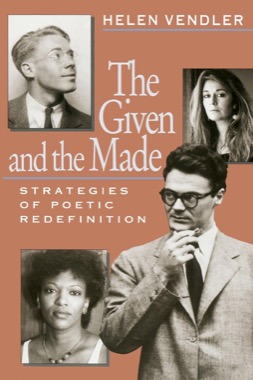
Softcover. Cambridge MA, Harvard University Press, 1st, 1995, Book: Very Good, Dust Jacket: None, Softcover, 139 pages. How does a poet repeatedly make art over a lifetime out of an arbitrary assignment of fate? By asking this question of the work of four American poets--two men of the postwar generation, two young women writing today--Helen Vendler suggests a fruitful way of looking at a poet's career and a new way of understanding poetic strategies as both mastery of forms and forms of mastery. Fate hands every poet certain unavoidable "givens." Of the poets Vendler studies, Robert Lowell sprang from a family famous in American and especially New England history; John Berryman found himself an alcoholic manic-depressive; Rita Dove was born black; Jorie Graham grew up trilingual, with three words for every object. In Vendler's readings, we see how these poets return again and again to the problems set out by their givens, and how each invents complex ways, both thematic and formal, of making poetry out of fate. Clean copy.
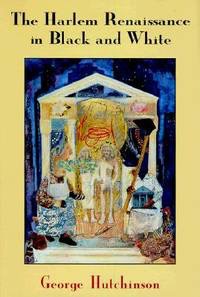
Softcover. Cambridge MA, Harvard University Press, 3rd pr., 1997, Book: Very Good, Dust Jacket: None, Softcover, 541 pages. It wasn't all black or white. It wasn't a vogue. It wasn't a failure. By restoring interracial dimensions left out of accounts of the Harlem Renaissance--or blamed for corrupting it--George Hutchinson transforms our understanding of black (and white) literary modernism, interracial literary relations, and twentieth-century cultural nationalism in the United States. What has been missing from literary histories of the time is a broader sense of the intellectual context of the Harlem Renaissance, and Hutchinson supplies that here: Boas's anthropology, Park's sociology, various strands of pragmatism and cultural nationalism--ideas that shaped the New Negro movement and the literary field, where the movement flourished. Hutchinson tracks the resulting transformation of literary institutions and organizations in the 1920s, offering a detailed account of the journals and presses, black and white, that published the work of the "New Negroes." This cultural excavation discredits bedrock assumptions about the motives of white interest in the renaissance, and about black relationships to white intellectuals of the period. Clean copy.
Hardcover. NY, powerHouse, 1st, 2009, Book: Very Good, Dust Jacket: Very Good, Hardcover, 112 pages. Established in 1866, the Ku Klux Klan still remains one of America's most secretive organizations. New York photojournalist Anthony Karen first transcended that secrecy several years ago when he got the opportunity to photograph a KKK cross-lighting ceremony. Since then, Karen has been documenting Klan organizations throughout the country. In The Invisible Empire: Ku Klux Klan, those photographs are compiled to form an absorbing document of one of the most notorious groups in history. Taken with unrestricted access, Karen's images bring us deep inside America's most private white nationalist organizations. Beginning with a brief introduction into the history of the Klan, the book provides detailed visual accounts of modern-day Klan life, including candid shots of rallies, individual portraits of Klansmen and women, as well as a look at the naturalization process for new members. Presented in intimate profiles are: a functioning Klan ministry, a group that has merged National Socialism with Klan ideologies, and a 58-year-old seamstress who makes custom Klan robes, among others. Accompanied by quotations from the late Dale Fox, Imperial Wizard of The Brotherhood of the Klans, The Invisible Empire: Ku Klux Klan offers an unprecedented glimpse into the shadowy society and its mysterious inner workings.
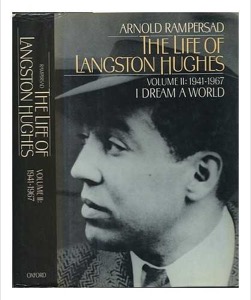
Hardcover. NY, Oxford University Press, 1st, 1988, Book: Very Good, Dust Jacket: Very Good, Hardcover in a bright, unclipped dust jacket, 512 pages. The second volume in this masterful biography finds Hughes rooting himself in Harlem, receiving stimulation from his rich cultural surroundings. Here he rethought his view of art and radicalism, and cultivated relationships with younger, more militant writers such as Richard Wright, Ralph Ellison, James Baldwin, and Amiri Bakara. Illustrated with black & white photographs, a few by Roy DeCarava with whom Hughes published "The Sweet Flypaper of Life" and a portrait by Henri Cartier-Bresson. Clean copy.

 "Story of Little Babaji, The (SIGNED BY ILLUSTRATOR)by: Bannerman/Fred Marcellino, Helen")


 "Striptease Artists of the 1950sby: Yeager, Bunny")
 "Studies in Italian Renaissance Architectureby: Lotz, Wolfgang")
 "Sweet Possum Valleyby: Govan, Christine Noble")

![The African Diaspora: A Musical Perspective by: Monson, Ingrid [Editor]](javascript:largeIMTop('https://www.browsingisarousing.com/shop/images/The-African-Diaspora-A-Musical-Perspective_by_Monson-Ingrid-Editor381587-424601.jpg','https://www.browsingisarousing.com/shop/images/The-African-Diaspora-A-Musical-Perspective_by_Monson-Ingrid-Editor381587-424601.jpg',0,'381587',0,'') "The African Diaspora: A Musical Perspective by: Monson, Ingrid [Editor]")
 "The Atlantic Slave Tradeby: Postma, Johannes")
 "The Black Fives: The Epic Story of Basketball's Forgotten Era by: Claude Johnson")
 "The Black Infantry in the West, 1869")
 "The Black Panthersby: Marine, Gene")
 "The Black Roseby: Tananarive Due")
 "The Blind African Slave: Or Memoirs of Boyrereau Brinch, Nicknamed Jeffrey Brace by: Jeffrey Brace; Editor Kari J. Winter; Contributor Benjamin F. Prentiss")
 "The Book of American Negro Spirituals, The Second Book of Negro Spirituals. Two volumes in Oneby: Johnson, James and J. Rosamond")
 "THE BUFFALO SOLDIERS: A Narrative of the Black Cavalry in the Westby: Leckie William H. & Leckie Shirley A.")
 "The Civitas Anthology of African American Slave Narratives by: William L. Andrews; Henry Louis Gates/editors")
 "The Conquest: The Story of a Negro Pioneerby: Micheaux, Oscar")
 "The Devil Finds Workby: Baldwin, James")
 "The Field God and In Abraham's Bosomby: Green, Paul")
 "The Flowering: The Autobiography of Judy Chicagoby: Chicago, Judy")
 "The Invisible Empire: Ku Klux Klanby: Anthony S. Karen")