Hardcover. NY, Random House, 1st, 1970, Book: Very Good, Dust Jacket: Very Good, Hardcover in a bright, unclipped dust jacket, 429 pages. Brown cloth with embossed red image of Seale gagged and bound in the courtroom during the Chicago 8 Trial. A gorgeous copy of Bobby Seale's narration of the Black Panther Party's origins and his relationship with Huey P Newton. Written as Seale was on trial as part of the Panther 14 in New Haven and during the Chicago 8/7 Conspiracy trial. Dust jacket is bright with original $6.95 price intact and unclipped. Stated First Edition on copyright page. Clean copy.
Hardcover. NY, Birch Lane Press, 1st, 1998, Book: Very Good, Dust Jacket: None, Hardcover, white cloth covers with black lettering on spine, no dust jacket. 238 pages with b&w photos. Biography by nephew of Malcolm X. Clean copy.
Hardcover. NY, Helga M. Rogers, reprint, 1972, Book: Very Good, Dust Jacket: Very Good, Hardcover in bright dust jacket. In the Sex and Race series, first published in the 1940s, historian Joel Augustus Rogers questioned the concept of race, the origins of racial differentiation, and the root of the "color problem." Rogers surmised that a large percentage of ethnic differences are the result of sociological factors and in these volumes he gathered what he called "the bran of history"--the uncollected, unexamined history of black people--in the hope that these neglected parts of history would become part of the mainstream body of Western history. Drawing on a vast amount of research, Rogers was attempting to point out the absurdity of racial divisions. Indeed his belief in one race--humanity--precluded the idea of several different ethnic races. The series marshals the data he had collected as evidence to prove his underlying humanistic thesis: that people were one large family without racial boundaries. Self-trained and self-published, Rogers and his work were immensely popular and influential during his day, even cited by Malcolm X. Clean copy.
Hardcover. New York, Thomas Nelson & Sons, 1st, 1938, Book: Good, Dust Jacket: None, Hardbound, 82 pages. Black & white illustrations by Erick Berry. Pink stain front cover. Story of a slave girl who lived at Mt. Vernon and was Nellie Custis's servant. Takes place at Mount Vernon in the years immediately following the Revolutionary War. No dust jacket.
Softcover. Urbana IL, University of Illinois Press, reprint, 2003, Book: Very Good, Dust Jacket: None, Softcover, 433 pages. From the plaintive tunes of woe sung by exiled kings and queens of Africa to the spirited worksongs and "shouts" of freedmen, enslaved people created expansive forms of music from the United States to the West Indies and South America. Dena J. Epstein's classic work traces the course of early black folk music in all its guises. Anchored by groundbreaking scholarship, it redefined the study of black music in the slavery era by presenting the little-known development of black folk music in the United States. Her findings include the use of drums, the banjo, and other instruments originating in Africa; a wealth of eyewitness accounts and illustrations; in-depth look at a wide range of topics; and a collection of musical examples. This edition offers an author's preface that looks back on the twenty-five years of changes in scholarship that followed the book's original publication. Clean copy.
Hardcover. NY, Little Brown, 1st, 2005, Book: Very Good, Dust Jacket: Very Good, Hardcover in a bright, unclipped dust jacket. This is a biography of C.L. Franklin, one of the black preachers in American history. It tells the story of black migration and activism, alongside the rise of gospel, blues, and soul music, with a cast of characters including Martin Luther King, Jr., B.B. King, Art Tatum, and Coleman Young.
Hardcover. self-published, 1st, 1920, Book: Very Good, Dust Jacket: None, Hardcover, blue cloth with gilt rules and a drawing of a fern on front cover, "WH" with dates on spine. 253 pages, an exceptionally bright copy with no markings and a like-new binding, appearance. 1st Ed., portraits, maps, plates. Howes H-500. Privately printed for friends. Hinchman was with Palmer on the 1867 surveying expedition to find the best route for a railroad to California thru Kansas, Colorado, New Mexico and Arizona. A most interesting account, various Indian troubles including the attack of the Apaches in Sycamore Canyon Arizona. Much on ranching, Indians including Cheyenne, Arapahoe, Sioux, Comanche, Crow, Blackfoot, and Kiowa. Profusley illustrated with drawings and nature studies by Hinchman, many in color. Very scarce item.
HARDCOVER. Boston, Bulfinch, 1st, 1989, Book: Very Good, Dust Jacket: Very Good, Hardcover, 42 color, 67 black & white photos by Skrebneski. In a bright, unclipped dust jacket. Showcases Skrebneski's work over four decades (1949-1989). Fashion and art photography, celebrity portraits, surrealistic compositions, architectural studies. and sensual nudes. With Foreward by Frank Zachary.
Softcover. Baton Rouge, Louisiana State University Press, reprint, 1997, Book: Very Good, Dust Jacket: None, Softcover, 777 pages. The largest collection of annotated and authenticated accounts of slaves ever published in one volume. In them, the slaves of Thomas Jefferson, Robert E. Lee, Henry Clay, and others speak for themselves about their culture, plantation life, the adequacy of their food, clothing, and shelter, the sexual exploitation of black women, and the psychological response to bondage. The views given are those of house servants and field hands, docile slaves and rebels, urban slaves and rural slaves, slaves with kind masters and those with cruel ones. These wide-ranging documents, together with annotations, notes, an index, dozens of illustrations, and an incisive introduction, form a volume of unusual scope and character. Clean copy.
Hardcover. Urbana IL, University of Illinois Press, 1st, 1964, Book: Very Good, Dust Jacket: Good, Hardcover in a dust jacket with two small holes to front cover, 227 pages with index. "Slavery was a social and an economic institution of such power that it sustained and extended an economic system whose demands went far to determine the domestic and foreign policy of the "agrarian" party in our early history. For the agrarian politics of Jefferson, while possibly benefiting the small freeholder, very closely served the interests of the plantation system, at least as the planters conceived their interests." Name on front fly leaf, otherwise clean.
Softcover. NY, Harcourt Brace and World, 1st pbk, 1966, Book: Good, Dust Jacket: None, Softcover, 261 pages. For whom was slavery profitable? Did it aid the slave, slaveowner, nonslaveholder, the South or all America? The readings here seek to clarify such questions. Front cover with light wear to fore-edge otherwise clean.
Softcover. Montgomery AL, Equal Justice Initiative, 1st, 2014, Book: Very Good, Dust Jacket: None, Softcover, 58 pages. Slavery in America: The Montgomery Slave Trade documents American slavery and Montgomery's prominent role in the domestic slave trade. The report is part of a project focused on developing a more informed understanding of America's racial history and how it relates to contemporary challenges.
Softcover. NY, The New Press, 1st, Book: Very Good, Dust Jacket: None, Softcover, 403 pages. Edited by Ira Berlin, the Bancroft Prize-winning author of Many Thousands Gone, and Leslie Harris, Slavery in New York brings together twelve new contributions by leading historians of slavery and African American life in New York. Published to accompany a major exhibit at the New York Historical Society, the book demonstrates how slavery shaped the day-to-day experience of New Yorkers, black and white, and how, as a way of doing business, it propelled New York to become the commercial and financial power it is today. Powerfully illustrated with images from the New York Historical Society exhibit, Slavery and the Making of New York will be the definitive account of New York's slave past.
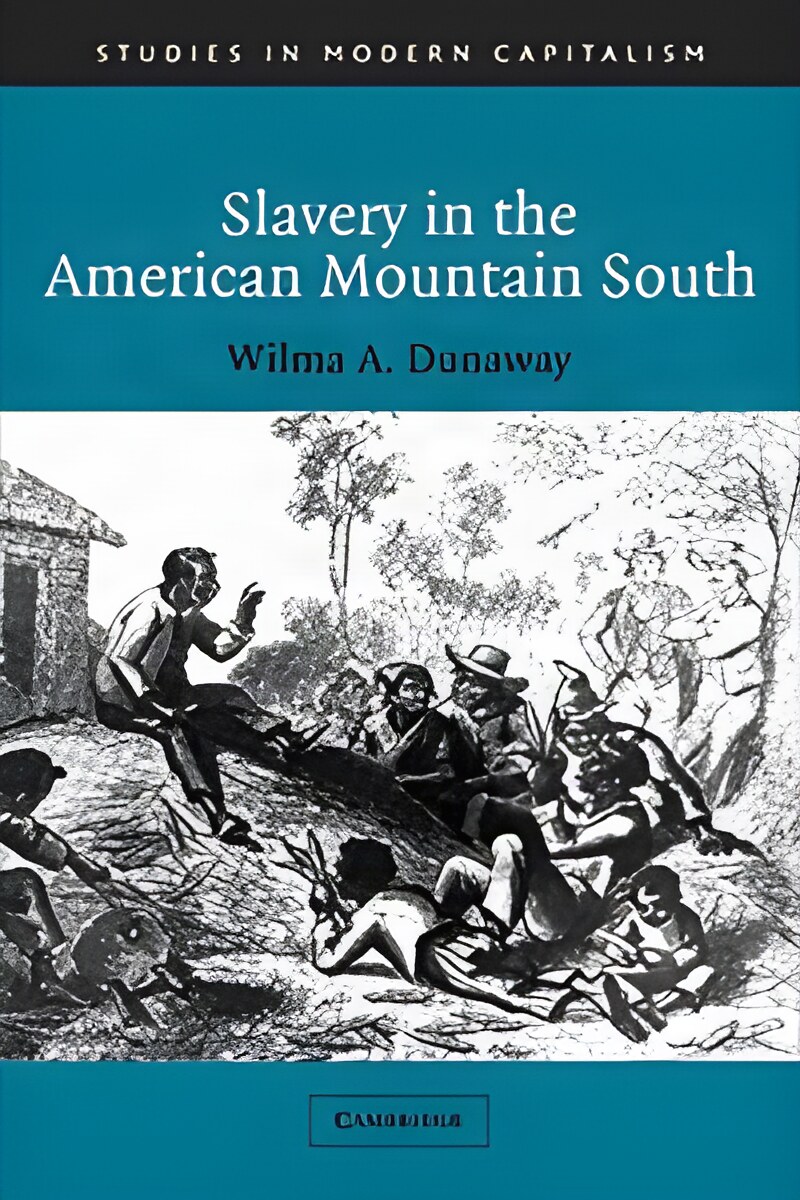
Softcover. UK, Cambridge University Press, 1st pbk, 2003, Book: Very Good, Dust Jacket: None, Softcover, 352 pages, b&w illustrations. Wilma Dunaway breaks new ground by focusing on slave experiences on small plantations in the Upper South. She argues that a region was not buffered from the political, economic, and social impacts of enslavement simply because it was characterized by low black population density and small slaveholdings. By drawing on a massive statistical data base derived from antebellum census manuscripts and county tax records of 215 counties in nine states, on a vast array of slaveholder manuscripts, and on regional slave narratives, she pinpoints several indicators that distinguished Mountain South enslavement from the Lower South. These include a higher incidence of ethnic mixing between African and Native American slaves, heavier reliance on the field labor of women and children, and more frequent assignment of slaves to non-agricultural occupations. Dunaway also calls into question the notion that large numbers were necessary before slaves could engage in community building and resistance. Clean, bright copy.
Hardcover. NY, Farrar, Straus & Giroux, 3rd pr., 1968, Book: Very Good, Dust Jacket: Very Good, Hardcover in a lightly worn dust jacket, 290 pages. This book about slavery and the southern plantation system includes writings by Nat Turner, Frederick Douglass, Thomas Jefferson, and many others. Name on a blank prelim page, otherwise clean.
Hardcover. New York, John S. Taylor, 2nd pr., 1837, Book: Good, Dust Jacket: None, Hardcover, leather bound with gilt design on front and rear covers, spine also with gilt design with the title Cabinet of Freedom (the series under which the publisher issued this narrative). 517 pages with an extra illustrated title page dated 1836, the regular title page dated 1837. All edges gilt. First published by John Shugert in Lewistown PA a year earlier. Written with the help of Isaac Fisher, a white Philadelphia lawyer, who declares in his preface that he has edited the oral narrative Ball had dictated to him to omit any beliefs or feelings Ball may have expressed about slavery. This declaration of significant editing has led scholars to debate the authenticity of Ball's narrative, but most agree that it represents a true story. Ball describes his experiences as a slave, including the uncertainty of slave life and the ways in which the slaves are forced to suffer harsh and inhumane conditions. In particular, he recounts the qualities of his various masters, and the ways in which his fortune depended on their temperament. The leather has separated from the spine of the book but appears to be very repairable. The first 3 pages loose (a blank leaf and the two title pages), there is a light stain to the illustrated one and light foxing. The interior of the book is clean, tight with minimal foxing throughout.
Hardcover. London, Oxford University Press, 1953, Book: Good, Dust Jacket: Good, 708 pages. Hardcover. This is Volume two only. Illustrated with black & white photographs. Some darkening to endpapers and to a few pages. Dust jacket with chipping, darkening to edges. DUE TO WEIGHT, DOMESTIC SHIPPING ONLY.
Hardcover. Salt Lake City, University of Utah Press, 1st, 1988, Book: Very Good, Dust Jacket: Very Good, Hardcover in a bright dust jacket, 188 pages. 141 color and black and white photographs by Milton Rogovin, Tony Maine, Ron Kelley, the essayists, and Yemeni workers. "What did the American astronauts find when the first landed on the moon?" "Yemenis, looking for work." High wages and easy work - these are the myths that lure Yemeni workers abroad, and especially to the United States, which has seen generations of migrant laborers. But the realities of migrant labor are something else. In Sojourners and Settlers, leading scholars of history, anthropology, folklore, sociology, and political science have joined with photographers and critics to present an interdisciplinary look at the phenomenon of labor migration. They reveal drastically changing rural and urban environments in Yemen, and in the United States, strenuous work weeks, bleak farm work camp conditions, plant shut downs, culture shock, and cautious assimilation. Under Friedlander's editorship, these reports of the ordinary events of Yemeni workers' lives become studies in courage, persistence, and dignity. Clean copy.
Hardcover. NY, McGraw Hill, 1st, 1971, Book: Very Good, Dust Jacket: Very Good, Hardcover in a bright dust jacket, 230 pages. Cultural commentary and autobiography of life in Alabama. The euthor's second book.
Softcover. New York, Harry N. Abrams, Inc., 1st, 1997, Book: Very Good, Dust Jacket: None, 336 pages. Softcover. Color and b/w illustrations throughout. Covers in excellent condition. Touch of foxing to top edge. Pages clean and bright. The ever-rapacious Nazis looted staggering quantities of great art and antiques from the nations they occupied. Much of it found its way back to Germany, and following the Allied victory, many thousands of rare (and some priceless) pieces were identified, and returned to the countries from which they had been taken. But not all of the paintings, statues, and archaeological treasures were recovered: Some were taken by Soviet troops and disappeared into Russia. Still others slipped into the black market in western Europe, and were snapped up by wealthy (if unprincipled) collectors. A 1995 symposium at the Bard Graduate Center for Studies in the Decorative Arts brought together European and American investigators and historians to discuss both the the Nazi thefts and the current state of knowledge of the whereabouts of the many still missing treasures. Those papers are reprinted here. While the pieces are detailed, dry, and likely to be of most interest to specialists, there are some extraordinary stories, most prominently the description of the recent rediscovery of ``Priam's treasure,'' excavated by Schliemann at Troy and hidden since WW II in a Russian museum. (123 illustrations, 25 in color).
Hardcover. London, Cassell, 1st, 1988, Book: Very Good, Dust Jacket: Very Good, 157 pages Hardcover with dust jacket. clean, tight copy. Black and white pictures in center. Dust jacket has light rubbing on fore edge.
Hardcover. NY, Stewart Tabori & Chang, 1st, 1996, Book: Very Good, Dust Jacket: Very Good, Hardcover, 113 pages. Anton Corbijn initiated a new era in portrait photography for the rock and pop music scene with his atmospheric, often melancholy images. Here is a photographer who travels the world, tirelessly seeking to capture its idols in quiet moments and catch a trace of their essential being behind all the fame and glamour. Taken primarily in black and white with a hand-held camera and without auxiliary lighting, most of Corbijn's photographs are shot in those quiet moments between performances. Beyond the reach of the glaring spotlights, on the dark side of the star cult - literally and metaphorically - Corbijn finds what interests him more than gesture, image or glamour: the unusual degree of privacy and closeness that turns his portraits into genuine character studies.Corbijn has now moved beyond the boundaries of music photography and Star Trak reads like a visual encyclopedia of the icons of our culture, gathering together outstanding personalities from the worlds of film, literature, rock music and fashion. He visits film directors Wim Wenders, David Lynch, and Martin Scorsese, actors Johnny Depp, Gerard Depardieu and Jodie Foster, and alongside the older rebels - like Mick Jagger and Leonard Cohen - he includes the enfants terribles of the Eighties and Nineties - Kurt Cobain, Billy Idol, and Slash. Corbijn couples the excesses of William S. Burroughs with the beauty of supermodels Naomi and Christy, and brings Salman Rushdie and Bono together in front of the camera.
Hardcover. Chicago, American Colortype Company, 1st, 1940, Book: Good, Dust Jacket: None, Hardcover, pictorial boards with red cloth spine. 96 pages illustrated in 2-colors by Dorothy Wagstaff. 22 short stories of a stereotypical black boy done in the style of the time. Chipping and wear to paper on the covers, interior clean, solid binding.


 "Seventh Child: A Family Memoir of Malcolm X. by: Collins, Rodnell P. w/Bailey, A. Peter")
 "Sex and Race, Vol. 3: Why White and Black Mix in Spite of Opposition by: Rogers J. A.")
 "Shipment for Susannah, Aby: Nolen/Erick Berry, Eleanor Weakley")
 "Sinful Tunes and Spirituals: Black Folk Music to the Civil War Music in American Lifeby: Dena J. Epstein")
 "Singing in a Strange Land: C. L. Franklin, the Black Church, and the Transformation of Americaby: Nick Salvatore")



 "Skrebneski - Black White & Colorby: Skrebneski, Victor")



 "Slavery in America: The Montgomery Slave Tradeby: N/A Bryan Stevenson (Introduction)")
 "Slavery in New York by: Ira Berlin; Leslie Harris (Editors)")
![Slavery in the South: First-Hand Accounts of the Ante-Bellum American Southland from Northern & Southern Whites, Negroes, & Foreign Obervers by: Wish, Harvey [Ed.]](https://www.browsingisarousing.com/shop/images/Slavery-in-the-South-First-Hand-Accounts-of-the-Ante-Bellum-American-Southland-from-Northern-Souther396380-446228.jpg "Slavery in the South: First-Hand Accounts of the Ante-Bellum American Southland from Northern & Southern Whites, Negroes, & Foreign Obervers by: Wish, Harvey [Ed.]")

 "Slavery in the United States: A Narrative of the Life and Adventures of Charles Ball, a Black Man, Who Lived Forty Years in Maryland, South Carolina and Georgia, as a Slave Under Various Masters, and was One Year in the Navy with Com")
 "Social & Economic History of the Hellenistic World, The: vol. IIby: Rostovtzeff, M.")

 "South to a Very Old Placeby: Murray, Albert")

 "Staging Steinbeck: Dramatizing the Grapes of Wrathby: Whitebrook, Peter")

 "Stories of Little Brown Kokoby: Hunt, Blanch Seale and Dorothy Wagstaff (illus.)")