Hardcover. NY, Alfred A. Knopf, 1st, 1946, Book: Very Good, Dust Jacket: None, Hardcover, 313 pages plus index. Tan cloth boards that show minor fading to top, spine and light discoloration to back cover. Otherwise very good. No dust jacket. Generous selection of black and white illustrations. This copy also complete with both the fold-out maps that are often missing: (1) City of Richmond in 1861; and (2) Richmond-Petersburg Theatre of Operations. These ten chapters reconstitute, across an eighty-year gap, the everyday life of a capital city close behind the fighting fronts of a prolonged war. From records that originated close to the facts or in the midst of them--newspapers, advertisements, diaries, letters, stenographic reports of the time--Mr. Bill discloses how people lived on the home front of the Confederacy. He tells in abundant detail what the people did to amuse themselves, what rumors alternately exalted and depressed them, about what and whom they gossiped, what they found procurable in the black market and what it cost them.
Hardcover. NY, G.P. Putnam's Sons, 1st US, 1873, Book: Good, Dust Jacket: None, Hardcover, brown cloth stamped in black and gilt, 442 pages. While a fictional story based on actual events, the author relates a wealth of information on the history, customs and political divisions in the Arab world at the time. Hinges weak but holding, bookplate on inside front cover. Light shelf wear.Originally published in England in 1850.
Hardcover. NY, Calla/Dover, reprint, 2012, Book: Very Good, Dust Jacket: None, Hardcover, red cloth with gilt decoration, 352 pages. A magnificent treasury of popular folklore, this rare, hardcover compilation offers a bounty of delightful illustrations by Charles Robinson -- there are black-and-white illustrations on every page as well as 16 plates of full- and two-color images. Decorative initials and borders, hand lettering, silhouettes, and other ornaments embellish renderings of 300 traditional verses, from "Little Tom Tucker" and "Baa, Baa Black Sheep" to "Good King Arthur" and "Shave a Pig." A facsimile reproduction of the 1903 edition.
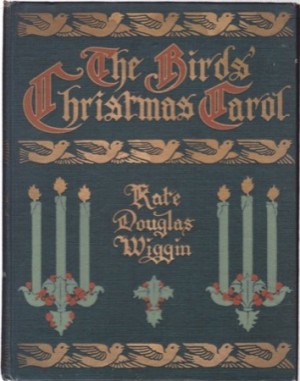
Hardcover. Boston, Houghton Mifflin, 1st Illust., 1912, Hardcover, originally written in 1886, this is a 1912 printing, a more scarce edition featuring the pen-and-ink sketches & color (black/gray/white/red) illustrations by artist Katharine R. Wireman. 91 pages. Small hardcover 8vo (6.75" x 8.5"), green cloth over boards with red & lighter green illustrations of birds, candles, & holly & red script lettering to front & spine. Front fly leaf gone, spine with mild fading.
Softcover. Louisville KY, Chicago Spectrum Press, 1st, 2006, Book: Very Good, Dust Jacket: None, Softcover, b&w illustrations throughout. INSCRIBED BY HAMILTON on the front fly leaf. Ed Hamilton was raised on a street, in a neighborhood, that no longer exists. But Walnut Street and the now razed black professional district are vibrant and alive in this account of how one skinny black youth became a nationally acclaimed sculptor. This autobiography chronicles not just one man, but a way of life. It is filled with photos of art work now located all over the U.S., in private homes, public plazas, and prestigious museums.
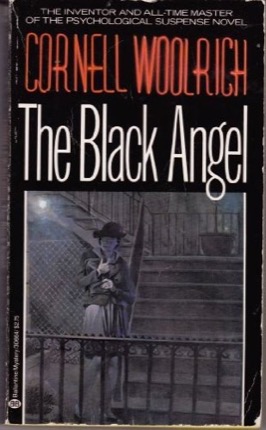
Softcover. NY, Pegasus Books, 2nd pr., 2012, Book: Very Good, Dust Jacket: None, Softcover, 300 pages. In this classic crime novel, a panic-stricken young wife races against time to prove that her convicted husband did not murder his mistress. Writing in first person from the wife?s viewpoint, Woolrich evokes her love and anguish and, finally, desperation as she becomes an avenging angel in her attempt to rescue her husband from execution. Clean copy.
Softcover. NY, Ballantine Books, reprint, 1982, Book: Good, Dust Jacket: None, Softcover, mass market paperback, 238 pages. When her husband is arrested for the murder of his supposed girl friend, a young woman struggles to prove him innocent and bring the true killer to justice. Name inside front cover, light wear to covers.
Hardcover. NY, Abrams Press, 1st, 2022, Book: Very Good, Dust Jacket: Very Good, Hardcover in a bright, unclipped dust jacket. Illustrations, 470 pages with index. A groundbreaking, timely history of the largely unknown early days of Black basketball, bringing to life the trailblazers, entertainers, gangsters, and supremely talented athletes who made the game From the introduction of the game of basketball to Black communities in 1904 to the integration of the NBA in 1950, there was a full era in the development of the game. It was a time when Black players were discriminated against and opportunities were limited, but entrepreneurial men and women nurtured the game and breathed life into a sport they loved. This period was known as the Black Fives Era (teams at the time were often called "fives"), and was akin to the golden age of the Negro Leagues. But despite fierce rivalries between big-city clubs, innovative managers, and star players, this period is almost entirely unknown to basketball fans. Claude Johnson has made it his mission to change that. An advocate fiercely committed to our history, for more than two decades Johnson has conducted interviews, mined archives, collected artifacts, and helped to preserve an important, culturally rich era that otherwise would have been lost. The Black Fives is the result of his work, a landmark narrative history that will braid together the stories of these forgotten pioneers and rewrite our understanding of the story of basketball.
Softcover. Norman OK, University of Oklahoma Press , reprint, 1996, Book: Very Good, Dust Jacket: None, Softcover, 167 pages. After nearly 200,000 African-American soldiers fought in the Civil War, Congress enacted legislation to authorize regiments of cavalry and infantry for service in the West. The Ninth and Tenth cavalries won fame as "buffalo soldiers" in the Indian wars, nearly overshadowing the critical support role of the Twenty-fourth and Twenty-fifth infantries. Now Arlen L. Fowler brings to light the story of African-American infantry service from 1869 to 1891 in Texas, Indian Territory, the Dakotas, Montana, and Arizona.
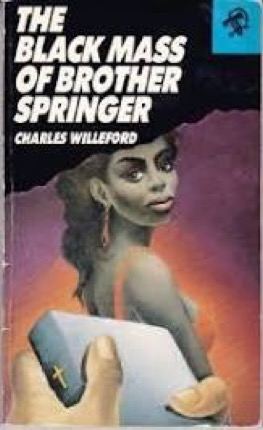
Softcover. Berkeley CA, Black Lizard Books, reprint, 1989, Book: Good, Dust Jacket: None, Softcover, mass market paperback, 171 pages. "No one writes a better crime novel than Charles Willeford" Elmore Leonard THE BLACK MASS OF BROTHER SPRINGER tells the story of Sam Springer, a drifter novelist who meets Jack Dover, the retiring Abbot of the Church of God's Flock. Dover's final official act is to ordain Springer and send him off to serve as pastor of an all-Black church in Jacksonville, Florida. Springer soon becomes entangled in the city's growing civil rights movement . . . and with the church deacon's earthy young wife, Merita. The Washington post calls this darkly humorous novel by Charles Willeford, one of the great crime writers of the 20th century, "his masterpiece." Light wear, book store stamp, price on first page, crease to rear cover. Otherwise clean.
NY, Viking Press, 1st, 1938, Book: Very Good, Dust Jacket: None, Hardcover in blue-green cloth with maroon lettering and drawing. Three-color, b&w illustrations by Margaret Van Doren. Front fly leaf gone, light soil, small mark to covers. Otherwise very good, clean. A spirited black puppy learns to make friends with two kittens in his new home.
Hardcover. NY, One World/Ballantine, 1st, 2000, Book: Very Good, Dust Jacket: Very Good, Hardcover in a bright, unclipped dust jacket. A fictional narrative base on the life of America's first black female millionaire. Born to former slaves on a Louisiana plantation in 1867, Madam C.J. Walker rose from poverty and indignity to become America's first black female millionaire, the head of a hugely successful company, and a leading philanthropist in African American causes. Renowned author Alex Haley became fascinated by the story of this extraordinary heroine, and before his death in 1992 he embarked on the research and outline of a major novel based on her life. Now with The Black Rose, critically acclaimed writer Tananarive Due brings the work to inspiring completion. "I got my start by giving myself a start," Madam C.J. was fond of saying as she recounted her transformation from the uneducated laundress Sarah Breedlove to a woman of wealth, culture, and celebrity. Madam C.J. was nearing forty and married to a maverick Denver newspaperman when the wonder-working hair care method she discovered changed her life. Seemingly overnight, she built a marketing empire that enlisted more than twenty thousand bright young African American women to demonstrate and sell her products door-to-door. By the time she died in 1919, Madam C.J. Walker had constructed her own factory from the ground up, established a training school, and built a twenty-room mansion at Irvington on the Hudson, New York, called Villa Lawaro.
NY, Henry Holt , 1st, 2014, Book: Very Good, Dust Jacket: Very Good, Hardcover in a bright, unclipped dust jacket. Raymond Chandler's incomparable private eye is back, pulled by a seductive young heiress into the most difficult and dangerous case of his career "It was one of those summer Tuesday afternoons when you begin to wonder if the earth has stopped revolving. The telephone on my desk had the look of something that knows it's being watched. Traffic trickled by in the street below, and there were a few pedestrians, too, men in hats going nowhere." So begins The Black-Eyed Blonde, a new novel featuring Philip Marlowe-yes, that Philip Marlowe. Channeling Raymond Chandler, Benjamin Black has brought Marlowe back to life for a new adventure on the mean streets of Bay City, California. It is the early 1950s, Marlowe is as restless and lonely as ever, and business is a little slow. Then a new client is shown in: young, beautiful, and expensively dressed, she wants Marlowe to find her former lover, a man named Nico Peterson. Marlowe sets off on his search, but almost immediately discovers that Peterson's disappearance is merely the first in a series of bewildering events. Soon he is tangling with one of Bay City's richest families and developing a singular appreciation for how far they will go to protect their fortune.
NY, Henry Holt, 1st, 1992, Book: Good, Dust Jacket: Very Good, Hardcover. Dust jacket pristine. Color illustrations by Brusca. A familiar folktale motif is that of the clever man who outwits the devil. In this zesty retelling, based on an Argentinian source, that man is Juan Pobreza, a poor blacksmith who reshoes a mule belonging to St. Peter and charges nothing for the job. Touched, St. Peter asks the man to name three wishes. Juan, sure that Peter is not who he claims to be, makes three seemingly senseless wishes that help him out later when he must deal with the agents of the devil. In the twist at the end, Pobreza finds himself barred from both heaven and hell.
Hardcover. London, Thomas Nelson, 1st, 1935, Book: Good, Dust Jacket: None, Hardcover, brick-red cloth with gilt lettering, design on spine. 216 pages plus publisher's catalog in rear. Color frontis. and 11 b&w illustrations by Rowland Hilder. Previous owner's inscription to front fly leaf, otherwise clean. Mild wear to spine cloth. This is the more elusive first printing with the color plate in front, no dust jacket.
Softcover. Madison WI, University of Wisconsin, reprint., 2005, Book: Very Good, Dust Jacket: None, Softcover in pictorial wraps, 244 pages. The Blind African Slave recounts the life of Jeffrey Brace (ne Boyrereau Brinch), who was born in West Africa around 1742. Captured by slave traders at the age of sixteen, Brace was transported to Barbados, where he experienced the shock and trauma of slave-breaking and was sold to a New England ship captain. After fighting as an enslaved sailor for two years in the Seven Years War, Brace was taken to New Haven, Connecticut, and sold into slavery. After several years in New England, Brace enlisted in the Continental Army in hopes of winning his manumission. After five years of military service, he was honorably discharged and was freed from slavery. As a free man, he chose in 1784 to move to Vermont, the first state to make slavery illegal. There, he met and married an African woman, bought a farm, and raised a family. Although literate, he was blind when he decided to publish his life story, which he narrated to a white antislavery lawyer, Benjamin Prentiss, who published it in 1810. Upon his death in 1827, Brace was a well-respected abolitionist. In this first new edition since 1810, Kari J. Winter provides a historical introduction, annotations, and original documents that verify and supplement our knowledge of Brace's life and times. Clean copy.
Hardcover. NY, Doubleday, Doran and Co. Crime Club, 1st, 1930, Book: Very Good, Dust Jacket: Poor, Hardcover in black cloth with red stamping. Poor dust jacket with chunks gone from front panel and spine. A group of jewel collectors and dealers gather in the Adirondacks to bid on the mysterious Blue Rajah diamond. Naturally, a murder ensues.
Hardcover. NY, Abrams Press, 1st, 2021, Book: Very Good, Dust Jacket: Very Good, Hardcover in a bright, unclipped dust jacket. 352 pages, b&w illustrations. The first full biography of the star Negro Leaguer and Hall of Famer James 'Cool Papa" Bell (1903-1991) was a legend in black baseball, a lightning fast switch hitter elected to the National Baseball Hall of Fame in 1974. Bell's speed was extraordinary; as Satchel Paige famously quipped, he was so fast he could flip a light switch and be in bed before the room got dark. Wheeler recounts the life of this extraordinary player, a key member of some of the greatest Negro League teams in history. Born to sharecroppers in Mississippi, Bell was part of the Great Migration, and in St. Louis, baseball saved Bell from a life working in slaughterhouses. Wheeler charts Bell's ups and downs in life and in baseball, in the United States, the Dominican Republic, and Mexico, where he went to escape American racism and MLB's color line.
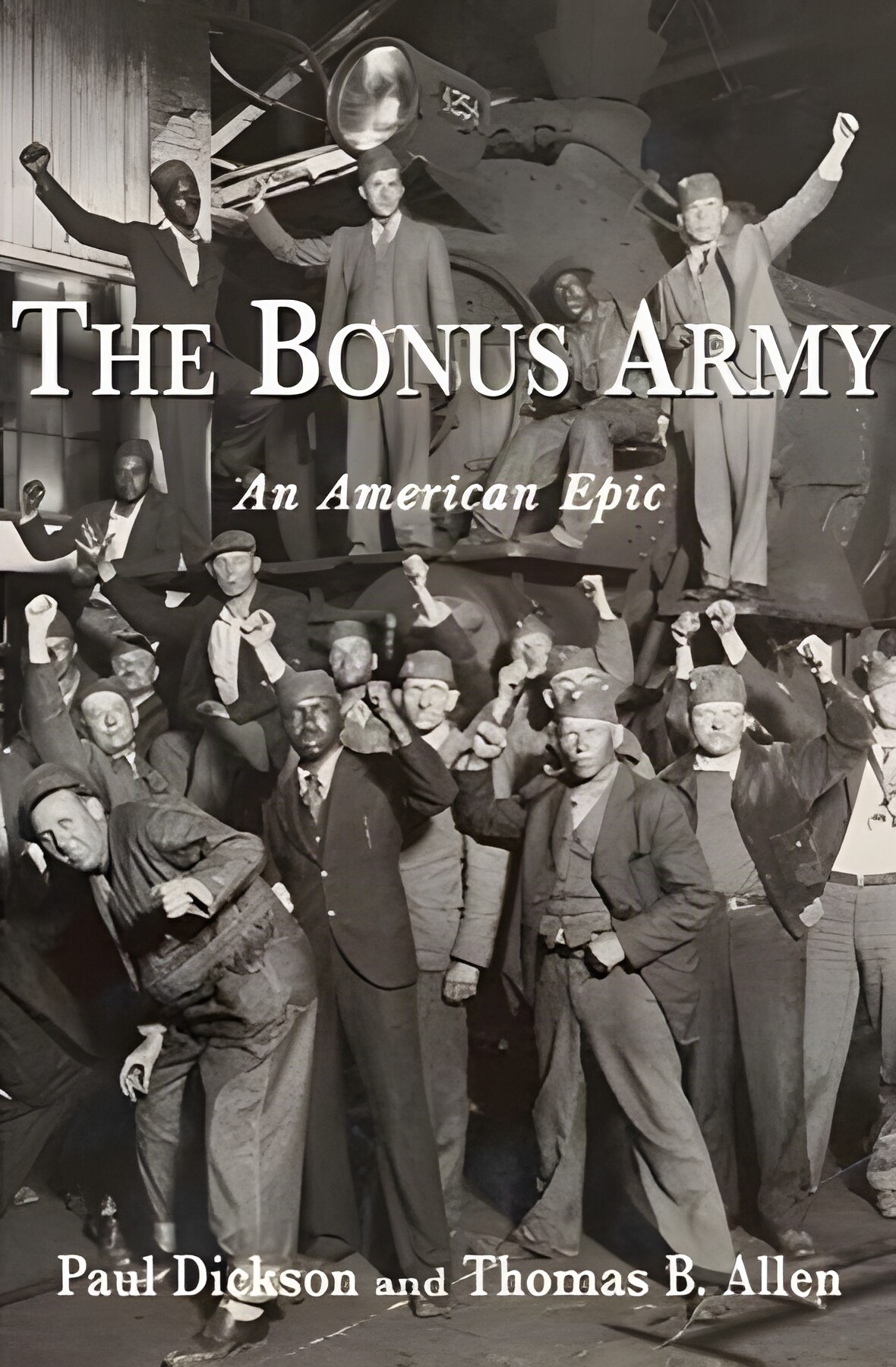
Hardcover. NY, Walker Books, 1st, 2004, Book: Very Good, Dust Jacket: Very Good, Hardcover in a bright, unclipped dust jacket. n the summer of 1932, at the height of the Depression, some forty-five thousand veterans of World War I descended on Washington, D.C., from all over the country to demand the bonus promised them eight years earlier for their wartime service. They lived in shantytowns, white and black together, and for two months they protested and rallied for their cause-an action that would have a profound effect on American history. Clean copy.
NY, Oxford University Press, 1st, 1929, Book: Very Good, Dust Jacket: None, 134 pages. Color, black & white illust. Previous owner's signature front fly-leaf. Tri-color decoration on front cover. Light soil to back cover.
Hardcover. NY, The Viking Press, reprint, 1956, Book: Very Good, Hardcover, tan cloth covers with brown lettering, 187/189 pages. Lyrics with music and a preface of the songs. Two volumes in one. No dust jacket. Inscription on front fly leaf, otherwise clean.
Hardcover. NY, Frederick A. Stokes , 1st US, Book: Good, Dust Jacket: None, Hardcover, light green cloth decorated in dark green, black and gilt, 418 pages. From the sword in the stone and the founding of Camelot to the famed Round Table and the Lake of Enchantment, the legend of King Arthur will never lose its magic. Though simpler, this version includes all the wonderful stories-such as King Arthur's winning of Guenievere and Merlin's tragic downfall at the hands of the evil Vivien. B&w drawings throughout by A. G. Walker. Introduction by John W. Hales. Undated, circa 1900, front hinge partially cracked, title page tanned from frontis. tissue-guard. Small gouge to spine, otherwise clean.







 "The Birth of an Artist: A Journey of Discovery (SIGNED COPY)by: Ed Hamilton")

 "The Black Fives: The Epic Story of Basketball's Forgotten Era by: Claude Johnson")
 "The Black Heartby: Sydney Horler")
 "The Black Infantry in the West, 1869")
 "The Black Panthersby: Marine, Gene")
 "The Black Pupby: Brooks/Margaret Van Doren, Anne")


 "The Black Roseby: Tananarive Due")
 "The Black-Eyed Blondeby: Benjamin Black")
 "The Blacksmith and The Devilsby: Brusca, Maria Cristina and Tona Wilson")
 "The Blackspit Smugglers: An Adventure Novel of To-dayby: Lennox Kerr")
 "The Blind African Slave: Or Memoirs of Boyrereau Brinch, Nicknamed Jeffrey Brace by: Jeffrey Brace; Editor Kari J. Winter; Contributor Benjamin F. Prentiss")
 "The Blue Rajah Murder by: Harold MacGrath")
 "The Bona Fide Legend of Cool Papa Bell: Speed, Grace, and the Negro Leaguesby: Wheeler, Lonnie")
 "The Book of Airplanesby: Iseman, Lt. Com J.W. and Lt. Sloan Taylor")
 "The Book of American Negro Spirituals, The Second Book of Negro Spirituals. Two volumes in Oneby: Johnson, James and J. Rosamond")
