Hardcover. New York, Thomas Dunne Books, 1st, 2008, Book: Very Good, Dust Jacket: Very Good, 324 pages, SIGNED BY AUTHOR on title page. B&w photographs, spotless and tight copy.
Hardcover. NY, Da Capo Press, 1st, 2011, Book: Very Good, Dust Jacket: Very Good, Hardcover in a bright, unclipped dust jacket. Fug You is Ed Sanders's unapologetic and often hilarious account of eight key years of "total assault on the culture," to quote his novelist friend William S. Burroughs. Fug You traces the flowering years of New York's downtown bohemia in the sixties, starting with the marketing problems presented by publishing Fuck You / A Magazine of the Arts, as it faced the aboveground's scrutiny, and leading to Sanders's arrest after a raid on his Peace Eye Bookstore. The memoir also traces the career of the Fugs -- formed in 1964 by Sanders and his neighbor, the legendary Tuli Kupferberg (called "the world's oldest living hippie" by Allen Ginsberg) -- as Sanders strives to find a home for this famous postmodern, innovative anarcho-folk-rock band in the world of record labels.
Hardcover. Cambridge MA, Zoland Books, 1st, 1997, Book: Very Good, Dust Jacket: Very Good, Hardcover in a bright, unclipped dust jacket. INSCRIBED BY CORBETT on the dedication page. A memoir by poet William Corbett recounts the story of his relationship with his father whose sudden and peculiar abandonment of his family in 1965 left numerous unanswered questions. Clean copy.
Hardcover. New York, Beaufort Books, 1st, 2016, Book: Very Good, Dust Jacket: Very Good, 375 pages. Hardcover with dust jacket. Clean, unmarked copy with only minor wear to dust jacket. Black and white pictures throughout.
Hardcover. NY, Elsevier/Nelson, 2nd pr., 1981, Book: Very Good, Dust Jacket: Very Good, Hardcover in an unclipped dust jacket, 127 pages. Newbery Medalist Katherine Paterson describes what it means to be a writer & reader struggling through the "gates of excellence". Spine with light fading.
Hardcover. NY, Doubleday, 1st, 2005, Book: Very Good, Dust Jacket: Very Good, Hardcover in a bright, unclipped dust jacket, 270 pages. In the early eighties, Jennie Erdal was hired by a flamboyant British publisher she calls Tiger to be his specialist editor for Russian books. By degrees he co-opted her time and loyalty, to the point where she ended up becoming his ghostwriter for a huge nonfiction book on women, two glossy novels, and hundreds of newspaper columns, all published under his own name. She also wrote any number of his love letters. With often ironic directness and quiet comedy, Erdal relates how she became seduced into this peculiar job. On the way she makes fascinating excursions into her own private history, from vivid evocations of her Scottish Presbyterian childhood to moving observations on being an abandoned wife and lone parent to piercing insights into the very nature of literary creation. One of the smartest books about writing in years, Ghosting is a tour de force in which the author renders both Tiger and herself as compelling characters, connected to each other by a strange symbiosis. Their interaction is bizarre and also quite spooky; in the end this is a book about the very nature of identity, literary and otherwise. Clean copy.
Softcover. Oakland CA, PM Press;, 1st, 2017, Book: Very Good, Dust Jacket: None, Softcover, 336 pages. The first comprehensive account of how the rise of postwar youth culture was depicted in mass-market pulp fiction. As the young created new styles in music, fashion, and culture, pulp fiction shadowed their every move, hyping and exploiting their behavior, dress, and language for mass consumption and cheap thrills. With their lurid covers and wild, action-packed plots, these books reveal as much about society's deepest desires and fears as they do about the subcultures themselves. Featuring approximately 400 full-color covers, many of them never before reprinted, along with 70 in-depth author interviews, illustrated biographies, and previously unpublished articles, the book goes behind the scenes to look at the authors and publishers, how they worked, where they drew their inspiration and--often overlooked--the actual words they wrote. It is a must read for anyone interested in pulp fiction, lost literary history, retro and subcultural style, and the history of postwar youth culture.
Hardcover. Washington DC, Shoemaker & Hoard, 1st, 2004, Book: Very Good, Dust Jacket: None, Hardcover, gray boards with blue cloth spine, 150 pages, b&w illustrations. A singular life often circles around a singular moment, an occasion when one's life in the world is defined forever and the emotional vocabulary set. For the extraordinary writer James Salter, this moment was contained in the fighter planes over Korea where, during his young manhood, he flew more than one hundred missions. James Salter is considered one of America's greatest prose stylists. The Arm of Flesh (later revised and retitled Cassada ) and his first novel, The Hunters, are legendary in military circles for their descriptions of flying and aerial combat. A former Air Force pilot who flew F-86 fighters in Korea, Salter writes with matchless insight about the terror and exhilaration of the pilot's life. This book collects passages from two other books he wrote about his military flight career and entries from his personal journal kept during his tours of military flying duty through flight training in late WWII, into combat duty in Korea in 1952, and through his post war flying up into the early 1960s. Masterfully edited by Jessica and William Benton, it has been organized chronologically and simply is wonderful. You can read from the journal entry, and then it is followed by fiction he created using that experience. No dust jacket, clean, bright copy.
Hardcover. NY, Oxford University Press, 1st, 2005, Book: Very Good, Dust Jacket: None, Hardcover, glazed boards, 205 pages. Much has been written about Graham Greene's relationship to his Catholic faith and its privileged place within his texts. His early books are usually described as "Catholic Novels" - understood as a genre that not only uses Catholic belief to frame the issues of modernity, but also offers Catholicism's vision and doctrine as a remedy to the present crisis in Western civilization. Greene's later work, by contrast, is generally regarded as falling into political and detective genres. In this book, Mark Bosco argues that this is a false dichotomy created by a narrowly prescriptive understanding of the Catholic genre and obscures the impact of Greene's developing religious imagination on his literary art. Clean copy.
Hardcover. NY, Columbia University Press, 1st, 2014, Book: Very Good, Dust Jacket: Very Good, Hardcover in a bright dust jacket, 328 pages. William Logan has been a thorn in the side of American poetry for more than three decades. Though he has been called the "most hated man in American poetry," his witty and articulate reviews have reminded us how muscular good reviewing can be. These new essays and reviews take poetry at its word, often finding in its hardest cases the greatest reasons for hope. Logan begins with a devastating polemic against the wish to have critics announce their aesthetics every time they begin a review. "The Unbearable Rightness of Criticism" is a plea to read those critics who got it wrong when they reviewed Lyrical Ballads or Leaves of Grass or The Waste Land. Sometimes, he argues, such critics saw exactly what these books were-they saw the poems plain yet often did not see that they were poems. In such wrongheaded criticism, readers can recover the ground broken by such groundbreaking books. Logan looks again at the poetry of Wallace Stevens, Frank O'Hara, and Philip Larkin; at the letters of T. S. Eliot, Elizabeth Bishop, and Robert Lowell; and at new books by Louise Gluck and Seamus Heaney. Always eager to overturn settled judgments, Logan argues that World War II poets were in the end better than the much-lauded poets of World War I. He revisits the secretly revised edition of Robert Frost's notebooks, showing that the terrible errors ruining the first edition still exist. The most remarkable essay is "Elizabeth Bishop at Summer Camp," which prints for the first time her early adolescent verse along with the intimate letters written to the first girl she loved. Clean, like new.
Hardcover. New York, Holiday House, 1st, 1985, Book: Very Good, Dust Jacket: Very Good, 152 pages. Hardcover with black & white illustrations. Light edgewear to dust jacket with closed tears to front cover. Protected by mylar cover. Clean, tight copy. History of this children's book publishing house followed by chronological listing of all their publications.
Hardcover. San Francisco, Chronicle Books, 1st, 1997, Book: Very Good, Dust Jacket: Very Good, Hardcover, 208 pages, fine in fine dust jacket. (10 1/2" X 12 1/4"). Color and b&w illustrations throughout. In celebration of the thirtieth anniversary of the Summer of Love, the Rock and Roll Hall of Fame and Museum has launched a major exhibition examining how rock & roll came of age in the late Sixties and influenced everything from fashion and art to politics and literature. I Want to Take You Higher expands on that exhibit, showcasing the infamous icons of the era - from John Lennon's Sgt. Pepper uniform to Janis Joplin's hand-painted Porsche. A host of revealing new interviews offer never-before-published tales from the land of psychedelic wonder. Country Joe McDonald, Allen Ginsberg, Grace Slick, Mickey Hart, Donovan, Bob Weir and members of the influential bands Big Brother and the Holding Company, Quicksilver Messenger Service, Moby Grape and many others contribute fresh perspectives on now-legendary events. I Want to Take You Higher also features posters, paraphernalia and an illustrated time line (just in case you forgot), as well as classic and previously unpublished images from the greatest rock photographers of the era: Jim Marshall, Baron Wolman, Robert Whitaker, Michael Cooper, Herb Greene, Bob Seidemann and others. Due to size and weight, DOMESTIC SHIPPING ONLY.
Hardcover. Milan, A. Mondadori, 1st, 1945, Book: Very Good, Dust Jacket: None, Hardcover, 6 unnumbered pages including the inside of both covers. Publisher's thick pictorial boards backed in white cloth-patterned paper & saddle stapled Lightly soiled, edges slightly rubbed, otherwise very good. A nice example with all flaps and concealed color illustrations in perfect working order. Laid in is a typed English translation of the text. Bruno Munari was "one of the most celebrated names in twentieth century Italy in graphic designing who fundamentally altered the landscape of many fields of visual arts, futurism and modernism He is credited for his contribution to industrial design, sculpture, painting, literature, film and concrete art." A collector's copy of this scarce title.
Softcover. New York, Interlink Books, 1st, 1995, Book: Very Good, Dust Jacket: None, 276 pages. Softcover with light edgewear to paper wrappers. Light fading to rear wrappers, otherwise clean, tight copy. The 37 stories which comprise this collection challenge the long-held stereotypes and provide a rare look at the everyday lives of common people in villages across Fujian province. Despite the efforts and influence of the male-dominant Confucian culture, the stories reflect women's voices and women's lives touched by power and independence.
Softcover. NY, Archipelago Books, reprint, 2021, Book: Very Good, Dust Jacket: None, Softcover in pictorial wrappers, 171 pages. One of the most transcendent poets of his generation, Darwish composed this remarkable elegy at the apex of his creativity, but with the full knowledge that his death was imminent. Thinking it might be his final work, he summoned all his poetic genius to create a luminous work that defies categorization. In stunning language, Darwish's self-elegy inhabits a rare space where opposites bleed and blend into each other. Prose and poetry, life and death, home and exile are all sung by the poet and his other. On the threshold of im/mortality, the poet looks back at his own existence, intertwined with that of his people. Clean Copy.
Softcover. NY, Archipelago Books, 1st, 2011, Book: Very Good, Dust Jacket: None, Softcover in pictorial wrappers, 171 pages. One of the most transcendent poets of his generation, Darwish composed this remarkable elegy at the apex of his creativity, but with the full knowledge that his death was imminent. Thinking it might be his final work, he summoned all his poetic genius to create a luminous work that defies categorization. In stunning language, Darwish's self-elegy inhabits a rare space where opposites bleed and blend into each other. Prose and poetry, life and death, home and exile are all sung by the poet and his other. On the threshold of immortality, the poet looks back at his own existence, intertwined with that of his people. Clean Copy.
Hardcover. New York , Times Books, 1st, 1996, Book: Very Good, Dust Jacket: Very Good, 273 pages. Hardcover with dust jacket. SIGNED BY NOEL on title-page. Clean, unmarked copy with only minor wear to dust jacket.
Hardcover. Hartford, CT, American Publishing Company, 1st Edition, 1870, Book: Good, Dust Jacket: None, 651 pages plus publisher's ads. Hardcover. Front and back hinges cracked, binding tight otherwise. Frontispieces with tissue guard. Tanning to edges. Pages clean with just a touch of tanning. Spine straight. Cover boards bound in black cloth, gilt title on spine and design on front cover board. Borders and decoration blind-stamped to front and back cover boards. Some agewear to boards: fraying/chipping at top and bottom of spine and corners, rubbing. "Being some account of the steamship Quaker City's pleasure excursion to Europe and the Holy Land; with descriptions of countries, nations, incidents and adventures, as they appeared to the author." Perfect for any collector's bookshelf.
Hardcover. Seattle, Fantagraphics, 1st, 2016, Book: Very Good, Dust Jacket: Very Good, Hardcover in a bright dust jacket, 304 pages. In 1976, the critic Paul Nelson spent several weeks interviewing his literary hero, legendary detective writer Ross Macdonald. Beginning in the late 1940s with his shadowy creation, ruminating private eye Lew Archer, Macdonald had followed in the footsteps of Dashiell Hammett and Raymond Chandler, but ultimately elevated the form to a new level. "We talked about everything imaginable," Nelson wrote-including Macdonald's often meager beginnings; his dual citizenship; writers, painters, music, books, and movies he admired; how he used symbolism to change detective writing; his own novels and why Archer was not the most important character-"my God, everything." It's All One Case provides an open door to Macdonald at his most unguarded. The book is far more than a collection of never-before-published interviews, though. Published in a handsome, oversized format, it is a visual history of Macdonald's professional career, illustrated with rare and select items from one of the world's largest private archives of Macdonald collectibles. Featuring in full color the covers of the various editions of Macdonald's more than two dozen books, facsimile reproductions of pages from his manuscripts, magazine spreads, and many never before seen photos of Macdonald and his friends (such as Kurt Vonnegut), including those by celebrated photojournalist Jill Krementz. It's All One Case is an intellectual delight and a visual feast, a fitting tribute to Macdonald's distinguished career. Full-color illustrations throughout
Hardcover. Boston, Houghton Mifflin Harcourt, 1st, 2014, Book: Very Good, Dust Jacket: Very Good, 181 pages. Hardcover with dust jacket. A very clean, unmarked copy with only minor wear to dust jacket edges. A tight copy.
Hardcover. Burlington, VT, Ashgate Publishing, 1st, 2013, Book: Very Good, Dust Jacket: Very Good, 162 pages. Hardcover with dust jacket. Clean, unmarked copy with only minor wear to dust jacket.
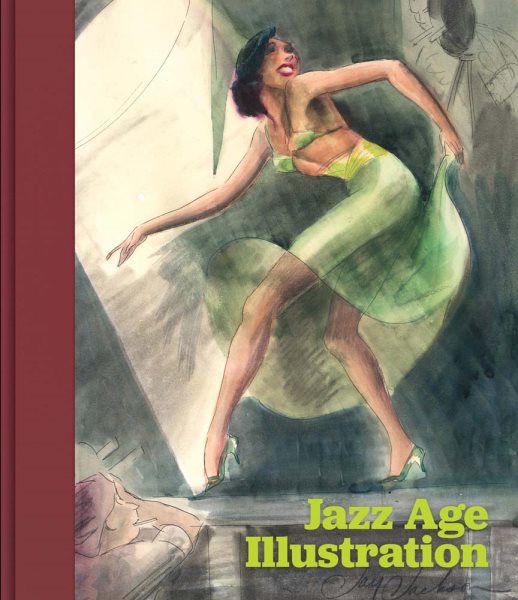
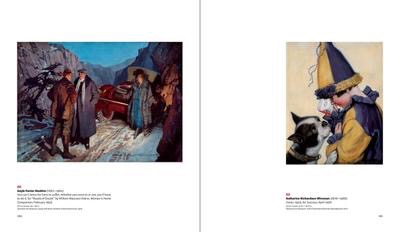
Hardcover. New Haven CT, Yale University Press, 1st, 2024, Book: Very Good, Dust Jacket: None, Hardcover, pictorial boards with a red cloth spine, 174 pages. A gorgeous look at popular illustrators of the Jazz Age and their influential role in the dynamic culture of the 1920s and '30s The 1920s in the United States was characterized by economic prosperity and dramatic social change. Known as the Jazz Age, it was a time when Black music, art, and literature became a powerful cultural force. Shifting roles for women and trends in youth culture coalesced in the figure of the flapper, causing a moral panic chronicled in the expanding popular press. Exploring how the art of popular illustration helped shape this new consciousness and impacted publishing, politics, and daily life, this volume features works by artists such as Aaron Douglas, Nell Brinkley, John Held Jr., and Lois Mailou Jones. Their striking images illustrated the New Yorker, Vanity Fair, The Crisis, Liberty, and the Saturday Evening Post, as well as newspapers, novels, and books for children. Essays foreground the contributions of women and Black artists; draw parallels between music, fashion, and the aesthetics of popular illustration; discuss the impact of the Harlem Renaissance and the national growth of the Black press; highlight the legacy of illustrator Howard Pyle and his students; and consider the appropriation of the subversive jazz culture by a white audience. Clean copy.
Hardcover. Athens GA, University of Georgia Press, 2nd pr., 1967, Book: Good, Dust Jacket: Good, Hardcover in a lightly worn dust jacket. 182 pages, 5 pages with red underlining. Brookes examines how Harris drew on his extensive knowledge of African American folklore and culture to create the characters in his work. Brookes classifies the Uncle Remus books under seven major categories: trickster tales, other "creeturs," myths, supernatural tales, proverbs, dialect, and songs.
Hardcover. San Francisco, Chronicle Books, 1st, 1975, Book: Very Good, Dust Jacket: Very Good, Hardcover in very good dust jacket with mild fading to spine. 184 pages plus index, b&w photographs. Light edge wear, protected by mylar cover. A very clean, tight copy. Written from personal recollection and years of research by the friend and writer Steinbeck knew would one day be his biographer. Emphasizes Steinbeck's formative years: boyhood in Salinas, farmhand, seaman, road-gang flunkie, hod carrier, dam builder and pursuit of wine, women and song.