Hardcover. NY, Whittlesey House, 1st, 1945, Book: Very Good, Dust Jacket: Fair, Hardcover, blue cloth with white lettering in a worn and chipped dust jacket with fading in spots. 280 cartoons from the Saturday Evening Post. Artists include Hoff, Richter, Chon Day, Ted Key, many others. Book very good, clean. Dust jacket fair only.
Hardcover. NY, David McKay, 1st, 1955, Book: Very Good, Dust Jacket: Very Good, Hardcover in a lightly soiled dust jacket. 167 pages illustrated by Ruth Sheetz. The Morse's became innkeepers on Martha's Vineyards, leaving city life in New York. This is the story of Beach Plum Inn. Light tanning to front fly leaf where newspaper clipping was laid in, otherwise clean.
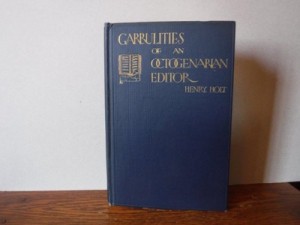
Hardcover. Boston, Houghton Mifflin, 1st, 1923, Book: Very Good, Dust Jacket: None, Hardcover, blue cloth covers with gilt stamping, top edge gilt. 400 pages with index. 4 b&w plates including a frontis portrait of the editor/publisher. Inscription, light note on front fly leaf, otherwise clean. Gilt lettering on spine has fading/chipping.
Hardcover. Syracuse, NY, Journal Office, 1st, 1883, Book: Good, Dust Jacket: None, Hardcover, 612 pages. Maroon cloth covers, gilt decoration and lettering on spine and cover with stamped decorations. Corner and edge wear, fading to spine. Decorative stain on all page edges. Tissue guarded illustrations. Previous owner's signature on front end paper. Binding cracked in multiple places.
Hardcover. Hoboken NJ, John Wiley & Sons, 1st, 2009, Book: Very Good, Dust Jacket: Very Good, Hardcover in a bright, unclipped dust jacket. The biography of one of the most controversial figures in sports: New York Yankees owner George Steinbrenner For 34 years, he berated his players and tormented Yankees managers and employees. He played fast and loose with the rules, and twice could have gone to jail. He was banned from baseball for life--but was allowed back in the game. Yet George Steinbrenner also built the New York Yankees from a mediocre team into the greatest sports franchise in America. The Yankees won ten pennants and six World Series during his tenure. Now acclaimed sportswriter and New York Times bestselling author Peter Golenbock tells the fascinating story of "The Boss," from his Midwestern childhood through his decades-long ownership of the Yankees-the longest in the team's history. Clean copy.
Hardcover. NY, Knopf, 1st, 1989, Book: Very Good, Dust Jacket: Very Good, Hardcover in a bright, unclipped dust jacket. Black & white photos. 579 pages. A massive and well-researched biography of one of the most powerful and influential men in Hollywood, from his days as a poor Polish immigrant through his steady climb to prominence. Photographs, notes, and sources, index.
Hardcover. Boston, Houghton Mifflin Company , 1st, 1973, Book: Good, Dust Jacket: Good, 297 pages, b&w photos. Light shelf-wear and rubbing to dust jacket with slight tear to center of rear flap. Nice reading copy.
Hardcover. NY, McGraw-Hill, 1st, 1970, Book: Very Good, Dust Jacket: None, Hardcover, 127 pages. Gold, red, green and black (old Lucky Strike colors) boards, no dust jacket. A history of cigarette smoking. Great photos of smoking in films, antique ads and packages, etc. Laid in are publicity photos of author and designer. Clean, bright copy.
Hardcover. NY, McGraw-Hill, 1st, 1970, Book: Very Good, Dust Jacket: None, Hardcover, 127 pages. Gold, red, green and black (old Lucky Strike colors) boards, no dust jacket. A history of cigarette smoking. Great photos of smoking in films, antique ads and packages, etc.
Hardcover. Philadelphia, James Gopsill's Sons, 1st, 1897, Book: Very Good, Dust Jacket: None, Hardcover, 581 pages, includes many ads. Black cloth spine with ad-illustrated cardboard covers. Covers edgeworn, interior bright and clean.
Hardcover. Princeton Architectural Press, 1st, 2006, Book: Very Good, Dust Jacket: Very Good, Hardcover, 256 pages. The Breakers, the Waldorf, the Biltmore, the Sherry, the Pierre--these landmark hotels are synonymous with grand luxury and style. When they were built, in the 1920s, their refined elegance and grandeur set the bar for hotels and resorts the world over. Responsible for creating these and countless other hotels throughout the United States, were the partners of a single architectural firm: Schultze & Weaver. Together, this duo--an architect and an engineer--virtually invented the glamorous lifestyle made famous in films like Grand Hotel. Catering to the social elite of which they were themselves a part, Schultze & Weaver synthesized the Old World style of Renaissance Italy, Moorish Spain, and Georgian England with all of the modern amenities that made hotel living luxurious. This book presents portfolios of fifteen of the firm's most spectacular hotels, culminating in the Art Moderne masterpiece of the Waldorf-Astoria. Over two hundred period photographs and hand-colored architectural renderings chart the ascent of the American hotel in all its glory and glamour, before the Great Depression forever changed the lifestyles of America's rich and famous. Essays address the cultural and technological developments that underpin the creation of resort and residential hotels, including the elemental role played by Schultze & Weaver.
Hardcover. University Park PA, Penn State University Press, 1st, 2015, Book: Very Good, Dust Jacket: Very Good, Hardcover, 272 pages. Graphic Passion recounts the publication history of nearly fifty books illustrated by Matisse, including masterworks such as Lettrew portugalises, Mallarme's Poisies and his own Jazz. A fantastic production executed with great care. Part of the Penn State series in the history of the book. From 1912 until his death in 1954, Matisse was involved in nearly fifty illustration projects, many of which rank among the greatest artists' books of the twentieth century. He directly participated in page layout, typography, lettering, ornament, cover design, and even the choice of text. Drawing on unpublished correspondence and business documents, this book pays scholarly attention to his illustration methods, typographic preferences, literary sensibilities, and opinions about the role of the artist in the publication process. Still in publisher's shrinkwrap.
Softcover. Zurich, Graphis Press, 1st, 1986, Book: Very Good, Dust Jacket: None, 84 pages. English, German and French text. B&w and color illustrations. Very good. International graphic design magazine based out of Switzerland. No longer in print. Cover illustration by Andrzej Dudzinski. In Graphis magazine Issue 242, you'll find articles on: IBM--Design, Business & Education, by Steven Heller; Fourth Colorado International Invitational Poster Exhibition, by Philip E. Risbeck, Fort Collins, Colorado; Conception and Design of the USA Annual Reports 1983/84, by Richard A. Lewis, New York.
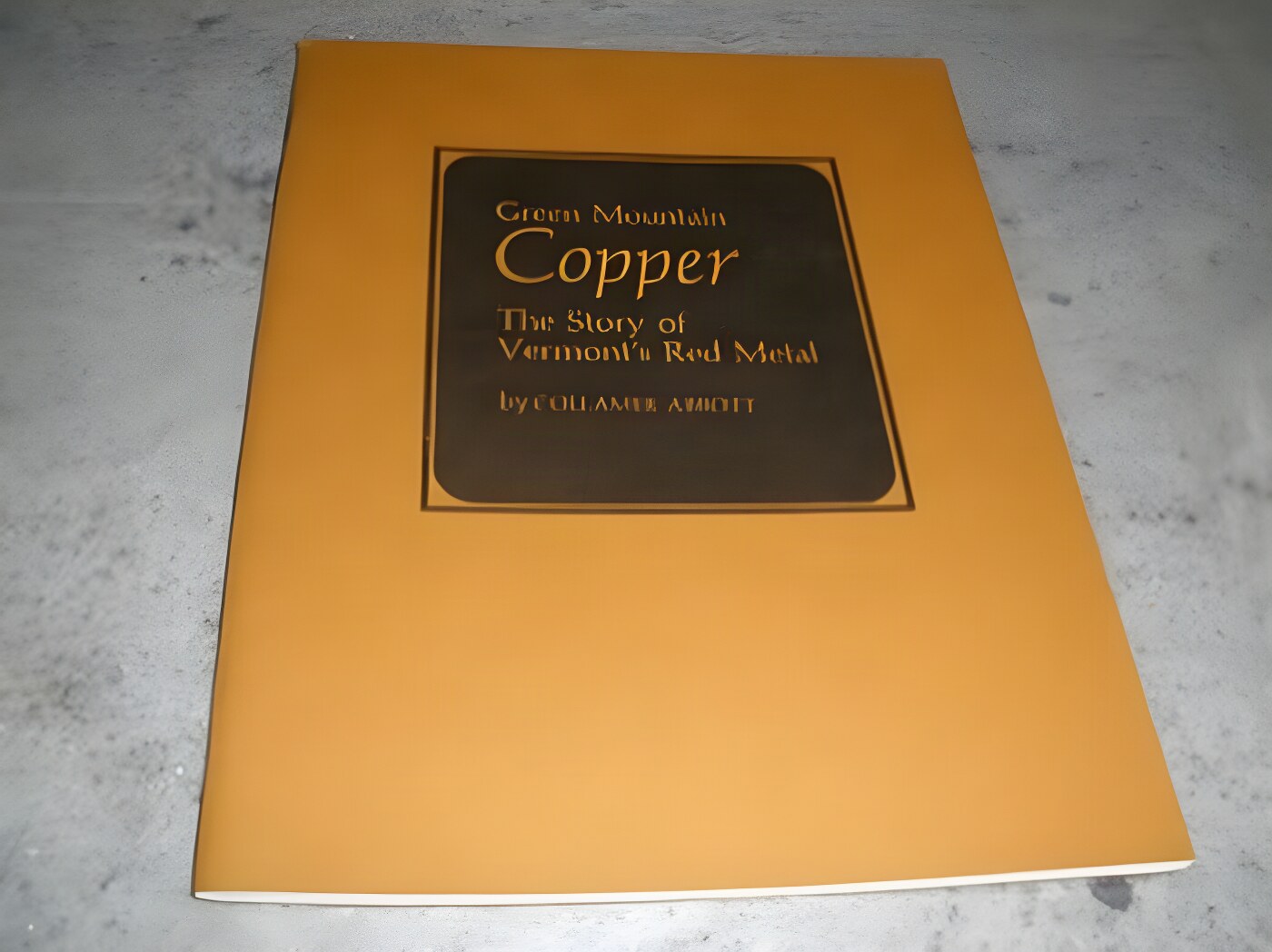
Softcover. Randolph VT, privately printed, 1st, 1973, Book: Very Good, Dust Jacket: None, Softcover. 36 pages. b&w illustrations. SIGNED BY ABBOTT on the title page. From about 1827 to 1958, periodic copper mining operations were carried on in the towns of Strafford, Vershire and Corinth. A glimpse into the times and men who produced Vermont's red metal. Stapled wrappers, mild soil to front cover, otherwise clean copy.
Hardcover. Greenfield, Raymond & Co., 1st, Book: Good, Dust Jacket: None, 338 pages. Hardcover. Directory of Greenfield, Massachusetts for the years 1904-1905. Features Advertising, Events Calendar, Streets, Avenues, Roads, etc., Greenfield Resident Directory, Greenfield Business Directory, and more. Staining, soiling to covers. Rubbing along leather spine. Pages are clean, unmarked. Good reference copy.
Softcover. Urbana, IL, University of Illinois Press, 1st, 2011, Book: Very Good, Dust Jacket: None, 217 pages. Softcover. B/w illustrations throughout. In excellent condition, clean inside and out.
Hardcover. Chicago, University of Chicago Press , 1st, 2013, Book: Very Good, Dust Jacket: Very Good, Hardcover, 364 pages, illustrated throughout in color. Clean, unmarked copy with only minor wear to dust jacket. Photographer Camilo Jose Vergara has been chronicling the neighborhood for forty-three years, and Harlem: The Unmaking of a Ghetto is an unprecedented record of urban change. Vergara began his documentation of Harlem in the tradition of such masters as Helen Levitt and Aaron Siskind, and he later turned his focus on the neighborhood's urban fabric, both the buildings that compose it and the life and culture embedded in them. By repeatedly returning to the same locations over the course of decades, Vergara is able to show us a community that is constantly changing--some areas declining, as longtime businesses give way to empty storefronts, graffiti, and garbage, while other areas gentrify, with corporate chain stores coming in to compete with the mom-and-pops. He also captures the ever-present street life of this densely populated neighborhood, from stoop gatherings to graffiti murals memorializing dead rappers to impersonators honoring Michael Jackson in front of the Apollo, as well as the growth of tourism and racial integration. Woven throughout the images is Vergara's own account of his project and his experience of living and working in Harlem. Taken together, his unforgettable words and images tell the story of how Harlem and its residents navigated the segregation, dereliction and slow recovery of the closing years of the twentieth century and the boom and racial integration of the twenty-first century. A deeply personal investigation, Harlem will take its place with the best portrayals of urban life.
Hardcover. London, Fourth Estate, 1st, 2005, Book: Very Good, Dust Jacket: Very Good, Hardcover in a bright dust jacket. 362 pages, SIGNED BY AW on title page. Set in Malaysia in the 1930s and 40s, with the rumbling of the Second World War in the background and the Japanese about to invade, The Harmony Silk Factory is the story of four people: Johnny, an infamous Chinaman -- a salesman, a fraudster, possibly a murderer -- whose shop house, The Harmony Silk Factory, he uses as a front for his illegal businesses; Snow Soong, the beautiful daughter of one of the Kinta Valley's most prominent families, who dies giving birth to one of the novel's narrators; Kunichika, a Japanese officer who loves Snow too; and an Englishman, Peter Wormwood, who went to Malaysia like many English but never came back, who also loved Snow to the end of his life. A journey the four of them take into the jungle has a devastating effect on all of them, and brilliantly exposes the cultural tensions of the era. Haunting, highly original, The Harmony Silk Factory is suspenseful to the last page. Clean copy.
Hardcover. Boston, Northeastern University Press, 1st, 1996, Book: Very Good, Dust Jacket: Very Good, Hardcover, 426 pages, b&w photographs. Bright, clean copy. This engaging biography of Harold Arlen charts the course of his brilliant career, from band leader in his native Buffalo, New York, to songwriter and vocalist in vaudeville, to composer of Broadway musicals and revues at Harlem's Cotton Club, to writer of the everlasting music in The Wizard of Oz and other films. Drawing on a treasure trove of family documents and memorabilia, Edward Jablonski vividly describes Arlen's life, including his loving but troubled marriage to Anya, the strained relationship with his father and brother, his alcoholism and illnesses, and his friendship with Marlene Dietrich. Populated with such greats as Johnny Mercer, George and Ira Gershwin, E. Y. Harburg, Bert Lahr, and Judy Garland, the book also captures the spirit of Arlen's times and conveys a sense of the inner workings of the music business.
Hardcover. St. Paul MN, Graywolf Press, 1st, 2002, Book: Very Good, Dust Jacket: Very Good, Hardcover in a bright, unclipped dust jacket. INSCRIBED BY DIMMICK on the title page. Like a ripped-from-the-headlines episode of TV's Law and Order, this second novel from Dimmick (following In the Presence of Horses) describes the aftermath of a horrendous physical attack at a Rhode Island school. In this particular incident, a knife-wielding student has disfigured teacher Zoe Muir. Unable to return to business-as-usual, she moves to northern Vermont, buys an unfinished house in the woods, and attempts to reconstruct her life. Clean copy.
Hardcover. St. Paul MN, Graywolf Press, 1st, 2002, Book: Very Good, Dust Jacket: Very Good, Hardcover in a bright, unclipped dust jacket. INSCRIBED BY DIMMICK on the title page. Like a ripped-from-the-headlines episode of TV's Law and Order, this second novel from Dimmick (following In the Presence of Horses) describes the aftermath of a horrendous physical attack at a Rhode Island school. In this particular incident, a knife-wielding student has disfigured teacher Zoe Muir. Unable to return to business-as-usual, she moves to northern Vermont, buys an unfinished house in the woods, and attempts to reconstruct her life. Clean copy.
Chicago, Allen-Bennett, 1st, 1972, Book: Very Good, Dust Jacket: Very Good, Hardcover in a bright dust jacket with light wear, chipping. 240 pages. This book is a good behind the scenes look at the business of Playboy and Hugh Hefner in the '60s and early '70s. The major focus is on the business side of the industry, Byer was a corporate Vice President of Marketing for the Playboy empire. Clean copy.
Hardcover. New Haven, CT, Yale University Press, 1st, 2014, Book: Very Good, Dust Jacket: None, 168 pages. Hardcover with no dust jacket. Very clean, unmarked copy still in shrink wrap. Color and black & white images throughout. Tight copy.
Hardcover. New Haven, CT, Yale University Press, 1st, 2014, Book: Very Good, Dust Jacket: None, 168 pages. Hardcover with no dust jacket. Very clean, unmarked copy still in shrink wrap. Color and black & white images throughout. Tight copy. Helena Rubinstein: Beauty Is Power traces the path of this remarkable early feminist and visionary art patron. In Rubinstein's world, art and commerce blended seamlessly. She ornamented her salons and homes with splendid artworks--Surrealist murals, modernist portraits, Art Deco furniture, Venetian mirrors, and one of the era's great collections of African and Oceanic art. Her understanding of beauty was similarly expansive and democratic: she saw the face as the site for self-expression and the exploration of identity. The Rubinstein beauty program thus included not only makeup and hairdressing, but also lessons in health, deportment, and culture. Such features, innovative at the time and wildly popular, today provide a fascinating glimpse into popular culture as it affected women in the 20th century.

 "Funny Businessby: Marione P. Derrickson and John Bailey (Ed.)")



 "Gazetteer and Business Directory of Franklin and Grand Isle Counties, VT for 1882-83.by: Child (Compiled), Hamilton")
 "George: The Poor Little Rich Boy Who Built the Yankee Empire by: Golenbock, Peter")
 "Goldwyn - A Biographyby: Berg, A. Scott")
 "Good Provider, The: H. J. Heinz and his 57 Varietiesby: Alberts, Robert C.")

 "Good-Bye To All Thatby: Harris Lewine")

 "Grand Hotels of the Jazz Age: The Architecture of Schultze & Weaverby: Marianne Lamonaca")
 "Graphic Passion: Matisse and the Book Arts by: Bidwell, John")
 "Graphis, No. 242, Volume 42by: Herdeg, Walter (Ed.)")
 "Greenfield, Mass. Directory - 1904-5 - Vol. VI, Theby: Greenfield, Massachusetts")
 "Guest Workers and Resistance to U.S. Corporate Despotismby: Ness, Immanuel")
 "Harlem: The Unmaking of a Ghettoby: Vergara, Camilo Jose")

 "Harold Arlen: Rhythm, Rainbows, and Blues by: Jablonski, Edward")
 "Heart-Side Up (INSCRIBED COPY)by: Dimmick, Barbara")

 "Hefner's Gonna Kill Me When He Reads Thisby: Byer, Stephen")
 "Helena Rubinstein: Beauty Is Powerby: Klein, Mason")
 "Helena Rubinstein: Beauty Is Powerby: Klein, Mason")